The law of praying (3): Praying for the Church

Over the summer, we are looking at a section from the Canon of the Mass each week, to learn what the ‘law of praying’ has to teach us about what we believe. You can find the previous posts in this series in our reflections archive.

…your holy catholic Church.
Be pleased to grant her peace,
to guard, unite and govern her
throughout the whole world,
together with your servant N. our Pope
and N. our Bishop,
and all those who, holding to the truth,
hand on the catholic and apostolic faith.

We began our prayer asking God the Father to accept our sacrifice, and now we make the first of our petitions for people. In the first place, we pray always as members of the Church. The Mass is the principal prayer of the Church, and every Mass is offered for all her members, living and dead. So in our private prayer, we should remember that we never pray purely as individuals. Neither should we pray only for our own intentions. But, as members of the Church, we have a duty to contribute to that daily round of petition addressed to God for the needs of all our brothers and sisters. And when we do so, we are in turn reminded that they are praying for us as well. If we find ourselves with more time to pray for the needs of the Church, we should make that investment while we can, trusting that others will return the favour when we need support. And so our prayer not only reminds us of our unity, but actually builds up those bonds of charity.

And this idea doesn’t just apply to our prayer. Our actions too are performed not only as private individuals, but as members of the Church. When we do good, it is not just to our benefit. When we sin, we don’t just hurt ourselves. I was once explaining this to a member of the armed forces. ‘Imagine you were in the centre of town, drunk and shouting and fighting with people in the street. Now imagine you were in your uniform. What would your commanding officer say?’ ‘Oh no,’ he replied, ‘He’d say: You’ve not just disgraced yourself! You’ve brought disgrace on the RAF. You’ve brought disgrace on your country…’ The list continued. That’s why at the beginning of Mass we confess our sins not just to Almighty God, but also ‘to you, my brothers and sisters’. Every sin we commit not only harms us, but the Church as well. The worst sins damage our union with the Church. Some of the sins the Church fears most are those that break apart her members: apostasy, schism and heresy. So we pray, first of all, for that safety in which our faith will flourish, in a Church guarded and governed by God, united in the true faith.

Then notice that we don’t explicitly pray for our Pope and Bishop. We do pray for them, of course, because they are included among all those members of the Church that we are praying will be guarded, united and governed by God. But we mention the Pope and Bishop here not simply as people we ought to pray for. We name them to identify what it is we’re talking about when we use the word ‘Church’. We name them because they are our guarantee that the Church we are in communion with is the Church founded by Christ himself, and is in union with him. We know that we are part of the Church because of our communion with the successor of St Peter, and the successor of the Apostles who heads our local church (in our case, the Archbishop of Birmingham).

The bishops — and the Pope as foremost among them — ‘hand on the catholic and apostolic faith’ in an unbroken succession that goes all the way back to the Apostles — who in turn received that faith from Christ himself. This ‘Tradition’ (from the Latin tradeo — I hand over) is the deposit of faith. It tells us who Christ was, and what he was like. It gives us our historical link to him and his teaching.

But Christ became man not just to hand over a set of doctrines. We don’t just want to know about him. We also want to know him, directly. And so by passing on to his Apostles the Holy Spirit, who in turn handed the Spirit on to the first bishops, Christ is made present here and now in every place that a successor of the Apostles celebrates the Mass. Without this unbroken chain of apostolic succession, we wouldn’t be able to enjoy the close relationship we have with Christ, who is present and draws us closer to him in every one of the sacraments.

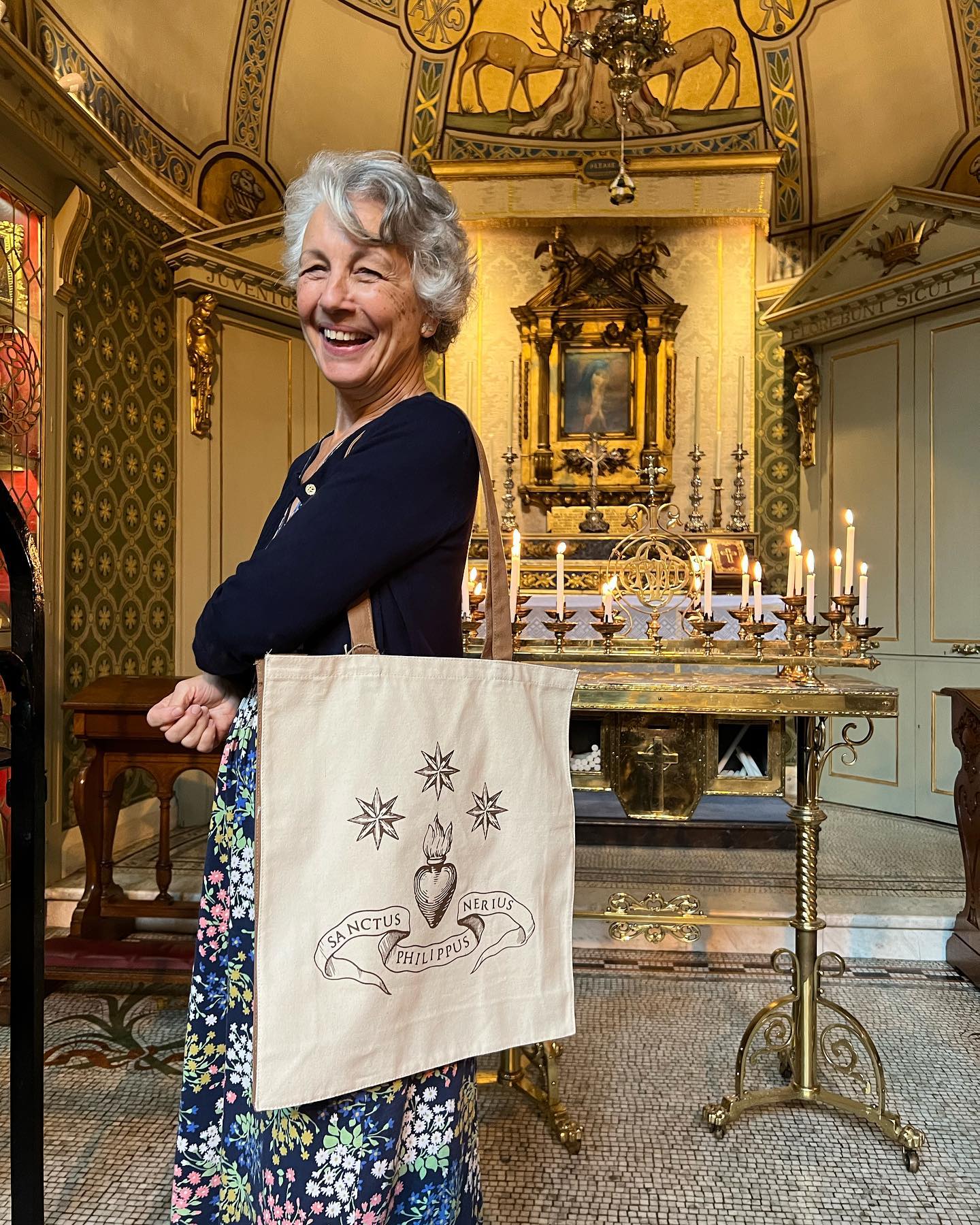
Thanks to Anna for modelling the new Oxford Oratory tote bag. Ideal for shopping, picnicking, a day at the beach or as a Sunday morning Mass bag! Our sturdy canvas tote is decorated with St Philip’s crest in fashionable sepia. Available at the Oratory Bookshop at just £11.99. #oxfordoratory

View on Instagram

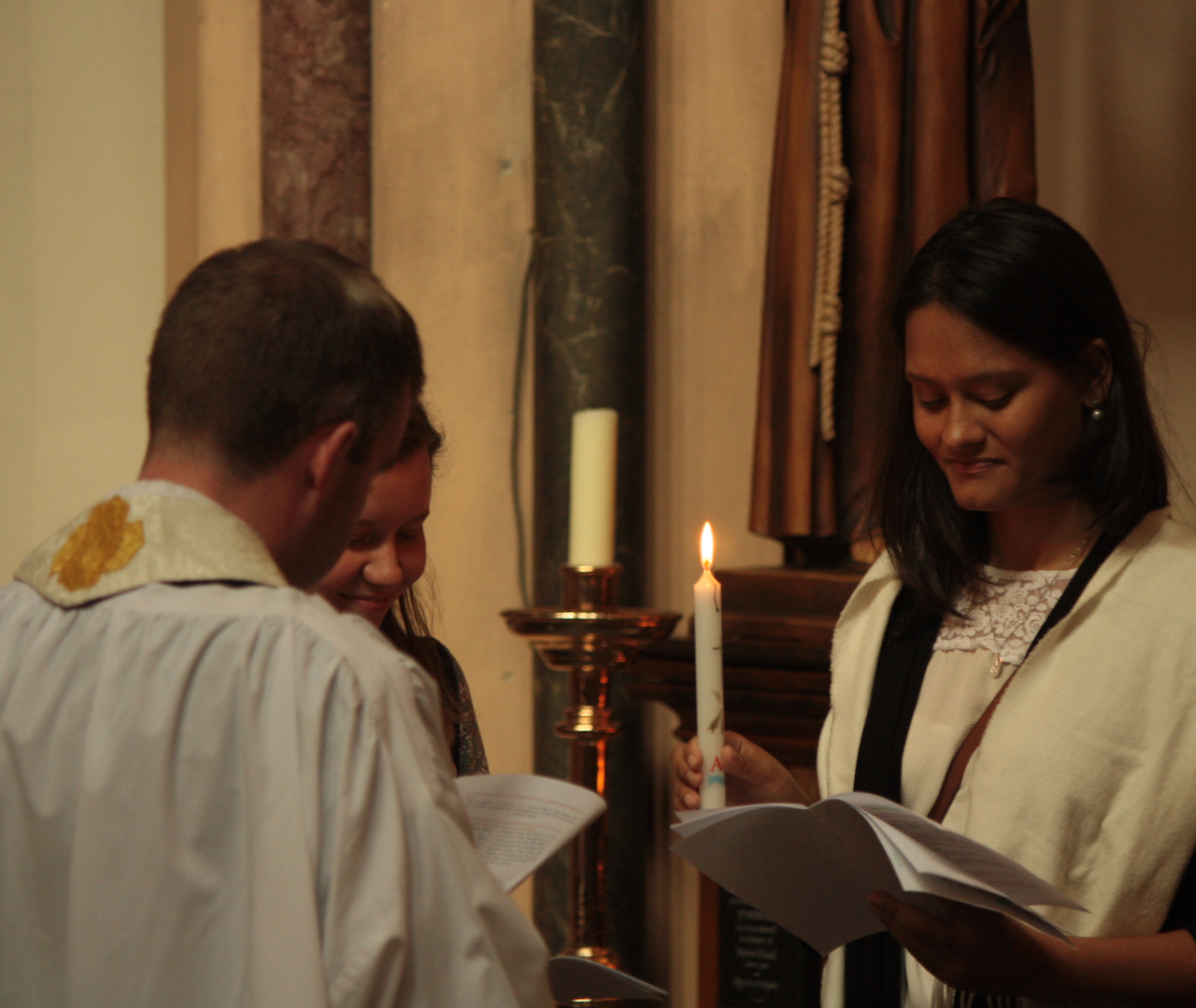
“Take this burning light and keep true to your baptism throughout a blameless life. Keep the commandments of God; that when the Lord shall come like bridegroom to his marriage feast you, in company with all the Saints, may meet him in the heavenly courts, and there live for ever.”

Congratulations to Clara, baptised today on the feast of St Clare!

#oxfordoratory

View on Instagram

The law of praying (2): Addressing the Father

Over the summer, we are looking at a section from the Canon of the Mass each week, to learn what the ‘law of praying’ has to teach us about what we believe. You can find the previous posts in this series in our reflections archive.
To you, therefore, most merciful Father,
we make humble prayer and petition
through Jesus Christ, your Son, our Lord:
that you accept
and bless these gifts, these offerings,
these holy and unblemished sacrifices,
which we offer you firstly
for your holy catholic Church…

We don’t waste any time here: we start our prayer by addressing God the Father immediately. But we approach him through his Son. This is the the fundamental Good News of the Gospel, that God the Son become one of us so that we might be adopted as God’s children. We are able to approach God — and even dare to call him Father — because his own Son became one of us, bridged the gap between humanity and God, and lives forever to intercede for us.

Almost all of our liturgical prayer is addressed to the Father. We speak directly to the Son much less frequently (we tend to wait until he is present on the altar in the Blessed Sacrament). There is no competition or jealousy between the Father, Son and Holy Spirit, so it’s not a problem that we address the Father most. It’s not even a problem that we never address the Spirit directly in the course of the Mass. This is, it seems, how things are meant to be. The Holy Spirit works quietly in the background, not drawing attention to himself, but making us like the Son, and directing us, through him, to the Father.

There is, perhaps, a practical reason that the Spirit is barely mentioned in this prayer — and it is most likely because of its age. In the very early Church, there was very little need to remind people that the Holy Spirit was God, because they could see that for themselves. He often showed himself descending as fire on the newly confirmed. He imbued certain members of the Church with the charismatic gifts they needed for that particular time. It was surely hard not to have faith in the Holy Spirit when he would cause one member of the congregation to stand up and speak in tongues, another to prophecy, and grant to another the gift of healing the sick miraculously! (St Augustine says the reason we don’t see these charismatic gifts so much anymore — and he was writing around 400AD — is that they are not needed in the same way. The twelve apostles between them certainly could not speak every language needed to preach the Gospel; now the Church does speak every language through her different members.)

There was then little need to remind people through the law of prayer that the Spirit is God. At least not until centuries later. The Church was over 300 years old when St Basil the Great wrote his great defence of the divinity of the Holy Spirit. And it is about this time that many of the liturgical prayers now used in the Christian East were composed or edited by St Basil and St John Chrysostom. These prayers emphasise throughout the divinity of the Holy Spirit, and call on him to come down upon the gifts of bread and wine to consecrate them. Well aware of the power of the lex orandi, the Fathers of the East wanted to make sure no one left Church on a Sunday in any doubt that the Holy Spirit is God.

It is perfectly possible, then, that the Roman Canon has no mention of the Holy Spirit because it comes from an even earlier Christian tradition. The consecration comes about simply through the Father’s gracious acceptance of our prayer.

That consecration of bread and wine into the Body and Blood of Christ is such an extraordinary thing that the priest finds himself speaking sometimes as if it has already happened before any change has actually occurred, and sometimes as if it still to happen after it already has. So here, what we offer to God is not really bread and wine — what would he want with those? But we offer him ‘these holy and unblemished sacrifices’. Here we clearly refer not to the whiteness of our altar bread, but the purity of the Spotless Lamb whose sacrifice this is, Jesus Christ himself. In a similar way, it is in the paragraph immediately following the consecration that we refer to what is on the altar as ‘bread’ for the first time in this prayer (‘the holy Bread of eternal life’). This is not meant to deny the change that has taken place, but is simply a sign of the great mystery we celebrate, that our words can’t quite capture. A mystery, as we are reminded here, that is celebrated always for the benefit of the whole Church.

An old joke says that a Dominican and a Jesuit were once arguing about whose was the greater order. They compared the reason each was founded: the Dominicans to save people from the Albigensian heresy, the Jesuits to fight Protestantism. The Dominican smiled and asked: ‘Met any Albigensians recently?’

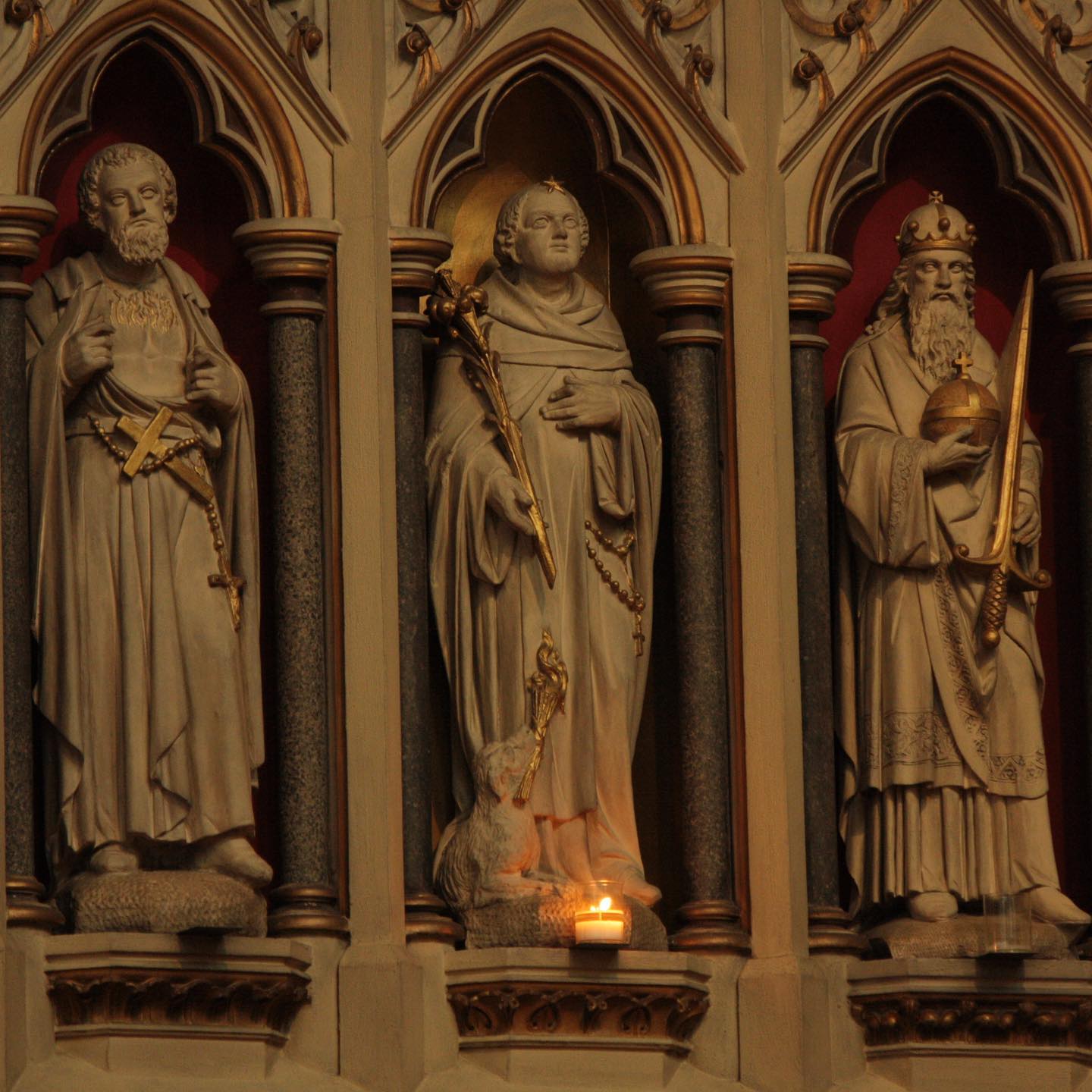
The strange thing about the great success of St Dominic as a preacher and founder of the Order of Preachers is that not a single sermon of his survives. Perhaps this is because he simply preached the Gospel, and so there was no need to record what he said.

It is a style of preaching that our own St Philip picked up from the Dominicans. He used to say that he learnt all that was good in him when he was young from the friars in Florence, and he enjoyed a close friendship with the friars in Rome for the rest of his life. They even gave him keys to the Minerva, so that he could let himself in for Matins and Compline, which he would often do, bringing a group of young people with him.

That friendship between the Oratory and the Dominicans continues today in Oxford. Most of the fathers studied for the priesthood at Blackfriars, and in October our two brothers will also start their studies there.

We pray today for all our Dominican friends on the feast of St Dominic, and especially the community at Blackfriars and the Dominican sisters who live in our parish.

#oxfordoratory

View on Instagram

Throughout the year, we make use of our “poor box” donations to support people in need both in Oxford and further from home.

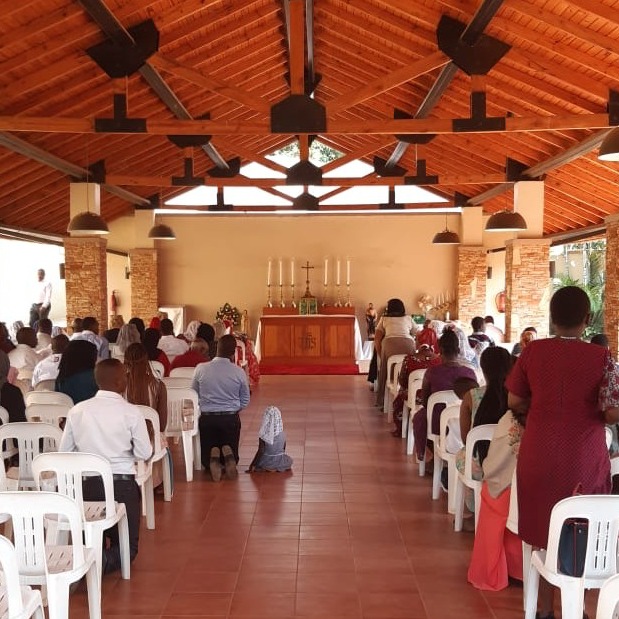
We were delighted to be able to help to pay for an altar at the shrine of St Denis Sebugwawo in Kampala, Uganda. Fr Crawford, who runs the church, sent us some photos of the newly installed altar, and writes:

“On behalf of Fr. Nouveau the superior of our Kampala house and all the faithful attached to the apostolate of the Institute of the Good Shepherd in Uganda, I wish to offer heartfelt thanks for your assistance in raising the new altar at St. Denis Sebugwawo shrine. Where we were previously obliged to offer the holy sacrifice on a low table, there is now an altar of simple but noble design, constructed in mahogany by local craftsmen. A footpace is yet to be added, but without doubt the new arrangement is more befitting the cult of the living God, and the faithful – who are absolutely delighted – are better reminded that in the temple of their hearts a pure offering must be made to Him whom angels worship without ceasing.

“Be assured of our continuing prayer for all your intentions, and please remember us before Our Lady of Oxford. I request in particular your prayers for fifteen children who will make their first holy communion at St. Denis’ on Sunday 20th August.”

#oxfordoratory

View on Instagram

“Philip knew very well that men mostly carry to the grave the vicious habits they have acquired in their youth; and hence it was, that although he was anxious to turn all kinds of people from sin, he laboured with a special zeal for the conversion and perseverance of youth, sedulously inventing ways of keeping them from offending God, and insinuating into their hearts the desire of virtue. Sometimes he left his prayers, and went down to sport and banter with young men, and by this sweetness and condescension, and playful conversation, he gained their souls.” (From the life of St Philip)

#oxfordoratory

View on Instagram

The law of praying

Sometime in the fifth century, St Prosper of Aquitaine wrote:

Let us consider the sacraments of priestly prayers, which having been handed down by the apostles are celebrated uniformly throughout the whole world and in every Catholic Church so that the law of praying might establish the law of believing.

At some point, this began to be summarised by the catchier phrase Lex orandi, lex credendi — the law of praying is the law of believing. That is to say, the prayers that the Church has developed over the centuries tell us what we are meant to believe, and are an authoritative source of her teaching. This is illustrated best of all in the most important and central prayer of the Church, the Mass. And, of all the prayers the Mass contains, none tells us so much about what the Church believes about God and herself than the Canon. The name of this section, the ‘Canon’ reflects precisely this principle. A canon is a rule or principle. The Canon of the Mass is that unchanging part of every Mass, which forms not only the rule of how the priest must pray at Mass, but also a rule of faith for all Christians. Different rites have their own Eucharistic prayers; the Roman Canon has been at the heart of every Mass celebrated in the Western Church for over 1500 years.

The Canon that we say…remains as it was in the days of Gregory I (c. 600AD), and that goes back far behind his time till its origin is lost in the mists that hang over the first centuries when the Roman Christians met together to “do the things the Lord commanded at appointed times” (Letter of St Clement c. 70AD)… The Canon stands out firm and unchanging in the midst of an ever-developing rite, the centre and nucleus of the whole liturgy, stretching back with its strange and archaic formulæ through all the centuries of church history, to the days when the great Roman Cæsar was lord of the world and the little community of Christians stood around their bishop while they “sang a hymn to Christ as to a God before day-break” (Pliny the Younger c. 100AD). Then the bishop lifted up his hands over the bread and wine, “gave thanks and glory to the Father of all through his Son and the Holy Ghost, and made the Eucharist” (Apology of St Justin Martyr c. 155AD). So that of all liturgical prayers in the Christian world no one is more ancient nor more venerable than the Canon of the Roman Mass. (Fr Adrian Fortescue)

Over the summer, we will look at a section of this prayer each week, and learn what the ‘law of praying’ has to teach us about what we believe.

August Music

Sunday 6 August Solemn Mass 11:00
The Transfiguration of the Lord
Missa Brevis in D Mozart
Gloria et honore Guerrero
Quasi cedrus Guerrero
A Jubilant March Stainer

Sunday 13 August Solemn Mass 11:00
19th Sunday of the Year
Missa Brevis Palestrina
In te speravi Lassus
Cibavit eos Byrd
Fugue in Eb BWV 552ii Bach

Tuesday 15 August Solemn Mass 18:00
The Assumption of the Blessed Virgin Mary
Missa Vidi speciosam Victoria
Assumpta est Maria Palestrina
Ave virgo sanctissima Guerrero
Toccata, Fugue et Hymne sur Ave Maris Stella Op. 28 Peeters

Sunday 20 August Solemn Mass 11:00
20th Sunday of the Year
Missa Ave virgo sanctissima Esquivel
Immittet angelus Domini Lassus
Salve Regina Esquivel
Fuga sopra il Magnificat BWV 733 Bach

Sunday 27 August Solemn Mass 11:00
21st Sunday of the Year
Missa Congratulamini mihi Guerrero
Hortus conclusus Ceballos
Sacris solemnis Anerio
Tiento 1° tono mano Derecha Bruna