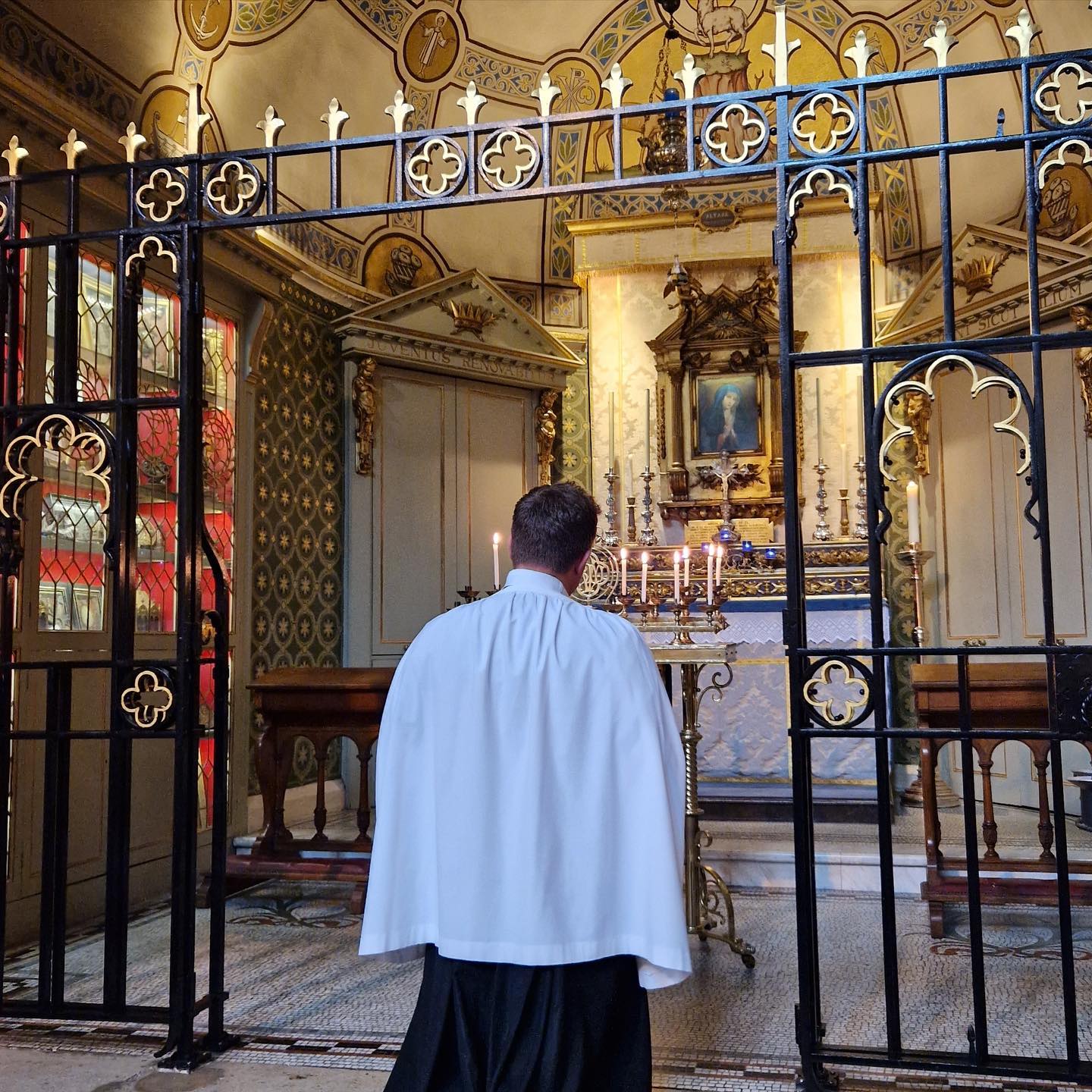
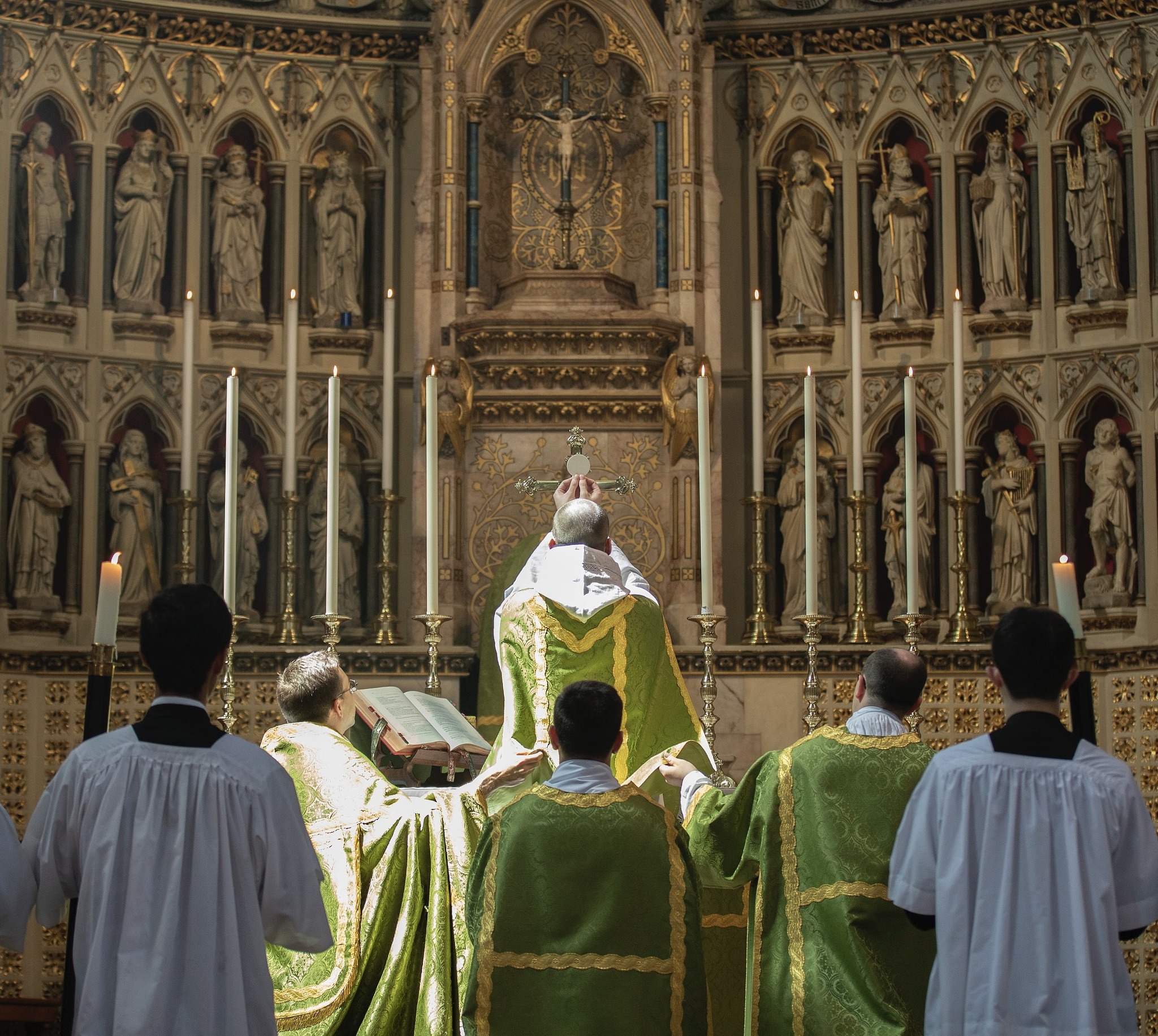
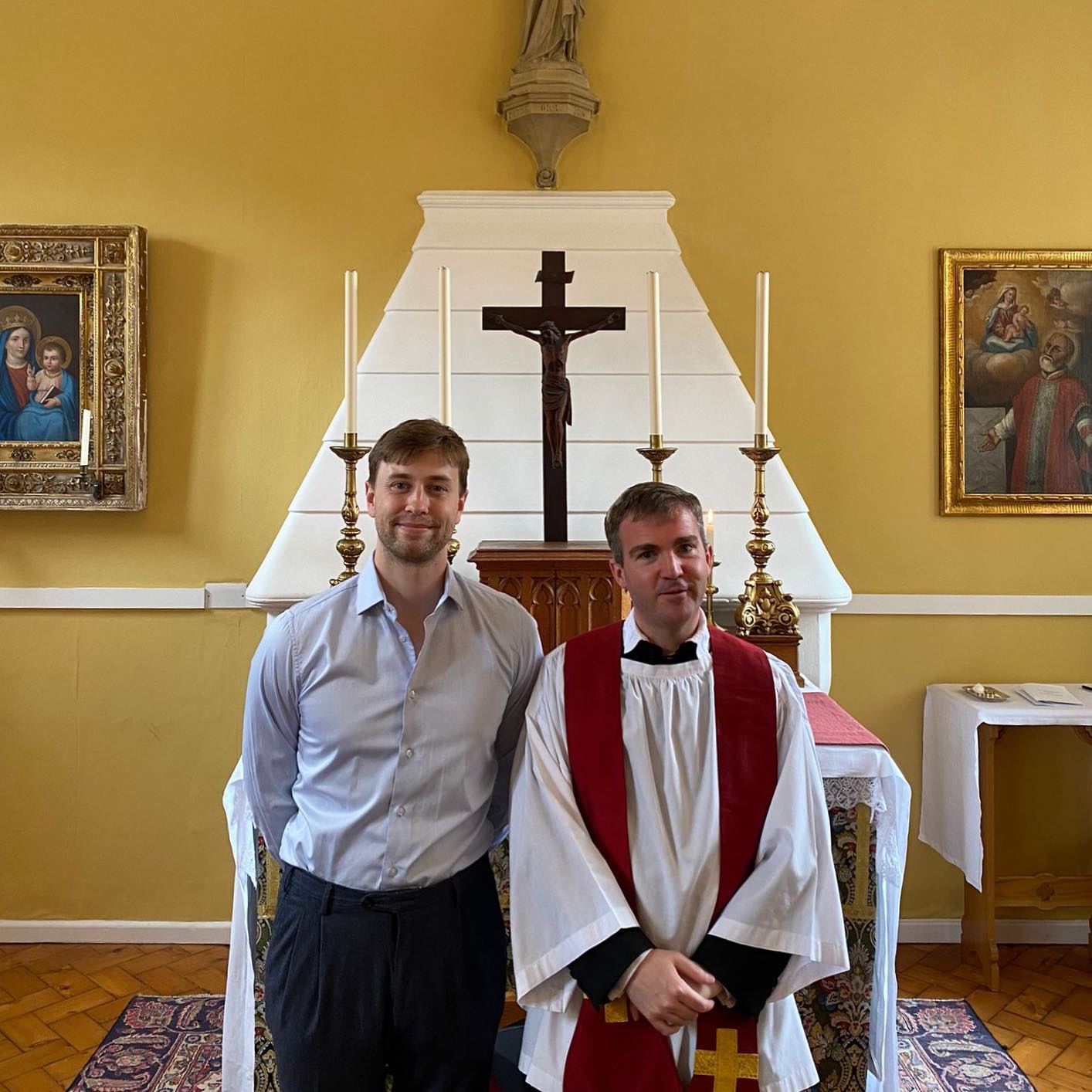
We don’t just prepare new converts to receive the sacraments for the first time. Here is Louis-Oscar who was confirmed yesterday. If you are an adult and haven’t yet received the sacrament of confirmation, speak to one of the Fathers and we’ll be happy to help you. #oxfordoratory

View on Instagram

Saying Something to Someone

Jean Guitton, the philosopher, records a conversation he had with the future Cardinal Bevilacqua, a Father of the Brescia Oratory, in which Bevilacqua was trying to define the Oratory and the work of St Philip:

He had no big plans, he had no other passion than his contact with people: in the inns, in the squares, in the markets, in the Roman festivals. He wanted to be with them in their anxieties but also in their rejoicing. In these meetings where everything is put in common, the thought and the song cease to be methodical and solitary. This will be the Oratory, which is different from the Exercise of Saint Ignatius. It was not about dialectics, even about preaching. Philip talked, he sang, he was. He did not preach: it was prayer and dialogue in its purest form. It was fire. It was the unpredictable, the Pentecost of love. It was music itself. I remember then interrupting the father to say to him: “I’m going to give a definition of eloquence which I once read, I don’t know where, but which has helped me a great deal in life. To be eloquent is to say something to someone” — “Oh!” he said, “how befitting Philip.”

To say something to someone… This certainly seems to have been the superabundant ability of St Philip — to be able truly to meet people and to speak to them — to speak to their heart cor ad cor loquitor — of the things of God, and thus inspire them in a most practical manner to embark, or embark again, on the journey towards holiness.

We can very often worry about what we are supposed to say to people when they ask us about God, our Faith, or one of those controversial topics that sets us apart from the thinking of the world at large. We worry we will say the wrong thing, misrepresent the teaching of the Church, or otherwise just make people angry or upset. Thankfully the Good Lord knows all too well our inadequacies and our failings, but remarkably he nonetheless wishes to make use of us, yes of us, to further the work of his love in this world. He reassures us “take no thought how or what to speak: for it shall be given you in that hour what to speak” (Matthew 10:19).

And speak we must. Having been sent out to preach the Good News we cannot very well deprive people of it by never speaking of God, of our Faith, of what really ought to be the love of our life. But to do so with gentleness and yet firmness in the truth, to do so with persuasion and yet compassion, all this requires the grace of God and a good deal of prudence, but so too does it require that we really do speak from a place of charity — for God whom we wish to convey to others, for others whom we wish to bring to him. We must always avoid the temptation to make speaking of our Faith a mere attempt to win an argument or to prove ourselves something to someone. In fact it can never be about ourselves, but in all things, in all our words, in all our encounters with others, ever to be pointing, and leading, to God.

To say something to someone… We have to make that real effort of course to avoid all those bad uses of our faculty to speak: gossip, judging others, putting others down, calumniating others, constant criticism, cursing…and all the other things which can come out of our mouth and make us unclean. There is a saying in Irish “Many’s the person missed the opportunity to say nothing and lost much because of it.” In order to say something, sometimes we have to know when to say nothing. Sometimes the opposite is also true — and God forbid we should ever be silent in the face of evil.

To say something to someone… When we think of the conversations we have had that day as we make our examination of conscience, it is always worth looking at how we speak, what we say, and how we say it. And do we speak of God ever? St Philip teaches us that God would have us say something to those whom he places into our life each day. To speak to their heart, to really say something to someone of the love of God. Every day God gives us the opportunity to do just that, to speak of him, to make him known, to allow his grace and his charity to be experienced by those we meet. And what is the something that this somebody is trying to say to you in this reflection? Speak of God to someone today.
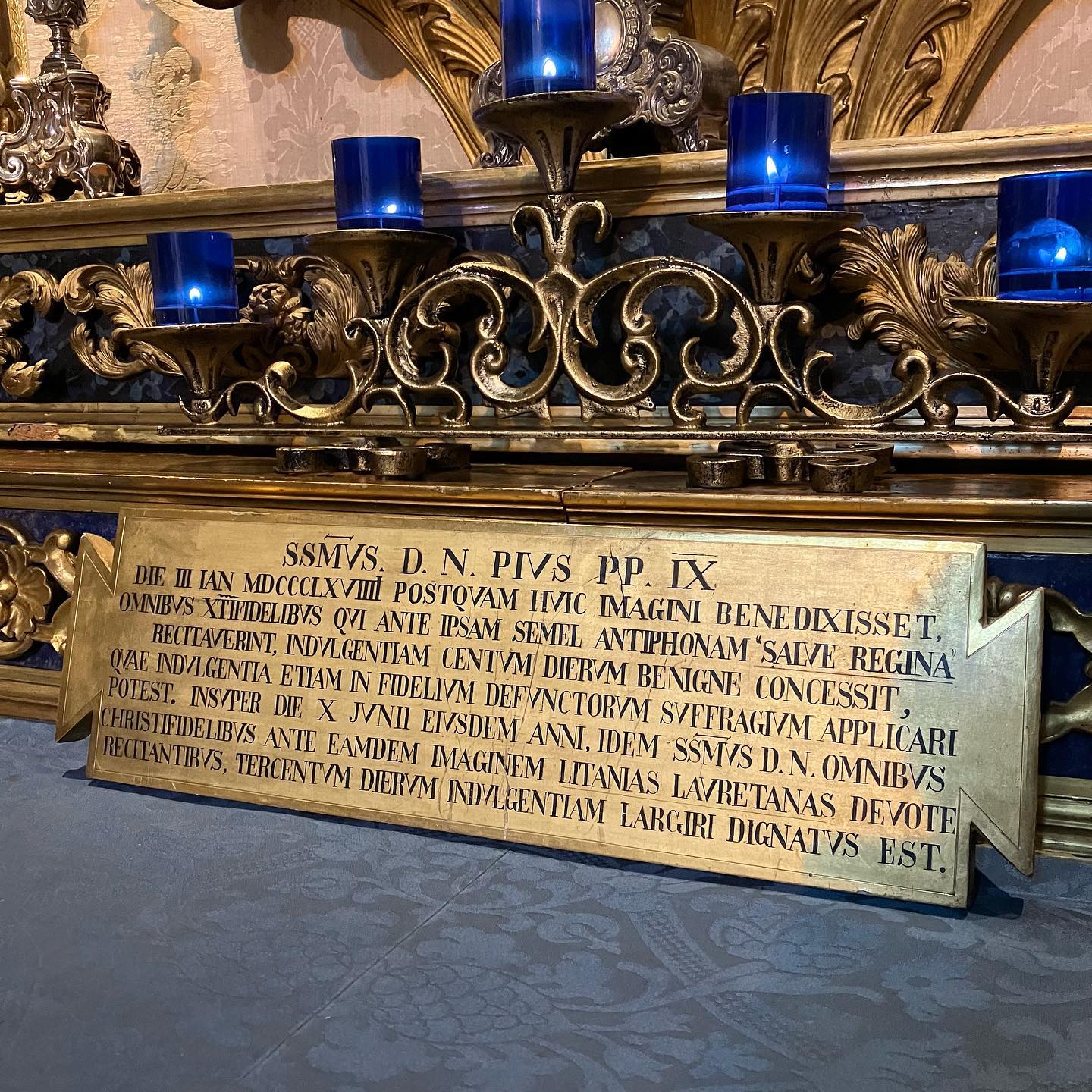
The image of Our Lady of Oxford, depicting the Blessed Virgin Mary as ‘Mother of Mercy’, was brought to Oxford in the 19th century by Hartwell de la Garde Grissell. Grissell showed the image to his friend, Pope Pius IX, who in 1869 granted indulgences to those who recited certain prayers before the image. Grissell bequeathed the contents of his private chapel to our church when he died, and the baptistery was converted into the chapel we see today to house it all.

The indulgences granted by Pius IX expired in 1969, but this year we applied to have them reinstated. We are very pleased to announce that the Apostolic Penitentiary, in the name of the Holy Father, has renewed the grant of indulgences as follows:

• A partial indulgence applicable to the Holy Souls is granted to anyone who recites the Salve Regina (Hail, Holy Queen) before the image.
• A partial indulgence is now granted to anyone who recites the Litany of Loreto before the image of Our Lady of Oxford.

#oxfordoratory

View on Instagram

As well as St Mary Magdalene, today is the feast of Our Lady of Oxford, Mother of Mercy, which falls each year on the Saturday before the fourth Sunday of July.

There are devotions to Our Lady of Oxford throughout the year on Saturdays after the 10am Mass, and there will be special devotions after the Solemn Mass tomorrow.

#oxfordoratory

View on Instagram

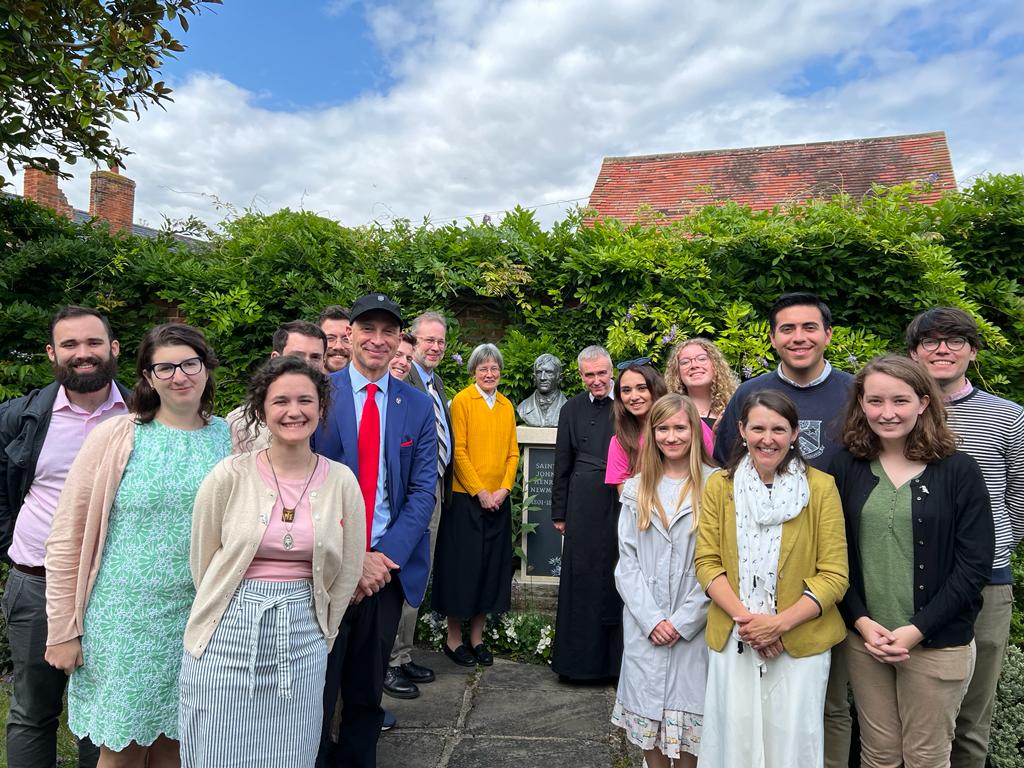
We are privileged to be so close to Newman’s College at Littlemore, where he lived and was received into the Church. The College is now in the care of the sisters of the Spiritual Family The Work. Today Fr Dominic visited the college to say Mass for a Catholic summer school on a Newman pilgrimage.

You can find the opening times of the College if you would like to make your own pilgrimage here: www.newmanfriendsinternational.org/en/visit-newmans-college-at-littlemore/

#oxfordoratory

View on Instagram

School’s out

This week our schools will break up for their summer vacation. For many students the stress of exams is over, for now, and for others they bid farewell to their familiar place and prepare for pastures new, “big school” or university. The long summer days (which seem to get much shorter as one gets older) stretch long before them. No doubt amongst the valedictory addresses and end of year sermons, the students — eager for their recess — will be reminded that we never stop learning, that our whole life is a school room. And so it is.

In the Gospels, the Lord exhorts us to become like little children. We know him, of course, to mean in the simplicity of our trust in God, in our faith, in the dependence we must have on him. But it must surely mean something else — emulating their sense of wonder. It is a classic scene when children are taken on a day out to a castle or a cathedral. Unlike their grown-up supervisors, their first reaction is to look up, wide-eyed and wide-mouthed in amazement at a building that dwarfs them. Being awestruck, giving in to wonderment, being amazed is one of the loveliest experiences of life. It makes our learning at school come alive and so often we leave it behind when we move on up the classes and out the other side.

St Benedict, in his Rule for Monks, describes the monastery as being a “school of the Lord’s service.” Here the monks learn to serve the Lord by prayer and works and learn to serve one another in charity. If we want to see the fruit of that particular school we need only look to many of our great cathedrals or the great abbeys of Europe to see that in their architecture, their libraries and their industry great things came out of that learning. And what about us?

“The monastery” in St Benedict’s rule could easily stand for the life of the Christian wherever we finds ourselves. Our life too should be a school of the Lord’s service and we must never give up on that learning that runs deep, that changes us, that acquaints us with the things of God and, most importantly, prepares us for eternity. But do we often give in to amazement? God works in our lives in ways that, as the scriptures tell us, are greater than we can ask or imagine, and they are there for us to discover. If only we could recover the glee and delight we once had as we lifted a log to find a beetle or followed a maze and got lost and followed it again, but in the real things of life, in our life with God.

Remembering St Philip’s words that, “the great thing is to become saints,” perhaps we could begin to characterise our life, as he did, as that great adventure, searching for and learning in the virtues so as to prepare us for heaven. Wouldn’t it be something if we allowed ourselves to be amazed by that search.

School might be out for summer for the kids, but for us it just begins again.


These reflections are sent out each Wednesday to all those on our mailing list. Click here to sign up to our mailing list, and receive our Sunday E-newsletter and these reflections straight to your inbox.

Is God my God?

When we first learn how to go to confession — whether that was as an adult or a child — we need to use an examination of conscience. We work through a list of questions designed to jog our memories and that remind us of our sins. And if it has been a long time since we last went to confession, we might also find such an exercise useful, since we may well have forgotten things that we want to be sorry for.

But generally speaking, if we confess regularly, we are less likely to need these written examinations. We know what our sins are, because they tend to come from our own particular collection of temptations that we happen to struggle with personally. And if we form the good habit of examining our conscience at the end of each day, we have an ongoing awareness of our own strengths and weaknesses in living the Christian life.

There are also other kinds of examination of conscience that aren’t necessarily meant to lead into sacramental confession. The following set of questions was composed by the Dominican priest Fr Vincent McNabb (and is included in our new prayer book). They are not so much about highlighting sins to be confessed, but identifying areas we need to work on as we grow closer to God. No matter how holy we become, all of us will still be able to say that we could love God more. These questions, answered prayerfully, should help us to do that.

Is God my God?
Or is he only one amongst many gods, vulgar or sinful, whom I strive to serve?

Is God the Sovereign of my mind?
Is the thought of God my sovereign thought?

Do I believe in God’s Word more than any other word—more than the beloved word of my friend, the imperative word of my country, the persuasive word of Art and Science?

Do I worship God, in body and spirit, at morning and at night, by kneeling down to pray?

Do I pray? Or do I merely say prayers when with but slight effort of mind and will I might pray?
Is it my lips only, or also my heart, that says: ‘Hallowed be thy name’?
Do I understand this mystic prayer when I say it—or am I glad not to understand?

Do I dwell with ease—or even joy—on the words ‘Thy will be done’?
Do I hurry over these words lest God overhear them and take me at my word?

Do I trust God?
Do I fear that he may hurt me if I give myself wholly to his keeping?

Do I expect and ask him to do for me what he has already given me power to do for myself?
Do I thus ask God to serve me, if not in my sins, at least in my life?

Do I love God?

Is God at home in my heart?

Am I at home with God?
Am I always at home to God?
Does God dwell in my heart as in his own house, which he may enter and leave at will?

Have I cast him forth from my soul by any wilful sin?

Have I been as much at ease after my sin as before?
Or have I been restless until, my sin confessed and forgiven, I have found rest in God?
Are the Sacraments of Confession and Holy Communion to me the outpourings of Jesus Christ’s most precious Blood, to the cleansing and nourishing of my soul?

Do I often thank God, through Jesus Christ, for these and countless other gifts which have made the Church the King’s Wedding Feast to me?

Do I still cling to this earth with its pleasant sights and sounds, or are my eyes straining to catch sight of the City of God?

If at this moment Death should knock at the door of my soul, should I treat its summons as an interruption, or an impertinence, or even a cruelty; or should I welcome it as a glad invitation to God’s Wedding Feast?


These reflections are sent out each Wednesday to all those on our mailing list. Click here to sign up to our mailing list, and receive our Sunday E-newsletter and these reflections straight to your inbox.

In the Gospel this Sunday, we heard Our Lord say: “Come to me, all you who labour and are overburdened, and I will give you rest.” Jesus calls us to come to him especially in the Blessed Sacrament.

#oxfordoratory

View on Instagram

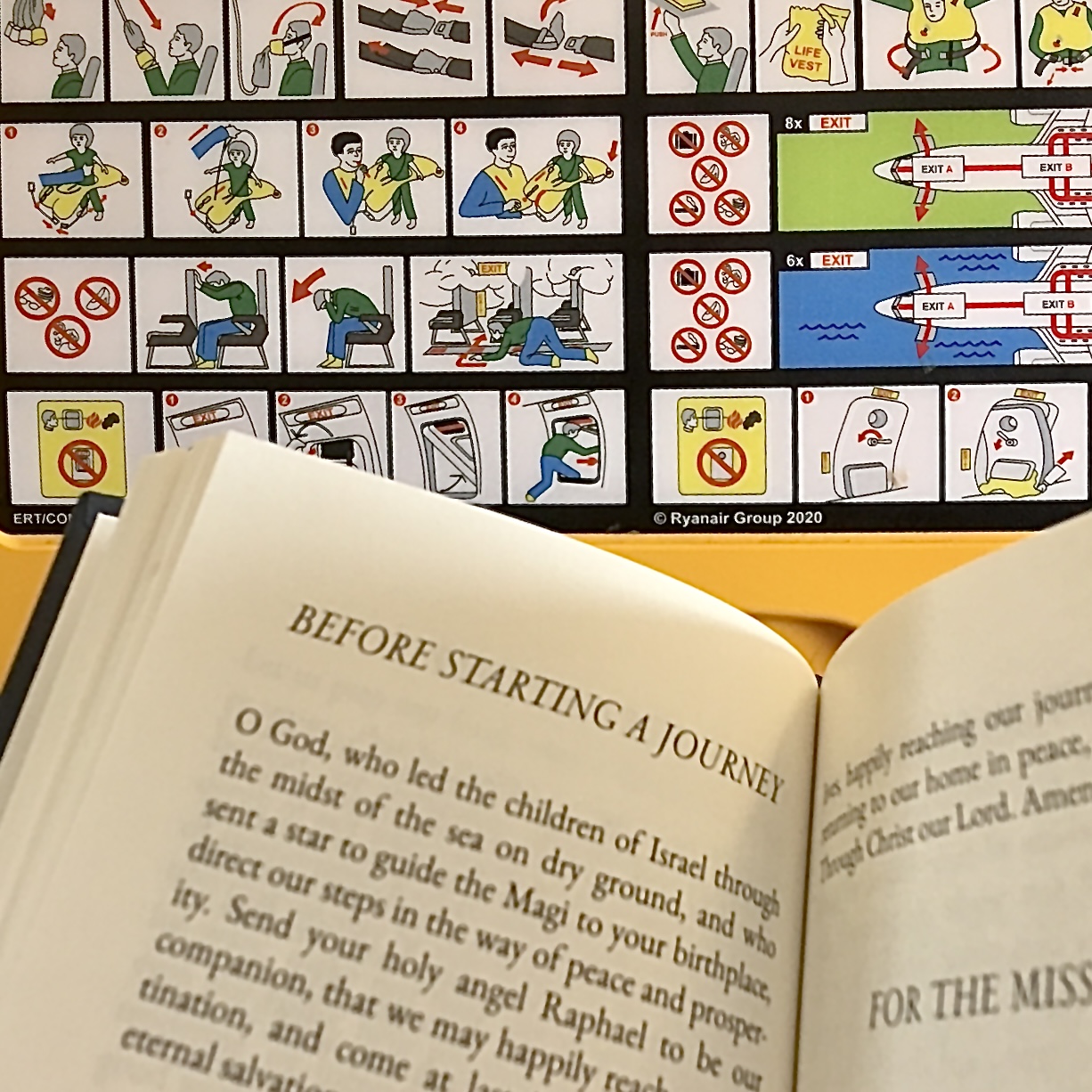
If you are travelling this summer, don’t forget to pray before you go!

There are some beautiful prayers that form part of the traditional Roman “Itinerary” (the prayers said when setting out on a journey) in our new prayer book.

O God, who led the children of Israel through the midst of the sea on dry ground, and who sent a star to guide the Magi to your birthplace, direct our steps in the way of peace and prosperity. Send your holy angel Raphael to be our companion, that we may happily reach our destination, and come at last into the haven of eternal salvation.

O God, who preserved Abraham your servant unhurt through all his journeys when you called him from his homeland, we beseech you to protect also us your servants. Be our support in our leaving, our comfort on the way, our shade in the heat, our shelter in rain and cold, our rest in weariness, our fortress in danger, our staff on perilous slopes, and our harbour in stormy seas, that with you for our guardian and guide, we may be kept safe from all harm throughout our lives, happily reaching our journey’s end, and returning to our home in peace, safety and joy. Through Christ our Lord. Amen.

The use of airline safety images is optional when reciting this prayer. This photo was sent to us by a member of the Oratory family. Share a photo of your prayer book being used by tagging it with #oratoryprayerbook.

Order your copy here: https://tinyurl.com/opb-buy

#oxfordoratory

View on Instagram