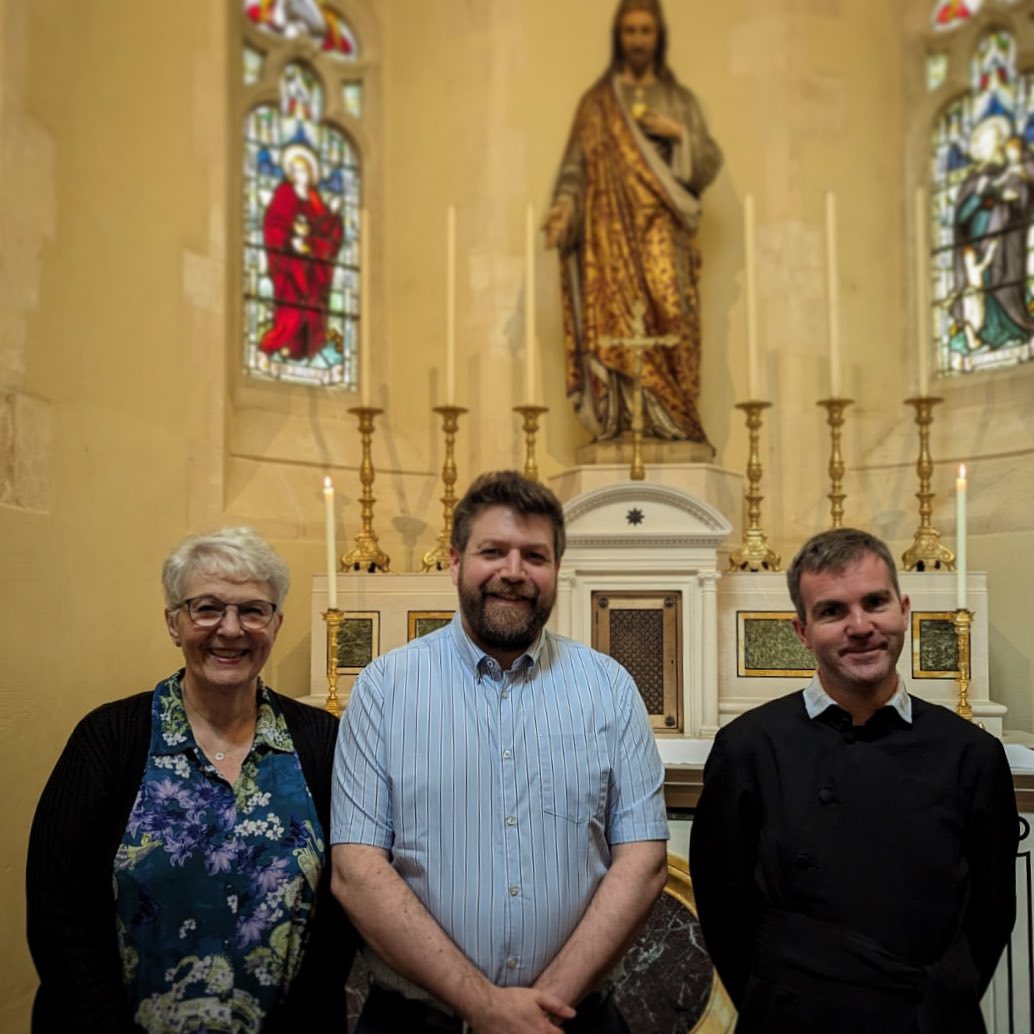
Welcome home to James who was received into Full Communion with the Catholic Church this week! #oxfordoratory
Welcome home to James who was received into Full Communion with the Catholic Church this week! #oxfordoratory
The author of the Epistle to the Hebrews spoke of a ‘cloud of witnesses’, by which he meant the martyrs, both of the Old Testament and which his readers must also have understood to refer to those among them who were suffering for Christ. Those who have given witness by the shedding of blood for the Faith have been the constant glory of the Church, since the day Paul stood guard over the cloaks of those responsible for the stoning of the deacon Stephen.
Why have there always been martyrs? Why do they hate Christians so much? The message we preach is that God loves us, that he came to be one of us, that he remains present among us, in order that we can love one another. Why is that message simply not ‘Good News’ to so many, and why throughout the Church’s history have they felt it necessary to resort to such extreme violence to stop us believing this and sharing it with others?
The most savage of persecutions have been, and still are, against our teaching that the Lord loves the world so much that he became one of us — the Incarnation. Even in our own country, the persecution was largely around the idea that our Lord wants to remain among us, to be truly present in the Mass, coming to us in Holy Communion. The persecution of Catholicism in these isles was, I believe, the longest ongoing persecution of the faith, causing sad divisions among our countrymen in the sixteenth and seventeenth centuries. But it was the cause of much holiness too, since there were many men and women who clung to the true faith with amazing tenacity and equal charity. Among these people are the great names of souls like St Thomas More and John Fisher, Edmund Campion, Ralph Sherwin, Margaret Clitherow and Margaret Pole. But there were others also, whose names haven’t really made it to the history books, such as the men whose memory we keep today, the anniversary of their martyrdom in Oxford on 5 July 1589. These are: Blessed George Nichols and Richard Yaxley, both priests, who died together with Blessed Thomas Belson, a gentleman, and Humphrey Pritchard, a bartender. Unlike the others, Blessed Humphrey was not a ‘university man’, and when taunted during his trial in Oxford by some learned divines, who told him that he did not know what it was to be a Catholic, he replied that he knew what he was to believe and that he would willingly die for so good a cause. They were hanged, drawn and quartered.
Jesus did warn us that his coming would bring division and indeed it has. It is a tremendous pity that the Mass, which is the sacrament of Unity, has been — even in the household of faith — something around which the divisions have been most vehement, whether it be theological or liturgical differences of opinion, where truth is boiled down to personal preference. What happens at the Mass is what matters above all, that Christ comes to us, that we plead his sacrifice for the sin of the world and he is given to us in Holy Communion, the Bread of Angels and Food for the Journey. The writer of Hebrews tells us to fix our eyes upon Jesus, and never to lose sight of him. This is advice our martyrs adhered to as ‘they ran with perseverance the race that was set before them’.
Although things look dark, we still have Our Lord. We have his presence in the Blessed Sacrament and we are able to come and pray each day in an open church. Moreover, we have the teaching of Christ, the Good News of God’s saving and merciful love, with a mission to pass it on to others, preaching as love knows how, by kindly words and virtuous life (Fr Faber).
It would be very easy to give in to the prevailing spirit and become discouraged, but we have the example of those men whose feast we keep today, our Oxford City Martyrs, whose perseverance and charity are a wonderful inspiration and example for us.
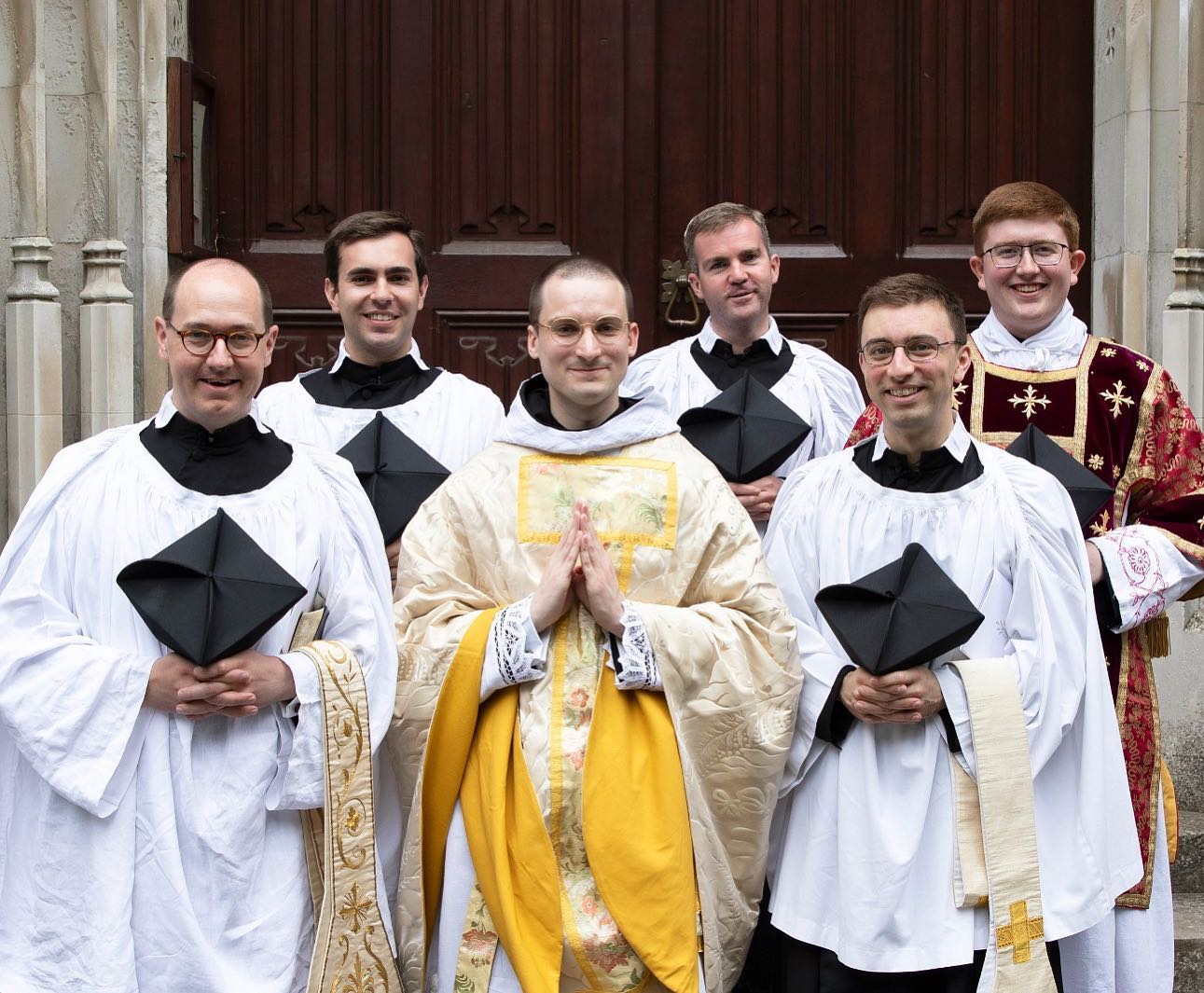
Congratulations to Dom Stanislaus on his ordination to the priesthood yesterday at St Michael’s Abbey, Farnborough!
We look forward to welcoming him back to celebrate the Solemn Mass in our church on Sunday 9 July at 11am.
#oxfordoratory
Sunday 2 July Solemn Mass 11:00
13th Sunday of the Year
Missa Tu es Petrus Palestrina
Sicut in holocaustis Palestrina
Laudibus in sanctis Byrd
Final from Organ Symphony No. 6 Widor
Sunday 9 July Solemn Mass 11:00
14th Sunday of the Year
Missa Octavi toni Lassus
Simile est regnum caelorum Guerrero
Beati omnes qui timent Dominum Purcell
Prelude in A minor BWV 543i Bach
Sunday 16 July Solemn Mass 11:00
15th Sunday of the Year
Mass for Four Voices Byrd
Ad te Domine levavi de Monte
Ave verum Byrd
A fancy Byrd
Sunday 23 July Solemn Mass 11:00
16th Sunday of the Year
Missa simile est regnum caelorum Victoria
Tota pulchra es Vals
Salve Regina Palestrina
Fugue sur le nom d’Alain Op. 7ii Duruflé
Sunday 30 July Solemn Mass 11:00
17th Sunday of the Year
Missa Quarti toni Victoria
Exaltabo te Domine Lassus
Tantum ergo de Severac
Prelude and Fugue in C BWV 547 Bach
Tomorrow we celebrate the feast of the two great pillars of the church, Peter and Paul. They were very different men from very different backgrounds. Peter was a fisherman from rural Galilee. Paul was a learned Pharisee from the university city of Tarsus. Peter’s first language was Aramaic; Paul’s first language was Greek. Peter knew Jesus from the time of his baptism and was with Jesus until the time of the Lord’s passion and death; Paul only ever met the risen Lord, in that famous incident, his conversion, on the road to Damascus.
For all their differences, they had that which is most important in common. Both of these men found themselves at odds with the Lord. Jesus called Peter “satan”, an obstacle in his path, when the Apostle tried to persuade the Lord away from his cross and passion — and then Peter would go on to deny his Master publicly three times. Paul had a hand in the death of the first Christian martyr, St Stephen, and violently persecuted Christ’s followers, and in doing that persecuted Christ himself.
And yet, in each case, it was Jesus who had the last word. Their resistance to the Lord did not prevent him from working powerfully through them. Peter was chosen to be the leader of the twelve, the rock on which Jesus would build his church. Paul was chosen to be the great apostle to the Gentiles, to take the faith out beyond Israel to the whole world.
They were very different people and the Lord worked through each of them in different ways. But they were united in one faith and in love for the Lord and for the little community of those who followed the Lord. They were certainly united in death: a very early tradition recalls that both were executed in Rome during the Emperor Nero’s persecution of Christians after the great fire of Rome.
The feast of Saints Peter and Paul reminds us that the way the Lord works through us is unique to each one of us. We each have our part in the great story of salvation, and each have our place in the great family of God which is the Church. The feast also reassures us that our many resistances to the Lord will not be a hindrance to his working through us. Peter, who denied the Lord, and Paul, who persecuted the Lord, would become his greatest servants and Apostles, and the very foundation of the Church. Our failings, even our greatest failings, do not define who we are. St Paul would go on to say, ‘the Lord’s grace toward me has not been in vain’. The Lord’s grace towards us in our weakness and frailty and our waywardness will never be in vain if we continue to open ourselves to the workings of that grace and the path that the Lord has prepared for us. May St Peter and St Paul pray for us, and for God’s church, as we each play our part in the preaching of the Gospel, the growth of the flock of Christ, and the building up of the kingdom.
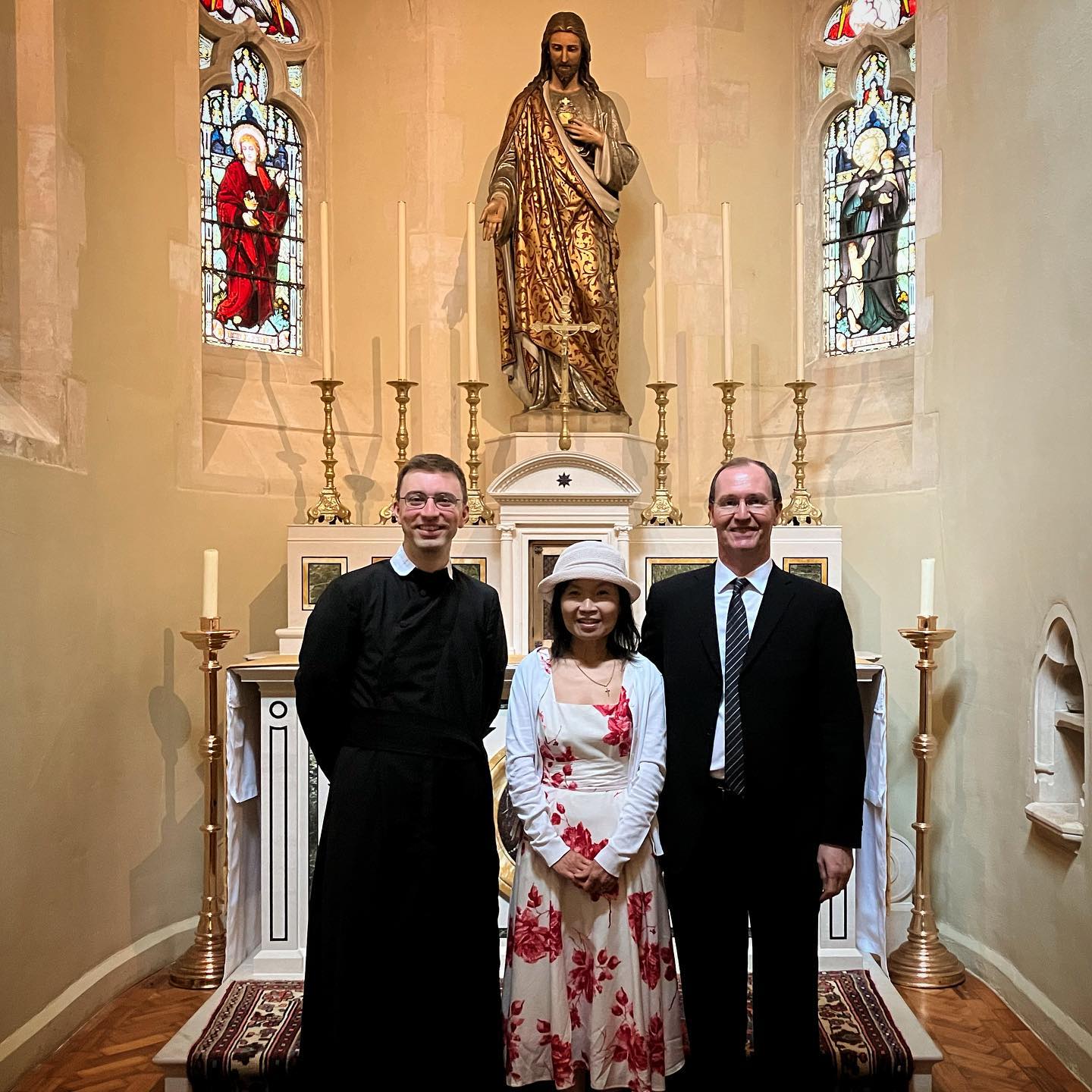
Congratulations to Andrew and Nina, baptised this morning!
Today, the birthday of St John the Baptist, is a fitting day to baptise, and not just because he is famous for baptising people. His birth marks the end of the Old Testament and the beginning of the New. Today is about looking forward to the future. Baptism can sometimes feel like an ending after the period of preparation and catechesis, but it is of course only the beginning of the Christian life. The big work lies before us. As St Philip used to say, “The great thing is to become saints.”
#oxfordoratory
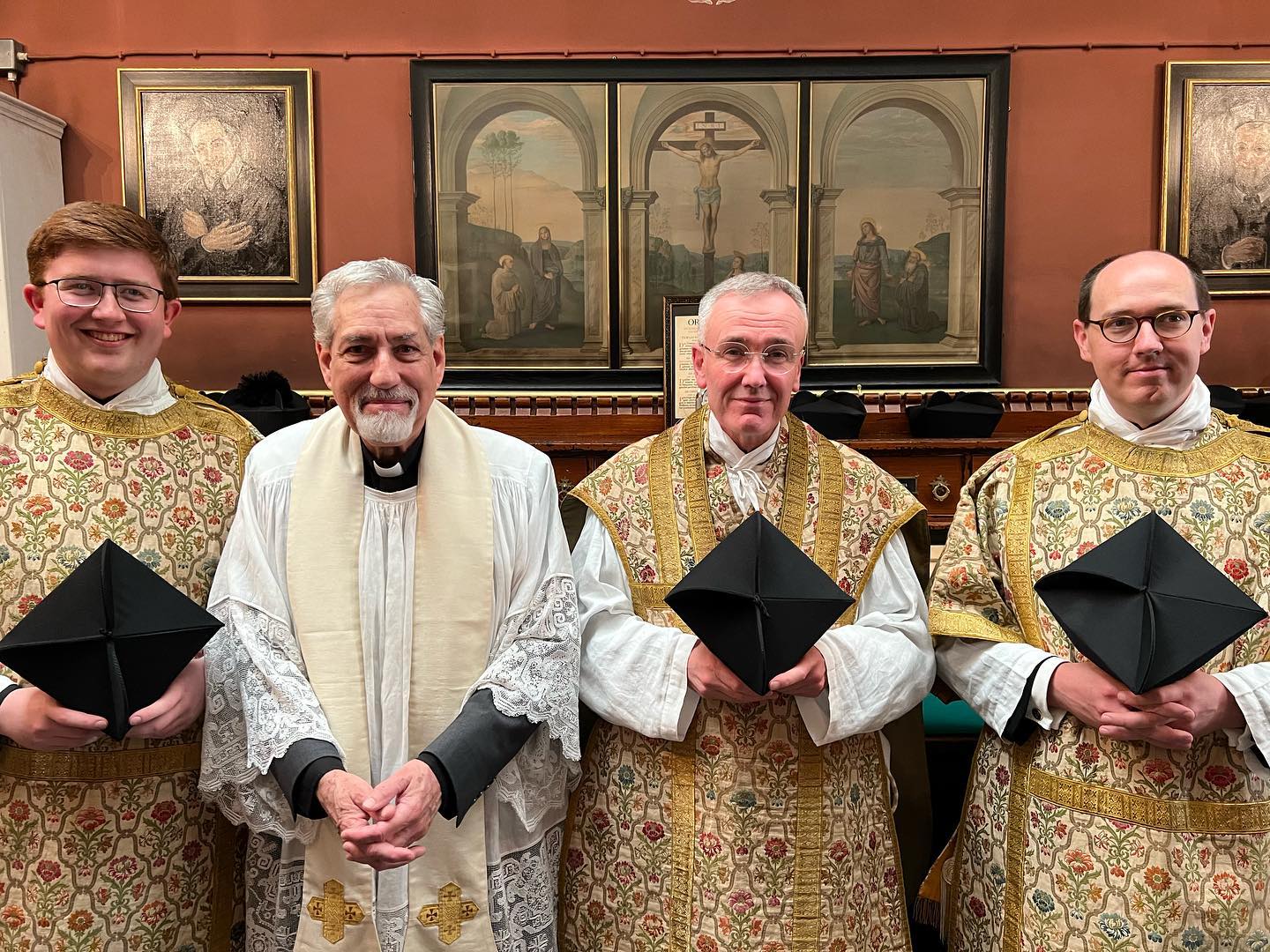
Yesterday we welcomed Fr William Pearsall of the Society of Jesus to preach for the feast of St Aloysius.
“What Aloysius did is what many saints have done — many who are condemned for not being useful. They explored the frontiers of the spiritual life. They were heroic in the sense that those who went to the North Pole or the South Pole or climbed the highest mountains, they were heroic… They were heroic because they were living with the discovery of God and how the limits between nature and grace will always be an expanding horizon.”
St Aloysius, pray for us!
#oxfordoratory
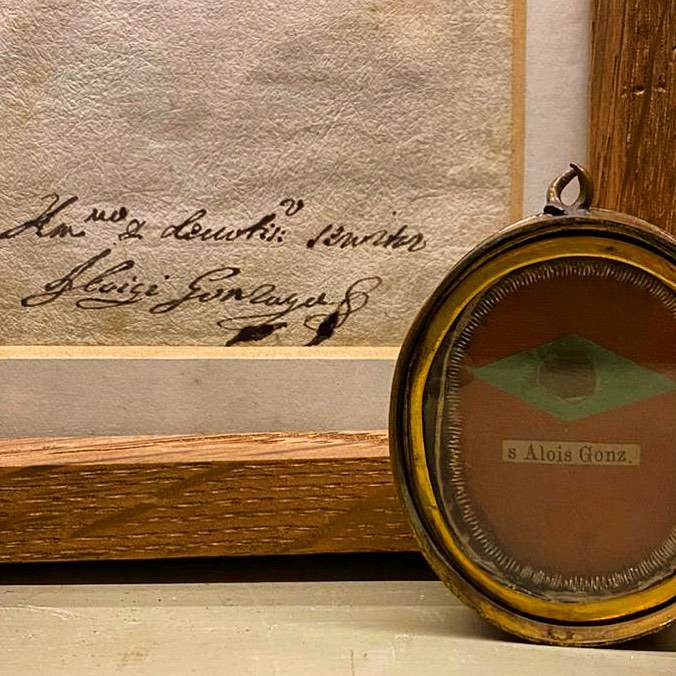
Happy feast of St Aloysius!
Two relics of his are displayed this month in our relic chapel, including a letter bearing his signature.
#oxfordoratory
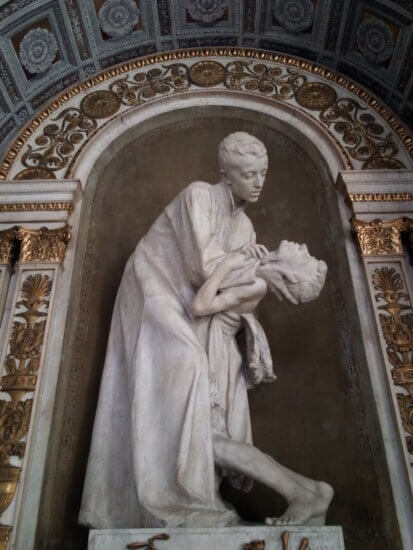
Today we celebrate the great solemnity of the patron of our church: St Aloysius Gonzaga of the Society of Jesus. St Aloysius is, together with St Gabriel Possenti, patron of young people, students, and seminarians and thus was a natural choice as patron for our church in this university city. He is also the patron of our parish school and we entrust to his loving intercession all our children who are able to learn the love of God from his example. We have his shrine in the chapel of Our Lady of Oxford, his statue is there on the reredos, and his initials guide our eyes towards his heavenly home as we look up at the sanctuary ceiling. Our patrons are important — St Aloysius has been given to us in this parish by God, through his Church, to watch over us in a particular manner, to intercede for all those who live and worship here, and to encourage us in our own quest for holiness.
Born the eldest son of the Marquis of Castiglione, St Aloysius seemed destined for a life of political intrigue and secular affairs, but, as with St Ignatius before him, it was the lives of the saints that really captivated him and placed in his heart the desire to strive for something better. This was not some childish caprice; he had seen the reality of life at court with its violence, frivolity, and degradation of human dignity, and desired not only to turn his back on it, but to embrace with all his heart a life given wholly to God. He began in earnest, adopting severe penances and teaching the local children their catechism. Hearing about the missions of St Francis Xavier, he set his heart on becoming a Jesuit — much to the horror of his family.
Eventually, having not overcome family opposition but at least its concrete obstacles, and having renounced his rights of inheritance, he entered the Jesuit novitiate in Rome in 1585. He had much to learn and much to which to adapt himself, but whatever he had to do he simply did it with all his heart — trusting in the sure knowledge that God was at work. Would he have met St Philip in Rome? Concrete evidence is hard to find, though these two saints of Rome are often depicted in art. We know they had mutual friends and these no doubt would have told them of Rome’s Third Apostle and of the holy Jesuit novice. One can imagine St Aloysius on a novitiate walk popping in to the Chiesa Nuova to see Mister Father Philip whom all Rome spoke of and revered or of St Philip blessing a crowd of passing Jesuit novices and knowing the heart of one of them that would see them both in glory.
St Aloysius’ real work in Rome was that which St Philip had embarked upon at the beginning — the care of the sick and the destitute. When plague broke out he volunteered to go with the other novices to pick people off the streets, to wash them, to prepare them for the sacraments and care for their souls. At first, he admitted to his director St Robert Bellarmine, this revolted him, but he soon learnt to see the image of Christ in these people, and to love them, not only in caring for them, but in seeing Christ in them. Never one to enjoy good health, Aloysius himself fell ill of plague, and died at the age of 23 on 21 June 1591, just a few years before St Philip’s death.
When we look at images of St Aloysius we normally see a rather pale young man who looks like so many other sickly young saints, distinguished perhaps only by the great ruff that he wears about his neck. But he was more than that. He was a young man who bothered about God and thus about other people. He was not yet in his mid-twenties, when he had discovered that real freedom comes from serving God with all ones heart; that Christian love has to be lived in the real, strength-sapping, heart-breaking, service of others; that there is joy in taking people off the streets, washing them, bandaging their wounds and restoring them to the dignity that is theirs as children of God.
The image attached to these words is a depiction of St Aloysius in Milan in the Chiesa di Santa Maria presso San Satiro. The saint looks rather weak and malnourished, but what strength he has is used to hold up a man who is either dying or dead, with St Aloysius pressing the Cross to him and holding the man’s head up with his hands. The look on St Aloysius’ face is one, simply, of love — of love for God and neighbour, and of joy found in bringing the love of God to others. How much this young man, St Aloysius, still has left to teach us…
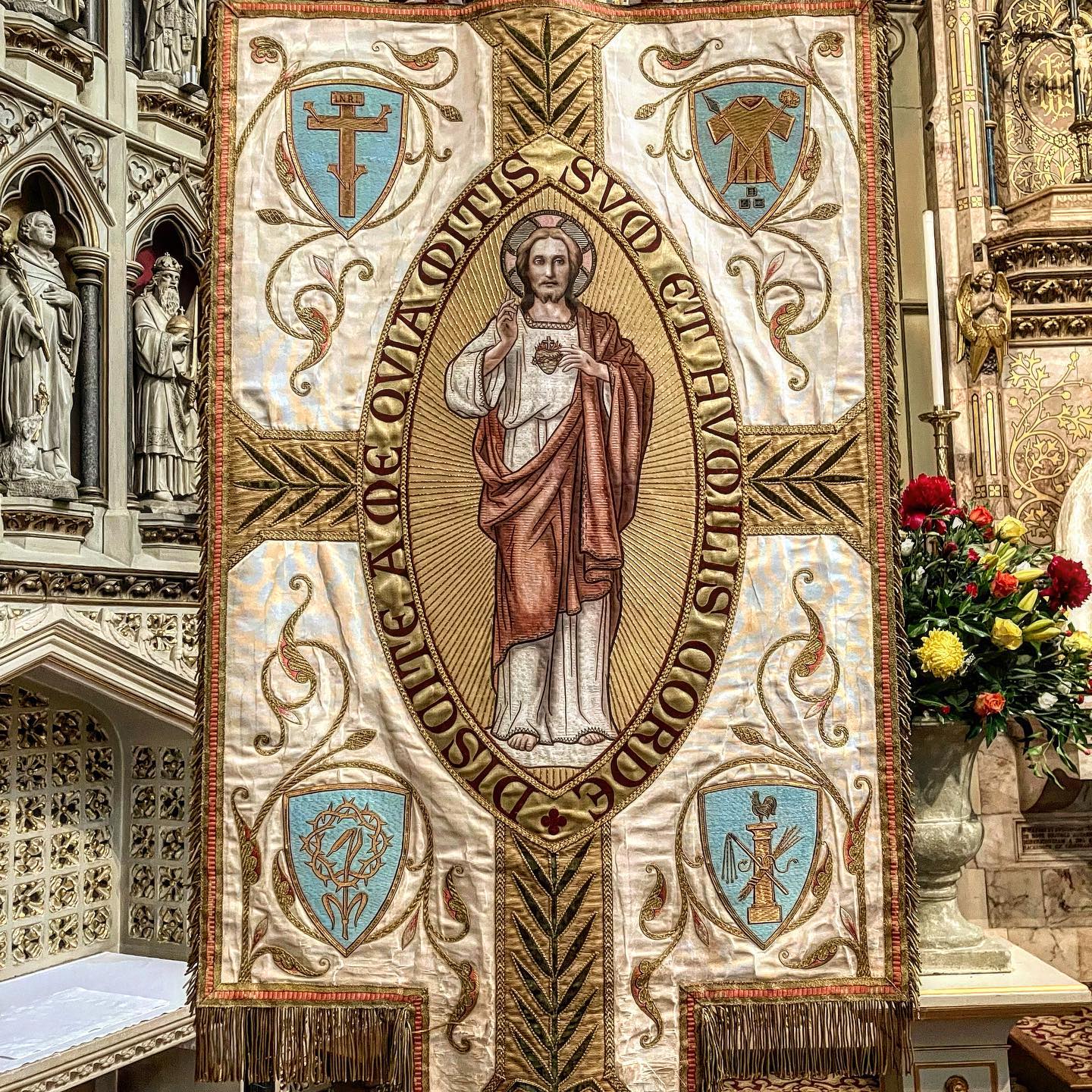
Heart of Jesus, all-holy! Fountain of all blessings, I adore thee, I love thee, and with a lively sorrow for my sins, I offer thee this poor heart of mine. Make me humble, patient, pure, and wholly obedient to thy will. Good Jesus, grant that I may live in thee and for thee. Protect me in the midst of danger; comfort me in my afflictions; give me health of body, assistance in my temporal needs, thy blessing on all that I do, and the grace of a holy death. Amen.
#oxfordoratory