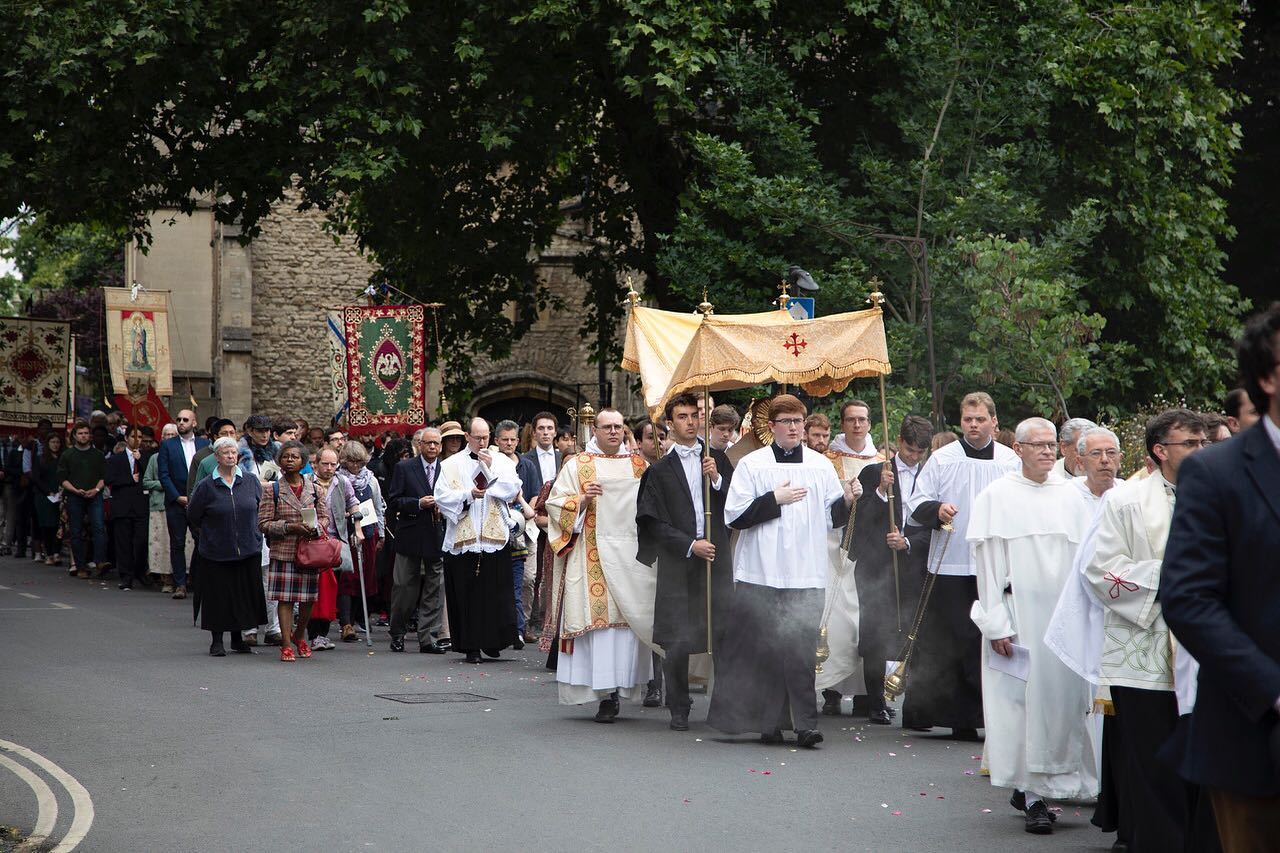
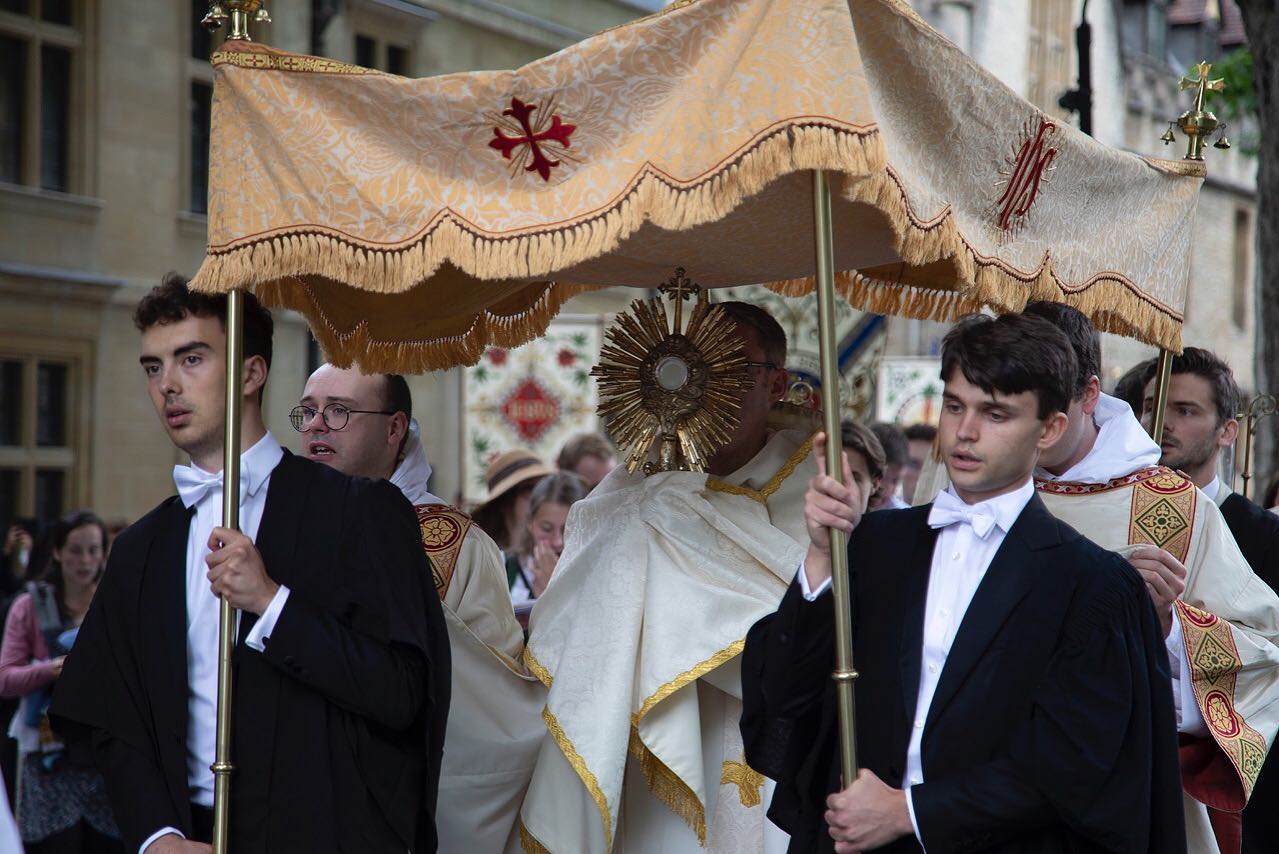
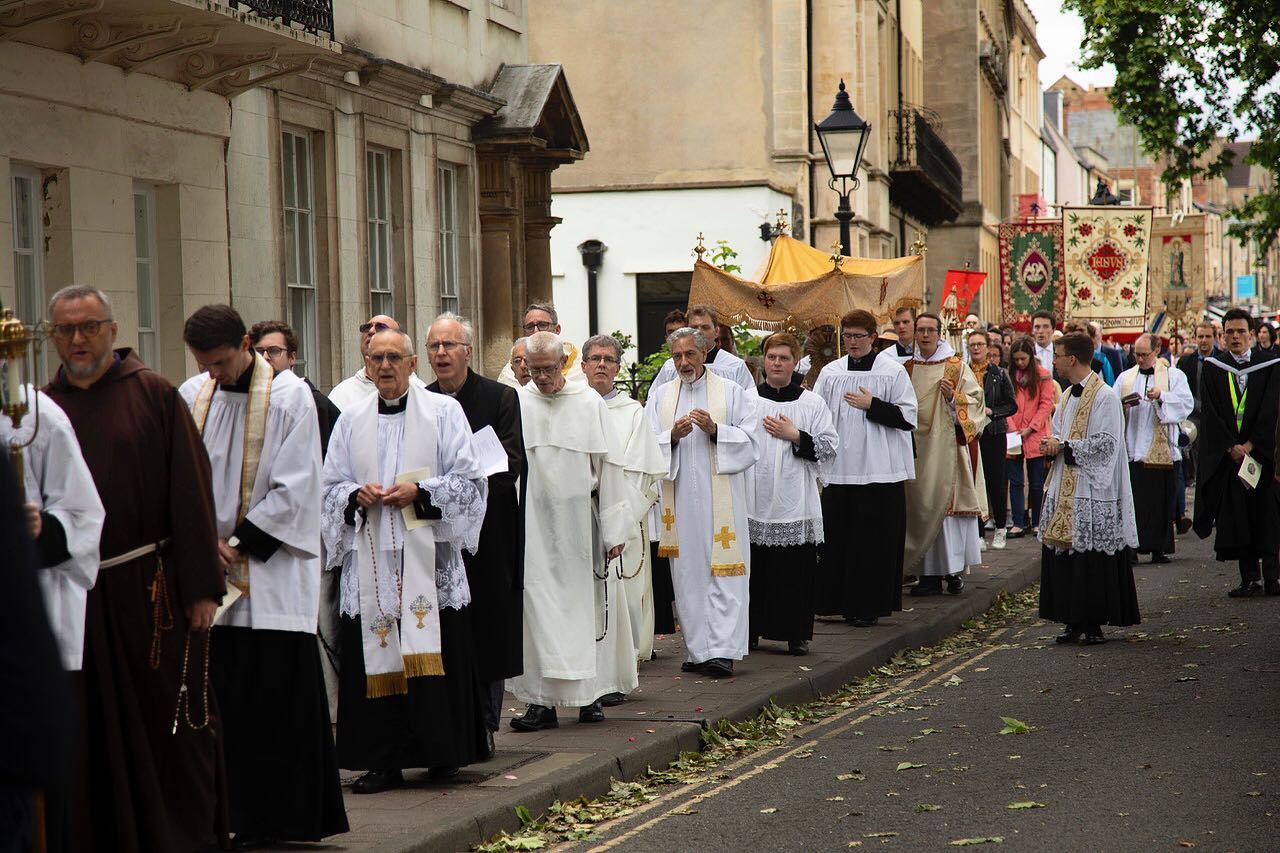
We were joined by Catholics from all the churches and religious houses in Oxford.
#oxfordoratory
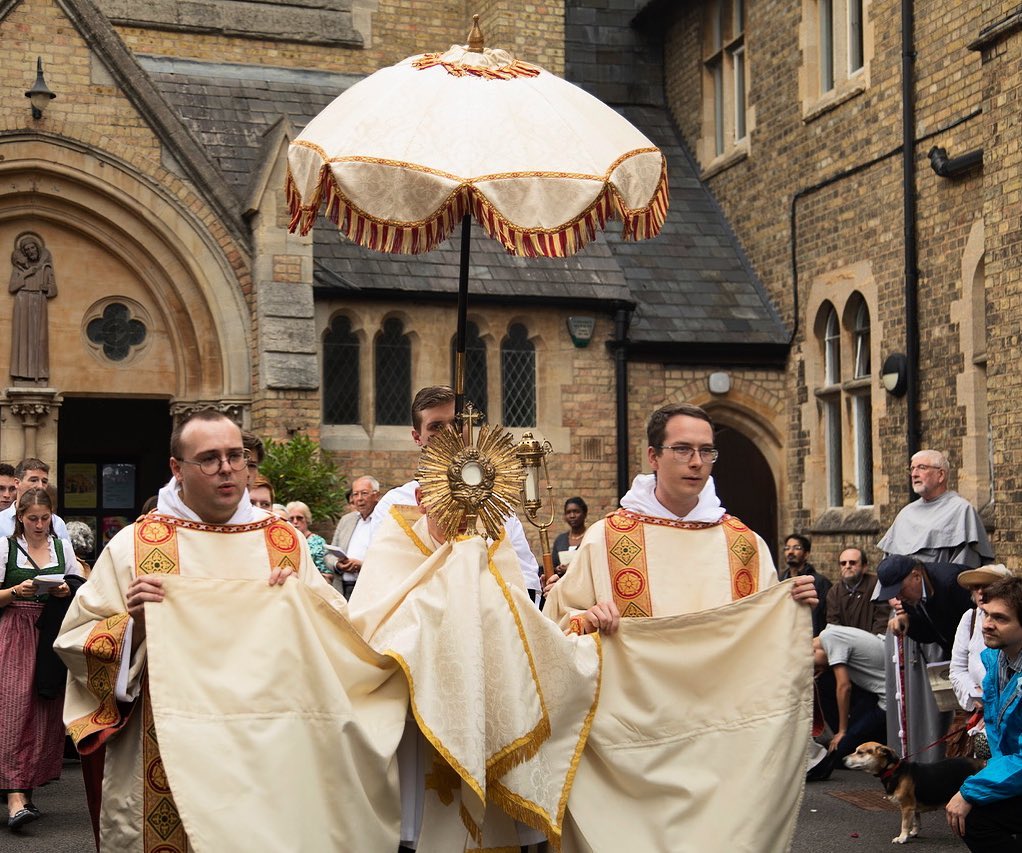
Our Corpus Christi procession returned on Sunday after a two year break.
#oxfordoratory
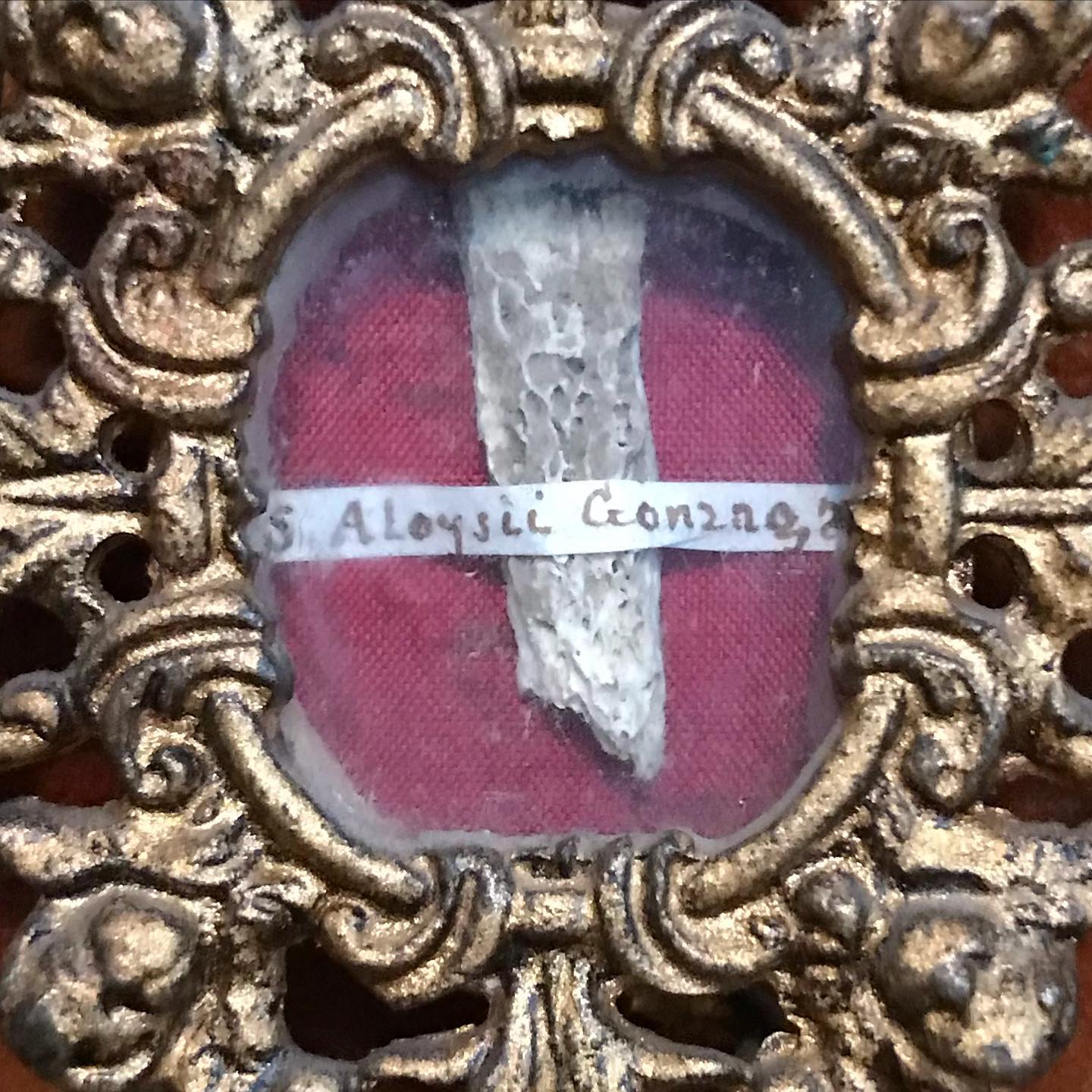
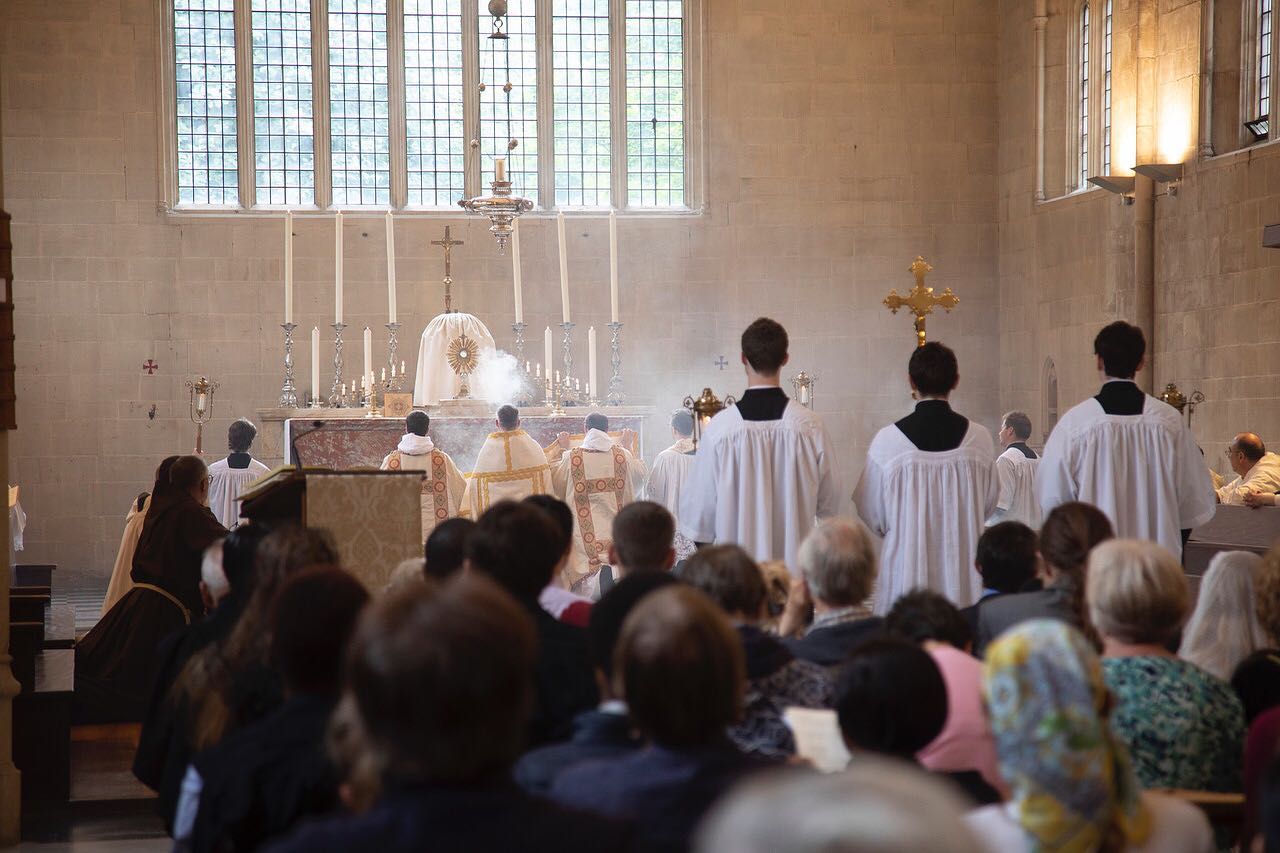
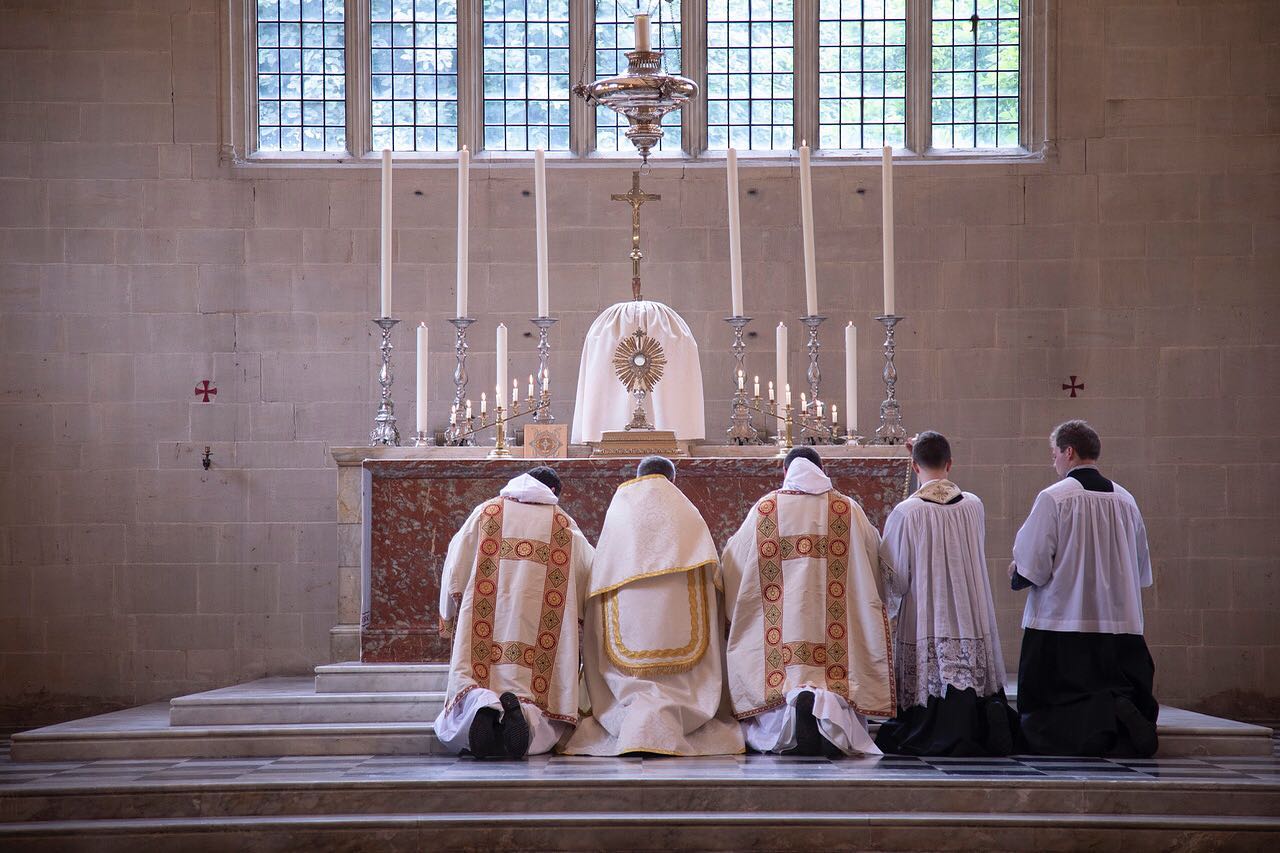
Today is the solemn feast of St Aloysius, the patron of our church.
As well as this relic of his displayed on our sanctuary, his relics were also placed in the high altar when it was consecrated, together with a relic of St Alban, whose feast we celebrated yesterday.
#oxfordoratory
Getting out of the way
I was given today a beautiful gift: a copy of the prayer journal of the American novelist Flannery O’Connor, which she kept from January 1946 to September 1947. O’Connor was not quite twenty-one when she started it and only twenty-two when she wrote her last entry. It is essentially a book of prayers, heartfelt and utterly sincere. Because the first pages are missing, the slim volume (the original was only an exercise book) launches in directly, sharing something of the young woman’s desire:
‘Dear God, I cannot love Thee the way I want to. You are the slim crescent of a moon that I see and my self is the earth’s shadow that keeps me from seeing the moon. The crescent is very beautiful and perhaps all one like I am should or could see; but what I am afraid of, dear God, is that my self shadow will grow so large that it blocks the whole moon, and that I will judge myself by the shadow that is nothing.’ She understands clearly enough the reason why we cannot ‘see’ God. ‘I do not know you God because I am in the way. Please help me to push myself aside.’
‘I am in the way,’ she says. If we take a moment to ponder that admission, we might well find it fittingly our own too. I am in the way. Time and again we make claim to want what God wants and to do what God wills, but again and again we signally fail on either count. It could be most discouraging, but since we are in Christ, we should not let it be so.
The truth, which as Mr Wilde said ‘is rarely pure and never simple’ — and that goes for the truth about ourselves — has to be borne, though we can, and indeed must, make changes where we can, allowing the Lord’s grace to permeate our lives and bring about a gradual conversion of heart and mind. For us, it really is a work of Divine Grace. God alone knows who we are; it is His will that we should become this or that beloved person, and He alone can enable it. We are work in progress — how can we know ourselves, since we are not yet complete? Please God, we have at least enough self-knowledge to make the lives of others less impossible. To see ourselves as others see us is not always a very pleasant sort of revelation, even when a kind, if exasperated, friend has sat us down and told us our faults and of the impact they have in their lives and those of others. It is a mortifying and a humbling experience.
But might it not also be a grace, an opening for real change? Our capacity for self-delusion is enormous, and the joke (or is it the pity) of it, is that though we see this so clearly in our friends, fellow parishioners and colleagues, we don’t see it quite so obviously in ourselves. It must take a lot of self-knowledge and honesty to see the ways we get in the way of God, blocking His action, grace and love in our lives, preventing us from doing anything we might do for Him, choosing to blame everything that goes wrong, or that we don’t like, on our families, friends, our clergy etc.
Next week we celebrate, a day earlier than usual, the feast of the Nativity of St John the Baptist, a model of true integrity of character, who approached his mission with the simple and clear understanding: ‘He must increase, I must decrease.’ John was ready to take the lower place, to see his disciples go off and follow his kinsman, Jesus, while he preached in the desert. He was willing to give himself totally for the cause of Christ, content to surrender the front rank in the battle, ready to decrease that Christ might increase. The Baptist knew the truth about the Lord and about himself. Centuries later, St Charles de Foucauld, the Parisian playboy who turned desert mystic, unearthed the secret, which, you will not be surprised to learn, is Love. ‘When one is in love, one is humble, one sees oneself as very insignificant, as nothing besides one’s beloved.’ Is this how we feel beside our Lord?
These reflections are sent out each Wednesday to all those on our mailing list. Click here to sign up to our mailing list, and receive our Sunday E-newsletter and these reflections straight to your inbox.
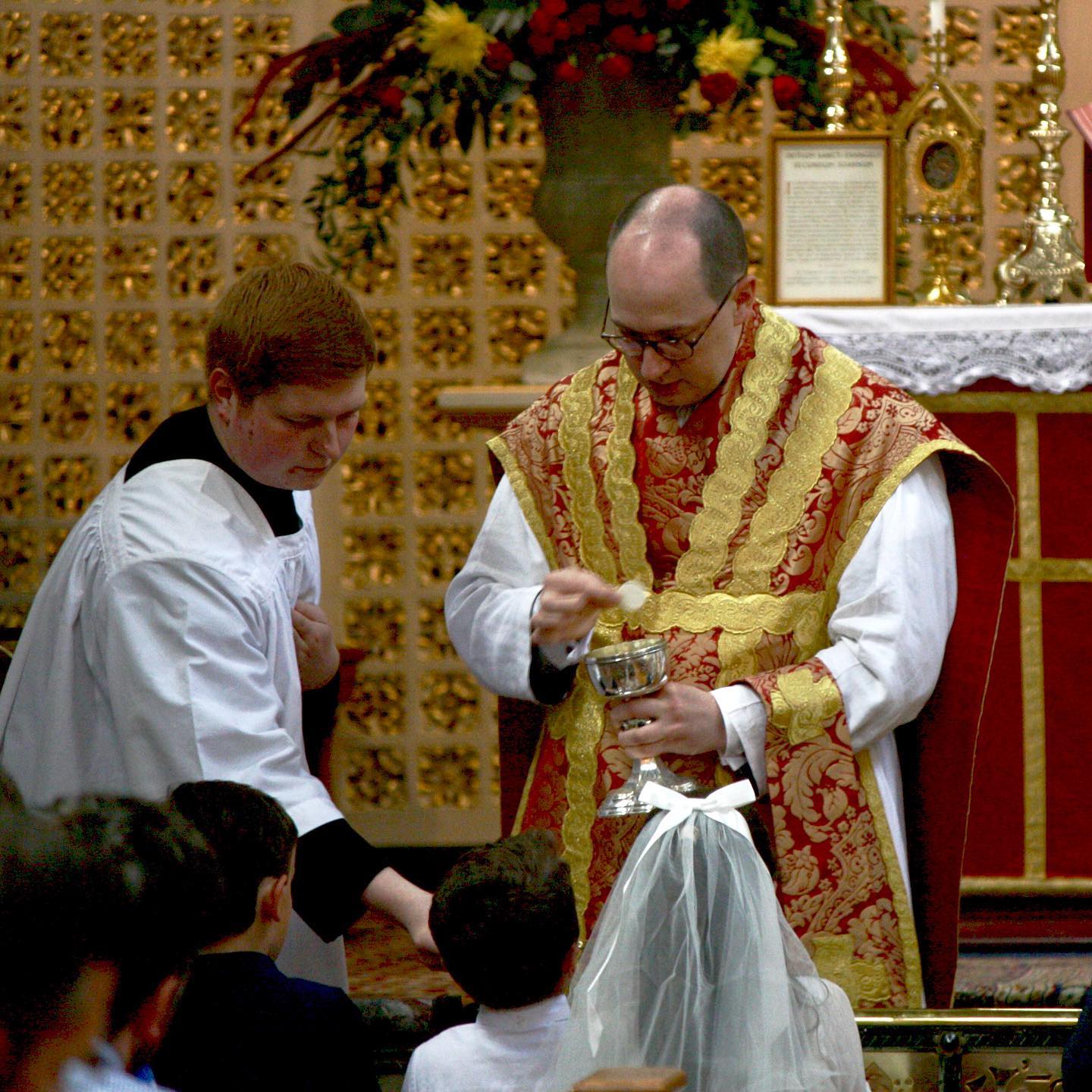
Today we celebrated the first of our three First Holy Communion Masses.
#oxfordoratory
The Silence of the Spirit
It is not often that the whole country takes four days off to celebrate — and what celebrations they were! All the Queen’s Jubilee events were designed for maximum spectacle, maximum effect and maximum emotion, everything from Trooping the Colour to Paddington Bear, to stir up feelings of gratitude, jubilation, national pride, and even to bring a lump to the throat and a tear to the eye. But in the midst of all the cannon-fire, cheering and music, we celebrated another, more important Person this weekend: God the Holy Spirit.
In Scripture the Holy Spirit generally prefers to remain hidden, silent. He acts, of course, but does not claim a leading role — although he has one. He acts, but not to draw attention to himself. The Spirit directs us to the Son, and through him to our Heavenly Father. The Father speaks in the Scriptures, the Son says much, the Holy Spirit never speaks. Rather, he enables and empowers: he allows us to cry “Abba, Father”, and “no one can say that Jesus is Lord except by the Holy Spirit” (1 Cor. 12:3).
It is the Holy Spirit who infuses our souls with the grace of Christ, and he does this primarily through the sacraments. The Holy Spirit washes away our sins in Baptism and makes us part of the family of God. It is the Holy Spirit who transforms bread and wine into the Body and Blood of Christ. And it is the Holy Spirit who restores us to a state of grace in the Confessional. All of this he does discreetly — objectively and effectively, but silently rather than with pomp and noise.
We are uncomfortable with silence and discretion nowadays, even in the Church, and think that for the Holy Spirit to be present and to be at work we have to feel him. We must experience a feeling of joy, or even euphoria. If we do not, then we obviously do not have the Spirit in us. That is the trap of sentimentality — good for moments of national importance, but dangerous in the spiritual life. If we look to our feelings and emotions as evidence of God’s presence then we make it about ourselves. It would no longer be the Holy Spirit who “blows where he wills”, but rather he is supposed to blow where and when we will. The Spirit can certainly give an intimate feeling of peace and joy, and many times he does so. But he does so when and how and where he wills, when he sees that this is good for us. Sometimes he also acts in us in the form of desolation or emptiness, as the great Carmelite mystical tradition teaches us. Not only in spiritual joy, but also in the dark night, can the Holy Spirit show himself to us and act in our lives.
In our path to God we must not seek sensations or certain emotions, but rather follow the spiritual motions of the Holy Spirit as he leads us towards the good, the true and the beautiful, to Christ himself; and we must do this whether movement occurs in joy or in moments of discouragement or desolation. Holiness is not a mood or a state of mind, but something objective and is seen in right thinking and right action. The Spirit may choose to make his presence known, although this is rarely in tongues of fire or the sound of a mighty wind; but regardless, we believe he is always present and active. Such is the certainty of faith, rather than the fickleness of human feelings.
These reflections are sent out each Wednesday to all those on our mailing list. Click here to sign up to our mailing list, and receive our Sunday E-newsletter and these reflections straight to your inbox.