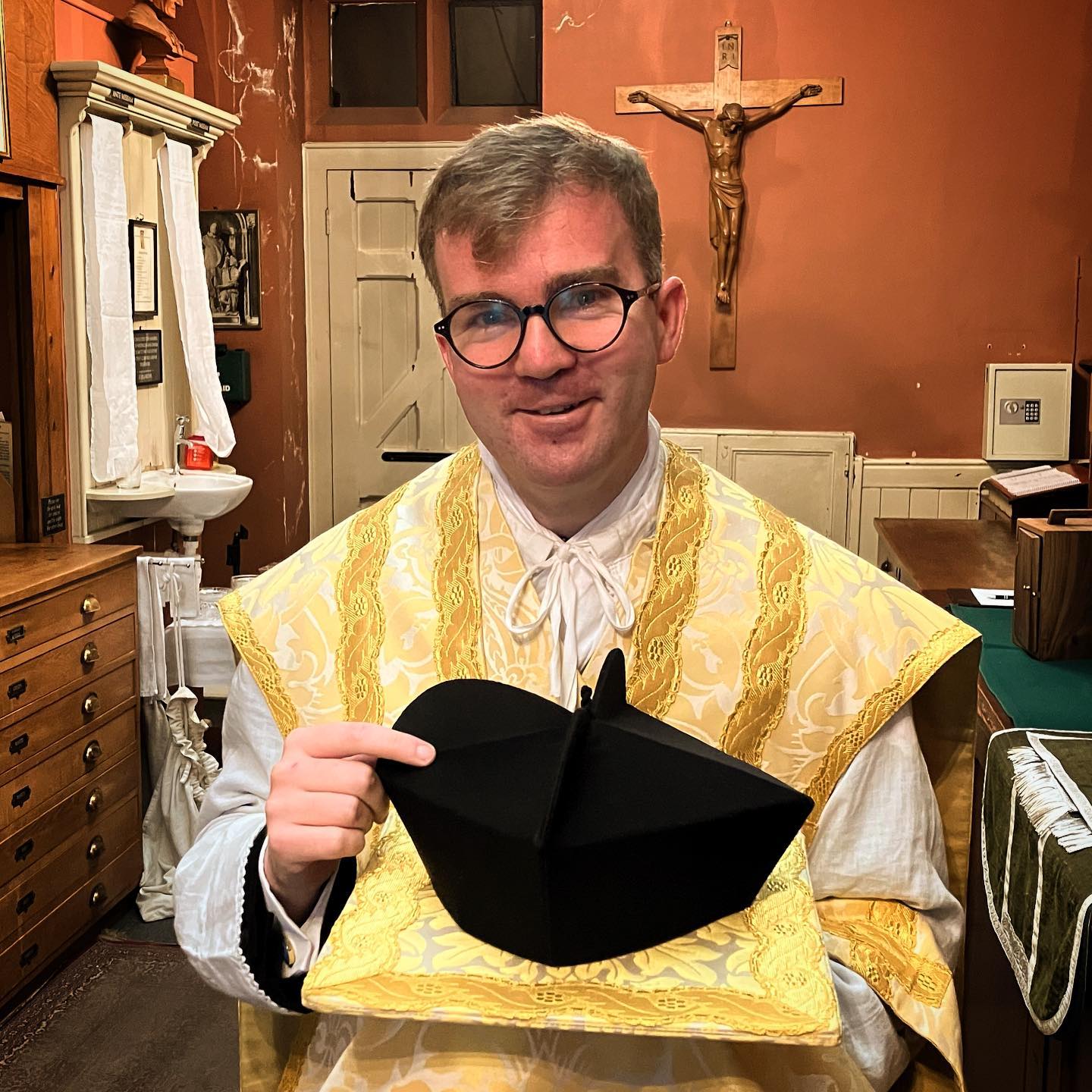
Congratulations to Fr Rupert, who celebrates 10 years of priesthood today.
#oxfordoratory
Congratulations to Fr Rupert, who celebrates 10 years of priesthood today.
#oxfordoratory
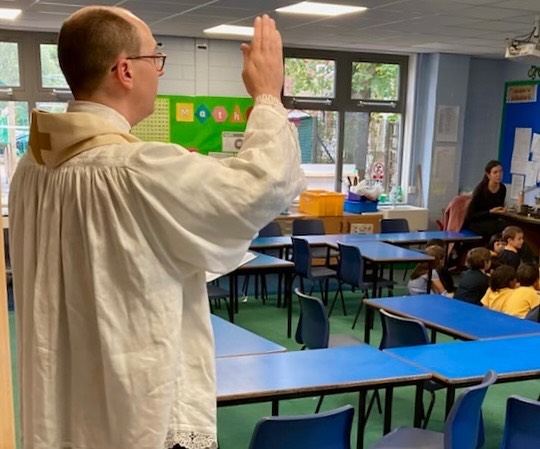
Today Fr Benedict blessed our primary school for the beginning of the school year.
#oxfordoratory
Sunday 4 September Solemn Mass 11:00
23rd Sunday of the Year
Missa Simile est regnum caelorum Lobo
Quasi cedrus Lassus
Cibavit eos Byrd
Fountain Reverie Fletcher
Thursday 8 September Solemn Mass 18:00
The Nativty of the Blessed Virgin Mary
Missa Ave virgo sanctissima Esquivel
Ave maria a5 Palestrina
Hoc corpus Robledo
Cantique Elgar
Sunday 11 September Solemn Mass 11:00
24th Sunday of the Year
Missa brevis Palestrina
Beati omnes Purcell
Domine, non sum dignus Aichinger
Dialogue on the Grands Jeux Couperin
Sunday 18 September Solemn Mass 11:00
25th Sunday of the Year
Missa Puisque j’ay perdu Lassus
Nisi dominus Carissimi
Sicut cervus Palestrina
A fancy BK62 Byrd
Sunday 25 September Solemn Mass 11:00
26th Sunday of the Year
Missa quarti toni Victoria
Super flumina Babylonis Palestrina
Quasi cedrus Guerrero
Fugue in C minor BWV582ii Bach
Our weekly reflections are paused for the summer, so in their place there will be a short extract from how to pray in ten easy steps. This guide is taken from The Oratory Prayer Book, a new prayer book of old prayers that we are publishing and will be available in the coming months.
9. Listen to him
Prayer is a conversation. That means you can’t do all of the talking! Some people give up on prayer because they don’t hear a booming voice from heaven the first time they give it a try. God can speak to people like that, but he tends not to, because he doesn’t need to. God has already said what we need to hear in the words of Scripture. He also uses his Church to speak to us today. Only when we are familiar with the sound of his voice from these two sources will we be able to distinguish his voice from our own in our times of quiet prayer. Lectio divina is a special way of praying by reading the Scriptures (or another holy text like the writings of a saint). It’s a great way to get started in listening to God’s voice. You can find help in doing this in the next section, ‘How to Read Scripture’.
Our weekly reflections are paused for the summer, so in their place there will be a short extract from how to pray in ten easy steps. This guide is taken from The Oratory Prayer Book, a new prayer book of old prayers that we are publishing and will be available in the coming months.
8. Pray throughout the day
You can give more of your daily routine to God by praying during the day. Saying grace before and after every meal reminds us of God’s many gifts to us. Saying a prayer when we meet someone in need might help them more than we know. We should get into a habit of saying a prayer when we see an ambulance (for the person in need), when we hear someone has died, and when we want to thank God for good news too! The time we spend travelling—especially when we’re walking or sitting on a bus or train—can be used to talk over the day so far and the day still to come in God’s company. You can ‘live’ your prayers by taking a word or idea from a prayer and finding opportunities to apply it throughout the day.
Our weekly reflections are paused for the summer, so in their place there will be a short extract from how to pray in ten easy steps. This guide is taken from The Oratory Prayer Book, a new prayer book of old prayers that we are publishing and will be available in the coming months.
7. Pray as you can
Everyone is different, and so is the best way for them to pray. Find ways of prayer that suit you. Some people prefer to speak to God in their own words, others like to use prayers written down by other people. There are different kinds of silent prayer: St Francis de Sales and St Ignatius Loyola are both examples of good teachers. You might say the Rosary every day, or recite the psalms in the Divine Office. There are short ‘arrow’ prayers (like just saying ‘Jesus’) that you can use to ‘shoot’ up to heaven. Sometimes it is good just to be still and quiet in God’s presence, and enjoy his company. Try different ways of praying, then stick to what works. Pray as you can, don’t try to pray as you can’t.

“A great sign appeared in heaven: a woman clothed with the sun.” (Rev. 12:1)
A happy feast of the Assumption!
#oxfordoratory
We are doing some research to help open our Oratory groups for adults and children to as many people as possible. Please help by filling out our short online surveys.
It doesn’t matter whether you have attended any of these groups in the past. We will welcome all feedback. But please only complete the surveys that are relevant to you!
There are different surveys for our groups for adults and children. Each survey is very short and will only take about a minute to complete.
Little Oratory Survey (ages 8–11)
Young Oratory Survey (ages 11–15)
Gaeta Survey (ages 15–17)
Our weekly reflections are paused for the summer, so in their place there will be a short extract from how to pray in ten easy steps. This guide is taken from The Oratory Prayer Book, a new prayer book of old prayers that we are publishing and will be available in the coming months.
6. Pray with your soul and your body
If you were asked to picture someone praying, you’d probably imagine a person kneeling down with hands joined and eyes closed. There’s no rule that says we have to pray kneeling down, but having particular prayer postures (whatever they may be) as part of our prayer routine will help us to focus. Human beings are bodies and souls, so prayer is going to involve our bodies too. And sometimes when we can’t find the words to pray, we might find that we can express our prayer better with our bodies than with our minds. That said, prayer is above all about raising our hearts and minds to God. That means sharing with him honestly all our thoughts, feelings, memories and desires.
Our weekly reflections are paused for the summer, so in their place there will be a short extract from how to pray in ten easy steps. This guide is taken from The Oratory Prayer Book, a new prayer book of old prayers that we are publishing and will be available in the coming months.
5. Keep things the same
Forming good prayer habits isn’t just about praying at the same time every day, but it’s also about forming a routine. Find a way of praying that works for you and stick to it. A routine doesn’t make things boring—it means we can skip the boring task of getting started and can give our attention to what really matters. A routine of prayer means we don’t have to think about prayer itself all the time, and can focus on God instead.