‘Forgive and you will be forgiven’

‘Be compassionate as your heavenly father is compassionate. Do not judge, and you will not be judged; do not condemn, and you will not be condemned; forgive, and you will be forgiven.’ (Luke 6:36f) This is no parable. Our Lord is very clear here. ‘Forgive and you will be forgiven.’ We must often have reflected that the only petition in the Our Father with a condition attached is the one relating to forgiveness. It is also the only one on which Christ offers any comment later, when he says: ‘For if you do not forgive others their sins, neither will your heavenly Father forgive you.’ It is quite a sobering thought, since we find forgiving some injuries, even quite small ones, difficult. We hug them to ourselves and the resentment and anger, instead of abating, can grow, fester and turn to bitterness. True, the white heat of our initial rage may subside in to a red hot anger, but then it can morph into an ice-cold hatred, which can masquerade as indifference. That is rather an extreme case. Quite often, we do ‘get over it’, though the issue has not been addressed and the anger doesn’t quite go away.

Perhaps the fear of not being forgiven our own sins is not enough. Luke can help us here. ‘Give, and there will be gifts for you: a full measure, pressed down, shaken together, and overflowing, will be poured into your lap; because the standard you use will be the standard used for you.’ Here the same teaching is presented to us in a more positive form, as the benefits of forgiveness are outlined. We are being told to be generous, and generosity is the very key-word of our religion. Generosity with God and with others and…with ourselves. There are occasions when we need to forgive ourselves. So many of us don’t and continue to beat ourselves up for our ‘past sins and transgressions’ which can ‘cause us to falter’ on our way to God. Instead, we need to keep going, acting without fear, by which I mean, without a craven fear, since we should have a healthy filial Fear of the Lord — which is, after all, one of the Gifts of the Holy Spirit! St Philip would pray : ‘Give me the grace dear Lord, to serve you not out of fear, but from love.’ Otherwise we are merely slaves, doing what is required, ticking boxes, hoping to get the job done without receiving a beating.

God’s mercy is inexhaustible, but it is sometimes the case that we erect barriers which prevent us from being able to receive it. And our being unforgiving is chief among these. If we say we cannot forgive such-and-such a person, God can deal with that. There is here a suggestion of a willingness to forgive, but for the present we are not yet ready to do so. The wound still smarts too much. So we pray about it, asking of the Lord the grace to reach the moment when we can offer forgiveness and genuinely so. On those occasions when the hurt is too great and the offence has been deliberate and its effects devastating, we need longer. We may have to take many steps back in order run forward. We may have to want to want to forgive. Or even to want to want to want to do so. But if we say we will not forgive and wilfully persist in our unforgivingness, do we not exclude ourselves from heaven, which is God’s space? ‘Be merciful, as your Father is merciful.’ Think of the Father in the parable of the Prodigal Son and you have there the image of God which Jesus wants us to know and to love, with whom ‘there is mercy and plentiful redemption.’ Furthermore, he tells us that we are to love this God and our neighbour with all our strength. Forgiving someone who has injured us or those we love may indeed require all the strength of mind, heart and soul we can muster, but try we must, knowing that our eternal salvation may well depend on it.


These reflections are sent out each Wednesday to all those on our mailing list. Click here to sign up to our mailing list, and receive our Sunday E-newsletter and these reflections straight to your inbox.
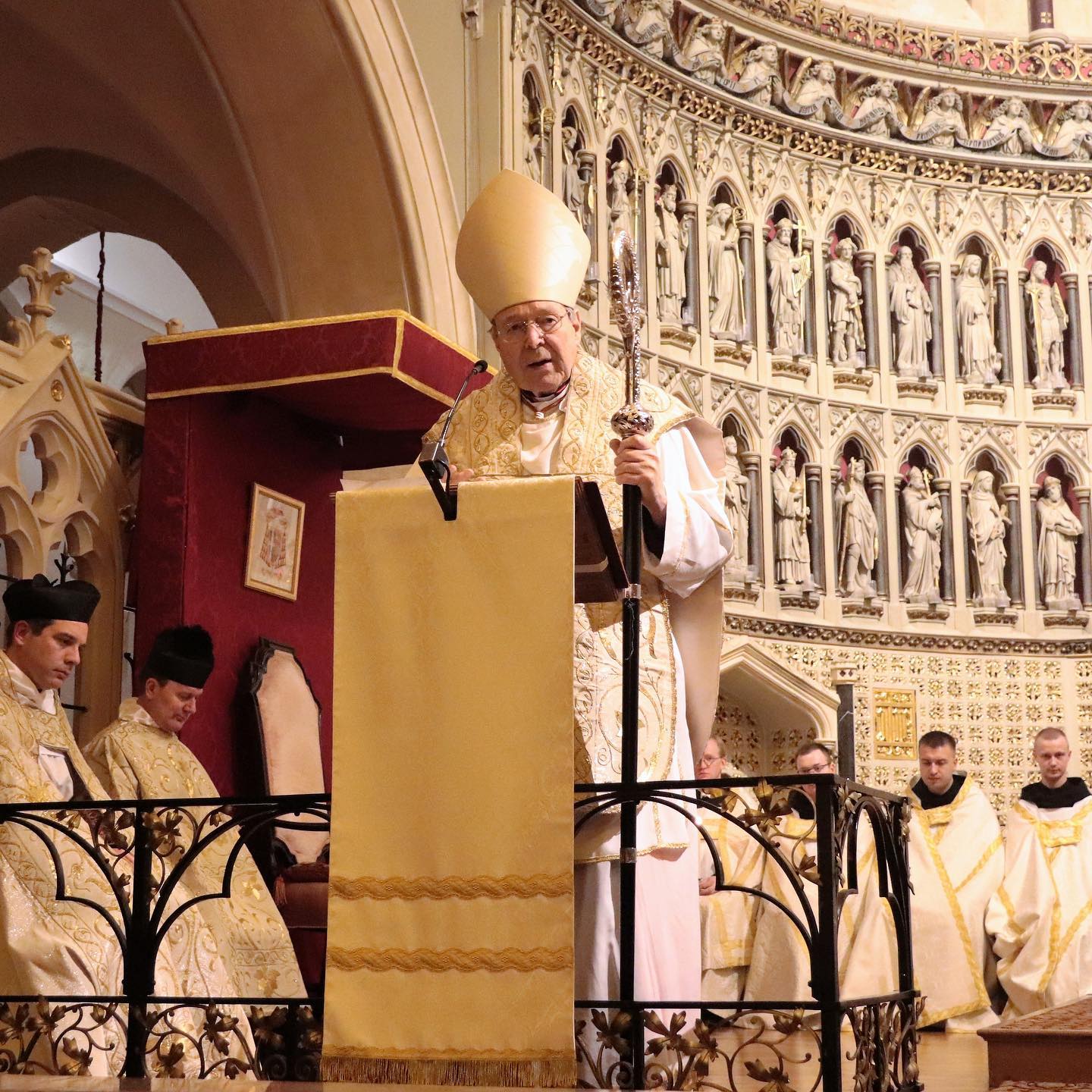
Last night we welcomed Cardinal Pell to our church as part of his visit to Oxford. The Cardinal celebrated a Mass of the Sacred Heart for us, and preached about the role of redemptive suffering in the life of Christians. Watch the full Mass here: https://www.youtube.com/watch?v=M8ZqgFv2Dhs

#oxfordoratory

View on Instagram

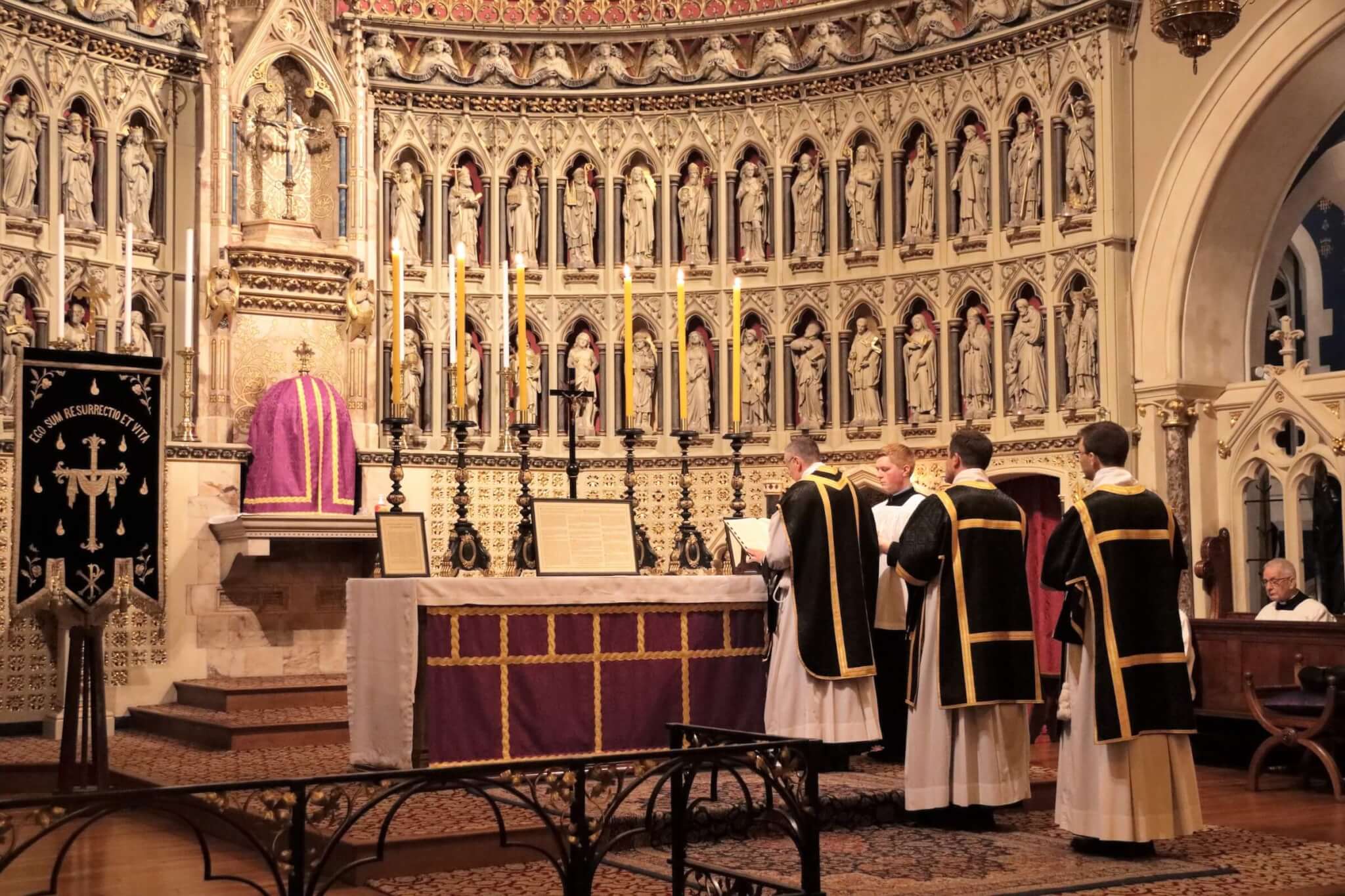
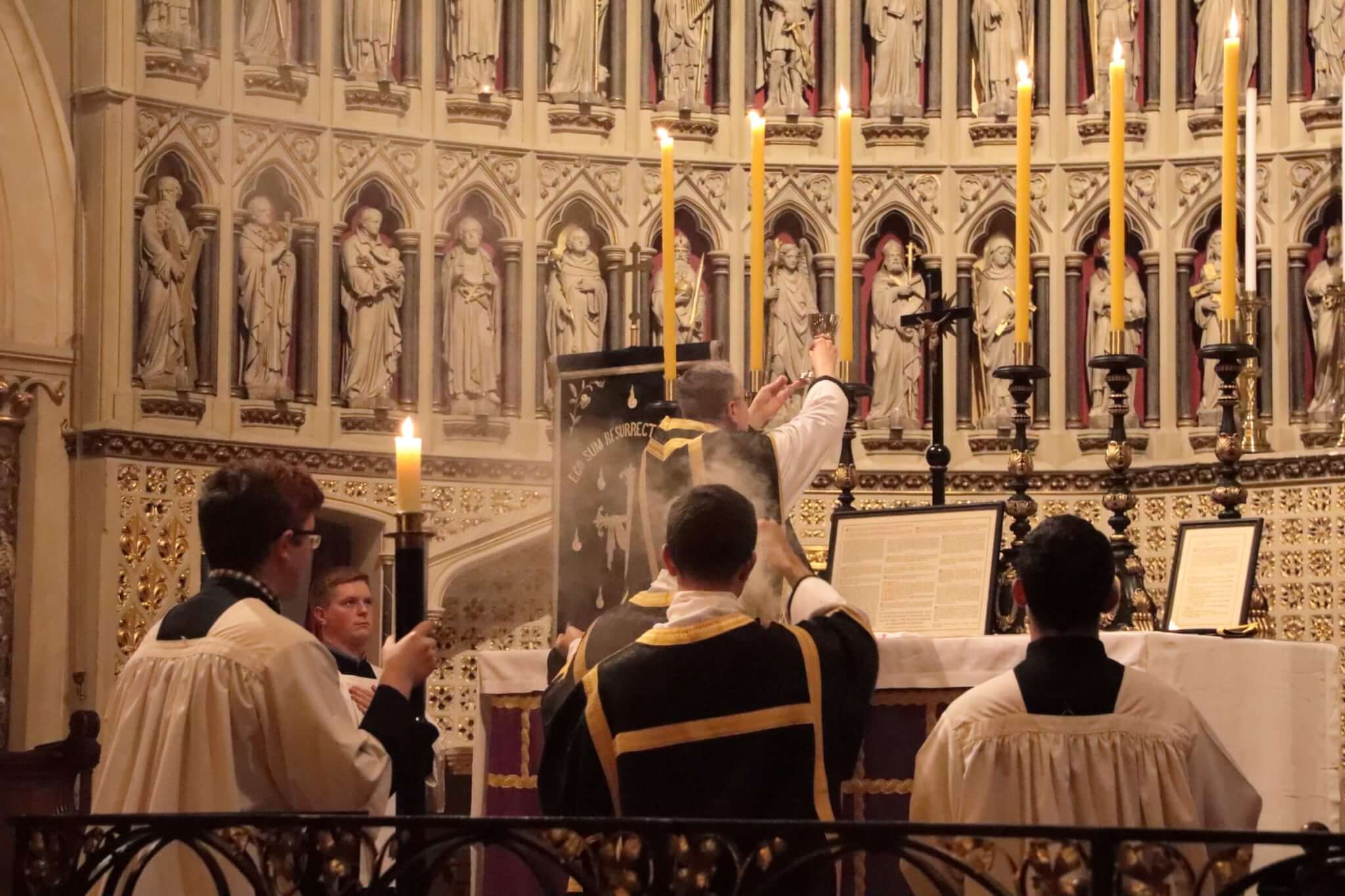
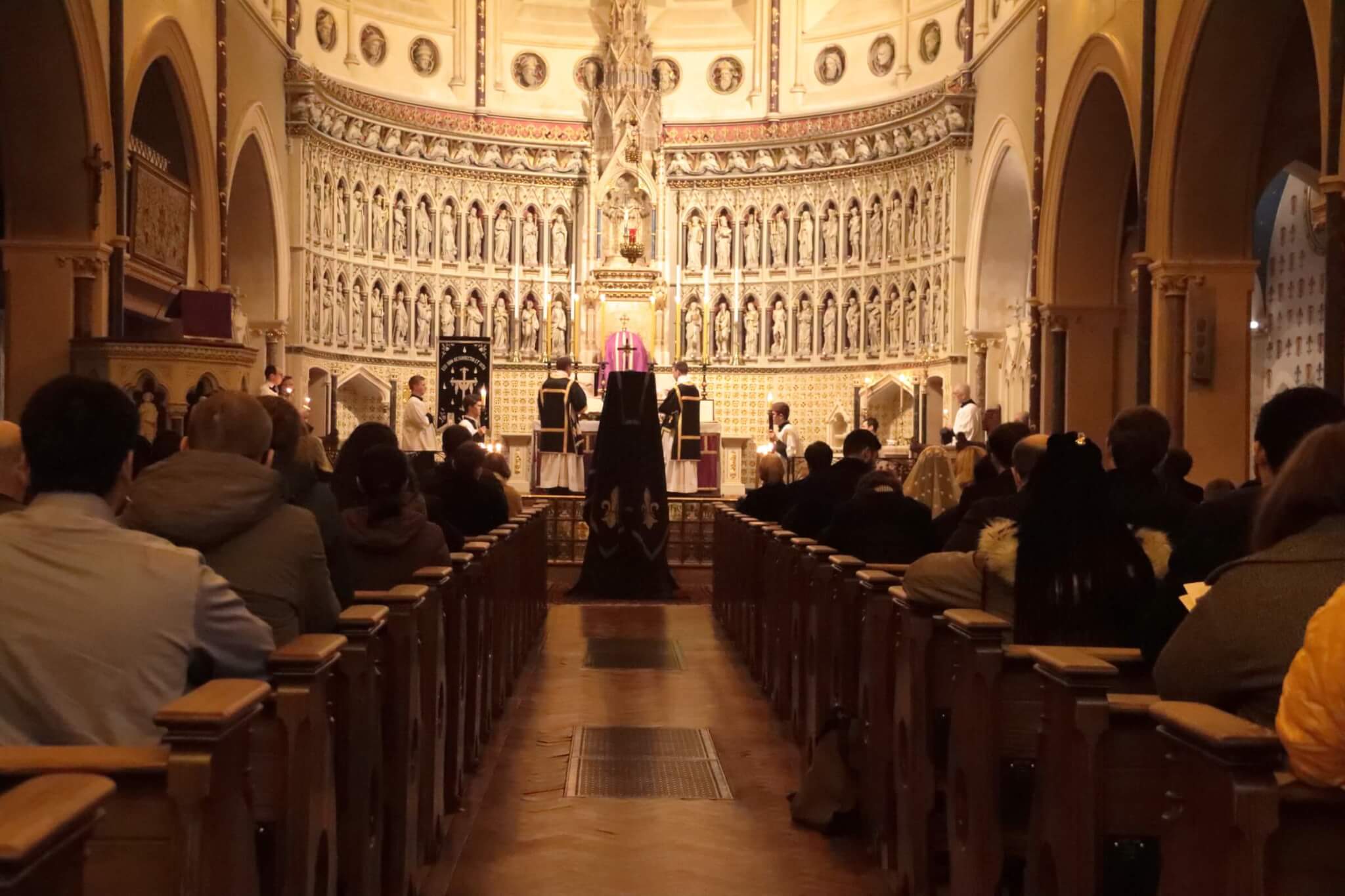
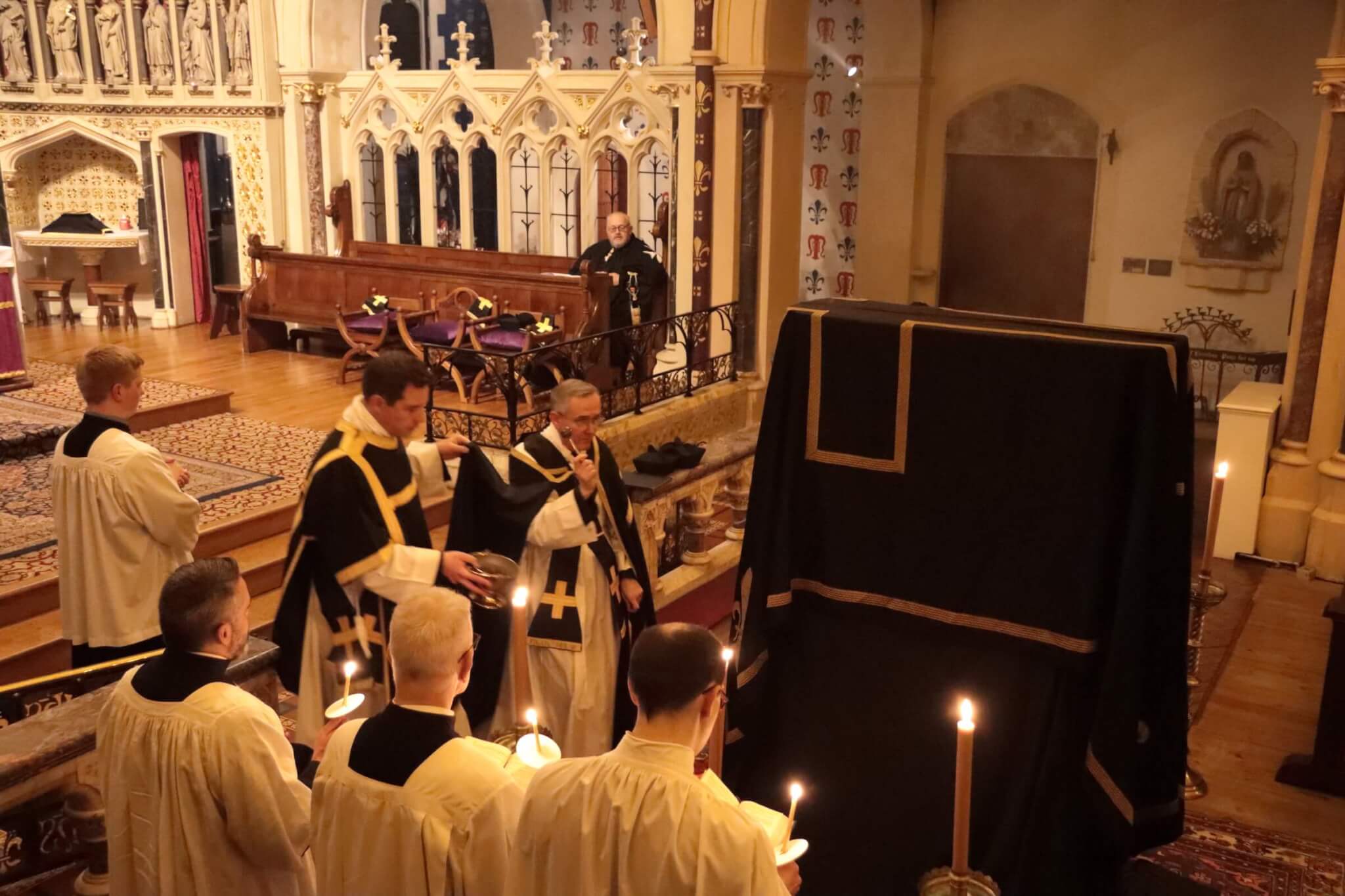
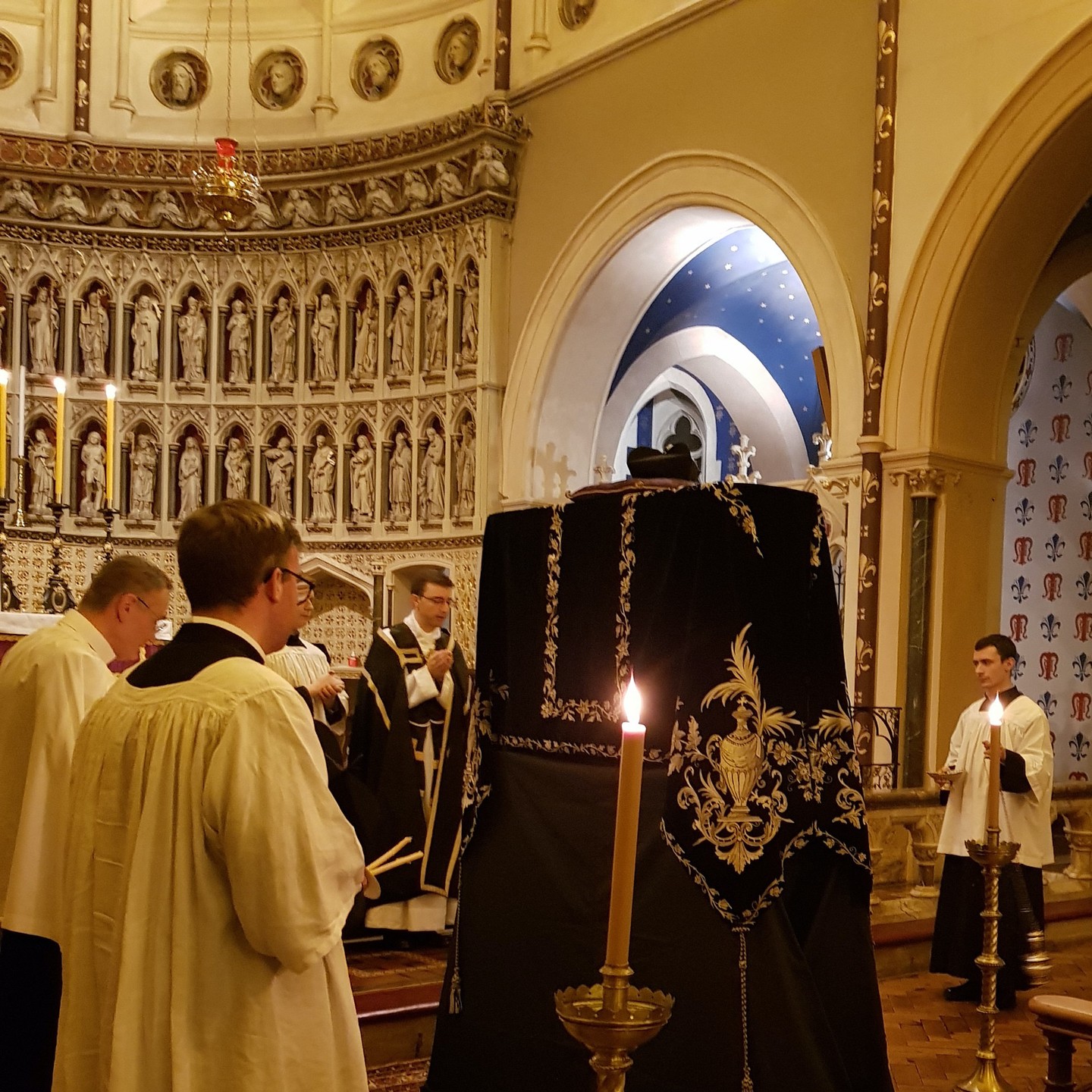
Absolutions at the catafalque after the Fathers & Brothers Requiem last Friday.

“After Mass, the clergy preceded by the Cross range themselves round the catafalque, which is placed in the nave of the church, to represent the dead, at the very spot where their bodies once rested before the altar of God. The cantors intone the ninth Responsory of Matins; it is followed by the Prayers said at the conclusion of the Office, during the singing of which, the Priest honours the dead with holy water and incense, as on each one’s funeral-day.” (From ‘The Liturgical Year’ by Dom Prosper Guéranger)

#oxfordoratory

View on Instagram

Reflecting on Death

November is a month when the Church asks us to pray for the faithful departed, and in doing so to reflect upon death. We may not relish contemplating our mortality, but doing so is an essential element of a well-lived life, a Christian life, realising that our life on earth will decide how we spend eternity. St Benedict in his Rule tells his monks, “Remember to keep death before your eyes daily”. Cardinal Basil Hume, when abbot of Ampleforth, was asked once by a prospective parent what the school could offer his son, and replied that the school did not prepare boys for life, but for death. St Therese of Lisieux expressed the same sentiment in a different way: “The world is a beautiful bridge, but do not build your home on it”.

Catholic tradition and culture has always kept death before our eyes, but the secular world — despite the ghouls and ghosts and skeletons of Halloween — has worked hard to bury death deeply in the vaults of history. Society cannot deal with death, ignoring it, hiding it in hospitals and hospices, seeing it as an enemy that must be fought at almost any cost. And the reason is fear. We fear what we cannot see — what we do not understand. It is the fear of the unknown, of what is hiding under the bed. When we are faced with fear, the natural tendency is to push it away: we pretend that death will not happen or can be cheated.

There is a danger, however, in this cover-up. We forget one of the most profound truths of life: that it is finite. The death of a loved one will always be a terrible experience, and no amount of preparation will make the pain go away more quickly. But if we have lived a life of silence about death, if we have not thought about it, confronted it — even made friends with it — we are ill-equipped to deal with grief, to know what to do, or how to console others. We keenly sense that we are alone inside an experience that the world will not recognise; yet it is going to be experienced by everybody.

We can talk about death because we believe in the Lord who said, “I am the resurrection and the life. If anyone believes in me, even though he dies he will live. Anyone who lives and believes in me, will never die”. The Kingdom of God is not a place of fear, because it has been opened for us by a God who descended into the worst fears of human reality for our sake. He shared human pain and human fear. As we contemplate the fearful unknown of human death, he embraced it for us, that we might live in eternal life with him.

Cardinal Hume was able to face the news of his own terminal illness with the assurance of faith, despite his fears:

As we approach the last bit of the journey there are days when we fear that we face an unknown, unpredictable, uncertain future. That is a common experience. But do not worry; because the time comes when we no longer carry heavy bags and all those possessions. We shall travel through the cold, grey light of a bleak… morning into God’s spring and summer. Death is the only way which leads us to the vision of God.

He had earlier in his ministry as a bishop reflected that

Death is a formidable foe until we learn to make it a friend.
Death is to be feared if we do not learn to welcome it.
Death is the ultimate absurdity if we do not see it as fulfilment.
Death haunts us when viewed as a journey into nothingness
rather than a pilgrimage to a place where true happiness is to be found.

The human mind cannot understand death.
We face it with fear and uncertainty, revulsion even;
or we turn away from the thought for it is too hard to bear.
But faith gives answers when reason fails.
The strong instinct to live points to immortality.
Faith admits us into death’s secrets.

Death is not the end of the road, but a gateway to a better place.
It is in this place that our noblest aspirations will be realised.
It is here that we will understand how our experiences of goodness,
love beauty and joy are realities which exist perfectly in God.
It is in heaven that we shall rest in him and
our hearts will be restless until they rest in God.

It is said that when the Cardinal informed his successor as abbot of Ampleforth that he was dying, the response was: “Congratulations! That’s brilliant news. I wish I was coming with you.”


These reflections are sent out each Wednesday to all those on our mailing list. Click here to sign up to our mailing list, and receive our Sunday E-newsletter and these reflections straight to your inbox.
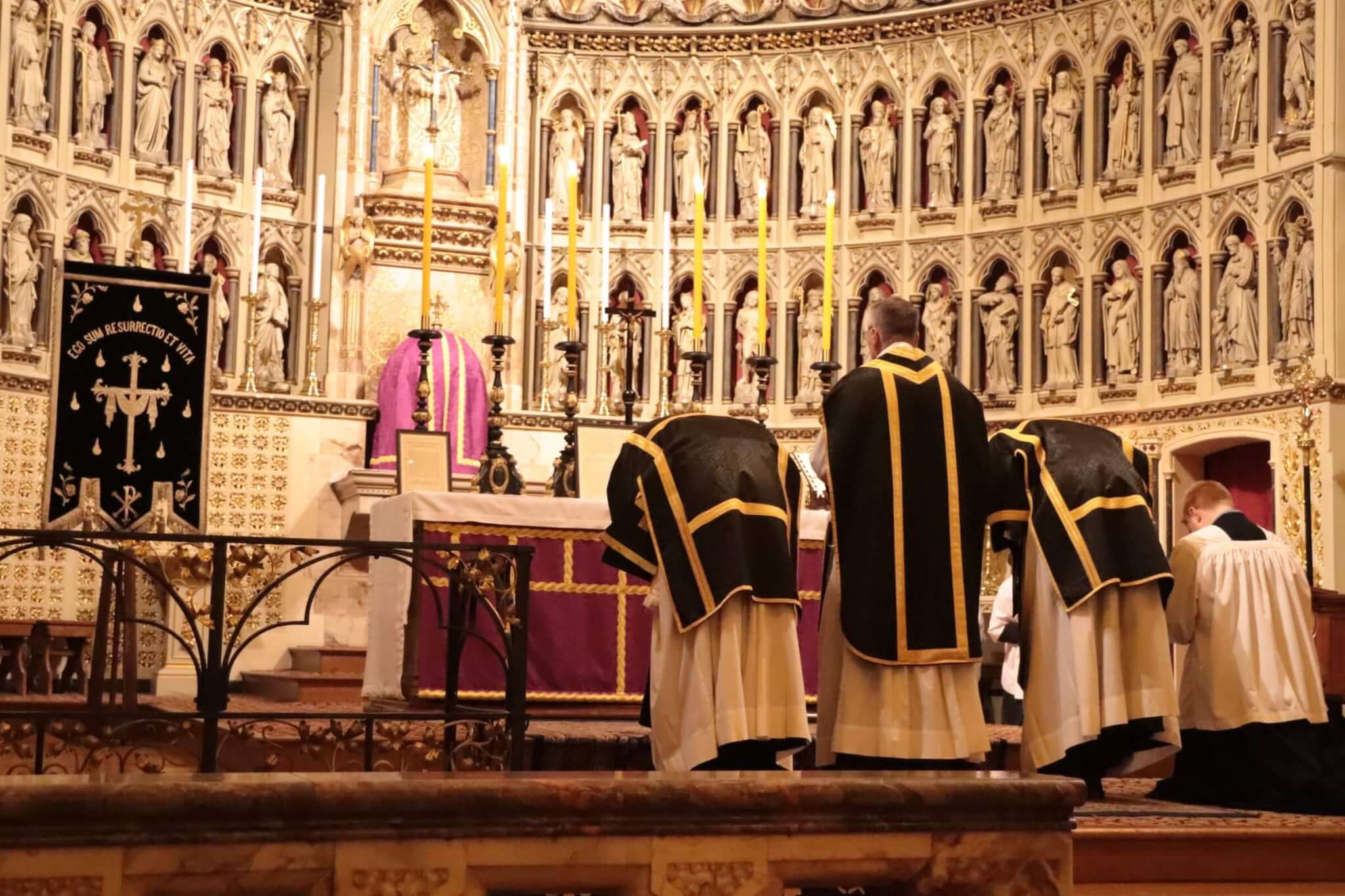
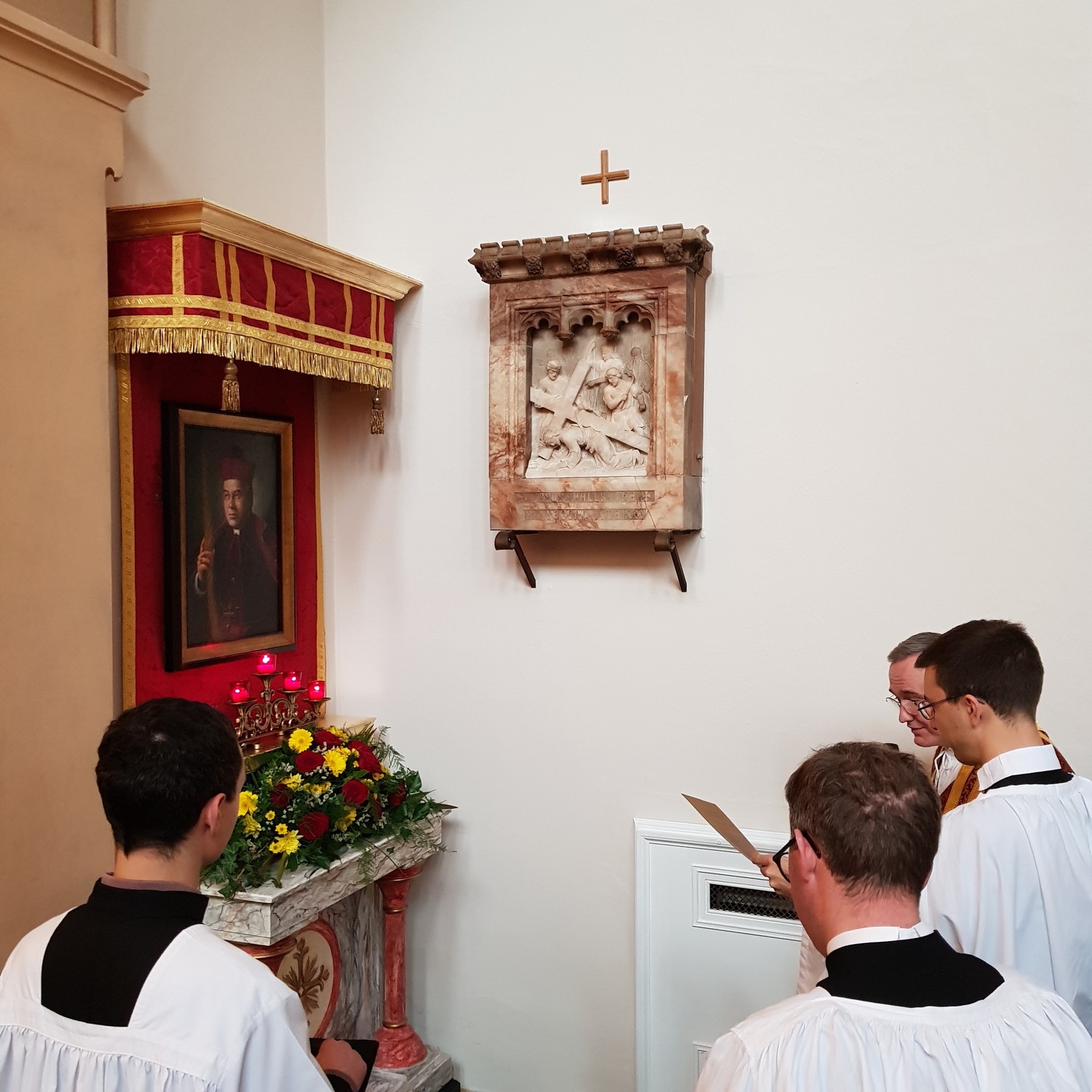
Today is the feast of Blessed Salvio Huix, the Oratory’s first martyr to be beatified. We blessed his image in church, which has recently been redecorated.

Almighty eternal God, thou hast allowed pictures and statues of thy Saints to be painted and carved, so that as often as we look upon them with our bodily eyes, we may recall with our more inward eyes their deeds and their sanctity and learn to imitate them. In thy goodness, therefore, bless and sanctify this picture fashioned to honour and to recall thy blessed Martyr and Bishop Salvio to our minds; and grant to all who honour and invoke the aid of the glorious Martyr Bishop with this picture before their eyes, that they may obtain grace from thee in this life and everlasting glory in the next, by the merits of that same Saint and his power with thee. Through Christ our Lord. Amen.

O Lord, who raised up the bishop Blessed Salvio to be a shepherd after thine own heart, to feed thy people with knowledge and understanding, to lay down his life for his sheep and to become the first of the sons of St Philip to shed his blood for Christ; grant us by his example to preach the faith in a world that knows thee not, and by his intercession strengthen the faith of our brothers and sisters who are persecuted today for their faith in thy Son, who lives and reigns with thee in the unity of the Holy Spirit, one God, for ever and ever. Amen.

#oxfordoratory

View on Instagram

November Music

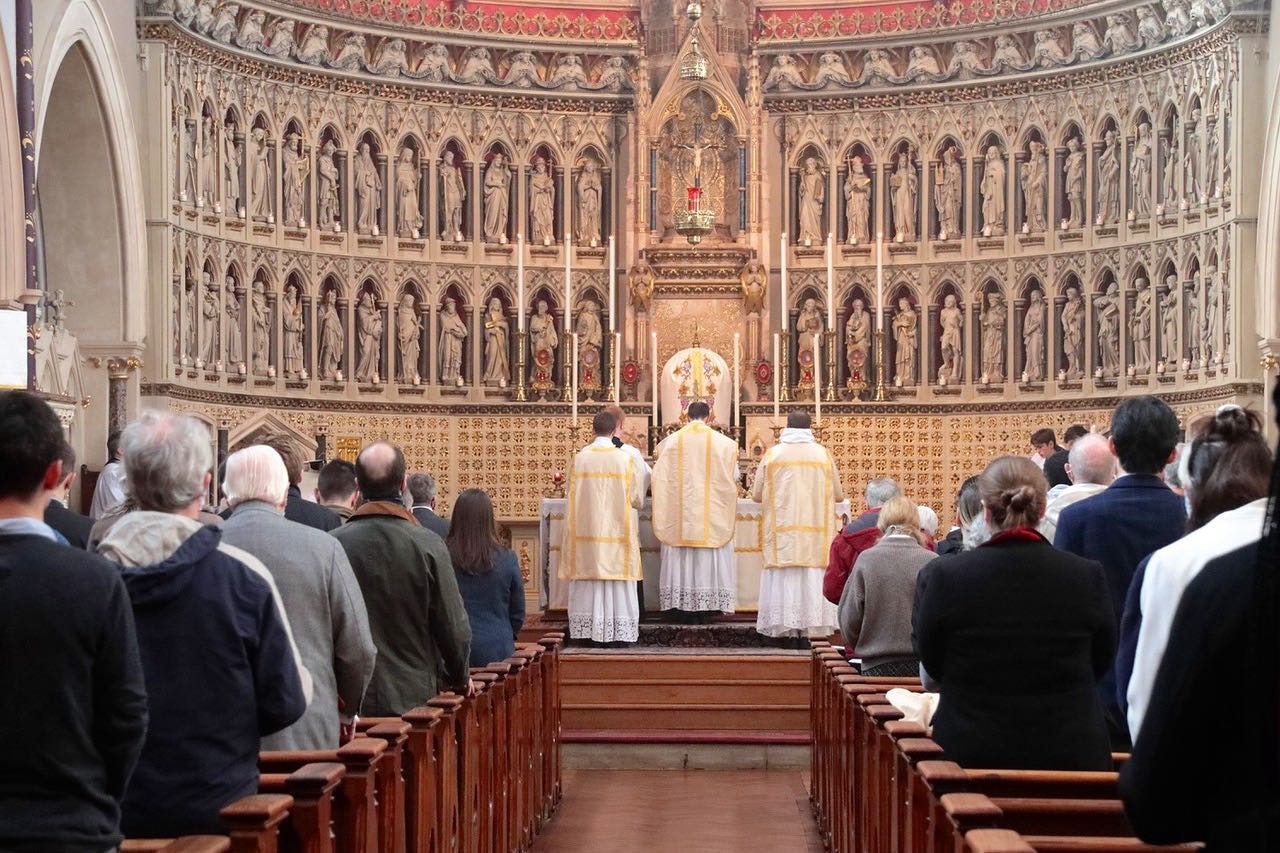
Tuesday 2 November Solemn Mass 18:00
All Souls
Officium Defunctorum a6 Victoria
Versa est in luctum Victoria

Friday 5 November Solemn Mass 18:00
Solemn Requiem for deceased
Fathers and Brothers of the Oratory

Officium Defunctorum a4 Anerio

Sunday 7 November Solemn Mass 11:00
32nd Sunday of the Year
Missa Doulce Mémoire Lassus
Cantate domino Croce
Ave verum Peñalosa

Friday 12 November Solemn Mass 18:00
Solemn Votive Mass of the Sacred Heart (Visit of Cardinal Pell)
Ecce sacerdos Elgar
Missa Papae Marcelli Palestrina
In spiritu humilitatis Croce
Adoramus te Monteverdi

Sunday 14 November Solemn Mass 11:00
Solemn Requiem for the Fallen
Officium Defunctorum a4  Morales

Sunday 21 November Solemn Mass 11:00
Christ the King
Missa brevis in C (220) Mozart
Dominator domine Lassus
Laudate dominum Mozart

Sunday 28 November Solemn Mass 11:00
Advent I
Missa Prudentes Virgines Lobo
Canite tuba Guerrero
Advent prose Plainchant

Tony Cockshut RIP

Of your charity please pray for the repose of the soul of Tony Cockshut, who died on 5 November 2021, aged 94, fortified by the rites of Holy Church.

Eternal rest grant unto him, O Lord,
 and let perpetual light shine upon him.