All Soul’s Night

There is a play by the Irish playwright Joseph Tomelty, All Soul’s Night, which tells a remarkable and haunting story. Set in 1949, in the fictitious village of Assagh on the shores of a County Down lough, it tells the story of a family trying to get by, beset by strife and tragedy, who on All Soul’s night are visited by the holy souls of their relatives asking for prayers, but coming too with an awful warning. The soul of a young fisherman killed tragically at sea visits the home of his mother and chastises her for neglecting to pray for him while he was at sea and even since he has died. The quote from the play that adorns the playwright’s tomb stone conjures up the grim sentiment of the play all too well, “Pray for the dead that they may be loosed from their sins; pray for the living that they may be loosed from their greed.” What Tomelty conjures up is that feeling that artists and poets have always tried to at this time of year, that somehow the veil is thinner. It reminds us of our own mortality and that we had better pray.

But, of course, the veil is always exactly this thin. Each year on St Philip’s day we sing the hymn that recounts his death. Cardinal Baronius asks our Holy Father, “Will you leave without giving us your blessing?” and as the saint raised his hand in blessing, he breathed his last. Fr Faber’s hymn has it like this:

One half from earth, one half from heaven,
Was that mysterious blessing given;
Just as his life had been
One half in heaven, one half on earth
Of earthly toil and heavenly mirth,
A wondrous woven scene!

But perhaps this should be the case that for each of us, for every Christian, that our life must be marked by the character of heaven, must be shaped by the priorities of that greater city than of this one. At the heart of all this is an overriding theme, that of the spiritual closeness to the departed, of the economy of spiritual goods between the children of God. We trade freely in the goods of that place where we hope to spend our eternity; in charity we pray for those who have died, and for those still alive that we may yet enjoy the vision of God together in heaven.

The veil is always very thin, and our loved ones who have gone before us to another shore are still very close to us. We pray for the dead that they might be loosed from their sins, and we must pray for one another that we might lose those sometimes greedy attachments to the things that cannot get us to heaven. With God’s help, may our lives continue ever more to be a “wondrous woven scene”, shot through with the gilded light of heaven, threads which will, at the last, lead us home.


These reflections are sent out each Wednesday to all those on our mailing list. Click here to sign up to our mailing list, and receive our Sunday E-newsletter and these reflections straight to your inbox.
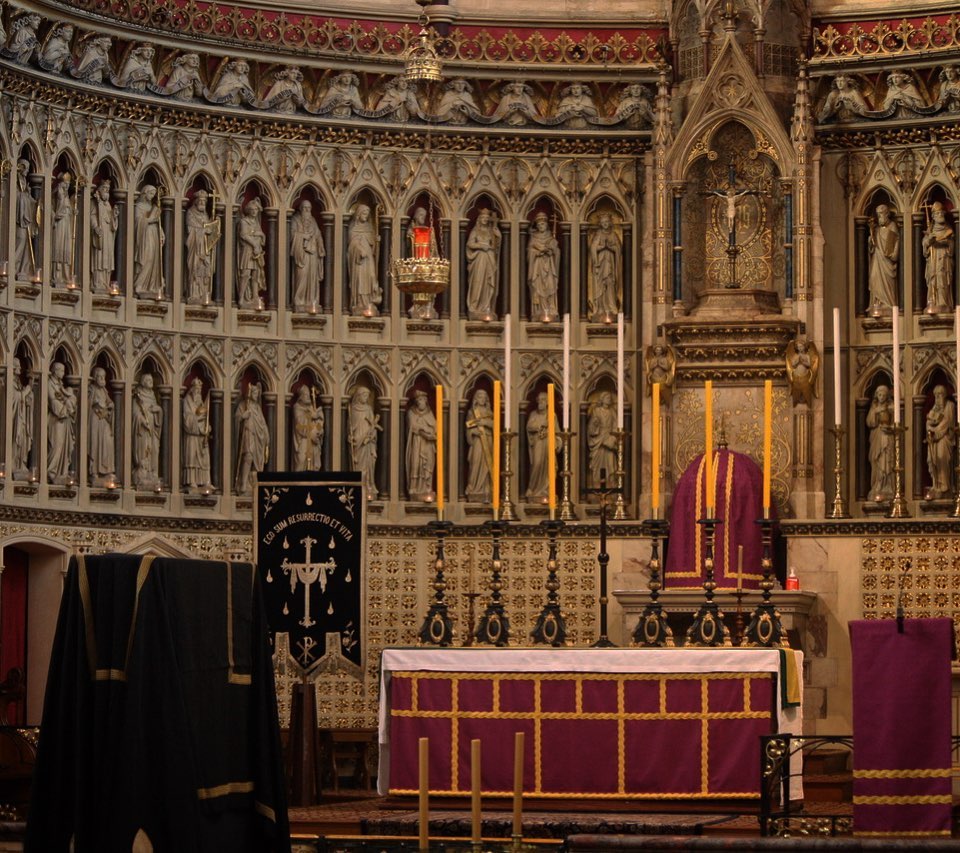
“Therefore he made atonement for the dead, that they might be delivered from their sin.” (2 Maccabees 12:45)

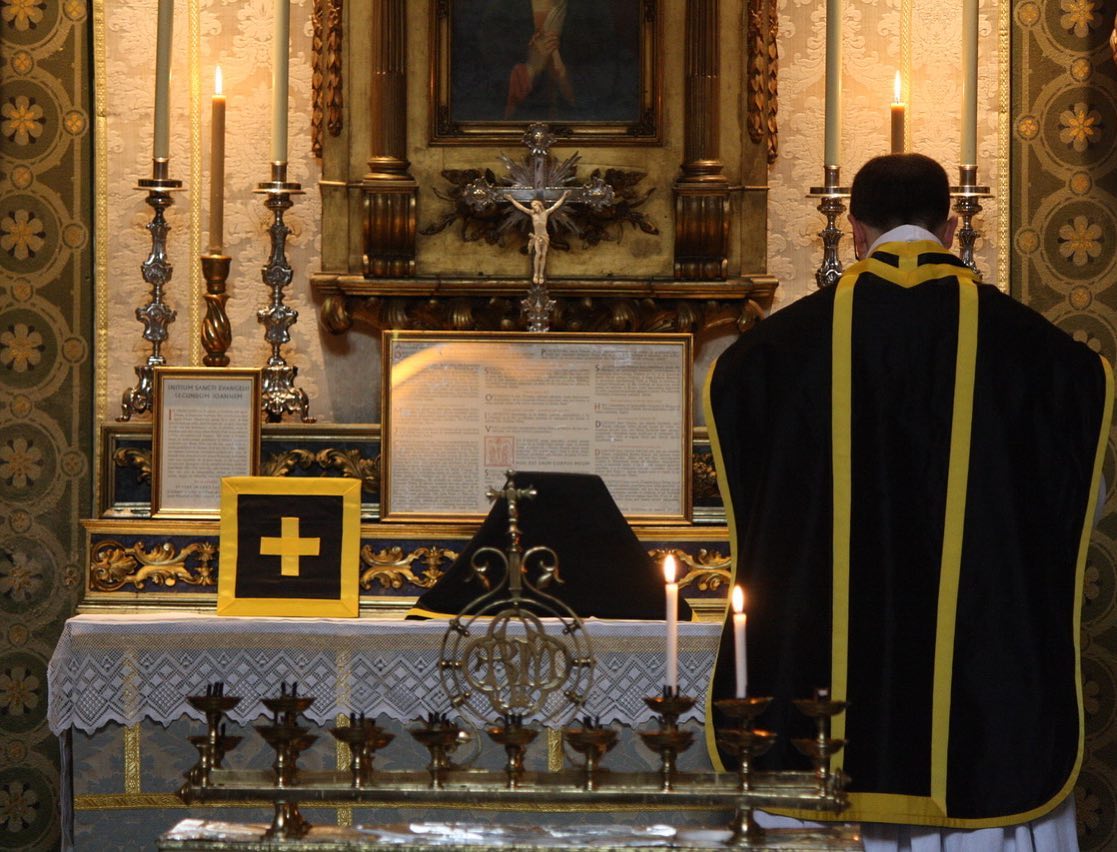
All priests can say three Masses on All Souls, to give the faithful departed as much help as possible.

All the faithful can assist the Holy Souls not just through prayer, but also through special indulgences granted by the Church in November. Every November, there are opportunities to obtain plenary indulgences for the Holy Souls in purgatory by: (1) visiting a church on 2 November and praying the Our Father and Creed; (2) visiting a cemetery and praying for the faithful departed on any of the days between 1 and 8 November (it is possible to obtain an indulgence each day this is done). As with all plenary indulgences, it is also necessary to go to confession, receive Holy Communion, pray for the Pope’s intentions and be detached from all sin.

Like last year, because of the pandemic, there is some flexibility about when these indulgences can be obtained: (1) any one day in November can be chosen to visit a church and pray the Our Father and Creed; (2) any eight days (which need not be next to each other) may be chosen to visit a cemetery and pray for the faithful departed. It is also possible for this to be a ‘mental’ visit to a cemetery.

#oxfordoratory

View on Instagram

“The Commemoration of all the Faithful Departed, when Holy Mother Church, after due observance of the celebration of all her children who are joyous in heaven, turns herself to intercede with God for the souls of all who have gone before us with the sign of faith, and sleep in the hope of resurrection. She prays also for all those from the beginning of the world, whose faith only the Lord has known that they may be purged from the contagion of sin, and enter the company of the heavenly citizens, to win the joyful vision of eternal bliss.” (From the Roman Martyrology for 2 November) #oxfordoratory

View on Instagram

Relics

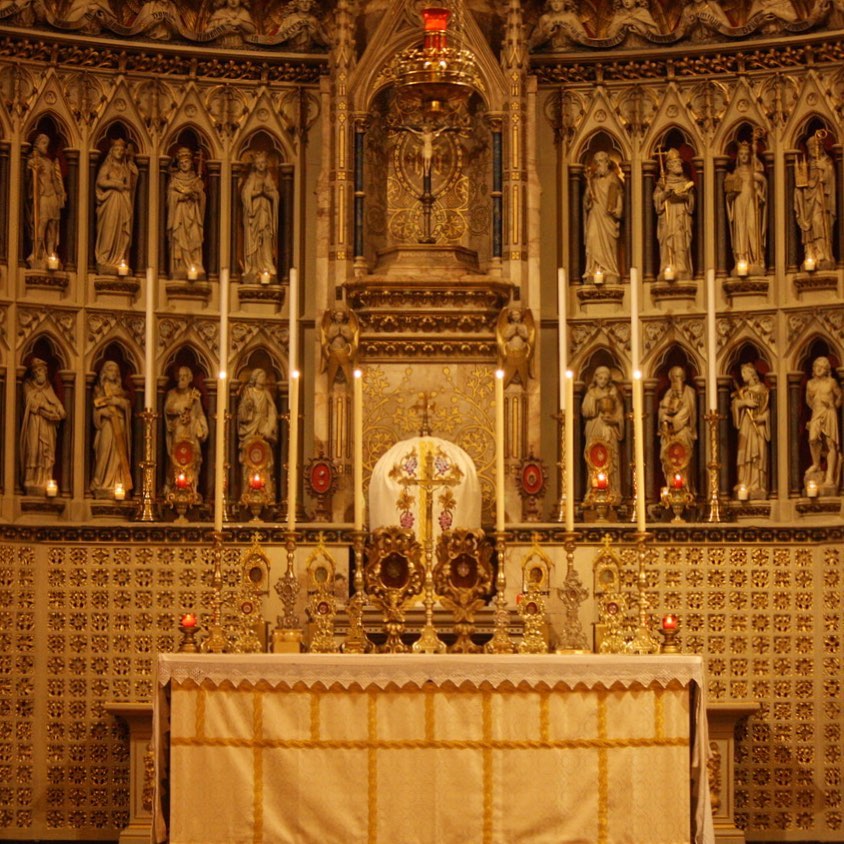
The approaching feast of All Saints gives us a chance to make use of two of the most distinctive features of our church. The first is the one everyone notices as soon as they walk in on the feast day: the 52 saints and angels in the sanctuary looking on, with lamps burning in front of them. Their presence helps us to visualise what actually happens during every Mass — that for an all too brief moment, we really are in their company and, more importantly, in the presence of God himself, as Christ opens heaven on earth for us.

The other thing we put to good use is our vast collection of relics. You should be able to spot the reliquaries on and behind the altar, each containing small fragments of the remains of a saint. And with the cupboard doors of our Relic Chapel open for the feast, you should be able to see some of the more substantial bones, while there are even more smaller relics stored elsewhere in the chapel.

When we think about it, Catholic devotion to relics is odd. We can understand the less gruesome ones. Our church once possessed the pen with which Bl. Pius IX signed the dogma declaring the Immaculate Conception of Our Lady. That was both a historic memento as well as a connection to the holy pope (sadly it was given away long before the Oratory arrived). We have a great collection of letters written by saints, and even a book that once belonged to Saint Philip and has his signature in it. These are precious in the same way that we might treasure items left to us by our own deceased loved ones. But our most venerated relics are those of the saints’ bodies themselves, usually bits of bone, blood or hair. And we tend not to preserve the body parts of our family and friends in order to remember them once they have gone.

There is a specific reason that it is the bodies of the saints that are our holiest relics, and it is tied to our faith in the resurrection. When a saint dies, his or her soul goes to heaven, while the body awaits the Last Judgment, when we will all share fully in the resurrection, as Christ already has done ever since he rose on Easter Sunday. It is the hope of this resurrection that means the body is not simply abandoned as no longer needed, but a kind of link continues to exist between body and soul. That means the bodies of the saints on earth form a link with their souls, which are now in heaven. These relics form a tiny gap in the fabric of this world, through which our prayers can reach the saints in heaven.

This is the real reason that the early Christians met underground in the Roman catacombs for Mass. It wasn’t all about hiding from persecution. Even when no one was trying to arrest them, the Church continued to celebrate Mass in the catacombs. It has been the custom of the Church since the earliest centuries always to celebrate Mass on the relics of the martyrs, because they form a link between heaven and earth. And on top of that, the Church on earth wanted to celebrate Mass in the company of the Church in heaven. It’s why our own St Philip would spend so much time praying in the catacombs of Rome, because surrounded by the remains of so many saints, we are closer to heaven.

On the feast of All Saints especially, we have these visible reminders that we have the saints on our side, to help, support and inspire us throughout this life. “Therefore, since we are surrounded by so great a cloud of witnesses, let us also lay aside every weight, and sin which clings so closely, and let us run with perseverance the race that is set before us.” (Hebrews 12:1)


These reflections are sent out each Wednesday to all those on our mailing list. Click here to sign up to our mailing list, and receive our Sunday E-newsletter and these reflections straight to your inbox.
Wisdom

Our Father Jerome died on 19 October, two years ago. Many of you found his sermons and talks both interesting and entertaining. His was indeed an inimitable style. Although our Weekly Reflection is ordinarily published anonymously, the following is the text of a sermon, preached by Fr Jerome in our church on the 30 July 2017. May he rest in peace.

Solomon prayed for wisdom, and discernment. Wisdom is not the same as knowledge: St Paul tells us that knowledge puffs up, but wisdom comes from on high. What is the difference? (It has been said that knowledge tells us that a tomato is a fruit, while wisdom tells us not to put it in a fruit salad.) Knowledge on its own is useless: only wisdom tells us how to make use of it.

This city is plagued with two universities and countless other institutions all peddling knowledge. But they do not teach wisdom.

Wisdom comes from listening to God, not studying in websites, books or lectures. Wisdom is within the reach of all: there is no need to be frightfully clever, for God speaks most clearly to the little ones; no need to have the wealth they demand for teaching knowledge, for God reveals himself to the poor. God speaks directly to every human heart, if only we have the patience to listen.

God speaks in what we call “conscience”. But when we say that, we are easily misunderstood: people use that phrase “following my conscience” to mean “doing exactly what I want”. They can convince themselves with all sorts of subtle arguments and clever “knowledge” that what they happen to want to do is their right. That’s why Newman tried to invent a new word for “conscience” — he called it the “illative sense”, but somehow that didn’t catch on. Perhaps “intuition” is a better word: what we mean is that after all the clever arguments and subtle knowledge, something cuts in and says “you know that’s all nonsense: what you want to do is something you really should not do.” Or, more often, “that is something you should not have done.” Conscience, in the true sense of the word, is that within us that tells us what is right and what is wrong, what is true and what is false. Listening to conscience is true wisdom, “how to discern between good and evil” as Solomon put it. False knowledge is what the devil promised, experience of good and evil. Wisdom is the instinctive feeling we have when all argument ceases, this is good, this is true, no matter what the experts say.

Wisdom comes from listening to God. All our prayer, all our worship is for listening. We may use words, but it is God who speaks through them. We may remain in silence, and it is God who speaks in silence. It is only after prayer that we can become aware of how our conscience has become more subtle, more accurate, listening to God.

And God speaks to us through others, yes, even the Catholic Church. When we discover that our feeling, our intuition, our conscience, agrees with what billions of others have felt, have heard God say, why, then we can be confident in ignoring the chattering arguments of the knowledge-peddlers.

This is not to say there cannot be good knowledge for those who have the leisure and the interest to acquire it. Part of wisdom is to discern between what is worth knowing, and what should be thrown away because it is no use. But wisdom is for everyone: wisdom is what we seek, and for that it is worth giving up everything else: that is the point of the parable of the pearl of great price.

Wisdom in the end is not a thing, not an abstraction: Wisdom is a Person, the one we love. For “God cooperates with all those who love him”, and it is the Son of God, Our Lord himself, who is the living Wisdom and the Power of God. It is the Holy Spirit who proceeds from the Father and the Son who breathes within us. Conscience, intuition, the illative sense, is that part of us that can hear the voice of the Holy Spirit. The more we listen to him, the more clearly we become aware of what God within us is telling us, how he is leading us into all truth.

All truth, all wisdom, comes from on high. But the Holy Spirit lives within us, so that the divine wisdom also wells up from inside us, from the heart, which speaks to the Sacred Heart of Jesus.


These reflections are sent out each Wednesday to all those on our mailing list. Click here to sign up to our mailing list, and receive our Sunday E-newsletter and these reflections straight to your inbox.
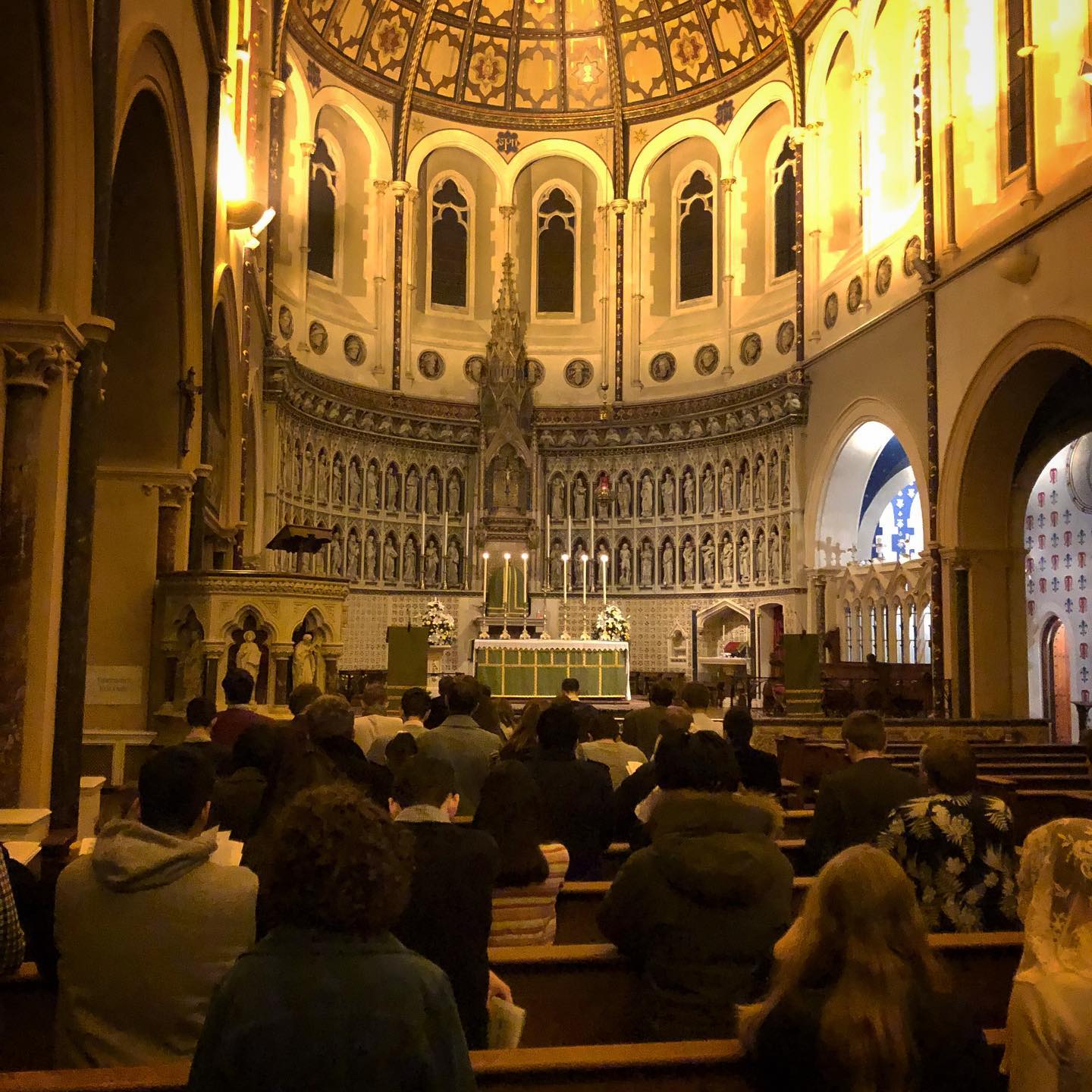
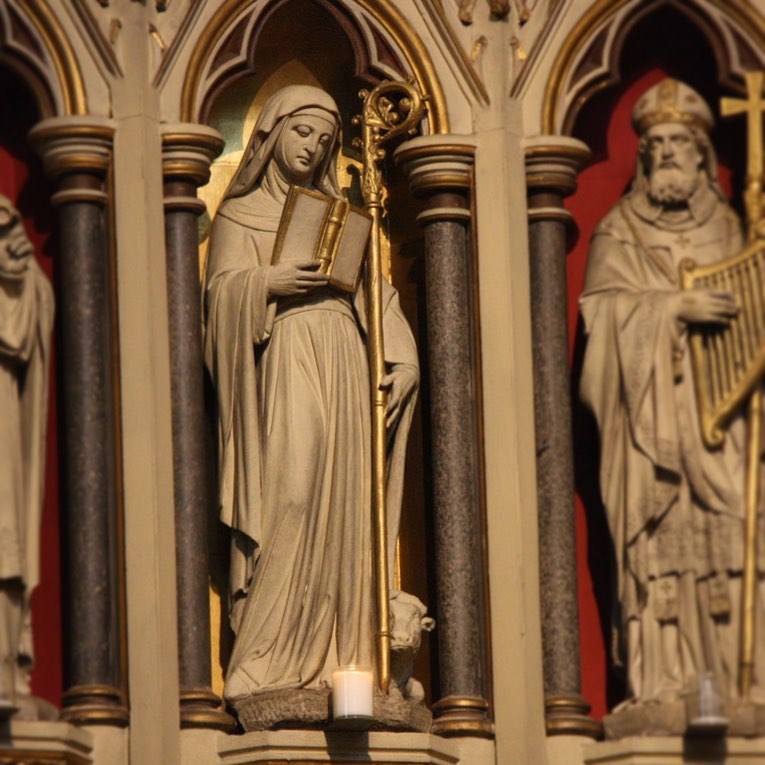
St Frideswide, patroness of the city and university of Oxford, with burning lamp on her feast day, complete with ox.

A prayer of St Cajetan for the city:

Look down, O Lord, from your sanctuary, from your dwelling in heaven on high, and behold this sacred Victim which our great High Priest, your holy Son our Lord Jesus Christ, offers up to you for the sins of his brethren, and be appeased despite the multitude of our transgressions. Behold, the voice of the Blood of Jesus, our Brother, cries to you from the cross.
Give ear, O Lord. Be appeased, O Lord. Hearken and do not delay for your own sake, O my God; for your name is invoked upon this city and upon your people; and deal with us according to your mercy. Amen.
That you would defend, pacify, keep, preserve, and bless this city, we beseech you, hear us.

#oxfordoratory

View on Instagram

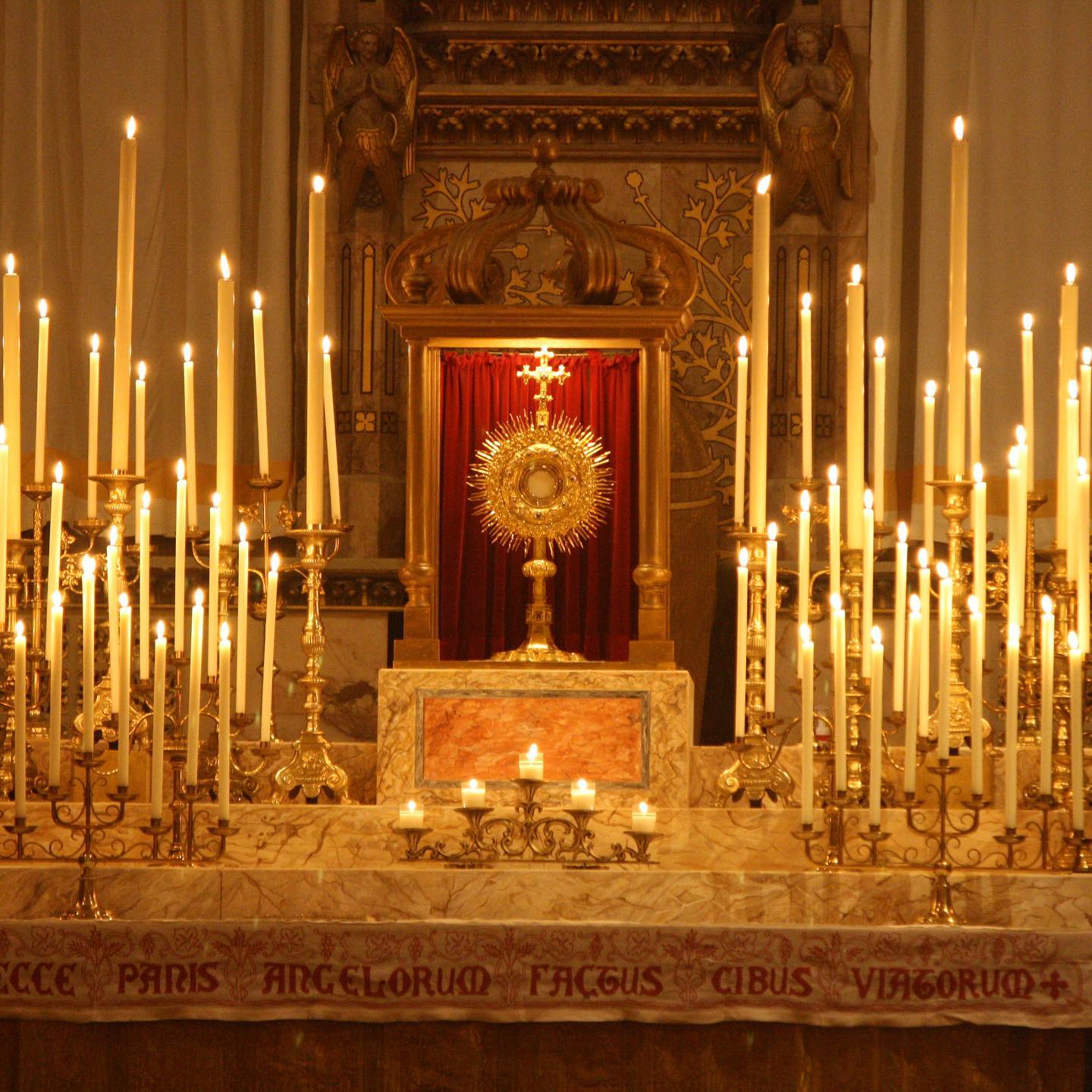
The Forty Hours has begun

Tonight
11pm Sung Compline followed by Benediction

All night vigil

Saturday
5am Sung Matins and Lauds
6am Low Mass in the Extraordinary Form
9am–10am Confessions as usual
10am Mass
5pm Musical Oratory with the Parish Choir
5:30pm–6:30pm Confessions as usual
6:30pm Sung Mass for Peace
9pm Sung Compline

Exposition until midnight

Sunday
Morning Masses as usual

Exposition resumes after 11am Mass

5pm Closing Choral Vespers, procession and Benediction

#oxfordoratory

View on Instagram

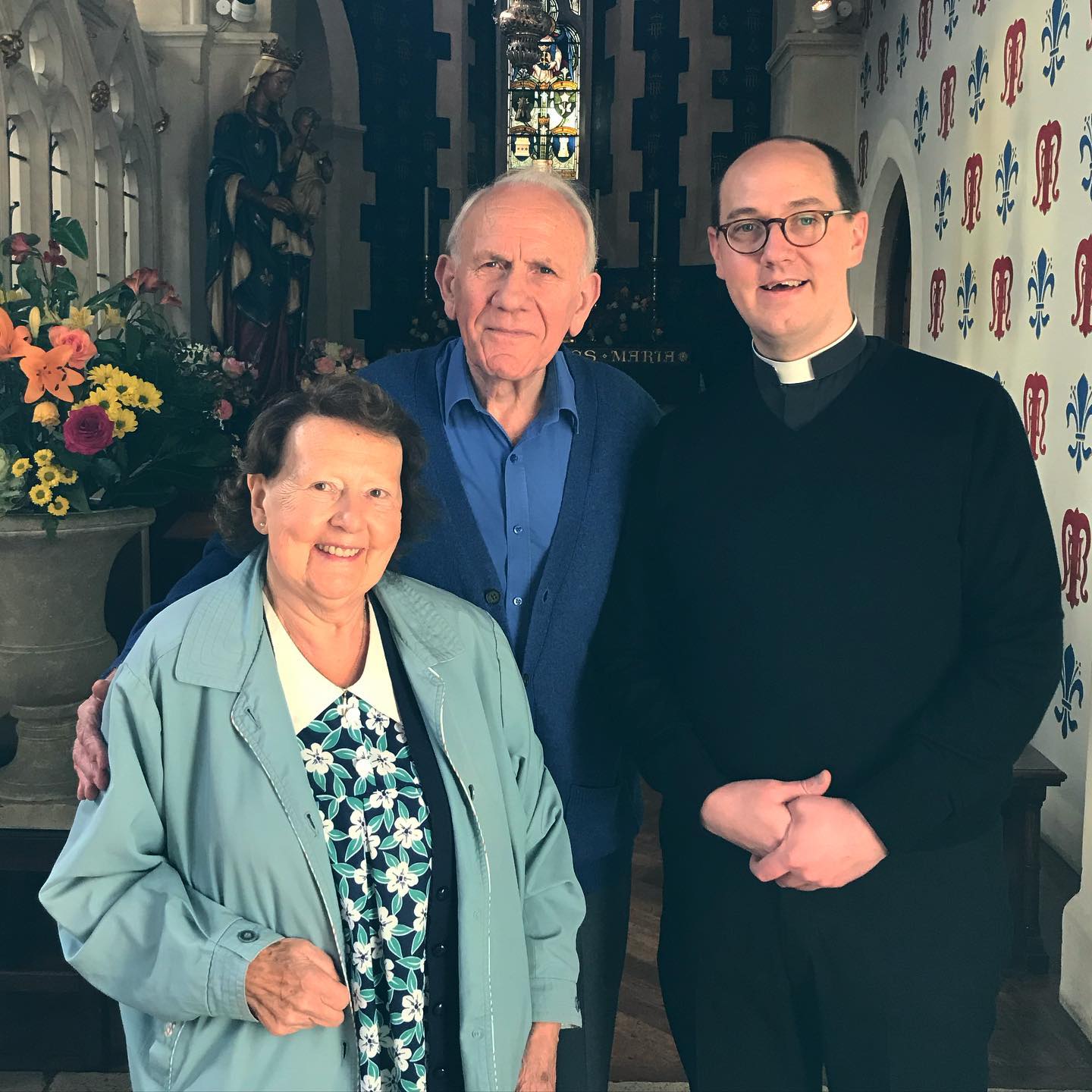
We were delighted to welcome Brian and Pat Barnes, who were married in our church 60 years ago today. Brian was baptised here, began serving at the altar at 8 years of age, and his family have a long association with the parish. The Fathers were very pleased to give them a blessing on their anniversary. #oxfordoratory

View on Instagram