Unfortunately this morning one of the Fathers tested positive for COVID. He has not been in contact with any parishioners since Sunday, his symptoms are very mild, and he is isolating. The rest of the community has so far tested negative. Masses continue as normal until further notice, but please continue to check our website for the latest updates in case we have to close the church. The Fathers will continue to take all necessary precautions. Please pray for us as we continue to pray for you.
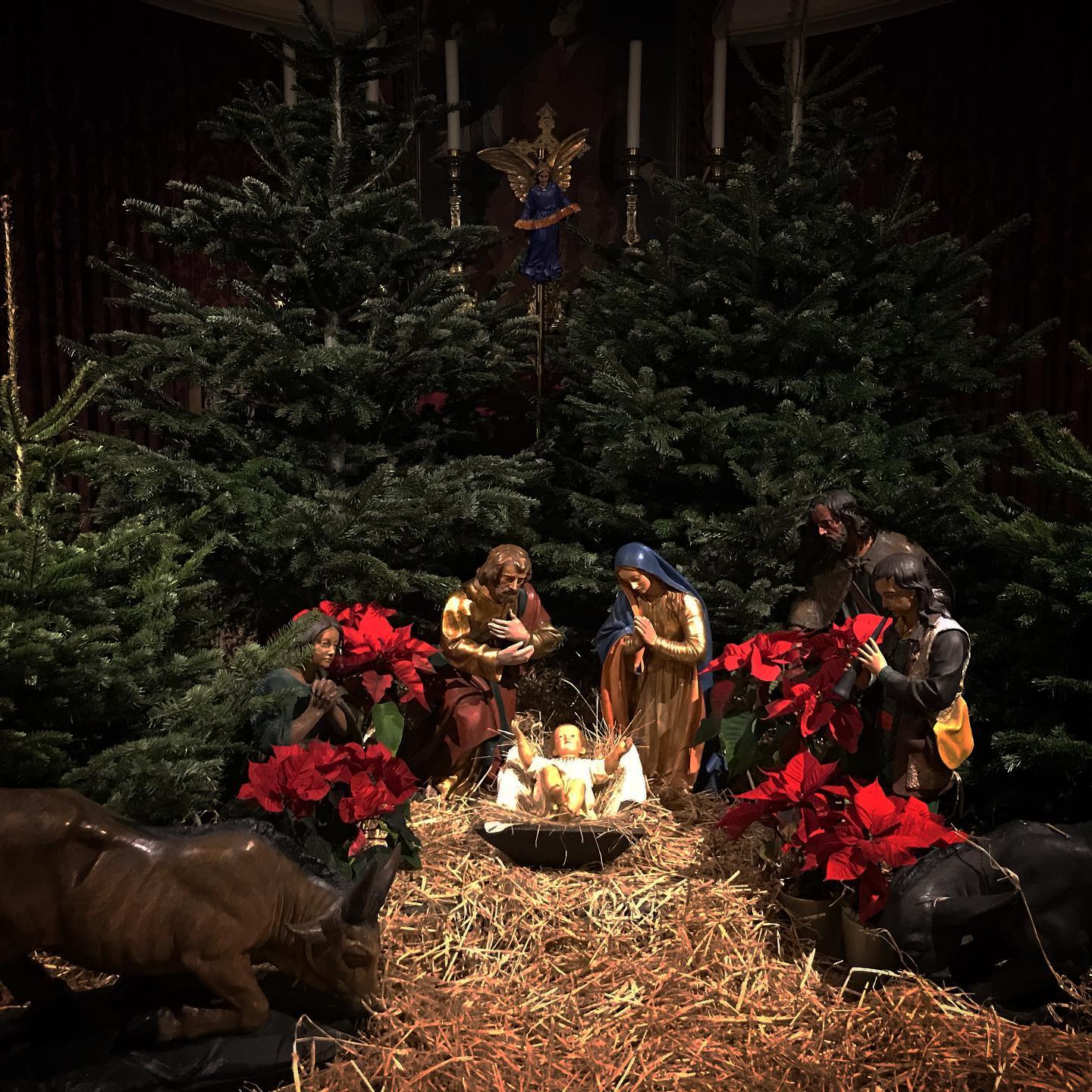
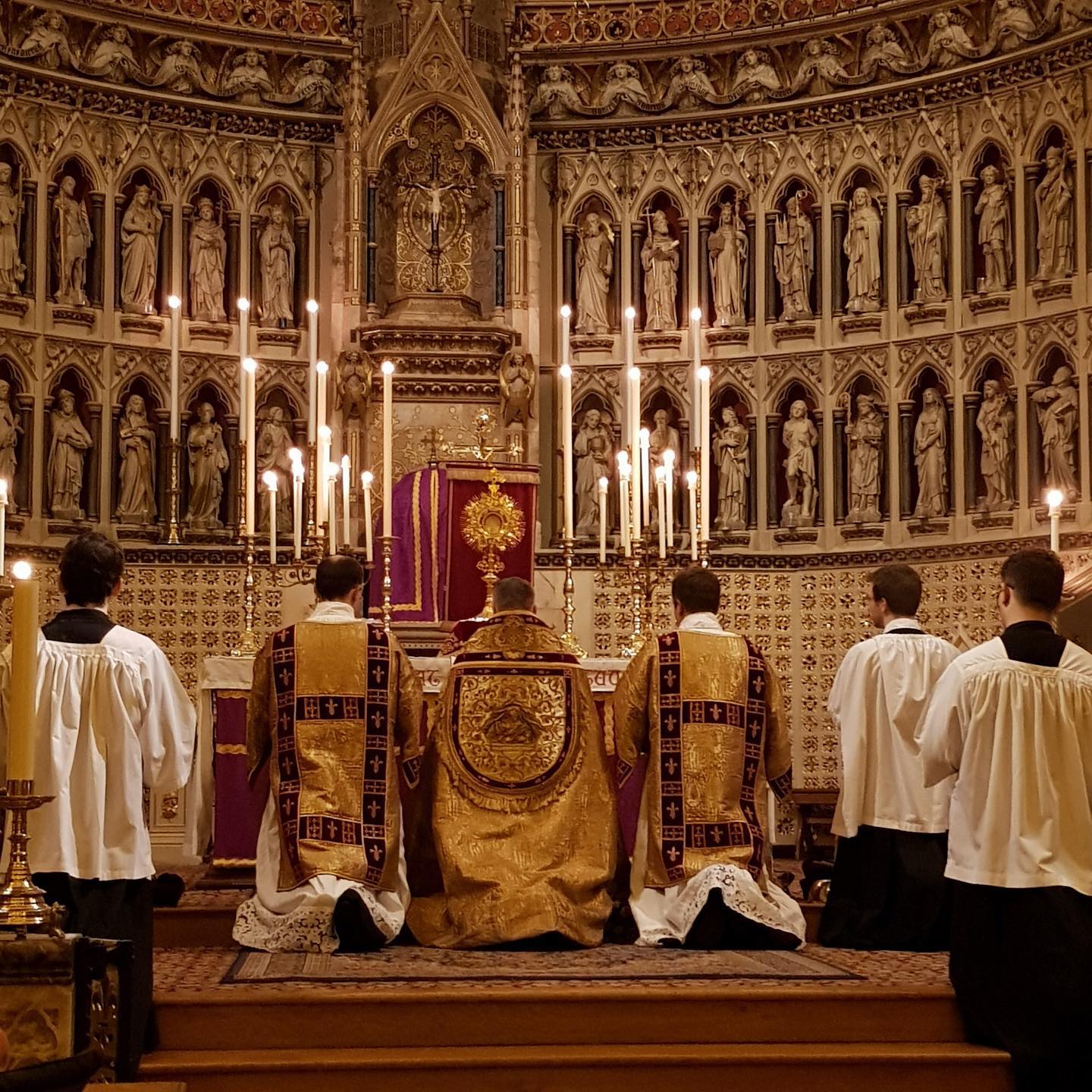
Our carol service last night concluded with Solemn Benediction of the Blessed Sacrament.
If you missed it in person, you can view the recording here: https://youtu.be/gAGMpWNBLkU
#oxfordoratory
Timing it right
We’re nearly at the end of 2021. It’s not the greatest year many of us have experienced, though perhaps not as bad as 2020. But even this year, like all years, is supposed to be a reminder to us of something more important. An event so important that all our years are counted from it. In three days’ time we will celebrate the 2021st anniversary of the birth of Christ.
Yes, we are probably out by a few years because someone didn’t add up properly somewhere along the line. And yes, even now, we can’t be 100% certain how far we’re out by. So just think how difficult it must have been to keep track of time in the ancient world.
Before people counted years since Christ’s birth, they had a number of other important events they used as reference points. And that pops up on Christmas Eve. There’s a book called the Martyrology that lists the feasts days and saints days that occur for every day of the year. And just before Midnight Mass begins, part of our celebration of Christmas will involve solemnly singing the entry for the 25th of December, which says:
When ages beyond number had run their course from the creation of the world, when God in the beginning created heaven and earth, and formed man in his own likeness; when century upon century had passed since the Almighty placed his bow in the clouds after the Deluge, as a sign of covenant and peace; in the twenty-first century since Abraham, our father in faith, came out of Ur of the Chaldees; in the thirteenth century since the People of Israel were led by Moses in the exodus from Egypt; in around the thousandth year since David was anointed King; in the sixty-fifth week of the prophecy of Daniel; in the one hundred and ninety fourth Olympiad; in the year seven hundred and fifty two since the foundation of the City of Rome; in the forty second year of the reign of Caesar Octavian Augustus, the whole world being at peace, Jesus Christ, being eternal God and Son of the eternal Father, desiring to consecrate the world by his most loving presence, conceived by the Holy Spirit, after nine months had passed since his conception, in Bethlehem of Judah was born of the Virgin Mary, and was made man: The Nativity of Our Lord Jesus Christ according to the flesh.
The Word was made flesh, God became a man, Jesus Christ was born at a specific moment in human history. This is not mythology that happened once upon a time. This happened at a particular time and in a particular place: in Bethlehem, 2021(-ish) years ago.
Why then? God could choose any time in the history of the world for his Son to be born. Why did he choose that one? The answer must be that there was something right about it. And this entry from the Martyrology seems to back that up.
In the forty second year of the reign of Caesar Octavian Augustus, the whole world being at peace…
So it seems that this was the right time. The world was at peace. Everything was ready. The world was prepared to receive the Son of God.
Except that we know that’s not quite true. St John’s Gospel tells us: He was in the world, and the world was made through him, yet the world knew him not. He came to his own home, and his own people received him not (1:10–11).
And this peace wasn’t all it’s cracked up to be either. The Roman Peace was incredibly violent. There were constant uprisings and rebellions across the empire. It was a peace that forced on people all across Europe a culture that depended on slavery, abortion and infanticide. It was a peace founded on military might, and maintained through the constant threat of violent execution. And it’s in the middle of this world that Christ chose to be born.
I’m not sure I would want to be born into a world like that. Why did God think that was a good time for his Son to enter our world? We can be certain he didn’t make a mistake. This was the opportune moment. The world may not have been perfect. But it was ready.
So many people think that they’re not ready for Christ because they are not yet perfect. None of us is. But we can still be ready. If we wait until we are perfect to receive Christ, then we’ll all be waiting a very long time. If God had waited for the world to be perfect before entering it, he would still be waiting. The Son of God entered our world as a human being because, even at its best, our world is still broken. Even when the whole world is seemingly at peace, it’s obvious that the world — and all the human beings in it — need a Saviour.
That entry from the martyrology looks forward. When it’s sung, the final line uses the same notes that are used to sing the Passion on Good Friday. Christ’s salvation is won for us on the Cross. But even while he is a newborn baby lying in the manger, he is still solving so many of our problems. Because whatever else may still be wrong in the world, he is now in it, here alongside us.
These reflections are sent out each Wednesday to all those on our mailing list. Click here to sign up to our mailing list, and receive our Sunday E-newsletter and these reflections straight to your inbox.
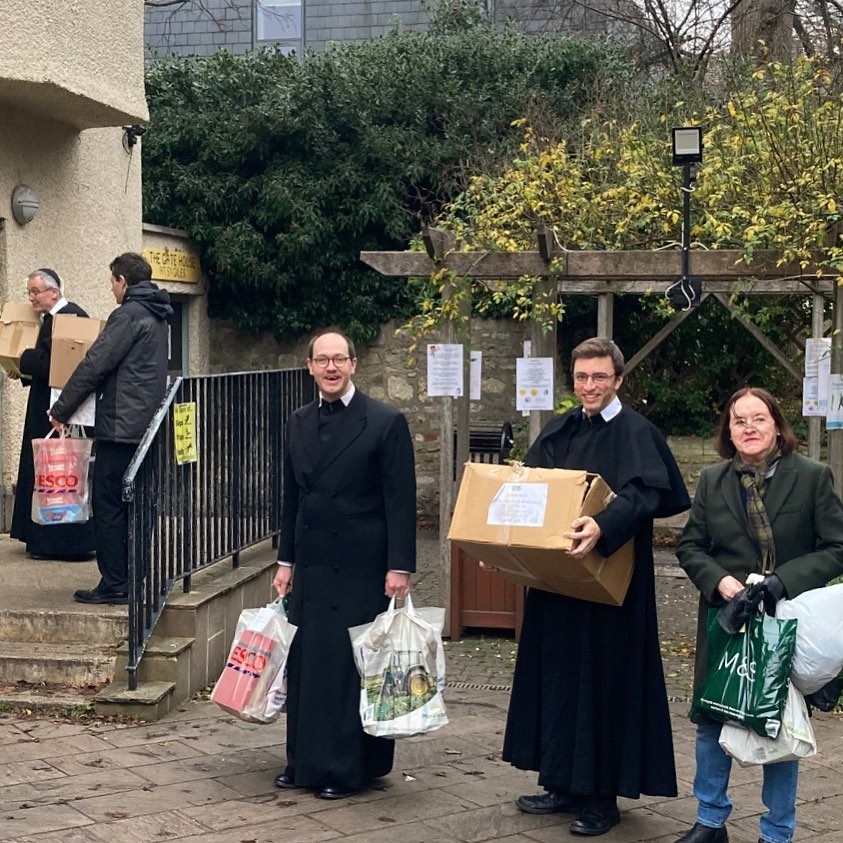
We had a really generous response to the Gatehouse’s appeal for Christmas presents for the homeless in Oxford, which we delivered on Sunday. Thank you to all who donated gifts. #oxfordoratory
Christmas Mass Times 2021
Wednesday 22 December
Carol Service with the Oratory choir at 8pm
Free entry, all welcome
Friday 24 December — Christmas Eve
Mass at 7:30 and 10:00
Confessions 11:00–17:00
Sung First Vespers of Christmas at 17:30
First Mass of Christmas with carols at 18:30
The church is closed after Mass until 23:00
Carols and readings from 23:15
Midnight Mass at midnight
Saturday 25 December — Christmas Day
EF Latin Mass at 8:00
Sung English Mass at 9:30
Solemn Mass at 11:00
Solemn Benediction at 17:30
No confessions or evening Mass
Sunday 26 December — The Holy Family
Masses at 8:00, 9:30, 11:00 and 18:30
No confessions
Monday 27 December & Tuesday 28 December
Mass at 10:00 only
Friday 31 December — New Year’s Eve
Mass at 7:30, 10:00, 18:00
Solemn Benediction and Te Deum at 18:30
Saturday 1 January — New Year’s Day
Mass at 10:00 only
No evening Mass or evening confessions
Monday 3 January
Mass at 10:00 only
Saturday 8 January
Epiphany Procession & Benediction at 15:00
Confessions
Before all weekday Masses
Saturdays 9:00–10:00 and 17:30–18:30
Sundays 7:40–8:00 and 18:10–18:30
Christmas Eve 11:00–17:00
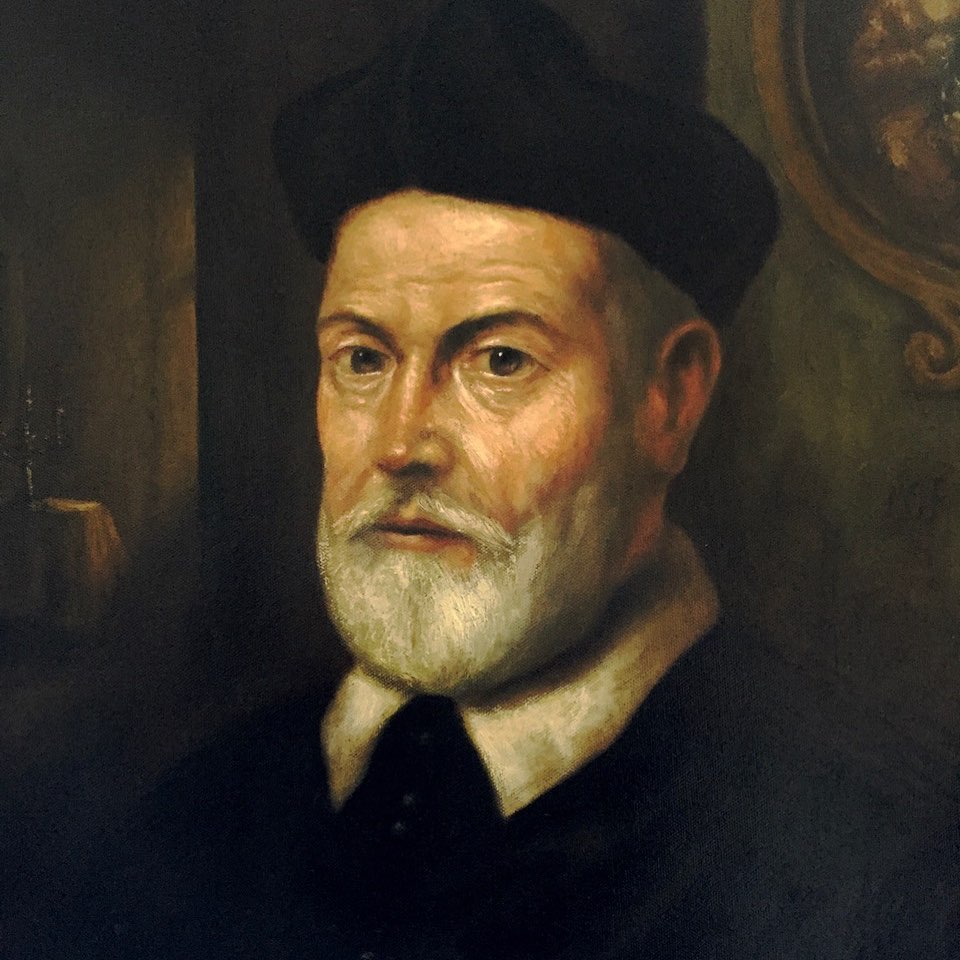
St Philip didn’t leave his sons a detailed rule of life to follow in the way that St Benedict or St Augustine did. Instead, the life of St Philip himself is meant to be our example.
But that’s quite hard when you think about it — so much of what St Philip did is impossible for us to copy, when we remember that his heart was enlarged with the Holy Spirit, and that he performed so many miracles, even raising the dead.
Today’s saint, Blessed Anthony Grassi of the Oratory in Fermo, set himself the task of becoming as much like St Philip as possible, with the result that in the end, he even began to look like him. But he managed to identify which elements of St Philip’s life are essential for us to copy…and which we can’t even try, unless God decides to grant us the same gifts he gave to St Philip.
“O Lord, hear our prayer and arouse in your Church that Spirit by which your priest blessed Antony unceasingly promoted peace among men and the beauty of your house. Through Christ our Lord. Amen.”
#oxfordoratory
The Coming of Our Lord
We hear a lot from John the Baptist in Advent. All the stories concerning him and his relationship with our Lord are presented to us. On one occasion, John sent his disciples to our Lord to ask, ‘Are you He who is to come, or are we to look for another?’ He did this not because he doubted in any way that his kinsman, Jesus, was the One. The question is more for the benefit of his own disciples. He had pointed out to them that here was the Lamb of God, and in case any doubted John’s gesture, he was sending them to explore for themselves. There were doubtless some among the little group who wanted John to be the Christ, and clung tenaciously to this view. However, this was an erroneous opinion, one which John, so just and honest, would have been quick to correct. So they went to Jesus and put their question to him, and received his answer. Are we to look for another? No, he says — we are not to look for another. Christ is the Lamb of God who takes away the sins of the world, and furthermore, there is no name under Heaven or on earth, by which men may be saved.
Advent is about the coming of our Lord, and of his coming in several different senses. In the first part of this season, we have been made to ponder the strange, dark teachings of Jesus concerning the end times, the Judgement and the warning that, for all of us, the sands of time are running out. So we have some eschatological fireworks, interlinked with the dreary certainty of our mortality. But there is also, threaded through this, the bright and hopeful expectation of the coming of our Lord as a baby at Christmas. The Lord is coming and we are expected to jump up and run to meet him.
I think that many Christians aren’t really too sure what this means. How do we prepare ourselves for the Lord’s coming, both at Christmas and at the End, ‘when he shall come again to judge the living and the dead.’ The thought that the secret thoughts and actions of all will be laid open can fill anyone with a measure of dread. Perhaps this is because we fear what others might think of us were they to be presented with the completed and unvarnished truth about us. I think it only fair to say that come the dreadful day, we are most likely to be worrying about our own sins, rather than anybody else’s. Besides, is this what the Lord wants? He wants us to look forward to his coming with joy. You know how it is when you are awaiting the arrival of a family member or dear friend. The eager anticipation, with which you have made the necessary (and some unnecessary ones too, no doubt) preparations. You just want the visit to be perfect and enjoyed by all. Surely it is the same for the coming of Christ. True, we may have forgotten some provisions, but we have made the room spruce and clean. The important thing is to make joyful preparations. For us, it is a matter of getting our lives sorted: the spring clean of the soul, the sincere effort to conform ourselves to our Lord’s teaching and will, employing the gifts with which he was endowed us, which sometimes we leave lying idle around. For now, we must fix our hearts on him with whom true joys are to be found, and not lose sight of the goal and the prize.
These reflections are sent out each Wednesday to all those on our mailing list. Click here to sign up to our mailing list, and receive our Sunday E-newsletter and these reflections straight to your inbox.
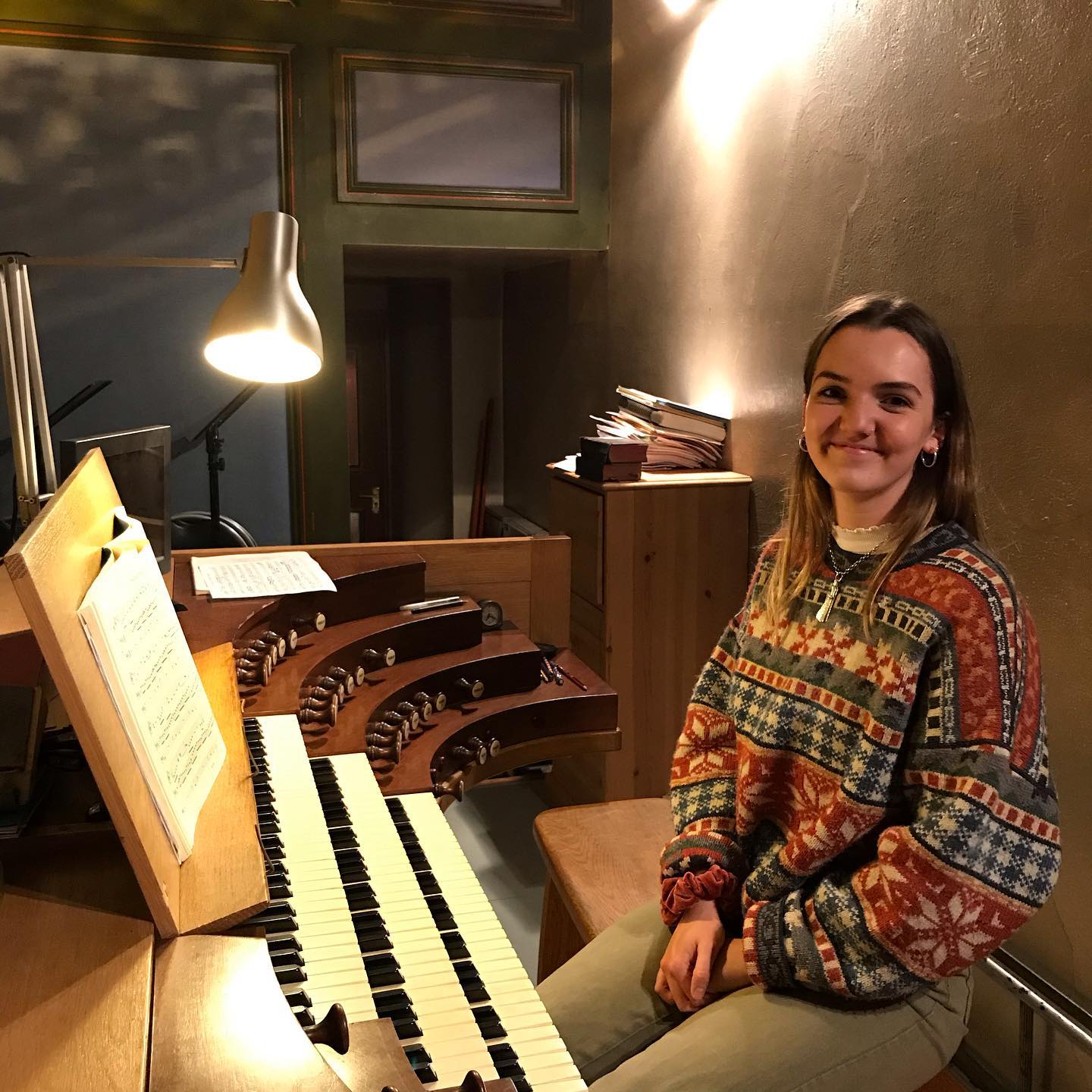
Welcome to Helen Birch, our new organ scholar! Helen will be working with and learning from Rory Moules, our Director of Music, at the Solemn Mass each Sunday for the next year.
Our organ scholarship was made possible through the gift of one generous benefactor. Find out more about supporting the work of the Oxford Oratory by becoming a friend:
oxfordoratory.org.uk/friends
#oxfordoratory
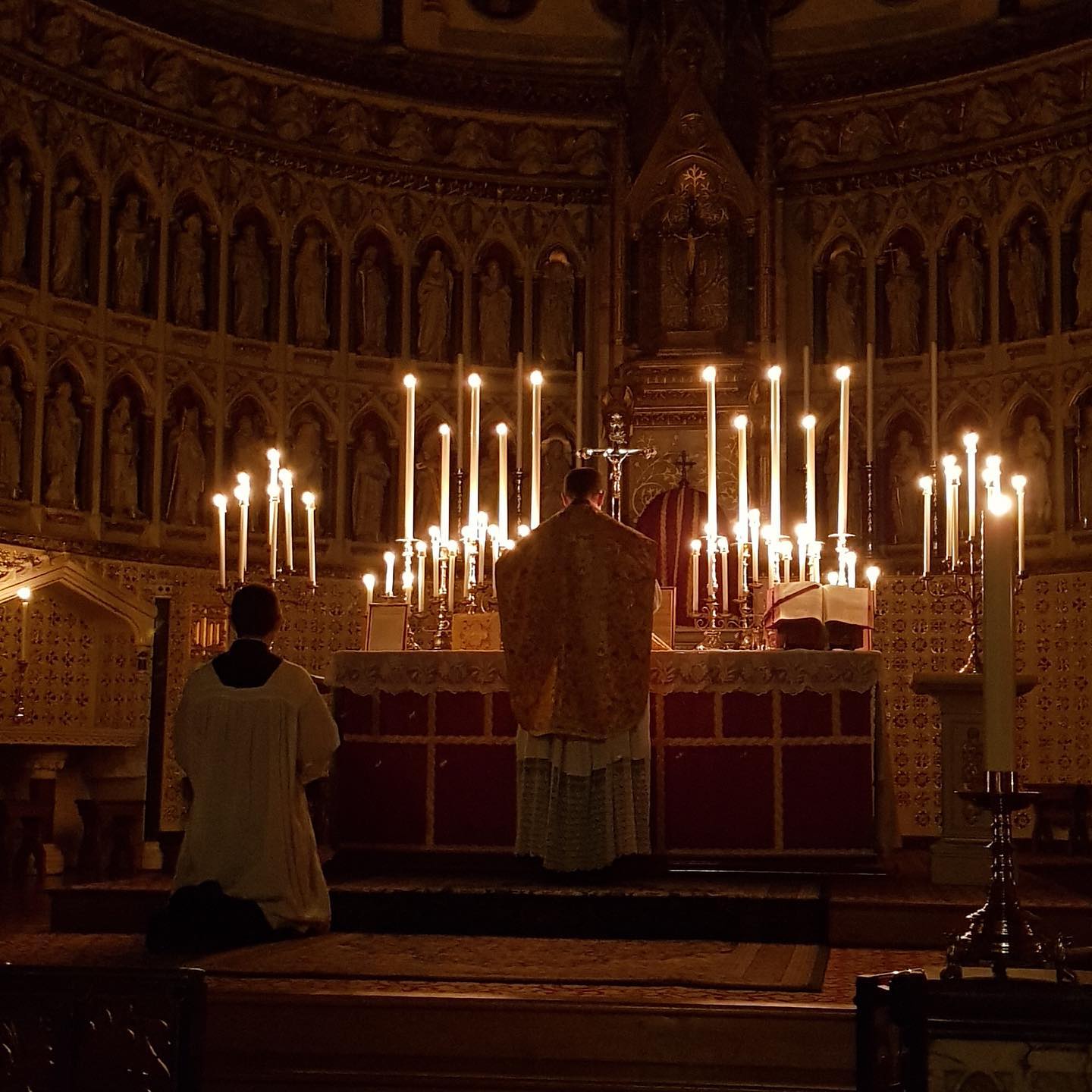
“Watch therefore—for you do not know when the master of the house will come, in the evening, or at midnight, or at cockcrow, or in the morning—lest he come suddenly and find you asleep. And what I say to you I say to all: Watch.” (Mark 13:35–37)
Watchfulness in action before dawn this morning at the Rorate Mass.
#oxfordoratory