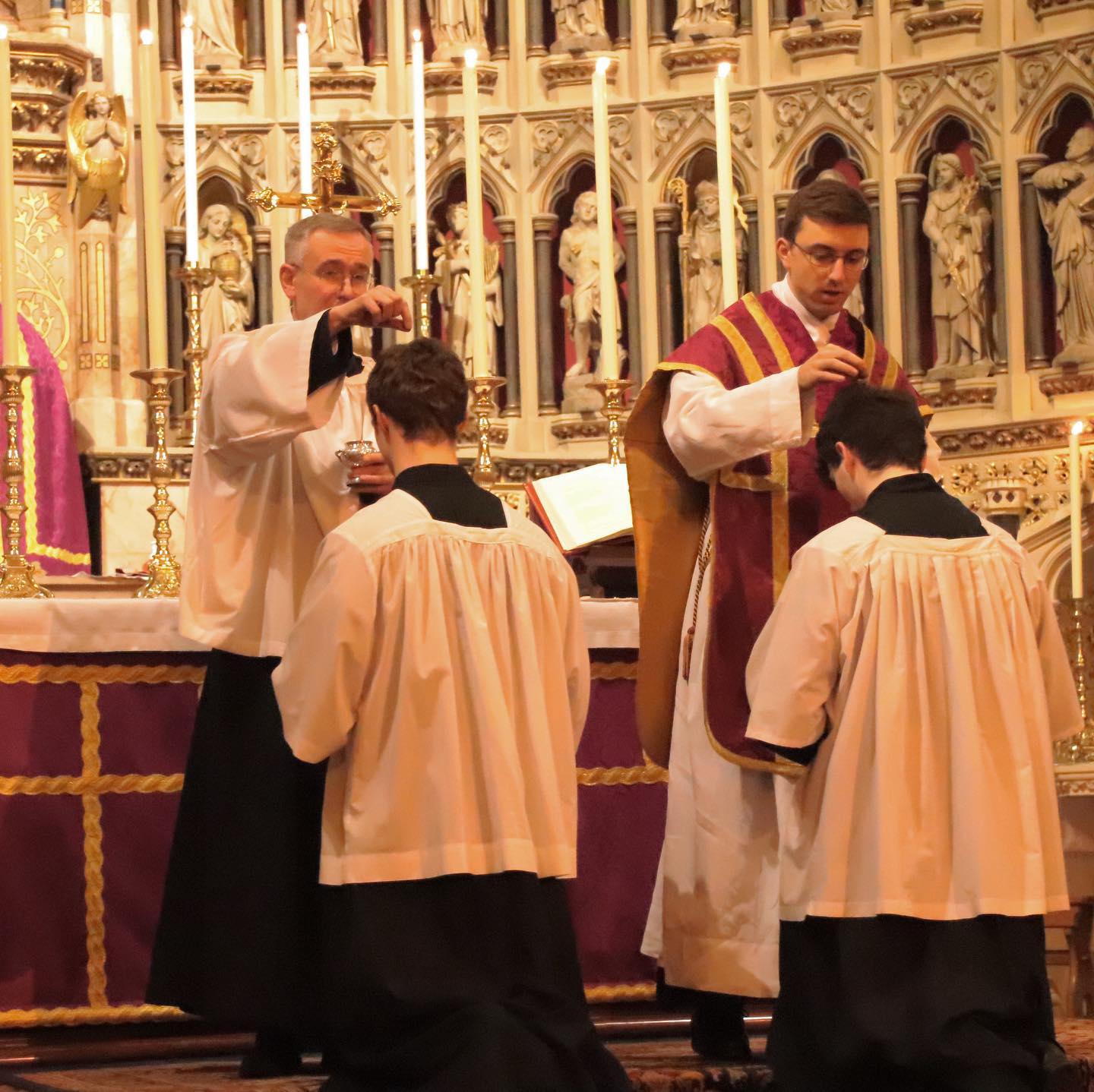
“Remember that you are dust and to dust you shall return.”
#oxfordoratory
The news reports these past seven days are as though they come from another age, and it is frightening to think that war has again broken out in Europe. Whatever shape it takes, however they arise, war and violence are not part of God’s plan for humanity, but rather he wishes that we live in peace with him and with each other. Sin divides. Sin causes enmity and conflict and the wages of sin, say the scriptures, are death. In a world where the plan of God for our wellbeing and where the commandments of God are overlooked, the result is what we see on the news in these days. Today begins the holy season of Lent when we focus on our sins, on our need for God’s mercy and make resolutions to try again with him. That Lenten resolve is shown into sharp relief by the events unfolding in our world today and they must give us cause to act.
In 1918, Pope Benedict XV wrote “To the Heads of the Belligerent Peoples” calling for an end to the Great War. He stressed that we must live up to the demands of that most universal of laws, the law of charity, and the commands of Christ, and do all that is in our power to be peacemakers. On the world stage, the solutions must be left to statesmen and governments, but to us there is an equally important charge, because we people of faith, we Christians, cannot ignore the threat to all of us and our common happiness and prosperity. If it causes us to worry, it must also spur us on to do what we can. And what can we do in the face of such events?
The peace that Christ offers us, the peace which he brings us is peace not as the world gives — fragile, contingent — but the very peace of Christ himself. This is what is gained when we live as citizens of a far greater city than this, as St Paul reminds us, when the very conduct of our lives, and our dealings with our neighbour is not the conduct of this world, but the conduct of the next. If we have stripped off the old self and put on a new self at our baptism, as St Paul exhorts us to, then we must exhibit those hallmarks of Christian goodness in the world — compassion, patience, kindness, humility and gentleness. Bearing with one another and forgiving one another in turn. And we must show those greatest of the hallmarks of Christian goodness: Faith, Hope and Charity, which have been given us. We must show those around us that this world in all its beauty and richness, but also in its finality and suffering, is not all that there is, and that our God hears our prayers and comes to our aid. We must witness to the fact that our true homeland is in heaven, and live that heavenly life now, in our small corner of the world, among our neighbours and friends. That is how we do our bit and it is no small task.
And most of all we must pray. We must pray for an end to violence and war. We must pray for the people of Ukraine and we must also pray for Russia and her people. We must ask the Lord who is himself the peace of heaven and great calm of earth, to cause his own peace and harmony to abide in the four quarters of the world. May he may bring wars on earth to an end; scatter those nations that delight in war, so that, as the ancient prayer says, “we may enjoy a quiet and peaceful life in all sobriety and fear of God,” and that at long last he may bring us all to that divine harbour of tranquility which is an eternity with him.
Lent is always a good time to take up spiritual tools and bear spiritual arms that bring peace, but those sentiments are even more poignant at a time like this. Perhaps the dust and ashes we place on our heads today might remind us this Ash Wednesday of the dust and ashes of a war torn place, of the lives of many thousands reduced to rubble, of the fragility of this life and how much we must rely on the Lord and live our lives for him knowing that only in him, only in his heart, do we find peace.
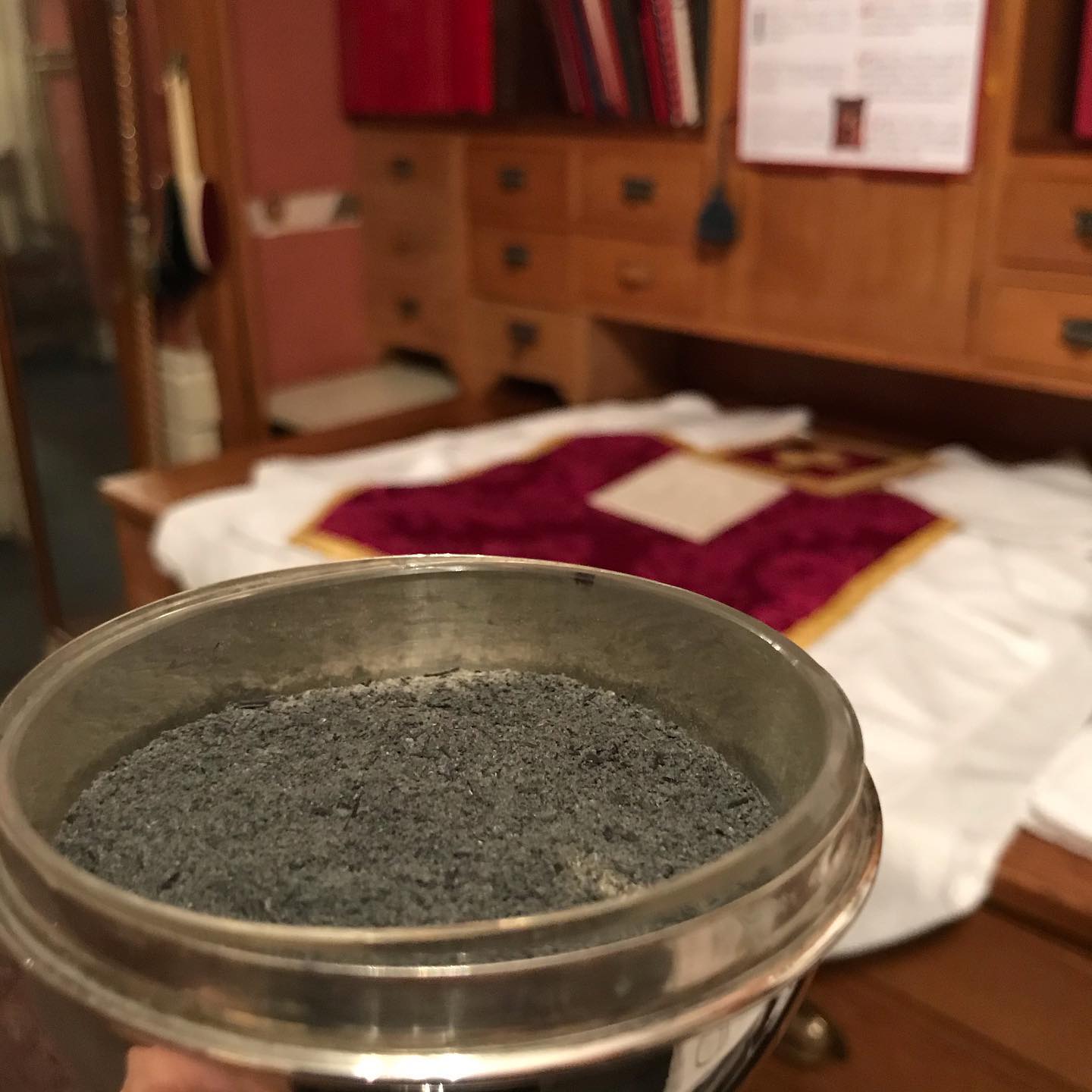
Tomorrow is Ash Wednesday and the beginning of Lent.
We are continuing the traditional Roman custom of sprinkling the ash on the crown of the head.
Masses with the distribution of ashes at 7:30, 10:00, 12:15 (EF) and 18:00 (Solemn).
#oxfordoratory
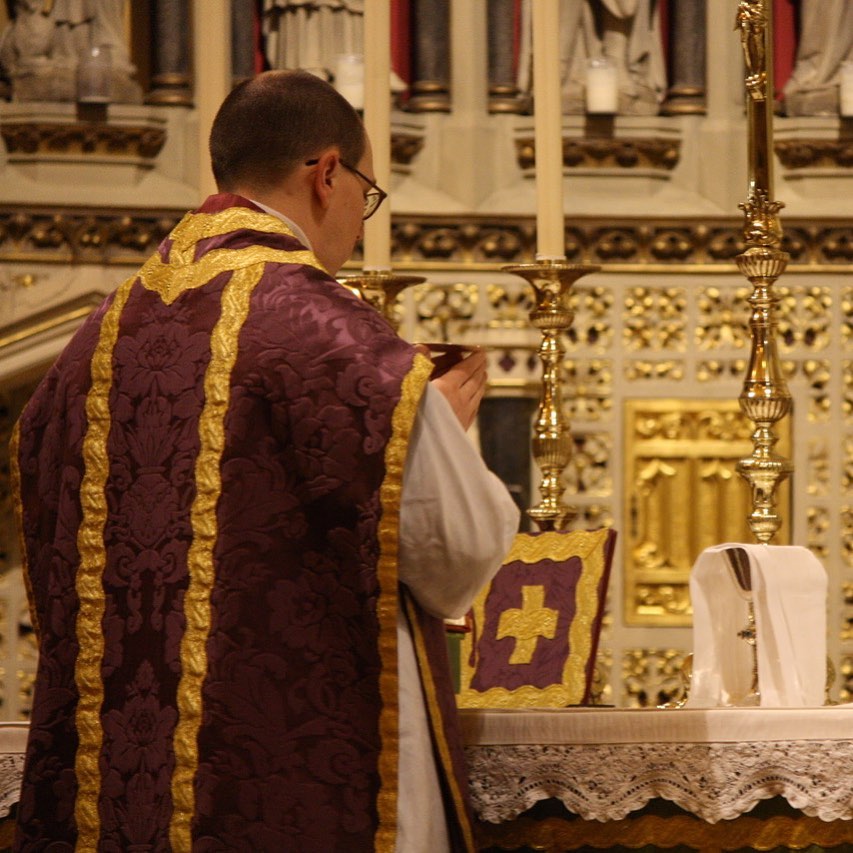
Mass this evening was a Votive Mass for an end to war.
Prayers for peace:
Christ, peace of heaven and great calm of earth, cause thy peace and quiet to abide in the four quarters of the world, and especially in thy holy Catholic Church. Bring wars on earth to an end; scatter the nations that delight in war, so that we may enjoy a quiet and peaceful life in all sobriety and fear of God.
Lord Jesus Christ, who said to thy apostles: ‘Peace I leave you; my peace I give you; not as the world gives do I give to you,’ look not on our sins but thine own merits, and grant to all thy servants that they, who are created and governed by the almighty Father, ransomed with thy precious Blood, and destined by thee to eternal life, may love one another with all their hearts for thy sake, and become one in spirit, and rejoice in thine unfailing peace.
Grant in thy mercy that states and nations may serve thee in all humility; and that all nations and tongues may form a single choir, to praise thee day and night; to bless thee and extol thee, King of the nations and their Lord, thee, the Prince of peace, the deathless King of all time.
Almighty God, who art the Father of all men upon the earth, most heartily we pray that thou wilt keep thy children from cruelties of war, and lead the nations in the way of peace. Teach us to put away all bitterness and misunderstanding, that we, with all the brethren of the Son of Man, may draw together as one gathering of peoples, and dwell evermore in the fellowship of the Prince of peace, who lives and reigns with thee in the unity of the Holy Spirit, now and for ever. Amen.
#oxfordoratory
Wednesday 2 March Solemn Mass 18:00
Ash Wednesday
Mass XVIII Plainsong
Miserere Allegri
Inter vestibulum et altare Ceballos
Emendemus Byrd
Sunday 6 March Solemn Mass 11:00
1st Sunday of Lent
Missa Emendemus Palestrina
Domine, quando veneris Palestrina
Super flumina Babylonis Palestrina
Saturday 12 March Solemn Mass 11:00
Solemn Votive Mass of the Five Saints
400th anniversary of the canonisation of St Philip Neri, St Ignatius Loyola, St Francis Xavier, St Teresa of Avila and St Isidore the Farmer
Missa Laetatus sum for 12 voices Victoria
Jubilate Deo G Gabrieli
Caro mea vere est cibus Palestrina
Te Deum Plainsong
Te Deum Demessieux
Sunday 13 March Solemn Mass 11:00
2nd Sunday of Lent
Missa Quarti Toni Victoria
Voce mea Porta
Pater peccavi A Gabrieli
Sunday 20 March Solemn Mass 11:00
3rd Sunday of Lent
Missa Ductus est Jesus Esquivel
Salvator mundi Tallis
Manus tuæ, Domine Morales
Friday 25 March Solemn EF Mass 18:00
The Annunciation of the Lord
Missa Dixit Maria Hassler
Ave Maria Guerrero
Sancta Maria, succurre miseris Victoria
A Fancy Byrd
Sunday 27 March Solemn Mass 11:00
4th Sunday of Lent (‘Lætare’)
Kyrie (Missa Brevis in G) Bach
Laetatus sum Scarlatti
Ecce quomodo moritur justus Handl
Agnus Dei (Mass in B minor) Bach
Kyrie, Gott heiliger Geist BWV 671 Bach
This year we will be celebrating the 400th anniversary of St Philip’s canonisation on 12 March. It’s a sobering thought that this is probably the last Philippine centenary most of us will celebrate. It’s not likely that those who celebrated 500 years since his birth in 2015 will make it to the fifth centenary of his death in 2095. The members of Young Oratory will already be preparing to retire when the Oratory reaches the age of 500 in 2075.
There’s quite a gap in the middle, and so we must make the most of our last great Philippine year for a while. Make sure you join us for our Solemn Mass at 11am on March 12!
We are fortunate to have been around for such a concentration of Oratorian celebrations in recent years. As well as all these centenaries, many of us have witnessed both the beatification and canonisation of St John Henry Newman, Our Cardinal. It was the same saint who famously wrote:
God has created me to do him some definite service; he has committed some work to me which he has not committed to another. I have my mission—I may never know it in this life, but I shall be told it in the next. Somehow I am necessary for his purposes. I have a part in this great work…
As he continued this meditation, Our Cardinal reflected on how our relationships with other people — ‘the bond of connection between persons’ — enable us to play a part in God’s work. Through our friendships, we can draw others closer towards God. And even if we find ourselves separated from all we know and love, we should trust God has a plan that he is bringing to fruition through us.
Therefore I will trust him. Whatever, wherever I am…still he knows what he is about.
This idea leads quite naturally into another: that we find ourselves in a particular time and a particular place for a reason, whether we are aware of it or not. St Paul says that God has marked out our appointed times in history and the boundaries of our lands so that we would seek and even find him (Acts 17:26–27). Our relationships, our time and our place all play a definite part in our journey towards God.
This is a comforting thought, when news headlines seem to report disaster after disaster and crisis after crisis. We find ourselves living in a world that, in many ways, needs rebuilding. Even the Church is no exception.
But there is a reason that we find ourselves living at this time and in this place. And perhaps all these anniversaries are meant to encourage us to look at the example of St Philip, who lived through a time of great difficulty. Rome suffered from plague and poverty in his lifetime — both physical and spiritual. It was a time of terrible corruption in the Church, and vast swathes of Catholics were lost to schism and heresy in the reformation. But what Philip did in Rome 500 years ago, what John Henry did in Birmingham 150 years ago, we are called to do here and now in Oxford. St Philip teaches us:
We must have confidence in God, who is what he always has been, and we must not be disheartened because things turn out contrary to us. When tribulations, infirmities, and contradictions come, we must not run away in a fright, but vanquish them like men. Let us throw ourselves into the arms of God, and be sure that if he wishes anything of us, he will make us good for all he desires us to do for him. Do not let a day pass without doing some good during it.
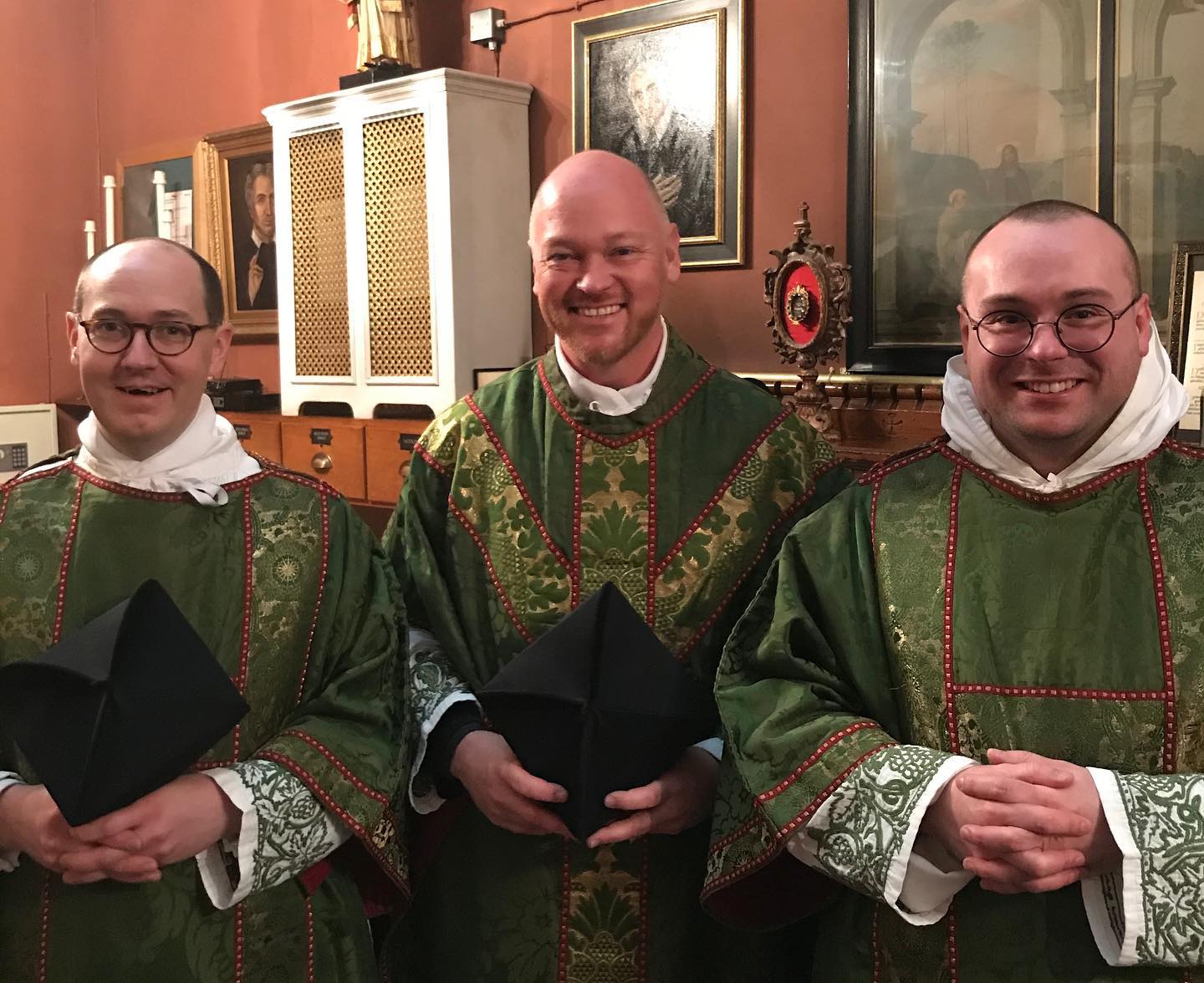
Today was Fr Gregory’s last Sunday with us before he returns home to the Oratory in Port Elizabeth. We look forward to his next visit! #oxfordoratory
‘Love is of God: and everyone who loves is born of God, and knows God. He who does not love, does not know God; for God is love.’ (1 John 4:7–8)
Jacob is not perhaps one of the more attractive characters in the Hebrew Scriptures. When we meet him in Genesis 25, he is a smooth, crafty little man, with no heart, concerned only with his own prospects, living by his wits rather than by hard work. Remember how he robbed his own brother of his father’s blessing and fled the consequences. No sign, as yet, of his becoming the great Patriarch! And yet, despite his deception, Jacob was chosen by God and privileged to be given not one, but two glimpses of heaven. The first was when he saw that ladder pitched between heaven and earth, with the angels ascending and descending. The second time was when he looked into Rachel’s eyes and fell headlong in love with her, showing that somewhere, deep down, he had a very human heart. We read how Jacob, having put himself out to move the heavy stone from the well, then watered the girl’s flock for her. He kissed her, and so full of love was he that he wept for joy and willingly bound himself to serve her father for seven years, in order that he might marry her. Surely falling in love is a foretaste of heaven, or at least it tells us something about the love of God for us and the love which we should have for Him.
I know, it is very easy to be dangerously sentimental when talking about love — either for God or anyone. Besides, the word has become so utterly debased, that when we speak of love, it seems to have very little in common with what we might mean in the context of faith and religion. For example, some may our find speaking of the Church as ‘the bride of Christ’ somewhat extravagant, or for that matter, wonder how on earth the Song of Songs ever made it into the canon of Scripture? We coyly tend to say that the Love of God isn’t like that kind of human love — and call it ‘Charity’ and a ‘theological virtue’; and yet, we are presented by St Paul, with a Christ who is shown as loving the Church with a love that is passionate and wholly sacrificial.
At my ordination, one of Charles Wesley’s marvellous hymns was sung. Forgive me if I quote it in full:
O love divine, how sweet thou art!
When shall I find my longing heart
All taken up by thee?
I thirst, I faint, I die to prove
The greatness of redeeming love,
The love of Christ to me.Stronger his love than death or hell;
Its riches are unsearchable:
The first-born sons of light
Desire in vain its depth to see;
They cannot reach the mystery,
The length and breadth and height.God only knows the love of God;
O that it now were shed abroad
In this poor stony heart!
For love I sigh, for love I pine;
This only portion, Lord, be mine,
Be mine this better part.For ever would I take my seat
With Mary at the Master’s feet:
Be this my happy choice;
My only care, delight, and bliss,
My joy, my heaven on earth, be this,
To hear the Bridegroom’s voice!Thy only love do I require,
Nothing on earth beneath desire,
Nothing in heaven above:
Let earth and heaven, and all things go,
Give me thine only love to know
Give me thine only love.
There’s nothing cold or rigid here, is there? ‘For love I thirst, for Love I pine!’ ‘My only care, delight and bliss, my comfort here on earth be this, to hear the Bridegroom’s voice.’ You may have noticed how often Our Lord was particularly fond of using weddings as subjects for some of his parables.
Here at the Oratory, we have many weddings each year. It is always a joy to meet with these young (and sometimes, not so young) couples who, having found each other and fallen in love, now want to bind their lives together in that covenant we call marriage. Whenever we encounter two people who have fallen in love, we should rejoice and smile with them, rather than view their joy with a weary, jaundiced eye and a cynical indifference — which is so unattractive, so un-Christlike! The lover looks on his beloved and sees in her (and vice-versa) something of no ordinary beauty, grace and goodness, which others may not see with such intensity, if at all. The true lover looks on the beloved with something akin to adoration and with utter humility in their presence. I’ve seen it many times — a humble gratitude mixed with the joy which comes from knowing that the other has responded to their love, not with a slap in the face or a harsh rebuff, but with a wonderful and full return of their affection. And it does — it must — work both ways.
Now, what does this suggest to us about God’s love for us and ours for Him? That He loves us, we cannot doubt — though we may well wonder what on earth He sees in us that He finds loveable. Still, we read in the Gospels all that our Lord did and endured for love of us, and isn’t it truly wonderful to be so loved, and humbling, giving rise to great joyfulness. This is evident in the lives of the saints. Our own dear St Philip, was universally known for his joyful spirit, which came from knowing how much he was loved by God. Grasp that and we too can experience ‘the peace of God which passes all understanding’.
The notion of being in love with God is one which had never occurred to me, until a Pentecostal Christian friend at College remarked of our local Catholic priest, ‘that man is really in love with God’ — and he certainly was. It was glowingly self-evident, just as it is in couples who are deeply in love with one another, which is not to say that it is always easy: ‘the course of true love etc’! Yet Paul teaches us: ‘Love endures all things’. Mere poetry? Just a nice idea? I suppose Jacob, must have loved Rachel very much to have been prepared to labour for seven years to win her hand. Yet, such was his love for the girl in whose eyes he had glimpsed heaven, those years seemed like days to him. Such should be our love for the Lord. It may seem a long way off being reality in our lives, but we can pray for a ‘love which believes all things, hopes all things and endures all things’, and moreover, a love which never ends.
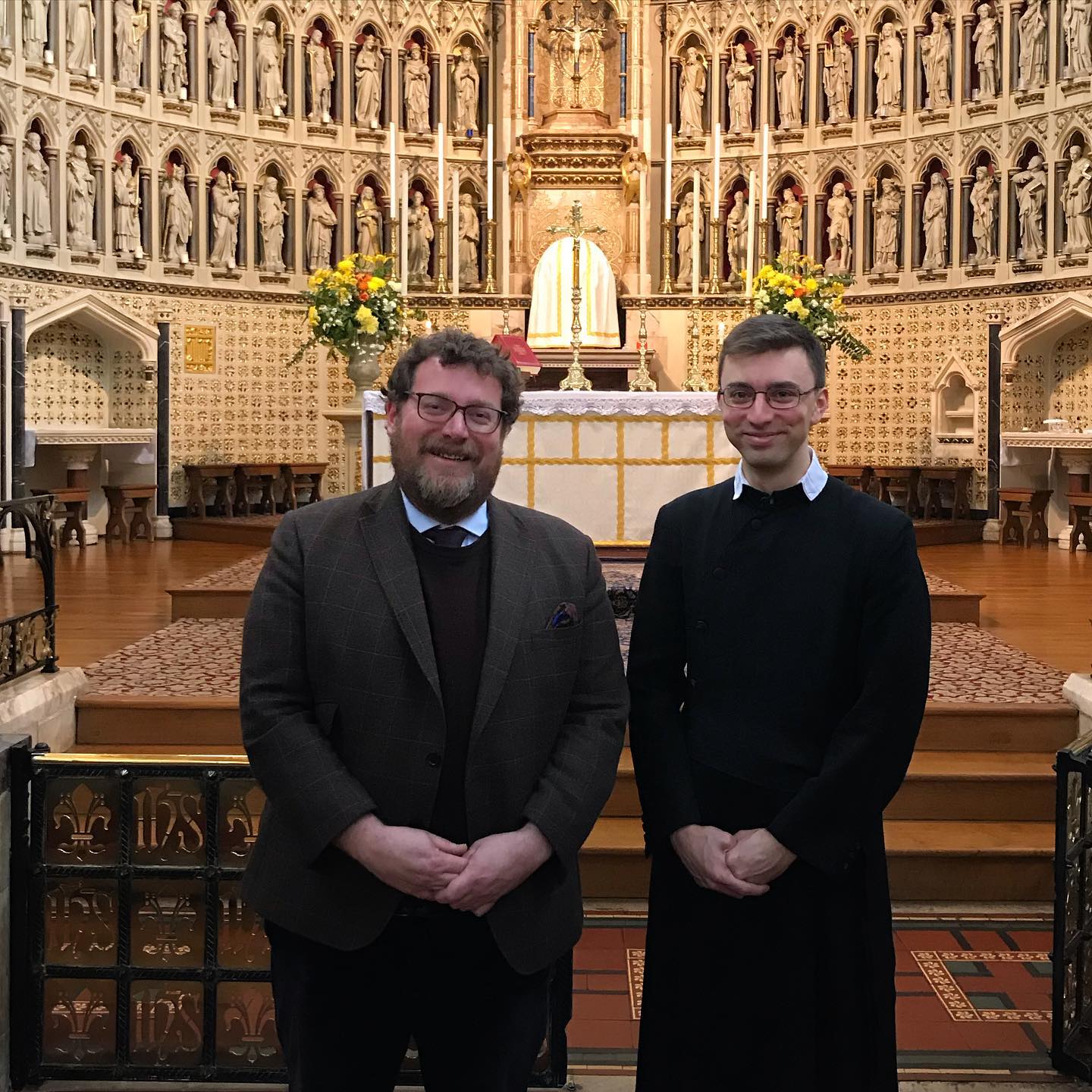
Welcome to another new Catholic, Matthew, received into full Communion with the Church today.
#oxfordoratory
In the scriptures, whenever there is an experience of the presence of God, there is a corresponding experience of unworthiness and incompleteness. We saw this in the readings on Sunday: Isaiah laments his sinfulness before the Lord, and has to be consoled by an angel; St Peter cries out after the miraculous haul of fish, “Depart from me Lord, for I am a sinful man”. In the presence of God, we see ourselves as we really are, rather than as we’d like to think we are. It is only in the light of the love of God that we see how much we need God. St Paul tells us this very clearly in his Letter to the Romans: “God shows his love for us, in that Christ died for us while we were still sinners.” We only know that God loves us because we know that we are sinners in need of love and mercy. We know that God loves us because Christ died on the cross to save us. We know that God loves us because without him we are incomplete, we are nothing, we are not even fully human. We know that God loves us because we depend on him for everything. Our acknowledgement, then, of our sinfulness and our need for God is not an obsession with sin and guilt — it is a celebration of the love of God. Confessing sin becomes a confession, a public conviction, of the greatness and the love and the mercy of God.
From that point of view, acknowledging our sinfulness and our unworthiness before God, the angels and saints, and each other (as we do at the beginning of every Mass) becomes not only a good thing to do before we proceed with the celebration of Mass, but a prerequisite; not a laudable way to prepare for the Eucharist, but something without which the rest of the Mass makes no sense at all.
How can we give praise and thanks to the Father for all that he has done and continues to do for us — which is what the word Eucharist means — if we cannot see why we need God in the first place? How can we join our sacrifice to that of Christ, cling to the Lord’s cross, and rise with him in his resurrection — all of which we do during the sacrifice of the Mass — if we do not recognise that Christ died to save us from sin? The Mass has no meaning if we are not sinners.
How very different from the sort of picture of human beings presented to us by the social media, television stations, magazines, and advertising agencies. We are told we deserve all sorts of things “Because I’m worth it”; we are given a “Chicken Soup for the Soul”, “I’m ok, you’re ok”, picture of a fulfilled human being: where a hot bath, a pilates class, a walk on the beach makes it all better; where earning money and spending money make us happy; where having sparkling white teeth, a flat stomach, and a massive sense of self-worth are the pinnacle of human perfection. Being a human being means I have the right to do anything I like, as long as it makes me happy. There is no place for God in that worldview, and certainly no need for redemption. And if there is no place for God, no need for him, if we can be happy and fulfilled without him, then praying or going to Mass is a pretty pointless waste of time.
During Mass we do not confess individual sins; that’s what the Sacrament of Penance is for. We are invited by the priest to acknowledge our sinfulness, not so much remembering all the spiteful or greedy or careless things we’ve done or said or thought recently, but admitting that we are the sort of people who always do or say or think such things. We are not obsessing over individual actions or omissions, but acknowledging that we are sinners, we have sinned, and that without God’s grace we’ll go on sinning.
And we do this without the many excuses and explanations with which we so often delude ourselves and others. How often do we do something or say something that we know to be wrong, or hurtful, or dishonest with the excuse, “Well, it’s not that bad really”, or “She deserved it”, or “Everyone else is doing it”, or “The Devil made me do it”. We beat our breasts and say — not just once, but three times so that we really mean it — “through my fault”! I sin. Me. This person here. And I’m sorry. I am in no position to judge anyone else. I cannot hold grudges against others for the wrongs they do to me. I cannot demand that I’m paid back what I’m owed. I cannot withhold compassion and mercy from other people. Because I am no better than anyone else. I too am a sinner. I too need the love and mercy of God. I too need to be redeemed.
But confessing our sins is pointless unless we then hear the words of the priest, “May Almighty God have mercy on us, forgive us our sins, and lead us to everlasting life” — and not just hear those words, but know them to be true. We confess our sins because we know that God loves us, forgives us, raises us up, and counts us worthy to stand in his presence and serve him: at Mass, at home, at school or work, and forever in the life to come.