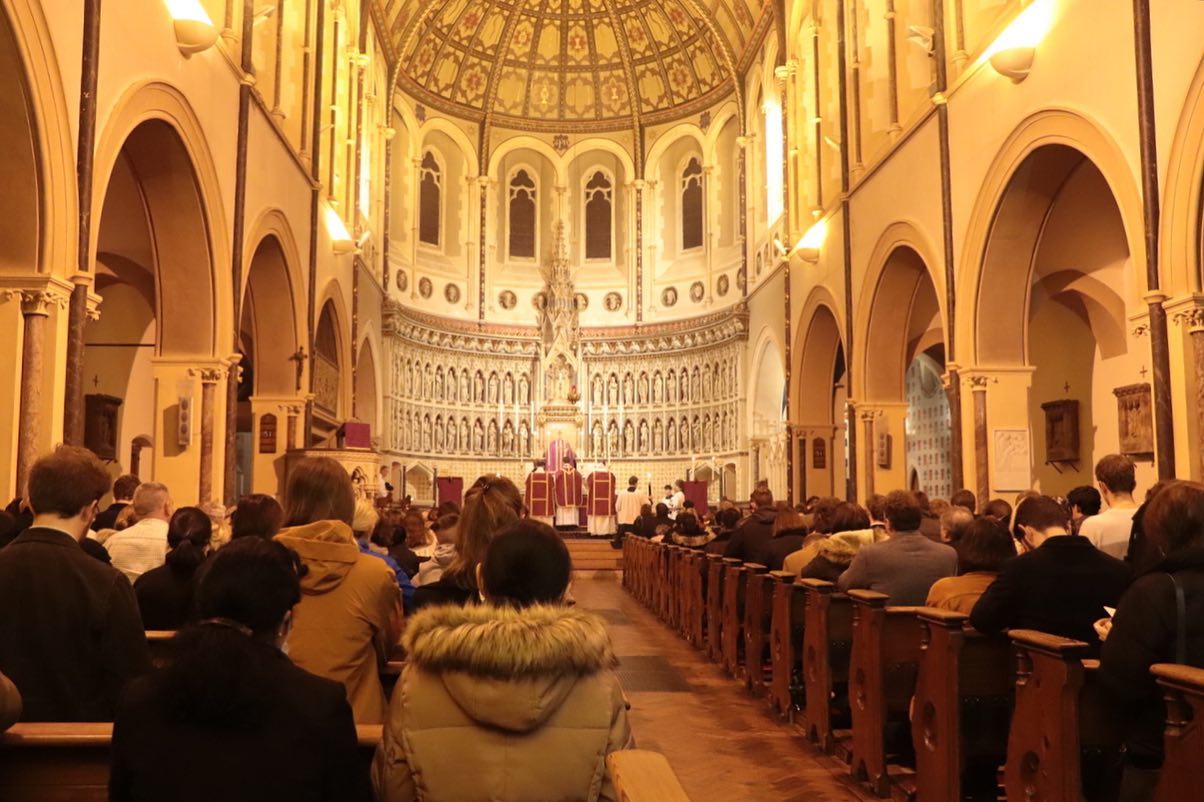
400 years of sainthood today!

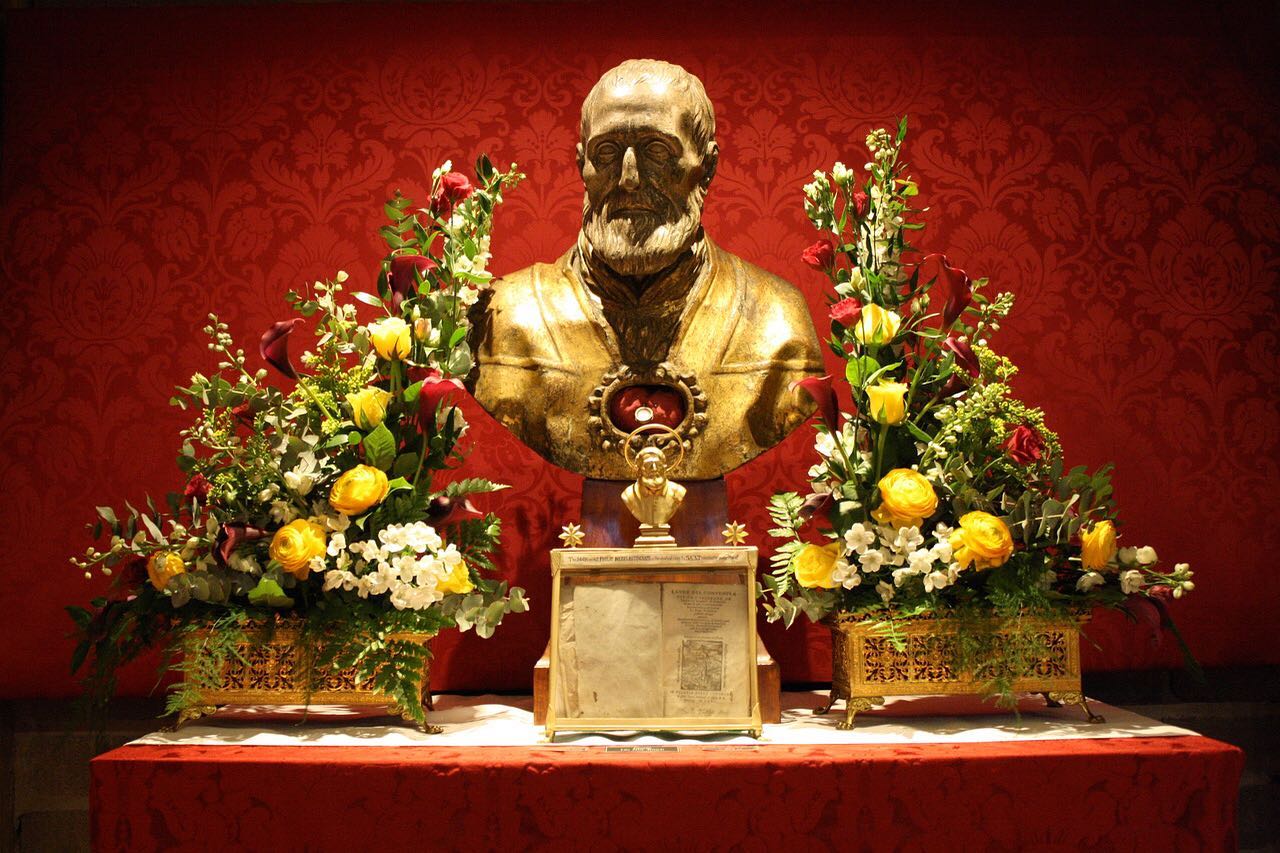
At the heart of our exhibition about St Philip is a reliquary bust. In front is a smaller reliquary containing St Philip’s own copy of the ‘Laudi spirituali’ by Jacopone da Todi. We know it’s his because he wrote his name on the title page.

#oxfordoratory

View on Instagram

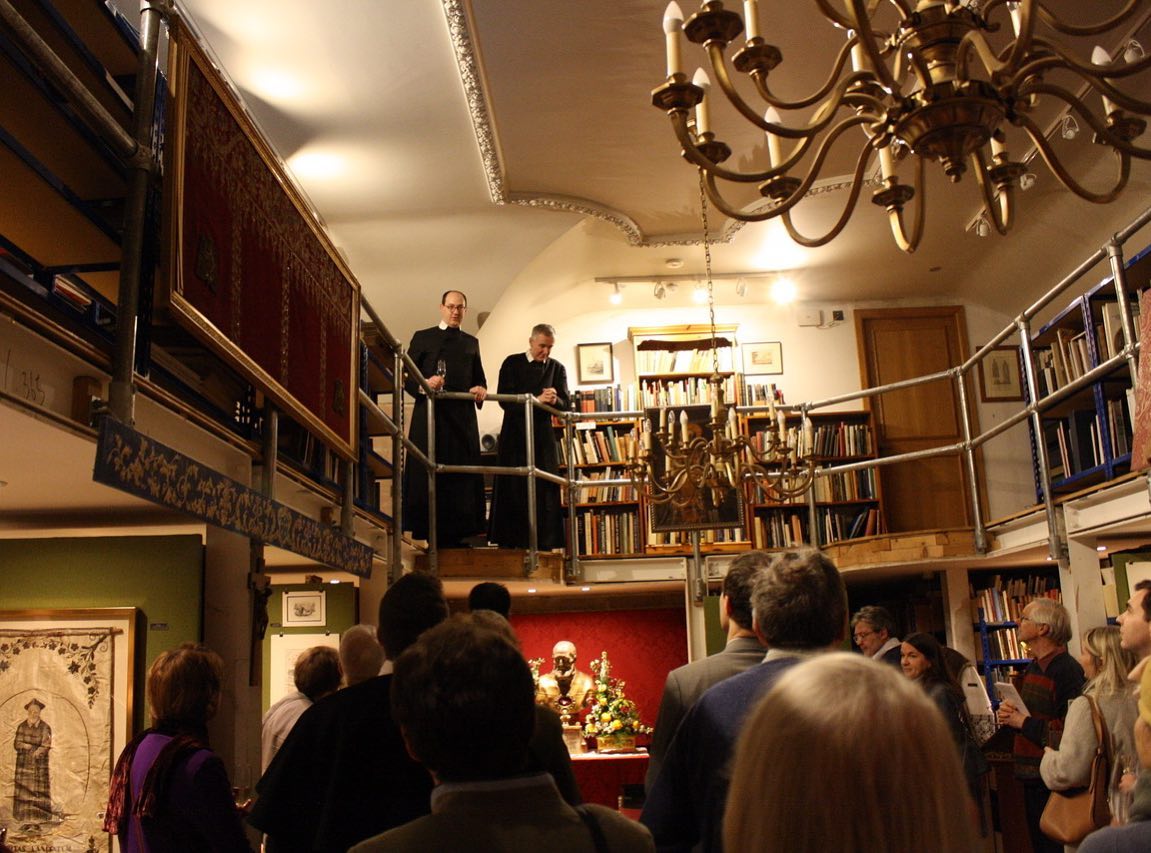
Our exhibition ‘St Philip Neri, Mirror of the Divine Life: Devotion to St Philip in art and artefact’ opened tonight with the curator’s tour for the Friends of the Oratory.

The exhibition will be open to the public this weekend, after the Solemn Mass of Thanksgiving on Saturday until 5pm, and again on Sunday from after the Solemn Mass until 4:30pm. Make sure you visit if you are in Oxford!

Find out how to join the Friends of the Oratory at www.oxfordoratory.org.uk/friends

#oxfordoratory

View on Instagram

The Holy See has granted a plenary indulgence (under the usual conditions) for all those who visit an Oratory church and take part in the celebrations for the 400th anniversary of St Philip’s canonisation.

Join us for our Solemn Mass at 11am on Saturday 12 March for a chance to gain this indulgence! Those who cannot join the celebrations in person for a grave reason are able to obtain the indulgence at home by praying before any image of St Philip.

Read the full text of the decree on our website: https://tinyurl.com/spn400

#oxfordoratory

View on Instagram

Plenary Indulgence for the Canonisation Jubilee

The Apostolic Penitentiary, in order to increase the devotion of the faithful and for the salvation of souls, by virtue of the faculties given to it in a most special way by the most Holy Father in Christ and Our Lord, Francis by Divine Providence Pope, in response to the recent request of Fr Michele Nicolis, Procurator General of the Confederation of the Oratory of St Philip Neri, on the occasion of the solemn celebrations in honour of St Philip Neri which will take place from 12 March 2022 to 12 March 2023, kindly grants a Plenary Indulgence from the heavenly treasures of the Church under the usual conditions (sacramental confession, Eucharistic communion and prayer for the intentions of the Supreme Pontiff) to Christ’s faithful who are truly penitent and moved by charity, which can also be applied to the souls of the faithful detained in Purgatory by way of suffrage, if attending one of the churches of the Confederation of the Oratory of St Philip Neri throughout the whole world to celebrate, they visit in the form of a pilgrimage and there take part devoutly in the jubilee celebrations, or at least spend a suitable length of time in holy considerations before the relics of St Philip, concluding with the Lord’s Prayer, the Apostle’s Creed and invocations of the Blessed Virgin Mary and St Philip Neri.

The elderly, the sick and all who for a grave reason cannot leave home can equally obtain the Plenary Indulgence, having the disposition of detachment from any kind of sin, with the intention of fulfilling, as soon as possible, the three customary conditions, if they join themselves spiritually to the jubilee celebrations before another image of St Philip, and offer the merciful God their prayers, sufferings or hardships.

In order to facilitate access to divine forgiveness through the keys of the Church, this Penitentiary firmly asks the Fathers of the Confederation of the Oratory of St Philip Neri to make themselves available, with a ready and generous spirit, for the celebration of Penance.

This decree is valid for this time only. Anything whatsoever to the contrary notwithstanding.

Given in Rome, at the Palace of the Apostolic Penitentiary, on 12 March 2022, on the 400th anniversary of the canonisation of St Philip Neri.

Mauro Card. Piacenza
Paenitentiarius maior

Perfect Saints

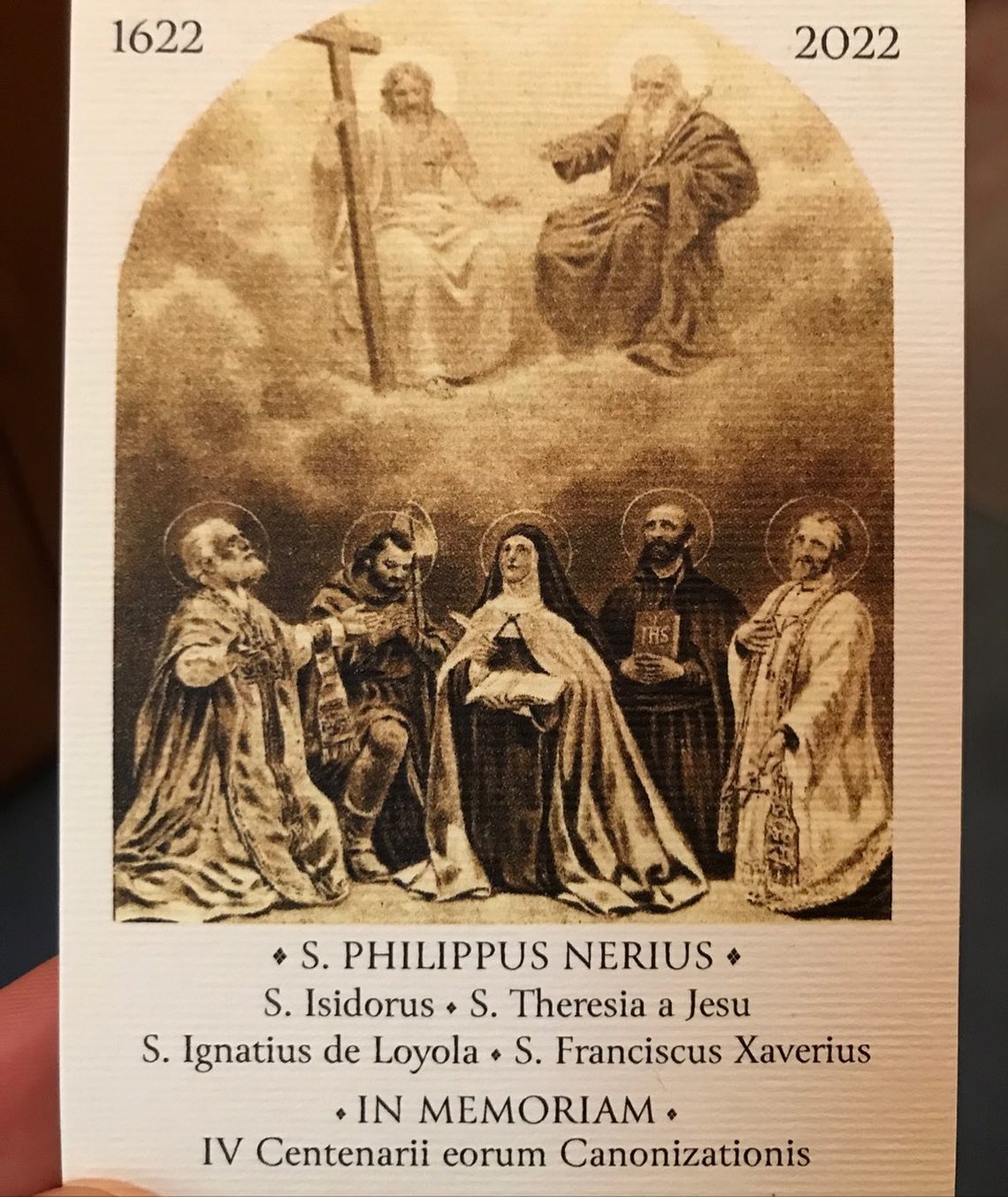
On Saturday we will celebrate the 400th anniversary of the canonisation of Our Holy Father St Philip. He was canonised on 12 March 1622, in illustrious company, together with St Ignatius Loyola, St Francis Xavier, St Teresa of Avila, and St Isidore the Farmer. All five are famous saints, who in their own different ways have had a profound effect on the Church: St Ignatius, the founder of the Jesuits, St Francis Xavier, perhaps the greatest missionary since St Paul, the Carmelite mystic, reformer and Doctor of the Church St Teresa, and St Isidore — the odd-one-out — a married man, father and farmer, the patron saint of Madrid and of the Spanish Royal Family.  

We might find it hard to identify with saints like these, whose stories we know so well, and whose great deeds and holiness are so rightly renowned. They seem so different from us, so otherworldly. We put them on pedestals and light candles in front of them, but they are not like us — or rather, we think we are not like them. They are perfect; we are very aware of our imperfections. They have done amazing things and changed the world in significant ways; we think we are pretty insignificant and ordinary. But when we look at the whole communion of saints, we see such variety, so many different expressions of holiness and virtue in such very different individuals; we see in the lives of the saints glimpses of what God can do in any person’s life. 

St John Henry has rather a lot to say about this very point. All Christians have the same basic calling, the call to sanctity, the call to perfection. But what that means is peculiar to the individual person, and the state of life to which one belongs. There are, Newman writes, very different modes of pursuing and practising perfection, though they look very different from each other. One person may observe one counsel, and another another, and yet each may be perfect. St Gregory the Great was perfect, although he did not fast like St Basil, who was himself perfect though he did not give up reading secular literature like St Teresa did. She was perfect although she could not go on the missions like St Francis Xavier, and he was perfect even though he did not spend his days singing the praises of God in choir or withdrawing to the desert like St Bruno. Even within the same Order there are different way to perfection: St Thomas and Fra’ Angelico were both Dominicans and both saints, although Thomas wrote theology and Angelico painted pictures of Our Lady. St John Chrysostom and St Gregory Nazianzen were both bishops, but Chrysostom commented on St Paul and St Gregory wrote poetry. Our task in this life, says our Cardinal, is to become saints, and becoming a saint is to find the service God has created us for, that which he has not committed to another — and to do it perfectly.

So our perfection probably will not lie in reforming a great city or founding an Order, preaching the Gospel in far-off lands or ascending the heights of mystical contemplation in a convent, but rather in the perfection of a priest, or a mother, or a teacher, or a doctor, or a housewife, or a student. And what, for Newman, is perfection? It does not mean any extraordinary service, anything out of the way or especially heroic — not all have the opportunity of heroic acts or sufferings. By perfect, he writes, we mean that which has no flaw in it, that which is complete, that which is consistent, that which is sound. He then is perfect who does the work of the day perfectly and we need not go beyond this to seek for perfection. We are perfect, if we do perfectly our duties.

We are all called to be saints, but most of us have to work out our salvation in fear and trembling in all the thousands of great and small tasks we have to do throughout the day, in our own place among our own people and in our own communities. For most of us, our perfection will be found among the dirty dishes, at the desk, behind the wheel of a car, in the supermarket, at work, at school. That is difficult, precisely because it is so ordinary. But it is consoling too, because we don’t have to be St Philip or St Ignatius or St Isidore the Farmer, to enter the kingdom of heaven. We just have to be ourselves, but be that perfectly: performing the ordinary duties of the day and of our state well, doing them consciously and deliberately, with care and attention and devotion and love.


These reflections are sent out each Wednesday to all those on our mailing list. Click here to sign up to our mailing list, and receive our Sunday E-newsletter and these reflections straight to your inbox.
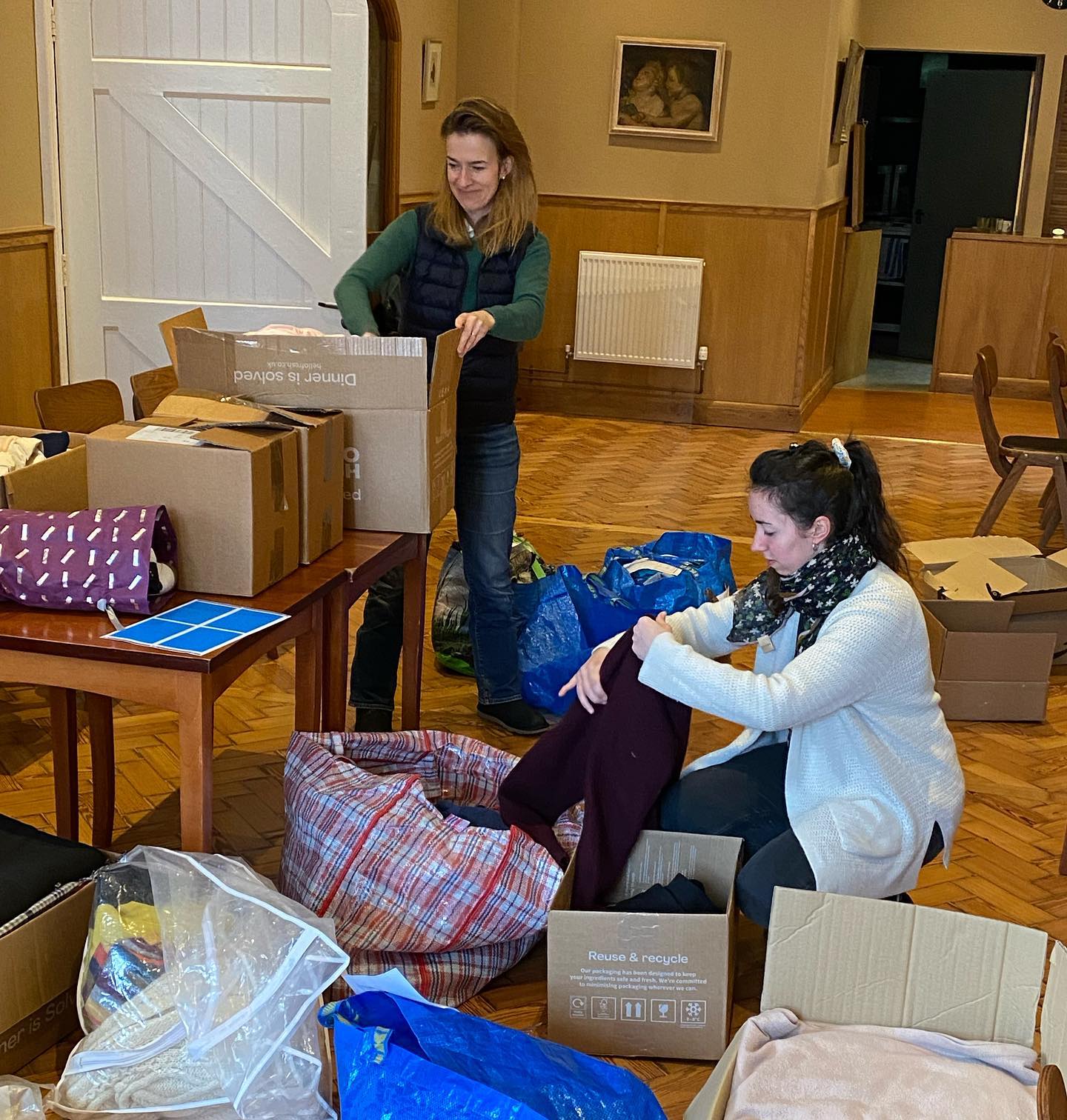
Packing of our donations for Ukraine is in progress! Thank you to our Oratory Outreach volunteers. The depot is now overwhelmed with boxes so sadly we can’t accept any more donations for now. #oxfordoratory

View on Instagram

Aid for Ukraine

UPDATE: The organisers of this collection are now swamped with donations. They have asked us to hold off on donations until we are notified what is needed by their partners in Ukraine. Please do not bring items to the Oratory for now.

Oratory Outreach has partnered with a local Russian family to help send 5 lorries with aid to Ukraine and its Polish border. This will go directly to refugees and Ukrainian families.

Can you help?
Please bring donations of the following to the Porter’s Lodge before Friday 11 March:

  • Nappies
  • Milk formula
  • Baby food
  • Non-perishable foodstuffs (that do not require cooking)
  • High protein foods e.g. peanut butter
  • Warm clothes and blankets
  • Over the counter medicines
  • Baby wipes
  • Toothpaste
  • Toothbrushes
  • Soap and hygiene products
  • Simple medical supplies