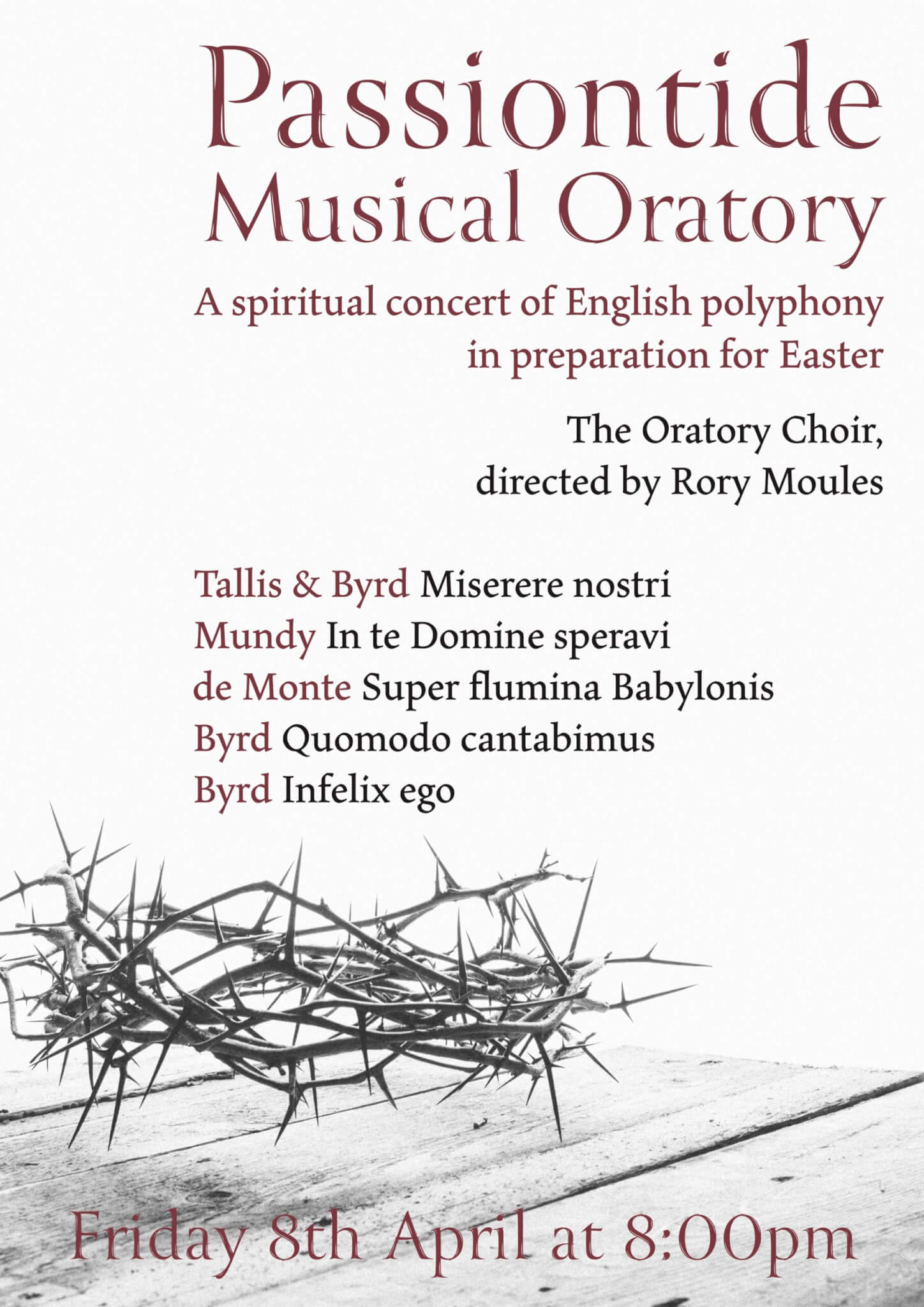
Join us for our Passiontide Musical Oratory — a spiritual concert of 16th century English polyphony in preparation for Easter sung by the Oratory Choir, directed by Rory Moules.

Friday 8 April at 8pm

Tallis & Byrd Miserere nostri
Mundy In te Domine speravi
de Monte Super flumina Babylonis
Byrd Quomodo cantabimus
Byrd Infelix ego

Free entry. All welcome.

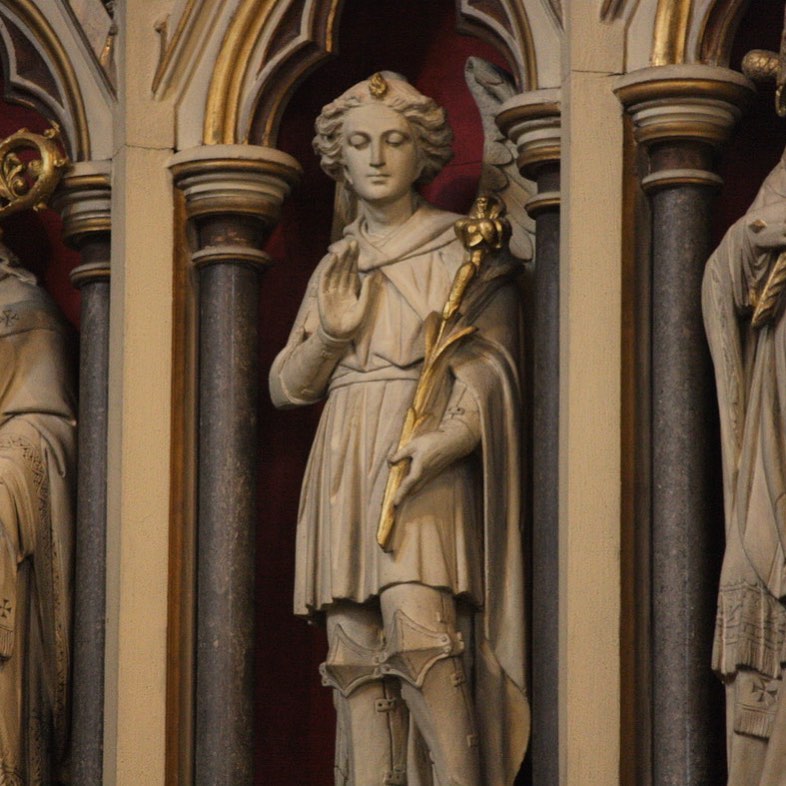
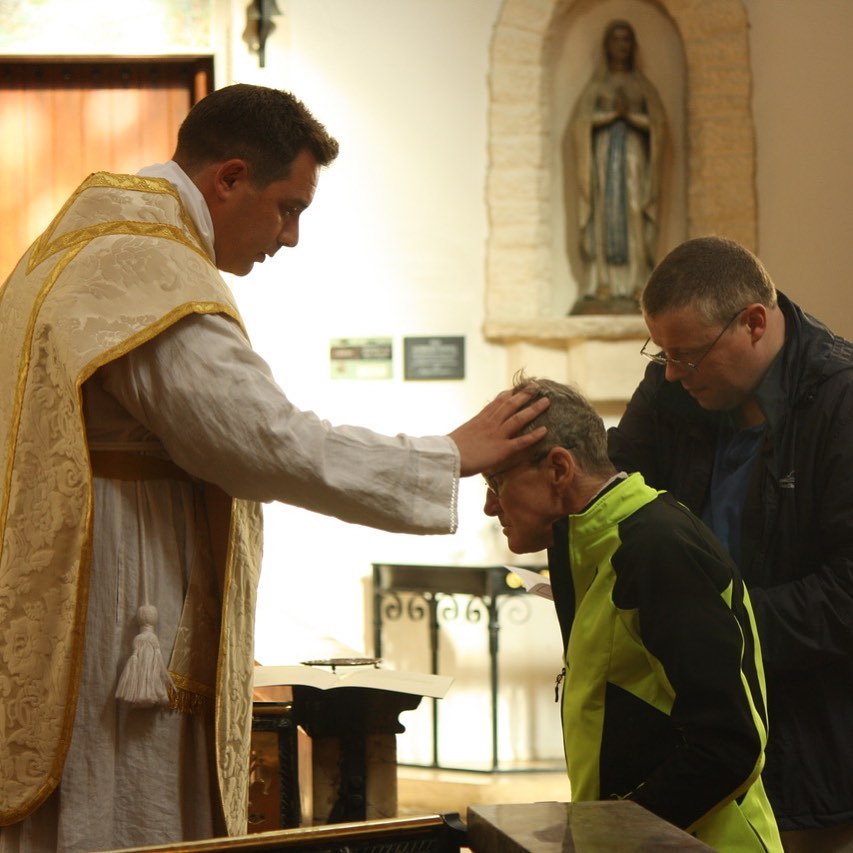
The angel Gabriel is shown in our church as he salutes Mary with the words, ‘Hail full of grace, the Lord is with thee!’

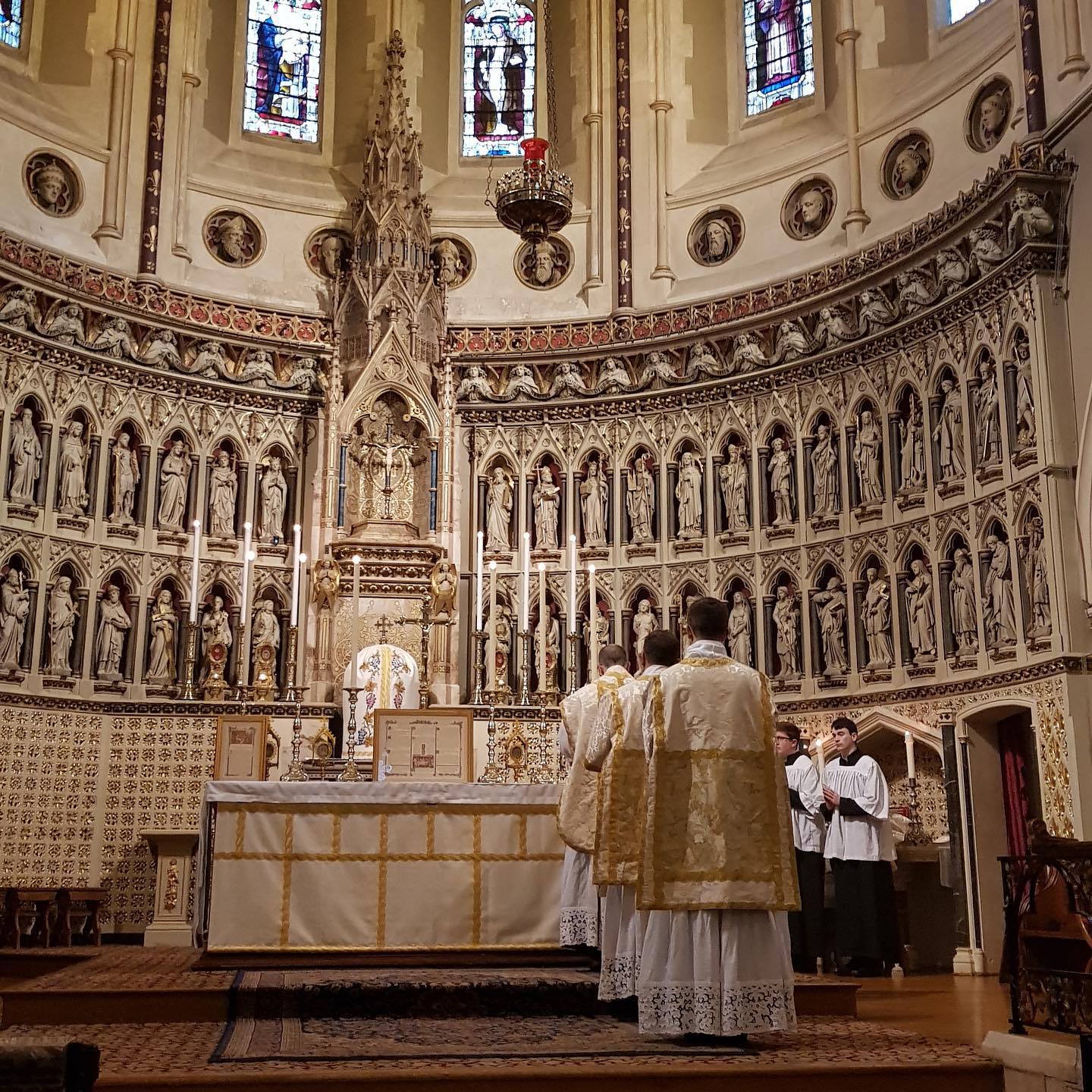
Before our Solemn Mass for the feast of the Annunciation, we joined the whole Church in reciting the Act of Consecration of Russia and Ukraine to the Immaculate Heart of Mary.

Pray for us, O holy Mother of God!

#oxfordoratory

View on Instagram

Scrupulosity

There’s a wideness in God’s mercy, like the wideness of the sea, Fr Faber tells us in his hymn. But the same hymn also comes with a warning:

But we make his love too narrow
  By false limits of our own;
And we magnify his strictness
  With a zeal he will not own.

There are two ways we might impose false limits on the mercy of God. The more obvious is by refusing to show mercy and forgiveness ourselves. Christ gives us many warnings in the Gospels by showing us how the scribes and pharisees fail to show mercy and take offence when sinners repent and are forgiven. They tie up heavy burdens and lay them on men’s shoulders, but will they lift a finger to move them? Not they! (Matt. 23:4) We make God’s love too narrow if we impose on others expectations that are impossible to fulfil, and more than God himself asks of them.

But there is another way in which we might try to make God too small, and that’s by being too strict on ourselves. One of the unexpected consequences of the pandemic has been a growing number of people suffering from scruples (even the BBC has covered it). Even if we do not currently suffer from this problem, it’s one that it’s good to be aware of, both to prevent ourselves from falling into it, and to help those we are close to if they should find themselves struggling in this way.

Scruples might arise in several stages of repentance. We might think that our sins are far worse than they really are. We might feel that we’re not really sorry enough for our sins to be forgiven. Or we might doubt whether our confession was actually valid because we feel we didn’t confess ‘properly’, because of a forgotten sin or a missing detail. Scruples will often lead a person to trying to be sure that their sins were forgiven, and may find themselves going to confession more frequently than they need to, or re-confessing sins, or confessing in far more detail than is necessary.

The underlying problem with scruples is that it does not reflect God as the loving Father he really is. He is more willing to forgive than we are to ask for forgiveness, so it doesn’t makes sense to think that these small imperfections in the way that we confess would be enough for him to refuse us forgiveness. God is not sitting in heaven with a list of our sins on a clipboard, waiting to catch us out with the sins we’ve forgotten!

This is where the Church’s distinction between mortal and venial sin comes to our help. These distinctions are not there so that we can condemn people who’ve definitely done something evil, but so that we can assure ourselves when we haven’t. Mortal sins are those actions that cut us off from the life of God — and you can’t do that kind of thing by accident. They’re actually quite hard to commit. They always involve something serious (‘grave matter’) like breaking one of the ten commandments. You can’t sin mortally with a fleeting thought.

And you have to have full knowledge of what you’re doing, and full consent as well. So if you’re under the influence of another — or even of your own bad habits — those are mitigating factors. A mortal sin can only be committed if we choose to do it freely. We cannot cut ourselves off from God by something we do by accident. These definitions are not about being sure that we have sinned, but about being sure, actually, that in spite of doing something truly serious, we haven’t cut ourselves off from God — and therefore that there is still hope for us.

St Philip’s advice to those suffering from scruples was as follows:

When any person is troubled with scruples from not knowing whether he has consented to the suggestion, especially in thought, he should observe these two rules. The first is to consider whether, during the temptation, he had always a lively love of the virtue contrary to the vice to which he is tempted, and a hatred of that vice, since, in that case, there will be a sufficient presumption that he has not consented. Secondly, the holy Father would have the scrupulous commit themselves in all things to the judgment of their confessor, and despise their own scruples.

(The School of Saint Philip Neri)

Judging whether or not we have consented to a sin can be very difficult — St Philip gives us a way to step back and try to observe our actions objectively, both by ourselves and with the help of a priest. If we are striving to overcome our sinful bad habits, if we regularly bring our sins to confession and mean it when we make a firm purpose of amendment, it will be very difficult for us to consent fully to those sins.

This doesn’t mean we can do what we like. Of course we still want to stop sinning in every way. Sin stops us from being happy. But at least we know that in our fight against sin, we are not constantly being abandoned by God. And that’s reassuring, because we can’t be good without his help.

This problem is not a new one in the Church. Six hundred years ago, Mother Julian of Norwich dealt with the question of how those who are trying to be good could still commit sin, and whether they made it impossible for themselves to achieve holiness by doing so. She was given the comforting revelation:

And I saw that he wants us to understand that he does not take the falling of any creature that shall be saved harder than he took the falling of Adam, who, we know, was endlessly loved and securely kept in the time of all his need, and now is blissfully restored in supreme overpassing joy. For our Lord is so good, so gentle, and so courteous, that he may never assign fault in those in whom he shall ever be blessed and praised. And my desire was partly answered by what I have just told, and my great difficulty some deal eased, by the lovely, gracious revelation of our good Lord. In which revelation I saw and understood with full certainty that in every soul that shall be saved is a Godly Will that never assented to sin, nor ever shall. This Will is so good that it may never desire evil, but it wills good forevermore continuously; and it works good in the sight of God. Therefore our Lord wills that we know this in Faith and trust; and especially that we have all this blessed Will whole and safe in our Lord Jesus Christ.

(Revelations of Divine Love, Chapter 53)
When to speak

It takes courage to speak out against injustice and violence, unless everyone around you is in total agreement with your cause. We are surely all pretty much united in our thoughts about what is happening in the Ukraine and can air these feelings with impunity. But what of those Russians who wish to protest against their president’s war against their neighbours? We see protestors being carried away by policemen, and who knows what may happen to them when out of sight of the world’s cameras? It takes courage to speak out, especially when you are well aware of what reprisals there may be.

This brings to my mind a hero of mine — Fr Bernhard Lichtenberg, an exemplary and hard-working German priest, who happened also to be the Dean of St Hedwig’s Cathedral in Berlin. Fr Bernhard was asked by the Cardinal Archbishop to do all he could to assist the Jews when persecution by the Nazi regime began to get more aggressive. As early as 1935, he had registered a protest to Hermann Göring about the treatment of the Jewish people in the camp at Esterwegen, to be told that the Office had heard that such things had occurred there. Nothing was done. Thereafter, Fr Bernhard was watched very carefully and threatened with arrest.

The real turning point came on Kristallnacht. It became the driving force of his daily prayers for the next three years. Up until November 1938, he had confronted the Nazi Regime in the manner that was safest for him by writing letters (even once to Hitler). Now, he knew he would have to speak out in defence of the Jews and in direct opposition to the Führer. He instituted daily evening prayers for the Jews in the Cathedral. On the night of 10 November, he stood in the pulpit in St Hedwig’s and preached (there were Gestapo men present): “What happened yesterday, we know. What will happen tomorrow, we do not know. But we have experienced what happened today. Outside, the synagogue is burning and that too is a house of God.” Then the Dean prayed, “I know I must die. I know not how, I know not when, I know not where. But one thing I do know — Jesus Christ, yesterday, today and forever.”

Although he knew he was a marked man, Fr Bernhard continued his relief work for the Jews and amid endless harassment, also protested against the increasing attacks on the Church. In May 1942, after having publicly criticised the “euthanasia” murders, he was condemned to two years imprisonment, by the end of which, his health was seriously impaired. When asked what he intended to do after his release, he replied: “I intend to fulfil the will of God and remain true to my priesthood until my last breath.” The Nazi officials, having realised that they had not managed to break the spirit or resolve of the Dean of Lichtenberg, decided not to release him but send him to join the Jews, in whose defence he had spoken and acted, in a death camp. On 5 November 1943, while being transferred to Dachau, he died from the ill-treatment he had received.

Most mornings, I read a little passage from the notes which Fr Lichtenberg wrote while in prison:

Begin my soul, to say slowly and mindfully upon waking in the morning, “Today, I intend to regard everything in the light of eternity — anything that happens to me, joyful and painful, uplifting and depressing.” In a few weeks, I may perhaps add a second resolution, may even be forced to do so, as I have already come to realize my impediment: It is my impatience. Therefore, in future, I will say slowly and mindfully after the first resolution, “Today, I intend to take possession of my soul through my patience.” I know I will lose patience a thousand times, but I will renew my resolve of patience again and again. Perhaps after several months, I will know why I lose patience so quickly: I speak too readily, my heart is on my tongue, I am too quick to show my displeasure – and I will add a third resolution: “Today, I will not sin with a single word.” And because a word always presupposes a thought, I will reformulate the third resolution and say, “Today, I will not sin with a single thought and a single word.”

This is a challenging agenda, though one we might all aspire to and attempt to practice, for such attentiveness to pleasing God and a sincere desire to come closer to Him will make us better Christians and better people — saints even? Fr Bernhard Lichtenberg was beatified as a martyr by Pope St John Paul II in Berlin on 23 June 1996. May his prayers help to discern when to speak and when to remain silent.


These reflections are sent out each Wednesday to all those on our mailing list. Click here to sign up to our mailing list, and receive our Sunday E-newsletter and these reflections straight to your inbox.

A Rhymed Life of Saint Philip

Four hundred years and more ago,
There did in Florence live
A worthy lawyer and his wife,
Who destined were to give
To Holy Church that wondrous Saint,
So simple yet so great,
The story of whose life in verse
I’m going to relate…

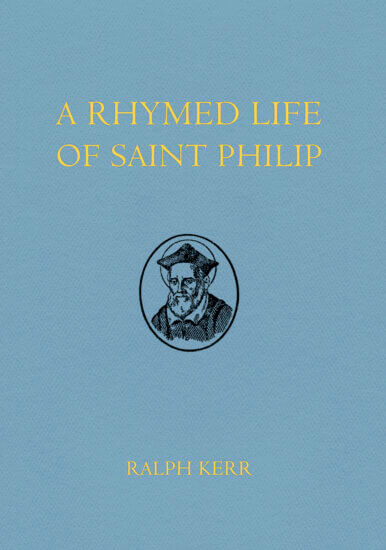
To commemorate 400 years since the canonisation of St Philip, we have republished A Rhymed Life of Saint Philip. This unique biography of Our Holy Father was written by Fr Ralph Kerr of the London Oratory and first published in 1926, but has long been out of print. This edition also features beautiful engravings from an 18th century life of St Philip. Available from the Oratory Bookshop or online from lulu.com, priced £6.99. Fr Kerr writes in his introduction:

Rhymed Lives of St Philip have been published before; three at least appeared in Italian during the seventeenth century, while Father Faber himself planned something of the kind, though, unfortunately, he never found the time to carry it into execution. The present little volume is put forward with the hope that it may bring some knowledge of the Apostle of Rome to those who do not know him, while others who already know and love him may perhaps find an hour or two’s diversion in its pages.

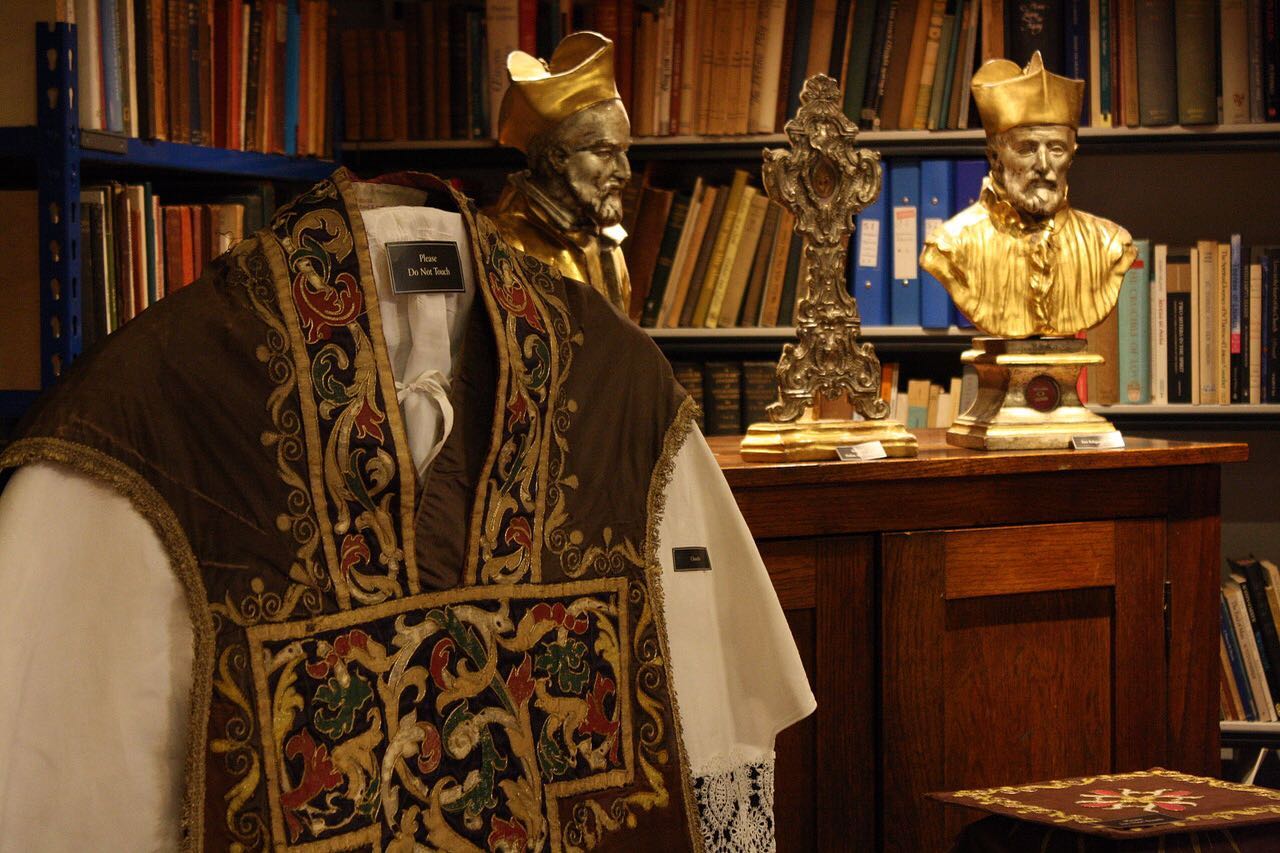
Some of the treasures in our exhibition were here before the Oratory arrived, like the reliquary busts of St Philip and his friend St Ignatius.

This vestment was designed by Pietro da Cortona for the Oratory church in Rome and was brought to England in the 19th century by Hartwell de la Garde Grissell.

#oxfordoratory

View on Instagram