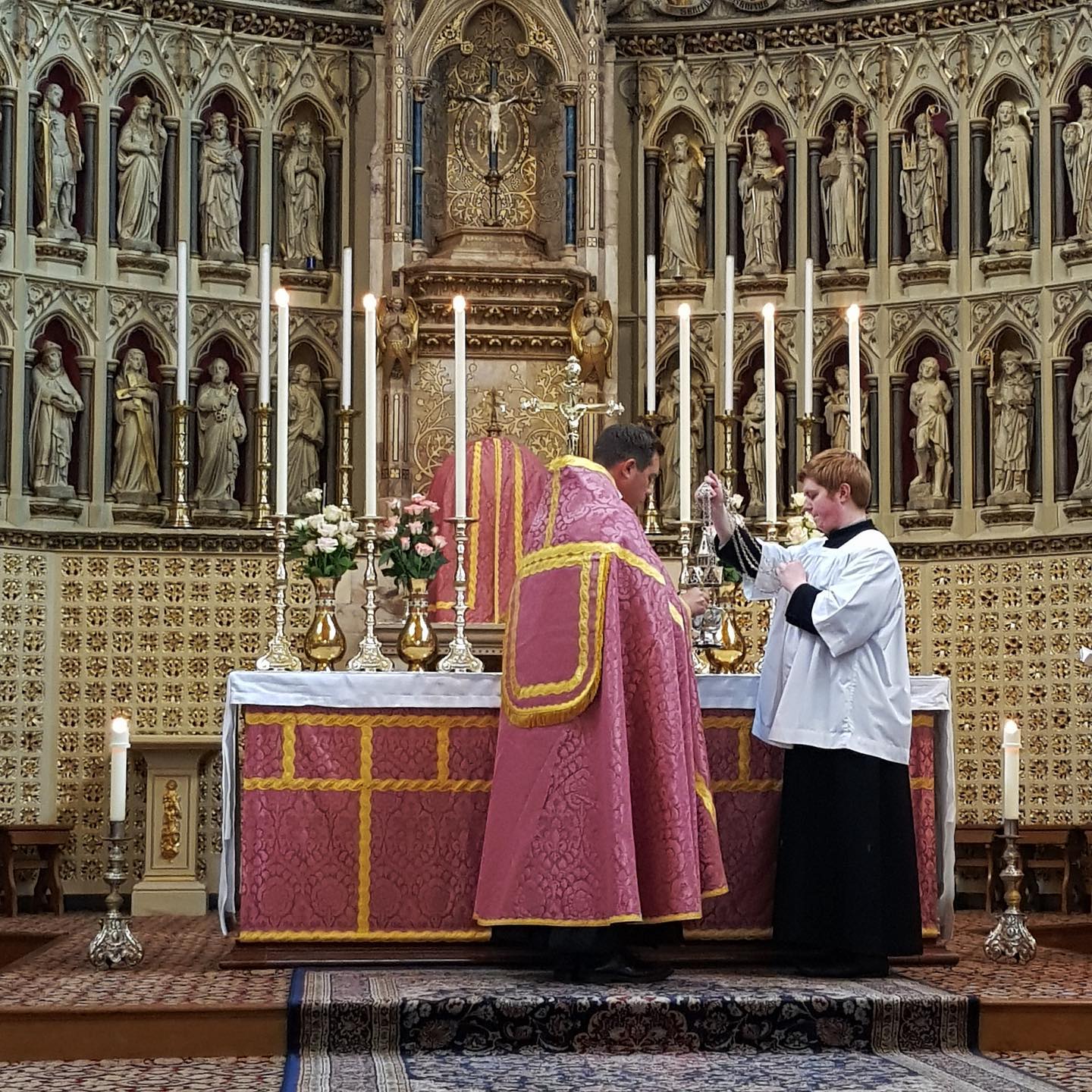
‘With the Jews, to hold a branch in one’s hand was a sign of joy. The divine law had sanctioned this practice, as we read in the following passage from Leviticus, where God commands His people to keep the feast of tabernacles: “And you shall take to you, on the first day, the fruits of the fairest tree, and branches of palm-trees, and boughs of thick trees, and willows of the brook, and you shall rejoice before the Lord your God” (Lev. 23:40). It was, therefore, to testify their delight at seeing Jesus enter within their walls, that the inhabitants, even the little children, of Jerusalem, went forth to meet Him with palms in their hands. Let us, also, go before our King, singing our hosannas to Him as the conqueror of death, and the liberator of His people.’ (From ‘The Liturgical Year’ by Dom Guéranger)

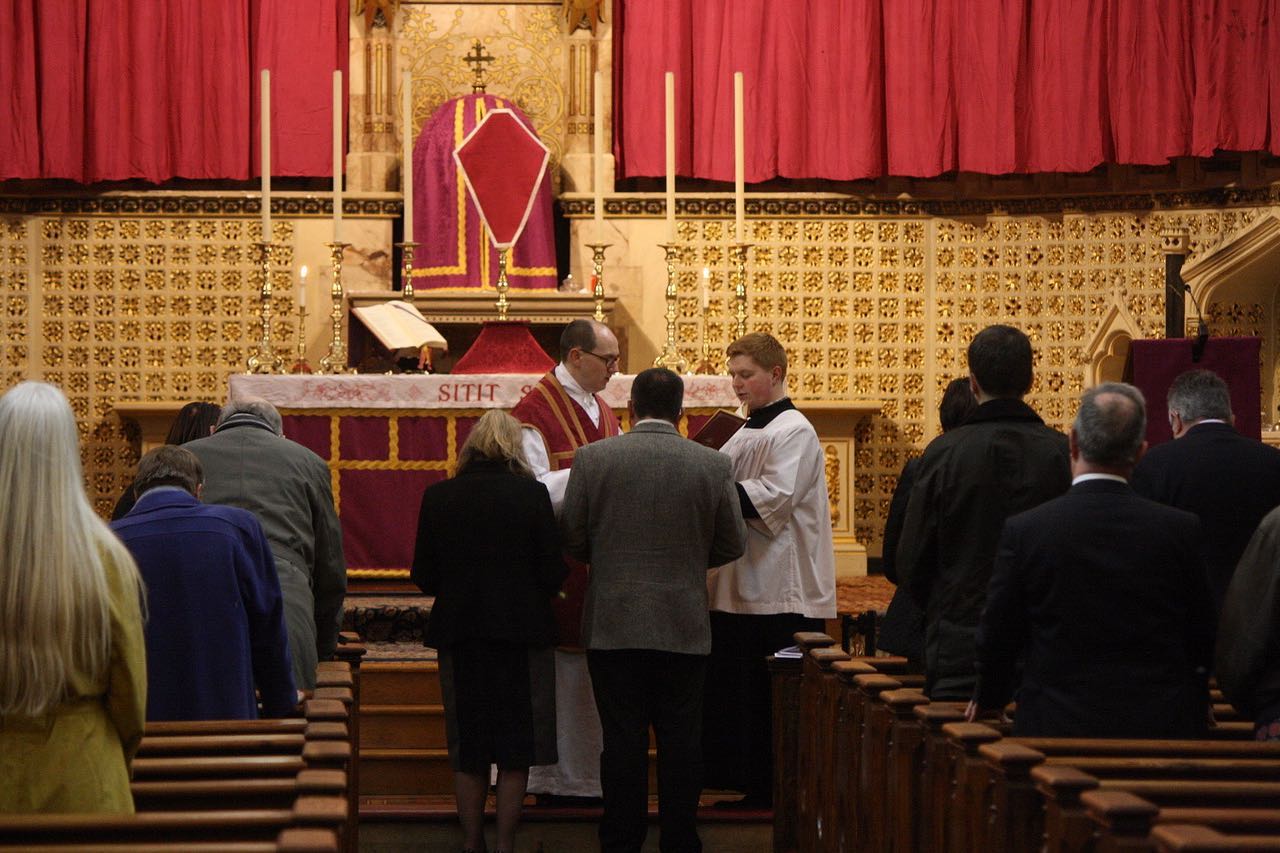
Photo from today’s Solemn Palm Sunday Mass.

#oxfordoratory

View on Instagram

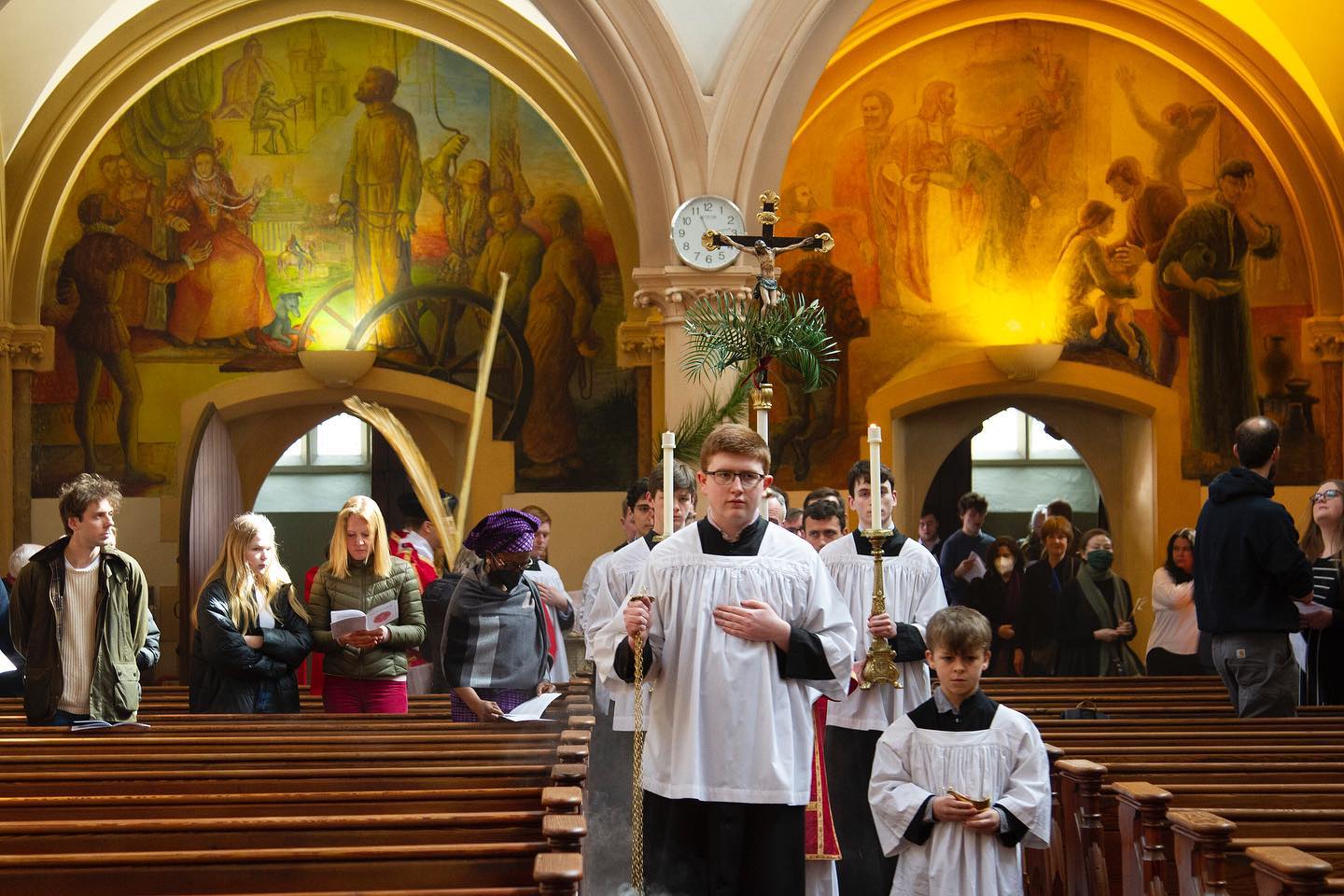
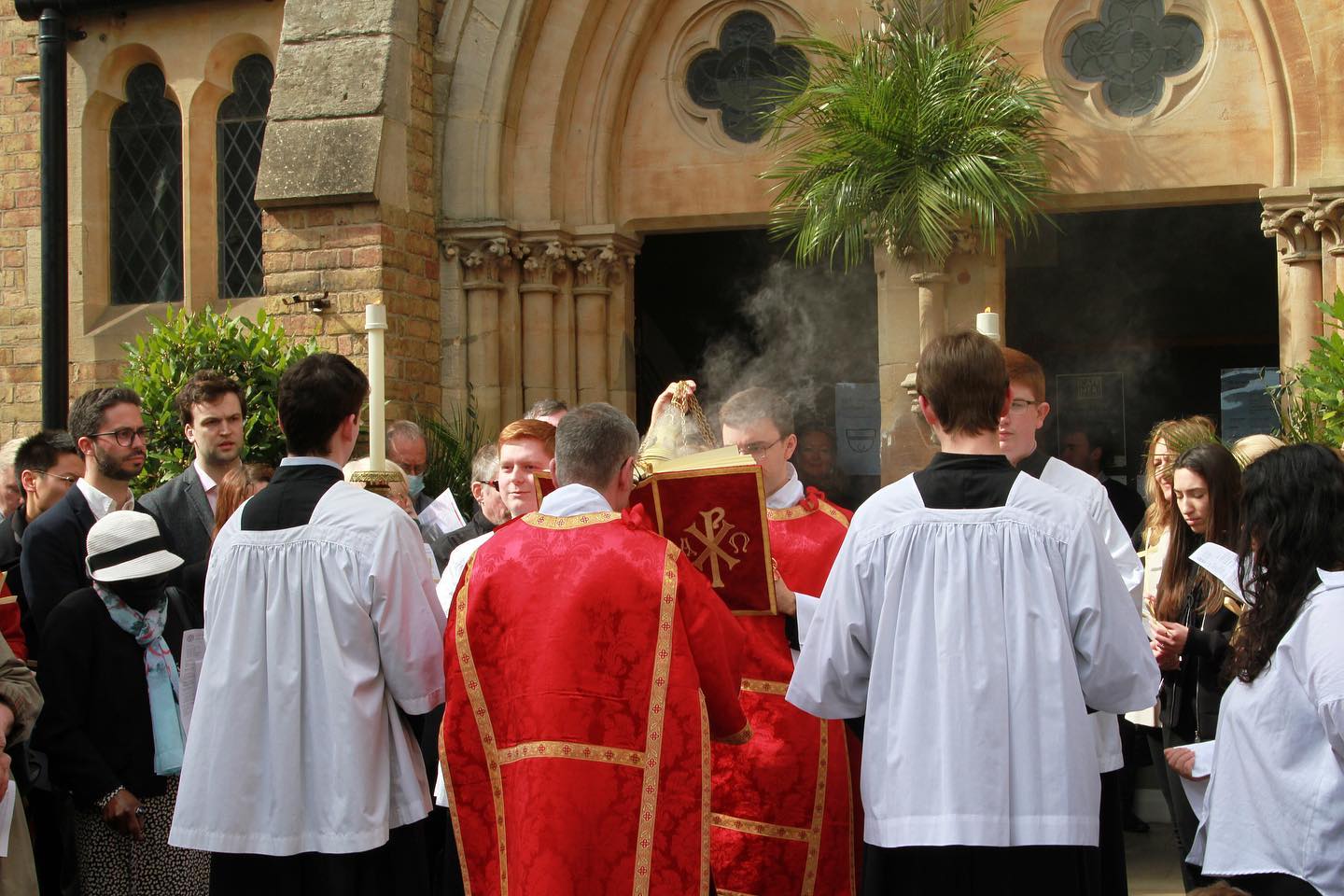
‘During the middle ages, it was the custom, in many churches, to carry the book of the holy Gospels in this procession. The Gospel contains the words of Jesus Christ, and was considered to represent Him. The procession halted at an appointed place, or station: the deacon then opened the sacred volume, and sang from it the passage which describes our Lord’s entry into Jerusalem.’ (From ‘The Liturgical Year’ by Dom Guéranger)

Photo from today’s Solemn Palm Sunday Mass.

#oxfordoratory

View on Instagram

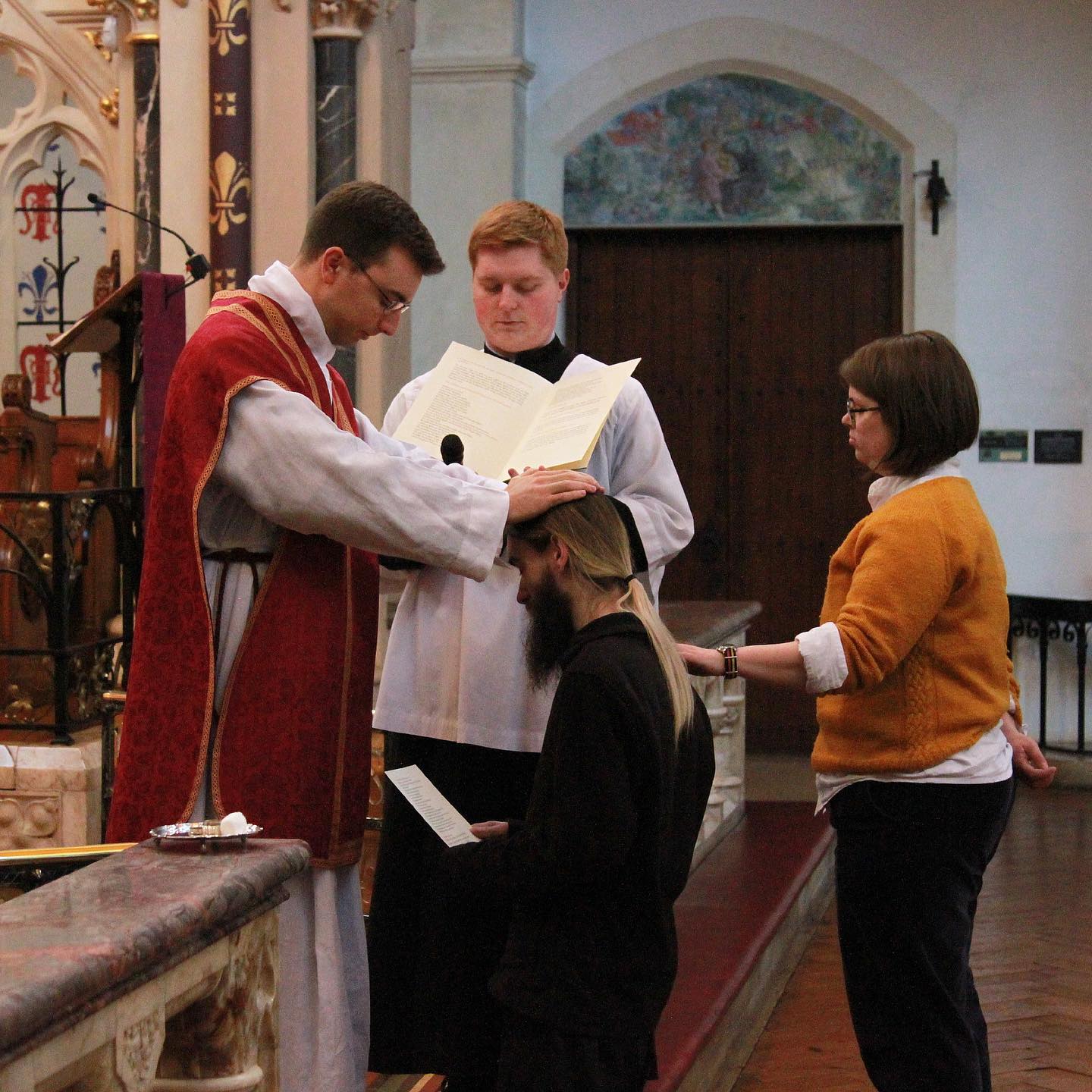
While Easter is the traditional time for administering baptism, the Church has always tried to restore her members to full Communion in time for them to join in the celebrations of the Easter Triduum.

Today we had the joy of receiving Steve into full Communion with the Catholic Church.

#oxfordoratory

View on Instagram

‘Go, and sin no more’

In the familiar gospel account of the woman caught in adultery that we read on Sunday, the scribes and the Pharisees aren’t actually very interested in the poor woman. She is, rather, a trap they wish to use to test Jesus, to trip him up, to expose him and thus condemn him, as Fr Dominic pointed out in his sermon. If the Lord agrees with their judgment of the woman, they can report him to the Roman authorities, who had stripped the Jewish people of their ability to put criminals to death, and have him condemned as a traitor to the state. If he doesn’t agree to a punishment which the Law seemingly demands, then he is a traitor to the Law and can thus be dismissed as a religious leader and would lose his credibility in the eyes of the people.

But insofar as they are interested in her, it is only because of her sin. Their view is such a common human way of treating sin — or rather, of treating sinners. You are defined by your sin. If you have stolen something, then you are a thief. If you have killed someone, then you are a murderer. Nothing that happens beyond that point can change that. And you have become defined by the worst actions of your life. It is an end of life — the fact that the crowd wants to stone the woman is the best example of this — they want to end her life at that point, and the lowest point. All sins become unforgivable.

Interestingly, it is the sinners in the story who do the condemning. You might think that human beings, sinful man, would be more prepared to be tolerant and understanding towards the sins of others, because we have experienced them ourselves. We all know how easy it is to fall into sin. But it is sinful man who is cruel and vengeful. Perhaps it is because we are just as quick to define ourselves by our own sins. We look at ourselves in the same way, with the same judgemental eye, and the only reason we excuse our sins so often is because we are unable to see life beyond them. It is not the sinless who throw the first stones, it is the sinful. We are imprisoned by our weakness and our guilt and our shame, and we are jolly well going to make sure others are too.

Christ has no time for this situation of condemnation and blame. Where the scribes and the Pharisees see only the sin and ignore the person, he sees the person and is prepared to dismiss the sin. He sees that sin does not define us, that we can be raised to a new life, that we can be “ransomed, healed, restored, forgiven”. Not that sin is not bad, not sinful, but that it is not the final word. It is not the end. It can be absolved. It can be put very firmly in the past. Notice that the woman does not ask for forgiveness, nor does the Lord say, “Your sins are forgiven”. He loves her because she is lovable, despite her sinfulness. Like the father of the prodigal son, Christ’s love is not conditional on the woman being good or bad. Her sin is forgiven, and Jesus invites her to respond, with conversion to a new way of life: “Go, and sin no more”.

God looks at us and loves us. And he forgives us. But our response to that love must be to go and sin no more, to acknowledge our mistakes and faults, our sins and our failures to love. A new way of life means letting go of the old way: the way of wounds and sins, past mistakes, regret and bitterness, lingering guilt and shame that still makes our cheeks blush and our stomachs churn. That new way of life means not allowing the worst things we do define us, but accepting the offer, made today and every day, to be made new through that closeness to Christ which is our redemption.

During these remaining days of Lent, as we enter Passiontide and contemplate the suffering and death of our Lord, we are challenged to bury our old selves, our sinful damaged pasts, so that we rise with Christ in a new way and to a new life.


These reflections are sent out each Wednesday to all those on our mailing list. Click here to sign up to our mailing list, and receive our Sunday E-newsletter and these reflections straight to your inbox.
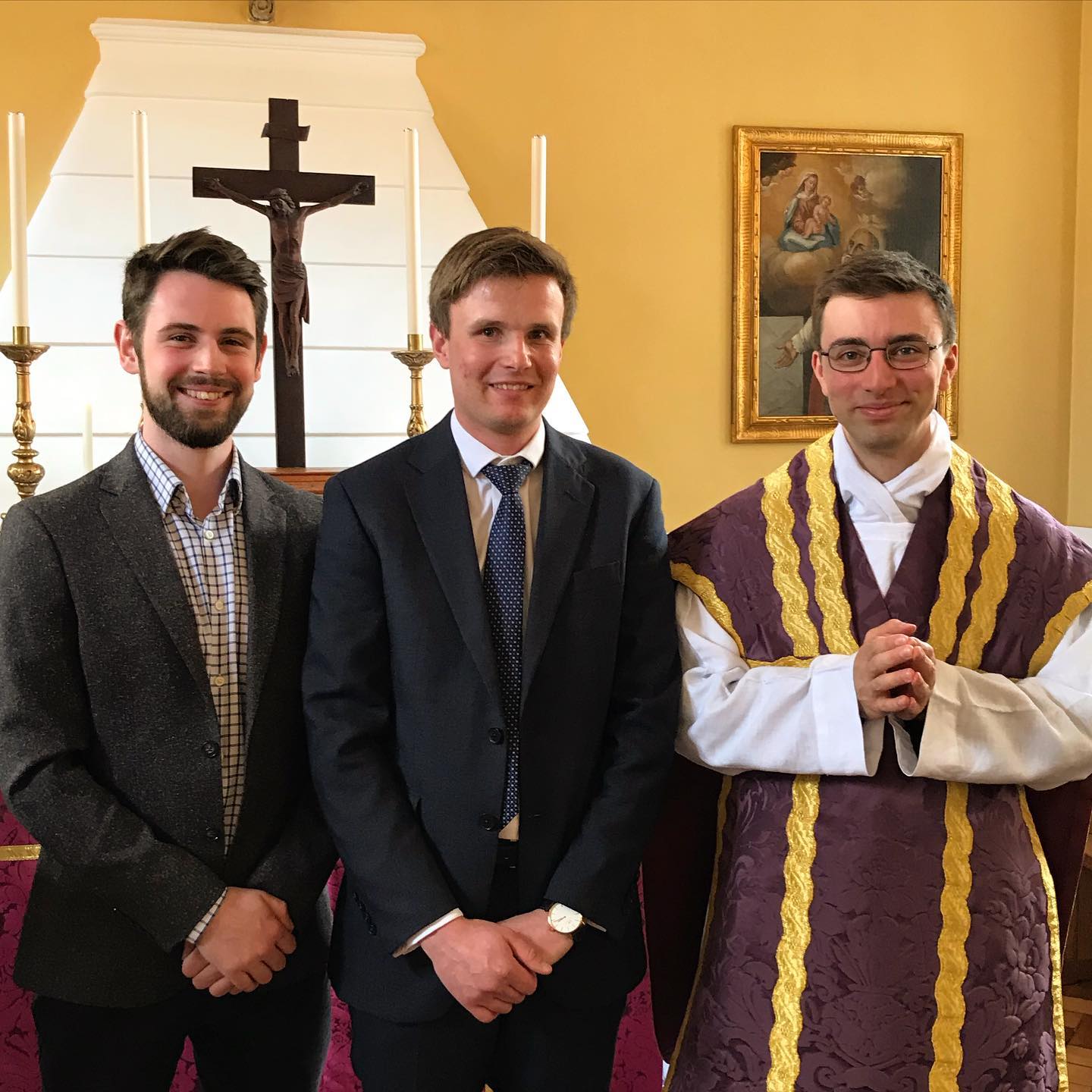
“Martin, the Lord receives you into the Catholic Church. His loving kindness has led you here, so that in the unity of the Holy Spirit you may have full communion with us in the faith that you have professed in the presence of his family.”

#oxfordoratory

View on Instagram

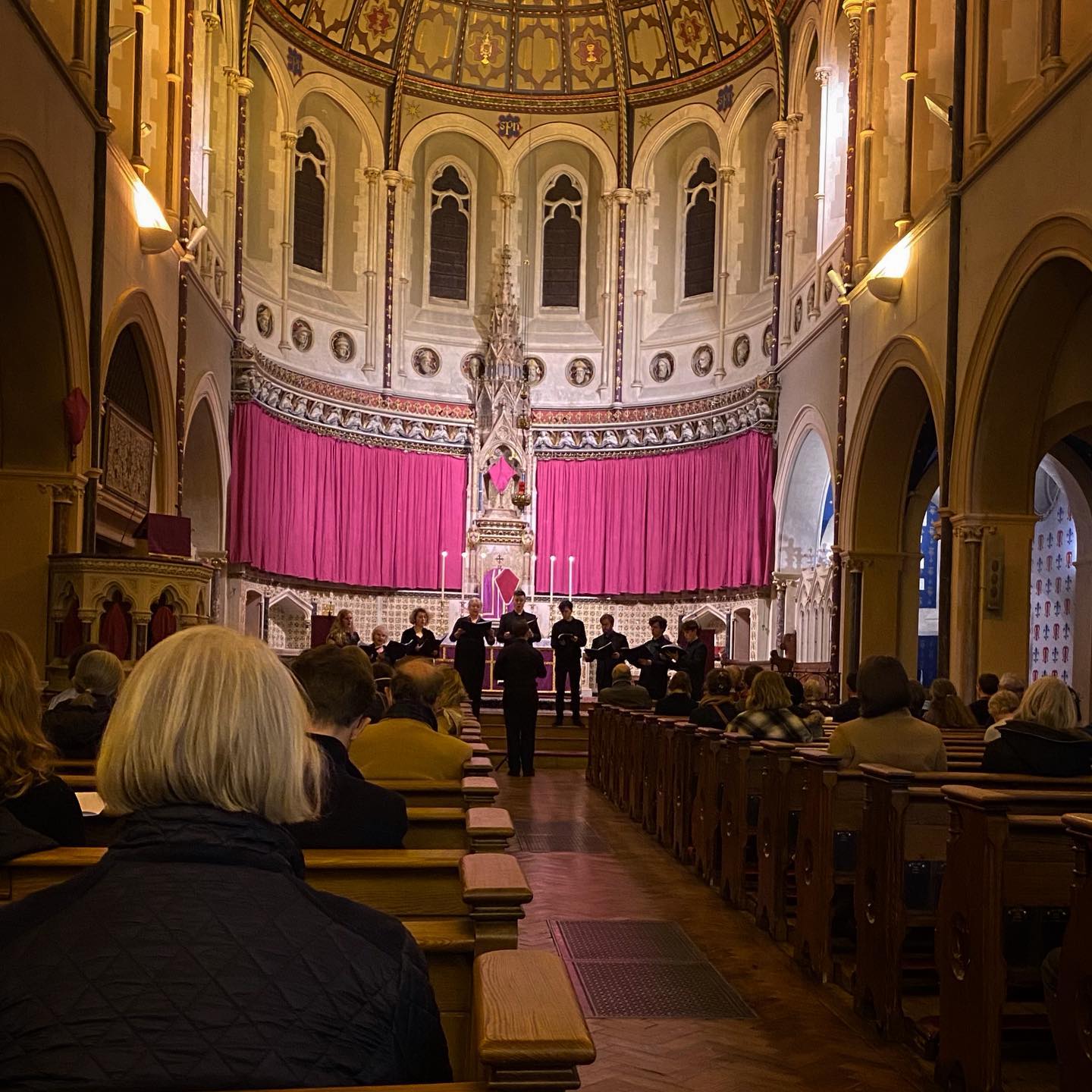
April Music

Sunday 3 April Solemn Mass 11:00
Passion Sunday
Mass in the Dorian mode Howells
Confitebor tibi Domine Casali
Media vita Gombert

Friday 8 April Musical Oratory 20:00
Passiontide Musical Oratory
Miserere nostri Tallis & Byrd
In te Domine speravi Mundy
Super flumina Babylonis de Monte
Quomodo cantabimus Byrd
Infelix ego Byrd

Sunday 10 April Solemn Mass 11:00
Palm Sunday
Pueri hebraeorum Victoria
Ingrediente Domino Malcolm
Missa brevis Palestrina
Christus factus est Bruckner
Improperium expectavit cor meum Palestrina
Vadam et circuibo Victoria

Thursday 14 April Solemn Mass 20:00
Maundy Thursday
Mass in Eb Rheinberger
Ubi caritas Duruflé
Dominus Jesus in qua nocte Palestrina
Pange lingua Victoria

Friday 15 April Liturgy of the Passion 15:00
Good Friday
Christus factus est Anerio
St John Passion Victoria
Popule meus Victoria
Crux fidelis King John IV of Portugal
Crucifixus Lotti
O vos omnes Casals
Adoramus te, Jesu Christe Handl
Versa est in luctum Lobo
Ne irascaris Byrd

Saturday 16 April Easter Vigil 21:00
Holy Saturday
Jubilate Deo Lassus
Missa Bell’ Amfitrit’ altera Lassus
Christus resurgens ex mortuis Allegri
Maria Magdalena Guerrero
Saraband for the morning of Easter Howells

Sunday 17 April Solemn Mass 11:00
Easter Sunday
Heiligmesse Haydn
Angelus Domini descendit A Gabrieli
Surrexit pastor bonus L’Héritier
Hallelujah chorus Handel
Prelude and Fugue in D ‘Halleluja’ Franz Schmidt

Solemn Vespers 17:00
Deus in adjutorium Croce
Haec dies Sheppard
Magnificat tertii toni Palestrina
O salutaris hostia Howells
Ecce vicit Leo Philips
Tantum ergo Duruflé
Alleluia Gabrieli
Regina caeli Howells
Grand Chœur Guilmant

Sunday 24 April Solemn Mass 11:00
2nd Sunday of Easter
Missa Brevis in C Mozart
Victimae Paschali Morales
Regina caeli Palestrina
Final from Symphonie VI Widor

The Passion

One of the last events we were able to hold before the country locked-down in 2020 was an exhibition devoted to the Holy Shroud of Turin. It was a most moving and compelling display of research, artefacts, photographs and expert testimony culminating in a highly detailed replica of the shroud. It has always been a fascinating relic and witness to the passion, death and resurrection of our Saviour, guarded and kept with great reverence. Even our own Bl. Sebastian Valfrè of the Oratory in Turin is said to have been called upon to mend it under the direction of skilled nuns — so sacred is that shroud, soaked in the precious blood, that only priestly hands could touch it.

There was one piece missing from the puzzle, the sudarium, or veil that covered the Lord’s head and was found “not lying with the linen cloths but folded up in a place by itself.” (John 20:7) This brings us to Oviedo in Spain where this object, blood-stained and of the same material as the shroud, is preserved. We might even look to another Italian town, Manipello, where a veil made of sea-silk is thought to be the veil of St Veronica, imprinted with the countenance of the Saviour, an image that maps exactly onto that of the shroud.

These mysterious objects are images of the suffering of Christ, and they are evidence of his resurrection — he did not remain in that tomb, and the image miraculously imprinted on those cloths remind us of that. They should spark in us a devotion to his passion. It should feature in our contemplation and our prayers, our spiritual reading and our devotions. Pope Benedict XVI reminded us that the passion of the Lord is a model for the spiritual pilgrimage of life. Our life is marked by the sufferings of Christ who died for us, each blow and bruise a mark of love felt with a perfect keenness and out of a perfect compassion. But this was, of course, not the end for him, rather this way of suffering led to light, to glory. And so for us, in Christ, we can find strength in his suffering and consolation in the light of his glory. His mysteries are our mysteries and so to encounter him more closely, to experience this strength and consolation, it can be helpful to meditate on his sufferings in these days, mindful of the love that motivated them.

Veils of another kind come into play at the end of this week. By the weekend, all the images of devotion, the crucifixes and the statues in our church will be veiled. Just as he was in his passion and his body in the tomb were veiled with ignominy, scars and bruises, and linen cloths, so we screen the beautiful images of our church from our eyes. Christ’s glory was veiled in suffering, and so our Lenten penance takes on another kind of abstinence in order to call this to mind and to make the light of Easter all the more splendid.

Our contemplation of the passion in the weeks to come surely must remind us of the reason for all this — the compassion of our God, the mercy he extends to us so freely as to enter into the depths of our suffering so as to bring us to the heights of his glory.


These reflections are sent out each Wednesday to all those on our mailing list. Click here to sign up to our mailing list, and receive our Sunday E-newsletter and these reflections straight to your inbox.