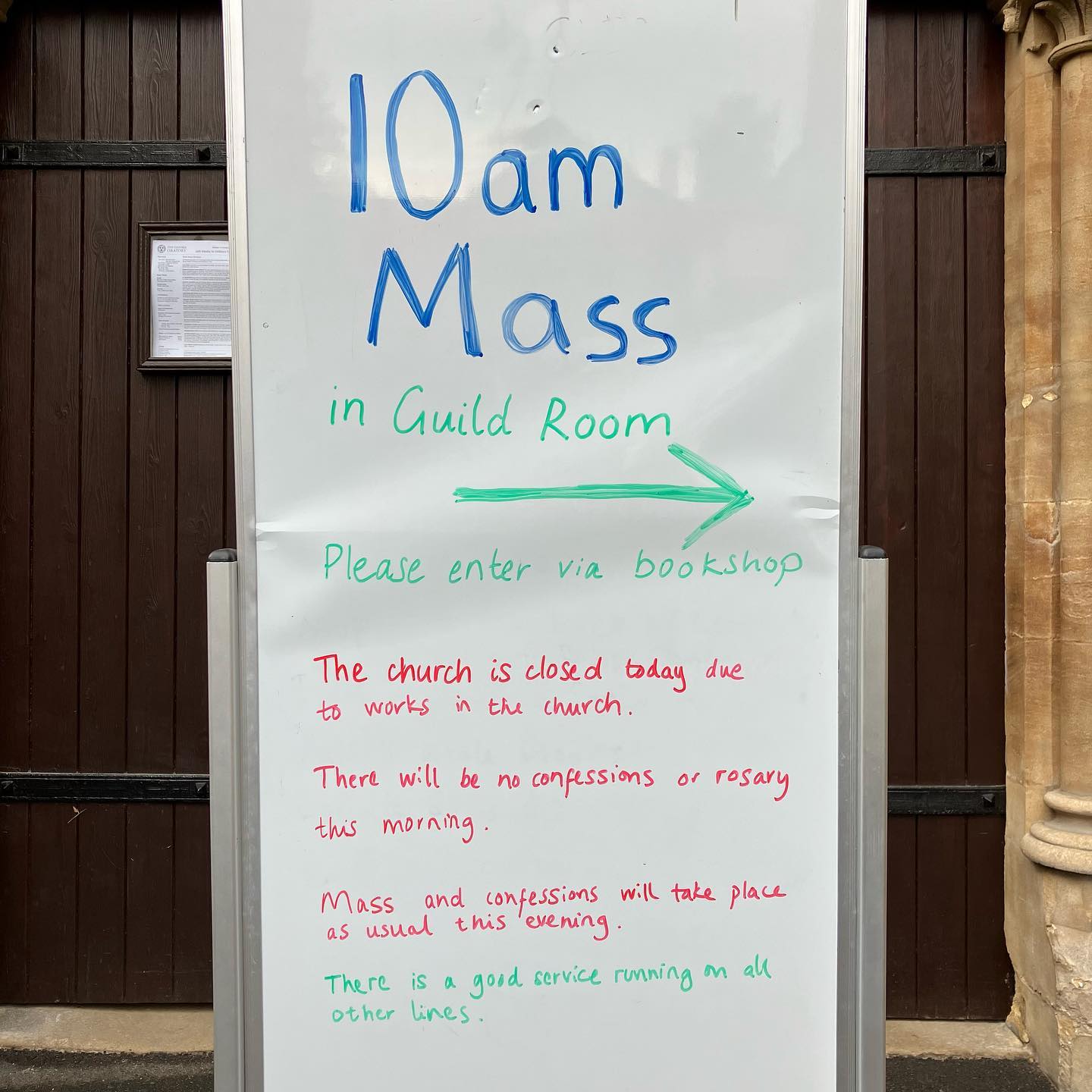
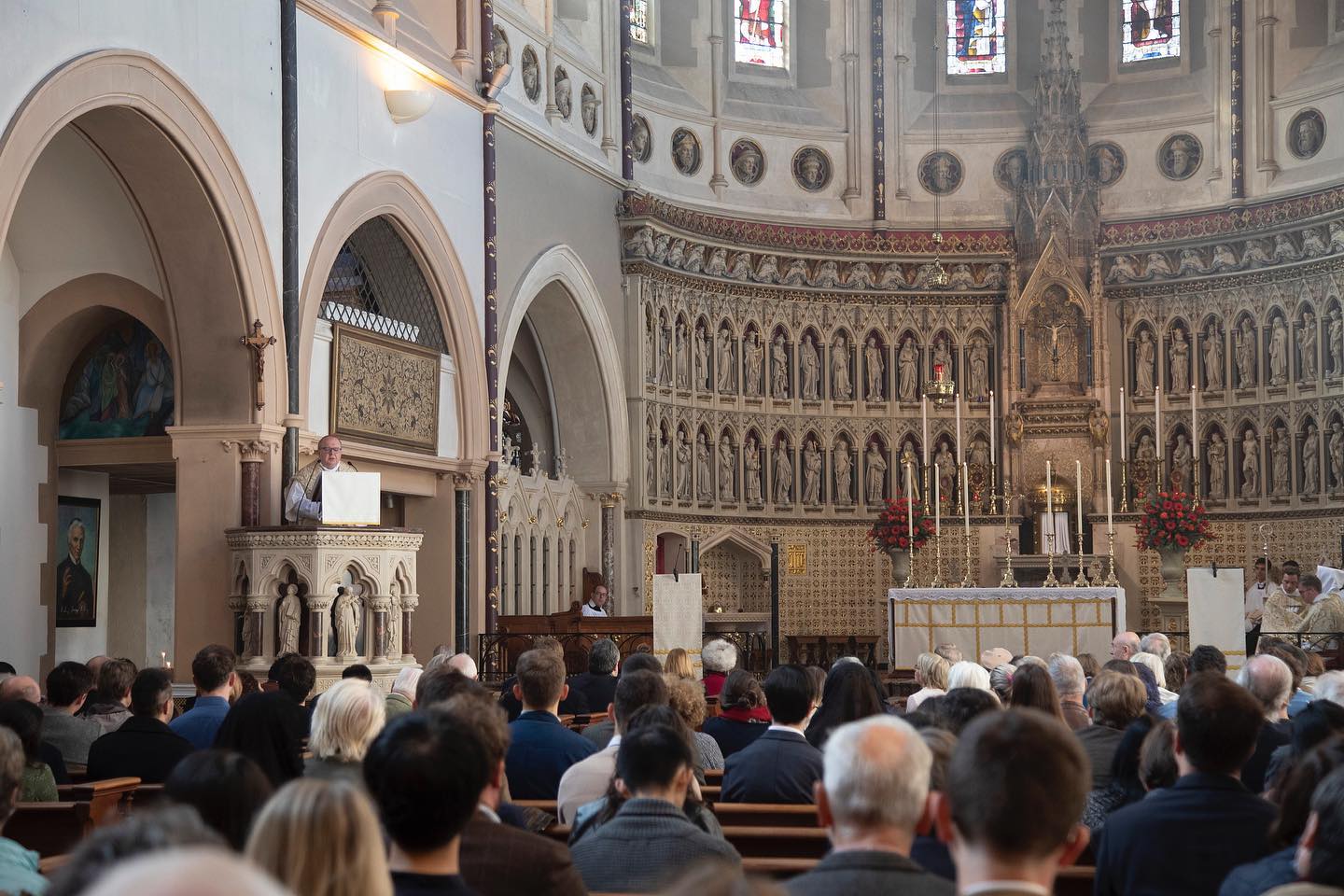
We have scaffolding up in church for the next few weeks while we investigate the condition of the stone, plaster and decoration at the upper levels. (There are also much less exciting holes being opened in the floor to find out what’s underneath.) This is all part of our ongoing maintenance of the building, but we’re also taking the opportunity to learn more about the original decorative scheme — photos of what’s been uncovered to follow.

#oxfordoratory

View on Instagram

Marlene Dietrich and Saint Frideswide

This time of year is an especially glorious one here at the Oratory. In the church we have just ended the magnificent Forty Hours with its solemn liturgies and hours of silent prayer before Our Lord, when so many hundreds of people have come to adore Christ in the Blessed Sacrament. For the Fathers and all around us we have also had the joy of clothing another new novice — a source of much joy and encouragement — do keep Brother Vincent in your prayers. In the city and university it is also the beginning of term, when students return or else come here to begin what they are promised will be the best years of their life. All of these things remind us that each one of us can enjoy a very real sense of belonging, not only to the places and institutions of which we are part, but for us as Christians to the Body of Christ which is His Church.

That sense of belonging is an important one, and one we must foster and cherish. In an age of heightened emphasis on identity we can often find ourselves more divided than ever before. Yet it is a problem as old as the Fall — that unless we feel we belong, we feel unloved. There is all sorts of depressing poetry on this theme; and Marlene Dietrich even put it into song (as only she could) — Ich weiß nicht, zu wem ich gehöre — I don’t know to whom I belong. When we forget that our human fraternity derives from the paternity of God, that we are brothers and sisters because we have the same Father in Heaven, then we run the risk of division and of forgetting to Whom we belong. If we all belong to God, recognise, know, and embrace that, then no-one is left by the wayside.

If only we could communicate to everyone that they really are wanted, really are loved by God, that they do belong, and belong to Him. How much more harmonious and happier we should all be! Belonging to God and to His Church reminds us that there is a place for us, not in this life only, but in our true home in Heaven. Our belonging to Christ and His Church also enables us to see our other ‘homes’ in a much greater perspective. Our families and friends become not just those we love and are loved by, but those that Almighty God has, from all eternity, desired us to know so that we should help each other to heaven. Our jobs and our daily tasks become those means of really living our holiness in that ‘Little Way’ so beloved of St Thérèse of Lisieux. And even the places where we belong take on a new meaning in God and gain for us new friends.

This week on Wednesday we celebrate Saint Frideswide, the patroness of Oxford and the University. She belongs to us all as a special friend in Heaven; she prays for us in this city and parish and through her prayers and encouragement reminds us that we belong to God and to Heaven. This week you might read about her or visit those places known to her and to us. We have Masses for her feast at the usual times and Benediction on Wednesday at 6:30pm. She belongs to us and we to her because we all belong to God.


These reflections are sent out each Wednesday to all those on our mailing list. Click here to sign up to our mailing list, and receive our Sunday E-newsletter and these reflections straight to your inbox.
Jesu! whom for the present veil’d I see,
What I so thirst for, O vouchsafe to me:
That I may see thy countenance unfolding,
And may be blest thy glory in beholding.

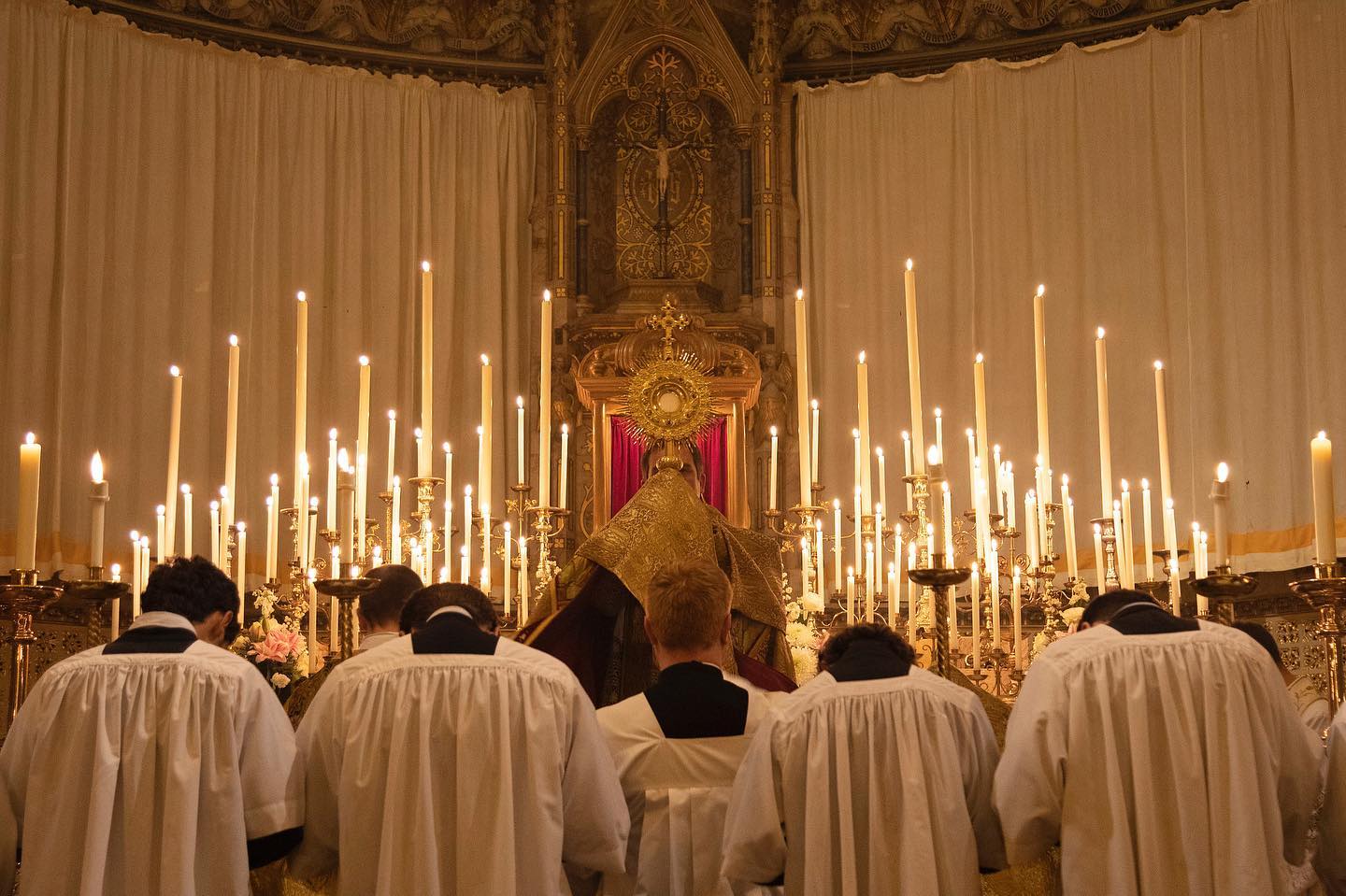
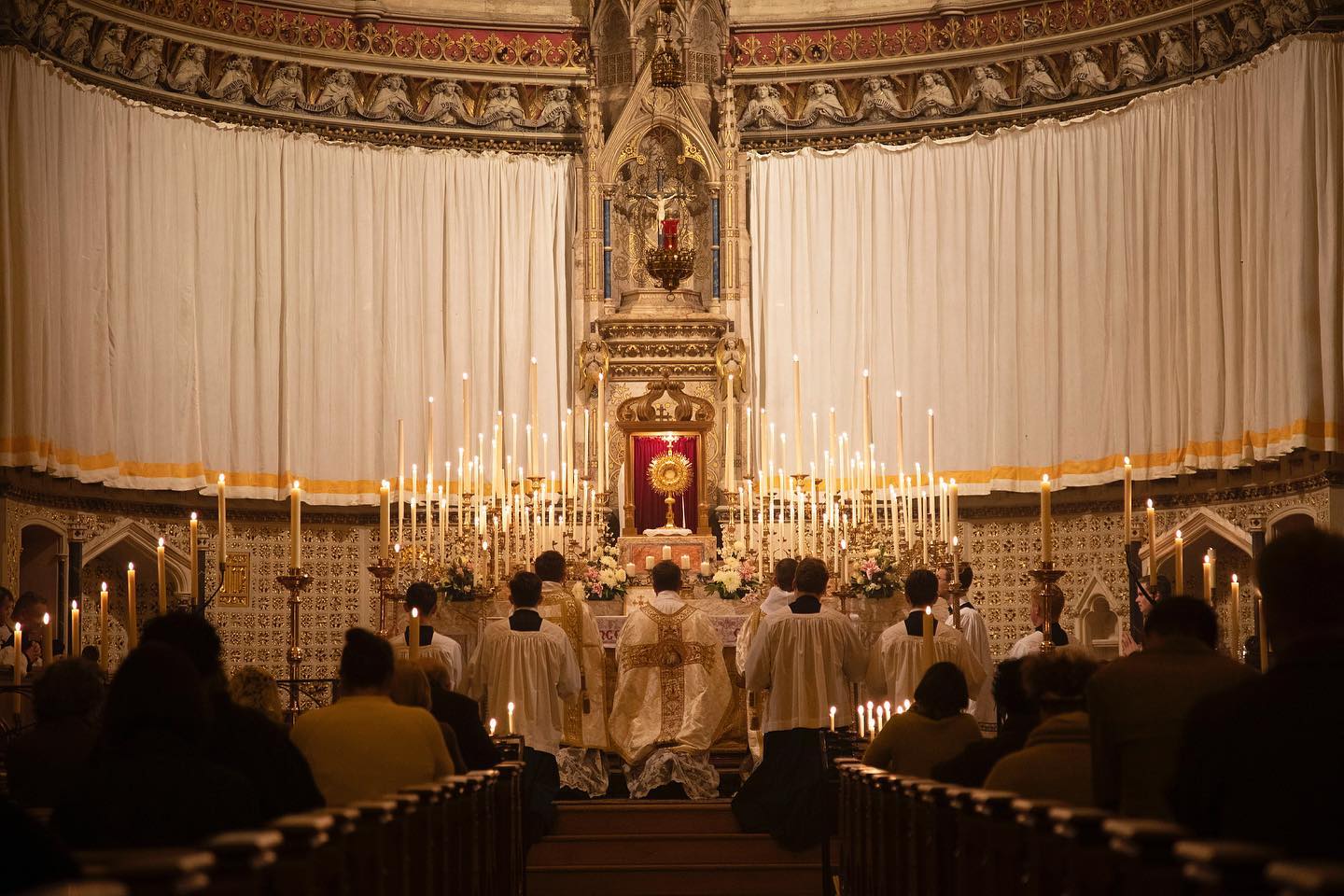
Our Forty Hours concluded with Benediction this evening. #oxfordoratory

View on Instagram

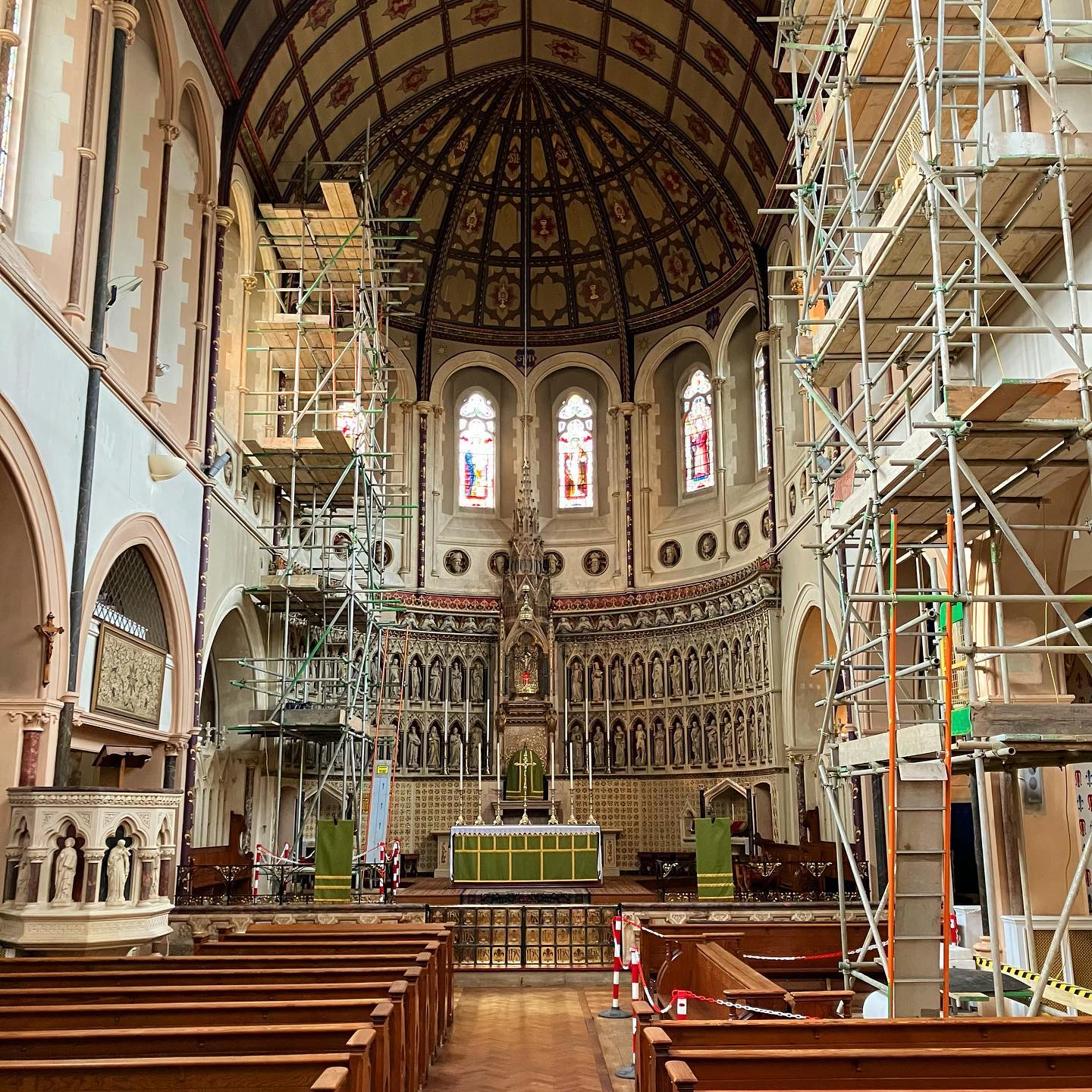
Our Forty Hours devotion has begun, with exposition of the Blessed Sacrament all through the night.

Next had they exposition for
The Forty Hours’ Prayer,
Which Philip introduced to Rome,
And all in this did share:
As each one’s turn for watching closed:
“Your hour,” he said, “is done,
But still the time for doing good
Is only just begun.”

(From The Rhymed Life of Saint Philip)

#oxfordoratory

View on Instagram

The hem of his garment

It is sometimes the little memories of a person that mount-up to give a true impression of them. For me, there is a little mosaic of images from my youth concerning my maternal grandfather. He was a reserved man. An aircraft engineer during the war, he worked in aeroplane and munition factories in different cities (and even at Cadbury’s Chocolate) when jobs at home were scarce. He was a man of his generation, not given to sentiment or to displays of emotion. I remember, as a child, being sent to his suit jacket in our hallway to retrieve some pills from his pocket. There among the handkerchief, the cough sweets and the pen knife I found his rosary, something I had never seen him use, and I was puzzled — perhaps it was my grandmother’s, I thought. Some years later, an elderly and now widowed grandfather descended the stairs one night long after retiring, anxiously searching for something he didn’t want to admit to. It was his rosary. Years later when he died, characteristically slipping out of the room, as it were, when no one was there, the nurse returned to find in his hand his rosary.

Not all men need to speak of their inner life. St Philip use to reply, when asked of his mystical experiences, secretum meum mihi — my secret is my own, thank you. A good Redemptorist Confraternity man his whole life, my grandfather’s devotion to the holy rosary was a pillar of his quiet life, and like so many men of the last century, an unspoken of, yet deeply treasured pillar.

The rosary lends itself to such quiet and heartfelt devotion, and it surprises some that it is as much so for men as it is for women. Those quietly spoken decades, and mulled-over mysteries give voice to our desires, our hopes, our need for God’s mercy, and Mary’s prayers. Those mysteries of the rosary provide us with an insight into the life of the Son of God made man, and whilst he came to bring us the Gospel of salvation, to accomplish our redemption, he also became incarnate to serve as the pattern of our spiritual life. Each of those mysteries is a revelation of the virtues of our Lord, and so to meditate on them, calling on our Lady’s prayers along the way, cannot help but be fruitful for us. Blessed Columba Marmion once reminded his monks that “the Eternal Father is pleased with us only in so far as we imitate his Son and inasmuch as he sees in us the likeness of his Son, for it is in his image that he has predestined us from all eternity.” A hard-hitting truth, that. But the Father also knows our weakness, and deals with us gently, leading us into this imitation of his Son by gradual steps, and the rosary is a marvellous tool in that great work.

One great priest and devotee of the rosary compared it to the woman with the haemorrhage grasping the hem of the Lord’s garment. In our search for him, in our need for his mercy, in our desire to imitate him in our spiritual life, the rosary serves as such an expression for our deepest desires and need for Christ’s grace. It is a tangible sign that our Lord’s life is not so removed from us, and that our Lady’s prayers are always on our side.


These reflections are sent out each Wednesday to all those on our mailing list. Click here to sign up to our mailing list, and receive our Sunday E-newsletter and these reflections straight to your inbox.