Our November Friends

This month began with All Saints, when we pray to our friends in Heaven, those known and unknown. Then the following day we mark All Souls, when we pray for those who have gone before us and, beautifully and comfortingly, we are reminded that our love for them survives even death and our prayers still help them. Friendship is the cornerstone of our Christian life; our daily conversion, our daily turning to our Friend so that in becoming more like Him that love may overflow from our hearts into our encounters with others. The Church, we might say, was founded on friendship: that of Our Lord for His Apostles and indeed for all whom He encountered. In the Oratory too, where we seek to imitate Christ by imitating St Philip, friendship is a hallmark of our vocation.

For St Philip, Cerrato writes, “[the notion of] ‘people’ did not exist, only ‘friends’ and everyone could become so”. The beginning and whole life of the Oratory consisted of St Philip making friends and drawing them into friendship with God and this remains the task of the Fathers today. Our Cardinal took as his motto “cor ad cor loquitur” (based on a similar phrase of the Oratorian bishop St Francis de Sales) and Newman himself led a life marked by friendships, by their loss and by their gain.

Our friendships are a great gift to us and enable us to experience in an especial way the love of Christ for us. Those whose names are written on our hearts, whom God has given a love for us, help us, rejoice with us, and offer us a support on the narrow way to Heaven — it is not so narrow that no-one can walk beside us.

Antoine de Saint-Exupéry wrote that “love does not consist of gazing at each other, but in looking outward together in the same direction,” and for Newman, “the love of our private friends is the only preparatory exercise for the love of all men.” There is a note of caution there. One thing St Philip always warned of was ‘particular friendships’. That phrase, which might sound rather Victorian to us, reminds us that friendships, whilst a special relationship, cannot be marked by exclusivity. We know (or hopefully can only imagine) the dangers of favouritism in families and workplaces; whereas for us as Christian we are called to love everyone from the depths of our heart and our task is to draw others into friendship. Father Spada of the Roman Oratory warned that “the closer anyone draws near to certain persons, the further, of necessity, he withdraws from others”. Our friends help us to overcome the walls we put up between ourselves and others and between ourselves and God; true friends do not help us suffocate love but rather to extend it.

We must then always pray to love our friends without exclusivity, without a sense of possession or a desire of control. In short, we must always pray to love them as Christ loved His friends. St Augustine wrote: “One does not lose those one loves if one loves them in Him whom one cannot lose”.

In November, indeed every day, we have the opportunity to pray for our friends who have gone before us and thus to love them still. Today (Wednesday) all our Masses are offered for those on our November List and after the 6pm Mass we will sing Vespers for the Dead. Come and pray for your friends.


These reflections are sent out each Wednesday to all those on our mailing list. Click here to sign up to our mailing list, and receive our Sunday E-newsletter and these reflections straight to your inbox.
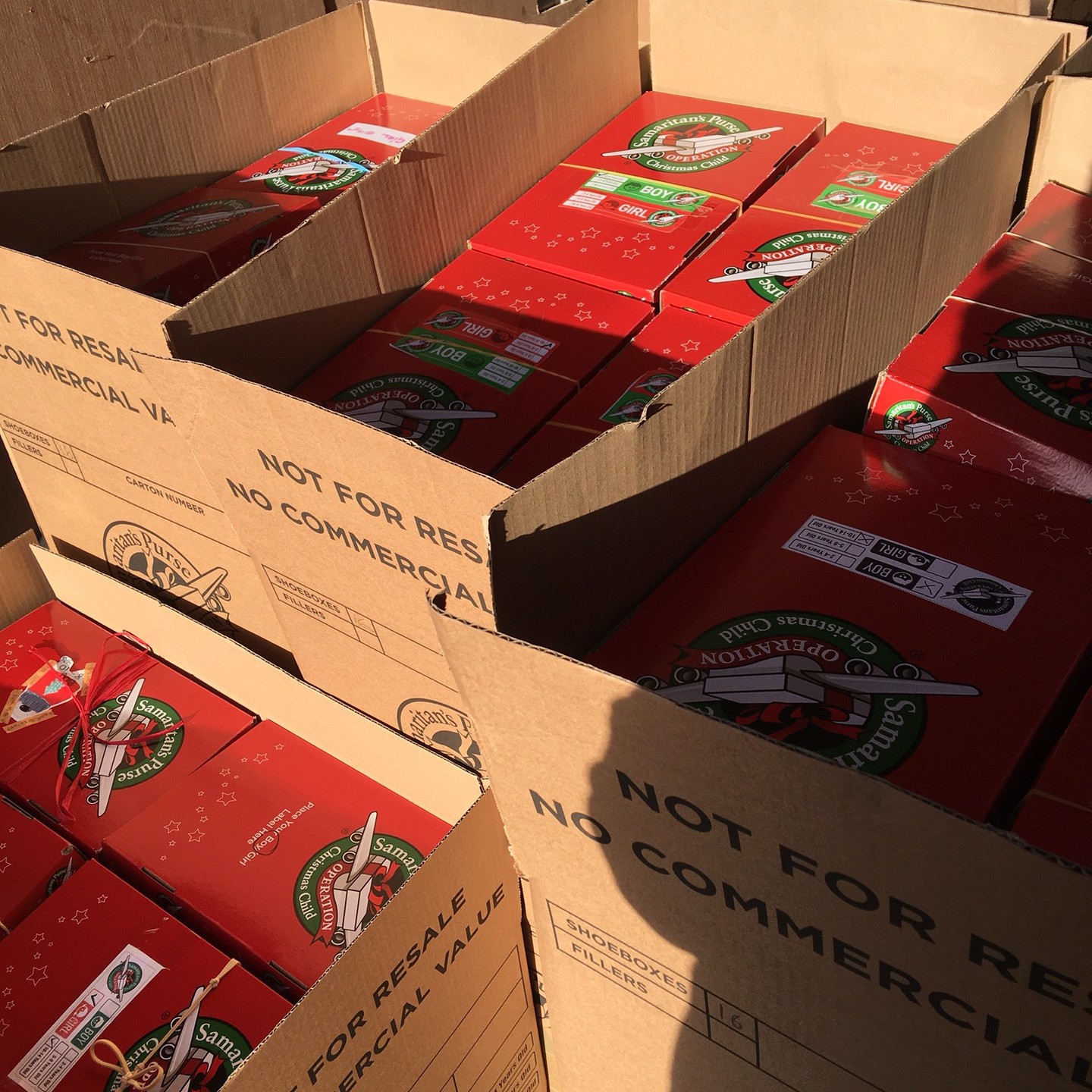
And they’re off! Today we shipped off our shoeboxes filled with Christmas presents as part of Operation Christmas Child. 180 children who would otherwise have received nothing will now have something to look forward to on Christmas Day. #oxfordoratory

View on Instagram

‘Frosts and cold, O bless the Lord’

The weather forecasters tell us that this year is particularly unusual as the Autumn months have not had one frost when usually two or three are the norm. The spring bulbs might be a bit later as a result. The traditional picture is, of course, of Autumn being that season of mists and mellow fruitfulness, cooling down to the frosty winter snows and a white Christmas. It is, in any year, seldom the case.

There is a neat parallel with our lives in this. Often we think that things are mapped out neatly or are plainly predictable and in such a case we know how to respond. But if we are honest, it is rarely the case. Just as we should make the most of the fair weather while it is with us, so in our moral and spiritual life we must take the opportunity to grow in good habits whilst there is a fair wind behind us. Cultivating good habits of prayer, working on the virtues, asking for the graces we need now will help us weather the hard times when they come all the better. Everything is a grace, and most things are opportunities. The spring flowers might be a bit late but bloom they will.

The canticle of the three young men in the fiery furnace from the Book of Daniel, sung at Sunday Lauds, reminds us that even the frosts and cold give glory and praise to their maker. How well the frosts and cold of our life can give glory and praise to God largely depends on how well we have prepared for them. “The hour is late, but the time for doing good is not over yet” — or so St Philip taught his friends. Thank God for mild autumns and for the opportunities he grants us to grow in virtue. We just have to take them.


These reflections are sent out each Wednesday to all those on our mailing list. Click here to sign up to our mailing list, and receive our Sunday E-newsletter and these reflections straight to your inbox.
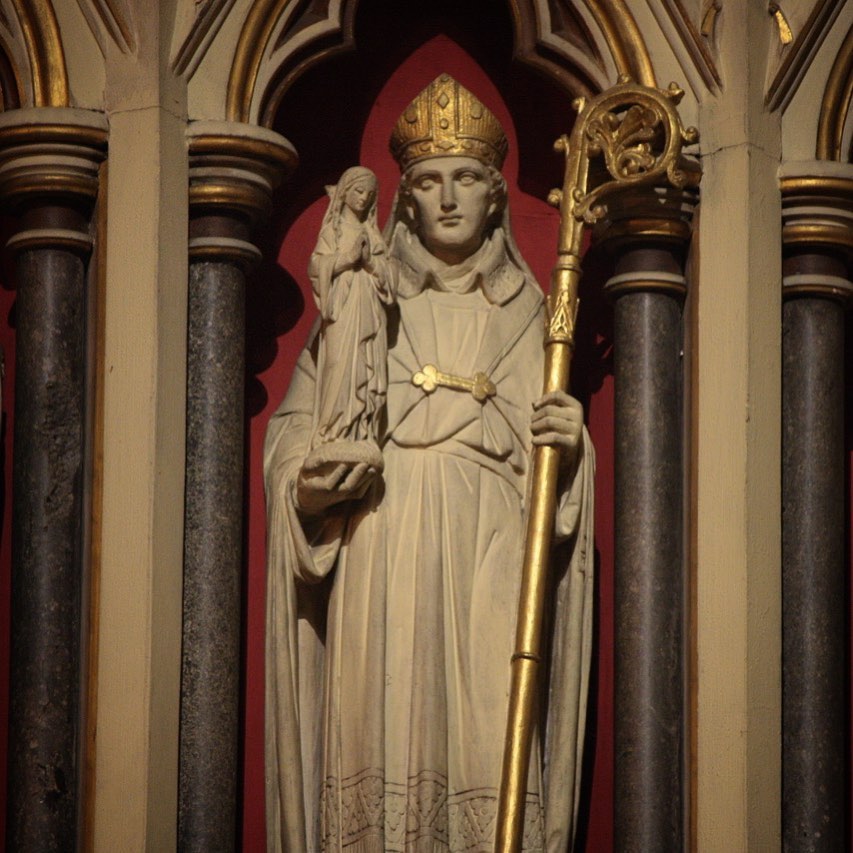
Our statue of St Edmund of Abingdon shows him holding another statue — a representation of the medieval statue of Our Lady of Oxford the saint made a vow of perpetual virginity before. As well as being born in nearby Abingdon, St Edmund taught in the University of Oxford, later going on to be made Archbishop of Canterbury. Many canonised saints (as well as many more unknown ones) have lived and worked in this city. May God grant us many more local saints again!

#oxfordoratory

View on Instagram

The Lateran Basilica

On this day, in the year 324, Pope Saint Sylvester consecrated his new church on the site of the Lateran palace in Rome, given to him by the Emperor Constantine. The anniversary is celebrated liturgically each year, with the feast of the dedication of the Lateran basilica. It might well be one of those feast days we find it hard to get excited about. As inspiring as the church building itself may be to pray in (should we be lucky enough to find ourselves there in person), the consecration of a church catches our attention somewhat less than the characters of the holy men and women whose feast days we more commonly celebrate.

The full title of the church whose consecration we remember on this day is: ‘The Major Papal, Patriarchal and Roman Archbasilica Cathedral of the Most Holy Saviour and Saints John the Baptist and the Evangelist in Lateran, Mother and Head of All Churches in Rome and in the World.’ It receives that rather grand title because this church is the Pope’s cathedral. And this is the main reason we celebrate today’s anniversary. Just as we celebrate the consecration of our own cathedral in Birmingham to show our unity with the Archbishop and the local church, so we celebrate the consecration of the Pope’s cathedral in Rome to show our unity with the successor of St Peter and the church of Rome, and thus also with the universal Church.

As in all cathedrals, one of the most important objects is the cathedra, the bishop’s (or in this case, the Pope’s) throne. It is a sign of his teaching authority. And this particular cathedra represents the Pope’s authority and responsibility to teach not just his own diocese of Rome, but the Church all over the world.

There are some other slightly more unique objects in the Lateran that say something about our Catholic faith. Above the altar are housed the heads of St Peter and St Paul. They are there as a witness. They proclaim that this is how the faith reached this city of Rome, from which it spread to the whole world. It was the work of those men, a former fisherman and a former pharisee, that brought the Gospel preached by Christ to the capital of the ancient empire. These are not the heads of mythical heroes, but of historical figures, who introduced the world to Christ the Saviour.

Slightly more obscure is another relic of St Peter housed in the basilica. It’s not a part of his body, but a wooden table said to be the altar on which he and his successors celebrated Mass. 

Although later on blessed Sylvester decreed that thenceforward all altars should be built of stone; yet the altar of the Lateran Basilica was of wood. This however is not surprising. For, from the time of St Peter down to Sylvester, persecution prevented the Pontiffs from having any fixed abode; so that they offered the holy Sacrifice either in crypts of cemeteries, or in the houses of the faithful, as necessity compelled them, upon the said wooden altar, which was hollow like a chest. When peace was granted to the Church, Sylvester placed this altar in the first church, the Lateran; and in honour of the Prince of the Apostles, who is said to have offered the holy Sacrifice upon it, and of the other Pontiffs who had used it up to that time, he decreed that no one should celebrate Mass upon it except the Roman Pontiff.

(From the Divine Office for today’s feast)

There is very little modern information available about St Peter’s altar. Perhaps people are embarrassed to talk about it in case it turns out that it isn’t really that old. Although, St Peter would have said Mass, and it is not so unlikely that the church in Rome might have preserved and continued to use the table on which he did so. Whether truly historic or merely symbolic, the Lateran altar is a reminder that St Peter was above all a priest. This reminds us that it is, in the first place, through the continuous celebration of the Mass that the Church has always made Christ present to the world and continues to make him present today.


These reflections are sent out each Wednesday to all those on our mailing list. Click here to sign up to our mailing list, and receive our Sunday E-newsletter and these reflections straight to your inbox.
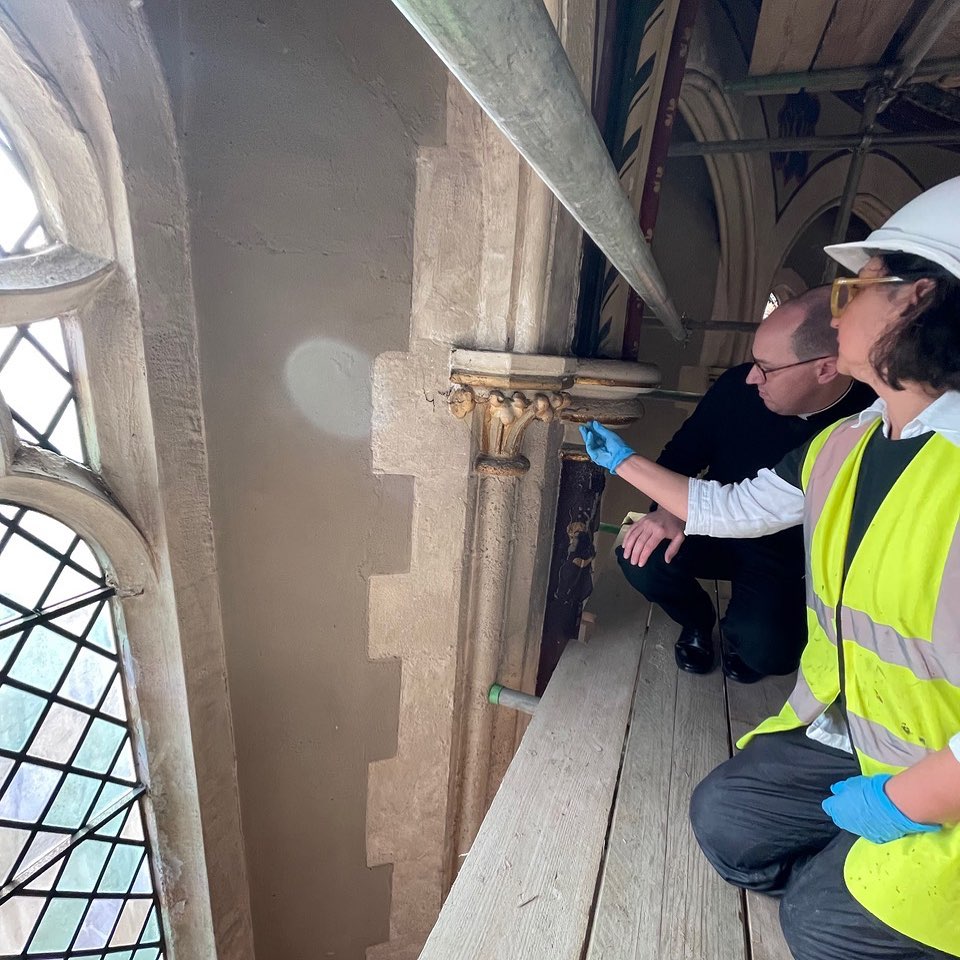
Our exploratory works are now complete — the scaffolding is all gone and the holes are all filled in. The test patches where the original decoration was uncovered remain until we can afford to uncover them fully. The exciting news is that more of the original decoration survives than we thought. That means future decorative works will be more a case of uncovering and restoring than of trying to recreate them from the limited historic pictures we have of the church.

As ever, the most important works were largely unseen. As well as assessing the state of plaster and stone work in the sanctuary with a view to future decoration, there were holes all over the church (and outside it) investigating the depth of the foundations and the ground underneath. These are all important factors in planning future building works…

#oxfordoratory

View on Instagram

Blessed Salvio Huix

The sixth of November marks the liturgical feast of the Spanish Oratorian martyr, Bishop Salvio Huix Miralpeix. Born in 1877, he was ordained priest in 1903 and worked as country curate before entering the Oratory at Vic in 1907 at the age of thirty. He was elected Provost and subsequently, in 1928, he was appointed apostolic administrator of Ibiza and ordained bishop. In 1935 he was appointed to the see of Lleida. The following year, in the tumult of the Spanish Civil War, his palace was attacked by the socialists and he found refuge in the house of his loyal servants. To save those who sheltered him he handed himself over to the Republicans and was imprisoned. On 5 August 1936 he and twenty other prisoners were taken to the municipal cemetery and forced to dig their own graves. Bishop Huix was offered his freedom if only he would renounce his faith; rather he requested to be the last to die so he could assist his fellow victims as they went to their deaths. One of the socialists grew furious and shot him in his right hand so that he could no longer bless; he continued to do so with his left hand instead. He was killed by a shot to the head.

As a young priest at the Vic Oratory, Blessed Salvio had published, under a pseudonym, a book of Eucharistic devotions and meditations. In one of these he expressed rather prophetically his desire to give his life for Christ:  

May all my aspirations and desires be none other than to give my life for your glory and love O Lord; you gave your life for my salvation and out of love for me. You alone are perfectly enough for me. To you I give all I have; if I had more, I would gladly give it all to you. Make me faithful until death. May I never retract this my firm desire. You can do everything Lord; give me the grace to overcome everything, for you are always faithful. You can do everything: make me live and die with you and for you, since only you are my life, my holiness, my love, my contentment and eternal happiness. I ask you, Lord, for the grace to always want to suffer any tribulation, labour, illness, and even death; all for you O Lord. I ask you for the virtue that is necessary for me to fight against difficulties and to shed my blood, if necessary, to uphold and defend the honour of your Sacred Gospel.

You bless and confirm, I know O Lord, this desire of mine, and with your divine grace you will make this promise of mine effective and persevering. Now, most loving Father, I also place myself on the altar of sacrifice and I beg you to deign to receive the total offering that I make of myself, of my soul with all its powers and of my body with all its senses; everything is a gift and a gift that I have received from your infinite generosity; I return it to you as a token of gratitude and homage, protesting here, in the presence of the angels that surround this altar, that I do not want to use your gifts except if it is in accordance with your most holy will.”

(translated from ‘Apuntes biográficos de Mons. Salvio Huix Miralpeix: Obispo mártir de Lleida’, p. 126)

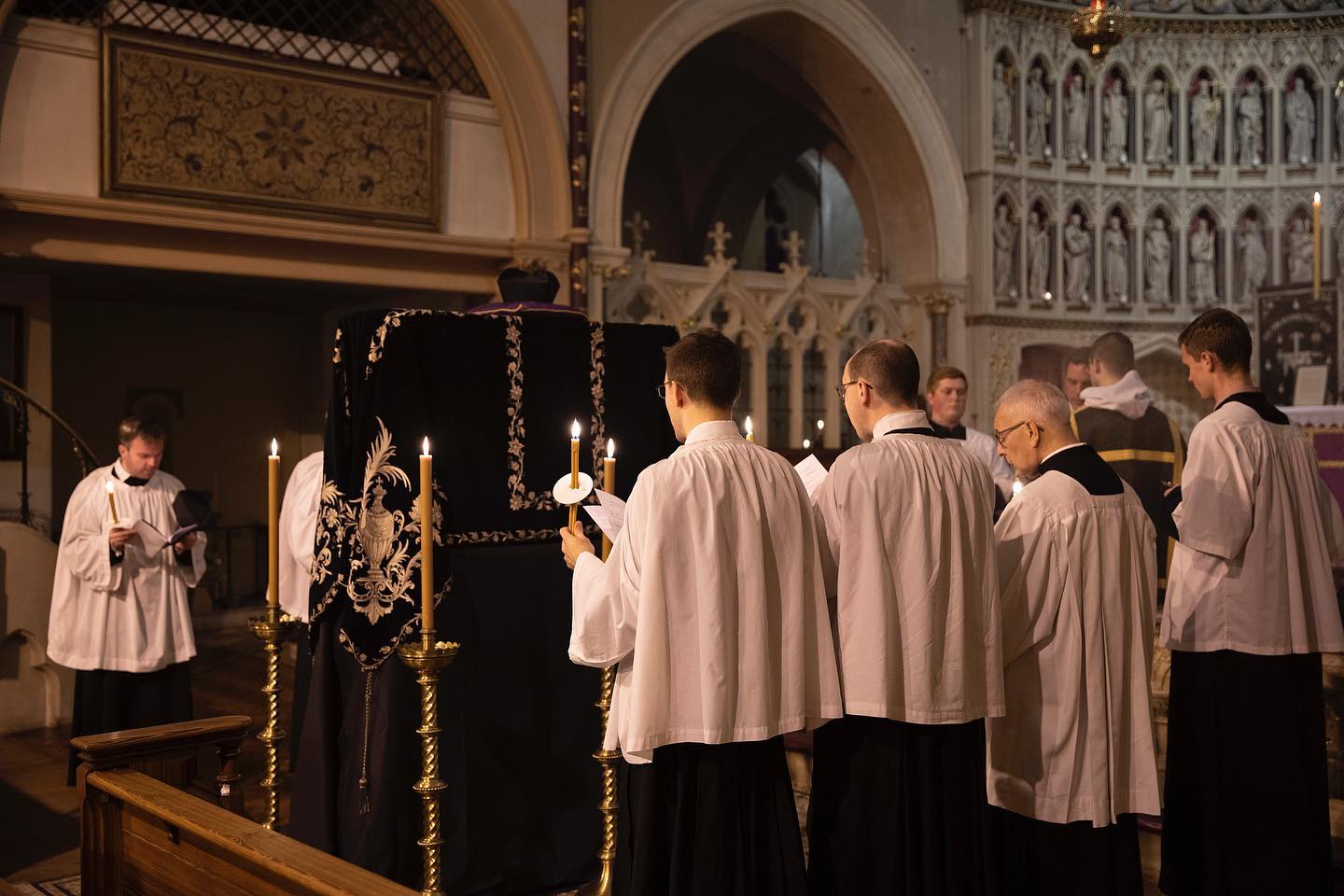
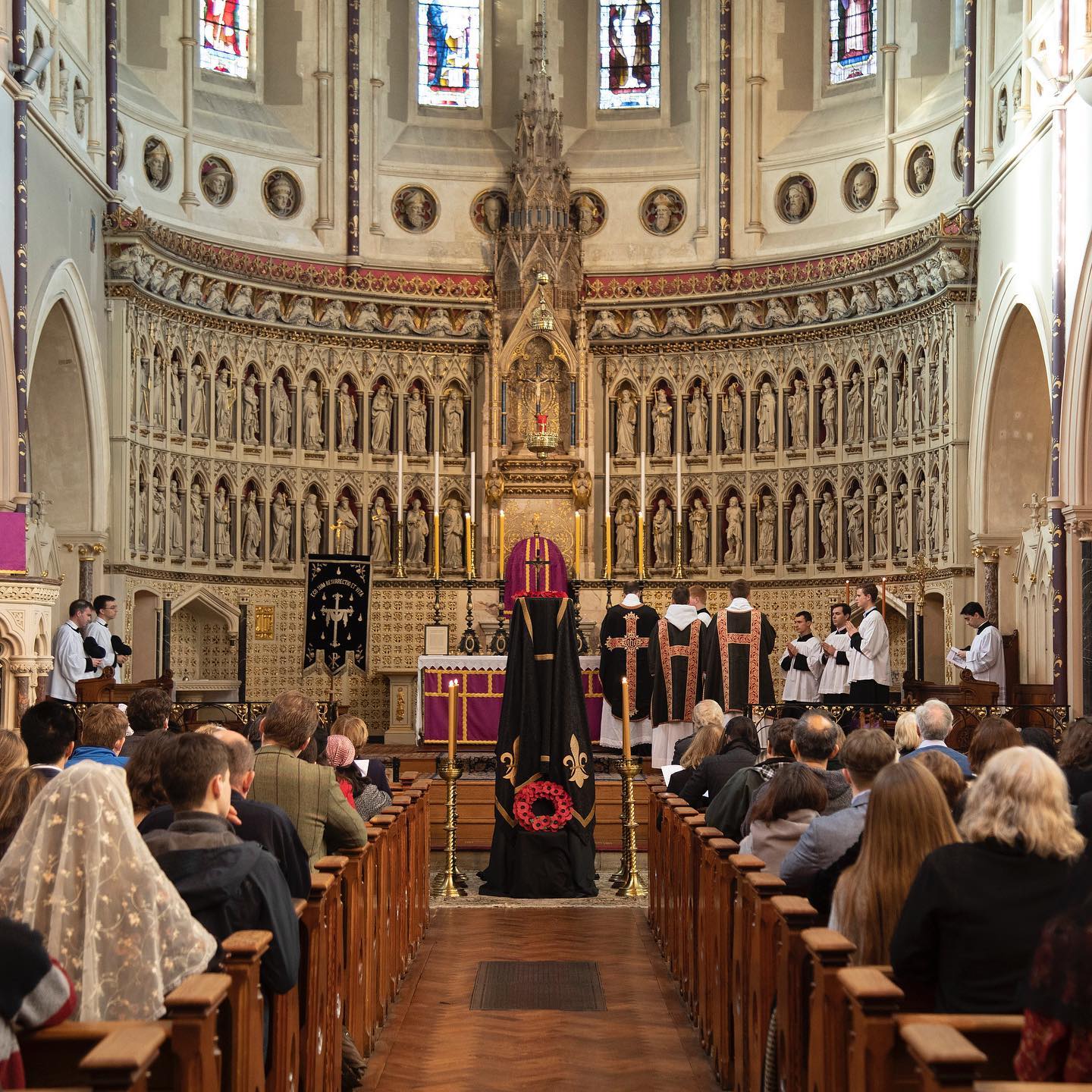
In the earliest constitutions for the Oratory in Rome, it says that a Solemn Mass of Requiem is said for the deceased members of the congregation within the octave of All Saints. We have also developed the custom that the Fathers and Brothers themselves sing the ‘Libera me’ during the absolutions at the catafalque. We give our departed brethren a voice as we sing the prayer:

“Deliver me, O Lord, from death eternal on that fearful day, when the heavens and the earth shall be moved, when thou shalt come to judge the world by fire. I am made to tremble, and I fear, till the judgment be upon us, and the coming wrath, when the heavens and the earth shall be moved. That day, day of wrath, calamity and misery, day of great and exceeding bitterness, when thou shalt come to judge the world by fire. Rest eternal grant unto them, O Lord: and let light perpetual shine upon them.”

#oxfordoratory

View on Instagram

November Music

Tuesday 1 November Solemn Mass 18:00
All Saints
Missa Vidi turbam magnam Allegri
Iustorum animae Lassus
Os iusti meditabitur Bruckner
Marche Pontificale Widor

Wednesday 2 November Solemn Mass 18:00
All Souls
Requiem a8 Lobo
Versa est in luctum Lobo

Friday 4 November Solemn Mass 18:00
Solemn Requiem for deceased
Fathers and Brothers of the Oratory
Officium Defunctorum a4 Anerio

Sunday 6 November Solemn Mass 11:00
32nd Sunday of the Year
Missa Dormendo un giorno Guerrero
Cantate domino Croce
O bone Jesu Anchieta
Gigue Fugue BWV 577 Bach

Sunday 13 November Solemn Mass 11:15
Solemn Requiem for the Fallen
Officium Defunctorum a6 Victoria
Versa est in luctum Victoria
Elegy Thalben Ball

Sunday 20 November Solemn Mass 11:00
Christ the King
Missa brevis in C (220) Mozart
Laudate dominum Mozart
Tantum ergo de Severac
Imperial March Elgar

Sunday 27 November Solemn Mass 11:00
Advent I
Missa Veni Domine Lobo
Canite tuba Palestrina
Veni Domine Morales