
A handwritten note from the past reminds us each year that the Passiontide veils must never be put out without ironing them first. #oxfordoratory
Hope
Philip often said, “I am past hope!” and one day, meeting two Dominicans, he passed between them, saying, “Let me pass, I am without hope,” meaning that he had no confidence in himself or in anything he had done. The good fathers, understanding the words in their ordinary sense, stopped him and began to console him, and to ask him a multitude of questions; at last he smiled and said, “I am past all hope of myself, but I trust in God.”
—from the Life of Saint Philip Neri, Apostle of Rome by Father Bacci
In ‘the ordinary sense’, hope is given to us from God, it leads us to God, and it makes us more like him — as with all of the theological virtues. It is by hope that we look forward to our union with God, something we trust is possible not because of anything we ourselves have done (as St Philip illustrates so dramatically) but because of his free gift to us.
The life of virtue is all about forming our character through our actions. We can see how the virtue of faith is a necessary part of that — it will be much easier to behave as God wants if you habitually believe he exists. Similarly, it is obvious that charity — the habit of loving God and our neighbour — will inform all of our actions for the better. But we can sometimes miss what hope contributes to our moral life. And yet its contribution is essential.
Hope tells us that all this is possible. We may very well believe by faith that God exists, and want to live always motivated by our love for him, but we may doubt that we really are capable of knowing him or loving him. Hope tells us that we are. Hope is the habit of looking forward to that union with God that we know by faith and desire by love. Without hope, the virtues of faith and charity would be a cruel form of torture, dangling before us joys we could never expect to obtain. But combined with them, hope gives us something to look forward to:
Hope is the theological virtue by which we desire the kingdom of heaven and eternal life as our happiness, placing our trust in Christ’s promises and relying not on our own strength, but on the help of the grace of the Holy Spirit.
—CCC 1817
This does not mean that hope itself is something for the future. It is a key part of our life here and now:
The virtue of hope responds to the aspiration to happiness which God has placed in the heart of every man; it takes up the hopes that inspire men’s activities and purifies them so as to order them to the Kingdom of heaven; it keeps man from discouragement; it sustains him during times of abandonment; it opens up his heart in expectation of eternal beatitude. Buoyed up by hope, he is preserved from selfishness and led to the happiness that flows from charity.
—CCC 1818
Sometimes we are faced with real difficulties in this world. We might be struggling to find a job, worrying about money, or doubting that our sick relative really will get better. In such cases, people often accuse themselves undeservedly of hopelessness or despair. But true despair is abandoning all hope of union with God. It is not a sin to admit that we are suffering, or to foresee difficult times ahead.
There are those who would say that we just have to keep trusting in God, and it will all work out fine in the end. But this is not the lesson of Christ’s life, who surely trusted perfectly in his Father, and allowed the virtue of hope to influence all that he said and did. Christ trusted in his Father, but that did not mean he did not experience the pain of losing friends and family members, or of suffering physical pain and even death. It is not despair to acknowledge that God does not guarantee our worldly health, success or prosperity.
It is easy to confuse hope with optimism, which is where we close our eyes and tell ourselves everything will get better — but without any reason for doing so. Hope tells us that, no matter what does go wrong, God never abandons us. And it is based on something more than wishful thinking. It based on God’s faithfulness, as demonstrated in the resurrection of Christ and as promised to us. Christ’s passion did not mean that he was abandoned by his Father. Hope tells us that whatever we may undergo in this world, nothing can separate us from the Father. And that makes us live differently in this world. ‘The one who hopes lives differently; the one who hopes has been given a new life.’ (Benedict XVI, Spe Salvi)
When we place our hope in good things happening to us here on earth, then we will face constant disappointment and obstacles to our happiness. But when all our hope rests with God in heaven, our hope is secure. No one can take it away from us, and nothing that happens to us can destroy our blessedness. We may still be upset. We may still suffer. People may still hurt us. But we can overcome all of this. Because by that hope, which goes before us and already resides in heaven, we have ‘a sure and steadfast anchor of the soul’ (Heb. 6:19) joining us to God.
These reflections are sent out each Wednesday to all those on our mailing list. Click here to sign up to our mailing list, and receive our Sunday E-newsletter and these reflections straight to your inbox.
Faith
Faith is the first of the three theological virtues, its companions being hope and charity. What is faith? According to Huckleberry Finn (or was it Tom Sawyer?), “Faith is believing what you know ain’t true.” This, I suspect is what many people think: that faith is a sort of hopeful make-believe, like believing in Santa Claus or the Loch Ness Monster. But faith is something entirely different. We often take what someone tells us on faith, meaning that we believe what the other person is telling us is true, even though we haven’t personally witnessed it, or don’t perhaps quite understand it. It means believing something, trusting something, without having the evidence, that we cannot know or grasp on our own.
The Catechism of the Catholic Church teaches us that Faith is first of all a personal adherence of man to God, and that it is a free assent to the whole truth that God has revealed. “By faith, we believe in God and believe all that he has revealed to us and that the Holy Church proposes for our belief.” (CCC 1842) For us Catholics, faith isn’t so much something we find, rather, we believe, it is God’s gift to us. He offers it freely to everyone, but it must be freely received as well. No one can be forced to believe, because faith is a personal act — the free response to God’s initiative. When it is presented, each person responds differently and in different ways. Some choose to ignore it or reject it. For others, it sits lightly, while others cherish it deeply.
The author of the Epistle to the Hebrews tells us that “He who comes to God, must believe,” (Heb. 11:6) and gives us the great definition of faith, “the substance of things hoped for, the evidence of things unseen.” (Heb. 11:1) This reminds us that though we trust we shall see God in glory in heaven, for now, on earth, we can only know him by the light of faith. “Now we see in a mirror dimly, then face to face.” (1 Cor. 13)
Now we seek God and we do so in faith — and the way is often quite dark, at times, would seem even pitch black; we must learn to walk in the path of ‘naked faith’, one that is totally shorn of comfort and what St Francis de Sales called ‘sensible consolations’. Modern attitudes to religion seem to centre on our feelings and seeking comfort, but to follow that line will inevitably lead to disappointment. The Carmelite writer, Fr Gabriel of St Mary Magdalen writes: “We must not base our interior life, our search for God, on sentiment or on spiritual consolations, but on an intensive practice of the theological virtues” (viz. faith, hope and charity). It is faith which puts us into contact with God: “Faith unites the soul with God, even though it experiences no spiritual consolation.” A hard lesson, I think, especially when life is tough and our external circumstances painful or draining, when to be reminded that we are disciples of Christ and therefore following his path, the Way of the Cross, is challenging.
We haven’t seen what those who witnessed our Lord’s miracles saw, but the fact that he performed miracles is a testimony to Who He is. He is a God of abundant mercy. As God, Our Lord could have expected faith from those to whom He ministered without being obliged to offer them the “proof” of signs and wonders. This is because true faith is not based upon external evidence, such as seeing miracles; rather, authentic faith is based upon an interior revelation from God by which He communicates His very self to us and we believe. Therefore, the fact that Our Lord did work signs and wonders shows just how gracious He is. He offered these miracles to help spark faith in those who found it hard to believe through the interior gift of faith alone. It is on the evidence of those who did witness such things that we base our faith.
With that said, it’s important to understand that we should work to strengthen our faith without relying upon external signs, using all the means at our disposal: the word of God, the sacraments and study, reading solid and sensible writings of authors, like Aquinas, Chesterton, Lewis and others, who may offer us, through their scholarship, some rational underpinning of our faith. For unlike the White Queen, we do not believe six impossible things before breakfast!
In each one of our lives, it is essential that we work to develop our faith, even if God doesn’t seem to act in powerful and evident ways. In fact, the deepest form of faith is born in our lives when we choose to love God and serve Him, even when things are very difficult. Faith in the midst of difficulty is a sign of very authentic faith. We can reflect, today upon the depth of our own faith. When life is hard, do we love God and serve Him anyway? Even if He doesn’t take away the crosses we carry? The great thing is to try to have true faith at all times and in every circumstance and we may yet be amazed at how real our faith is.
These reflections are sent out each Wednesday to all those on our mailing list. Click here to sign up to our mailing list, and receive our Sunday E-newsletter and these reflections straight to your inbox.
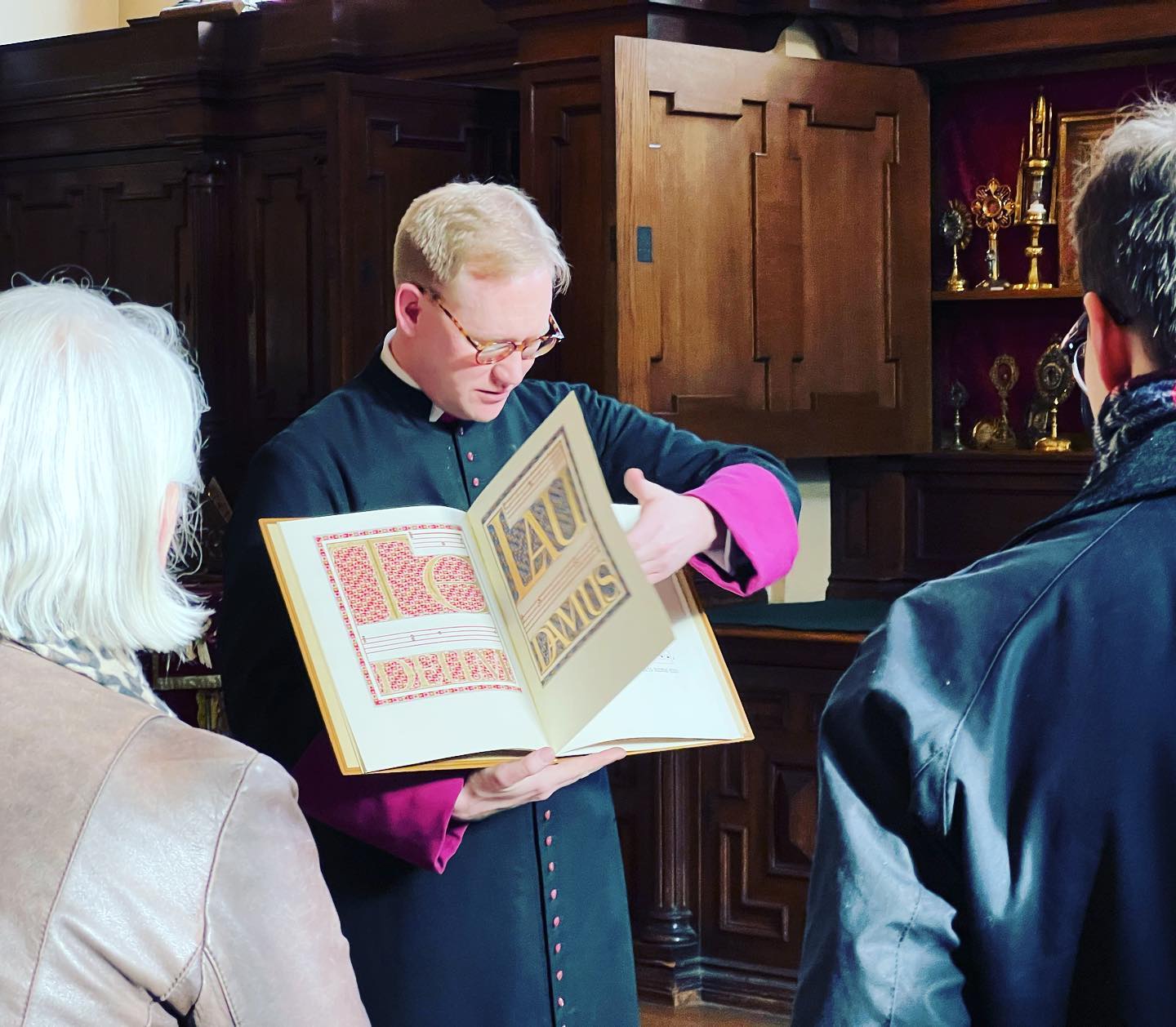
Friends of the Oratory enjoyed an exclusive tour of some of the treasures of Westminster Cathedral and some of the finest treasures of the Catholic Church in England. Here the Head Sacristan shows a hand illuminated manuscript of the Te Deum hymn of thanksgiving — a fitting end to an exceptional event! To support the Oxford Oratory by becoming a Friend, and participate in future events, see www.oxfordoratory.org.uk/friends. #oxfordoratory
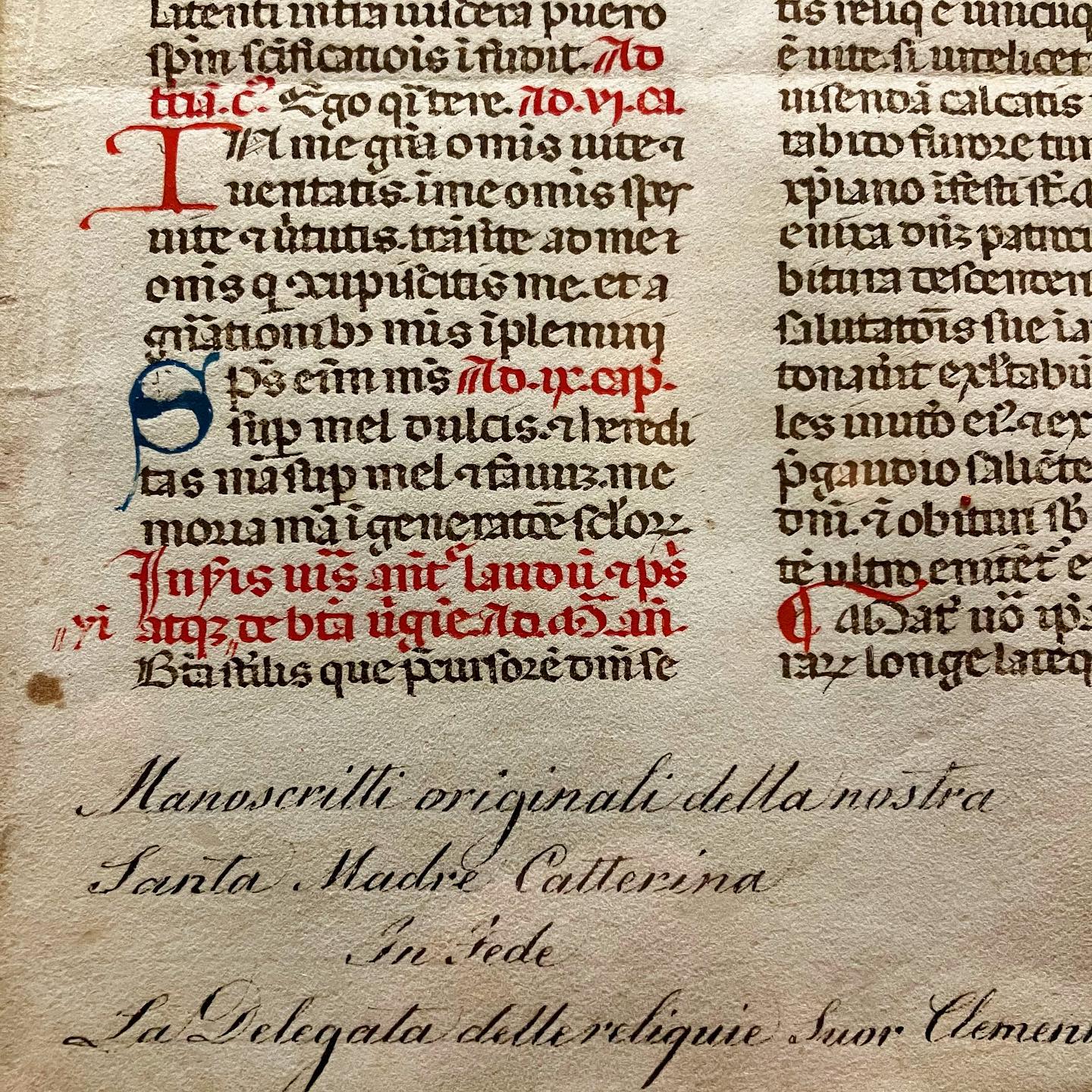
Our relic of the month display features a manuscript of St Catherine of Bologna, whose feast day is today. She is celebrated for her artistic skill as well as her mystic virtue.
#oxfordoratory
Temperance
It is part of the human condition to struggle against temptations for what we know to be bad for us and for others. The virtue of temperance is what helps us fight these temptations. It helps us to keep from doing what is wrong, even when we have strong feelings for it. In other words, temperance is what keeps us from sinning, even when we want to.
Temperance always comes last in the list of the cardinal virtues: temperance is about maintaining the good, but you can only maintain the good if you already have some idea of what the good is and how to acquire it. Prudence is how we know the good, justice and fortitude helps us to do the good. Temperance is how we avoid doing evil, or losing the good.
Many — if not most — people see the major goal of the Christian life as the avoidance of sin. Many people would answer the question “What makes a good Christian?” in purely negative terms: someone who doesn’t fornicate, or get drunk, or do drugs, or steal, or get angry, or tell dirty jokes, or say nasty things. Those are all things a good Christian should not do, but that is hardly a good enough answer.
A good Christian, or even a good person, is not just someone who doesn’t do certain things, but rather someone who does do certain things, someone who seeks the good, who strives to promote beauty, health, holiness, love, friendship, truth, and so on. Our Christian faith calls us to focus on doing good rather than simply avoiding evil. That is why temperance is the last in the order of virtues, though it is as indispensable as the others.
The Catechism defines temperance as “the moral virtue that moderates the attraction of pleasures and provides balance in the use of created goods. It ensures the will’s mastery over instincts and keeps desires within the limits of what is honourable” (CCC 1809).
We need the virtue of temperance because of one of the effects of Original Sin we call “concupiscence”. Concupiscence is a fancy theological word that describes the human desire for things we know are not good for us. Diabetics crave sugar, alcoholics desire whisky, and we all sometimes just long for something sinful. We want something good, but in a disordered way. We want something good, but we want too much of it. We want something good, but in a way that could be bad for us. All evil comes from an inappropriate mode of pursuing a good — sin is seeking some good, but in the wrong way. It is a constant human temptation to go after one good at the expense of some other good. But when we do that, we hurt ourselves and others.
Temperance prevents us from acting on these dangerous urges. It allows us to govern our desires, instead of allowing our desires to govern us. For an intemperate person — that is, someone who permits their impulses to run rampant — it is much harder to see the truth, and much harder to do what is right. One’s life is run by emotional drives, instead of by prudence, justice, and fortitude. But temperance takes the reins from the urges and gives it back to the first three virtues. In a way, we could say that temperance allows the other virtues to do what they are meant to do.
Temperance protects whatever good it is that we are pursuing. If a person pursues a good in a disordered way, he is sure to end up hating that good. Alcohol, for example, is a good thing, but nobody hates alcohol more than an alcoholic; he hates it because it has separated him from everything else: his family, his job, his self-respect. Goods pursued in a disordered way can make us addicted to them, slaves to them, in such a way that our lives are dominated by something that should bring us happiness but really leads to sorrow. Addiction ruins appreciation; an uncontrolled over-focus on just one good at the expense of all others will not only cause a person to lose all the other goods, it will also make him lose the good he thought he loved. Temperance, therefore, by directing our desires and overcoming concupiscence, protects human goods and happiness as a whole.
Balance and moderation are important aspects of temperance. Thus certain extremes must be avoided. The first of these extremes is a lack of self-control, that is, intemperance: a person can’t control any of his impulses, and so he follows wherever they lead at any given moment. Such indulgence inevitably leads to disaster. But the other extreme is also to be avoided, namely insensibility, the undesirable condition in which a person is not even attracted to the goods of life. We should be attracted to food and drink, to health and exercise, to relationships, to achievement, and so on. These are goods created by God as gifts to us, and lead us to happiness in this life. Temperance allows us to appreciate all the goods and joys of human life as coming from God, without misusing those gifts.
Some of the sins against temperance are obvious: lust, drunkenness, gluttony, and the like. This latter isn’t just concerned with how much a person eats (although that is part of it); there can also be sins which arise from being extremely picky, or attached to a certain kind of food. Many people make those around them miserable by refusing to eat anything other than exactly what they want. As C.S. Lewis points out, every time a person is grumpy, impatient, uncharitable, or self-concerned because of their stomach, it’s a case of gluttony.
But some of the sins against temperance are not concerned with “externals”, with the created goods we want and use. St John Paul II in one of his general audience addresses said about temperance: “A temperate man is one who is master of himself. One in whom passions do not prevail over reason, will and even the ‘heart’. A man who can control himself! … What a fundamental and radical value the virtue of temperance has. It is even indispensable, in order that man may be fully a man. It is enough to look at someone who, carried away by his passions, becomes a ‘victim’ of them.” Our passions, faculties, emotions and abilities — all goods given to us by a loving God — also need to be controlled by temperance. Pride, the excessive love of the self, is a sin against temperance, and must be countered with true humility. Anger can be righteous and help us to put right that which is wrong, but it can so easily, without temperance, become a destructive force within us and can hurt others too.
As with all the cardinal virtues, the moderation and self-control of temperance cannot be acquired in one day, but require practice, substantial effort, prayer and time — exactly the sort of practice, effort, prayer and time that this season of Lent offers us.
These reflections are sent out each Wednesday to all those on our mailing list. Click here to sign up to our mailing list, and receive our Sunday E-newsletter and these reflections straight to your inbox.

The Blessed Sacrament is exposed for adoration from 10:30am to 6pm every Saturday of Lent. Stop and spend some time with Our Lord, even if only for a few minutes, if you pass the church this Saturday. #oxfordoratory
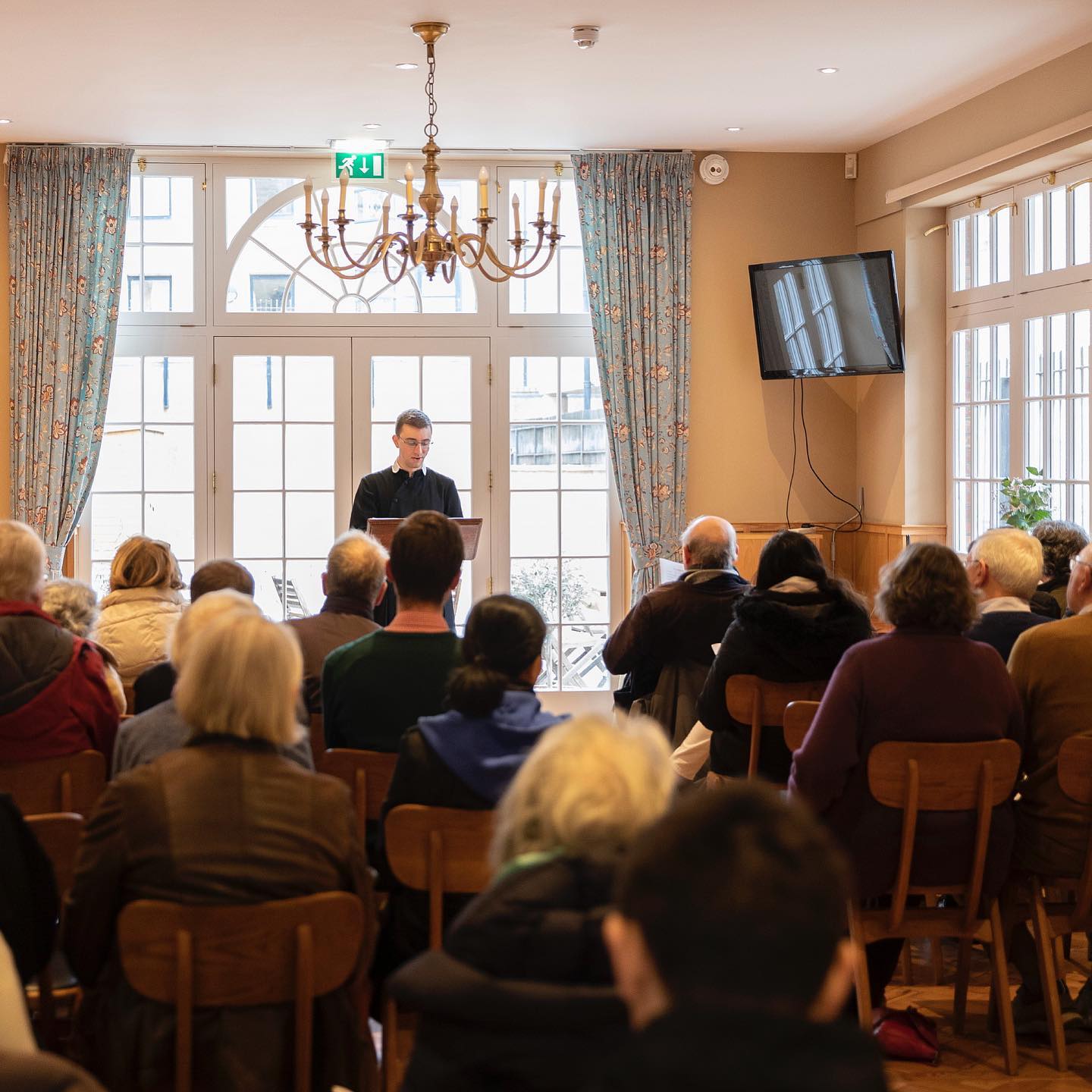
Our Saturday Talks for Lent began yesterday with ‘Job and the problem of suffering’.
Join us next week for ‘Tobit and the rewards of generosity’ at 11am. Cafe Neri will be open from 10:30.
#oxfordoratory