March Music

Sunday 5 March Solemn Mass 11:00
2nd Sunday of Lent
Mass in the Dorian mode Howells
O vos omnes Gesualdo
Ductus est Jesus Guerrero

Sunday 12 March Solemn Mass 11:00
3rd Sunday of Lent
Missa quarti toni Victoria
Tristis est anima mea Kuhnau
Ecce nunc tempus acceptabile Gombert

Sunday 19 March Solemn Mass 11:00
4th Sunday of Lent (‘Lætare’)
Missa Brevis in F Rheinberger
Quid vis ut faciam Cardoso
Salvator mundi Blow

Saturday 25 March Solemn Mass 11:00
The Annunciation of the Lord
Missa Ave Maris Stella Victoria
Ave Maria Victoria
Ne timeas Maria Victoria

Sunday 26 March Solemn Mass 11:00
Passion Sunday
Missa L’hora passa Viadana
Circumdederunt me dolores mortis Vivanco
O Domine Jesu Christe Guerrero

Friday 31 March Musical Oratory 20:00
Passiontide Musical Oratory
Tenebrae Responsories Victoria

Fortitude

We continue looking at the cardinal virtues with the virtue of fortitude or courage.

Very often when we think of truly brave and courageous people we might think of lion-tamers in the circus or matadors in Spanish bullrings bravely facing things that would cause any of us to run for our lives. But the virtue of fortitude is more subtle when we experience it from day to day and it is, in fact, essential for the spiritual life lived well. At times, it may not be what we think it is.

The first kind of fortitude we think of is when someone has to perform a truly brave action. One has to overcome what is preventing us from doing something good, from doing the right thing. Soldiers in battle have to run toward those who would seek to attack them and firefighters have to be ready to run into a burning building when the reasonable course of action would be to run out of it. The thing about fortitude is that it is fitted to special circumstances. For most of us when the fire alarm sounds, the prudent thing is to exit the building calmly, but when you are a firefighter, the right thing to do is to run towards the blaze to tackle it. Soldiers and firefighters go through a period of training, and also having experiences of going on manoeuvres or answering 999 calls that help them acquire the instinct they need to tackle real and present dangers. And so in our life we can acquire the virtue of fortitude through experience, choosing the right thing to do again and again, over and above the dangers or obstacles that make it challenging and hard.

The other kind of fortitude is not one that is acquired through practice but is a grace from God. We call it an infused virtue. St Thomas Aquinas points out that this is not so much about attacking problems, or having the moral strength to run into the fire (metaphorical or real), but rather it is the courage to bear with suffering when it comes, to overcome difficulties of one kind or another with patience. It is a grace, a gift from God which is linked to that gift of the Holy Spirit we don’t often talk about — longanimity. In our life bearing with others, or with suffering, with sickness or persecution takes courage, it requires real fortitude not to let it crush us, and this is a grace God gives us.

So whether it is in practical circumstances or in the depths of the soul, fortitude is essential. Fr Louis Bouyer reminds us that it is where the vigour of the whole life of the soul resides. It is one of the cardinal virtues (from the word for hinge) because the whole moral life turns on being able to use it. Bouyer is right to think that our moral life needs energy to overcome the inertia of not acting, of not striving, and that energy comes from fortitude. It also reminds us that being virtuous is not just about avoiding sin, consisting in not doing bad actions, but rather seeking out the good and despite what might be in the way, using that virtue of fortitude to do the right thing.


These reflections are sent out each Wednesday to all those on our mailing list. Click here to sign up to our mailing list, and receive our Sunday E-newsletter and these reflections straight to your inbox.
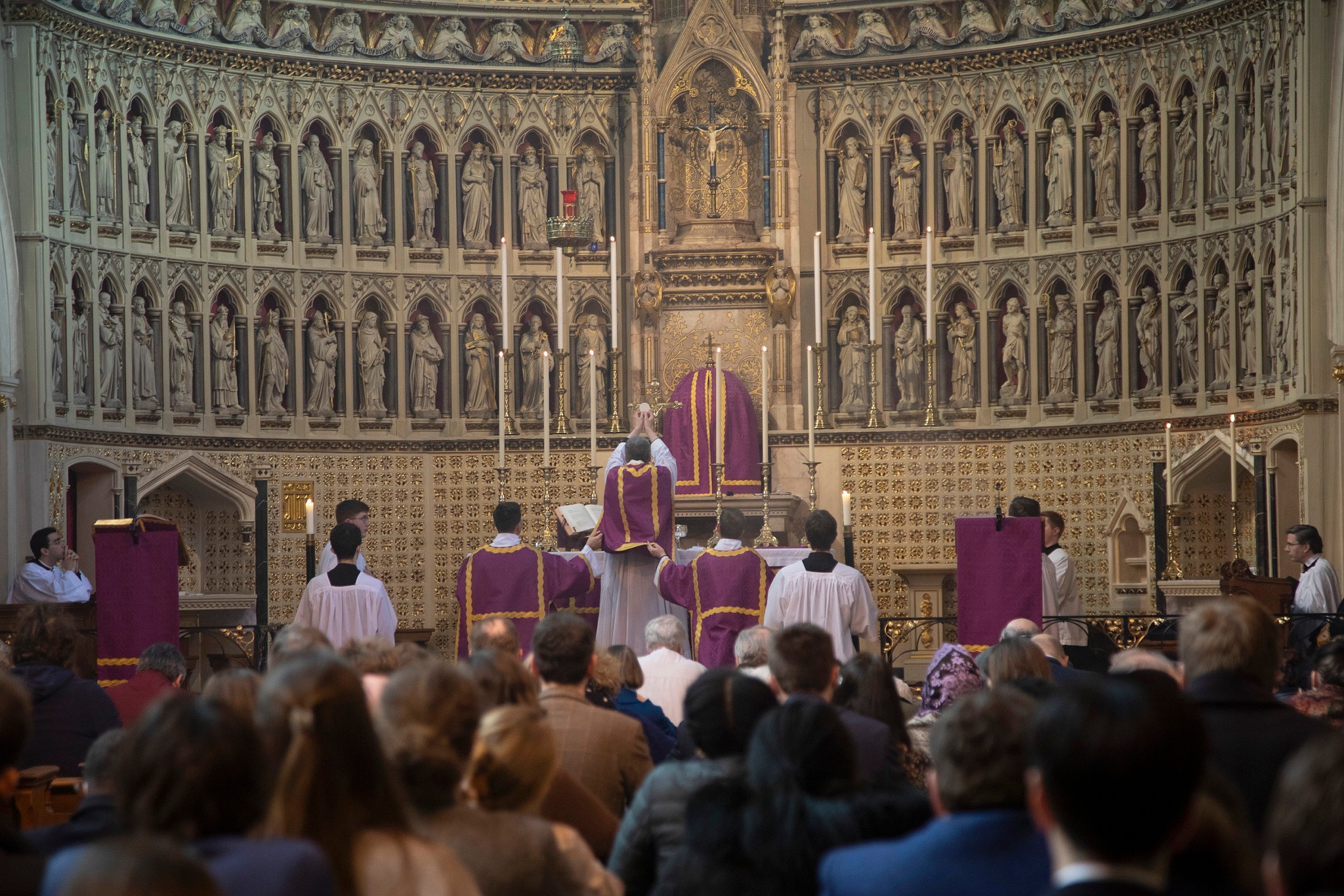
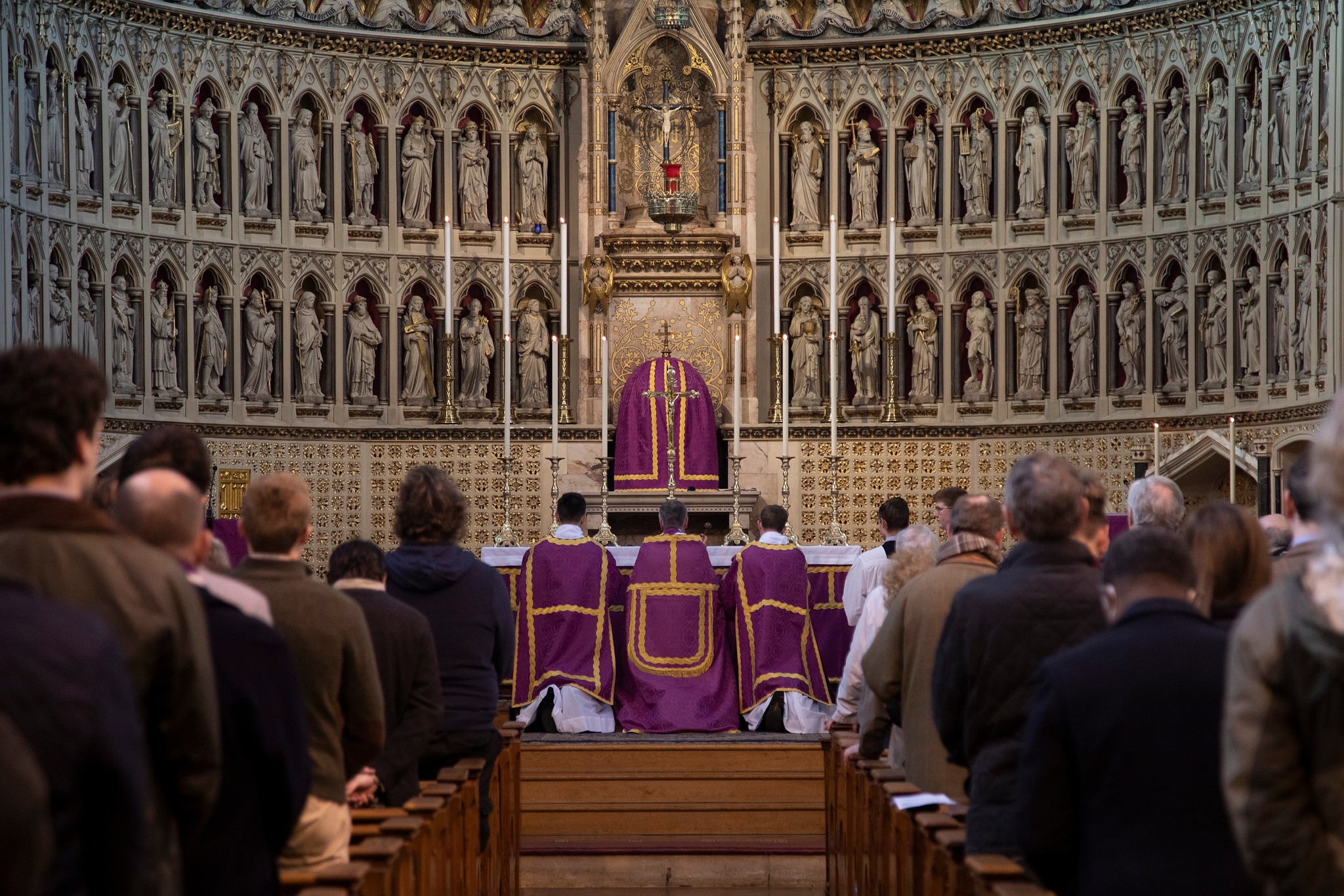
The devil took him to a very high mountain and showed him all the kingdoms of the world and their glory. And he said to him, “All these I will give you, if you will fall down and worship me.” Then Jesus said to him, “Be gone, Satan! For it is written: You shall worship the Lord your God and him only shall you serve.” (Matthew 4:8–10)

#oxfordoratory

View on Instagram

The Solemn Mass begins each Sunday with the “Asperges”, which takes its name from the antiphon sung as holy water is sprinkled:

Asperges me, Domine, hyssopo, et mundabor: lavabis me, et super nivem dealbabor.
You will sprinkle me with hyssop, and I shall be clean. You will wash me, and I shall be whiter than snow. (Ps. 50:9)

Like the priests of the old covenant washing themselves before they offered sacrifice, this ritual purification reminds us of the preparation and repentance we need before we can receive God’s gifts. In a similar way, our Lenten penances prepare us to take part in the celebrations of the Lord’s Passion and Resurrection in Holy Week.

#oxfordoratory

View on Instagram

“The day of Ashes, and the beginning of the holy season of Lent. See, the days of penance are coming, for the remission of sins, for the salvation of souls. See, this is the acceptable time, when the ascent begins towards the mountain of Easter.” (from the Roman Martyrology for Ash Wednesday)

#oxfordoratory

View on Instagram

Justice

Today, we consider that cardinal virtue, justice. What is it? The Catechism say simply that ‘Justice consists in the firm and constant will to give God and neighbour his due’ (CCC 1807). This virtue is something we would see practised everywhere and by everyone. From childhood, we feel keenly when something is not fair. We are told that ‘life is not fair’, which adds a certain insult to injury. Still, life is not fair, people and structures are not always just. As one American judge remarked in the 1920s: ‘Justice is open to everyone in the same way as the Ritz Hotel.’ We know very well what he meant.

When we talk about justice, we are usually referring to distributive justice or retributive justice. We want restitution and recompense when someone circumvents or denies our rights. We demand retribution for crimes committed against us: for perpetrators to face “justice” and for the victims of their crimes to receive “justice”.

The Scriptures assure us that the call for justice is right and good and that the role of government is to uphold what is good and to punish evil. We read that God is just and that he is not partial – that he has no favourites. Our Lord told his followers to ‘Seek first the Kingdom of God and its righteousness’ (Matt. 6:33). And in this vein, he spoke about our individual responsibility to bring justice by loving our neighbours and doing good for those around us, especially the poor and marginalized. He talked more about the responsibility of individuals than of authorities to promote good. According to Jesus, those who call themselves his disciples do the work of bringing justice through love and persistence.

When the religious leaders of his day asked our Lord which was the greatest commandment, he answered:

‘Love the Lord your God with all your heart and with all your soul and with all your mind.’ This is the first and greatest commandment. And the second is like it: ‘Love your neighbour as yourself.’

—Matt. 22:37–39

He gave them the parable of the Good Samaritan to illustrate what it meant to love ones neighbour: it means to act for the good of others. That is rendering justice. It is also to show mercy.

In his Sermon on the Mount, Jesus taught the disciples the way they should live. Most of his exhortations hinged on his audience acting justly. He set the tone with the Beatitudes: attitudes oriented toward God, loving toward others.

Blessed are the meek, for they will inherit the earth.
Blessed are the merciful, for they will be shown mercy.
Blessed are the peacemakers, for they will be called the children of God.

—Matt. 5:5,7,9

It can be seen that he set a high standard for individual justice. For example, he warned that acting out in anger toward someone was tantamount to murder, urging that if we are angry with someone, we ought to resolve conflicts quickly, and even refraining from offering our gifts to God until we are in a right frame of mind, free from anger (Matt. 5:21ff). He also told his listeners to take extraordinary measures to prevent themselves from dishonouring God and those who bear his image, likening lust for another person to adultery (Matt. 5:27ff). Furthermore, Jesus said that it was not good enough that we love those who love us, but we must love our enemies as well: ‘But I tell you, love your enemies and pray for those who persecute you, that you may be children of your Father in heaven’ (Matt. 5:44–45). Love is shown in action: doing good for others, giving them justice.

Jesus spoke of people who sought justice through faith and kept asking until they received it. He once told his disciples a parable of a widowed woman who pleaded with an unjust judge to grant her justice in her case (Luke 18). Again and again he refused her, and again and again she brought her claim back to him. Finally, he relented just to get her off his case and leave him in peace. Jesus said, ‘And will not God bring about justice for his chosen ones, who cry out to him day and night? Will he keep putting them off? I tell you, he will see that they get justice, and quickly.’

You may recall how he himself illustrated this parable, when he initially refused to even listen to a Canaanite woman who came to him anxious about her daughter who was being tormented by an evil spirit (Matt. 15:22ff). ‘I was sent only to the lost sheep of Israel,’ he said. Yet she kept on asking, saying, ‘Even the dogs eat the crumbs that fall from their master’s table.’ At which, the Lord commended her faith and immediately freed her daughter.

The gospels are full of stories of people coming to Jesus looking for justice, hoping and expecting to receive it. In Christ we see justice always tempered by mercy. When we act justly and show mercy, we become more like him and show ourselves more to truly be his disciples — ‘by the love you have one for another’ (John 13:35). When we become men and women of the Beatitudes and sincerely try to love our neighbours as ourselves, our individual acts of justice of which our Lord spoke, will have a positive impact on the demands for justice that resound throughout the world. They will certainly ‘be righteous in His sight’ (Romans 3:20).


These reflections are sent out each Wednesday to all those on our mailing list. Click here to sign up to our mailing list, and receive our Sunday E-newsletter and these reflections straight to your inbox.
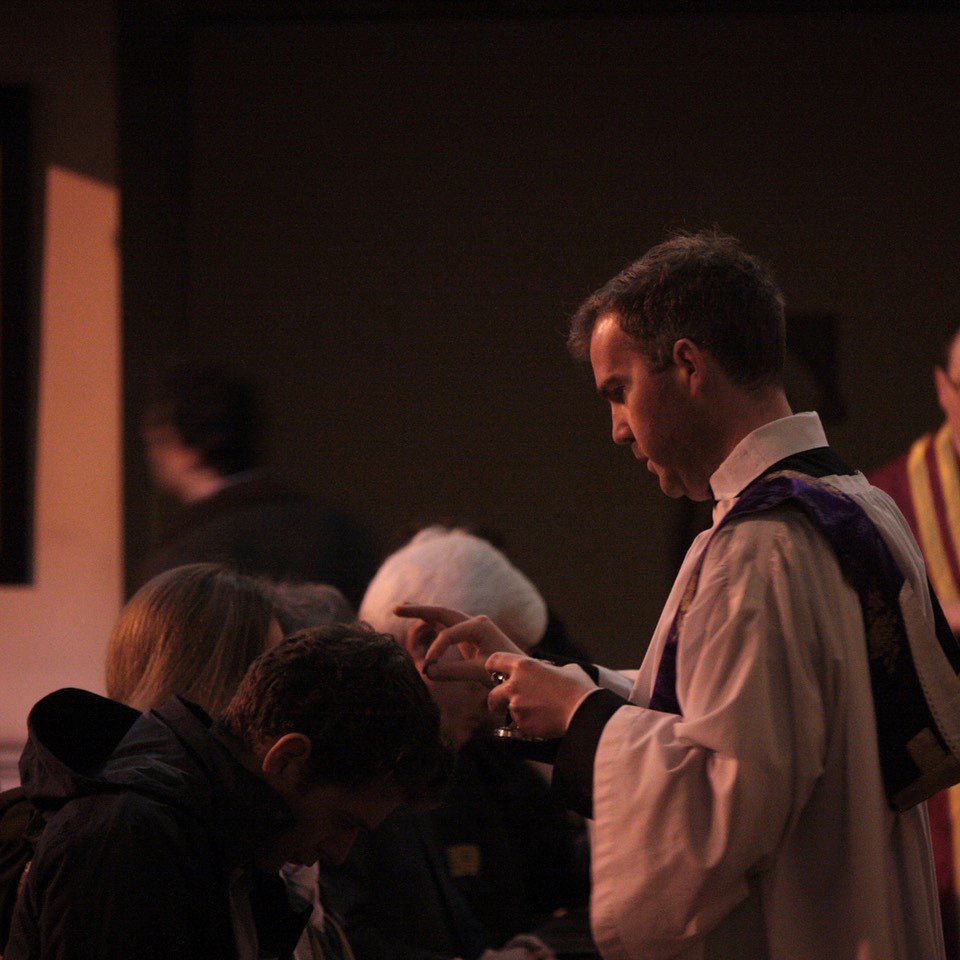
The last time many of us learned about the faith was when we were at school. But if this is you, help is at hand! Our adult catechism class meets each month working our way through the main sections of the Catechism. On Thursday we looked at Grace and the Soul but why not join us on Thursday 2 March at 8pm when we will learn about the “Holy Spirit, Lord & Giver of Life” #oxfordoratory

View on Instagram

Prudence

Last week we started thinking about the importance of the virtues as skills for the moral life, and forming who we are by training ourselves in the virtues. The question is, when we have to make a decision and act, which virtue applies now?

That’s where prudence comes in. Prudence does not mean (as it is so often used) being cautious. In ordinary life, we call someone prudent when they are careful with their money or when they take a long time to make decisions and rarely act quickly (if they act at all). Sometimes we call people prudent when they’re a bit dull and never take any risks. A virtuous person will have to take risks from time to time. The martyrs took risks. That doesn’t mean they were without prudence. So what exactly is this neglected virtue?

Prudence is the virtue that disposes practical reason to discern our true good in every circumstance and to choose the right means of achieving it.

—Catechism of the Catholic Church 1806

Prudence governs the other virtues. That’s why it’s so important. It’s the skill of knowing what virtues are called for here and now, in this given situation. And then, if we have the virtues we need, prudence sets them to work. Prudence is the control centre of the moral life. If you don’t have this virtue, no matter how much you grow in all the others, you won’t actually be able to put them to good use.

Because it is a skill — just like the other virtues — once we have obtained prudence, it works like an instinct, rather than a conscious decision. There’s no delay while we think about the moral choice before us. Prudence puts our other virtues into action straightaway.

We grow in prudence by learning to judge what is good and what will lead to that good outcome. Discerning our true good comes from knowing God’s laws, but most importantly, knowing him who is our ultimate good.

‘When he listens to his conscience, the prudent man can hear God speaking,’ the Catechism tells us (CCC 1777). The prayerful examination of our actions each day gives us a chance to learn from our experience — both good and bad — so as to act more quickly in the future. Then we try again the next day. All that prayer and study has to be put into practice, by trying to act well in difficult situations. We probably don’t need to go searching for these — difficult choices are quite good at finding us by themselves. The important thing is not to be so scared of making a wrong decision that we don’t act at all, just as we can’t be scared to play a wrong note when we learn the piano or to miss the goal when we learn to play football. There are few skills in life that anyone ever obtained without making mistakes along the way. Even our mistakes help us to grow in prudence, if we learn from that past experience.

We should want to grow in prudence because it makes life easier for us. We gain the ability to make good decisions without thinking about them, and making those good decisions quickly, we will make the choice to escape all kinds of temptations before we’ve even noticed they are there.

Christ is the supreme example of all the virtues, and when we know what to look for, we see prudence at work in the Gospels. He often had difficult decisions to make, and little time to make them. He knew when to stand up to the pharisees, and he knew when to vanish into the crowd. He knew when to work a miracle in front of everyone, and when to let only his closest disciples see his power. Most importantly, he knew when it was time not to run away, and when to put obedience and fortitude and love for the men and women he had come to save before the preservation of his own life.


These reflections are sent out each Wednesday to all those on our mailing list. Click here to sign up to our mailing list, and receive our Sunday E-newsletter and these reflections straight to your inbox.

St Bernadette records being asked which made her happier: her First Holy Communion or seeing the apparitions of Our Lady at Lourdes (which we commemorate today). St Bernadette wrote:

‘I could but answer, “The two go together. They cannot be compared. I only know I was very happy on both occasions.” Years later I would write in my prayerbook in Nevers, “I was nothing, and of this nothing God made something great. In Holy Communion I am heart to heart with Jesus. How sublime is my destiny.”’

Nothing beats the miracle we are all invited to take part in, of receiving Christ himself in Holy Communion. Today we shared that miracle with Soubera and Catherine, as they were received into Full Communion with the Catholic Church, and made their own First Holy Communions.

#oxfordoratory

View on Instagram

Virtue

How is it that to call someone ‘virtuous’ is practically an insult in modern English? You might as well just use the word ‘boring’.

But the life of virtue is meant to be anything but boring. Not only are we meant to pursue virtue as Christians, but, as human beings, we should want to.

Virtue isn’t so much about what we do as who we are. We grow in virtue (or not) through our actions, but the point of acquiring a particular virtue is to shape our character. Growing in virtue is part of life for all human beings. We wouldn’t be particularly impressed with an adult who had the self-control of a toddler.

Growing up involves growing in virtue. A certain amount of that virtue grows quite easily in the right environment. When we are encouraged by our families and our friends, our school or our workplace to take on certain responsibilities for ourselves and for others, we have no option but to grow in the virtues we need to live and work with other people.

But that will only get us so far. The level of virtue society demands of us is not the same as the level God calls us to. The standard of our virtue is not meant to be our friends on earth, but our friends in heaven — those men and women the Church has recognised as examples of ‘heroic virtue’.

Every so often, a video will hit the news or social media and be watched by millions around the world because it shows someone doing something that is highly skilled, often to the point of being unbelievable. There’s no trick though. We know how they did it. Practice. And more practice. If you want to be a skilled athlete, musician or artist, you know that it takes practice and hard work. The same is true of the virtues.

Sometimes there are shortcuts. The Lord can, if he wants, give us a virtue we’ve never had to work for. But even in the Christian life virtues are normally acquired only with our co-operation. Because virtues are also skills. They are the skills of the moral life, of decision making and action. A temperate person can decide without hesitation when to stop eating. A patient man controls his temper without a second thought. And such people are able to act in this way because they have practised making the right decision over and over again.

The members of some religious communities make an explicit commitment to strive for one particular virtue each Lent. As Lent approaches, we can take the opportunity to ask ourselves what we would like to change about our character by the time we get to Easter. We don’t need to know the technical names of the virtue we need, and we don’t need to tell anyone else what we’re doing. We just need to identify one particular bad habit we want to overcome and do something each day to chip away at it.

Rome wasn’t built in a day, and saints aren’t made overnight. Virtue requires a consistent, daily effort — like we see in the life of St Andrew Avellino, who promised God that he wouldn’t let a day pass without making at least some small progress in virtue.

If you’re still not sure where to start, help is on its way. The Church identifies seven principle virtues: the four cardinal virtues of prudence, justice, fortitude and temperance, and the three theological virtues of faith, hope and charity. We’ll be exploring each of these over the next seven weeks and looking at how we can make them part of our own good character.


These reflections are sent out each Wednesday to all those on our mailing list. Click here to sign up to our mailing list, and receive our Sunday E-newsletter and these reflections straight to your inbox.