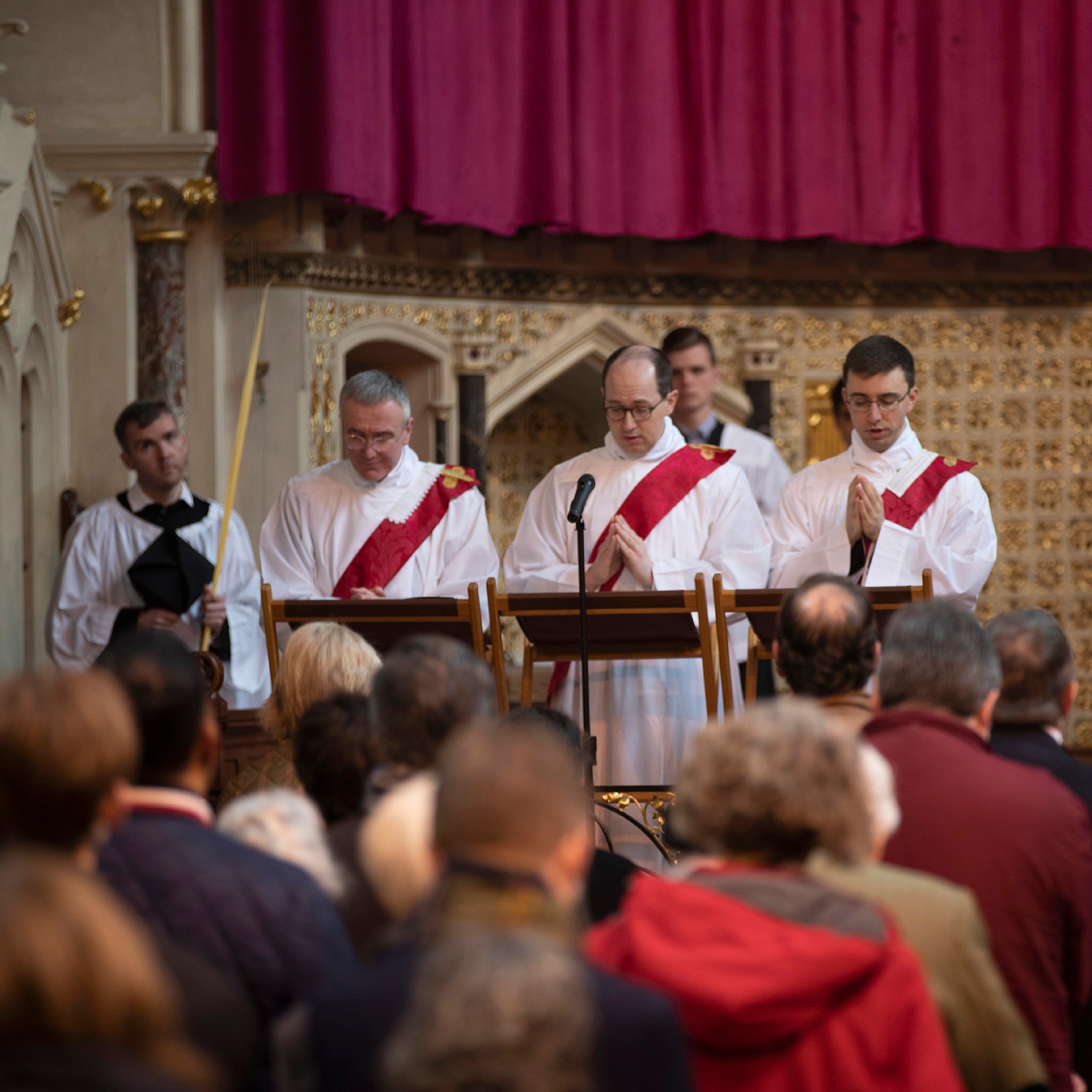
The blessed palms are held while the Passion is sung.
#oxfordoratory
And suddenly it is Holy Week… I suspect that for some of us it comes as rather a relief. Somewhat like the Israelites in the desert who long for the melons and cucumbers (or were they cornichons and cantaloupes?) of Egypt, we might be a bit fed up of our Lenten penances, or at least finding that the zeal with which we entered into Lent is somewhat lagging by now. Such is the difficulty of long preparations — we can easily lose sight of why we began it at all after a while. So Holy Week comes as an almighty wake up call, another opportunity for us at last to get things right with God, and put our life with him on track again. Our Lent might have been rather ‘I’ focused: ‘my’ penances, ‘my’ sacrifices, ‘my’ charity, ‘my’ spiritual reading, but Holy Week rather takes us by the shoulders, gives us a good shake about, and lets us focus on the only thing that, in the end, and certainly at The End, really matters — and that is God and our life with him.
We are already well into Holy Week by now, but with the Sacred Triduum just about to begin we still have time to prepare: in a practical way by trying to shift a few things in our diary so we can be with the Lord in the liturgies of these days, but also by that best preparation of making our confession if we haven’t done so recently already.
The days of preparation and anticipation come then to the beginning of the Sacred Triduum when we are invited into the intimacy of the life of Christ and his disciples as, during the Passover which he shares with them, he gives them the new commandment: that we should love one another as he has loved us. And then institutes those two abiding signs of his great love for us: the Eucharist and the Priesthood. Those two signs are rooted in his love and, please God, are always for us the sure sign of it — but a love of which the hallmark is sacrifice. So to prepare for the sacrifice of his own life, the shedding of his blood which will take away our sins, the Lord goes to Gethsemane to pray to his Father and ours. And we follow him there, and in our watching before the Altar of Repose we try so very hard to stay awake and watch with him, if only for an hour, to give him who has given us life all the time we can in that moment, as he prepared to pour out his life for ours.
And then he is taken from us and the church is strangely empty. “Oh come and mourn with me awhile” Father Faber of the Oratory urges us in his hymn, and so we do what we must when we lose sight of the One we love — we give full vent to our loss in the beauty of Tenebrae on Good Friday and Holy Saturday mornings. Though we lose sight of him we do not cease to look for him, nor to follow the path he has traced for us — and we follow him to Calvary with the Stations of the Cross on Good Friday and then, whilst those around us may have fled to other distractions, we stand with Mary beside the Cross of Christ to witness the greatest act of love anyone will ever make for us and for many with the Solemn Liturgy of the Passion. And if we can say nothing to him at all when confronted with the enormity of our sins, surpassed by the enormity of his love, we might at least come to tell him ‘thank you’: for dying for me, for loving me, and asking him to help us accept that love.
On Holy Saturday when he lies in the tomb we mourn amidst the stillness and the silence that is unique to that day, but knowing that we do so in the sure and certain hope of the Resurrection. And darkness falls, darkness in which a light is kindled that can never go out, for a new day begins to creep in, and we enter into his time and out of ours once again, and then the light shines in the darkness for all the world to see, and as at the beginning of the Easter Vigil the light of Christ illuminates the whole church, and as his light kindles our own, suddenly but so quietly everything is different, for we are redeemed…
And at last it is morning, and everything appears to be different, for he has changed it. Will we, I wonder, come and see, as he is ever inviting us, and ourselves be changed also this Holy Week?
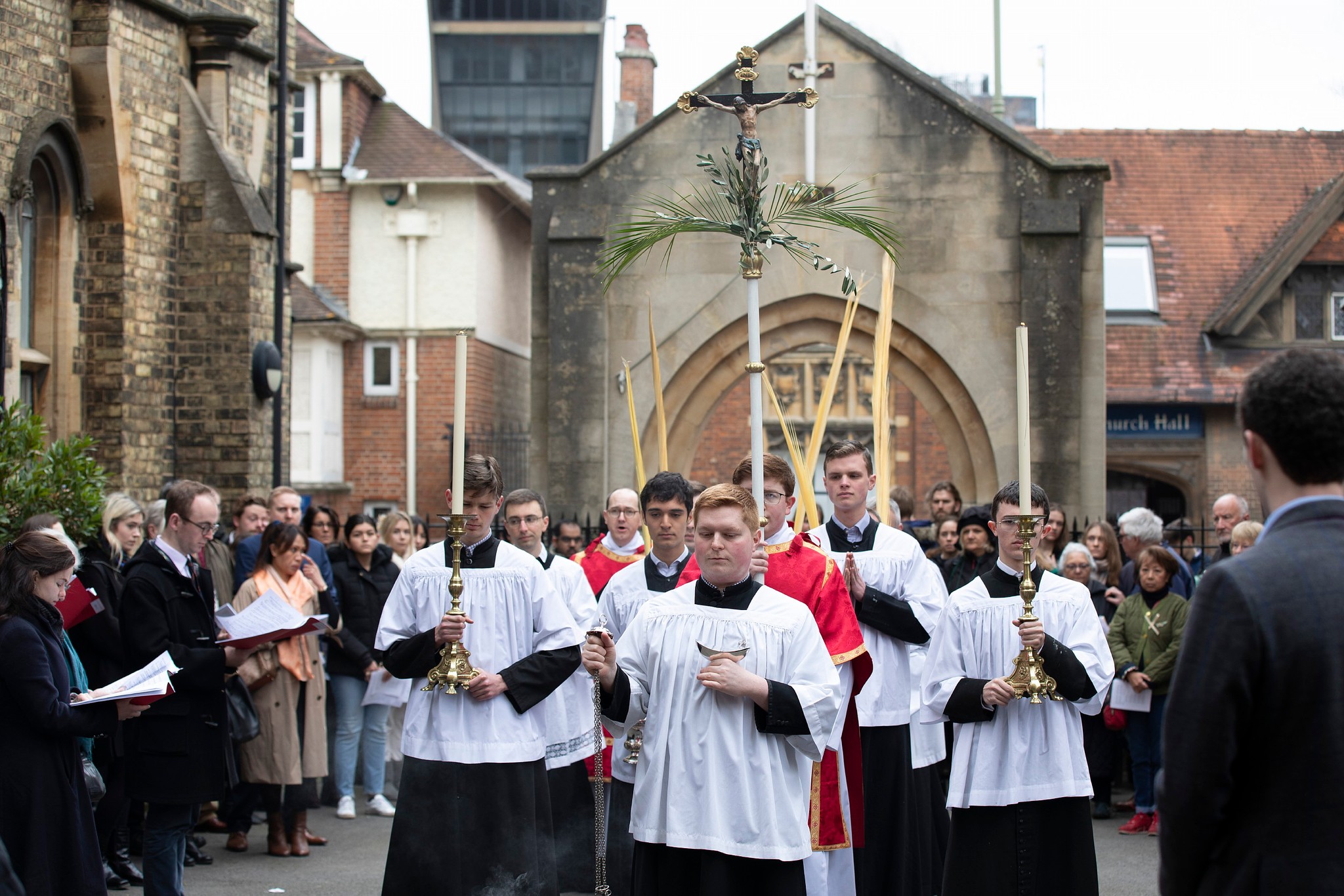
“Gloria, laus et honor tibi sit, Rex Christe, Redemptor: cui puerile decus prompsit Hosanna pium.”
The procession on Palm Sunday
#oxfordoratory
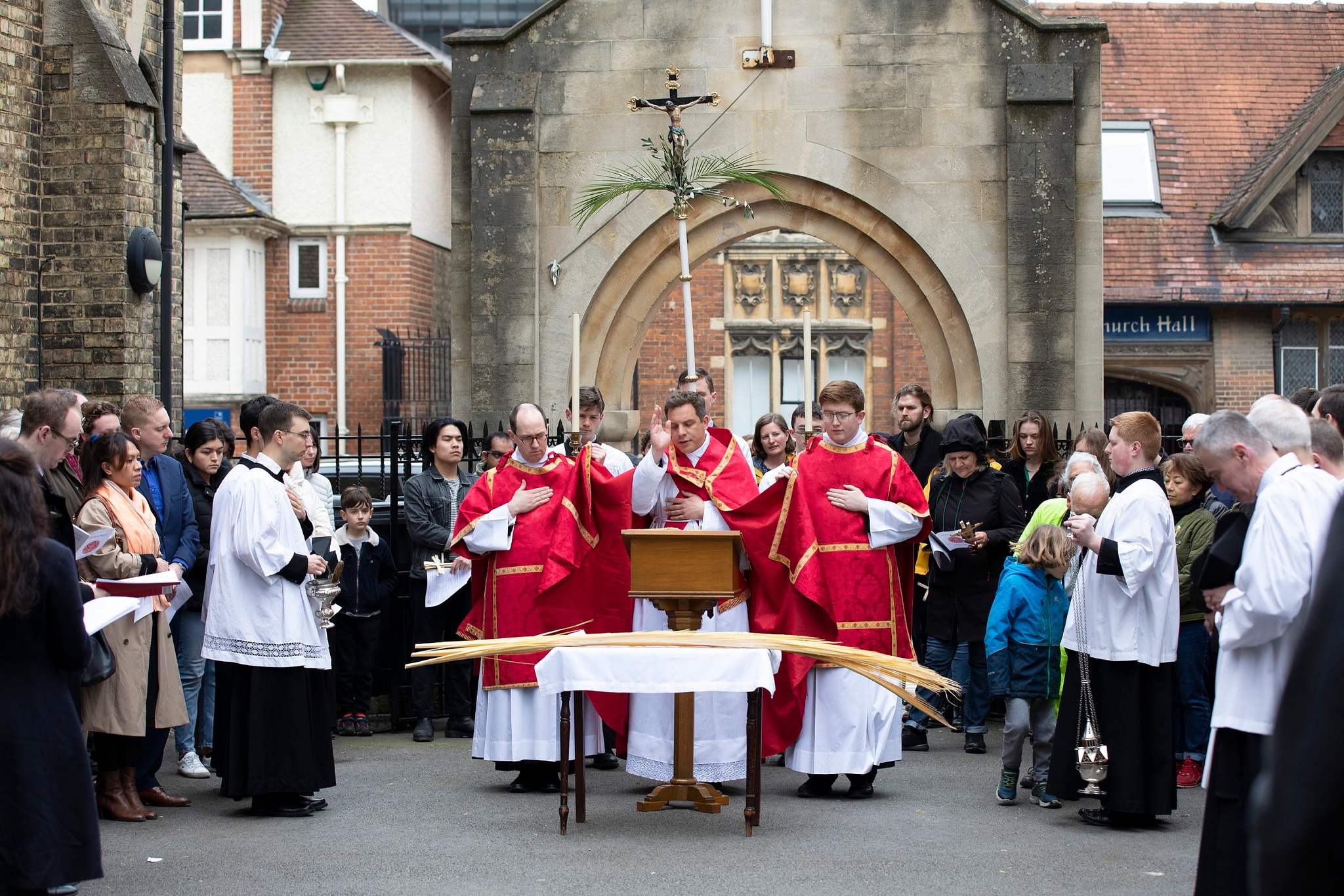
“Hosanna to the Son of David; blessed is he who comes in the name of the Lord, the King of Israel. Hosanna in the highest.”
The blessing of Palms on Sunday
#oxfordoratory
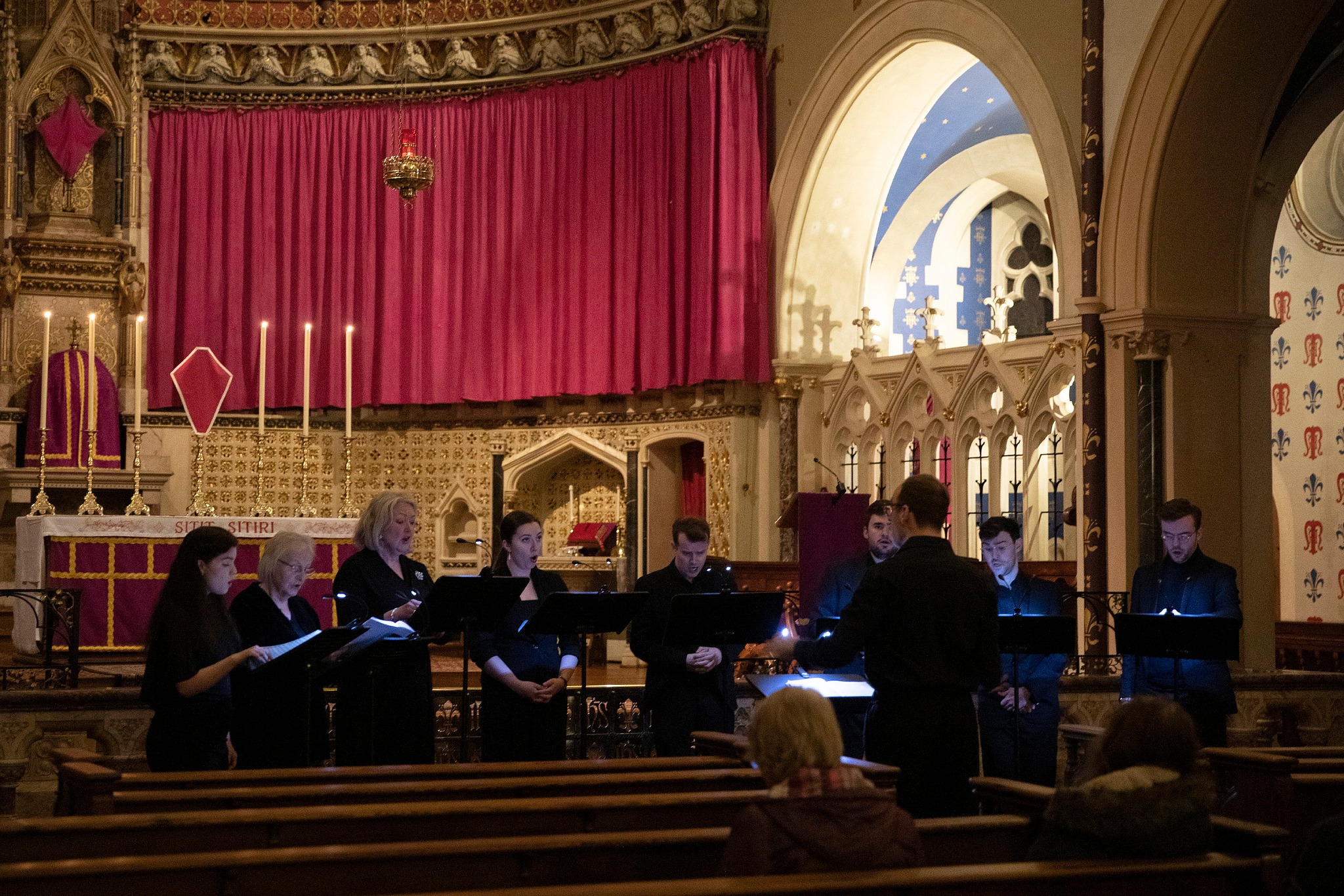
“Behold, I was like an innocent lamb; I was led to the slaughter, and I knew it not. My enemies have conspired together against me, saying: Come, let us put poison into his bread, and let us cut him off out of the land of the living.”
The first of Victoria’s Tenebrae Responsories we heard at Friday night’s Passiontide Musical Oratory. St Philip used Musical Oratories to lift our minds and hearts to God through beautiful music, and we try to do the same.
This is a busy week for our choir. You can see our full music list for Holy Week and Easter here: https://tinyurl.com/holyweekmusic2023
#oxfordoratory
Sunday 2 April Solemn Mass 11:00
Palm Sunday
Pueri hebraeorum Victoria
Ingrediente Domino Malcolm
Missa brevis Palestrina
Christus factus est Anerio
Improperium expectavit cor meum Palestrina
Vadam et circuibo Victoria
Thursday 6 April Solemn Mass 20:00
Maundy Thursday
Missa Bell’ Amfitrit’ altera Lassus
Ubi caritas Duruflé
Dominus Jesus in qua nocte Palestrina
Pange lingua Victoria
Friday 7 April Liturgy of the Passion 15:00
Good Friday
Christus factus est Anerio
St John Passion Victoria
Popule meus Victoria
Ne irascaris Byrd
Civitas sancti Byrd
Versa est in luctum Lobo
Adoramus te, Jesu Christe Handl
O vos omnes Gesualdo
Crux fidelis King John IV of Portugal
Stabat mater Palestrina
Saturday 8 April Easter Vigil 21:00
Holy Saturday
Jubilate Deo Lassus
Missa Laetatus sum a12 Victoria
Sicut cervus Palestrina
Dum transisset sabbatum Taverner
Prelude and Fugue in B Major Dupré
Sunday 9 April Solemn Mass 11:00 with orchestra of period instruments
Easter Sunday
Piccolomini Mass KV258 Mozart
Haec dies Byrd
Regina caeli Mozart
Hallelujah chorus Handel
Church Sonata in C K263 Mozart
Solemn Vespers 17:00
Invitatory Croce
Haec dies Sheppard
Magnificat tertii toni Palestrina
O salutaris hostia Anerio
Christus resurgens ex mortuis Allegri
Tantum ergo Victoria
Alleluia Gabrieli
Regina caeli Aichinger
Te Deum Langlais
In his first letter to the Corinthians, St Paul gives us a cautionary tale. Without the thing of which he writes, despite our remarkable accomplishments, despite our seeming altruism, he tells us we are nothing, nothing other than dissonant noise like a clashing cymbal. Without this thing we run the risk of being inconstant, jealous and arrogant, resentful and irritable. St Paul does not write of a quality of character in the first place, nor an attitude, at least at its beginning. The thing of which he writes is, of course, a gift first and foremost. It is charity.
Pope Benedict XVI reminded us that, “Charity is love received and given. It is ‘grace’.” As grace it is a share in the very life of God himself, and we can find its source, its wellspring in the Father’s love for the Son, in the Holy Spirit: a love so full it does not want to be contained and so pours over into our life through the Son. “Love is revealed and made present by Christ,” writes the great pope, “and is poured into our hearts through the Holy Spirit.” (Rom 5:5) It is very apt that we have this very short reflection on charity in Passiontide since it is in the passion of the Lord that we see it made most clearly manifest. The passion of the Lord is, as Pope Benedict said, “love in its most radical form.”
It is because this love that is charity is so radical that it is experienced by the saints in radical ways. For St Philip, as with the apostles and Our Lady, it was as a Pentecostal fire. That fire and heat remained with him his whole life and inspired both devotion and acts of mercy in him and in those close to him. That flame of charity encouraged aversion to sin, an infectious joy and the ability to win over others to Christ. St Philip would startle those around him by exhorting them to charity in remarkable ways. “May St Anthony’s fire burn you!” he was known to say, meaning may you glow with the divine love with which St Anthony glowed — though it may have been hard to know that at first. Contemplation of heavenly things and the practical works of mercy go hand in hand when enlivened by the gift of charity — they are not mutually exclusive but rather complementary sides of the one gift. The Fathers of the Church looked to the story of Jacob’s ladder in the Old Testament as an image of that gift of charity in us. The angels descending and ascending are a sign of the love given us by God that enables us to think of and love him in return. Commenting on just this passage, St Gregory the Great thinks of how this image can be a picture of the soul of each of us: “Within he is borne aloft through contemplation, while without he is completely engaged in helping those who suffer.”
This love which makes us do great things is so intoxicating because it speaks to the deepest part of our heart. For St Thomas Aquinas, our Lord’s words in St John’s Gospel, “No longer do I call you servants… I have called you friends,” (Jn 15:15-17) are the key to understanding the virtue of charity — it is the love that is friendship.
For Aquinas, the place where we find charity working is the part of us that is concerned with loving in the first place, our will. Charity works on it to perfect it. We naturally love some things for the good they do for us and the benefits they bring us that help us survive. And other things we naturally love for what they are in themselves. Charity helps us see God as our final end, our destination, and also helps us see him as our first and best friend because he has loved us first. And if we see these things then we love all other things for love of him because they come from him and return to him again. For Aquinas, the charity that we show is nothing other than our loving response to the friendship offered to us by God. In friendship we love our friend as well as what he loves.
And charity bears fruit. Joy, peace and mercy grow over time in our heart as we experience and show God’s love through acts of kindness, almsgiving, and witnessing to the truth on the outside — these things are, Aquinas tells us, the beginnings of, or a little glimpse of, heaven. In heaven there will no longer be the need for faith — we will have Truth himself — and there will be no need for hope — we will possess God fully. The only thing that will remain is charity, that enjoyment of God in friendship forever, a friendship which has already begun here. But we must learn how to let it grow.
As we move into Holy Week, we are given an example and a witness to the depth of charity: what it costs, but also what it wins. For Pope Benedict, again, in order to understand love and to grow in it we must return to that love found in its most radical form, in Jesus’ suffering and death. By contemplating the pierced side of Christ, we can understand the starting-point of any consideration of charity. “It is there,” writes Benedict, “that this truth can be contemplated. It is from there that our definition of love must begin. In this contemplation the Christian discovers the path along which his life and love must move.” We must learn to give ourselves in love since it is the only thing known to us that grows in the measure that it is given away. Holy Week shows us the depths of the love of God and the love of others in Jesus, and he will, by the gift of himself in friendship, show us how to be like him.
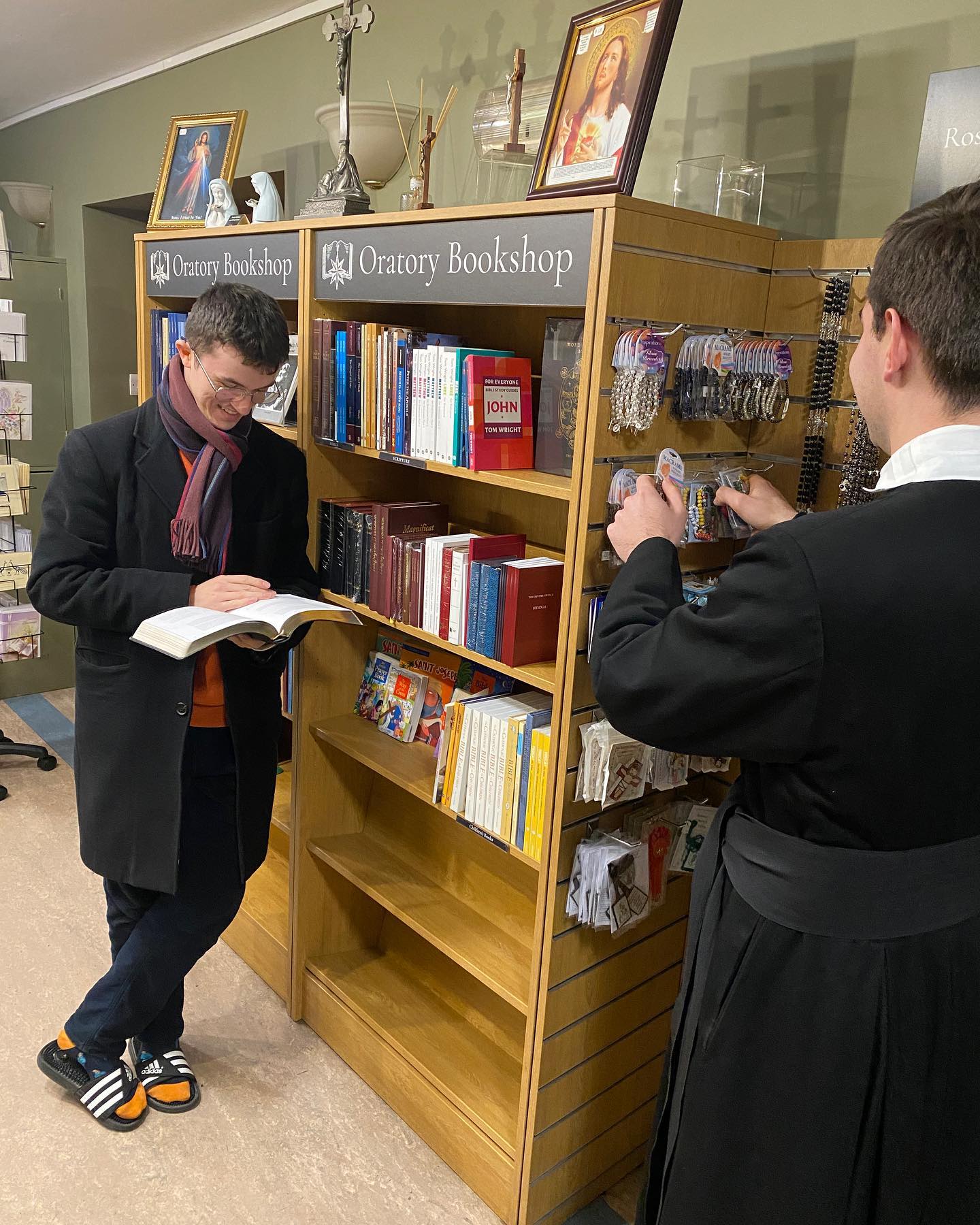
Our bookshop is open every day with a carefully chosen selection of Catholic books and devotions items including handmade and monastic products. Why not call in and find some spiritual reading or buy some of our beautiful cards? #oxfordoratory
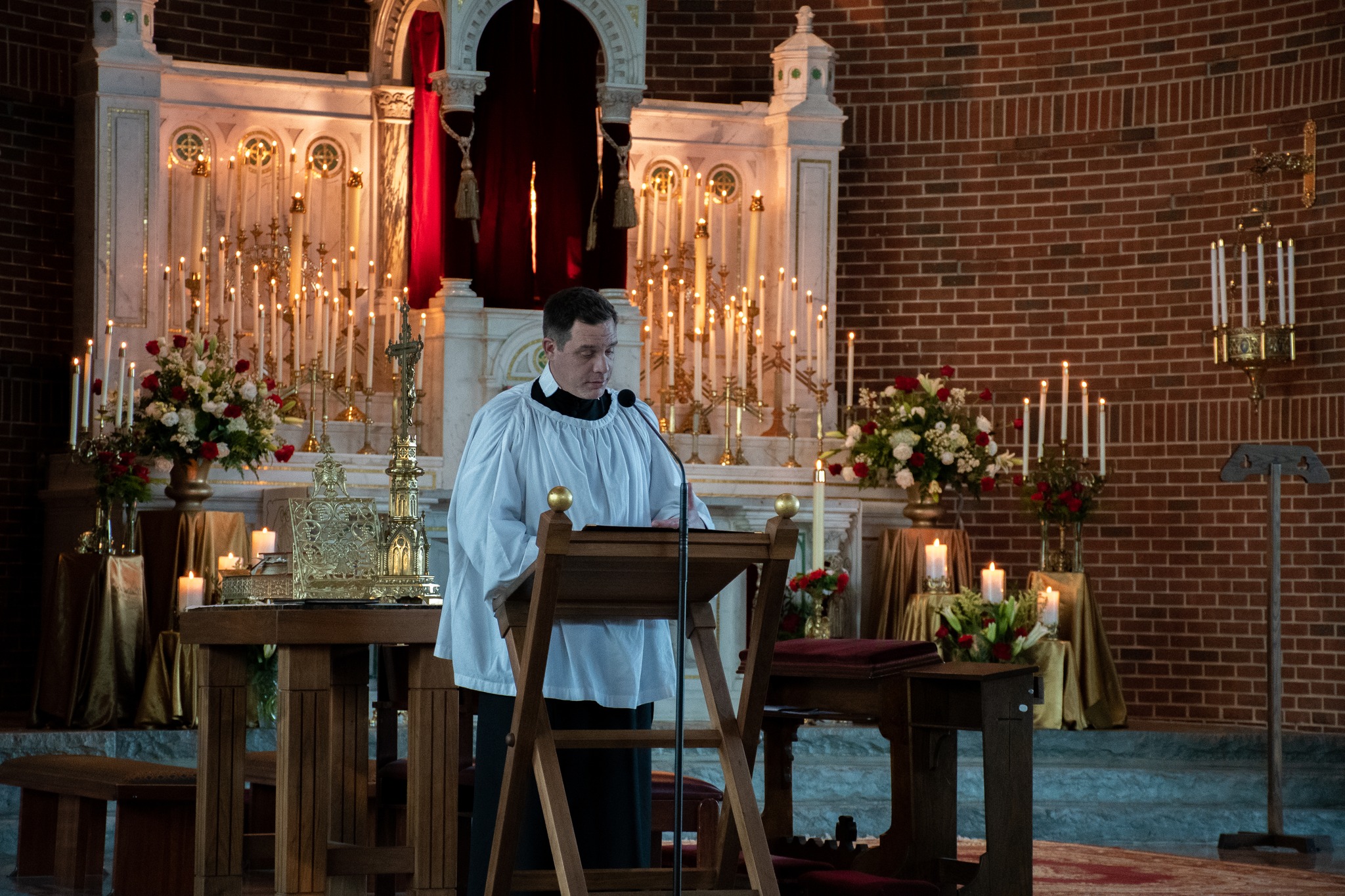
Fr Nicholas has been flown across the Atlantic to preach a series of sermons and talks for the Forty Hours at Prince of Peace Church in Taylors, South Carolina.
The series is titled: “The one great thing to love on earth” — an Oratorian spirituality of the Blessed Sacrament with St Philip Neri, St Francis de Sales, and St John Henry Newman, and the recordings are available to watch here: https://youtu.be/hlkLm63xfW4
#oxfordoratory