Look up to heaven

On Monday this week some of the Fathers and Brothers spent the day erecting and moving scaffolding — with all due health and safety measures observed — in order to change and improve the lighting on the sanctuary of our church. It is already a great boon for us to see more clearly the beautiful decoration which adorns that focal point of the whole building, as well as being a great help for the priest reading from the missal. Tomorrow as we celebrate the feast of the Ascension, our eyes are directed upwards once more as Our Risen Lord ascends to heaven and for a moment like the Apostles we gaze upwards as he is taken from our sight.

How very much more clearly do we see when we make that effort to lift up our eyes towards the Lord. We not only contemplate his glory but from that vantage point are able to see all things in their fullness, seeing them from the perspective of heaven. Prayer, the lifting of the mind and heart to God, enables us to understand and to see clearly, all those other things of life in which we are otherwise immersed. That daily shifting our focus from the things of this world to the vantage point of heaven is that great encouragement for our daily striving for God, so that where Christ goes we too may follow him.

It is often an effort for us to pull ourselves out of the daily round in order to lift up our heads and our hearts to the things of heaven, but if we are to have the desire for heaven to drive us on, it is essential that we always keep our goal before us. Not only in prayer, but all those things which form the way we see things must have heaven as their vantage point and aim. Monsignor Knox wrote:

In all ages, in all countries, the world acts as a solvent to Catholic piety; breathes an air in which Catholic piety languishes. Man’s intellect always wants to approach things from the human side, from the side from which they can be known by man; shirks and burkes discussion of things from the side of reality, from the side which relates them to God. Man’s art and literary genius is constantly concerned with man at his most human level, his passions, his craven fears, the rebellion of his will against the order in which he lives. All that breathes a poison, for which writers who care about the truth as it is in God have to provide an antidote; they must fight, they must react, but still more they must see things, they must record things, from that higher standpoint which is God’s. You must, sometimes, give the lungs of your soul an airing on these heights, even if the atmosphere of it is more rare, is breathed with more effort, than the other. Or else, the miasma of the modern world will get you down, will weaken your resistance; you will be a prey to the germs of infidelity, to the infection of bad example. And you will forget your Friend.

As the Church invites us then on the Ascension to gaze up towards heaven, to contemplate Our Lord, Risen and Ascended, it is perhaps a good time for us to think on the place we give to the things of heaven in our life each day — not only in terms of the time we give to heaven, but also in terms of what we strive for, on what really all our efforts are in fact based.

And from our gazing upon heaven, we can then go on like the Apostles, down from that mountain and into the world — to teach the Good News and make disciples of all nations, keeping ever in mind that he whom we meet on those heights of prayer is with us always, even to the end of time.


These reflections are sent out each Wednesday to all those on our mailing list. Click here to sign up to our mailing list, and receive our Sunday E-newsletter and these reflections straight to your inbox.
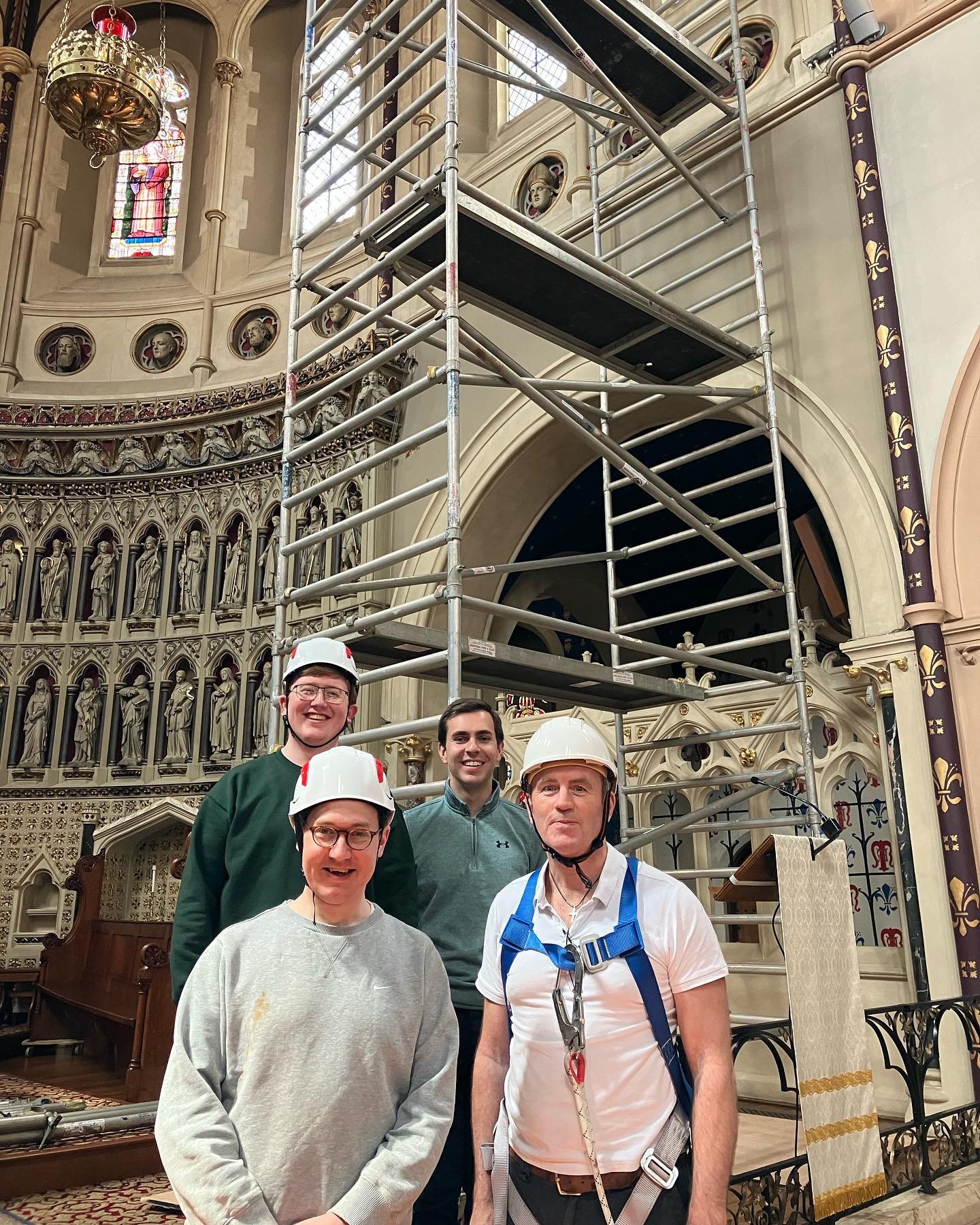
Q: How many Oratorians does it take to change a lightbulb?
A: “Change”?

Actually the real answer turns out to be three, plus one very helpful volunteer and a lot of scaffolding. The sanctuary lighting is all working at full brightness again!

#oxfordoratory

View on Instagram

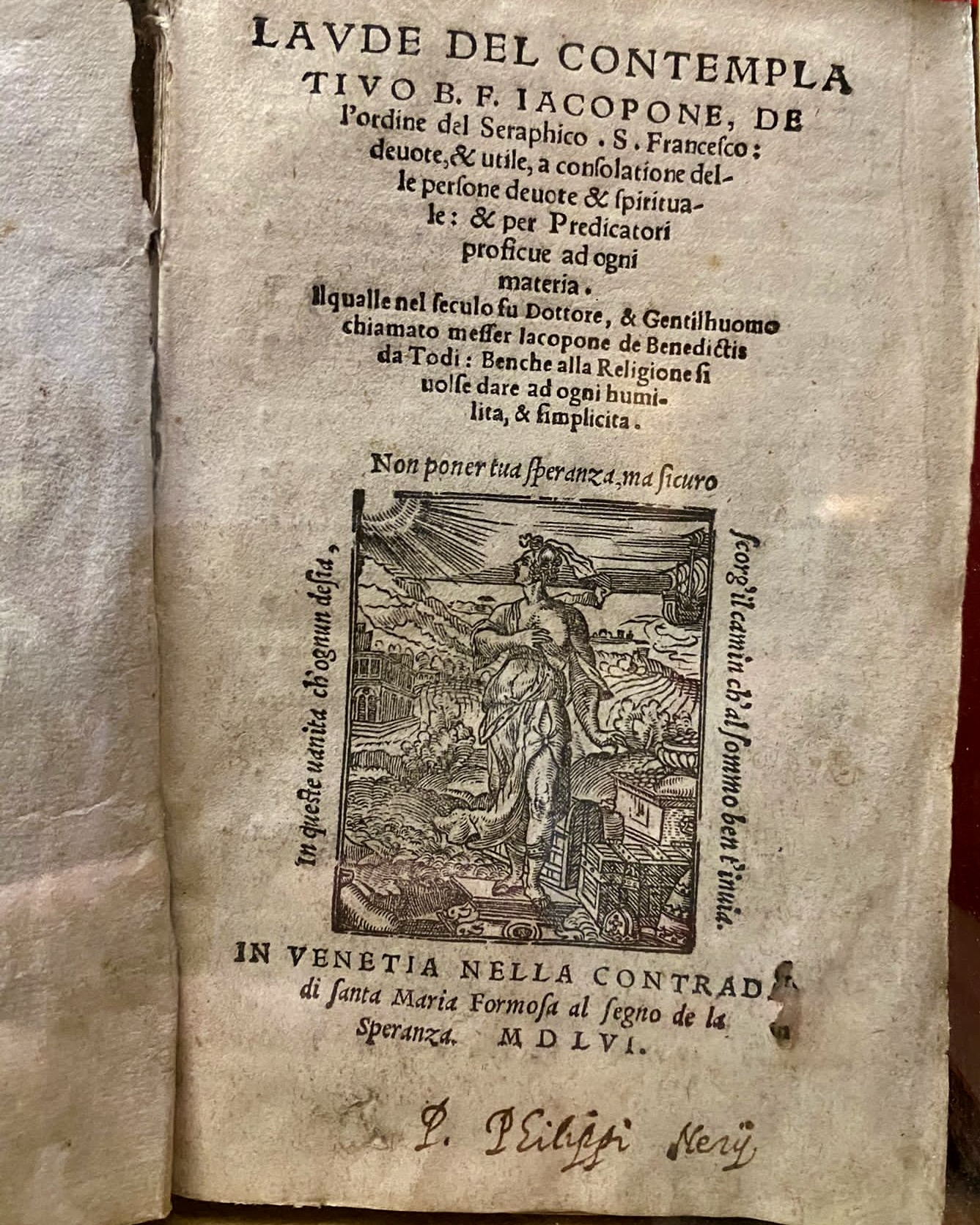
One of this month’s relics on display is St Philip’s own copy of Jacapone da Todi’s “Laude”, which St Philip has written his name in. The story of how it was rediscovered in our church — only days before the first Fathers of the Oratory arrived here from Birmingham — is extraordinary. You might find it hard to believe, unless you heard it straight from the priest who found them, who is now the Bishop of Leeds. Read his account from his St Philip’s day sermon on our website:

www.oxfordoratory.org.uk/blog/post/1335-solemnity-of-our-holy-father-saint-philip

The novena to St Philip begins on Tuesday after the evening Mass. You will be able to place your own prayer intentions for the novena in St Philip’s chapel over the weekend.

There will be Solemn Choral Vespers on Thursday 25 May at 6:30pm.

We will welcome Fr Robert Ombres OP from Blackfriars to preach at the Solemn Mass for the feast day itself on Friday 26 May at 6pm.

#oxfordoratory

View on Instagram

May Music

Sunday 7 May Solemn Mass 11:00
5th Sunday of Easter
Missa Simile est regnum caelorum Lobo
Jubilate Deo universa terra Palestrina
Caro mea vere est cibus Guerrero

Sunday 14 May Solemn Mass 11:00
6th Sunday of Easter
Missa Regina caeli Palestrina
Benedicite gentes Palestrina
Portio mea White

Thursday 18 May Solemn Mass 18:00
The Ascension of the Lord
Missa Ascendens Christus Victoria
Ascendit Deus Philips
O Rex gloriae Marenzio

Sunday 21 May Solemn Mass 11:00
7th Sunday of Easter
Missa Jam Christus astra ascenderat Palestrina
Viri Galilaei Palestrina
Ego sum panis vivus Palestrina

Thursday 25 May Solemn Vespers 18:30
Our Holy Father St Philip Neri
Deus in adjutorium Padilla
Magnificat primi toni Victoria
Pangamus Nerio Sewell
O salutaris hostia Laloux
Tantum ergo Widor
Alleluia Gabrieli
Respice de caelo Sewell

Friday 26 May Solemn Mass 18:00
Our Holy Father St Philip Neri
Missa Papae Marcelli Palestrina
In spiritu humilitatis Croce
Jubilate Deo a8 G Gabrieli

Sunday 28 May Solemn Mass 11:00
Pentecost
Missa De la Batalla Guerrero
Confirma hoc deus Lassus
Loquebantur variis linguis Palestrina

Crowns come in different sizes

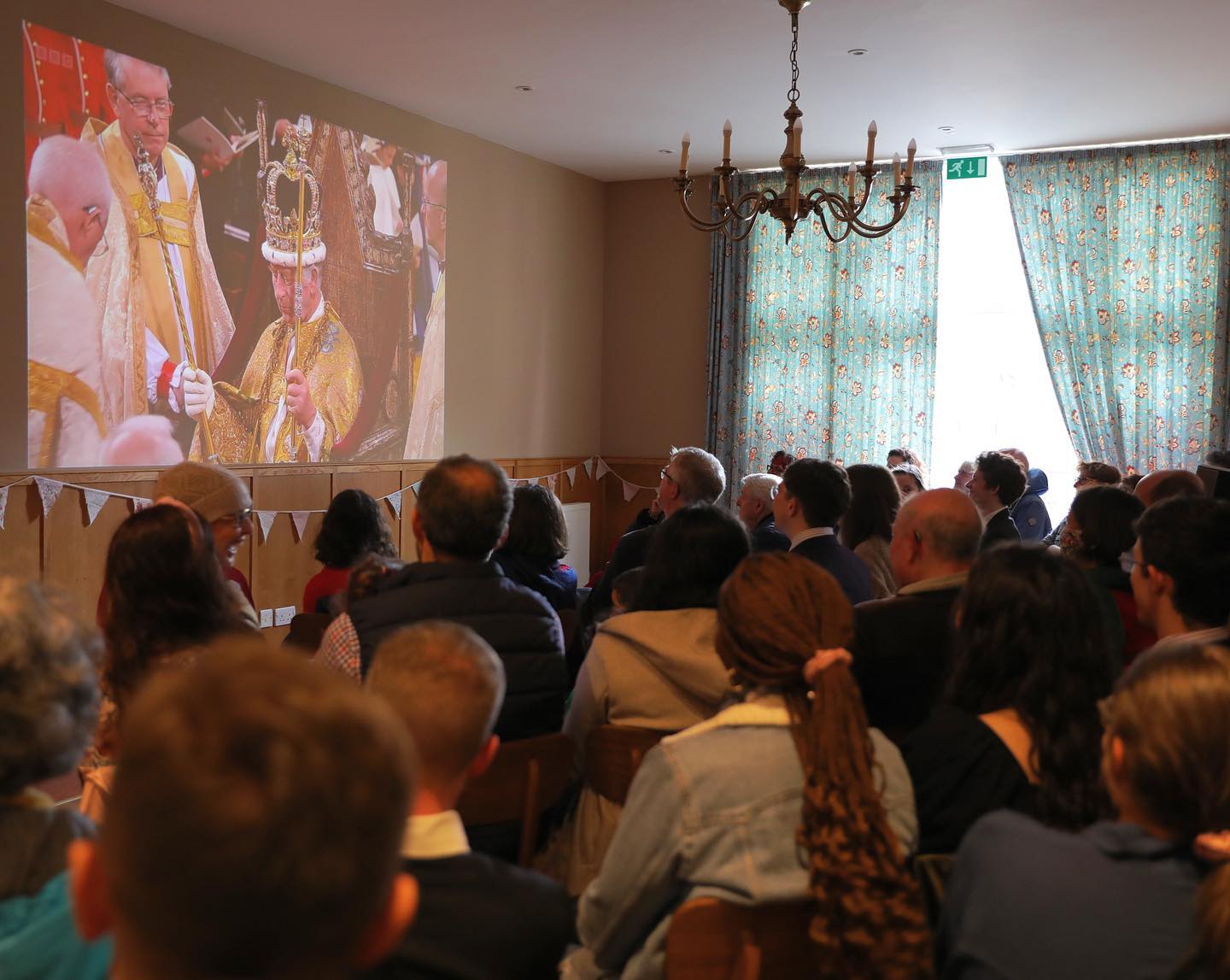
One could not have missed the many images of crowns in the past week. On posters and flags, on shop advertisements and on the official emblem of the coronation of His Majesty the King. The whole world, it seems, was caught up in amazement at that moment when St Edward’s crown was placed on the King’s head, the only time it is ever worn, to be replaced by the Imperial State Crown, impressive in its size and its jewels. One could not help but feel a certain sympathy with them — perhaps especially Her Majesty the Queen — as they walked around gingerly with several pounds’ weight of crown on their heads, lest they take a tumble. A crown is a symbol not only of a regal inheritance, but of a sacred anointing and the leadership of a nation. It also shows that one is set apart from the rest, is chosen, is consecrated.

Crowns are a familiar sight even in church. Our Lady’s statue is crowned, there are crowns above the cabinets in the Relic Chapel and they are even to be found, accompanied by palm branches, on the reliquaries placed on the High Altar on feast days. These crowns too stand for those set apart, who are chosen to bear the ultimate witness to the greatest truth.

On Friday we keep the feast of Saints Nereus and Achilleus. Baptised by St Peter himself, these two soldiers having obeyed the cruel orders of their emperor out of fear alone, it is said, came quite suddenly to faith in Christ and in doing so were liberated. They were freed from their obedience to a tyrant to embrace obedience to Christ and in so doing were called to shed their blood in witness to their faith. Theirs is the story of so many brave Christians who saw eternal life as the greatest prize against which everything the world has to offer pales in comparison. St Philip had a great devotion to the saints. Their relics are enshrined at the Roman Oratory and the Venerable Cardinal Baronius was the Cardinal Priest of their ancient church, often frequented by St Philip.

St Philip had a marvellous devotion to the saints and their relics. In his last years we are told he had the lives of the saints read to him daily and took great care to preserve the relics of the saints with devotion at the Vallicella. He saw in the lives of the saints a guide for the rest of us so that where they have gone we might follow.

Earthly crowns fall on the heads of very few men. The crowns on our relic cabinets, on the altar reliquaries and paintings in the church are a reminder to us that there is a lasting crown in store for all of us, a crown of glory that will never fade and is given us by the Lord. It may not be that we have to win it by shedding our blood like Nereus and Achilleus, but rather through the long and arduous path of growing in holiness day by day. We are chosen and set apart, we are consecrated by our baptism to win the crown that is fitted for us. In the eyes of the world it rarely glitters, but it is more lasting than anything the world can dream up. And go for it we must.

And we pray for our King Charles, that the golden crown set on his head a few days ago may always remind him of that crown of glory that awaits him, please God, after a life of service and virtue. May he be helped in seeking that crown by our prayers.


These reflections are sent out each Wednesday to all those on our mailing list. Click here to sign up to our mailing list, and receive our Sunday E-newsletter and these reflections straight to your inbox.
Praying with words

There is an idea among some people that our prayer is meant to evolve with time. They think that while we all start with vocal prayer (made with words either aloud or silently), we are meant, as we grow up, to use fewer words, to move on to mental prayer or meditation, and eventually move beyond that and learn pure contemplative prayer, where we are silent both without and within. Some authors speak as if the silence of contemplation were the only true prayer. And yet one of the Church’s greatest mystics, St Theresa of Avila, spent her day, in between periods of contemplation, reciting the words of the psalms of the Divine Office with her fellow sisters. Mental and contemplative prayer are certainly forms of prayer we only learn about when we are older, but vocal prayer cannot be something that we are meant to grow out of. When the Apostles asked Our Lord to teach them to pray, he told them: ‘Pray like this: Our Father, who art in heaven…’ (Matthew 6:9) He taught them, in the first place, the words of a prayer.

Catholic interest in the Mass (which is certainly a good thing) also seems to have eclipsed our interest in other prayers, so that the only prayer book most people might own is a missal. And many other books of prayers have little space for other devotions, because so much space is given to the text of the Mass.

There haven’t been so many books of prayers printed in recent decades. When we look back a hundred years, we find a combination of factors led to a golden age of prayer books for ordinary people. I remember inheriting my grandfather’s prayer book from 1959, and feeling that I had discovered a hidden treasure. While freedom in choosing how to pray is essential, sometimes we do need someone to teach us, like Our Lord: ‘Pray like this. Say these prayers.’ And that’s what I found in that prayer book of my grandfather. Many of the prayers in our new prayer book (pretty much the entire collection of night prayers) come straight from that old prayer book. And many other collections have been plundered for their treasures too, together with a handful of newly adapted or translated texts.

But that is only meant to be a starting point. It is a wonderful thing to build up — committing to memory or even to paper — our own collection of favourite prayers: from the scriptures, from the writings of the saints, from the prayers of the Church. Metropolitan Anthony of Sourozh writes in School for Prayer:

Mark these passages that go deep into your heart, that move you deeply, that makes sense, that express something which is already within your experience, either of sin, or of bliss in God, or of struggle. Learn those passages, because one day when you are so completely low, so profoundly desperate that you cannot call out of your soul any spontaneous expression, any spontaneous wording, you will discover that these words come up and offer themselves to you as a gift of God, as a gift of the Church, as a gift of holiness, helping our simple lack of strength. And then you really need the prayers you have learnt and made a part of yourself.

We don’t always find time to think about the words of our prayers as much as we might like. Ideally, we would spend some time thinking about not just what our prayer says to God, but also what it says to us about him and about ourselves in relation to him. St Philip used to teach people to take the Our Father slowly, word by word, phrase by phrase, and draw out all the ideas it contains. We don’t have time to do that every time we say it though. And so when we do rush through it in a few seconds, we mean implicitly whatever it was Christ meant when he gave it to his disciples and asked them to hand it down to us. And we intend to say to God all the ideas that would come to mind, if we did have a bit more time to think about it.

Similarly, when our prayer has been composed by a saint, we can be confident that the thoughts those words express — even if we don’t always have time to explore them — led the author to an even closer union with God.

We might think that we can compose better prayers in our own words than some of these old prayers, and that might even be true. Some part of our time of prayer can and should involve speaking to God in our own words. But there is something special about joining in a prayer that has been in use even from before we were born, that has been sanctified by centuries of use. When we use a prayer that is shared with the rest of the Church, we are reminded that we don’t just pray by ourselves. We imply not only all those ideas we might find in it, but we attach to it also all those intentions that our brothers and sisters in the Church, throughout the world, throughout time, have meant and do mean and ever will mean in their use of the same prayer. And it is a comforting thought to imagine all the saints — past, present and future — praying with us and for us in those same words.


These reflections are sent out each Wednesday to all those on our mailing list. Click here to sign up to our mailing list, and receive our Sunday E-newsletter and these reflections straight to your inbox.
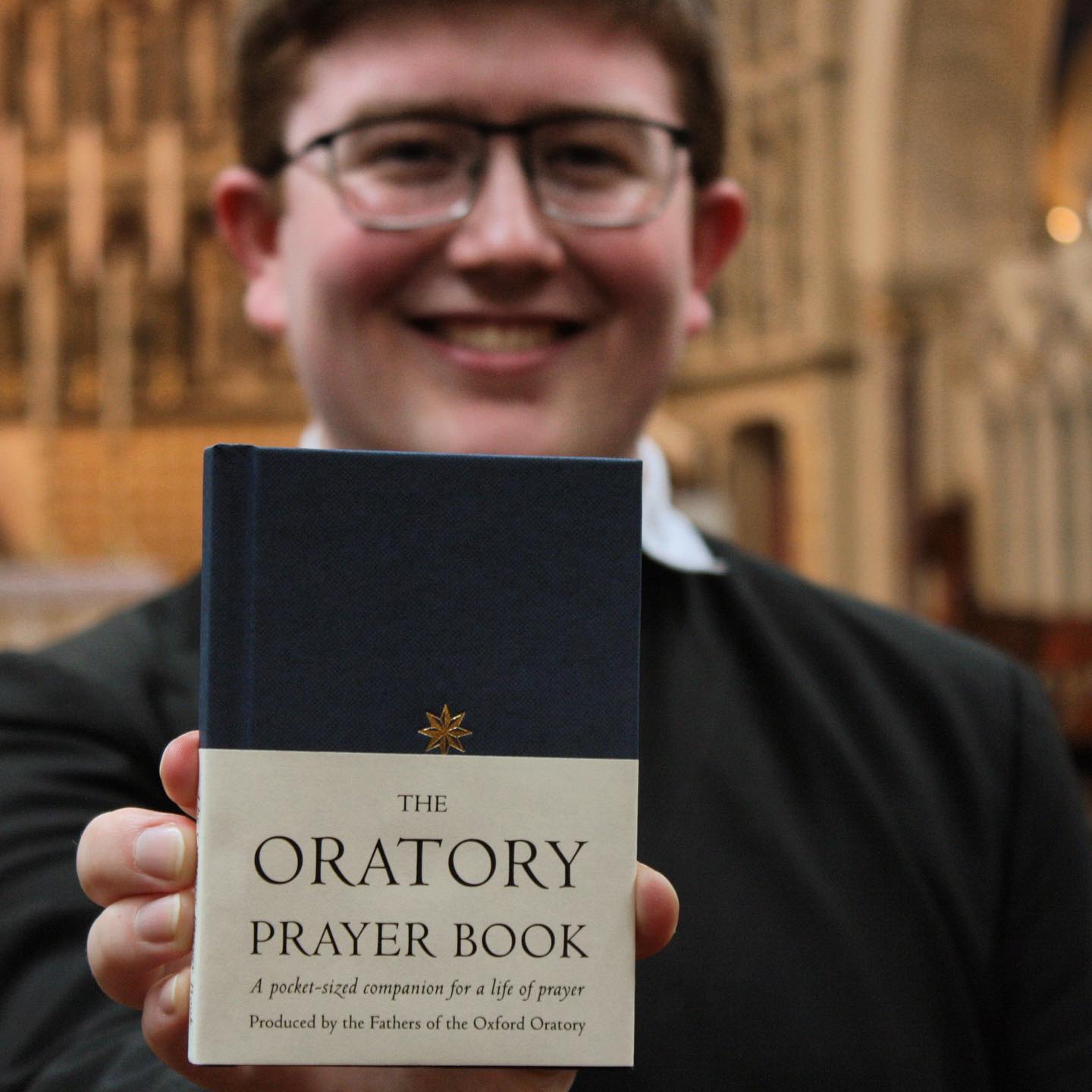
We’re delighted to launch the Oratory Prayer Book, which we’ve been working on for some time now.

It’s a pocket-sized book packed with the best prayers we could find. It’s available to buy in person from our bookshop or online through our website.

Read more (and order your copy!) here:

https://tinyurl.com/oratoryprayerbook

#oxfordoratory

View on Instagram