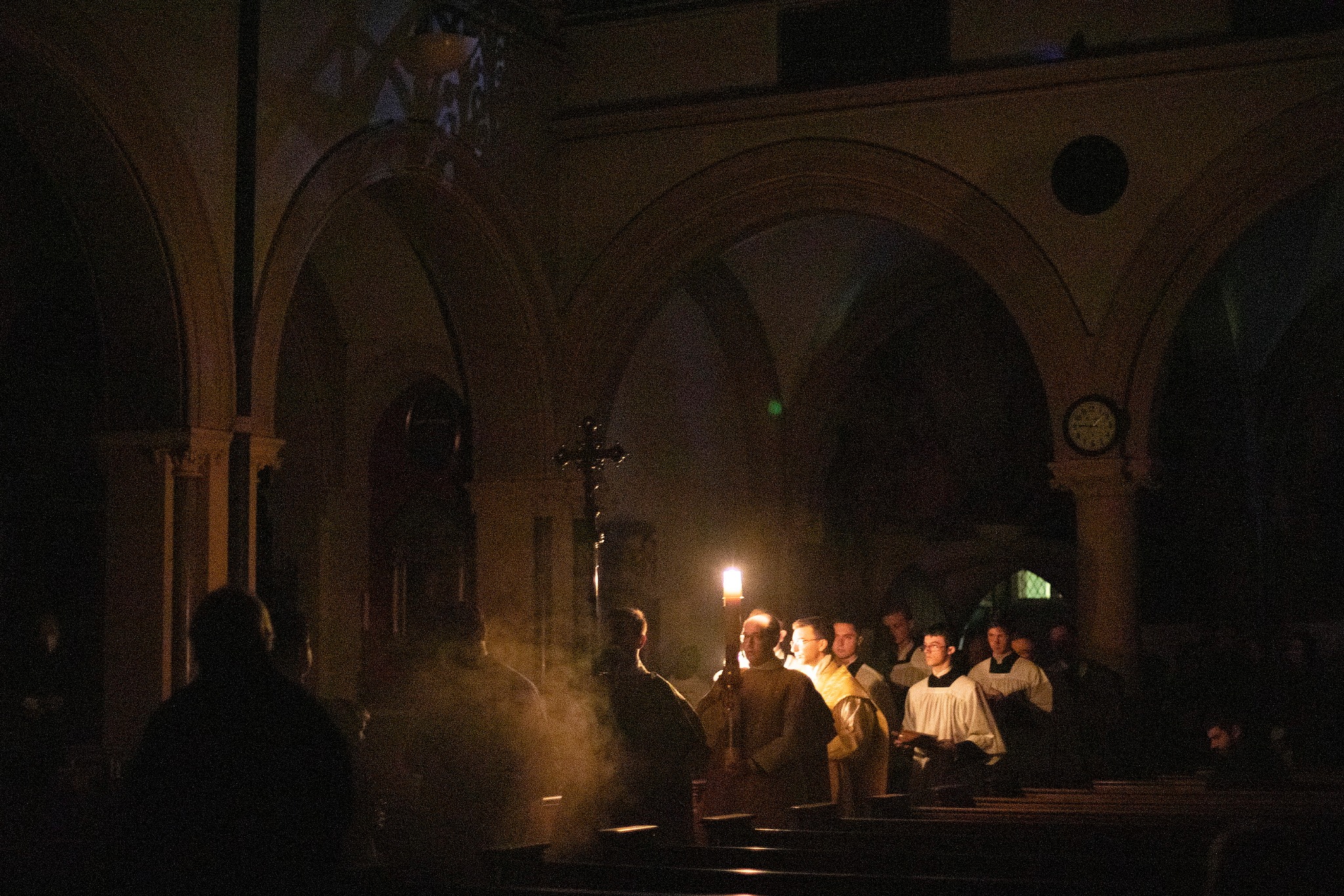
The Oratory Prayer Book

Our latest publication — now available from our Bookshop and online

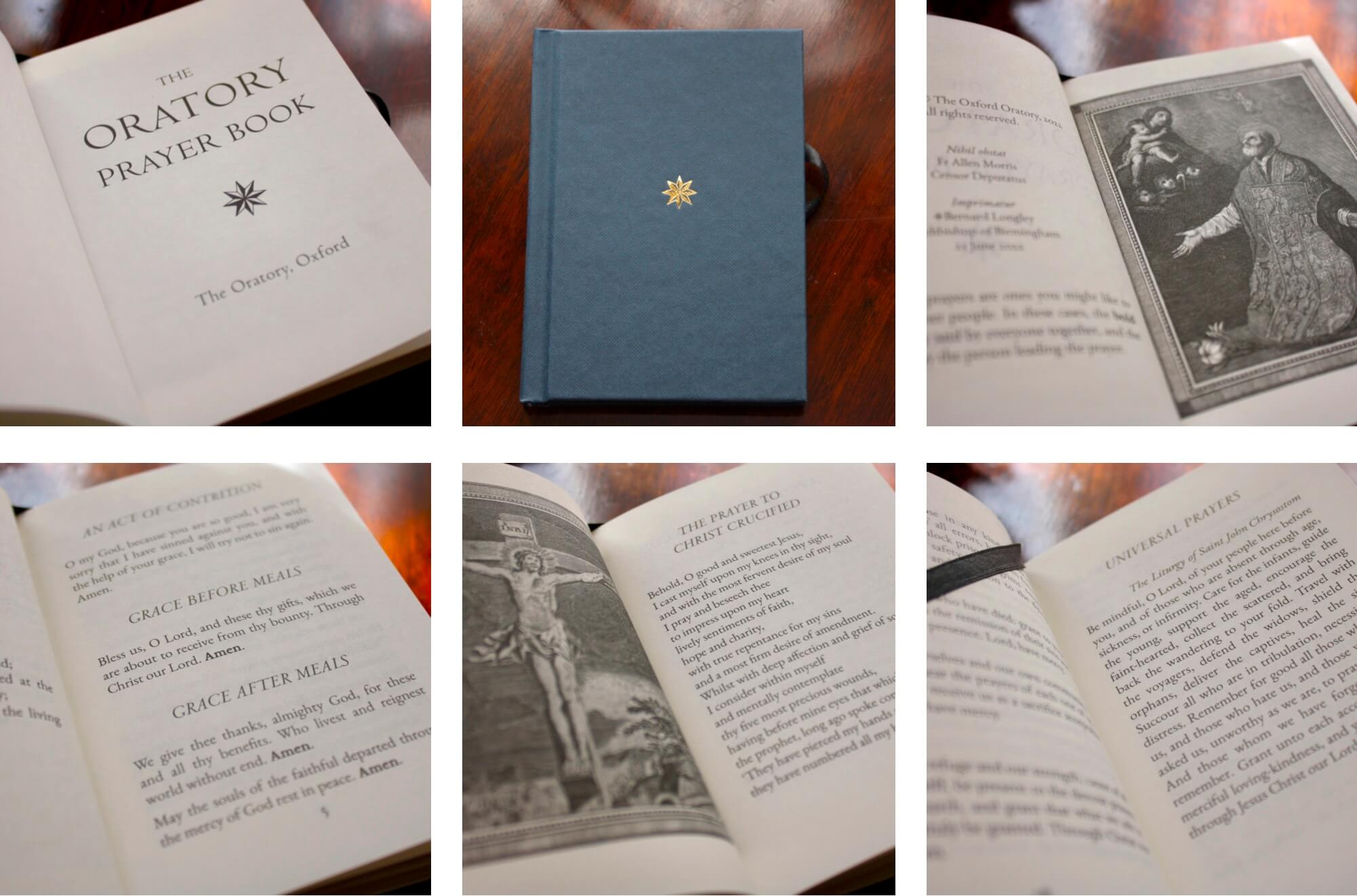
The Oratory Prayer Book is designed for anyone to use: children and adults, new converts and cradle Catholics. It has prayers for all sorts of occasions and for all sorts of people, but is small enough to carry around all the time in a pocket.

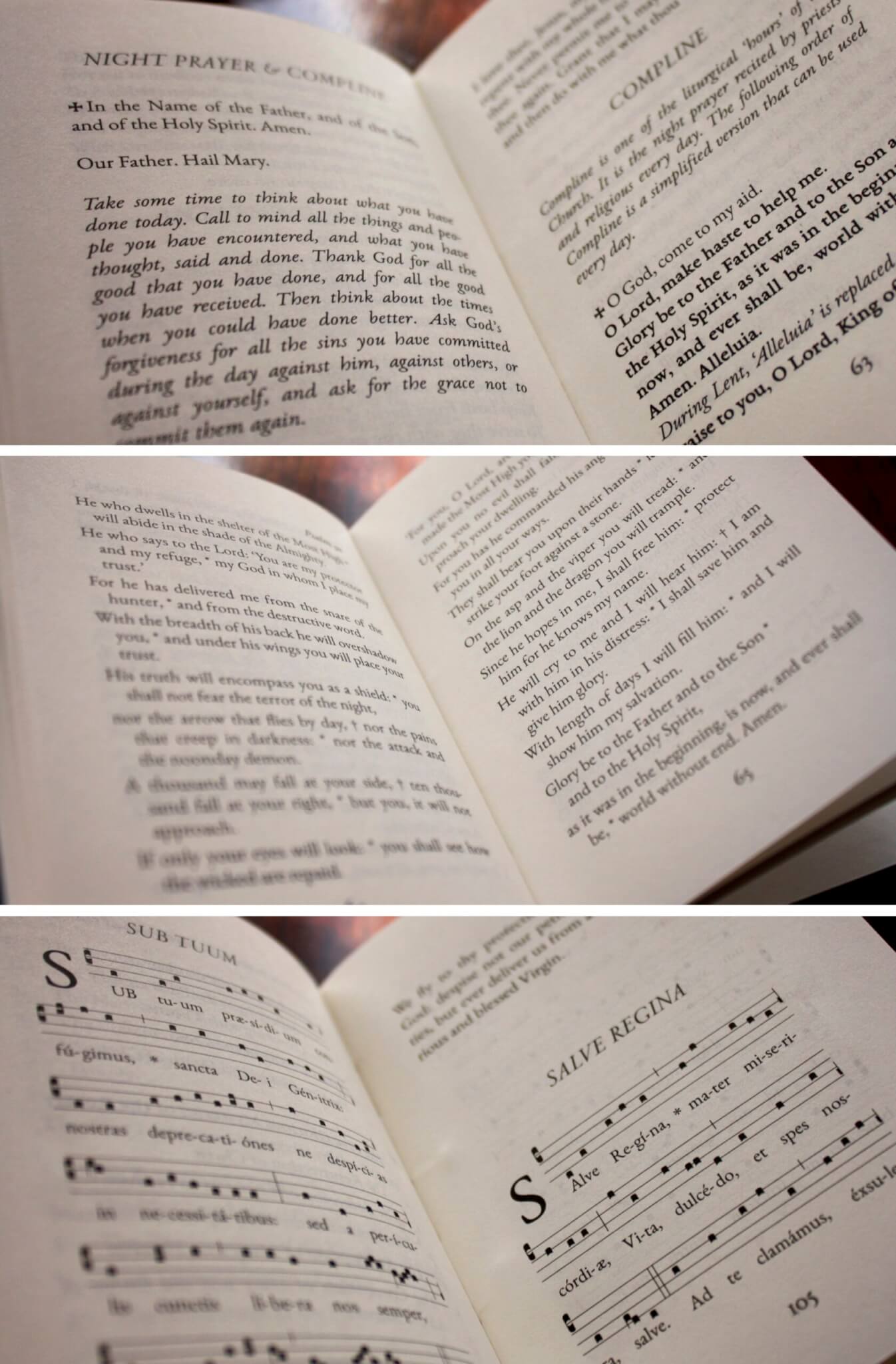
The riches of Catholic devotion are included, with beautiful prayers from Scripture and the Saints, and texts inspired by the sacred liturgy. There are the essential prayers all Catholics should know, as well as less familiar but useful ones for everyday situations and for times of need. The antiphons to Our Lady are given in Latin with music and traditional English translations. There is an order of morning and evening prayer. It also includes straightforward guides to prayer in general, reading scripture, the examination of conscience, confession, and the rosary. (How to pray was published in our weekly reflections last summer.) Some prayers (like the special order of ‘Compline’ or Night Prayer) are laid out so that they can be used either in private devotion or shared with family and friends.

Carefully typeset and beautifully printed on heavy cream paper, these small hardback books have been designed to last. They have a ribbon for marking the pages you use the most, but they are also the perfect size to house a collection of prayer cards and holy images.

The Oratory was founded by St Philip Neri to help teach everyone to pray. This book is a small contribution from the Oratory in Oxford to that mission.

Dimensions: 134mm x 95mm, 120 pages

The Oratory Prayer Book is available now from the Oratory Bookshop in Oxford priced £8.95.

Click here to buy online.

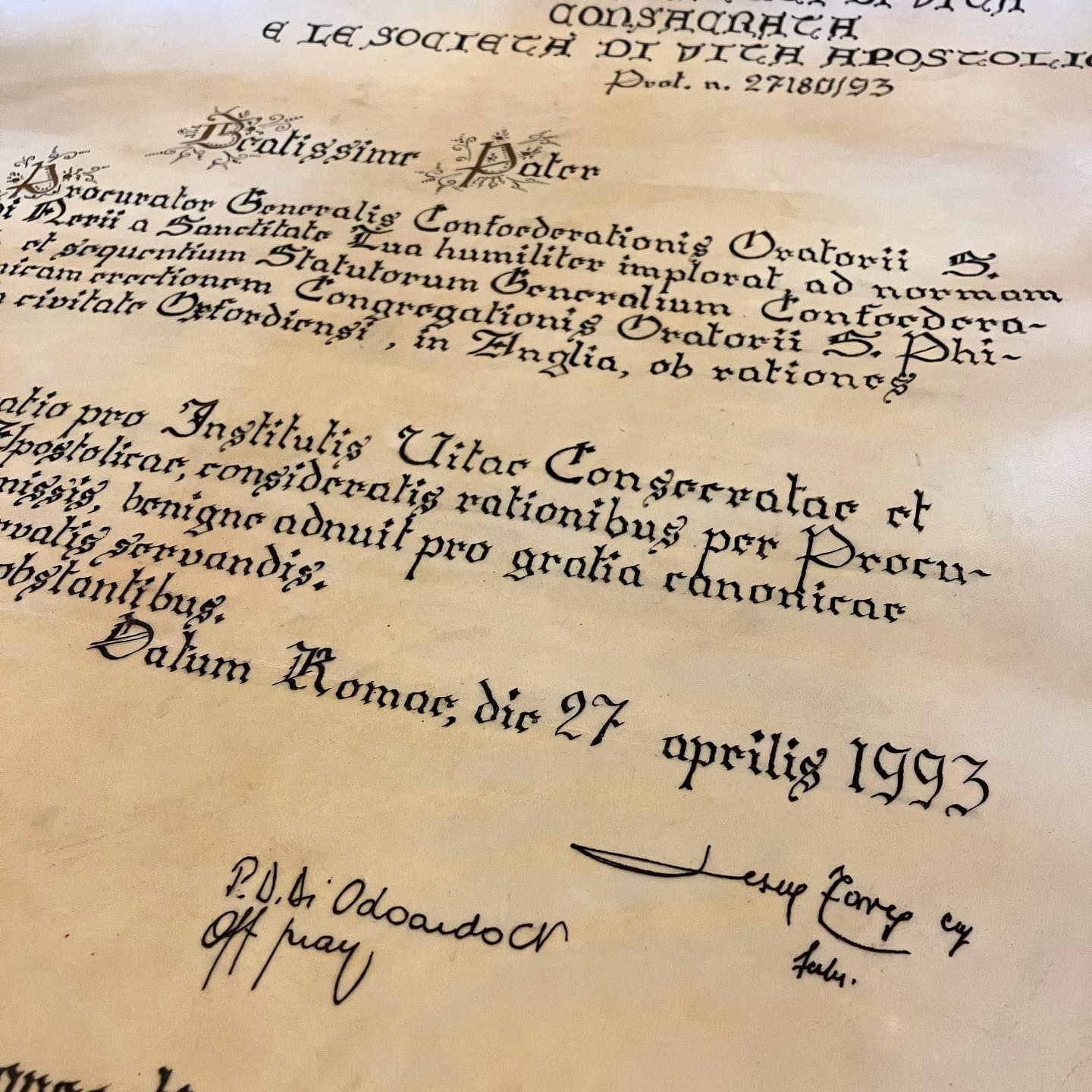
Today marks 30 years since our Oratory here in Oxford was established as an independent house by the Holy See. The image is a photo of the decree from Rome.

We mark the anniversary each year by celebrating the feast of the Patronage of St Philip. After Mass tonight, there will be a Musical Oratory to ask St Philip’s continued intercession. We will also sing the Te Deum to thank God for all the blessings bestowed on the Fathers and Brothers and all those they serve in this city.

“The time to do good is not finished yet.” — St Philip

#oxfordoratory

View on Instagram

Found by God

St Luke’s description of the scene of the two disciples on the road to Emmaus, and the supper which they shared with our Lord is, I think, one of the most beautiful and powerful in his Gospel. It shows what a true artist the Evangelist was — and his words have served as an inspiration to some of the world’s most gifted artists, such as Valasquez, Caravaggio and Rubens, each painter lending his talents to give us his own interpretation of the moment the two disciples ‘recognised him in the breaking of bread.’

I recently discovered the portrayal of this scene by another artist, Jean-Marie Pirot (1926–2018) who worked under the name Arcabas. His representation in the church of St Hugues-de-Chartreuse, France, was used by Bishop Erik Varden on the cover of his excellent book The Shattering of Loneliness, which I strongly recommend to those looking for their next spiritual book. The Cistercian bishop writes of the picture: ‘The mood is of friendship. It draws the spectator in, hospitably. The pilgrims talk among themselves. Christ is pensively silent, unimposing. But it is he who lends the picture warmth. He knows that his companions need to talk before they can listen. They are caught up in what they have been through.’ And he is quite right. The two figures seem hardly to notice their guest, as they are obviously rehearsing, yet again, the fiasco of the past few days in Jerusalem, when their friend whom they called Master was taken and summarily executed by the Roman authorities at the behest of the Chief Priests and the Pharisees. The rest of the group had fled, leaving the whole movement in disarray. That was why they were putting as much distance between themselves and the Holy City. It was too dangerous, frightening and, besides, their hopes of the new Messianic kingdom now lay in tatters. It was over. What was there to stay for?

The picture shows the two disciples, Cleopas and his anonymous companion, deep in conversation, each holding a large glass of wine. Beside them sits Jesus, just about to change everything once again. He is holding in his hands a hunk of bread and is clearly about to break it for them, the action that will enable them to recognise his presence with them and to see what they had already been told by some of the women who had visited the empty tomb in the morning, but whose testimony they had clearly either rejected or misunderstood. ‘God,’ says Varden, ‘remembers us before we remember God. Christ seeks the wanderers out when they, for their part, have despaired of finding him. He hears their anguish as a silent call. In a moment, he will hold the bread of mourning up as a Eucharistic host.’

He goes on to make a further observation: ‘Behind the pilgrim on the right sits a fourth person, whose profile is concealed. I take that to be me — or you. We are invited to sit down and share our story, assured that we have never been out of God’s mind. The old has passed. The new has come. There is a golden shimmer of glory to things.’

I like that idea of our entering into the story too. And since it isn’t about one of the Apostles — it’s not about Peter or Thomas, but two unknown disciples, Cleopas and A.N. Other — it makes it a little easier for us to read ourselves into the story, whether as pilgrims or escapees, in a muddle, confused, disillusioned, disappointed, hopeless, angry…whatever we are feeling. Imagine we are on the way to Emmaus, running away, and then astonished, delighted even, to be found by God, who has gone in search of us. Luke uses this same effect in the parable of the Lost Son and elsewhere. It is something to hang on to when we, like Cleopas and his companion, feel disconsolate and discouraged by the difficulties and twists of life, and when we are feeling most turned in ourselves or just feeling sorry for ourselves, that we can sense the attentive and compassionate presence of Christ, who has fallen in beside us and is walking with us, quietly on the road.


These reflections are sent out each Wednesday to all those on our mailing list. Click here to sign up to our mailing list, and receive our Sunday E-newsletter and these reflections straight to your inbox.
Now we see as in a mirror, dimly

The liturgies of Holy Week and Easter are incredibly rich and moving, helping us to enter more deeply into the mysteries of the Lord’s Passion and Death and to be filled, once again, with the joy of his Resurrection. But we will all have experienced that what goes on in church doesn’t always correspond to how we are feeling or what we are thinking at our particular point in life’s journey. There are times when we are required to say the De profundis psalm when we are actually feeling rather happy. And then there are times when the circumstances of our own lives can make it very difficult for us to sing the Easter Alleluia, overcome with Paschal joy. We might identify with the disciples locking themselves in the upper room out of fear, and not so much with “This is the day that the Lord has made, let us rejoice and be glad!” We can find ourselves being plagued by all sorts of trials in the Easter season as much as in any other season. Even though we are an Easter people, we never stop being a Good Friday people also, at least this side of eternity. We can find it hard to believe in the ultimate triumph of life over death, of joy over sadness, of glory over suffering, especially during those times in our lives when we feel sad and lifeless, when we are anxious or hopeless or are grieving.

St Thomas the Apostle is therefore a very consoling example for us. When the other Apostles give him the good news of Easter, “We have seen the Lord”, that message did not resonate with him in any way. The darkness of Good Friday was still too real for him and prevented him from being moved by their news. His own experience did not allow him to believe that life had triumphed over death, that the crucified Jesus was now the risen Lord. Thomas stood in the light of Easter, yet that light did not dispel his darkness. In his doubting, Thomas is like so many Christians today. Many of us are surely distressed by the doubts we have, troubled by our sense that the light of Easter does not seem to have penetrated our lives very much, that Easter Sunday really hasn’t changed anything at all.

The Lord understands a doubting, questioning, troubled faith. When Jesus appeared to Thomas, he did not tell him off. His first words were, “Peace be with you”. He invited Thomas to touch his wounds as he had demanded, and then called on him to “doubt no longer but believe”. The gospel does not tell us that Thomas actually put his finger into the wounds in Christ’s hands and side. Seeing the Lord was enough: “My Lord and my God”.

Thomas, like the other disciples, saw and believed. However, Jesus knew that only a small group of disciples will see and believe, and so he blessed those many future disciples who believe without seeing. That blessing is on all of us who calls ourselves Christians and try to follow the Lord. As St Peter puts it, “You did not see him, yet you love him”. The Church is the community of those who believe in and love the Lord, without having seen him in the way Thomas and the other eyewitnesses did — those Apostles and disciples who are the foundations of our faith. We look forward to that day when we will see the Lord face-to-face in his kingdom. And because we do not yet see him face-to-face, our faith is always a faith that hopes.

Because we only live in hope of meeting the Lord like Thomas, there will always be some element of doubt in our own faith. As St Paul tells the Corinthians, “now we see as in a mirror, dimly”. Questions and doubts are an inevitable part of seeing dimly. Such questions and doubts are not an enemy of faith. They can lead, rather, to a deepening of our faith. If we face our doubts and our questions honestly, like St Thomas, and bring them to each other and to the Lord, we too can reach a point where we can make Thomas’ confession our own, “My Lord and my God”. We must all learn to seek the Lord with humility, sincerity and honesty, just as Doubting Thomas did, but to seek in hope, knowing that if we remain true to that search, true to the path, the Lord has his own ways to meet each one of us and to invite us, as he invited St Thomas, “Doubt no longer but believe”. Our doubts and our fears — even our sins and our failings — so often seem to us to lock the Lord out. But Jesus will always pass through the walls and doors we put up to meet us — in those doubts and worries — and to give us the peace of his presence.


These reflections are sent out each Wednesday to all those on our mailing list. Click here to sign up to our mailing list, and receive our Sunday E-newsletter and these reflections straight to your inbox.
Vidi aquam egredientem de templo,
a latere dextro, alleluia;
et omnes, ad quos pervenit aqua ista, salvi facti sunt
et dicent: Alleluia, alleluia.

I saw water flowing from the Temple,
from its right-hand side, alleluia;
and all to whom this water came were saved
and shall say: Alleluia, alleluia.

#oxfordoratory

View on Instagram

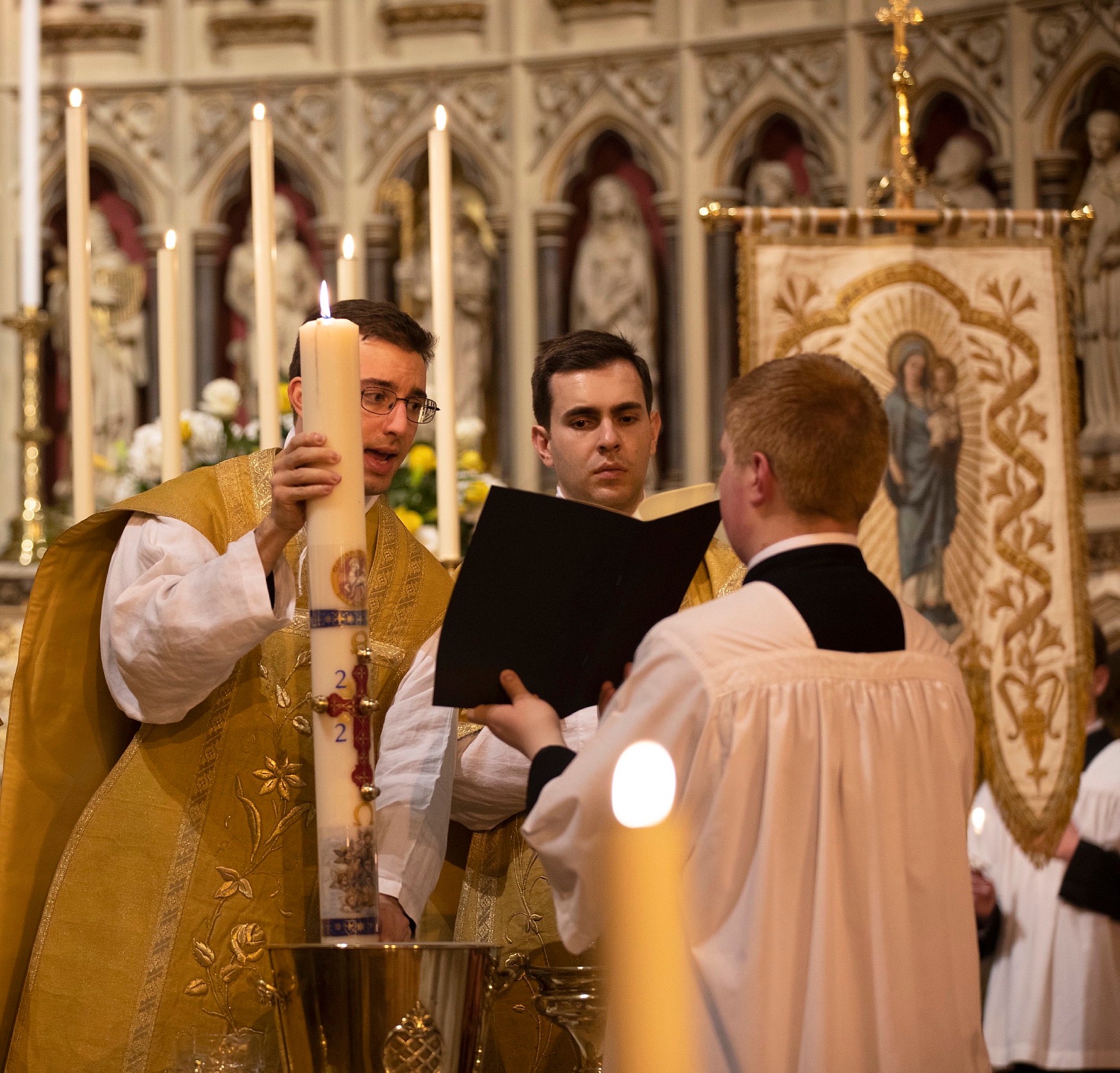
“May the power of the Holy Spirit,
O Lord, we pray,
come down through your Son
into the fullness of this font,
so that all who have been buried with Christ
by Baptism into death
may rise again to life with him.
Who lives and reigns with you in the unity of the Holy Spirit,
God, for ever and ever. Amen.”

#oxfordoratory

View on Instagram