Courtesy

I recall how, as a child at school, we were sometimes made to learn poetry. At the time I hated it, and baulked at the idea of having to commit to memory The Ancient Mariner, and in fact, never did. But one poem which did touch me, was Belloc’s Courtesy. It began:

Of Courtesy, it is much less
Than Courage of Heart or Holiness,
Yet in my Walks it seems to me
That the Grace of God is in Courtesy.

The poet goes on to tell us how, on one occasion he visited the ‘monks’ at Storrington in Sussex, and that ‘They took me straight into their Hall’
where he ‘saw Three Pictures on a wall, And Courtesy was in them all.’

He then tells us the subject of those paintings:

The first the Annunciation;
The second the Visitation;
The third the Consolation,
Of God that was Our Lady’s Son.

The first was of St. Gabriel;
On Wings a-flame from Heaven he fell;
And as he went upon one knee
He shone with Heavenly Courtesy.

Our Lady out of Nazareth rode —
It was Her month of heavy load;
Yet was her face both great and kind,
For Courtesy was in Her Mind.

The third it was our Little Lord,
Whom all the Kings in arms adored;
He was so small you could not see
His large intent of Courtesy.

Today is the feast of the Visitation, when we celebrate how our Lady made the long and uncomfortable journey to see her older kinswoman, Elizabeth, and her husband Zachariah, who lived in the hill country of Judah. Courtesy seems to me to be a perfect description of what this moment is all about. Imagine the cordial welcome extended to Mary by the older woman, solicitous for her health and how both women were eager to share with one another the joy of the forthcoming births of their sons. Our Lady had herself gone to visit her older cousin, not simply because she wanted to ‘be there’ for her, but because she wanted to share her own good news, which was not hers alone but for her people and, ultimately for the entire world.

This is something Elizabeth seemed to know already! Her enthusiastic greeting is wonderful when she cries out ‘Oh that I should be visited by the Mother of my Lord’. Her unborn son joins in the greeting, kicking and letting his mother know that he too is part of this exciting thing that is happening. Elizabeth’s gracious words: ‘Blessed art thou among women and blessed is the fruit of thy womb’ have been enshrined in our prayer to the Virgin, incorporated with the Angelic Salutation: ‘Hail Mary, full of grace!’

And if today’s feast is about courtesy (so much more than stiff politeness or polished manners, but a warm and real concern for the wellbeing and interest of the other) then it is also about joy. Mary’s presence, together with that of her Divine Son, transformed the home of Elizabeth and Zachariah. ‘Elizabeth was filled with the Holy Spirit’ because of it. St Jose Maria puts it thus: ‘Mary brought joy to her cousin’s home, because she “brought” Christ’. Dame Julian liked to call Jesus ‘our courteous Lord,’ no doubt on account of his gracious dealings with us, flowing from his ‘large intent of Courtesy’!

Julian writes in her Showings:

And this is a supreme friendship of our courteous Lord, that he protects us so tenderly whilst we are in our sins; and furthermore he touches us most secretly, and shows us our sins by the sweet light of mercy and grace. But when we see ourselves so foul, then we believe that God may be angry with us because of our sins. Then we are moved by the Holy Spirit through contrition to prayer, and we desire with all our might an amendment of ourselves to appease God’s anger, until the time that we find rest of soul and ease of conscience. And then we hope that God has forgiven us our sin; and this is true. And then our courteous Lord shows himself to the soul, happily and with the gladdest countenance, welcoming it as a friend, as if it had been in pain and in prison, saying: My dear darling, I am glad that you have come to me in all your woe. I have always been with you, and now you see me loving, and we are made one in bliss.

So sins are forgiven by grace and mercy, and our soul is honourably received in joy, as it will be when it comes into heaven, as often as it comes by the operation of grace of the Holy Spirit and the power of Christ’s Passion.


These reflections are sent out each Wednesday to all those on our mailing list. Click here to sign up to our mailing list, and receive our Sunday E-newsletter and these reflections straight to your inbox.
Look down from heaven, Holy Father, from the loftiness of that mountain to the lowliness of this valley; from that harbour of quietness and tranquillity to this calamitous sea. And now that the darkness of this world hinders no more those benignant eyes of thine from looking clearly into all things, look down and visit, O most diligent keeper, this vineyard which thy right hand planted with so much labour, anxiety and peril. To thee then we fly; from thee we seek for aid; to thee we give our whole selves unreservedly. Thee we adopt for our patron and defender; undertake the cause of our salvation, protect thy clients. To thee we appeal as our leader; rule thine army fighting against the assaults of the devil. To thee, kindest of pilots, we give up the rudder of our lives; steer this little ship of thine, and, placed as thou art on high, keep us off all the rocks of evil desires, that with thee for our pilot and our guide, we may safely come to the port of eternal bliss.

#oxfordoratory

View on Instagram

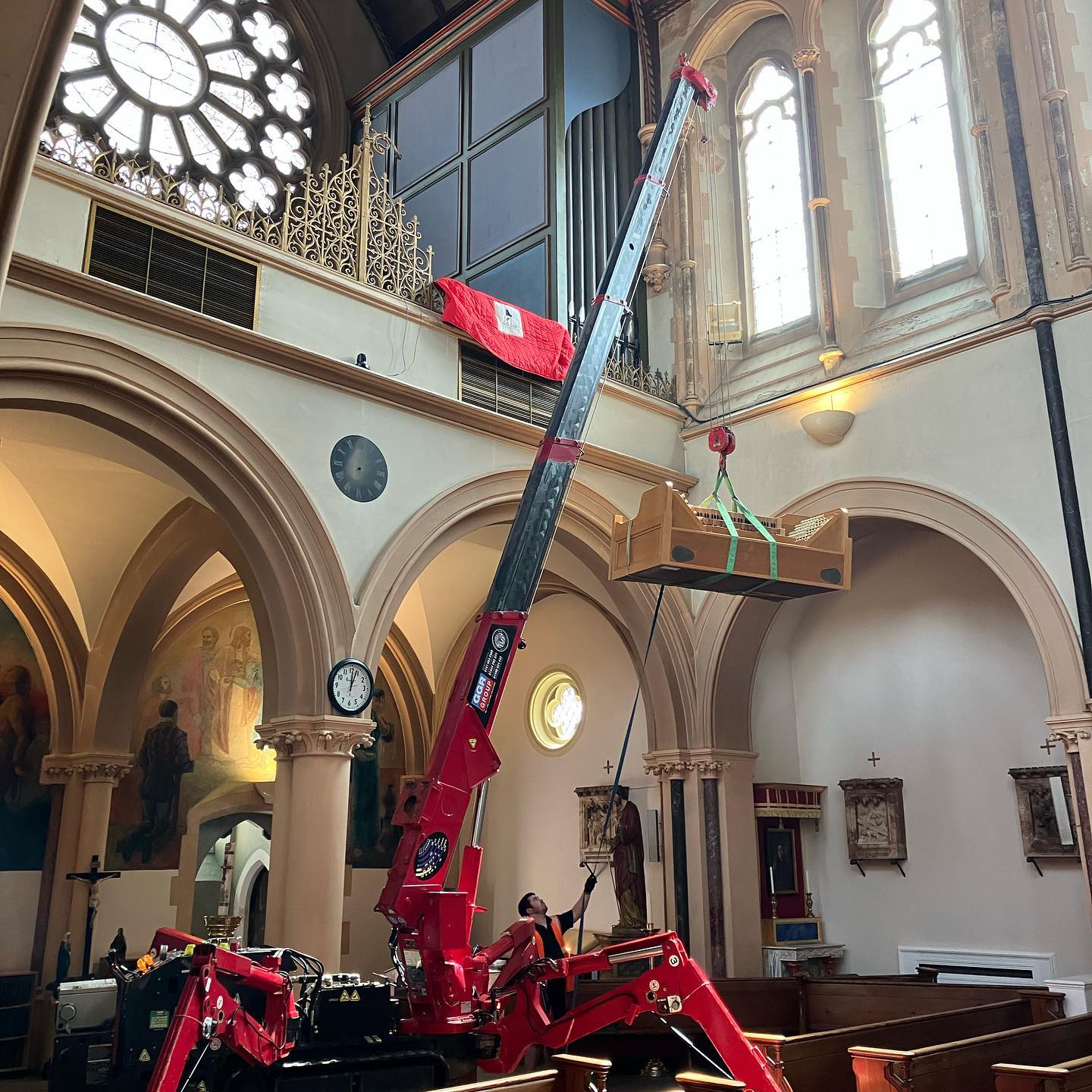
Our new longer term temporary digital organ was hoisted up to the gallery this week in time for First Vespers of Our Holy Father St Philip. Catch up on our YouTube channel if you missed it, and join us for the Solemn Mass at 6pm this Friday.

#oxfordoratory

View on Instagram

Vessel of the Holy Spirit

This year the novena in preparation for the feast of Our Holy Father St Philip corresponds almost exactly with the novena of novenas, the first novena, the nine days of prayer between the Ascension and Pentecost when we wait once more with the Apostles for the outpouring of the Holy Spirit. And this is most appropriate, as St Philip was, more than anything else, a man of the Spirit — as we say in his litany, he is the “vessel of the Holy Spirit”. The story of his life, which we read during the novena, really begins with his singular experience of the Spirit on the Vigil of Pentecost 1544 in the catacomb of St Sebastian when the Spirit descended like a ball of fire, entering his mouth and then into his heart. After that experience — Philip’s own Pentecost — his life would never be the same again.

Behind his holiness of life, and his preaching, and his miracles, and his founding of our Institute, there is something fundamental we can learn from St Philip — conveniently for this time in the Church’s liturgical calendar, something about the Holy Spirit. St Philip’s life shows us what happens when we do not simply possess the Holy Spirit, but allow ourselves to be possessed by him. We all have the Holy Spirit dwelling in us — all of us who have been baptised and confirmed. He is in us as much as he was in St Philip Neri, as much as he was in the Apostles at Pentecost. But we are very good at closing ourselves to the Spirit — we, through our sins and our selfishness, our attachments and our self-will, block him out; we ignore his prompting and are deaf to his call, we partition him away into a little forgotten compartment in our souls. Or we make of him a very petty little thing indeed, our God — a God who always agrees with what we say, who wants us to do precisely what we want to do, and makes me right and everyone else wrong.

But this is not the Holy Spirit whom we worship; this is not the awesome power of Almighty God, who hovered over the waters at creation, who raised Jesus from the dead, who came down on the Apostles and Our Lady in the Upper Room, who wonderfully penetrated the heart of St Philip, and who gives power and authority to the Church. The Holy Spirit blows where he wills; his ways are not always our ways; and if we give ourselves to him and allow him to possess us completely — as St Philip did — then we will find that he will do more for us than we ask or even imagine; do more through us and with us. St Philip wanted to be a layman — the Spirit called him to the priesthood; he wanted to be a martyr, the Spirit made him a martyr not of blood, but of charity; Philip wanted to preach the Gospel to the pagans in the Indies, the Holy Spirit had other plans. He wanted to be a humble, hidden servant of the Church, living at San Girolamo and doing what good he could, but the Spirit gave him the gift of preaching and teaching and working miracles and reading men’s hearts and winning souls, and brought him to the Vallicella, and through him founded the Congregation of the Oratory, spread, as it now is, across the world. St Philip loved to be unknown — the Holy Spirit moulded and fashioned and transformed him into one of the most popular saints, the Apostle of Rome. St Philip wanted to reform the hearts and souls of those men and women he met — the Spirit used him to reform the very heart of the Church herself.

It is not enough to have the Holy Spirit — it is not enough even to think we are serving God or doing great things in his honour. We must allow ourselves to be led by the Spirit, formed and transformed by the Spirit. We must be prepared to give up our own desires and plans — even the good ones — and be taken over by the Holy Spirit to be used for his own purposes. If we do this, if we open up to the Spirit who dwells in our hearts, then the life of St Philip Neri, and indeed of all the saints, shows us that the Spirit will do great things for, in, and through us. St Philip, Vessel of the Holy Spirit and Sweetest of Fathers. Pray for us.


These reflections are sent out each Wednesday to all those on our mailing list. Click here to sign up to our mailing list, and receive our Sunday E-newsletter and these reflections straight to your inbox.

A Prayer of Our Holy Father St Philip:

My Lord Jesus, I want to love you but you cannot trust me. If you do not help me, I will never do any good. I do not know you; I look for you but I do not find you. Come to me, O Lord. If I knew you, I would also know myself. If I have never loved you before, I want to love you truly now. I want to do your will alone; putting no trust in myself, I hope in you, O Lord.

View on Instagram

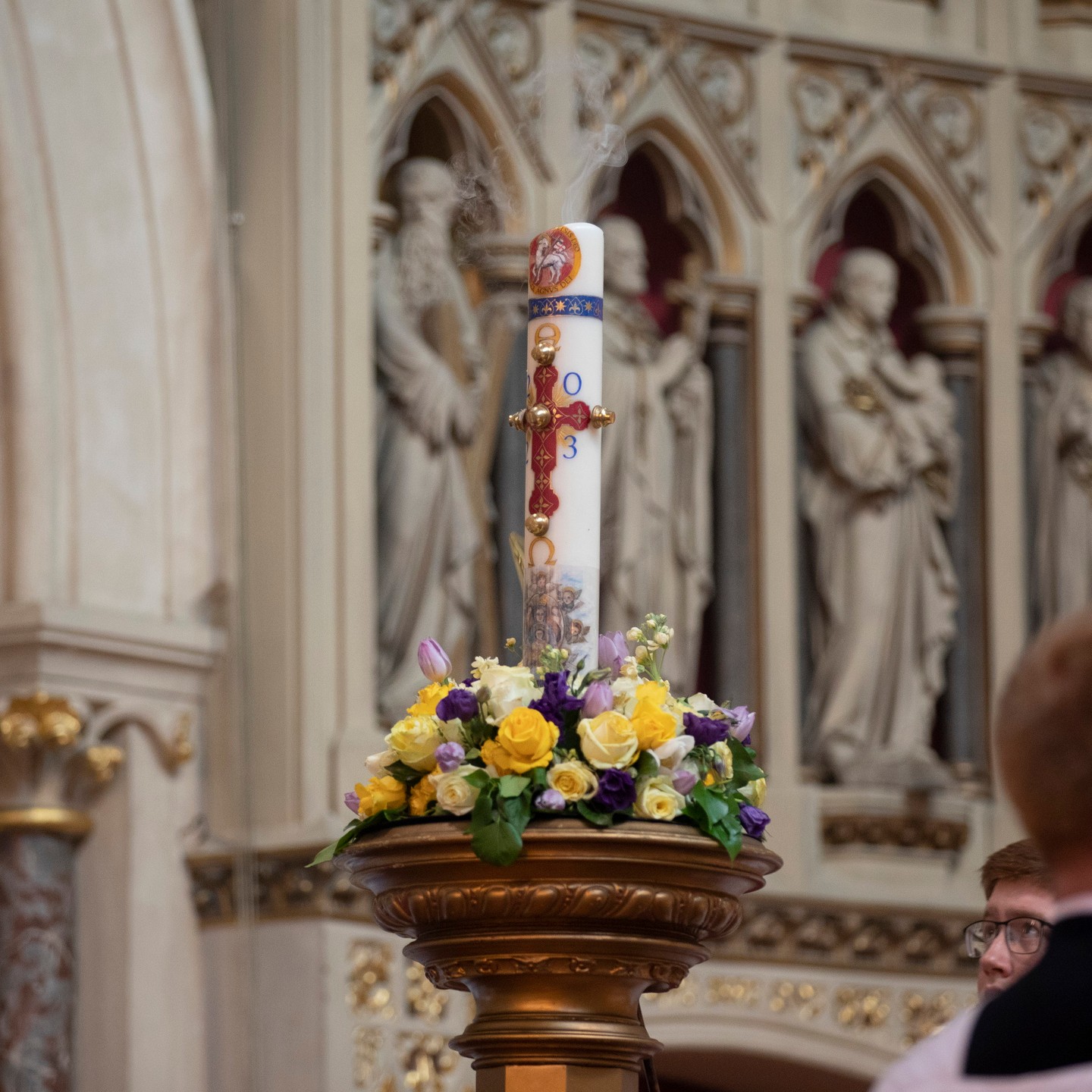
The Paschal Candle has been lit for Masses since the Easter Vigil to represent Christ’s presence among us, as with his disciples for forty days. After the Gospel of the Solemn Mass yesterday, it is extinguished to symbolise his ascension into heaven.

#oxfordoratory

View on Instagram