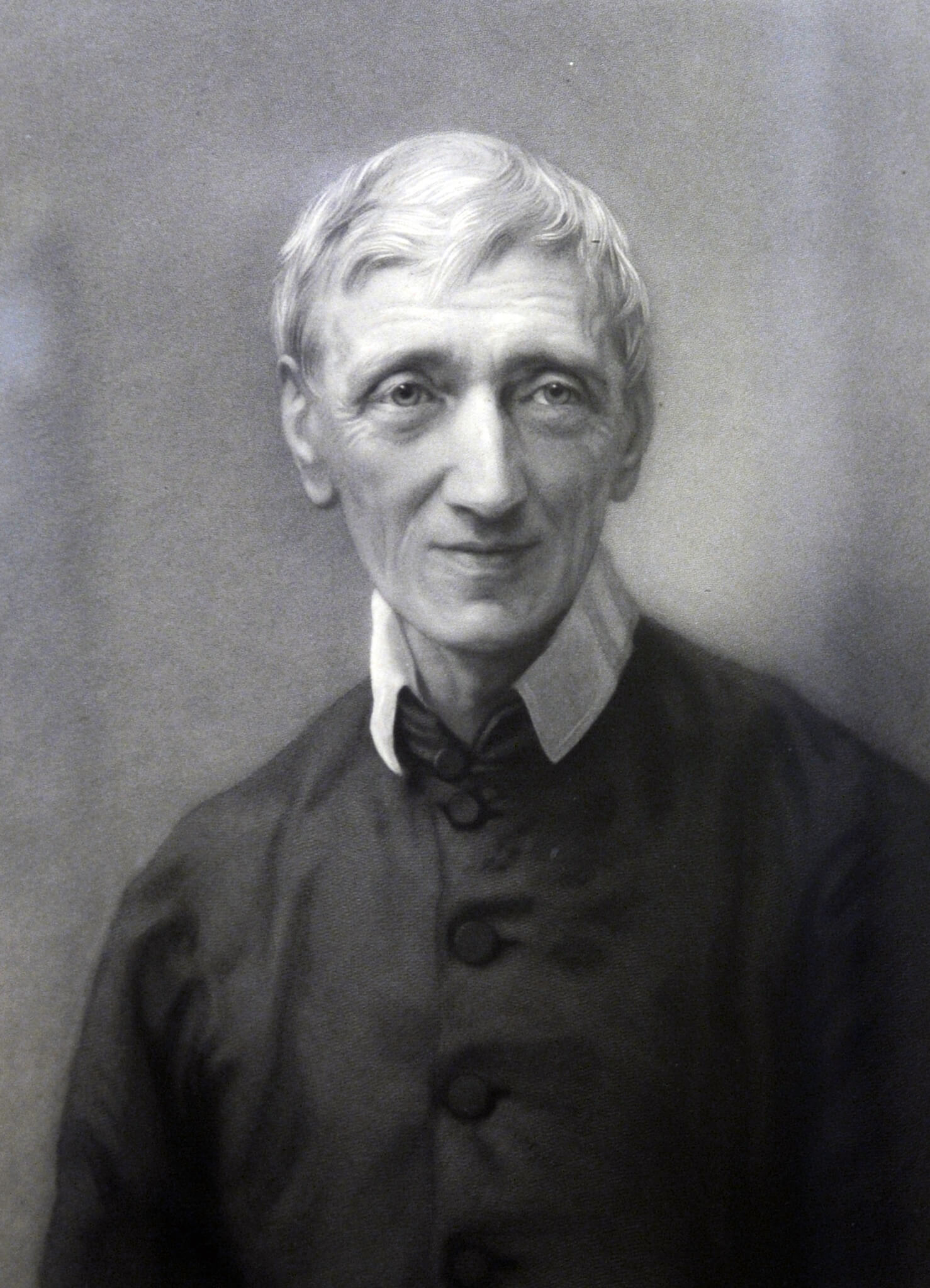
We commit our souls and bodies to the Most Holy Trinity, and to the merits and grace of our Lord Jesus, God Incarnate, to the intercession and compassion of our dear Mother Mary, to Saint Joseph, and our holy father Saint Philip, and especially to thee Saint John Henry. Together with all the saints and angels, pray to God to bring us all together again in heaven, under the feet of the Saints. And, after the pattern of the Good Shepherd, who seeks so diligently for those who are astray, ask him especially to have mercy on those who are external to the true fold, and to bring them into it before they die.
— A prayer to St John Henry Newman, based on his writings

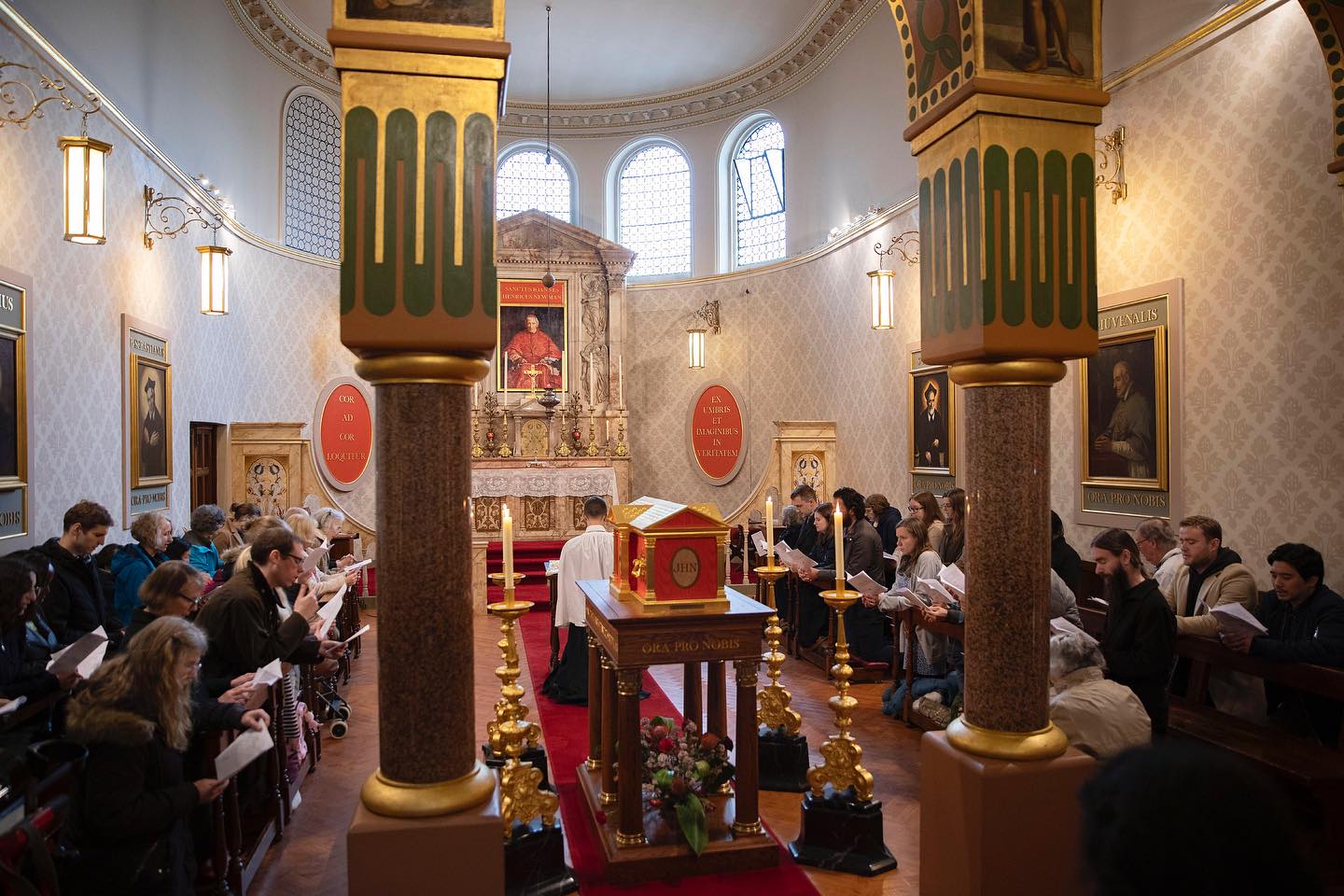
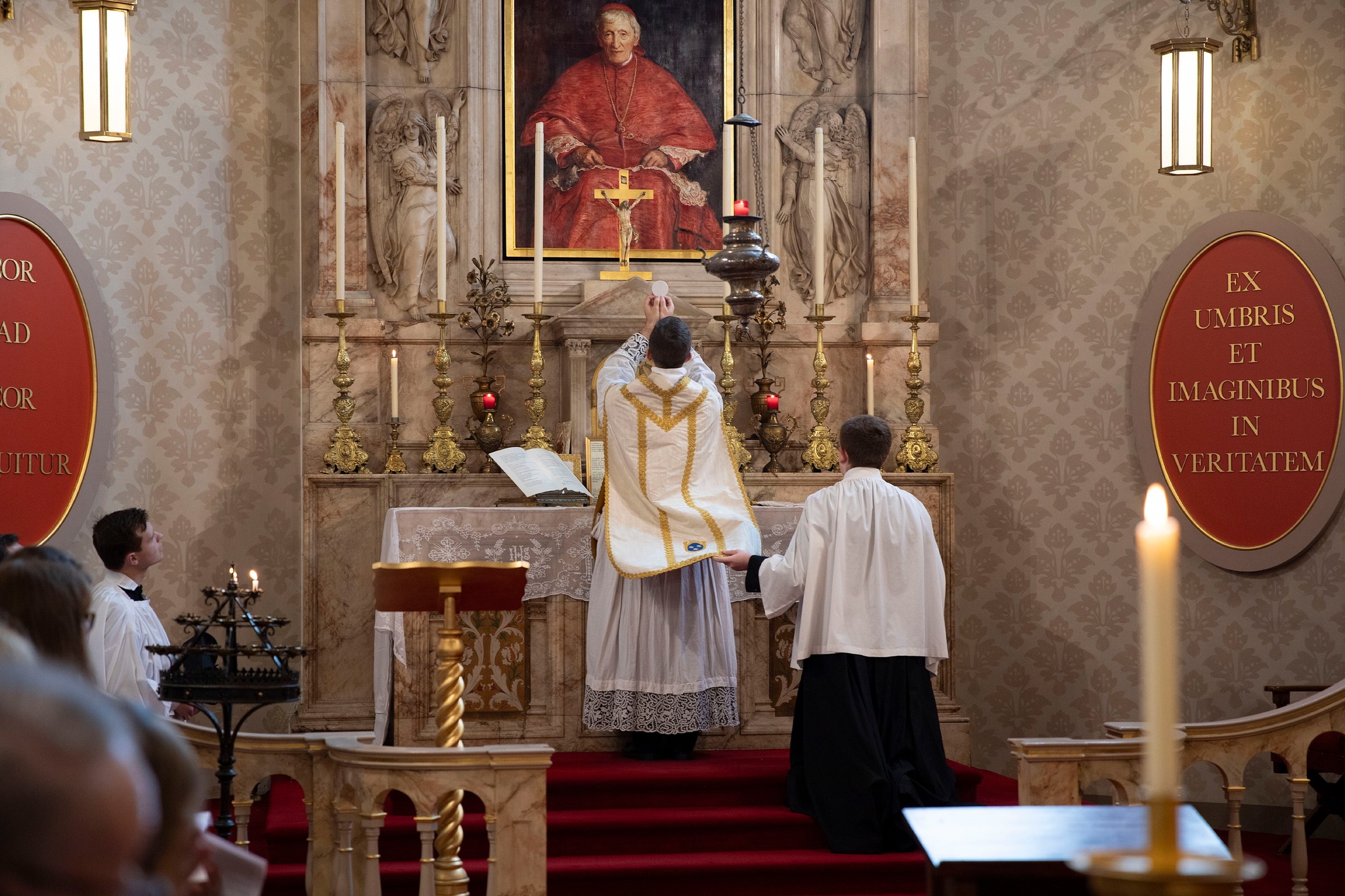
The photo shows Mass in the chapel of St John Henry Newman as part of our pilgrimage to the Birmingham Oratory last Saturday.

#oxfordoratory

View on Instagram

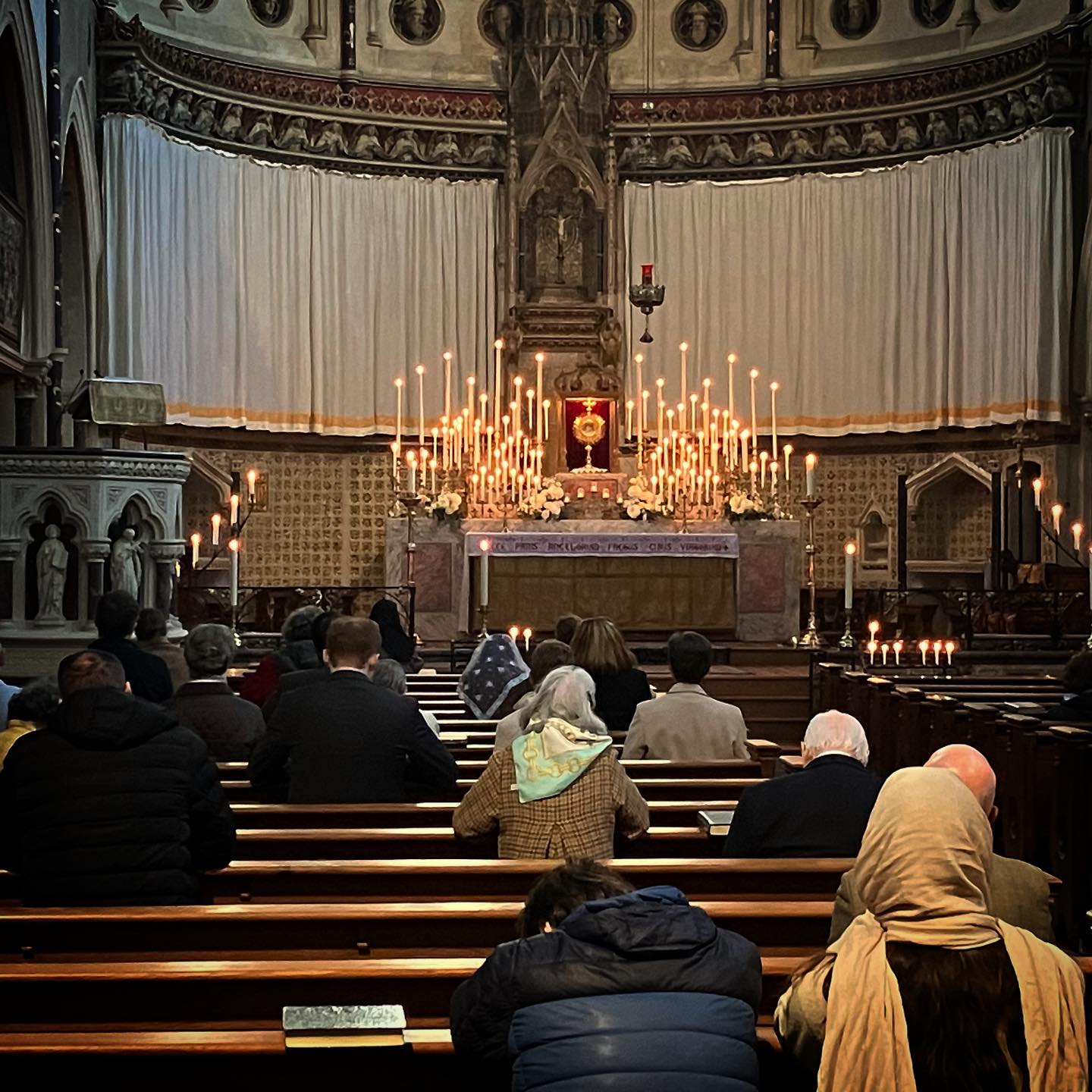
Concluding prayers in the shrine of St John Henry Newman at the end of our pilgrimage on Saturday.

The Fathers in Birmingham warmly welcomed a full coach of pilgrims from Oxford. A good number of our pilgrims had themselves been guided into the One Fold of the Redeemer with the encouragement of Our Cardinal. For all, the pilgrimage was a chance to get to know our saint better by visiting the home where he lived and worked for Christ, as well as to ask his continued prayers for all our needs.

Saint John Henry, pray for us!

#oxfordoratory

View on Instagram

OYA 2023–2024

Oratory Young Adults meetings include a time of discussion, catechesis, conversation and prayer. Refreshments are available from the Cafe Neri bar from 7:30 and the main discussion begins at 8:00. Adults aged 18 to 35 are welcome to come along.

20 October — What was Jesus REALLY like?
It can sometimes be all too easy forget that Jesus is not a character in a book, or just a shadowy figure from history. He was a living, breathing human being, with thoughts, feelings and emotions like us — and he still is! What kind of personality does he have? Would we have got on with him if we’d met him 2000 years ago? How do we get to know him better now? Come along to find out.

17 November — Death: the final frontier
There is one thing all people can agree on: none of us want to die. But should that be true for Christians? Is death something to be scared of, or should we look forward to it as our birth into eternal life? Does heaven mean we don’t need to worry about death? If you want to know what the answer is, don’t miss this meeting of OYA.

1 December — Stop trying so hard
Sometimes it can feel like there are too many things to get done, too many standards to meet and not enough hours in the day. Sometimes our faith can feel like that too. Overwhelmed with questions about vocation, relationships and work? Underwhelmed by your progress with prayer and the fight against sin? Maybe it’s time to let Christ do the work. Come along to think about how to do just that.

19 January — The great ascent
The spiritual life, being holy, becoming saints can all seem like a monumental task which is frankly unachievable — but we have to begin somewhere. Come and reflect on how our understanding of what it is to be human encourages us in climbing our spiritual Everest.

9 February — Lose yourself to find yourself
The scriptures are an indispensable means of encountering Christ in the life of all Christians. We lose ourselves in the text to find him — and our authentic selves. Come along to find out how to read deeply, to listen with the ear of the heart and to put into practice what Christ has to say to us.

1 March — What God buys he puts a value on
God is never required to do anything. He is always free to choose exactly what he wants to do. And of all the things he could choose, he chose to become man and save us by dying for us. Why would he do that? Come along to explore what Jesus’ death on the cross tells us about him — and us.

26 April — God give me patience: when God is silent
We would give up trying to talk to a friend who never spoke back to us. Do we ever feel like doing the same with God? Is silence always a problem? This month we’re exploring the mystery of silence. Come along to find out more.

17 May — We have no lasting city
There have always been some Christians who have looked at the world around them and thought the best thing to do is run away! But are we really supposed to abandon the world to save ourselves? Come along to discuss what it means to be a faithful Christian in Oxford today.

7 June — Rediscovering the off button: Self-sacrifice in an age of instant gratification
Do we look after number one or love our neighbour? How do we find time for ourselves, for others — and for God — when there are so many demands on our time and energy already? Come along to think about how we can rediscover the off button.

facebook.com/oratoryyoungadults

The law of praying (12): The law of living

Over the summer, we are looking at a section from the Canon of the Mass each week, to learn what the ‘law of praying’ has to teach us about what we believe. You can find the previous posts in this series in our reflections archive.

…through Christ our Lord.
Through whom
you continue to make all these good things, O Lord;
you sanctify them, fill them with life,
bless them, and bestow them upon us.
Through him, and with him, and in him,
O God, almighty Father,
in the unity of the Holy Spirit,
all glory and honour is yours,
for ever and ever.
Amen.

It is astonishing the complex ideas that are conveyed through a few small words. ‘Through him, and with him, and in him,’ that is, ‘Through Christ, and with Christ, and in Christ’. These are the ways in which we give glory to the Father.

We give glory to the Father through the Son as our intermediary. He stands forever to intercede for sinners, just as we saw at the beginning of this prayer. All prayer to the Father is made through his Son Jesus Christ.

We give glory to the Father with the Son, standing next to him as co-heirs and adopted children of the Father, even more so now that he is present with us on the altar.

We give glory to the Father in the Son, from within his Body, as members of his Church.

We do all this when we join ourselves to this great prayer of the Mass, as we have seen. But this Eucharistic model of prayer does not cease when we reach the end of the prayer.

One of the saints we didn’t look at last week, St Ignatius of Antioch, really loved the Mass. When he was arrested for being a Christian, he pulled the same trick as St Paul and demanded, as a Roman citizen, to exercise his right to be tried by the emperor himself in Rome. Unlike Paul, he wasn’t taken by boat, but began a very long and slow journey on foot towards Rome in the company of some soldiers.

On the way, he wrote to each church he passed, and members of the churches would come to meet him and exchange letters with him. His letters survive, and he captures for us a wonderful snapshot of the life of the Church around 110AD. He often talks about what Christians do when they gather for Mass. He is one of the most powerful witnesses to the continuity of what we do whenever we celebrate the Mass, following the same patterns that Christians have done ever since the time of Christ.

But not only does St Ignatius talk about the Mass when he describes what should happen in church. He also talks about the Mass when he describes his own desire for martyrdom. He says that he wants to be like Christ. He wants to pay back Christ by dying for him who died for us.

When we think of trying to be like Christ, we can focus solely on imitating what we read in Gospels of Christ’s life on earth. Ignatius tried even to conform himself to Christ as we encounter him now — he wanted to become like Christ in Holy Communion:

Let me be food for the wild beasts, for they are my way to God. I am God’s wheat and shall be ground by their teeth so that I may become Christ’s pure bread. Pray to Christ for me that the animals will be the means of making me a sacrificial victim for God.

I no longer take pleasure in perishable food or in the delights of this world. I want only God’s bread, which is the flesh of Jesus Christ, formed of the seed of David, and for drink I crave his blood, which is love that cannot perish.

He is not alone in tying together martyrdom and the Mass. When the Romans attempted to execute his friend St Polycarp by burning him alive, Polycarp’s prayer sounds very much like a Eucharistic prayer. Meanwhile, he was miraculously unhurt by the flames: ‘he appeared within not like flesh which is burnt, but as bread that is baked’.

When Ignatius was condemned to death, we’re told that he prayed: ‘I thank you, O Lord, that you have vouchsafed to honour me with a perfect love towards you.’ Again, it is a prayer of thanksgiving, a Eucharistic prayer, the same kind of prayer as the Canon of the Mass.

The Eucharist — the Mass — is not just something we attend. It is not just a law of praying, or even a law of praying that forms a law of believing for us. It is also a model of what we become. St Ignatius made his life and his death into a prayer of thanksgiving, modelled after the prayer of the Mass, conforming himself to Christ as we encounter him there. If we appreciate what Christ has done for us, we will want to find our own way of doing the same in return.

The law of praying (11): Asking for pardon

We are looking at a section from the Canon of the Mass each week, to learn what the ‘law of praying’ has to teach us about what we believe. You can find the previous posts in this series in our reflections archive.

To us, also, your servants, who, though sinners,
hope in your abundant mercies,
graciously grant some share
and fellowship with your holy Apostles and Martyrs:
with John the Baptist, Stephen,
Matthias, Barnabas,
Ignatius, Alexander,
Marcellinus, Peter,
Felicity, Perpetua,
Agatha, Lucy,
Agnes, Cecilia, Anastasia
and all your Saints;
admit us, we beseech you,
into their company,
not weighing our merits,
but granting us your pardon…

Finally, last of all, we insert a prayer for ourselves, that we may be like these saints. We can work out what’s going on here by looking at a particular example: that of St Perpetua.

St Perpetua and St Felicity were martyred together in Carthage in 203AD. They became very popular, which means the detailed account of their martyrdom has survived. It is a vivid and gory account of the heroism of these women. They were both in their early twenties. Unlike the very young virgin martyrs in this list, they were also mothers.

After some time in prison, they were finally thrown to the beasts. But there were so many Christians for the animals to eat that they stopped attacking once they’d had enough. The gladiators had to be brought in to finish off the job. The account of Perpetua’s death is particularly moving. She had the misfortune of facing a novice gladiator, who wasn’t very sure of what he was doing. He went for her throat, missed, and got his sword stuck in her collarbone. She was knocked to the ground, but not killed. He stood there shaking and nervous, not knowing what to do. So Perpetua had to help him. She pulled the blade free with her own hands, and held it for him over her throat. The account of her martyrdom concludes: ‘Such a woman — one before whom the unclean spirit trembled — could not perhaps have been killed, had she herself not willed it.’

There is something more than ordinary in the heroism of these martyrs — and the early Christians knew it. And that is why they also placed such great value on the prayers of those about to be martyred. Martyrs carry their message directly to God, and, as it were, win God’s attention by their death.

This idea developed in the early Church, where serious sins led to a person being excommunicated and unable to receive the sacraments until they were on their deathbed. It was a risky business to sin seriously — what if the priest didn’t make it to you in time to reconcile you with the Church? Harsh as it may sound, the idea behind this was not vengeance on sinners. The idea was to deter anyone from taking such a great risk by sinning, because the effect of sin was expressed visibly through the way the Church corrected those who committed serious sins.

The problem came about in one particularly ferocious persecution. So many people — bishops and priests among them — pretended not to be Christians in order to save their lives that the Church had to rethink this policy. And so a shorter period of excommunication and public penance was introduced instead.

Now some clever people thought of a way to get out of this too, and would go to those who had not denied their faith and were in prison awaiting execution. The soon-to-be martyrs would agree to pray for the sinner, offering a share of their own merits gained in dying for the faith to balance out the other person’s sins. When they put this in writing, the first indulgences were formed. The sinner would present the martyr’s letter to the bishop, who would allow them to end their public penance and return to the sacraments.

The Church has always recognised the particular power of the prayers of the martyrs. It’s precisely this idea that we invoke when we ask God not to weigh our merits (that is, the punishment due to us because of our sins) but, implicitly, those of the saints we have mentioned.

A particularly touching example of the power of the martyrs’ prayer is given in the life of St Perpetua. While in prison, she prayed for her brother Dinocrates who had died, unbaptised, in childhood. She recounts the vision in her own words:

I saw Dinocrates going out from a gloomy place, where also there were several others, and he was parched and very thirsty, with a filthy countenance and pallid colour, and the wound on his face which he had when he died. This Dinocrates had been my brother after the flesh, seven years of age, who died miserably with disease — his face being so eaten out with cancer, that his death caused repugnance to all men. For him I had made my prayer, and between him and me there was a large interval, so that neither of us could approach to the other. And moreover, in the same place where Dinocrates was, there was a pool full of water, having its brink higher than was the stature of the boy; and Dinocrates raised himself up as if to drink. And I was grieved that, although that pool held water, still, on account of the height to its brink, he could not drink. And I was upset, and knew that my brother was in suffering. But I trusted that my prayer would bring help to his suffering; and I prayed for him every day.

Then, on the day on which we remained in fetters, this was shown to me. I saw that that place which I had formerly observed to be in gloom was now bright; and Dinocrates, with a clean body well clad, was finding refreshment. And where there had been a wound, I saw a scar; and that pool which I had before seen, I saw now with its margin lowered even to the boy’s navel. And one drew water from the pool incessantly, and upon its brink was a goblet filled with water; and Dinocrates drew near and began to drink from it, and the goblet did not fail. And when he was satisfied, he went away from the water to play joyously, after the manner of children, and I awoke. Then I understood that he was translated from the place of punishment.

All members of the Church, living and dead, are helped not just by the prayers of others, but by their merits too — the good works they build up with God. It’s an encouraging thought that we are in credit with God, because it means, overall, the members of the Church do more good than bad. The saints have far more merits than they need — and that’s particularly good news for us.
St John Henry Newman: Theologian, Oratorian

It is apt that this year our Cardinal’s feast day falls on the first working day of Michaelmas Term, given that a considerable part of St John Henry’s life was spent in the University of this city, as a student and as a don. He was an immensely influential figure while he was a Fellow at Oriel: hordes of undergraduates piled into the University Church to hear him preach, and the Tractarian movement of which he was a central part changed the face of the Church of England forever. Even after he had become a Catholic and left Oxford, he continued producing significant academic works, especially in the areas of conscience and the philosophy of faith. His contributions to Catholic theology were so significant that he was made cardinal by Pope Leo XIII, and his theological legacy is still being examined to this day, amid suggestions that he ought to be made a Doctor of the Church.

This is often how Newman is remembered: a theologian, a cardinal, and not much else. If one were to have asked the elderly Cardinal Newman what his life was about, however, he would surely have named something else entirely. The Apologia, his spiritual autobiography and defence of his religious convictions, ends:

I have closed this history of myself with St Philip’s name upon St Philip’s feast-day; and, having done so, to whom can I more suitably offer it, as a memorial of affection and gratitude, than to St Philip’s sons, my dearest brothers of this House, the Priests of the Birmingham Oratory?

Newman was not just a theologian with a red hat: the real axis on which his life revolved was being a son of our Holy Father St Philip. When he and his group of fellow-converts were looking for an order to join, he saw in the Oratory a place where active pastoral ministry was combined with more room for prayer and contemplation and for time spent studying than would normally be available to the average secular priest, and it is clear from his extensive corpus of writings produced while he was an Oratorian that he put that time to good use. However, what is so often forgotten is that his time was mostly spent doing his best to be a devoted son of St Philip, not merely by his detailed research into the origins of Oratorian life in an effort to mimic as closely as possible St Philip’s methods and intentions, but above all in his practical work. His life was spent hearing confessions, preaching in that straightforward and engaging manner encouraged by St Philip — cor ad cor loquitur — and following St Philip in practical work to assist the poor, trading washing the feet of pilgrims to Rome for providing an education to the poor of Victorian Birmingham. St John Henry was certainly a great theologian, but it is impossible to understand him properly if we forget that he was, first and foremost, a son of St Philip.

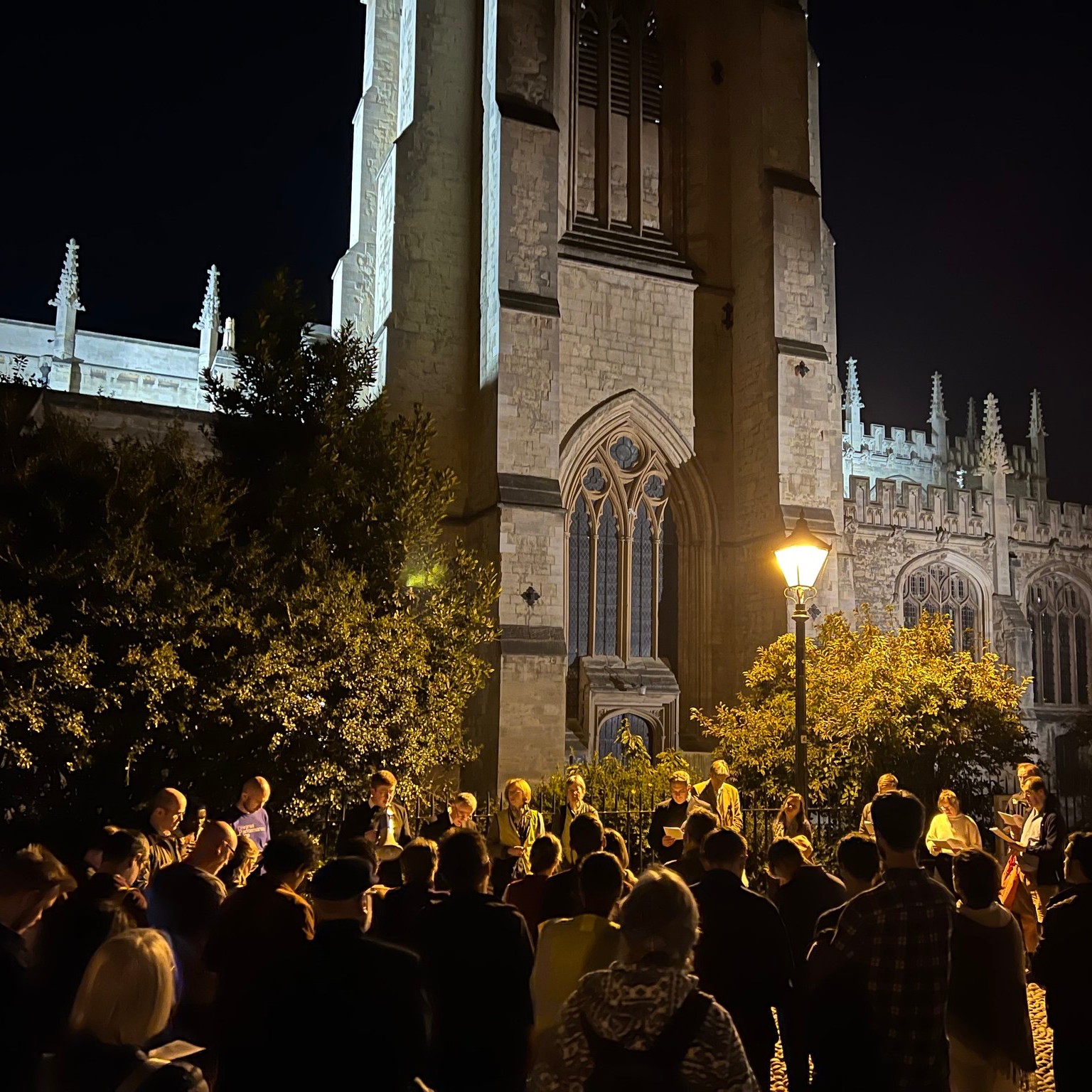
Our annual night walk to Newman’s College at Littlemore commemorates the journey of Blessed Dominic Barberi on this same night in 1845, stopping at key points in the city associated with the life of Our Cardinal. The feast of St John Henry Newman is celebrated tomorrow, the anniversary of his reception into the Catholic Church.

Blessed Dominic wrote:

“I arrived in Oxford, sodden with rain, a few hours before midnight. I went to Littlemore, and whilst I was drying myself before the fire I turned round, and what was my surprise at seeing Mr Newman kneeling before me, begging me to hear his confession and receive him into the Catholic Church…

“This I consider an ample reward for all I have suffered since I left Italy, and I expect that the results of such conversions will be incalculable.”

#oxfordoratory

View on Instagram