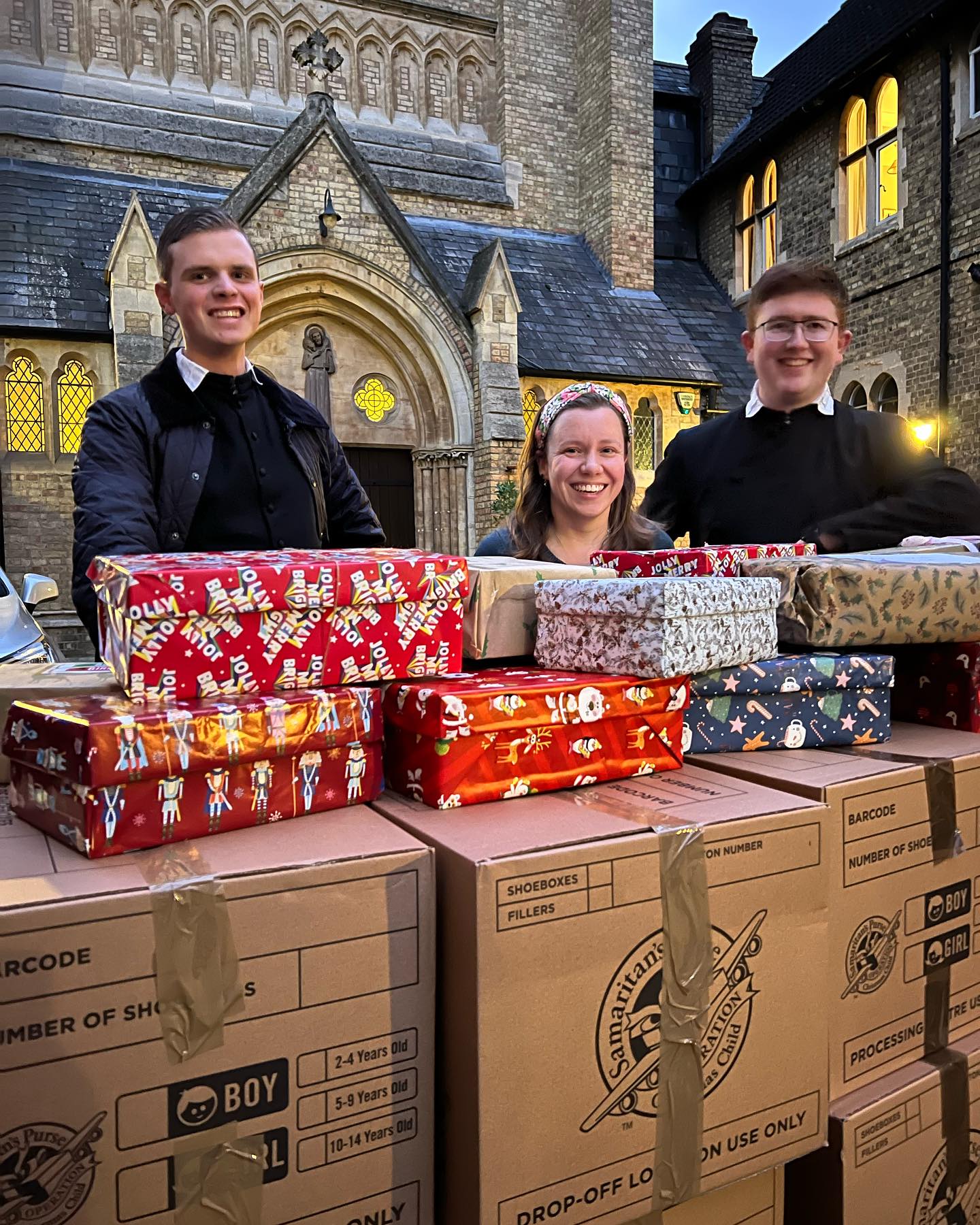
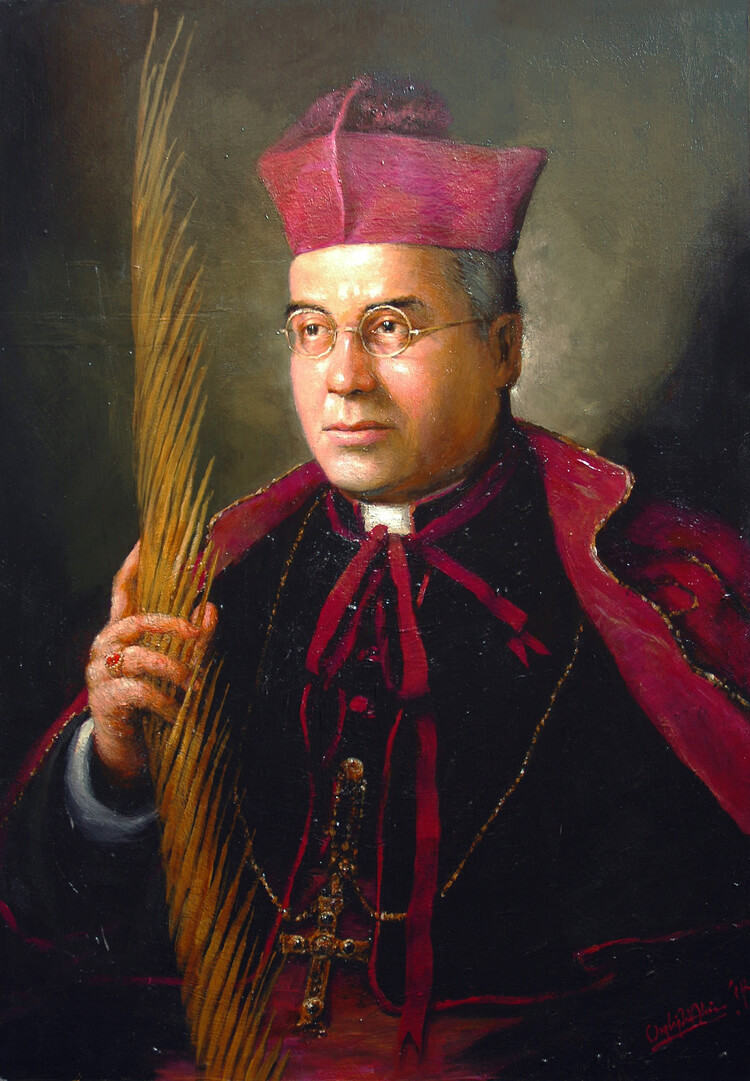
On Saturday we enrolled three new members of the Secular Oratory.

The Secular Oratory consists of those men and women who find themselves drawn by the spirit of St Philip to devote themselves more fully to God. They commit themselves to a simple rule of life, and meet together once a month for Mass, spiritual conversation and pray together, in addition to attending our other regular Oratory groups that meet each month. They all volunteer their time and their talents to further St Philip’s work in the Oratory.

Learn more: oxfordoratory.org.uk/secularoratory.php

#oxfordoratory

View on Instagram

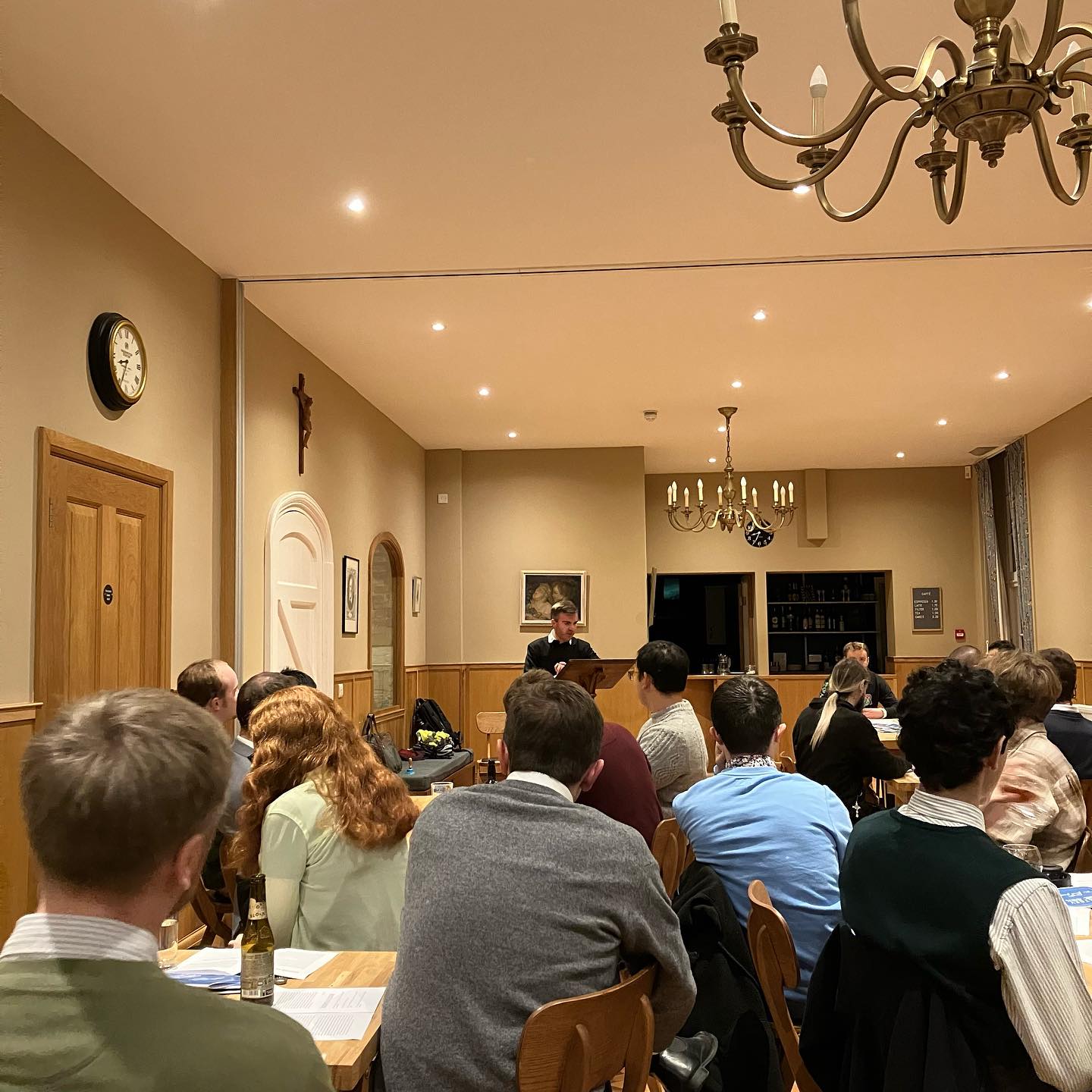
Tonight’s Oratory Young Adults meeting focused on ‘Death: the final frontier’.

‘Real solid inner joy of the heart is a gift from God, which derives from a good conscience, detachment from external things, and the contemplation of what is most profound. It comes through meditating on death, associating with devout men, nourishing ourselves regularly on the holy sacraments, taking great care over oneself and over others, practising generosity towards many, daily prayer to God, reverence for the holy Cross, the prayers of the saints and our devotion to them.

‘Now this is the purpose of our Oratory, of our way of life, of the companionship of our community…our meditations and frequent sermons about death, seen as something to be desired more than to dread; all is a preparation for death welcomed with a joyous heart. Let us go forth from our prison joyfully, when the Lord bids us.’

(from the dialogue by Cardinal Augustine
‘Philip, or On Christian Joy’)

#oxfordoratory

View on Instagram

The Communion of Saints

The Church often speaks of the totality of God’s People, as the Communion of Saints. The word “saint” simply means “holy” — a saint is a holy person. But holiness doesn’t refer to a moral state. It doesn’t mean “good” or “virtuous”. A saint is not someone who behaved better than other people. Holy, saintly, means belonging to God. A saint is someone who belongs to God. So when St Paul refers to the Saints in his Letters, he means you and me, those of us who belong to God because he has claimed us for his own. The Communion of Saints is, therefore, what we otherwise call the Church (a word which, incidentally, comes from the Greek meaning “belonging to the Lord”).

As we remember from our Catechism, the Church, this great Communion of Saints, is formed of three parts. The first is those who can properly be called “saints”: that is, those who have died and are now enjoying the vision of God, and reigning with Christ in glory. Those countless men and women throughout the ages whom God was able to mould and shape and form by his grace into the image of his Son. Those millions of known and unknown people celebrated at the beginning of this month on the feast of All Saints. We do not pray for them — rather we ask them to pray for us and for all God’s people. We feebly struggle; they in glory shine.

The second part of the Church is made up of those who are alive today, the People of God which is still very much on its way to ultimate union with him. That’s all of us who are working out our salvation in fear and trembling, who are stumbling and falling and getting up again and moving forward — hopefully — with God’s grace. We call this part of the Church the Church Militant, because we are still fighting — fighting against ourselves, fighting against everything that keeps us from God, fighting the good fight, and running the race. We are saints too, because we belong to the Lord, and we fight as the saints who nobly fought of old.

The third group is that which the Church remembers especially during November, the Holy Souls. They are those who have died but are not quite ready to meet God face to face. Most of us would probably acknowledge that we are far from perfect. Our hearts are divided, we seek after things which can only give us temporary happiness, we become attached to all sorts of rubbish, we have to live with the consequences of our actions. Nothing which is imperfect can enter heaven, so if through prayer and penance in this life, we haven’t yet been purified of all that debris of sin and selfishness, then we still need to go through some purifying process before entering the eternal presence of God. What that process is like it is not for us to speculate, but we call it Purgatory.

It is our Christian faith that just as we can pray for each other here on earth, and just as we can ask the saints in heaven to pray for us, so too we can pray for those who are undergoing this purification after death. Those souls still have parts of themselves which they tried to hide from God, areas in their lives and in their hearts which were dead, which were far from where they ought to be, far from where God is, where God’s love was taken for granted. God’s grace will penetrate all those parts, it will purify and restore and bring back to life. And our prayers express our Christian faith and hope that after that process it is God’s will that our loved ones will indeed be with him in paradise. They are the “Holy Souls” because they too belong to God.

There is a great tendency today to speak about someone who has died as if they have gone immediately to heaven, a sort of instant canonisation. It is true that Christ has conquered death, and opened the gates of heaven to all who believe in him. We have a God who is a loving Father and who has created all his children to live with him forever. We can have faith and trust in the mercy of God. But we must never presume on that mercy. And we cannot deny the weakness and pride and self-centredness that is a part of the humanity we all share. The great danger of instant canonisations is that we might in all the celebrating of life forget to offer up our prayers and our good works and our love on behalf of the dead.

And so, although it is a “good and religious thing to pray for the dead” every day and at every Mass, it is especially appropriate this month set aside by the Church, when the whole Church Militant, the saints on earth, join their prayers with those of the Saints in heaven for the Holy Souls. Naturally, we will remember especially family members and good friends but we should also think of those who may not have anyone to remember them and pray for them. When our time comes to leave this world, it is on the prayers of those people that you and I will depend.

Eternal rest grant unto them, O Lord, and let perpetual light shine upon them. May they rest in peace. Amen.
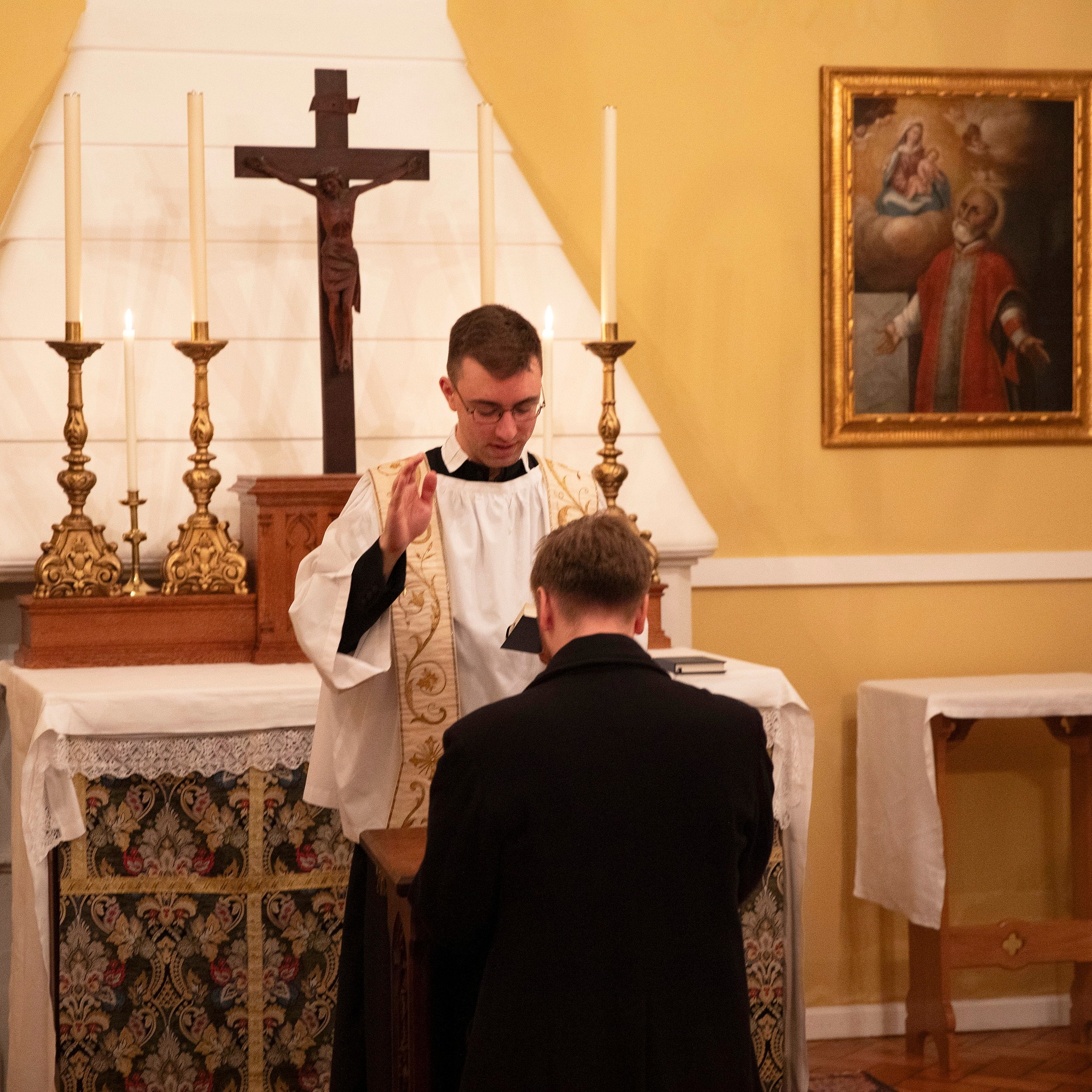
Blessed Salvio Huix

Imprisoned during the religious persecution of the Spanish Civil War, Blessed Salvio Huix was forced to dig his own grave in a cemetery in Lleida on 5 August 1936. He was martyred there in hatred of the faith alongside twenty other prisoners. In the moments that preceded his death, he was offered his life by the militants in exchange for renouncing Christ. He instead requested that he die last so that he could provide encouragement and strength to the others as they went on to meet their end.

There never was a real possibility for Bl. Salvio to renounce his faith. Since his youth, while in his home Oratory, the Vic Oratory, he asked Our Lord for the strength to overcome anything in quite a prophetic and exemplar way: “I ask you for the virtue that is necessary for me to fight against difficulties and to shed my blood, if necessary, to uphold and defend the honour of your Sacred Gospel.” During his life he remained close to the Sacraments, and much like Our Holy Father St Philip, in true Oratorian spirit, used to spend hours in the confessional.

Bl. Salvio was not only granted the virtue needed to shed his own blood in honour of Our Lord, but also the strength that led him to choose to witness the murder of his companions. He blessed each one as they were being killed, fully aware that he would soon also be dead. As he was blessing each soon-to-be martyr, he was shot in the hand by a militant. With the strength that he so much prayed for to God, he continued to bless his companions with his other hand instead. 

Once all twenty were killed, he was shot in the head, making twenty-one the number of people killed there. He was not the only Oratorian to be martyred during the Spanish Civil War. While we remember all those martyred, today we specifically remember Bl. Salvio’s exemplary death alongside his exemplary life as someone who loved the Sacraments, Christ, and the Church. His trust in the Lord provided comfort to that group of twenty martyred there, and like the Good Shepherd, Bl. Salvio guided his flock until the end. “With the help of divine Grace, we want to remain faithful to Christ until martyrdom.”

Bl. Salvio was aware he would be killed there. Despite this knowledge, he was able to persevere until the end with his trust in the Lord unchanged. He is a shining example of not just a true priest, devoted to his flock until the very end, but also of a true Christian, willing to completely renounce his own self in reverence to God. May we be as brave as Bl. Salvio in the face of adversity. May we be as confident in the Lord as Bl. Salvio was in the time of our death. Blessed Salvio Huix, pray for us.

November Music

Wednesday 1 November Solemn Mass 18:00
All Saints
Missa O quam gloriosum Victoria
Justorum animae Byrd
Beati mundo corde Byrd
Placare Christe servulis Dupré

Thursday 2 November Solemn Mass 18:00
All Souls
Officium Defunctorum a6 Victoria
Versa est in luctum Victoria

Friday 3 November Solemn Mass 18:00
Solemn Requiem for deceased
Fathers and Brothers of the Oratory
Officium Defunctorum a4 Anerio
Beati mortui Mendelssohn

Sunday 5 November Solemn Mass 11:00
31st Sunday of the Year
Missa Ecce nunc benedicite  Lassus
Vox in rama de Wert
Salve Regina a5
 Josquin
Fantasia [A final] Byrd

Sunday 12 November Solemn Mass 11:15
Solemn Requiem for the Fallen
Officium Defunctorum a6 Cardoso
Versa est in luctum Lobo
Solemn Prelude for the Fallen Elgar

Sunday 19 November Solemn Mass 11:00
33rd Sunday of the Year
Missa Tertia, Octavi toni Croce
De profundis Palestrina
Ave verum Dering
Toccata in D minor BWV 538i Bach

Sunday 26 November Solemn Mass 11:00
Christ the King
Missa Festiva Peeters
Attollite portas Byrd
Ego sum panis Peeters
Acclamations Langlais

Friends in heaven

One of our Fathers tells a lovely story about a friend of his who lived in Munich. Whenever her landlady had some kind of problem she would say “I must go and speak to Father Rupert about this”. Who was this priest who was able to solve all her landlady’s problems and was the immediate port of call amidst the daily ups and downs of her life? It turned out that the said priest had been dead for some fifty years and what the landlady was doing was going to pray at the tomb of Blessed Rupert Mayer in the Burgersaalkirche. That is a wonderful illustration of what our friendship should be with the saints: they are our familiar friends to whom we take the concerns of our lives and they are the examples we seek to imitate — those burning furnaces of divine love from which we can keep the spark of charity aflame in our own heart by approaching, through them, that wonderful light in which they dwell.

We will all have our favourite saints, those friends whose lives, or names, or patronages, or examples, seem to stretch out to us like the invitation of an old and trusted friend, someone to help us and show us the way. They are those lights of the world which cannot be covered over, those cities built on mountaintops which cannot be hidden. We know and we love those saints who are so well known to all Catholics: above all Our Lady, St Joseph, the Apostles, St Francis, St Thérèse of Lisieux, St Philip… But there are the more obscure ones too whose lights shine no less brightly and whose intercession is no less sure. I once knew a person who preferred to entrust their prayers to the intercession of obscure 19th century beati “because they were less busy”. I’m not sure about that, but a saint is a saint, and they all want to help us. We have All Saints because sometimes, whilst their light burns brightly in heaven, their life on earth was more obscure, or simply they haven’t been officially canonised. Blessed Dominic Barberi famously preached “let us all be saints, but not canonised ones — that is too expensive”. November 1st therefore gives us that opportunity to pray to them all, known and unknown, those of popular devotion and those whose names are known to God alone but all of whom belong to him, and hence to us, the Church.

Monsignor Knox wrote “[The Church] chooses an excellent day for it; the first day of November, when the year has definitely turned to autumn, and the leaves have fallen, and the weather is for the most part rather depressing, either wetter or colder than we quite want it to be. Because it is then that we like staying indoors, and sitting at the fireside, if there’s one to sit by; and there’s a kind of snug feeling about coming in out of the misty twilight and drawing the curtains across the windows, which helps us to think about the saints in heaven, so snug there, with all the painful struggles of their earthly life behind them. To be sure, it is nice to be out on a November afternoon; but it is still nicer to come in at the end of the afternoon, and shut the world out from us. And the saints are happy, even in this world, in spite of all their uncomfortable goings on. But happier still when they leave this world, and draw the curtains of heaven round them.”

That is what all the saints do. They draw us home. And of course there are those destined for Heaven but who still have purgatory to undergo and that is why the very next day we pray for them all. We show those whom we have loved and lost that we love them still because we pray for them, and particularly we give them the most a human being can — we offer Mass for them. Just as the saints in Heaven help us, so we can help the Holy Souls on their way to Heaven too, and what a beautiful and consoling teaching that is. Every man, woman, and child is our neighbour and so we love them all as we pray for the Holy Souls. In the grief of our own bereavements, whether still raw or become a loss we have learnt to bear, the Church gives us All Souls as a reminder of the duty of charity we owe them, our ability to show that charity still, but so too as a remembrance of the sure and certain hope offered by our Faith: a reminder too that one day we shall die — and then? as St Philip was wont to say — well, that is up to us, not for then, but for now. The great thing then, as Our Holy Father again would say, is to become saints…

“Of ghouls and ghosts and long-leggedy beasties”

I’m not a particularly squeamish person. I can cope with watching hospital dramas on the television, I am a first-aider and I’m not easily spooked. There is something, however about the proliferation of Halloween decorations in almost every public space and shop which gives me the creeps — but perhaps not in the way the owners intend. It is a slightly odd thing to want to terrify our neighbours with images we would normally run a mile from at other times of the year. Why do we delight in ghouls and ghosts but not so much in the “spirits and souls of the just”? The reasons for keeping Halloween are well known — emerging from a conflation of the All Souls’ Day observance with pagan customs. And whilst I would never want to be a party-pooper, perhaps this year we might try and think about it in a different way.

Perhaps those skeletons and skulls remind us that one day we too will die. At the end of a famous crypt in Rome three real skeletons hold a plaque which says, “What you are now, we once were, and what we are now, you too will be.” At the end, we all must die, but the remembrance of death on this 31st October falls on the vigil of one of the great feasts of the Church’s year, that of All Saints. During the persecution of the Emperor Diocletian, a celebration was called for to cover all those many witnesses to the Christian faith, too numerous to have a day each in the calendar. At the end we all must die, but, like them, we must see our death as the gateway to that sainthood, that heavenly bliss, that is ours if we are judged to be holy, to be virtuous, to be just. Those ghouls and ghosts and even the silliest and naffest of costumes must be for us Christians, who should live in the world as though we are on the threshold of heaven, a reminder to press on, to seek the face of God, to strive after virtue so that we too might be numbered among that great sea of witnesses on November 1st each year and not be consigned to ghoulish misery.

So as you bob for apples and light your sparklers, don’t forget that it is to the joys of heaven we aspire more than anything else.