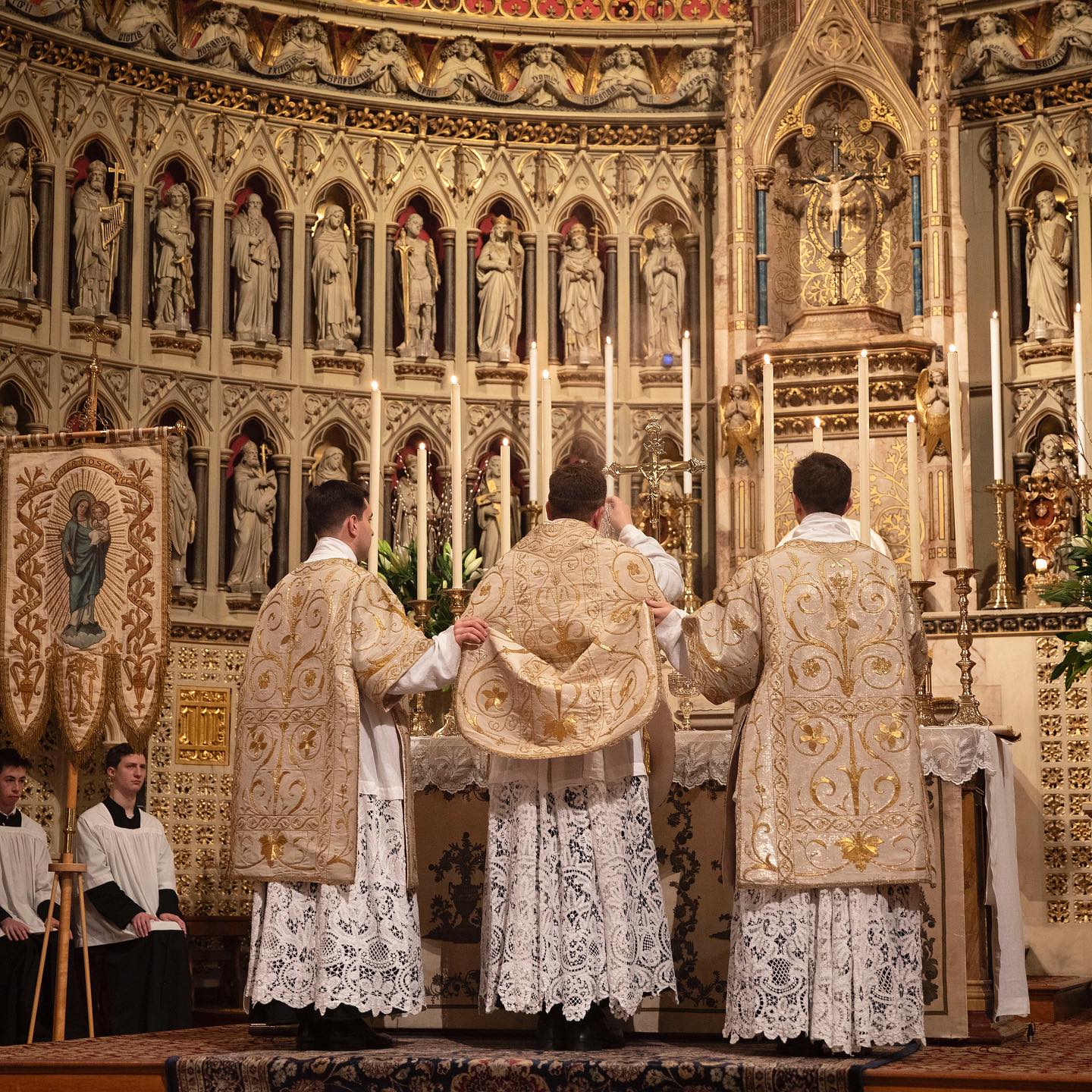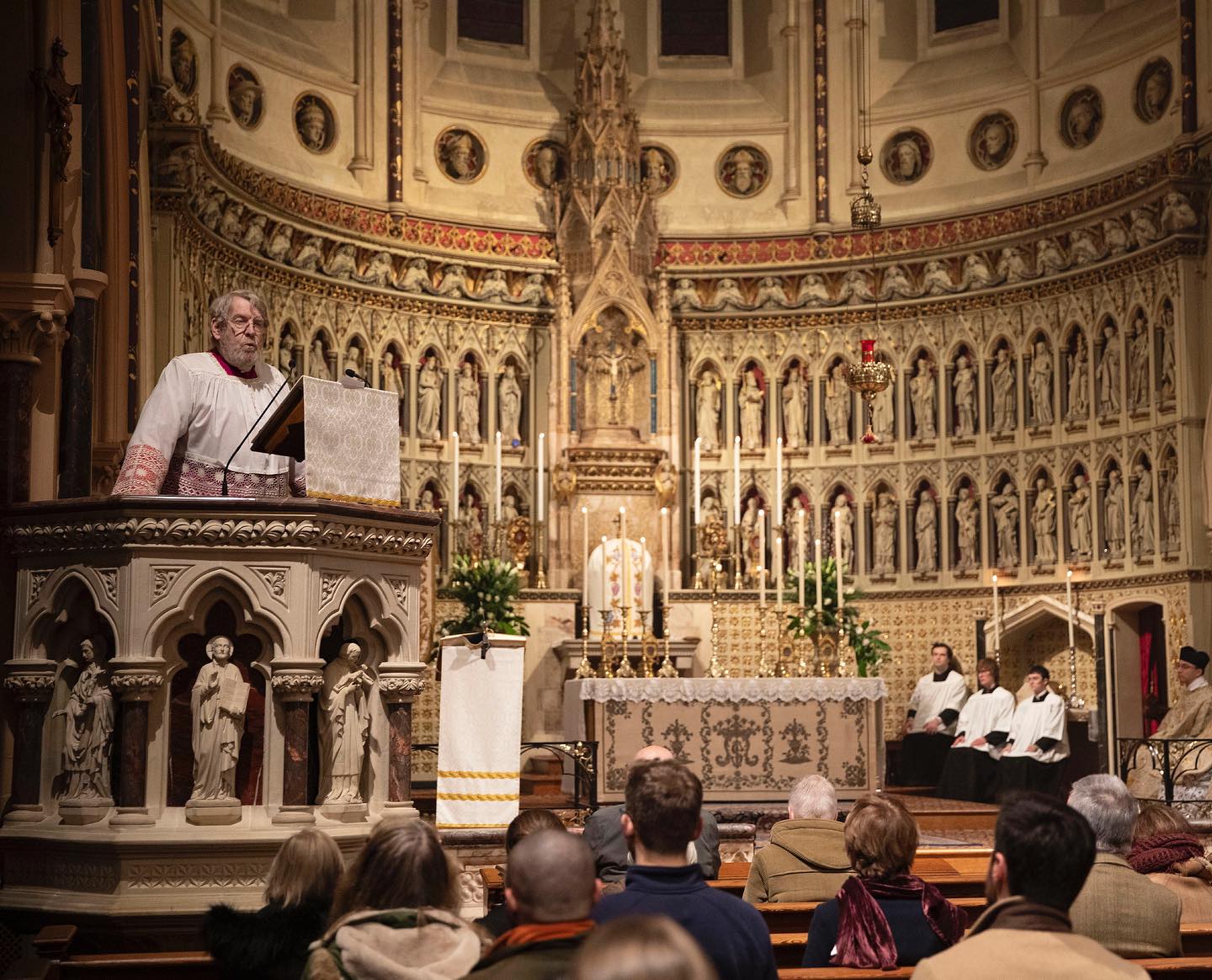
We welcomed Monsignor Andrew Burnham as our guest preacher at the Solemn Mass last night. Mgr Burnham has been a friend of our community for many years, and celebrated his first Mass in our church. #oxfordoratory
We welcomed Monsignor Andrew Burnham as our guest preacher at the Solemn Mass last night. Mgr Burnham has been a friend of our community for many years, and celebrated his first Mass in our church. #oxfordoratory
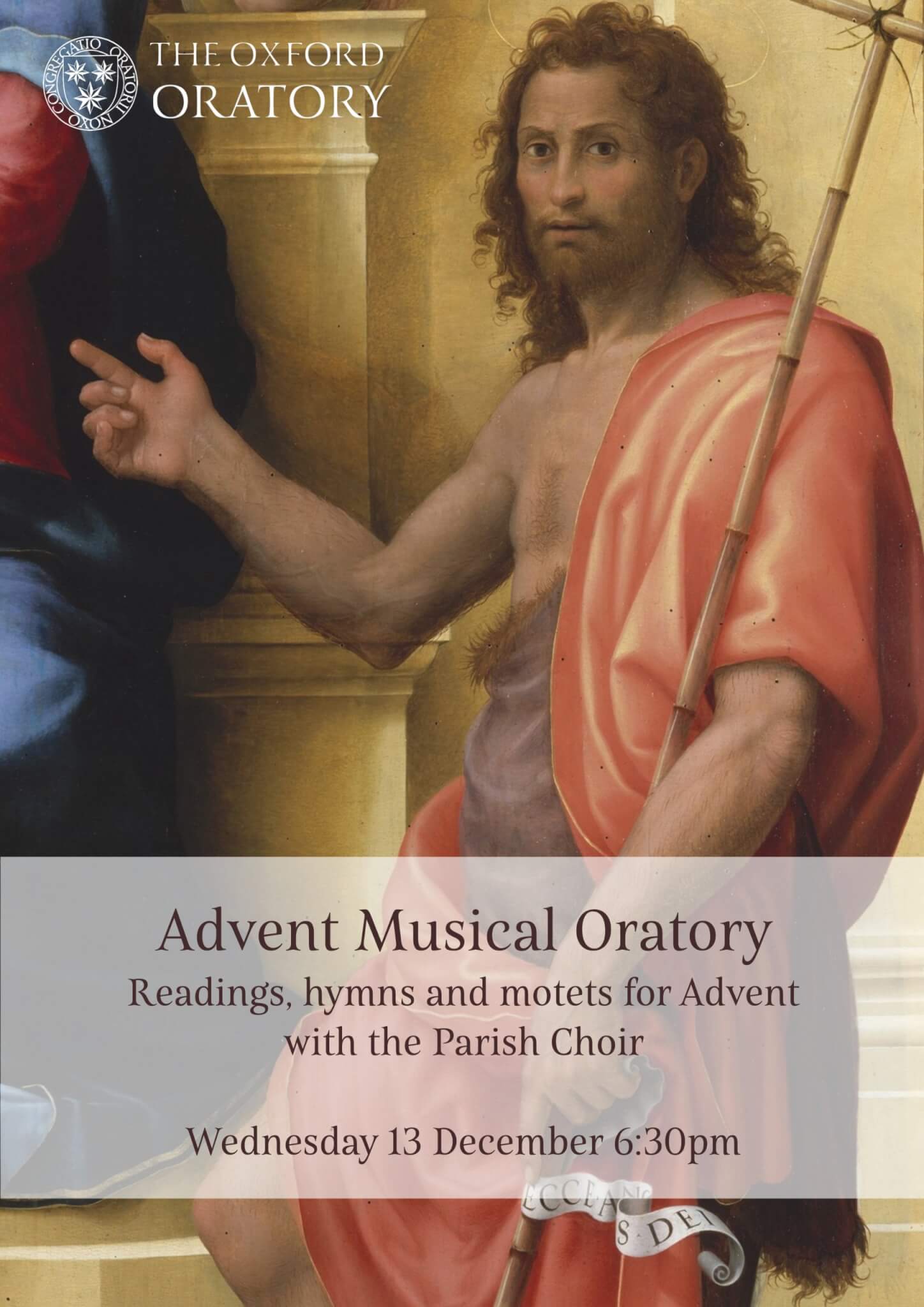
Join us on Wednesday 13 December for hymns, readings and choral music with our volunteer parish choir after the evening Mass. This short service, continuing the tradition St Philip started in Rome 500 years ago, is bit like the more familiar carol service, lasting around 40 minutes, and is a great way to mark this season of preparation for Christmas.
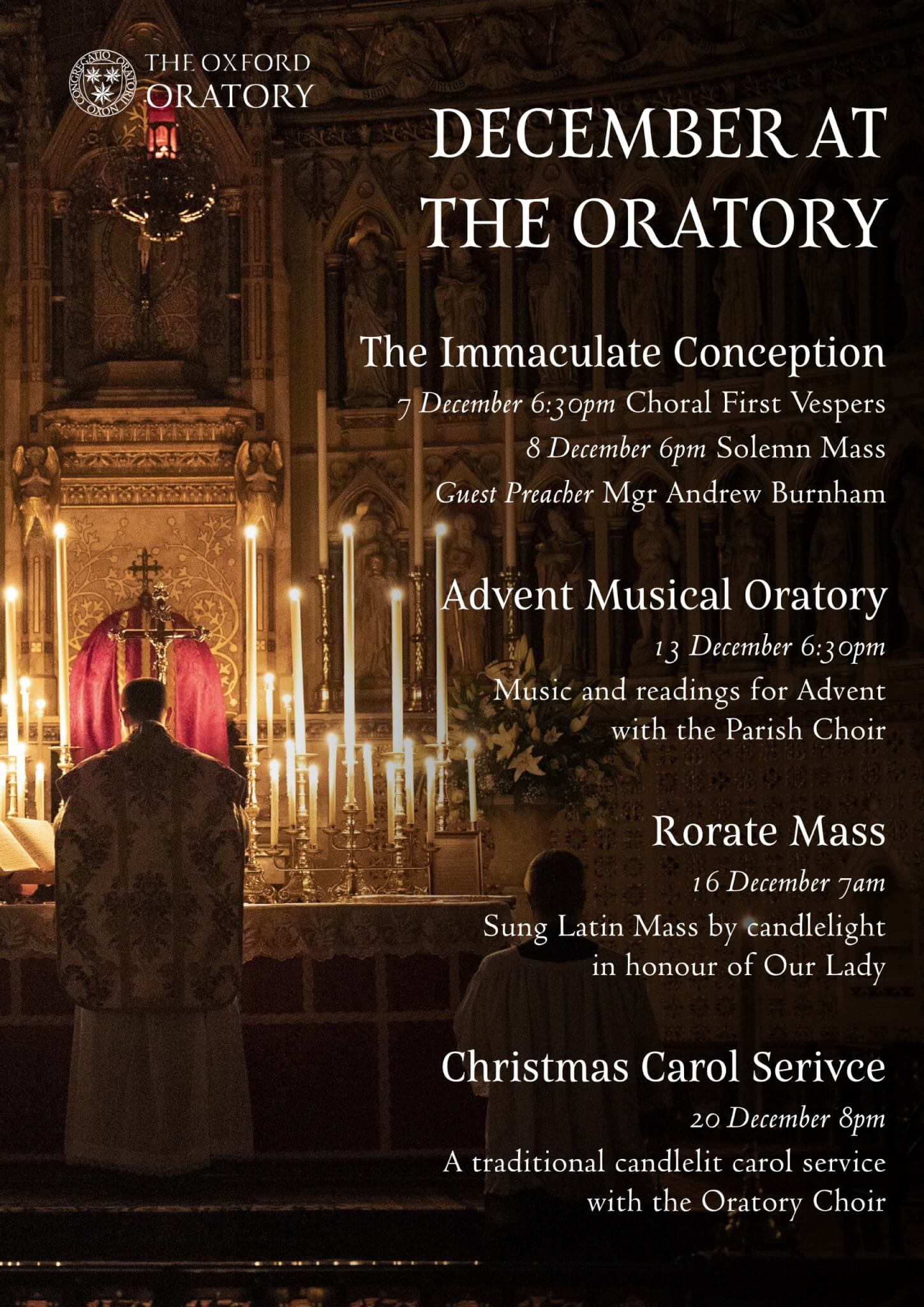
Our traditional candlelit Rorate Mass in honour of the Blessed Virgin Mary will be sung on 16 December at 7am.
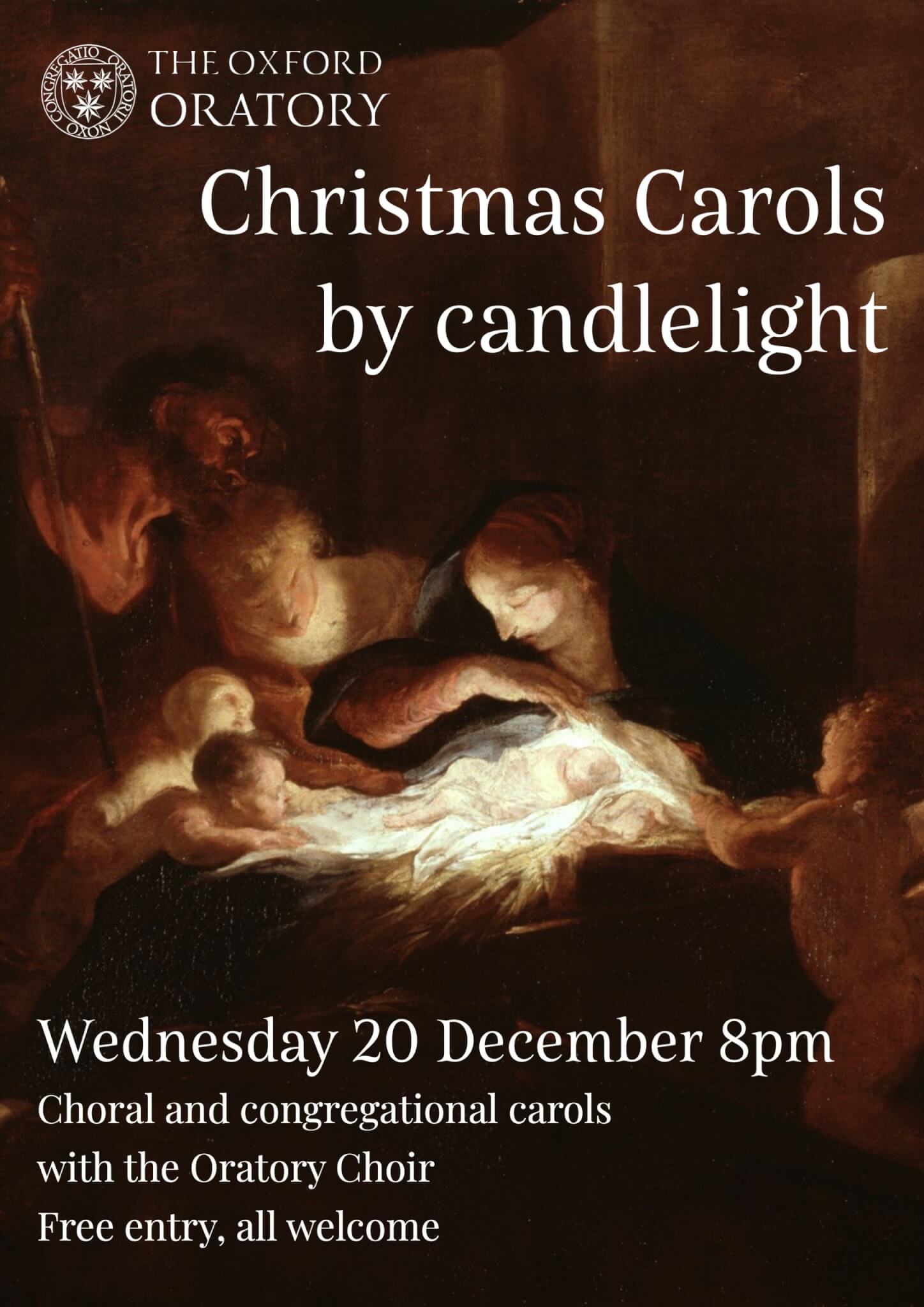
Celebrate Christmas with an evening of traditional carols and readings at the Oxford Oratory on Wednesday 20 December 20 at 8pm.
Join in with all your favourite carols, and enjoy some stunning choral music from the Oratory Choir. There’s no charge for entry so bring your family and friends too.
A story is told of a man walking along the road one day when he falls into a hole. The walls are so steep, he can’t get out. A doctor passes by, and the man shouts up, “Hey you, can you help me out?” The doctor writes a prescription, throws it down into the hole and moves on. Then a lawyer comes along, and the man shouts up, “Excuse me, sir, I’m down in this hole, can you help me out?” The lawyer writes out a note explaining his rights, throws it down in the hole and moves on. Then a friend walks by. “Hey Joe, it’s me, can you help me out?” And the friend jumps in the hole. Our man says, “Are you stupid? Now we’re both down here.” The friend says, “Yes, but I’ve seen this before. I can show you the way out.”
Advent is our time of preparation for the greatest moment in human history, when God stoops down from on high in order to lead us back to himself by showing us the way. He condescends to become one of us, not because he has to, or is forced to, but out of love — for the sake of friendship.
Our preparation for the feast of Christmas takes the form of a renewal of our acceptance that God comes so close as to be one of us. That he, even now, gives us that share in his divine life, his grace, which sanctifies and perfects us. His grace makes us righteous.
The beautiful “Advent Prose” which is sung at this time of year makes just that plea, that by God’s generosity, the sky will rain down the Just One who comes to make sense of past wrongs, to bring healing and peace and does this mostly by his presence, by his solidarity with us. And so we prepare to accept him anew in our hearts.
We are not asked to take on great fasts and penances in Advent (though a little of either doesn’t hurt), but rather to clear the decks of those empty promises of help, those things which don’t offer the real help we need (like the doctor and the lawyer in our story). It is a time to read the scriptures, perhaps the Gospel from Mass each day. It is a time to beef-up our prayer life, to return to our devotions with more heart and care. It is a time to begin again at showing charity for those around us in word and deed. We talk a lot about resolutions in Lent, but perhaps not so much at the beginning of the Church’s year, even though this too is an acceptable time of God’s favour.
So what in your life could benefit from a spiritual restart, a holy new beginning? It’s time to ask the Lord who is shoulder to shoulder with you to help you with just that.
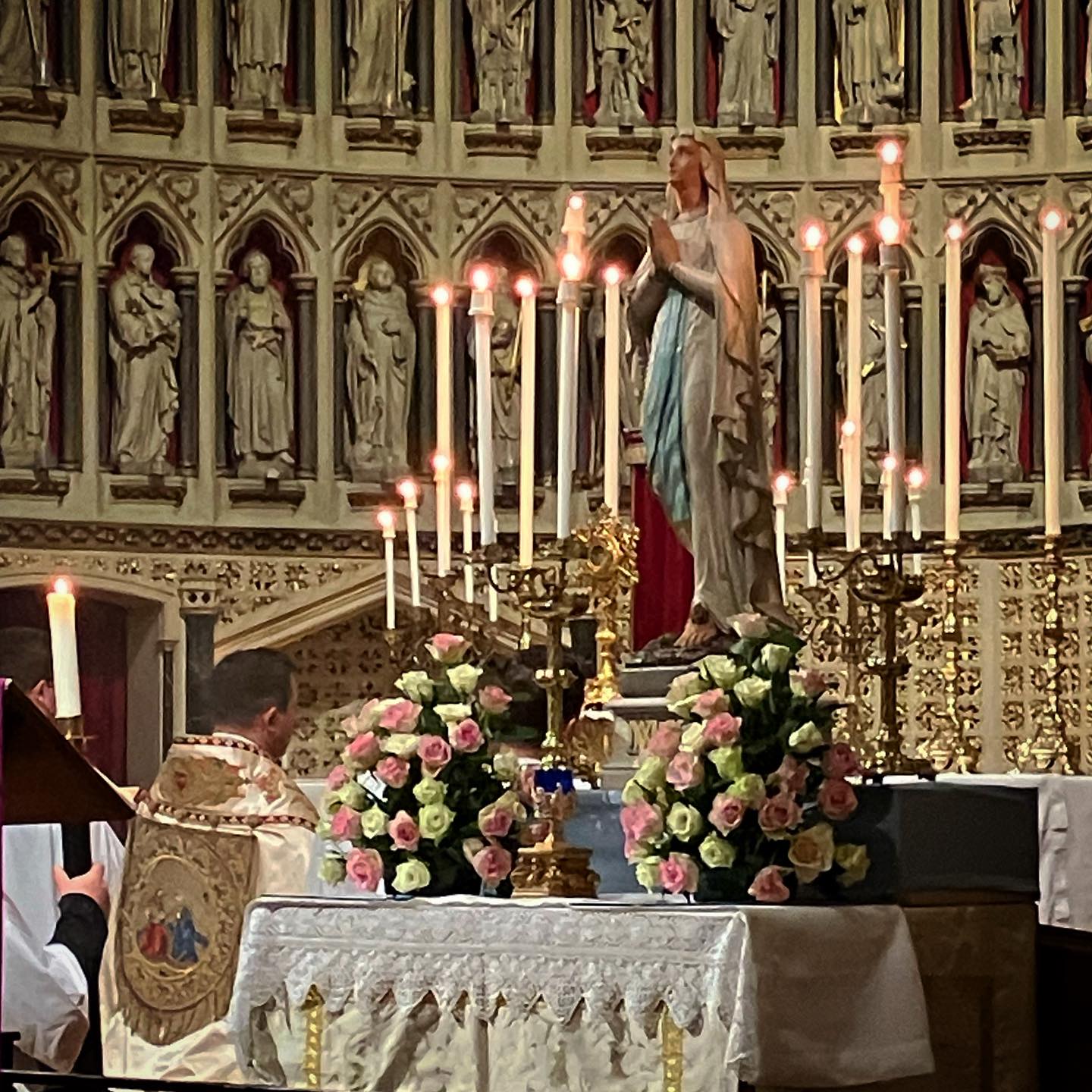
Three more days left of the Immaculate Conception novena. The feast begins with Choral Vespers on Thursday at 6:30pm. On Friday, we will welcome Monsignor Andrew Burnham as our guest preacher at the Solemn Mass at 6pm.
#oxfordoratory
Sunday 3 December Solemn Mass 11:00
Advent I
Mass for four voices Byrd
Ad te levavi animam meam Palestrina
Vigilate Byrd
Thursday 7 December Solemn Vespers 18:30
The Immaculate Conception
Invitatory Padilla
Ave maris stella Carpentras
Magnificat octavi toni Vivanco
Alma Redemptoris Mater Guerrero
Fantasia in C Byrd
Friday 8 December Solemn Mass 18:00
The Immaculate Conception
Missa Ego flos campi Padilla
Ego flos campi Clemens
Ave Maria a8 Victoria
Ave Maris Stella De Grigny
Sunday 10 December Solemn Mass 11:00
Advent II
Missa Conditor Alme Siderum Animuccia
Deus tu convertens Palestrina
Alma redemptoris mater Fernandez
Sunday 17 December Solemn Mass 11:00
Advent III (‘Gaudete’)
Missa Sancti Joannis de Deo Haydn
Gaude et laetare Sweelinck
Vox clamantis Esquivel
Le monde dans l’attente du Sauveur Dupré
Sunday 24 December Solemn Mass 11:00
Advent IV
Mass IX ‘Cum jubilo’ Plainsong
Pulchra es Monteverdi
O mysterium ineffabile Lalloutte
Monday 25 December Solemn Mass at Midnight
Christmas Day — Midnight Mass
Missa Pro Victoria Victoria
O magnum mysterium Lauridsen
Verbum caro Sheppard
In dulci Iubilo BWV 729 Bach
Solemn Mass 11:00
Christmas Day — Mass during the day
Missa Sancti Nicolai Haydn
Christe Redemptor Omnium Martin
Hodie Christus natus est Schütz
Finale from Symphonie No. 2 Widor
Sunday 31 December Solemn Mass 11:00
The Holy Family
Missa O magnum mysterium Victoria
Quem vidistis pastores Lassus
O magnum mysterium Victoria
Toccata on ‘Vom himmel hoch’ Edmunson
At this time of year, the Church attempts to cheer us up in the face of the cold weather and long nights by reading the sections of the Gospel that speak of Christ’s second coming at the end of the world. We might struggle to find comfort in these words as we hear of the trials and tribulations that his followers will undergo in those last days. And yet from the earliest days, Christians have looked forward to Christ’s return with joyful hope.
While we do not know when Our Lord will come again — ‘Of that day and hour no one knows, not even the angels of heaven, nor the Son, but the Father only.’ (Mt. 24:36) — it isn’t meant to be a complete surprise to us. We have been waiting for that day and hour for a very long time.
The end of the world isn’t the one off event that we often think it is. Since God became man and entered this world, the boundaries between heaven and earth have got a bit blurred. Bits of heaven keep poking through. We see that in the lives of the saints, when they do extraordinary things and work wonderful miracles. But we see it in our own lives too. Christ is already present in the Church, in the sacraments, in the lives of individual Christians. So the second coming — what we think of as the ‘real’ end of the world — is just about revealing to other people what we already know to be true.
The Christian life helps bring that day closer. Each day, we pray: ‘Thy kingdom come’. Not only that prayer, but every prayer, every encounter with Christ in the sacraments, every one of our good works drags this world one step closer to heaven.
We have nothing to fear when Christ comes again. Or at least we shouldn’t, because we live with him here and now. This will not be an encounter with a stranger. We should know what to expect. It will be a reunion, rather than an introduction. We should long for his second coming, if we are truly living with him now.
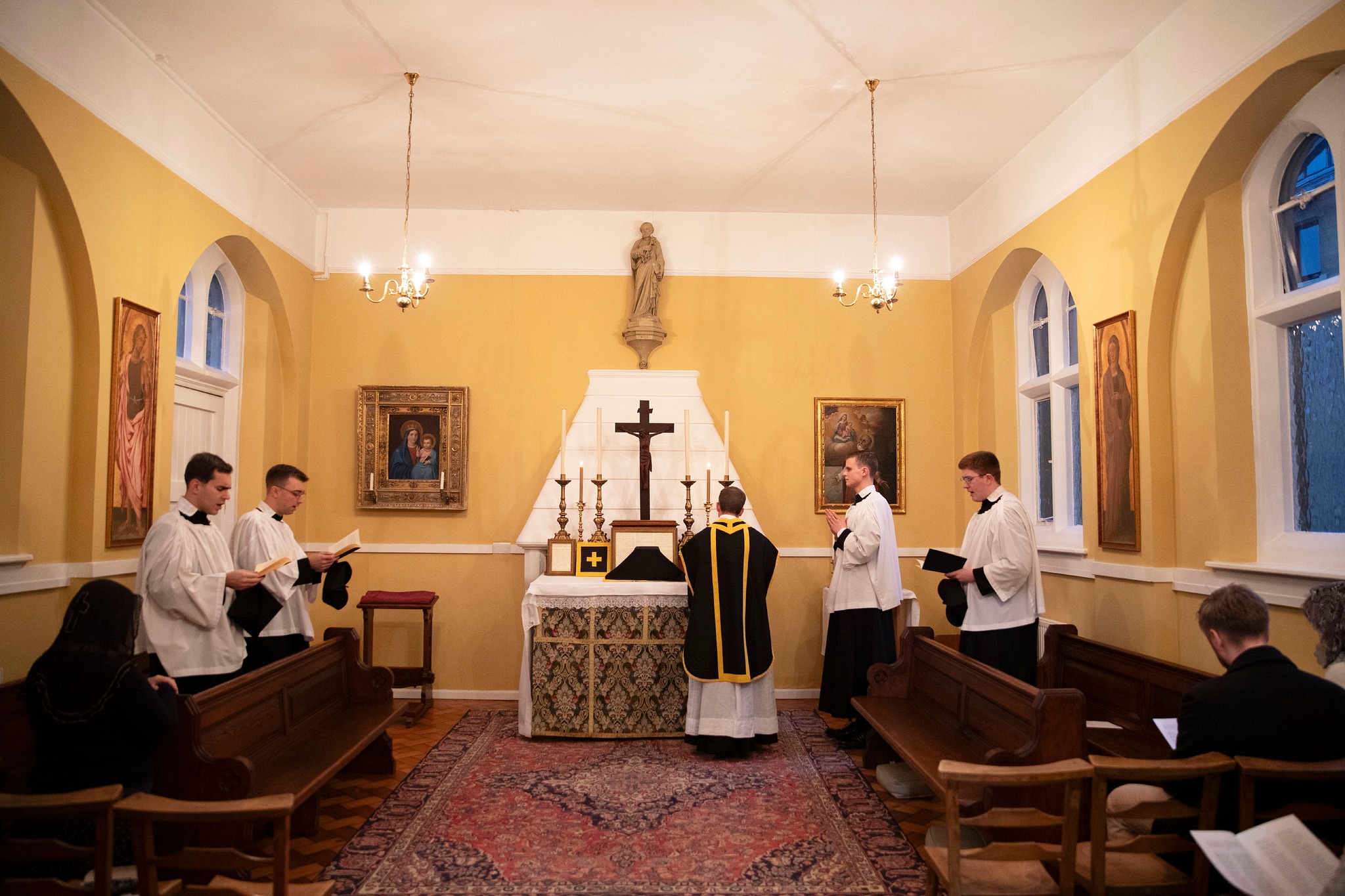
Annual Sung Requiem Mass last Saturday with the Secular Oratory, for the deceased members of the Secular Oratory throughout the world (we don’t yet have any of our own) and for the deceased loved ones of our own members.
#oxfordoratory
Envy is one of the seven capital sins. It is a root sin that produces a number of poisonous offshoots. What is envy? It is sadness at the sight of another’s goods, opportunities, talents or advantages. It is this discontent which makes us unhappy and dissatisfied with what we actually have ourselves. We can be envious over another person’s possessions such as his house, his car or his swimming pool. We can envy another’s reputation, position, opportunities and influence or accomplishments. Remember how in Peter Schaffer’s play Amadeus, the Court Composer Antonio Salieri becomes consumed with jealousy of the young upstart Mozart, envious of his far superior musical talent.
St Thomas Aquinas notes that the progress of this vice has a beginning, a middle and an end. Initially, envy itself may lurk below the surface but it soon comes out in sarcasm, in bitter comments, in nasty criticisms. When we begin to be jealous of someone, we may start quietly undermining their reputation, through gossip or detraction.
For example, your neighbour is building a new swimming pool in his garden. You start to brood on this — your garden isn’t big enough for such a large status symbol — so you start to talk about it, a little disparagingly. ‘Isn’t it rather ostentatious?’ you remark. Or you casually question how your neighbour could possibly afford it ‘in these hard times’. And before we know it, our criticism turns from the pool, which we now hate (can’t the local council put a stop to it?) and becomes focussed on the neighbour himself. At first it was the swimming pool that disturbed our rest at night, now it is the man who owns it who keeps us awake. When we hear that he has been elected President of the Golf Club, we feel sick with envy, but when we hear that his son has been expelled from his school, we can barely suppress our glee. We no longer pretend to be objective or just. We are sad when our neighbour is successful and we rejoice when things go badly for him.
The awful fruit of this vice is hate. What began as a rather silly envy of someone else’s possessions, reputation or good fortune ends as a hatred. First we hate whatever it is they have and we don’t, even though it was clearly something we wanted because it was good in itself. Yet now we have grown to loathe it. But not quite as much as the person who has that thing or else, is that person we would like to be but which we are not: rich, clever, good-looking, talented, happily married, a parent blessed with wonderful, gifted and well-mannered children and so on.
Whatever it may be, when we permit envy to gain entrance, we soon lose any sense of perspective or reality. It is desperately sad, since envy and jealousy are so utterly corrosive, eating away at the soul, destroying our ability to love, without which we find ourselves far from God. Saint Augustine saw envy as the diabolical sin. ‘From envy,’ he says, ‘are born hatred, detraction, calumny, joy caused by the misfortune of a neighbour, and displeasure caused by prosperity.’ Furthermore, ‘He that is jealous is not in love’ and therefore not in God. St Cyprian can have the last word. ‘While envy leads us to hate our neighbour for their prosperity’ (or indeed, whatever) ‘love and patience drive it out.’ Let us pray for those virtues and to be free from envy and jealousy in everything.