And is it true?

It is one of the curious features of the modern Christmas that as its secularisation and its commercial exploitation seem to gather momentum each passing year, so too does a rather interesting phenomenon. Throughout the land, thousands of people, from every conceivable background and belonging to every conceivable type, come to church to take part in (or perhaps only to watch) the Midnight Mass of Christmas. And though many of them will tell themselves that they do so because it is “a lovely idea”, it is clear that they are seeking something more: not a picturesque fantasy, but a reality far more profound than the rationalist expectations now foisted upon them. For though the story of God’s birth as a baby in Bethlehem long ago may be easily sentimentalised, the meaning it conveys may not; and it is a meaning which confronts the violence and pride of humankind and its pretensions to contain reality within the boundaries of his own understanding, and to dismiss even the notion of revealed religion.

And is it true? And is it true,
This most tremendous tale of all…
The Maker of the stars and sea
Became a child on earth for me?

It is a truly amazing thing that we are celebrating now — the Incarnation — the doctrine that God himself came down in great humility as a tiny child, took human flesh so that we might be saved. That was once considered by all Christians as one of those irreducible teachings of the Church — along with so many others which have been questioned or watered down and even denied in more recent times. However, it is still the faith of the Church. The words of St John which we heard at the Mass of Christmas Day, and which are read at nearly every celebration of the Extraordinary Form of the Mass, ring as true to us now as they did when they were first written by the Beloved Disciple: ‘In the beginning was the Word, and the Word was with God and the Word was God…and the Word became flesh and dwelt among us, full of grace and truth.’

I recall a Christmas hymn, not often sung these day, which contains the verse:

O wonder of wonders, which none can unfold:
The Ancient of Days is an hour or two old;
The Maker of all things is made of the earth,
Man is worshipped by angels, and God comes to birth.

The Incarnation of our Lord, which we are celebrating in these days with especial fervour and gratitude, will remain mysterious. It must. But there is no trick here to be exposed. Neither is the Christmas story a pretty seasonal confection but a truth passed down to us and taught in great earnest, since our salvation depends on it. The baby in the manger has power to draw us close to Himself. It is an almost irresistible attraction — Grace and Truth. When we go to Communion, we do so, knowing that as we receive Him, we have “come to share in the divinity of Christ, who humbled himself to share in our humanity.”

And is it true? (asks Sir John Betjeman) For if it is,
No loving fingers tying strings…
No love that in a family dwells,
No carolling in frosty air,
Nor all the steeple-shaking bells
Can with this single truth compare —
That God was Man in Palestine,
And lives today in Bread and Wine.
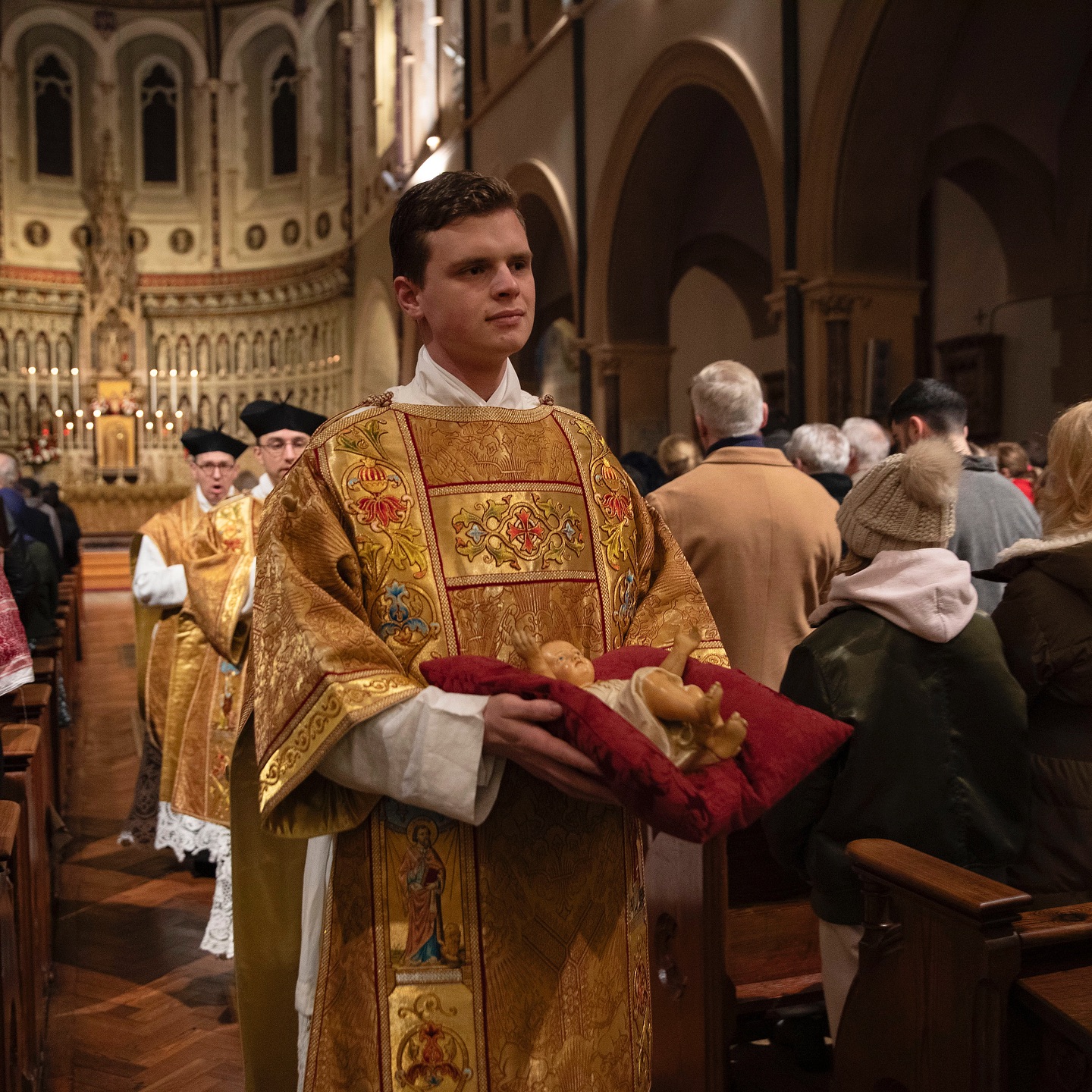
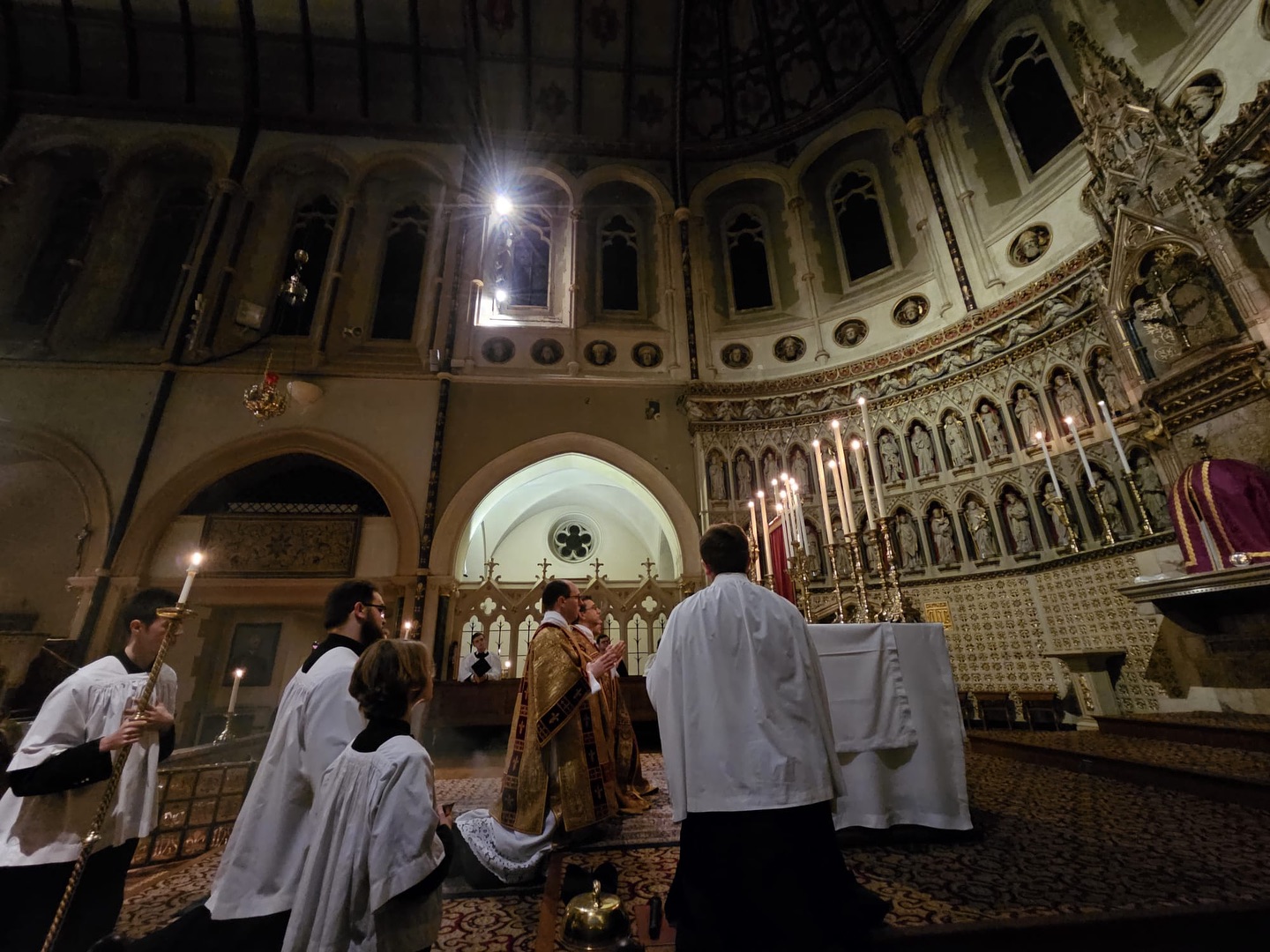
Merciful and loving God, whose will and gift it was that our Lord Jesus Christ humbled himself in order that he might raise up the whole race of men, stooping low to exalt the lowly, God born of a Virgin to restore in man the lost image of heaven: grant that this people of yours may remain always close to you, and that those whom you have freely redeemed may ever give you zealous and acceptable service. Prepare the minds of the faithful, and subdue unbelieving hearts, to welcome the surpassing mystery of your Son’s human birth. Who lives and reigns with you in the unity of the Holy Spirit, God, for ever and ever.

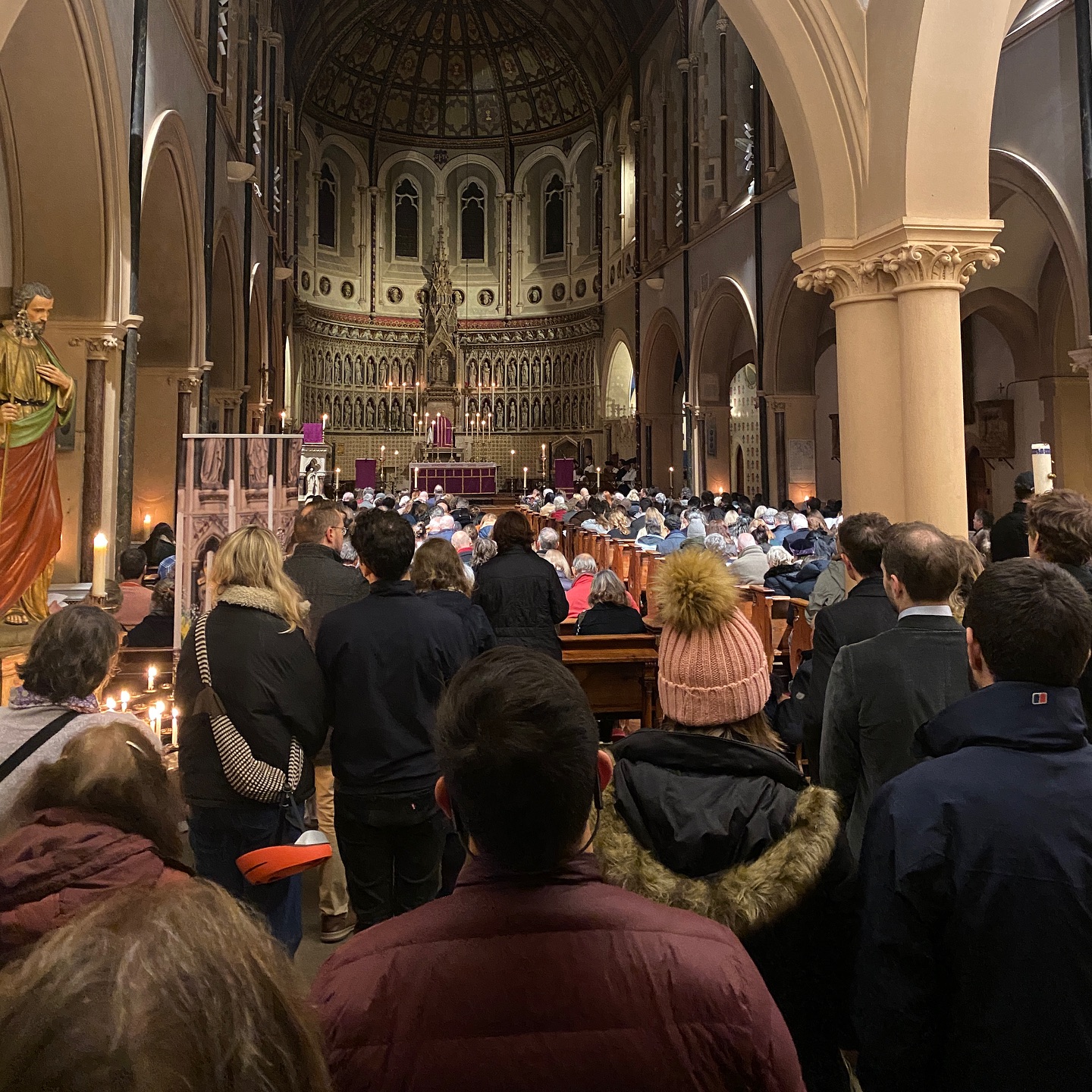
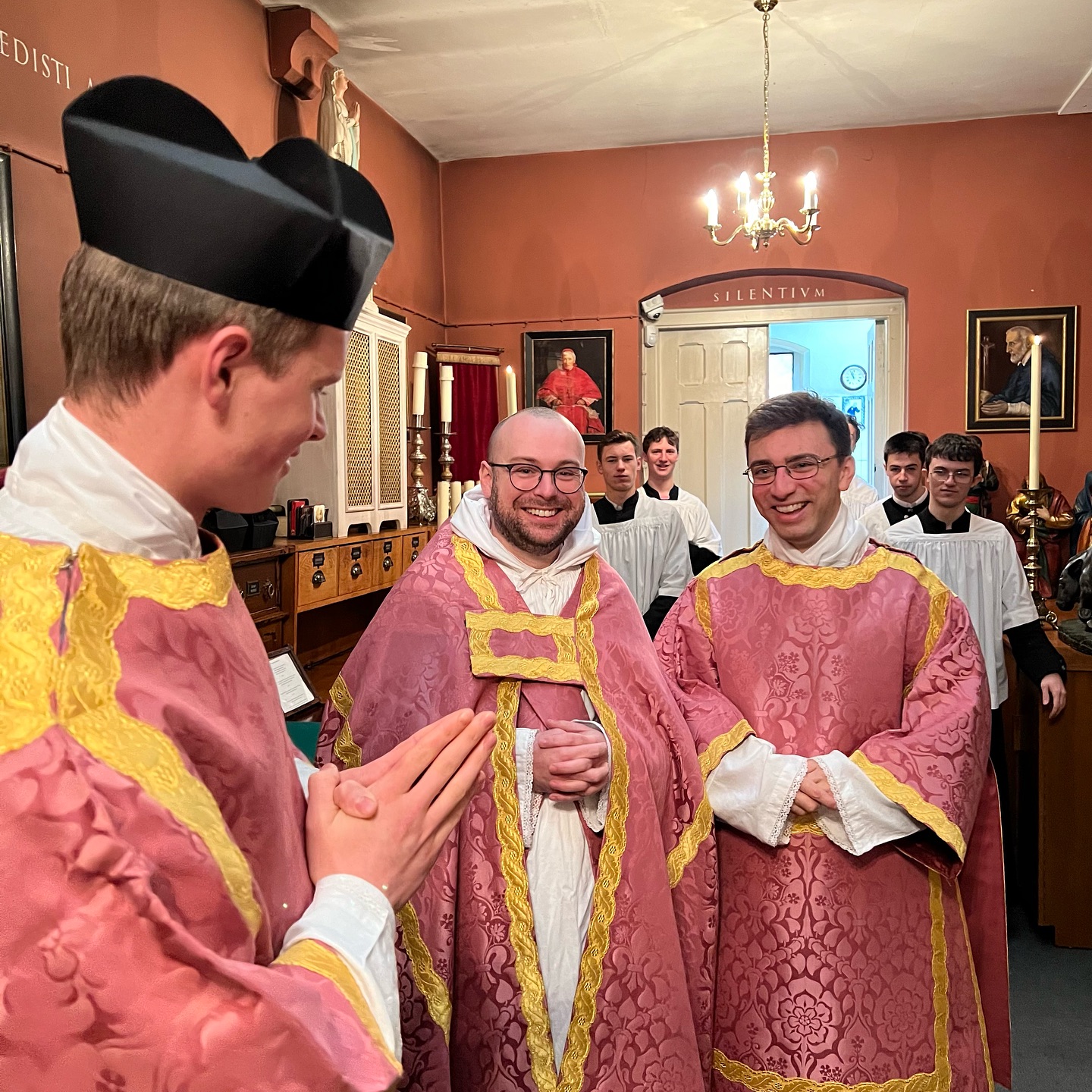
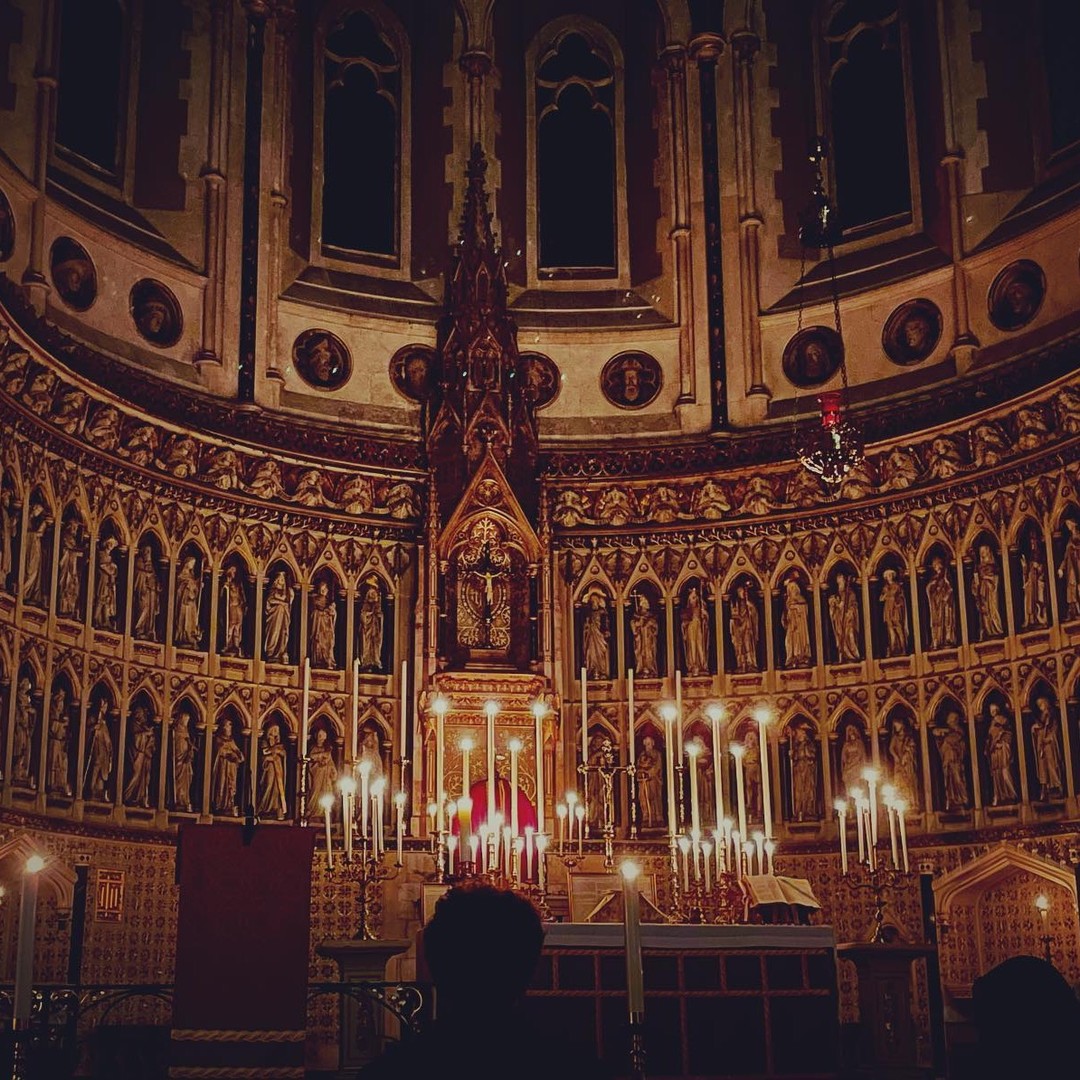
Benediction at the conclusion of the Christmas Carol Service on Wednesday.

#oxfordoratory

Photo by @lawrenceop

View on Instagram

We welcomed a huge number of new faces to join us for our Christmas Carol service last night. It is great to share the Christmas Gospel with so many people, and the spectacular music from the Oratory Choir helped raise our hearts and minds to God. #oxfordoratory

View on Instagram

O Come Let Us Adore Him

With only a very few days left now until 25 December and the great feast of Our Lord’s Nativity it is, as we so often hear sung now, beginning to feel a lot like Christmas. The smell of Christmas trees and cakes being prepared wafts through our houses. Cards come through our door with the familiar handwriting of great aunts or upside-down stamps of Jacobite friends. The High is crowded with panic-stricken last-minute shoppers and the roads are jam packed with the hoards of Oxonians who have remembered that “one more thing” which has to be got.

Amongst the jollity and the busy-ness it can be hard for us to capture something of that moment, some 2000 years ago, when the Word was made Flesh, something of the intimacy of that moment in the manger, or very simply of the quiet prayerfulness of the day “when ages beyond number had run their course…the whole world being at peace” as the Martyrology has it. There is a remarkable contrast here on the Woodstock Road between the crowds heading down to the town and the interior of our church. Here, now, as on every day, this house of God, this Bethlehem, offers an oasis of prayer and of stillness where any one of us can come, kneel, and simply enjoy being in the Presence of Almighty God amidst that peace which the world cannot give.

We do all rush around at this time of year. There is much to be done and that is no bad thing — we want to make Christmas the best it can be for those whom we love and with whom we wish to share the feast of Our Lord’s Incarnation. But let us not forget to prepare ourselves, to sweep out the manger of our hearts by a good confession, to unwrap the gifts the Good Lord wishes to bestow upon us in prayer and in sacrament, and to make our own soul a fitting place for Him to be born.

Christmas Mass Times 2023

Wednesday 20 December
Carol Service with the Oratory choir at 8pm
Free entry, all welcome

Saturday 23 December
Mass at 10:00 and 18:30
Confessions 9:00–10:00 & 14:00–18:30

Sunday 24 December — Christmas Eve
Sunday Masses at 8:00, 9:30, 11:00
Confessions before all morning Masses
Sung First Vespers of Christmas at 17:30
First Mass of Christmas with carols at 18:30
The church is closed after Mass until 23:00

Carols from 23:45
Midnight Mass at midnight

Monday 25 December — Christmas Day
EF Latin Mass at 8:00
Sung English Mass at 9:30
Solemn Mass at 11:00
Solemn Benediction at 17:30
No confessions or evening Mass

Tuesday 26 December
Mass at 10:00 only

Wednesday 27 December – Friday 29 December
Mass at 10:00 and 18:00

Sunday 31 December — New Year’s Eve
Sunday Masses at 8:00, 9:30, 11:00, 18:30
Solemn Benediction and Te Deum at 17:30

Monday 1 January — New Year’s Day
Mass at 10:00 only

Saturday 13 January
Epiphany Procession & Benediction at 15:30

Confessions
20 minutes before all Sunday & weekday Masses (except as noted above)
Saturday 23 December 9:00–10:00 & 14:00–18:30

Ad litteram

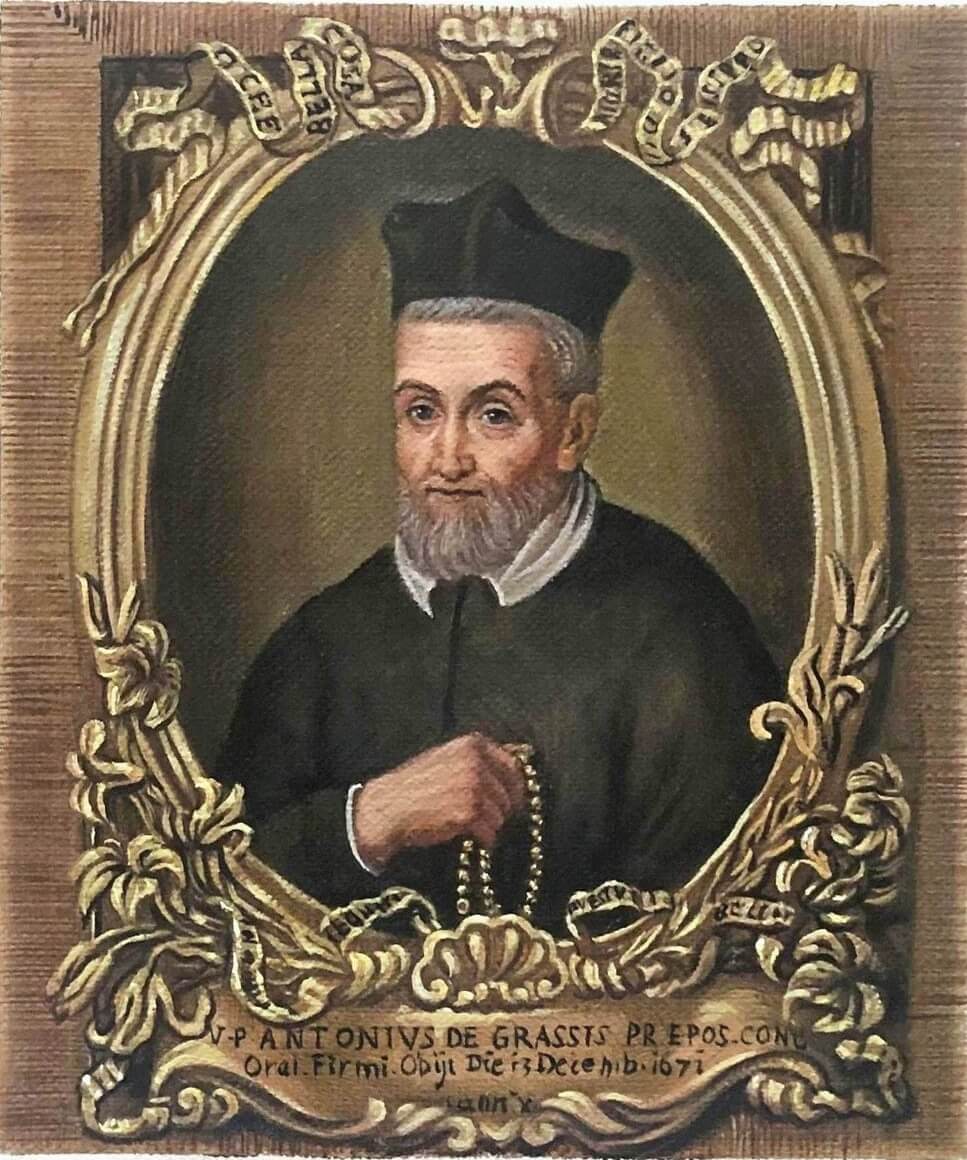
This Friday is the feast of Blessed Anthony Grassi of the Oratory in Fermo. There will be Solemn Benediction in his honour at 6:30pm.

When we examine the outward signs of Blessed Anthony’s sanctity, we see that he prayed for six hours every day and was miraculously saved from a lightning bolt while at the Holy House of Loreto. In fact, he is such a shining example of holiness that any attempt to imitate him may seem daunting. Unlike Saint Philip, he did not even have a period of discernment at the beginning of his life, but leaves us liable to think that unless we have joined religious life at the age of sixteen (following a childhood of exemplary sanctity) we have no hope of relating to him. However, we must remember that Divine Providence, which he trusted in so deeply, leads us all along different paths and, on each of these, Blessed Anthony’s example lends us encouragement.

Perhaps the most obvious is his appeal to the young and devout who worry whether it is possible to sustain their present piety. To these Blessed Anthony shows a life of eighty years, constantly guided by the Divine Will and never faltering in progress towards virtue. As a child, he attended daily Mass and listened to sermons so intently that he would repeat them to his playmates in a makeshift chapel he constructed in his home. This fervour never ceased and, after joining the Congregation of the Oratory in Fermo, he made the firm resolution to be a perfect imitator of Saint Philip and to follow the Oratorian rule ad litteram (to the letter). He died sixty four years later, having achieved this, with even his countenance visibly changed to mirror that of Our Holy Founder.

At this time of Advent and approaching the New Year, many of us who are not in a state of youthful perfection know how they ought to improve and may be making resolutions to do so. For his part, Blessed Anthony realised that his path to holiness lay in the Oratorian vocation and decided to follow this perfectly. Not only does he show us that it is indeed possible to follow a rule of life without faltering, but the fullness of every virtue which he achieved through this should encourage each of us to proceed diligently on the path we know will lead us to holiness.

And when we fail, we can look at his treatment of penitents. He never said much in the confessional except enough to reveal hidden sins, encourage contrition, and excite a new fervour for the service of God. Though he himself seems to have never done anything seriously wrong, Blessed Anthony understood human weakness and believed in new beginnings, never tiring of calling sinners to repentance and putting them back on the path to holiness.

Finally, as one biography puts it: “He reminds all the faithful to seek before all else God and to remember that on earth they live to know God, love Him, and faithfully serve Him that they may reign with him in heaven. Towards this every man should turn all his labour and concern in order to gain eternal happiness and glory in heaven.” Perhaps this is the simplest rule which each of us should follow, like Blessed Anthony, ad litteram.