A Week of Prayer

The Church requires all priests to make a spiritual retreat each year — a week away from pastoral work to give some attention to their own spiritual lives, to pray and to rest. Christ took the disciples away from their public ministry to rest (Mark 6:31), and often escaped himself to be alone with his Father (e.g. Matt. 14:23, Mark 1:35).

A week-long retreat in a monastery will not be possible for those who have work, studies or families to take care of. But the busier we are, the more essential it is that we take time in the course of the year to give our relationship with God some more than ordinary attention. In many ways, the Church builds this time into the year for us, by encouraging us not just to attend Mass on Sundays and major feast days, but also to rest from our usual activity on those days and devote the time we save to extra prayer, study and works of charity.

In the fourth century, when the Roman Empire became Christian, the emperors suspended all law courts and businesses from functioning during Holy Week so that all the faithful would be free to spend the week in church. That practice continued in Christian countries even into the nineteenth century. All Christians were given time off to devote the whole week leading up to Easter to more intense spiritual activity.

Lent is a time of preparation for Easter. That preparation takes the form not only of prayer, fasting and almsgiving but also of planning. Without a plan, Holy Week and Easter may pass us by like any other ordinary days. The thought of Easter rapidly approaching should remind us to make some more practical plans for the Sacred Triduum. The full schedule for the liturgies and other devotions taking place that week in church is now available on our website. Do we know what time we will spend in church? Do we know what else we will do in those days? Will we make sure in advance that the house is clean, the shopping is bought and the laundry is done so that we are free to focus on God during those days that he was so especially focused on us and our salvation?

Fr Walter Ciszek, in his book He Leadeth Me, speaks of the retreats he organised for his fellow prisoners in a Soviet prison camp. They managed to spend their days in prayer without any break from their work in some of the toughest conditions human beings have ever faced. Fr Ciszek and his fellow priests made this possible by the rigorous planning they put in ahead of each period of retreat, in order to make the most of the little time they had available to them. It is possible for all of us to grow in our love of God — but we need to plan how we are going to do it.

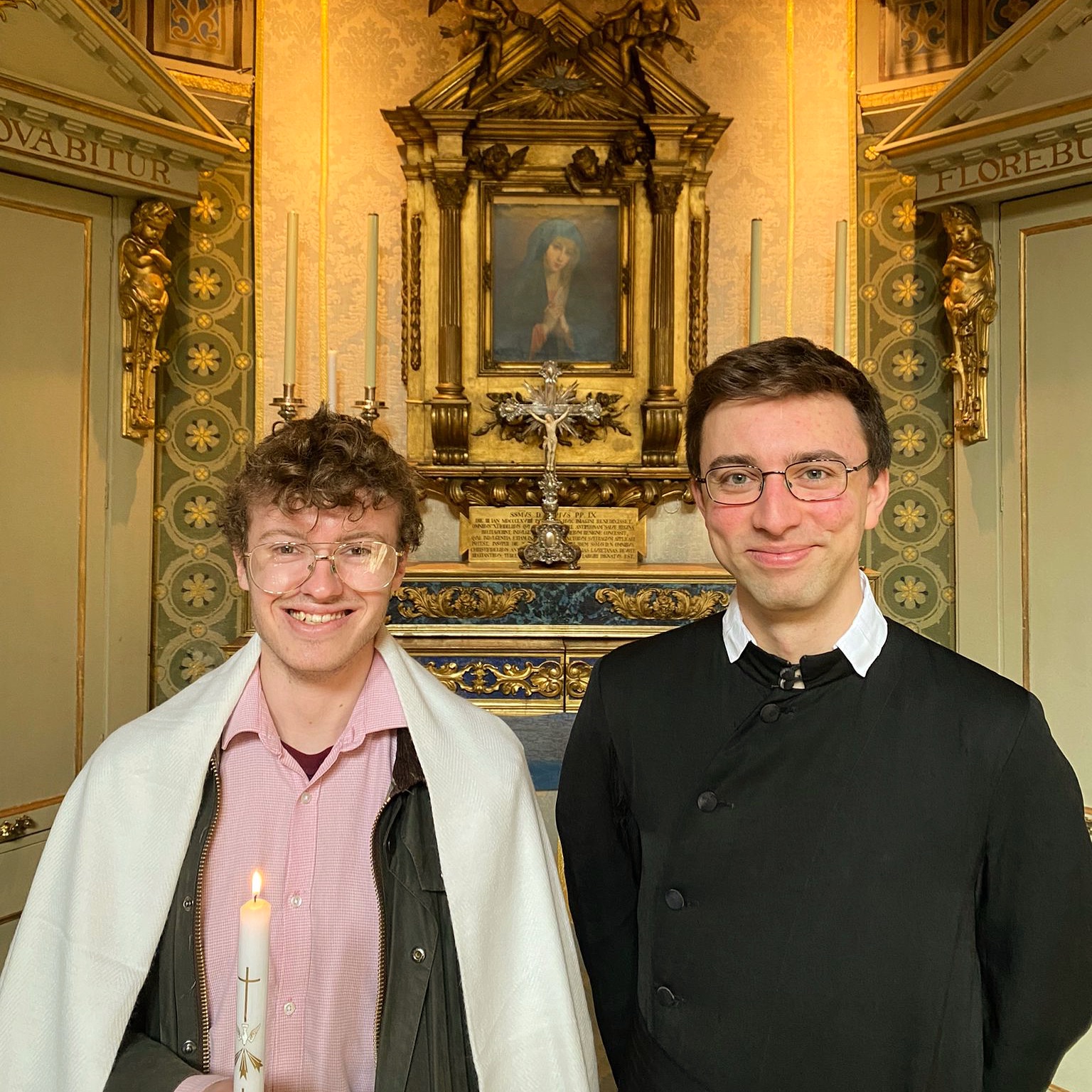
The altar of Our Lady of Oxford came originally from the private chapel of Hartwell de la Garde Grissell on the High Street. Grissell’s chapel became the place where many entered the Catholic Church, and these new Catholics all received their First Communion from this altar. Today, this same altar served as a fitting place to continue a 150 year old tradition. Many congratulations to Edward, who was baptised today, and was confirmed and received his First Holy Communion at Grissell’s altar. #oxfordoratory

View on Instagram

How’s your Lent going so far?

We are not quite half-way through Lent, the penitential season, and by now it is not unusual to hear the complaint: “I’ve broken every one of my resolutions.” If that is the case, never mind, just pick up where you left off and start off all over again. It’s the intention that counts.

Naturally, we want to do as well as we can, to be as perfect as can be. However, experience shows us that we are a long way off perfection. But will eating a biscuit in Lent really bar us from Heaven? Of course not. But that is not why we make those Lenten sacrifices — or because eating or drinking less may be good for us for health reasons. We do so because we are disciples of Christ and are seeking to learn from his teaching and to imitate his example.

On the First Sunday of Lent, we read, as we do every year, the account of the Temptation of the Lord in the desert. This year, we heard Mark’s somewhat pared back version of the incident, mentioned, it almost seems, as if in passing. But our minds went back, I’m sure, to the fuller stories in Luke and Matthew’s Gospels, which tell us how Jesus was tempted. It’s not necessary to rehearse them here. All that is necessary is to recall that he was tempted. We learn from his example how to deal with those temptations, and to learn that it is essential and indeed possible to say say “No” to ourselves and not simply to give in to our every whim and desire.

If we have an uncontrolled habit of snacking between meals, or spending hours on social media or endlessly checking our mobile phones, or pouring ourselves a drink (just the one?), we may find ourselves enslaved, unable, or so we think, to free ourselves from whatever addiction it is we are subject to. Lent is a good time to seek our freedom again, and to re-evaluate our relationship with our phones, with food and drink, or Ebay and Amazon. It can be a struggle, and present a real test of our love for God and our self-control. God allows us to be tested not because he does not know how strong we are, but because we do not know. We are all of us tested, tried, by the stresses and pains of life, by the burdens others lay on us, by the ceaseless challenge to respond with love to those whom we find difficult to love. When we succeed in overcoming this or that temptation, we are doing so in his strength, not ours. When we suffer some temptation, we must see it as an opportunity to grow, in holiness and in virtue. Only when we are tempted do we have the chance to triumph. When we choose to try to resist temptation, standing firm, having recourse to the grace of the Sacraments, then every temptation becomes an occasion of virtue.

Every temptation is an opportunity — to be faithful or not. The saintly Curé of Ars, John Vianney, told someone who was struggling with some temptation to imagine Our Lord standing beside him, neither judging nor condemning him as he struggled, but saying, “Ah, so you do love me.” There can be no virtue without temptation. “God is faithful, and he will not let you be tempted beyond your strength, but with the temptation will also provide the way of escape, that you may be able to endure it.” (I Cor. 10:13) As we continue our Lenten journey, let’s keep in mind that in our weakness, the Lord will show himself to be strong and will hear our prayer “lead us not into temptation.”

The prayer of surrender which many use each day, can be a great help: O Jesus, I surrender myself to you, take care of everything. A simple enough prayer to make. Worth trying.

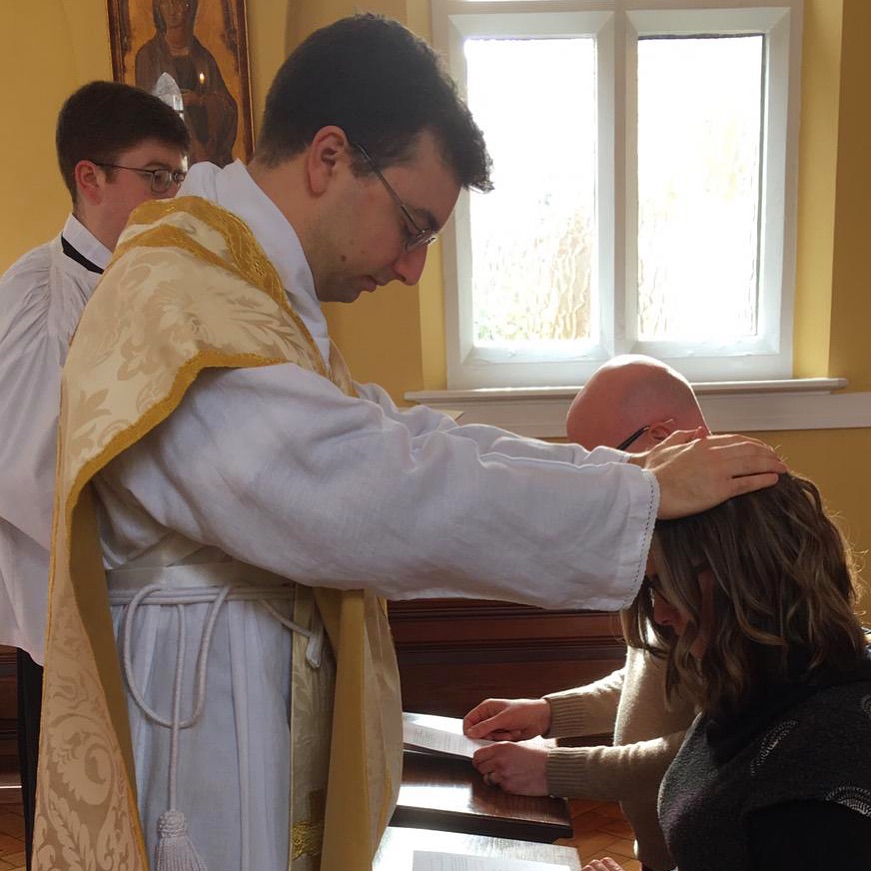
Charlie was received into the Church today, confirmed with the name “Aloysius” and received his first Holy Communion. In the background, another Aloysius can be seen receiving his own first Communion. #oxfordoratory

View on Instagram

Today we celebrated the reception of Kevin and Melanie into full Communion with the Catholic Church.

Christians who are already baptised are “received” into the Church (and are not technically “converts”) because baptism joins a person to Christ’s Body — the Church — wherever it may take place. The fullness of Communion with the Church comes about by receiving Christ’s Body for the first time in the Eucharist.

Please pray for all those we have baptised or received into the Church recently, and carry on praying for those who are still on their way!

“We entreat you, brothers, as earnestly as we are able, to have charity, not only for one another, but also for those who are outside the Church. Of these some are still pagans, who have not yet made an act of faith in Christ. Others are separated, insofar as they are joined with us in professing faith in Christ, our head, but are yet divided from the unity of his body. My friends, we must grieve over these as over our brothers. Whether they like it or not, they are our brothers; and they will only cease to be so when they no longer say ‘Our Father’.” — St Augustine

View on Instagram

March Music

Sunday 3 March Solemn Mass 11:00
3rd Sunday of Lent
Missa Inter vestibulum  Guerrero
Rex autem David Ribera
Tristis est anima mea Kuhnau

Sunday 10 March Solemn Mass 11:00
4th Sunday of Lent (‘Lætare’)
Mass in the Dorian Mode Howells
Laetatus sum Vaet
Manus tuae Morales

Sunday 17 March Solemn Mass 11:00
Passion Sunday
Missa Quarti toni Victoria
Voce mea Porta
Ave verum Byrd

Sunday 24 March Solemn Mass 11:00
Palm Sunday
Pueri Hebræorum Victoria
Ingrediente Domino Malcolm
Missa brevis Palestrina
Christus factus est Anerio
Improperium Palestrina
Vadam et circuibo Victoria

Thursday 28 March Solemn Mass 20:00
Maundy Thursday
Missa Vinum bonum Lassus
Ubi caritas Duruflé
Dominus Jesus in qua nocte Palestrina
Pange lingua Victoria

Friday 29 March Solemn Liturgy 15:00
Good Friday
Christus factus est Bruckner
St John Passion Victoria
Popule meus Victoria
Crucifixus a8 Lotti
Versa est in luctum Lobo
O suavitas et dulcedo de Monte
Crux fidelis King John IV of Portugal
Lamentations I Tallis

Saturday 30 March Easter Vigil 21:00
Holy Saturday
Missa Tulerunt dominum meum Praetorius
Aurora lucis rutilat Lassus
Dum transisset Taverner
Chorale Improvisation sur ‘Victimae Paschali Laudes’ Tournemire

Sunday 31 March Solemn Mass 11:00
Easter Sunday
Coronation Mass Mozart
Christus resurgens Allegri
Surrexit a mortuis Widor
Hallelujah Handel
Prelude and Fugue in G BWV541 Bach

Solemn Vespers 17:00
Deus in adjutorium Croce
Haec dies Sheppard
Magnificat tertii toni Vivanco
Ecce vicit leo Philips
O salutaris hostia Howells
Tantum ergo Howells
Regina Caeli Howells
Finale from Symphony 6 Widor

The Lenten Fast

On Ash Wednesday we asked the Lord to grant “that we may begin with holy fasting this campaign of Christian service, so that, as we take up battle against spiritual evils, we may be armed with weapons of self-restraint”. We were told to give alms, and pray, and fast. Self-discipline, penance, works of charity and, particularly, fasting will be demanded of us in the liturgy for these forty days. The ancient preface of Lent is all about fasting, by means of which God restrains our faults, raises up our minds, and bestows virtue and its rewards. We speak of the Solemn Lenten Fast — in fact, the Dutch and Afrikaans word for Lent is Die Vaste or Vastyd, “The Fast” or “The time of fasting”.

Fasting has always held a special place in Jewish and Christian religious thought and practice. Both Elijah and Moses fasted for forty days before seeing God. St John the Baptist and his followers fasted. The Lord himself fasted in the desert, not for his own needs, says Dom Guéranger, but to serve as an example for us. The Church has sanctified, encouraged, and sometimes mandated the practice of fasting. Why? According to St Thomas Aquinas, to “bridle the lusts of the flesh, to raise the mind more freely to the contemplation of heavenly things, and to satisfy for sins”. He quotes St Augustine who says, “Fasting cleanses the soul, raises the mind, subjects one’s flesh to the spirit, renders the heart contrite and humble, scatters the clouds of concupiscence, quenches the fire of lust, kindles the true light of chastity.”

For more than a thousand years, the Lenten fast was of the strictest kind. Abstinence from meat, eggs and dairy products was required of all Catholics for the entirety of Lent, and every day except Sunday was a day of fasting — with only a single meal allowed, and only after sunset. In more recent centuries this fast was mitigated, and by the middle of the twentieth century eggs and dairy were permitted and abstinence from meat only required on a couple of days each week. Fasting was still obligatory, but a small breakfast and an evening snack were permitted. Today, the only days of obligatory fasting for us are Ash Wednesday and Good Friday, and even then we are allowed one meal and two small snacks (which is what many of us would eat ordinarily anyway). So what are we to make of the liturgy’s assumption that we are all engaged in a prolonged and difficult fast from Ash Wednesday to Holy Saturday?

Some people have said that fasting means to give up doing something, so in Lent we should give up all sorts of bad behaviour: refraining from hurtful words, sadness, anger, worry, bitterness, selfishness, and so on. But surely we should be trying not to act in these ways throughout the year? Fasting has never been seen as giving up what is bad — that goes without saying. Rather, to fast is to deny ourselves something that is good for the sake of a greater good. We reduce our eating not because it is bad — or because we want to lose weight or be healthier — but because in denying ourselves we show the Lord that we are sorry for our sins, for all those times when we have indulged ourselves and let our appetites lead us away from God. We take our attention away from food and drink to focus it on repentance and prayer. We give up something good for the sake of him who gave up his life for us.

St John Henry explains how we should keep Lent, especially at a time when the rules of fasting have been mitigated, in a sermon he gave in 1848 (when, despite several relaxations, Lenten fasting was still much stricter than today). He says:

…fasting is only one branch of a large and momentous duty, the subdual of ourselves to Christ. We must surrender to Him all we have, all we are. We must keep nothing back. We must present to Him as captive prisoners with whom He may do what He will, our soul and body, our reason, our judgement, our affections, our imagination, our tastes, our appetite.

The great thing is to subdue ourselves; but as to the particular form in which the great precept of self-conquest and self-surrender is to be expressed, that depends on the person himself, and on the time or place. What is good for one age or person, is not good for another.

Newman teaches that fasting from food is appropriate in people or places where the struggle against sin is a bodily struggle: against lust, greed, gluttony, drunkenness, and violence. But when fasting rules are relaxed, it is a reminder to us that there are other sins and weaknesses to mortify in us — sins of the intellect, the affections, the will, sins of pride — which need subduing even more than our bodies. He suggests that we mortify our curiosity for news and information (how necessary this is today, with constant exposure to media and social media), and mortify our reason (taking time to hear the opinions of others, and getting into the habit of mistrusting our own views in order to properly try them and purify them). None of these involve giving up that which is objectively bad, but all will involve some effort and renunciation on our part — a real “fasting”.

Lent is a sacred time in which we double our efforts to reject sin, to amend our behaviour, and move from darkness to light. But it is also a time when we offer to the Lord true sacrifices: denying ourselves in little ways and big ones to tell him — and to show our selves — that we love him above all things and repent with our whole heart for having offended him.