Go back to Jerusalem

The gospel readings at Mass during the Easter Octave give us the Resurrection appearances of Christ after Easter: to the two women, to Mary Magdalene, to the Eleven apostles, to the two disciples on the Road to Emmaus. Each is given to prove that he is truly risen, truly alive — he talks with them, eats with them, allows them to touch him. Each one also tells us how the encounter with the Risen Lord changed people and transformed his disciples. And each account shows us something about what the resurrection of the Lord should bring about in us too.

This is seen especially in today’s Gospel, the Disciples on the Road to Emmaus. The two disciples were burdened by sadness and a loss of hope. We are told that their faces were downcast. In talking to the stranger, the Lord Jesus they were not able to recognise, they used the past tense: ‘We had hoped’. We had hoped that Christ would be like this, that he would do that, that God would act in this way. But now Christ was dead and their hopes were dashed. They were walking away from Jerusalem, the city of death and darkness, as they had come to experience it. But in reality, Jerusalem was the city where life had triumphed over death, light over dark, and it would be the city where the risen Lord would pour out his Holy Spirit upon the disciples. Jerusalem would be the city from which the Gospel would begin to be preached to the whole world.

The Lord walked and talked with them, even though they were heading in the wrong direction. He did so to help them to see that there was more to Jerusalem and more to the story of Jesus than they had ever realised. His presence with them transformed their sorrow into joy and their despair into hope and, as a result, they turned around and went back to Jerusalem. There they shared their encounter with the Lord with the other disciples and heard from them the story of theirs. And that was when the story of the Church begins.

We often find ourselves going in the wrong direction, away from Jesus and away from his Church, burdened by sadness and hopelessness, dejection, frustration and disappointment. But the Lord always walks with us as he walked with Cleopas and his friend. He is always with us, inviting us to share the story of our own lives with him — our fears, hopes, anxieties and needs. If we share that story with him, with everything that is in it, and everything that we think and feel, and spend time talking to him and listening to him, then he will show us what our story really is. He will point out to us where he is in that story, and what is its true meaning. If we open our hearts to his presence, he will reveal himself to us. And we will be transformed as the two disciples on the road to Emmaus were transformed. Our sadness will turn to joy, our despair to hope, and we will begin to face again in the right direction. We will go back to Jerusalem, recognising that the places we try to get away from because we see them as places of darkness and sorrow are the very places where the seeds of new life are to be found. Those are the places where God is mysteriously but powerfully at work.
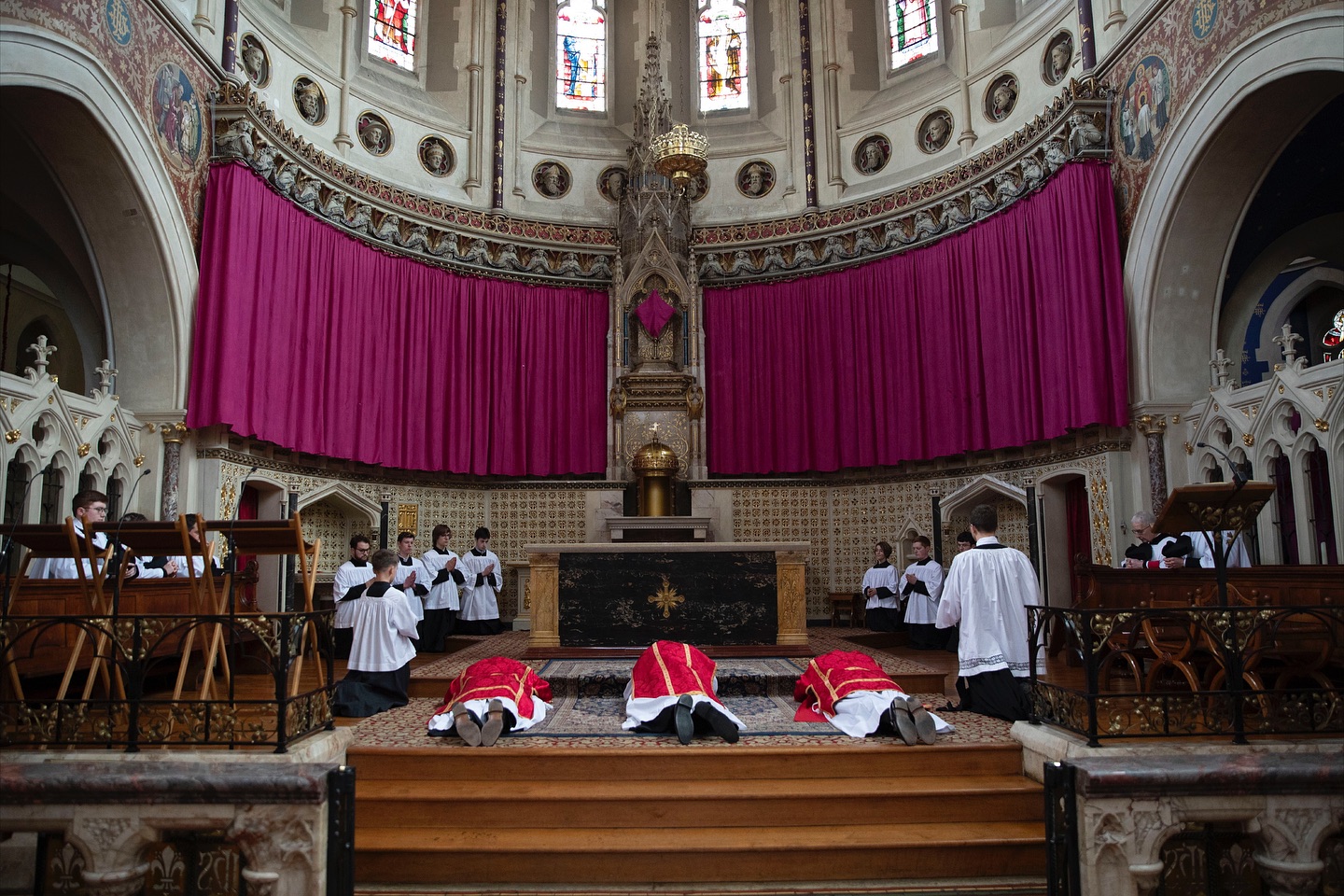
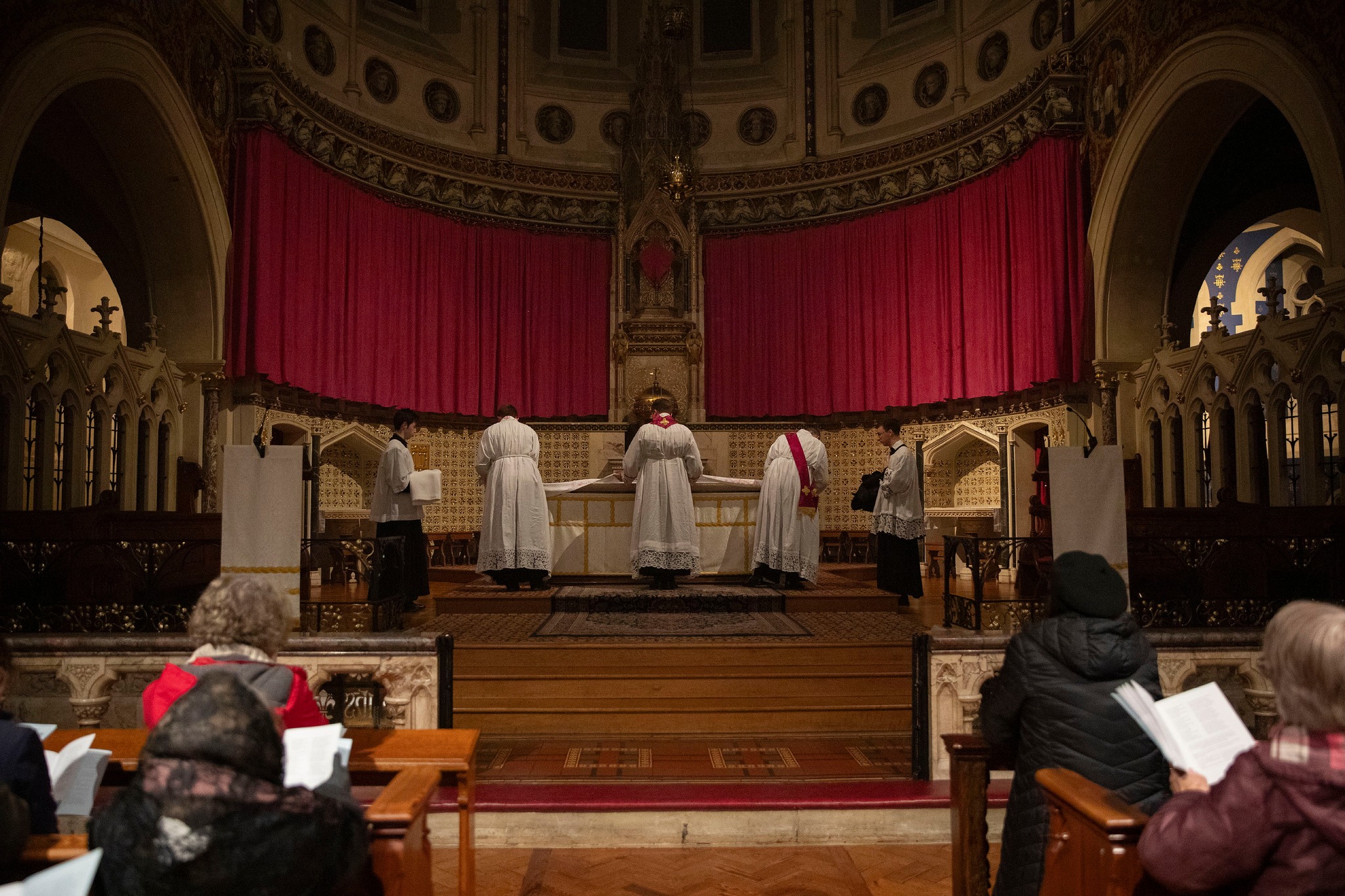
April Music

Sunday 7 April Solemn Mass 11:00
2nd Sunday of Easter
Missa “Puisque j’ay perdu”  Lassus
Dic nobis maria Bassano
Surrexit Pastor bonus Lassus

Monday 8 April Solemn Mass 18:00
The Annunciation of the Lord
Missa Dixit Maria Hassler
Ave virgo sanctissima Guerrero
Ne timeas Maria Victoria

Sunday 14 April Solemn Mass 11:00
3rd Sunday of Easter
Messe Basse Fauré
Regina caeli Charpentier
Tantum ergo Fauré

Sunday 21 April Solemn Mass 11:00
4th Sunday of Easter
Missa Congratulamini mihi Lassus
Ardens est cor meum Dering
Caro mea vere est cibus Guerrero

Sunday 28 April Solemn Mass 11:00
5th Sunday of Easter
Missa Festum nunc celebre Palestrina
Ardens est cor meum Victoria
O sacrum convivium Sweelinck

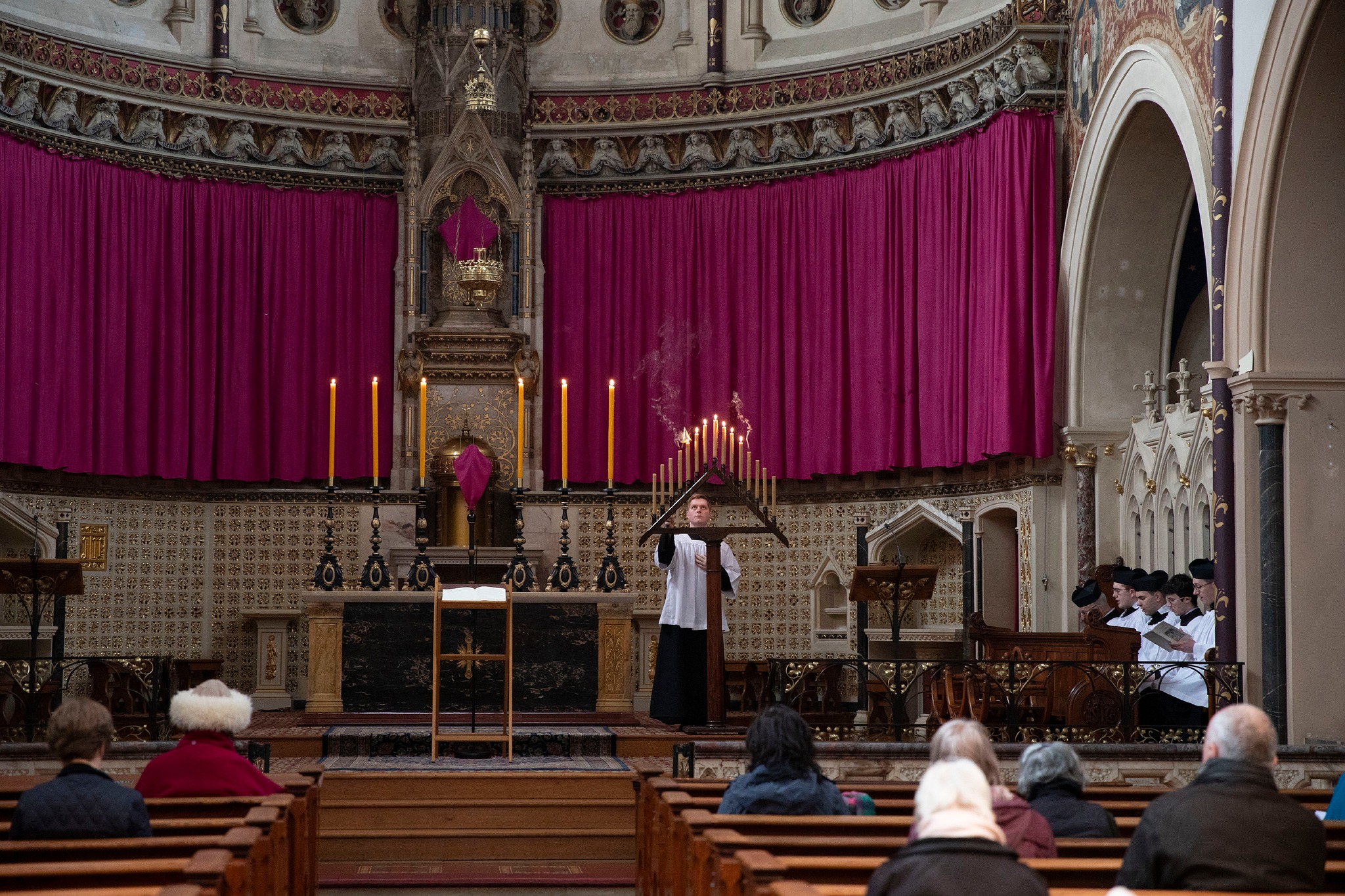
During the Sacred Triduum, the Divine Office is sung in a special form. The psalms and readings that make up the offices of Matins and Lauds are sung in a darkened church, lit only by the light of the altar candles and tenebrae hearse. After each psalm, the candles are gradually extinguished until the church is left in darkness — in Latin, ‘tenebrae’.

#oxfordoratory

View on Instagram

O Friend, on what errand hast thou come?

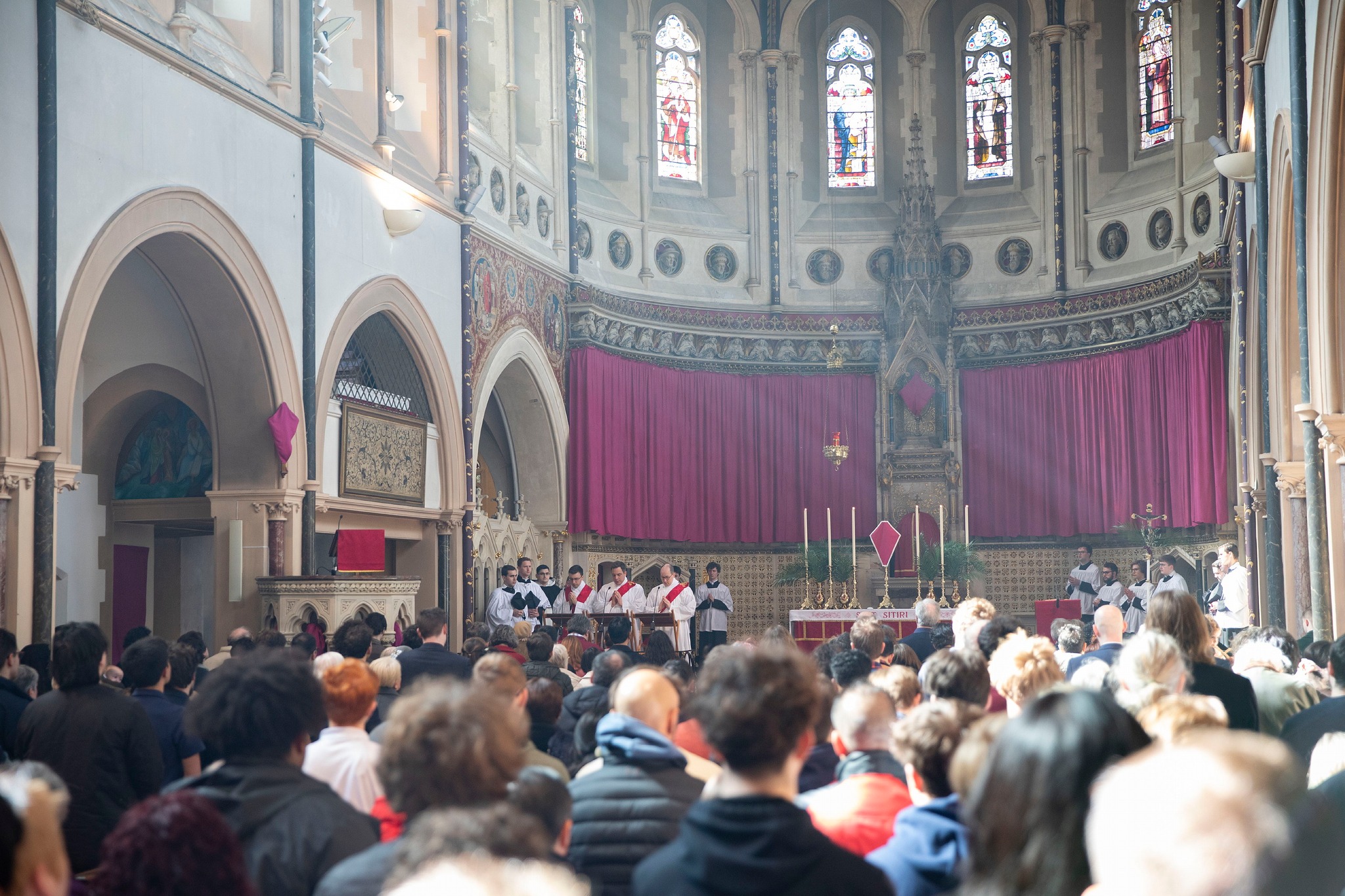
On Palm Sunday we heard the Passion narrative once more: the sacred history of our salvation; of the betrayal of Christ, of his trial, of his Passion, of his death on the Cross — those “ancient words, newly spoken”; a tale so familiar to us and yet in which we always seem to be struck anew by the tragedy, the violence, the pity, the love… We may notice something that has never struck us before, or hear the passage that always seems to strike at our heart year after year. We will hear the Passion several times over in the next few days, in the liturgy, or in other places. St Philip, we are told, would constantly be reading the accounts of it, and a very profitable thing for us to do in this Holy Week would be to find a quiet place, switch off our telephones, take up a New Testament, and read the account of what God did for us in the Passion, as we find it in the Gospels: to read one the Passion narratives slowly, and to think on it.

We do all seem to have one passage or another which strikes us more than others. The Servant of God Jacques Fesch wrote as he was preparing for his own execution: “Nothing about the apostles does as much for my faith as their incredulity, their rationalism, their weakness, their boasting, and their pride. ‘Who is the greatest amongst us?’ said Simon Peter. And his denial, who does not almost rejoice in it, seeing it as a reflection of one’s own weakness? But how sweet the response is, and how consoling are these words: ‘Jesus having gone out, turned around and looked at Peter’. Who has not felt the gaze of Jesus fall upon themselves, full of love and forgiveness, and who has not wept like Peter?” It is certainly true that those words of the Gospels really do seem to speak directly to us sometimes: of our own lives, our sins, our struggles, and our redemption too.

One phrase from the Gospel which seems especially piercing is that from St Matthew, when Christ, having prayed in the Garden, beholds the rabble come to arrest him. Our Lord casts his eyes upon Judas, who comes to kiss him, to greet him, not in love, but as a sign to the soldiers, as a seal on his betrayal of his Friend. Our Lord beholds him and speaks: “O Friend, on what errand hast thou come?” Naturally there are other translations, but the point is the same. O Friend — underlining the full tragedy of the betrayal, but yet, even then, mercy is offered to Judas. Despite our sins, our betrayal of Christ, still his friendship is on offer to us. The door is not closed as long as we have life in us. Peter would betray him too of course — but Peter in his tears, in his realisation of what he had done to his Friend, he knew there was mercy for him. When Peter heard Our Lord had risen from the dead, he did not flee fearing retribution for his betrayal, but Peter ran, and rejoiced, met the Lord and was restored. How different our sacred history might have been if Peter in his tears had met Judas in his despair. If Judas on his way to destroy himself had met Peter and heard the promise of mercy and of forgiveness, the reassurance that Christ gave to every one of us, that even if after a lifetime of sin if we turn to him, acknowledge our Friend with a contrite heart, well then, even after all that, we can be with him in Paradise…

“On what errand hast thou come?” Our Lord asks this of us all. Every situation, every meeting, every time we go down on our knees to pray to him — what have we come for? He will ask it of each of us when we come to live his Passion with him over the Triduum. O Friend, on what errand have you come? O Friend, why have you come? Let us come acknowledging that often we are Judas, but praying always to be Peter — for seeing the greatness of God’s love displayed for us in all its reality over this Holy Week, we cannot fail to see and to know that there is always mercy, always forgiveness, always a chance to turn to him and begin anew, for there is always his love on offer to us, always our God wanting us to be his friend. Sometimes we need to be reminded of that. Always we need to pray for the grace to accept it.