Hail, true Body, truly born
of the Virgin Mary mild;
truly offered, wracked and torn,
on the Cross for all defiled;
From whose love-pierced, sacred side
flowed thy true Blood’s saving tide:
Be a foretaste sweet to me
in my death’s great agony,
O my loving, gentle One,
sweetest Jesus, Mary’s Son.

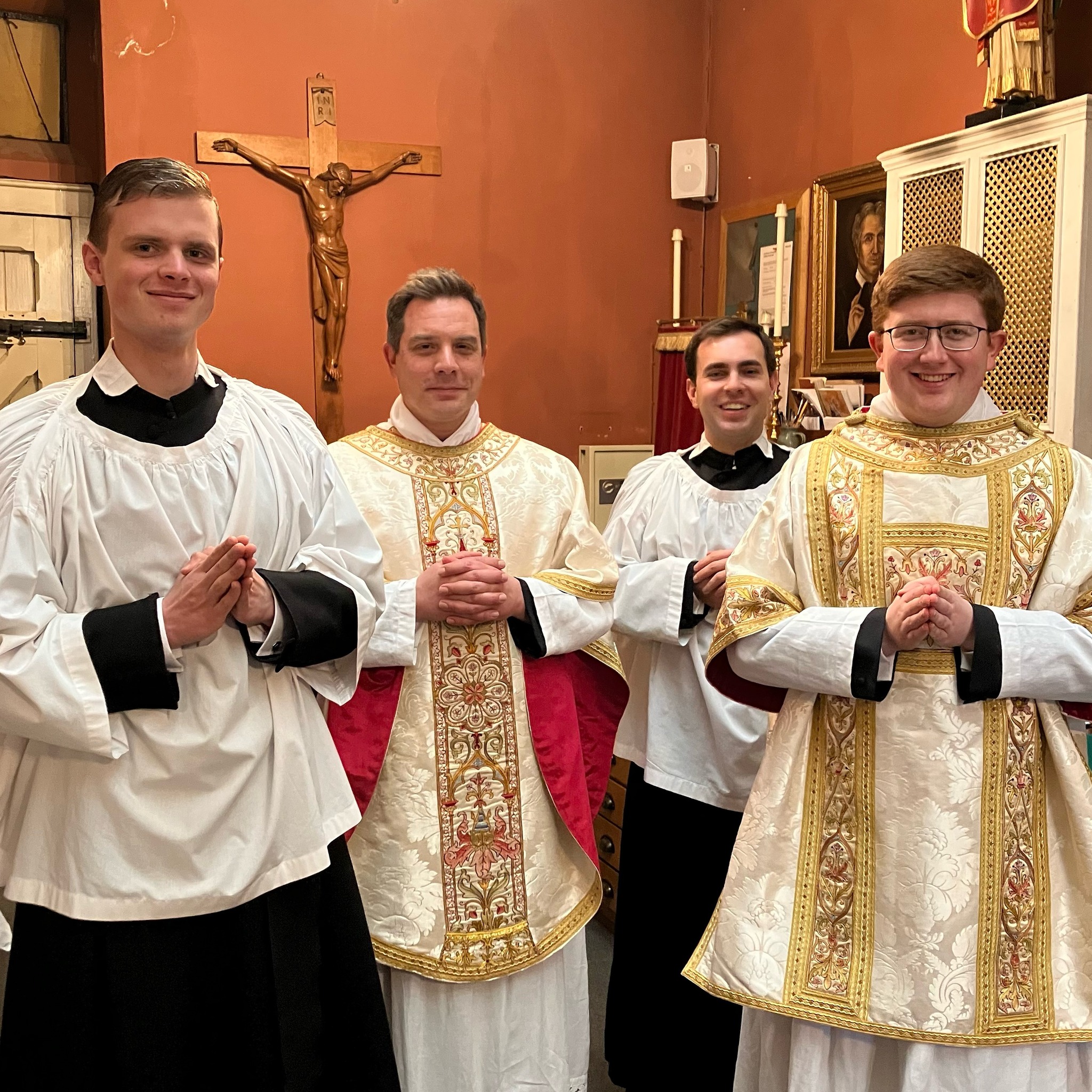
Benediction to conclude our May Devotions in honour of Our Lady.

#oxfordoratory

View on Instagram

Life Begins At Forty

Forty is a very significant number. In the Old Testament we read how the rains poured for forty days before the flood came and Noah boarded the ark to await a world renewed by the waters sent from Heaven. Moses fasted for forty days in order to prepare himself to meet God upon Mount Sinai and then spent another forty days atop the mountain to receive the Law from the Almighty. For forty years the people of Israel wandered in the desert before reaching the land promised to them. Elijah walked forty days and forty nights to reach Mount Horeb where he was to know God in the gentle whisper. In the life of Christ there were forty days between his nativity and his presentation in the temple, then the fasting for forty days and forty nights after his baptism, when he was led out into the desert to fast, to pray, and to do battle with Satan in order to prepare for the beginning of his public ministry. This we mirror in our own observance of the forty days of Lent. After his Resurrection from the dead, Our Lord was amongst his followers and friends and seen by all people for forty days before he ascended to Heaven, there to sit at the right hand of the Father.

Forty days, forty years, they all represent the passage of one thing to another — of God perfecting, preparing, changing us anew to make us fit for the next step he has in mind for us in our life with him. We come now, this Thursday, to the culmination of the forty days of Easter with the celebration of the Ascension. The scene of Christ being taken up to Heaven whilst the men of Galilee look on is one that has given rise to beautiful art, music, and those rather fun images and sculptures we sometimes find in churches of a pair of feet seemingly going through the roof. But those feet still bear the wounds of the cross — a reminder that it is the now glorified humanity of Christ that ascends — there to prepare for us the place he has promised us if indeed we are faithful to his commandments.

Life begins at forty we are told, or tell ourselves. The reality is more often, as one of the Fathers says, that just being alive begins to hurt at forty. In the Ascension however the life of the Church really does begin anew at this point, forty days after the Resurrection. The apostles, strengthend, comforted, and renewed by their encounter with the Risen Lord, see him go to prepare that place, and receive from him the Great Commission to preach the Good News and to baptise so that all people might know the Way to the place where on the Ascension he is going.

One might think there is something rather sad about the Ascension — but a parting of friends it is not. With the coming of the Holy Spirit sent by the Father and the Son the presence of God fills the Church and with it the earth. This is expressed in beautiful simplicity by the Penny Catechism:

Where is Jesus Christ?
As God, Jesus Christ is everywhere. As God made man, he is in heaven, and in the Blessed Sacrament of the Altar.

And this is why St Jean Vianney, the holy Curé of Ars, reminded his people that they were much more fortunate than those who lived in the time of Christ: they had to travels hours, days, weeks, to be in the presence of Jesus Christ but all we need to is to go to Church and there to find him in the tabernacle of the altar.

This Ascension we have that opportunity God so often gives us: the opportunity to begin again. To look, for just a moment, up at the Heaven he has won for us and the place that is there waiting for us. Then encouraged by this to go and preach the Good News in our own place, to win others to Christ by our efforts to love and to co-operate with all that Heaven sends us. The Ascension points us to Heaven and thus to the End — of Christ’s earthly ministry and where we hope to be when our life ends, but it is a beginning too. Our Cardinal, St John Henry Newman, wrote “Fear not that life shall come to an end, but rather fear that it shall never have a beginning”. Forty days after the Resurrection we begin again. We embark upon the ancient but ever new task that Christ places before us. May this Ascension be the proof for us that life really can begin at forty.

Today is the feast of the English Martyrs. We placed on the altar for Mass today our set of four reliquaries containing the relics of Edmund Campion, Oliver Plunkett, Henry Garnett, Robert Southwell, Henry Walpole, Edward Oldcorne, John Southworth, Thomas Whitbread, Thomas Garnett and Thomas More.

Faith of our fathers, living still
In spite of dungeon, fire, and sword:
Oh how our hearts beat high with joy
Whene’er we hear that glorious word!

Faith of our fathers! Holy Faith!
We will be true to thee till death.

#oxfordoratory

View on Instagram

May Music

Sunday 5 May Solemn Mass 11:00
6th Sunday of Easter
Missa Ave virgo sanctissima Esquivel
Benedicite gentes Palestrina
Regina caeli Victoria
Magnificat Primi Toni BuxWV203 Buxtehude

Thursday 9 May Solemn Mass 18:00
The Ascension of the Lord
Missa Jam Christus astra ascenderat Palestrina
Ascendens Christus in altum Victoria
Ascendit Deus Philips
Postlude in D Minor Stanford

Sunday 12 May Solemn Mass 11:00
7th Sunday of Easter
Mass for five voices Byrd
Viri Galilaei Palestrina
Non vos relinquam orphanos Byrd
Pièce d’orgue BWV 572 Bach

Sunday 19 May Solemn Mass 11:00
Pentecost
Missa Dum complerentur Victoria
Loquebantur variis linguis Tallis
Dum complerentur Palestrina
Choral varié sur le Veni Creator Duruflé

Sunday 26 May Solemn Mass 11:00
The Most Holy Trinity
Missa brevis in C, KV 220 ‘Spatzen-Messe’ Mozart
Tibi laus, tibi gloria Philips
Ave verum Mozart
Clarifica me, Pater III, BK49 Byrd

Monday 27 May Solemn Vespers 18:30
Our Holy Father St Philip Neri
Deus in adjutorium Croce
Magnificat primi toni Palestrina
Pangamus Nerio Sewell
O salutaris hostia Laloux
Tantum ergo Widor
Adoremus Laloux
Respice de caelo Sewell

Tuesday 28 May Solemn Mass 18:00
Our Holy Father St Philip Neri
Ecce sacerdos magnus Bruckner
Missa Papae Marcelli Palestrina
In spiritu humilitatis Croce
Laudate dominum a8 Palestrina

Please pray for the repose of the soul of Fr John Hunwicke, who died on Tuesday.

Fr Hunwicke has been a friend of our community and a familiar face to our congregation for many years. He was ordained priest in our church in 2012 for the Ordinariate of Our Lady of Walsingham. More recently he tutored many of the Fathers in Latin and was a regular guest speaker at our Lenten talks. He will be greatly missed.

His funeral will will take place in our church. Full details will follow once they have been confirmed.

Grant, we pray, O Lord, that the soul of John, your servant and Priest, whom you honoured with sacred office while he lived in this world, may exult for ever in the glorious home of heaven. Through our Lord Jesus Christ, your Son, who lives and reigns with you in the unity of the Holy Spirit, God, for ever and ever. Amen.

#oxfordoratory

View on Instagram

Easter goes on

“It is at this time of year,” the remark came, “when one is a bit fed up with Easter Hymns. There are no good ones left and it is too early for May hymns to Our Lady.” Whilst clergy can find the oddest things to complain about, there is both something with which to have sympathy in this view and also something to rebel against. As we head into the last week before the Ascension we can marvel that Easter still goes on, whether we have sung all the good hymns or not. But that is rather the point: Easter does go on and on and it is something about which we do not give enough thought.

At the moment of the incarnation, our Lord took our human nature to himself but also shared his divine nature with us. And as he went through his life experiencing all that it is to be human, he shared with us his divinity. Just as death is an ever present reality in everyone’s lives, every day, so too the resurrection is an ever present reality in the lives of believers. If the human experience is coloured by the presence of death, that colour is changed by the fact that the life of the Risen Christ colours it too.

Caryll Houselander once reflected on this presence. She wrote:

All day long, all over the world there is resurrection. A puny infant is baptized; Christ lives again, strong in his new life. A convert is received into the Church, a little appalled and disappointed by the sense of emptiness in his own soul, after the long tension of his conversion; Christ comes back to the world. A boy murmurs the monotonous story of his sins in the cramped confession box, the words of absolution are spoken; Christ lives again in the heart of mankind. A forgotten old woman dies in the workhouse. To those who close the eyes and cover the quiet face nothing extraordinary has happened; in the eyes of the Eternal Father, Christ has risen again from the dead.  Every day thousands of people receive Holy Communion. Christ who has been sacrificed on the altar is laid in the tomb of their hearts. There is no place he will not come: prisons, hospitals, schools, camps, ships at sea, cathedrals, little tin churches; he comes to them all. He comes into the houses of the sick and the dying, regardless of whether they are mansions or slums.

When we receive the sacraments, we too must be conscious that Christ is ever rising in our hearts. We are joined on to him, and so those moments of grace, of renewal and of devotion are participations in his resurrection. We have to make sure we look for them and keep them. Easter characterises and defines the life of our soul as much as anything else. If we only kept that in mind more we could still be found singing, “Christ the Lord is risen today” with as much freshness and gusto in July as on Easter morning, because the truth is that it is always Easter morning somewhere.

So the Ascension is not the end, because there is no end. We are in Easter now, and we always will be. And we must thank God for that.

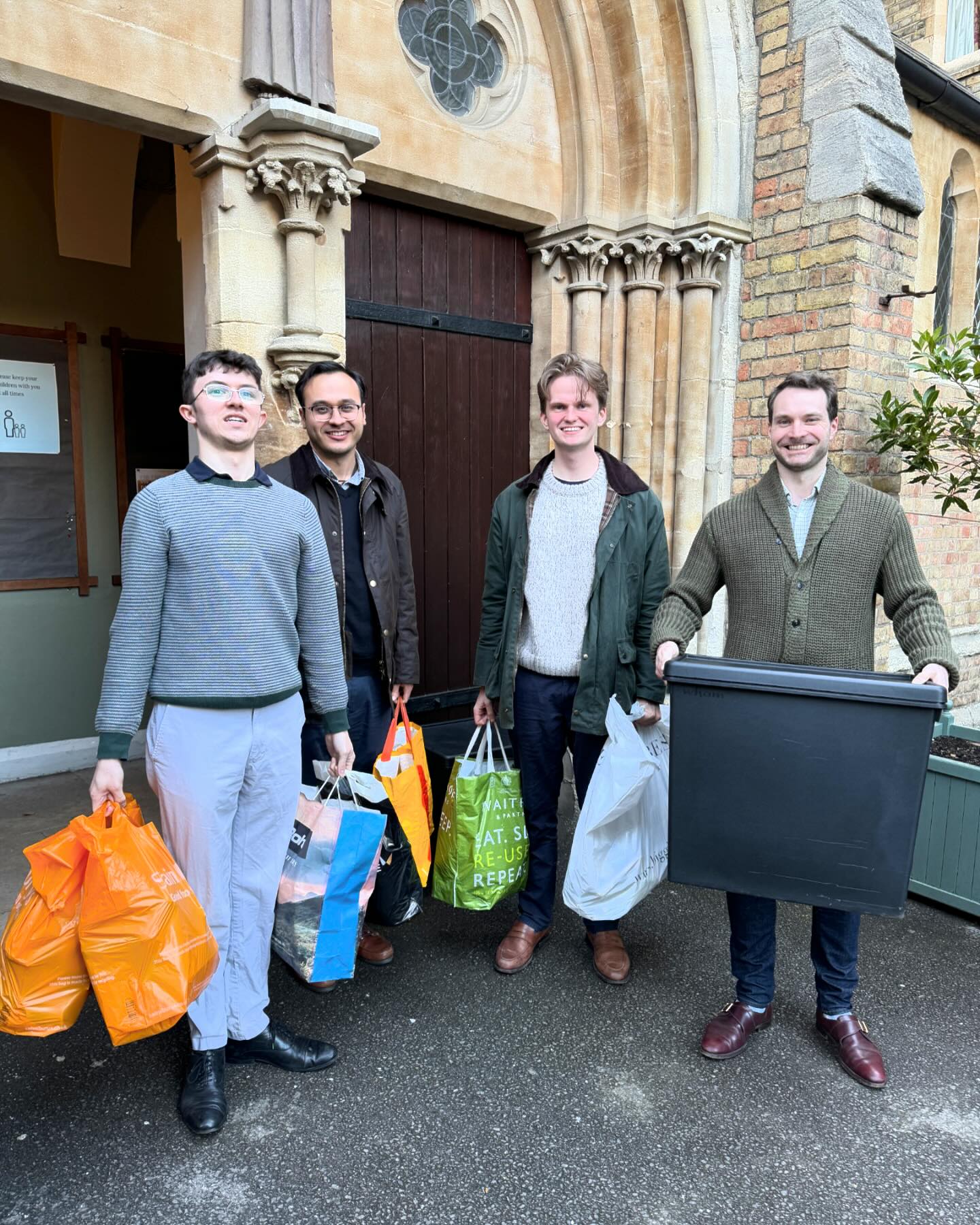
We had a great response to our collection of food for the Oxford Food Hub this weekend. Thanks to all the Oratory Outreach volunteers who made it possible. The next collection will be after Masses on the last weekend in May. #oxfordoratory

View on Instagram

The Patronage of Saint Philip Neri

This Saturday we commemorate St Philip’s Patronage of this very Oratory. It is not just a ceremonial observance, but a profound recognition of the influence and care of our beloved Holy Father over the lives of the Fathers of the Oratory and the souls they shepherd.

Saints are set apart for a sacred office of dedication to God’s service. St Philip is entrusted with the continuous care of the souls here as the patron of the Congregation of the Oratory. On this feast, then, we are reminded of his gentle role as our Holy Father, and the special place he holds in our lives. He is our protector and advocate. He is our intercessor, speaking on our behalf to the Lord. He is someone who guides us now as once he guided the people of Renaissance Rome.

It might have been the Saint’s exceeding joy, humour and approachability that initially attracted the attention of the people of his city, but it was certainly his deep faith and love for our Lord that inspired people to love our God as St Philip loved him. It is this same deep faith and love that makes him our spiritual father, always willing to intercede for us.

But the idea of patronage also encompasses inspiration. St Philip’s commitment to Rome is the perfect example of the commitment of this Congregation to the people of Oxford. The Oratory Fathers strive to emulate the joyful disposition and humour of St Philip, aiming always to approach the love of God with a light heart and spreading that same joy and example of sanctity to others. This sanctity of St Philip is not one only characterised by miracles or his Counter-Reformation work to keep our Catholic faith alive. It is firstly characterised by our patron’s genuine humanity and humility. By being available, approachable and interested in human nature, St Philip transformed ordinary encounters into moments of spiritual joy and closeness to God.

We should invite him to guide us with his love away from sin and temptation; to be not only the patron of our Oratory, but of our whole lives, unreservedly; to be the one we seek for aid; to be the one who guides us to eternal bliss.

As we celebrate the feast of the Patronage of St Philip, let us recommit ourselves to living out his virtues, especially of joy, humility, and love. May his intercession continue to guide us to Heaven as he inspires us on Earth. And may his Oratory remain a beacon of faith, fellowship, and service to all, as St Philip intended.