150 Years of St Aloysius’ Church: (9) The Nave

We have skipped over the greatest part of our church so far: the nave. When his bishop thought that St John Henry Newman was too eager to consult the laity, the bishop asked him ‘What are the laity?’ Newman responded: ‘the Church would look foolish without them.’ And so indeed would our church if the nave were empty. (Somewhat ironically, when Newman visited our church to preach on Trinity Sunday 1880, he presented the Jesuit fathers with a watercolour of the church in thanksgiving for their hospitality. The painting depicts the church with an empty nave…)

The body of our church seats about 400 people (and even more when it needs to at Christmas and Easter). The “nave” takes its name from the Latin word for boat, since the historical shape of churches appeared to be that of an upturned ship. The ceiling of our church does indeed resemble this hull shape. And as we voyage towards heaven in it, we are reminded that those boats in the Gospels that carried Our Lord never sank, no matter what storms threatened the vessel.

A curious feature of our church is that wherever you sit in the nave (unless you are right up against the pulpit) the altar is clearly visible. Our church may be gothic in decoration, but it is not medieval in design. Instead, it is an example of the principles of the counter-reformation pioneered by the Society of Jesus in their mother church of the Gesù in Rome. The altar is not hidden behind a screen or a deep sanctuary, but all can see Our Lord directly when he is lifted up in adoration.

The nave is also home to the pulpit. The pulpit is an important place in any church for preaching sermons, but in the Oratory, it has a particular significance. It is said that there are three pieces of wood where a good Oratorian priest should be found: the wood of the altar step (because he is saying Mass), the wood of the confessional (because he is hearing confessions) or the wood of the pulpit (because he is preaching). The “daily distribution of the Word of God” was the essential work of the Oratory when St Philip started: he began preaching even as a layman. Sermons are preached at least daily in our church today.

The original pulpit — from which Newman preached — was made entirely of wood, and collapsed during a rather vigorous sermon of Fr William Humphrey SJ in the 1880s. Fr Humphrey, as he climbed out of the remains of the pulpit, could only conclude his sermon, “a blessing which I wish you all.”

The sturdier stone pulpit now in place is adorned with statues of the Madonna and Child, St Joseph, St Aloysius, St Philip and St Charles. After all, any ship needs to know where it is heading, and the saints are the stars in the heavens by which we direct the course of our lives.

Tenebrae with the Oratory Choir

Better than a concert, Gesualdo’s Tenebrae Responsories in their proper liturgical setting, the traditional office of Tenebrae on Wednesday 16 April at 8pm in our church.

The full office of Tenebrae will be sung in Latin with the Oratory Choir under the direction of Rory Moules.

There will be a retiring collection to help cover the cost of the music, but this is a liturgical service to which all are welcome at no cost.

O Lord Jesus Christ, by those five wounds which in thy love for us thou didst endure, succour thy servants whom thou hast redeemed with thy Precious Blood.

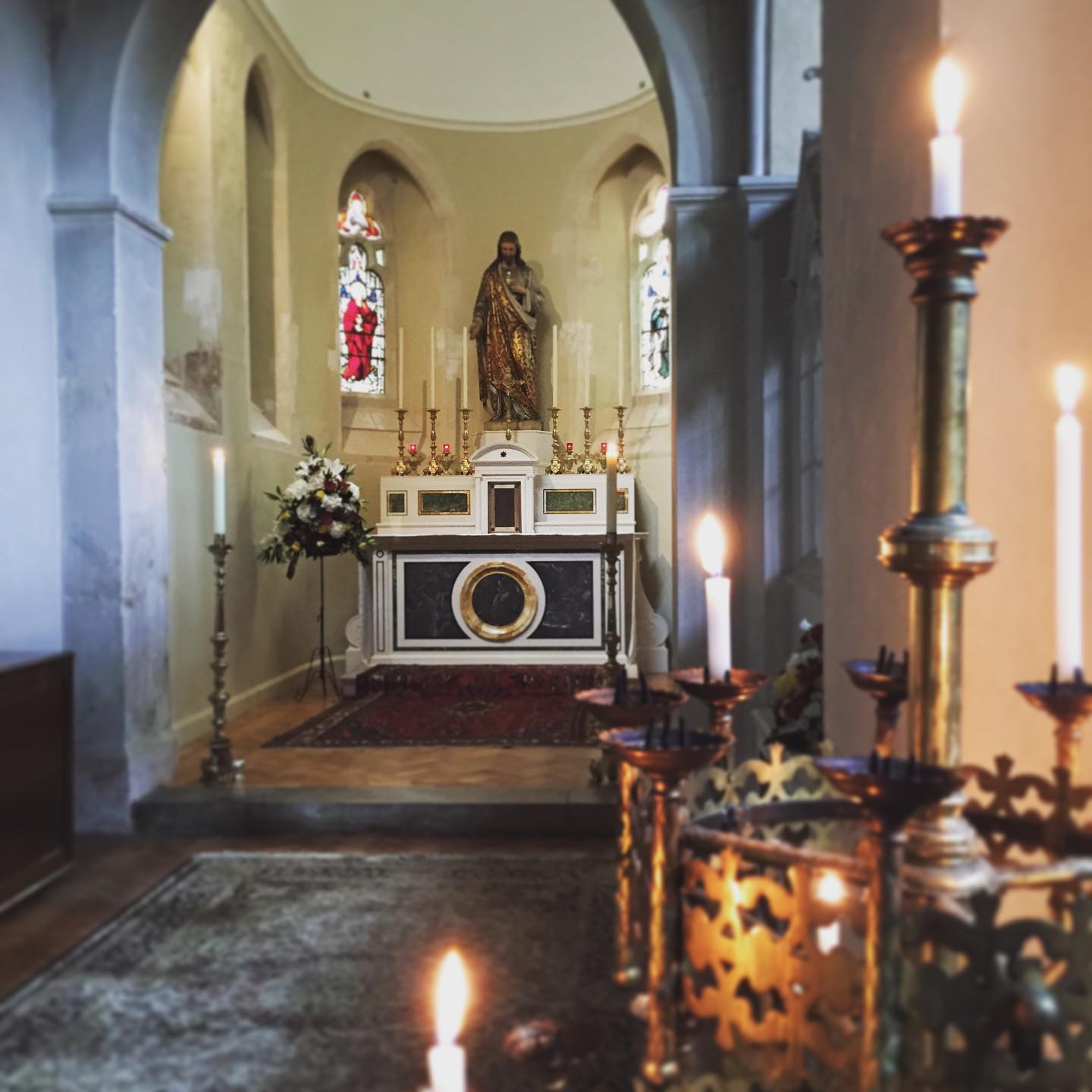
From the archive: the Sacred Heart chapel.

#oxfordoratory

View on Instagram

150 Years of St Aloysius’ Church: (8) The Sacred Heart Chapel

Almost hidden beyond the Sanctuary is the Sacred Heart chapel. Devotion to the Sacred Heart of Jesus is very ancient but became widely popular in 18th century France and was promoted by the Jesuits who built our church. It focuses on the profound love that Jesus has in his humanity for those who trust in him. It reminds us that although he is God, he is also man, and loves us in a way we can understand — although he does so perfectly and unconditionally. In this image his heart is wounded on account of our sins but on fire with love for us.

A new altar of Portuguese limestone and marble, designed by Robbie Kerr of Adam Architecture in the Roman baroque style, was installed in 2019. The tabernacle, used on certain feasts, is modelled on the main doors of the Oratory church in Rome with the star of St Philip’s coat of arms above it. The altar was consecrated in 2020. The ancient ceremonies for consecrating an altar echo the rites of consecration given to Moses by God. You can watch the highlights from the consecration on our YouTube channel. Turn on the captions to see the explanations of the rite.

150 Years of St Aloysius’ Church: (7) The Sanctuary

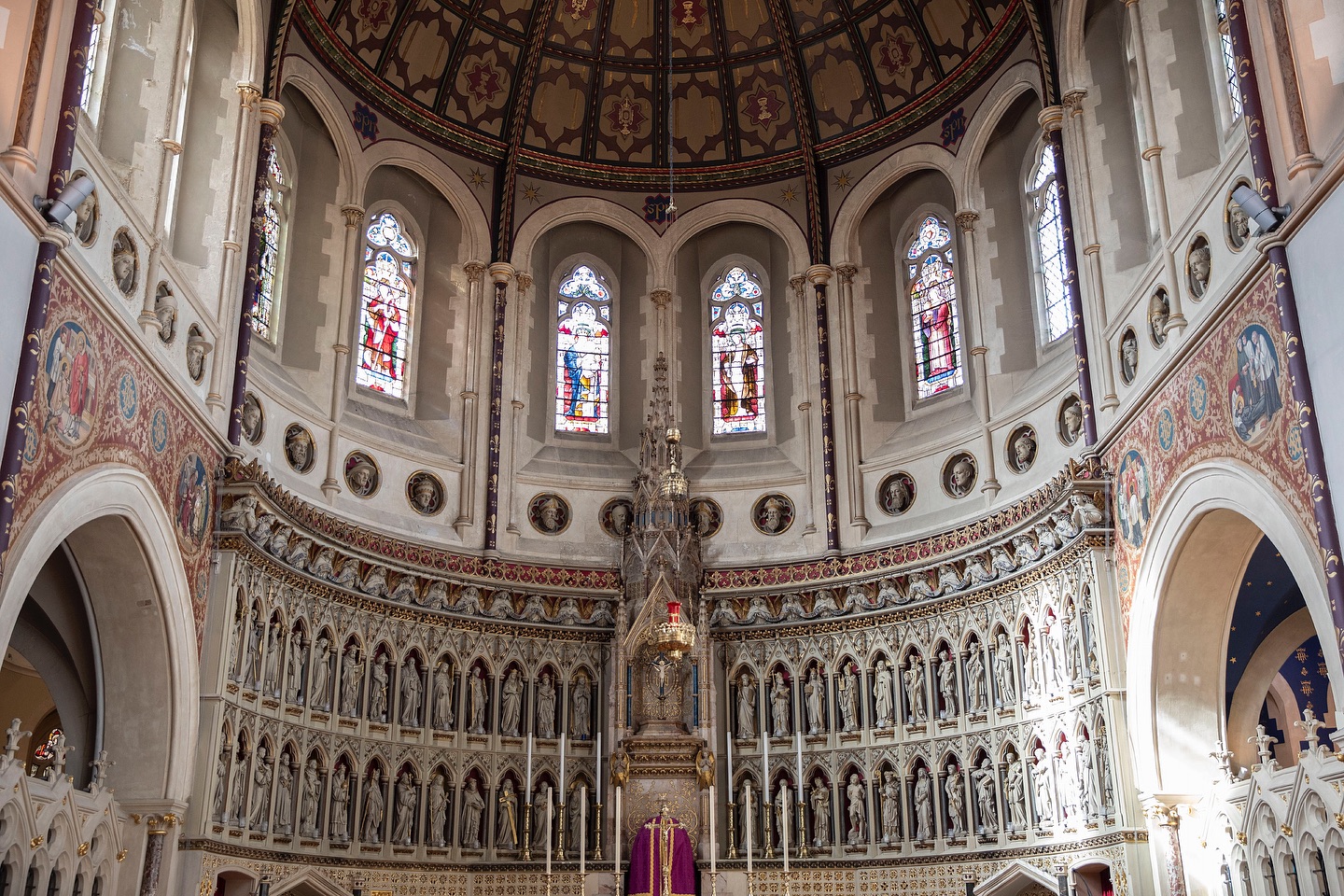
The central focus of the whole church is the sanctuary, where Mass is celebrated on the high altar every day, and where the Blessed Sacrament resides in the tabernacle. Christ is here in the sanctuary, and that makes this place heaven on earth. This is why the walls are covered in images of those who are also in heaven: the saints and angels.

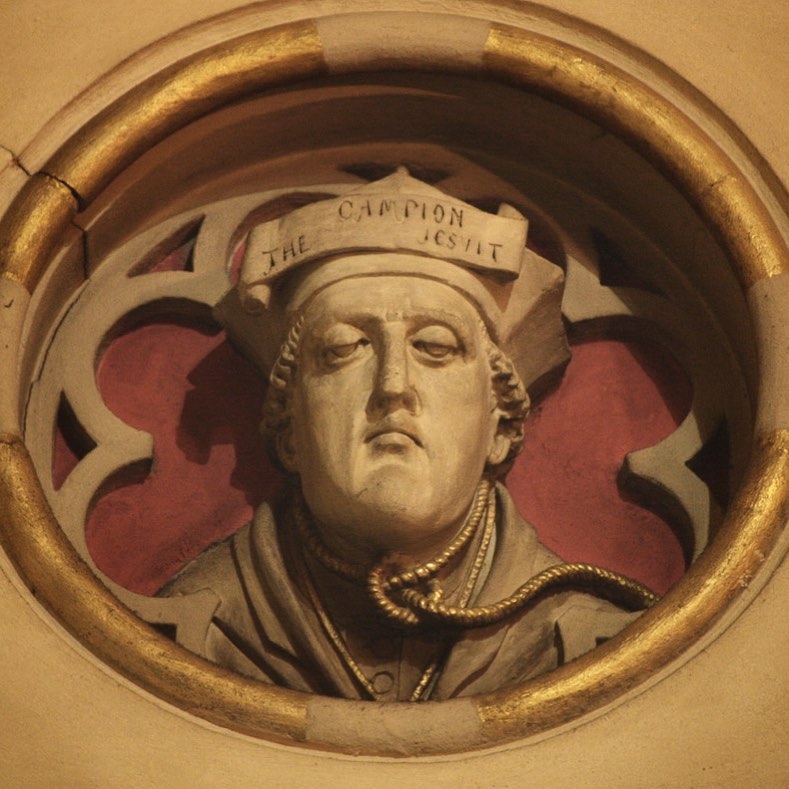
The wall behind the tabernacle, called the reredos, is one of the most striking features of the building. Installed in 1878, it contains the statues of 52 saints with the heads of 20 saints filling the roundels above, with angels holding a scrolling banner that reads: “Sanctus, sanctus, sanctus, Dominus Deus sabaoth” (Holy, holy, holy is the Lord God of Hosts). The reredos depicts the heavenly court looking down on the worship taking place in the sanctuary, worship they share in in heaven. Whilst many college chapels today have niches filled with saints, this is the earliest surviving example in Oxford, the others having been destroyed at the Protestant Reformation and only restored in the early twentieth century.

The places of honour on the top row either side of the crucifix are naturally occupied by Our Lady and St Joseph. But then, discounting the archangels Michael and Gabriel, all of the saints on this row are either from (or very closely associated with) the British Isles. Only St Gregory the Great (who sent the first missionaries to preach the Gospel here) and St George (patron of England) never visited in person.

From left to right, the saints depicted are:

Top row, left: St David of Wales, St Columba of Ireland and Scotland, St Edmund of Abingdon, St Edward the Confessor, St Frideswide of Oxford, St Dunstan of Glastonbury, St Michael the Archangel, St Bede the Venerable, St Hilda of Whitby, St Alban protomartyr of England, St Helen, St Gregory the Great and Our Lady.

Top row, right: St Joseph, St Augustine of Canterbury, St Winifred of Wales, St Chad Patron of the Archdiocese of Birmingham, St Edith of Wilton, St Cuthbert of Lindisfarne, St Gabriel the Archangel, St Thomas of Canterbury, St Bertha of Kent, St Hugh of Lincoln, St Simon Stock, St Thomas of Hereford and St George.

Bottom row, left: St Andrew the Apostle, St Charles Borromeo, St Stanislaus Kostka, St Francis Xavier, St Dominic, St Henry the Emperor, St Raphael the Archangel, St Augustine of Hippo, St Gertrude, St Ambrose, St Julia, St Peter the Apostle, St John the Evangelist.

Bottom row, right: St Mary Magdalene, St Paul, St Cecilia, St Sebastian, St Hubert, St Monica, St Uriel, St Ignatius, St Aloysius, Gonzaga, St Teresa, St Francis de Sales, St Vincent de Paul, St Patrick.

There are some other patterns to note: the patrons of the British isles at the end of each row; Peter and Paul flanking the cross; St Monica and her son St Augustine opposite each other; and four symmetrical archangels.

The only saints who are turned towards each other are St Gertrude and St Ambrose, although they had nothing to do with each other in life and lived centuries apart. But they were given in memory of a husband and wife, Ambrose and Gertrude, and now the statues gaze lovingly at each other as we pray the donors do now in heaven. He was clearly very devoted to her, because when she died he also commissioned the stained glass window of St Gertrude in the Lady Chapel.

Above the reredos are twenty more Saints with only their heads showing. They are, from left to right:

Four English Martyrs: Bl. John Forest, Bl. Margaret Pole, St Thomas More, St John Fisher
Four Western Doctors: St Thomas Aquinas, St Anselm, St Jerome, St Leo
Four Eastern Doctors: St Athanasius, St Ephraem the Syria, St Basil, St John Chrysostom
Four Monastic Founders: St Benedict, St Bruno, St Francis of Assisi, St Bernard
Four English Martyrs: St Edmund Campion, St Oliver Plunkett, St Alexander Briant, Bl. John Storey

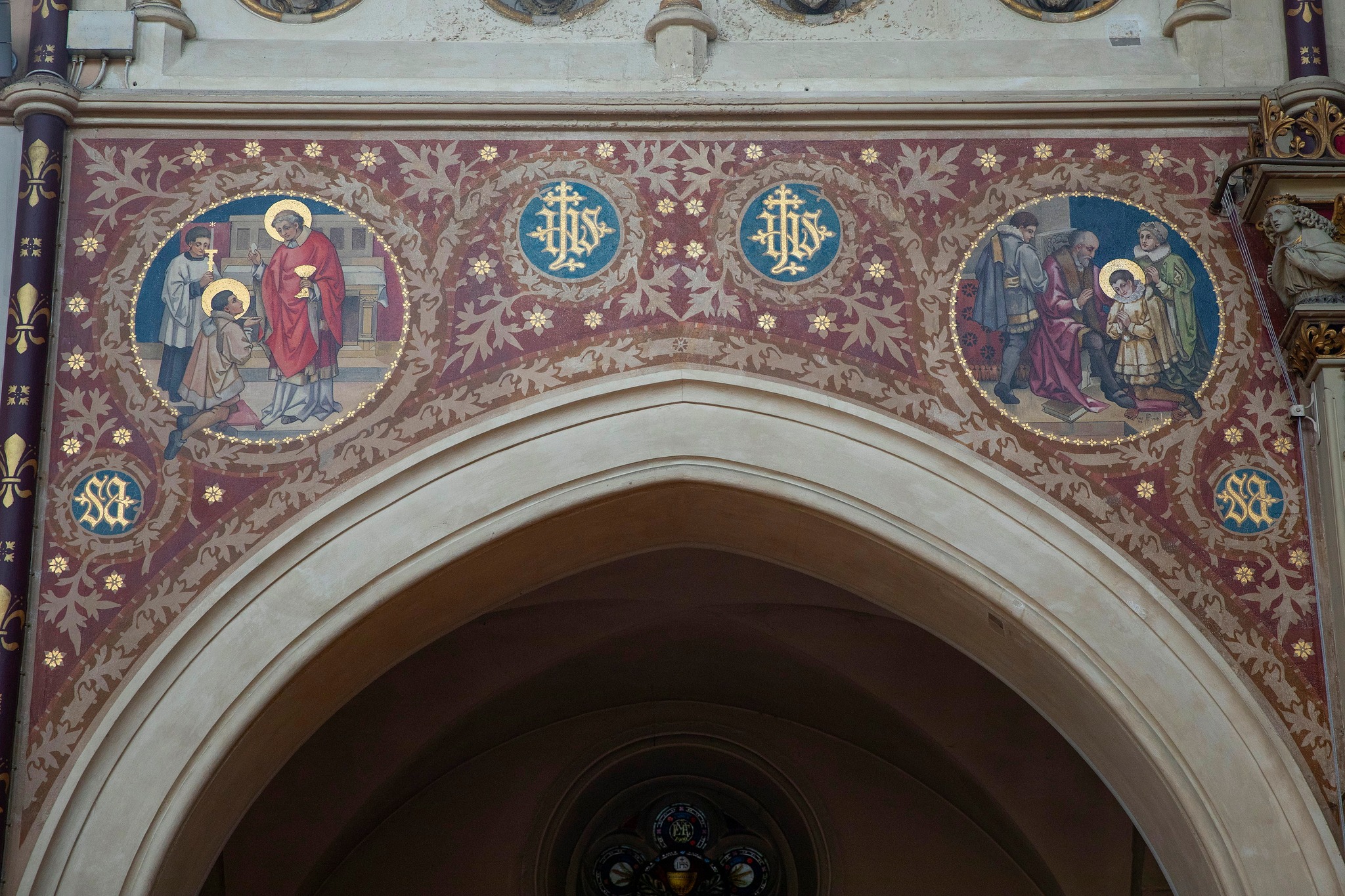
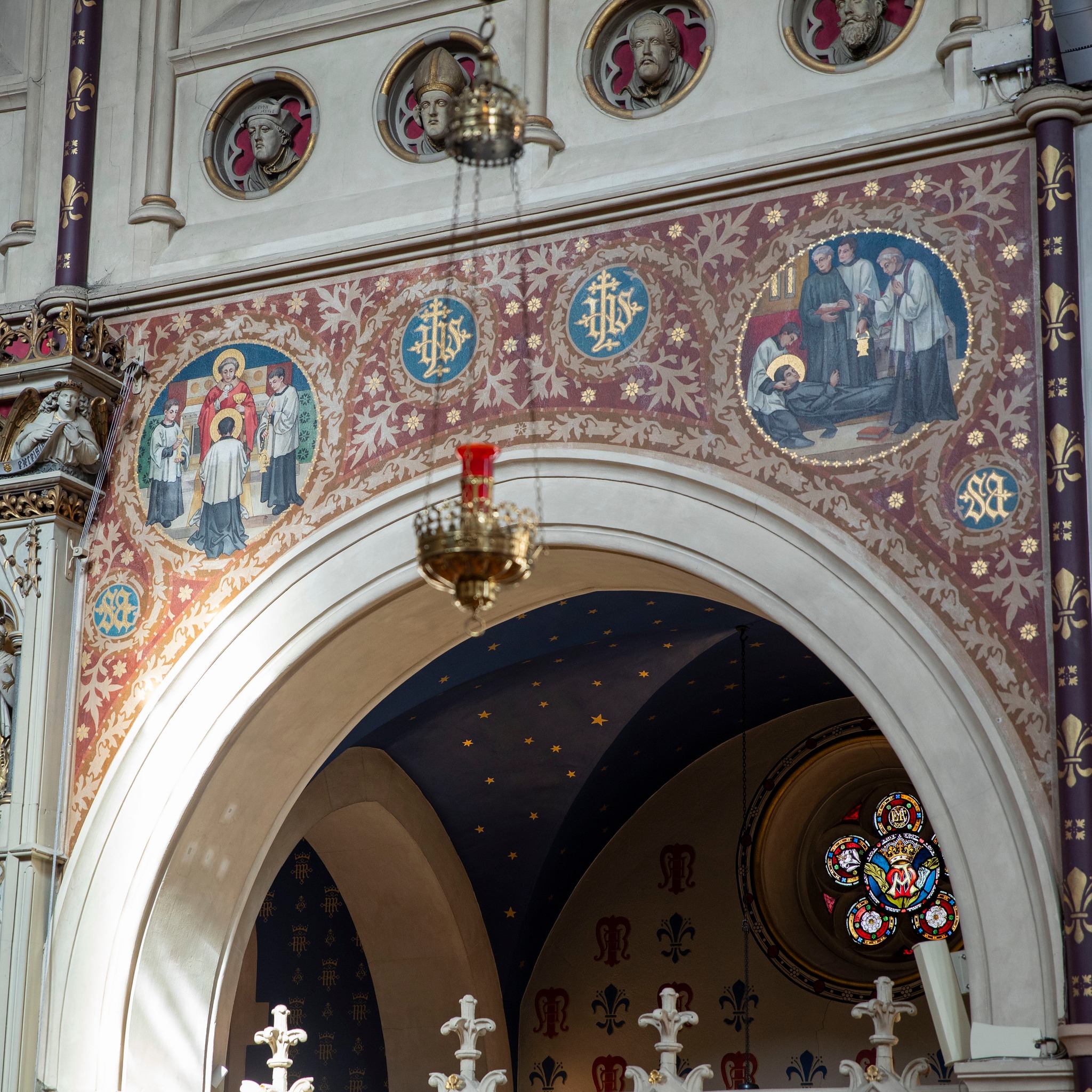
The recently restored murals above the arches painted in 1905 by Gabriel Pippet show scenes from the life of St Aloysius: his First Communion, his renunciation of his inheritance, his taking his vows as a Jesuit brother, and his death serving the sick at age 23.

All the decoration is connected with the vine motif, which stretches all the way from the railings at the front of the sanctuary, through the murals and reredos, to the central pillar. This vine, which covers the whole sanctuary, represents our union with Christ. Notice, though, that it is only shown bearing fruit directly behind the tabernacle. We will only bear fruit if we remain close to Christ in Holy Communion.

This very fine window of St Gertrude was commissioned in memory of Gertrude Smith, who died young in 1892. St Gertrude promoted devotion to the Sacred Heart long before it became fashionable in the thirteenth century.

#oxfordoratory

View on Instagram