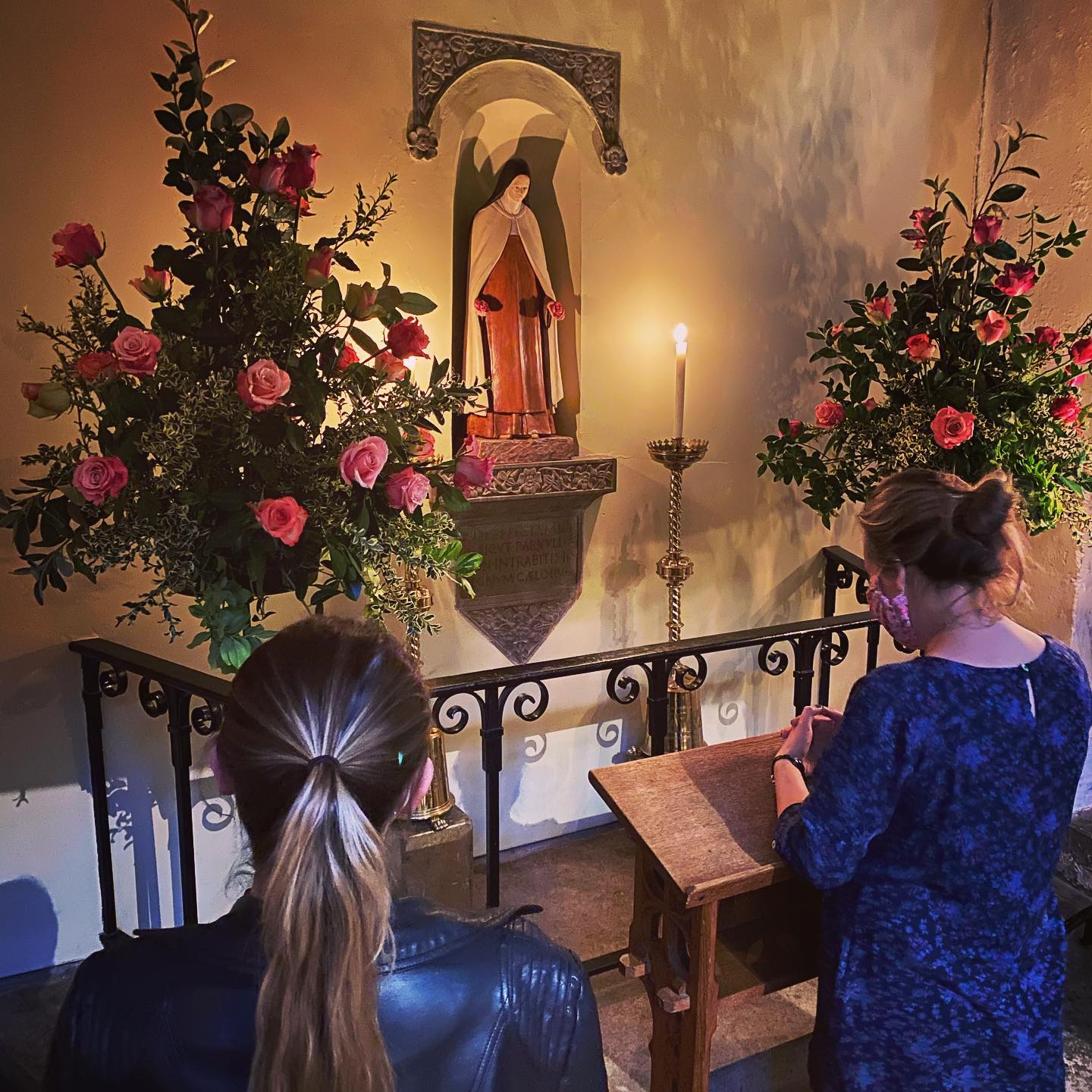
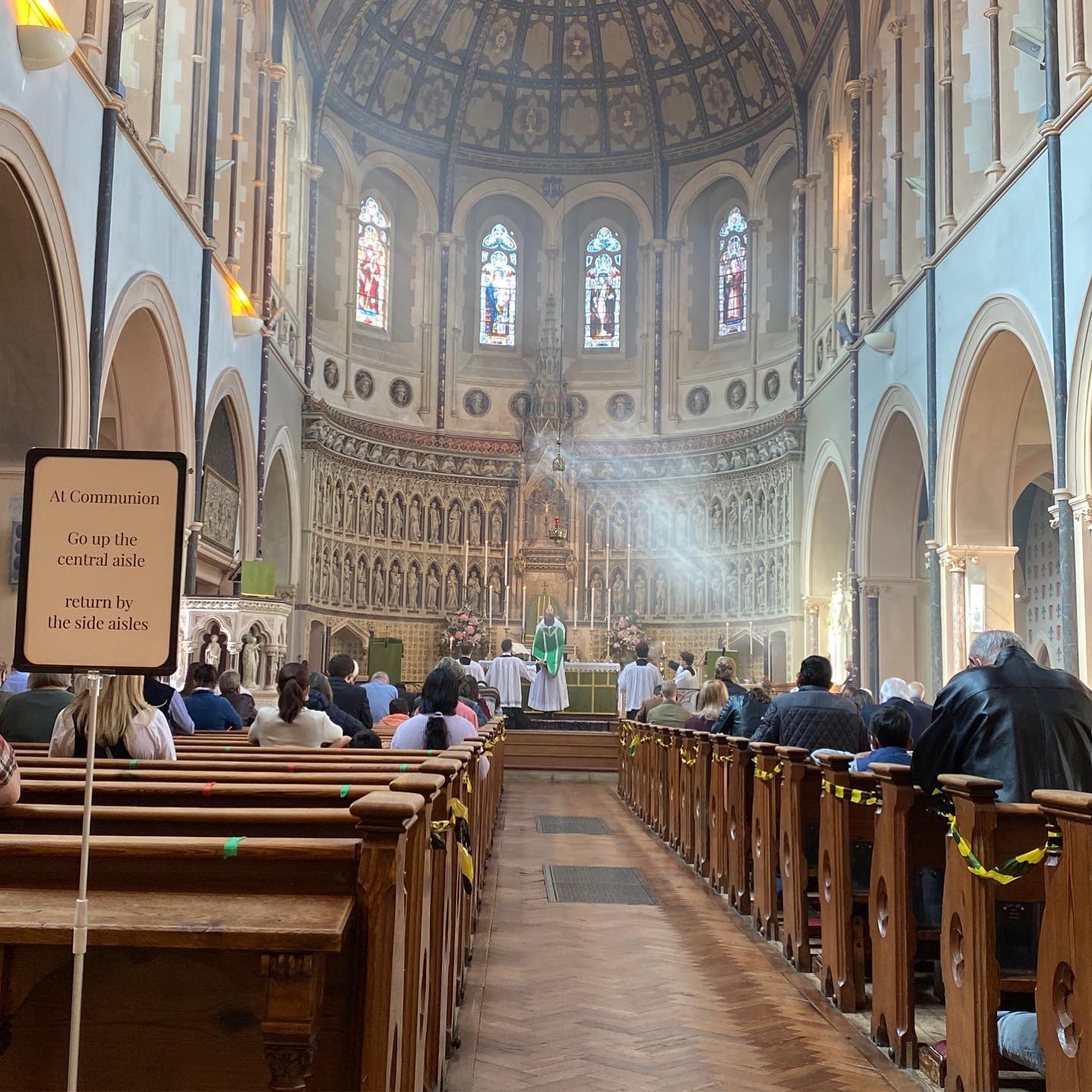
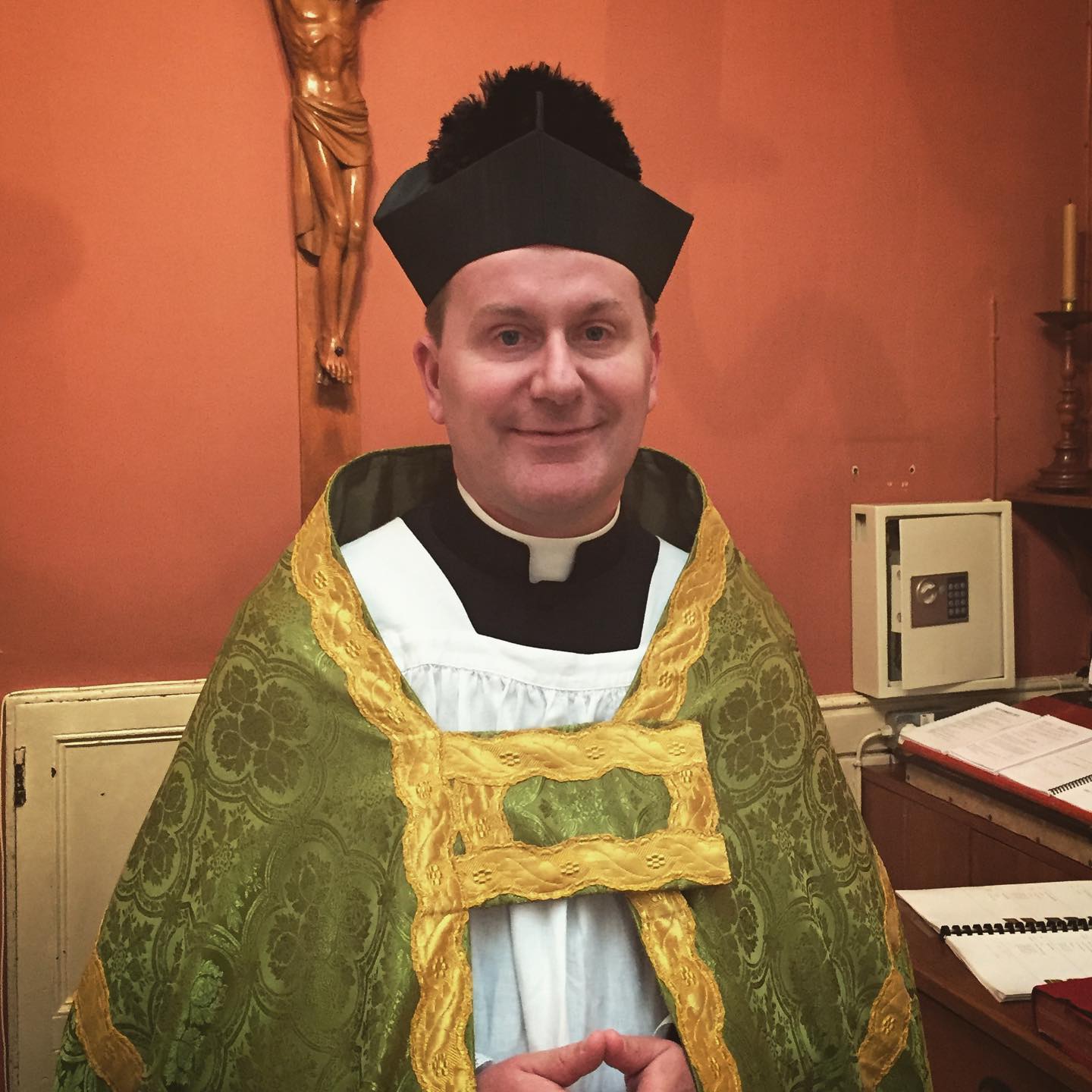
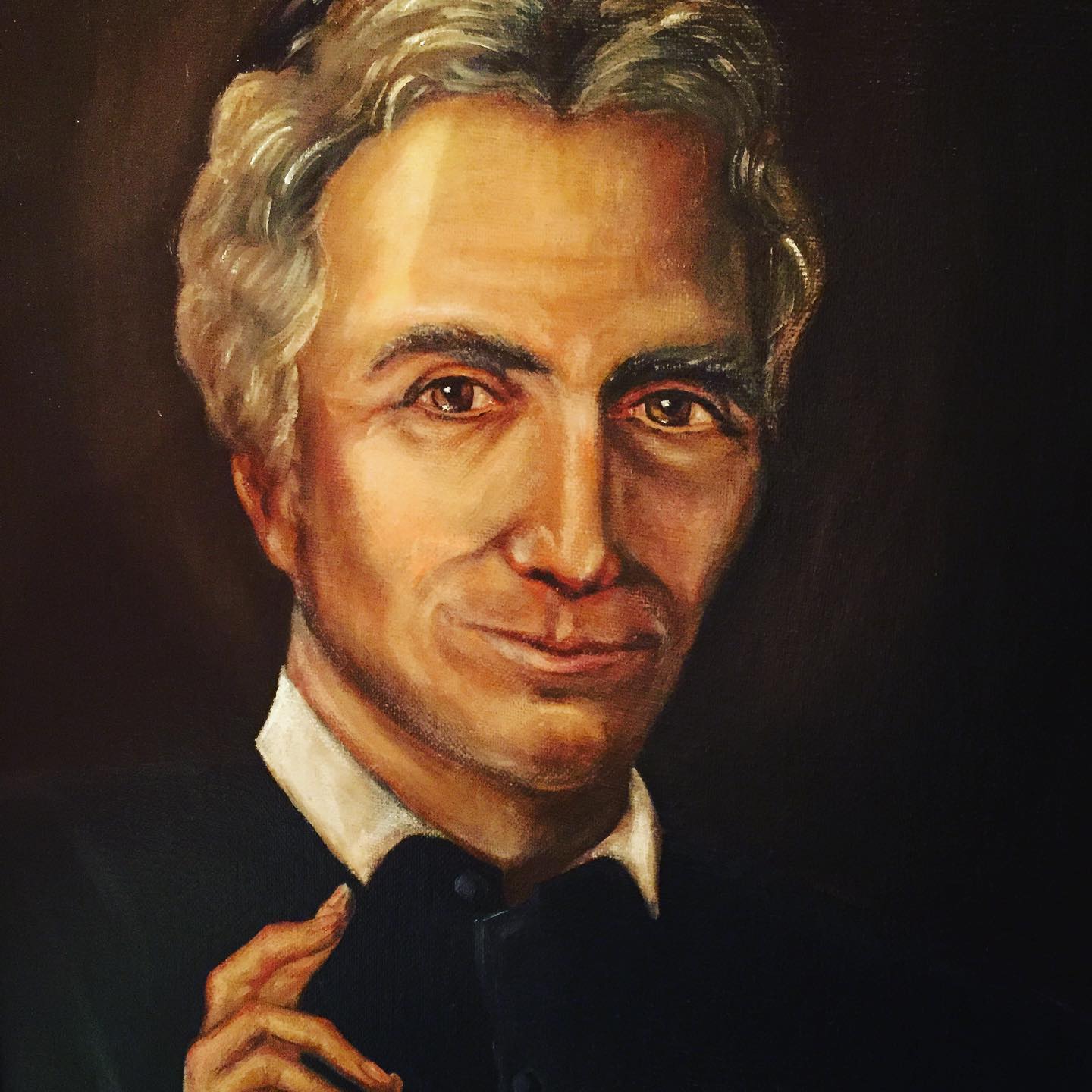
St Luigi Scrosoppi founded a ‘House for the Destitute’ as a home for orphans. He would drive a cart around the local countryside to beg for building materials. On one trip he was accused of being a robber and punched in the face. His response? ‘That was for me, now how about something for my orphans?’

#oxfordoratory

View on Instagram

Fr Jerome Memorial Journal

As many may already know, Fr Jerome studied, lectured and wrote about medieval brasses for over 50 years. He was a long-standing member of the Monumental Brass Society and was their senior Vice President. This year their annual journal, the Transactions of the Monumental Brass Society, will be a special issue in tribute to Fr Jerome. It will contain two of his final articles and also reviews of his last books on the brasses of Oxfordshire and Sussex which came out in 2019.

The journal is being made available to non-members at a special offer of £15 (free postage within the U.K, £5 for overseas) for those who might like to have a copy of this memorial issue.

Click here for more details and information on how to order.

Spiritual battles

We are thinking about the angels a lot this week, with the feast of the archangels yesterday and the feast of the guardian angels on Friday. But almost like Tom without Jerry, when we think about the angels, we can’t help thinking about who it is they are guarding us from, and who it is that St Michael defeats in battle. This is also a time to think about their opponent.

We’re very familiar with the main images scripture uses to describe the devil. At one end of the Bible, we meet a serpent in a garden; at the other, the great dragon of the Apocalypse. And in Monday’s Mass, we were reminded of one of his more subtle appearances as ‘the Satan’ — the Accuser — appearing in God’s presence to point an accusatory finger at the innocent Job.

In modern times, there are two extreme view points that are often adopted in the Church. Either that this is all old-fashioned superstition not to be feared, or that the devil really does exist and is to blame for all the evil in the world. Both of these extremes are not only wrong, but dangerous. If we believe the devil doesn’t exist, then we don’t use the appropriate spiritual weapons against him. But if we blame him for all our faults, we won’t take any responsibility for our failings and therefore can’t improve. The answer lies somewhere between the two. The devil does indeed exist (as scripture tells us), but he is not to blame for absolutely everything — an awful lot of sin is our own fault too.

Should we be scared of him then? No. As the serpent who tempts us in to sin, we have an answer: Christ forgave our sins on the Cross, and continues to apply that forgiveness in the confessional. As the dragon who fights against God’s faithful even to the point of martyrdom, we have an answer to that too: Christ rose from the dead, and shares that life with those who died in union with him. Death is not the end. The devil doesn’t have the final word. And as to the accuser, who stands before God and points out our weaknesses, Christ gives us another Advocate, the Spirit of Truth to be our defence in the heavenly court. (John 14:16)

The fight between Michael and Satan in the Apocalypse describes a great cosmic war between good and evil that is always going on in the background of our lives. We may take part in some of the battles, but we know the outcome of the war already because Christ has won the definitive victory on the Cross. We will win our own personal battles in the end. And our weapons are fairly simple. Most powerful of them all are the sacraments. As St James says: ‘Resist the devil and he will flee from you. Draw near to God and he will draw near to you.’ (James 4:7–8) The devil cannot touch us if we are filled with Christ himself. Or as St John Chrysostom described the effects of Communion: ‘When we come back from this Table we ought to be like lions breathing fire, dreadful to the devil.’

Our own St Philip used to warn us that ‘there is nothing the devil tries to hinder so much as prayer’. Presumably that’s because prayer makes the devil’s task so much more difficult. The great travel writer H V Morton described this form of spiritual combat among the ancient desert fathers:

The ancient Egyptians believed, as the moderns do, that the desert was haunted by evil spirits and that was one of the reasons why the hermits went to live there: they deliberately entered Satan’s country in order that they might pit the strength of their faith against the evil which they felt to exist all round them. It is wrong to think that these men entered the desert to escape temptation. It was the exact opposite, for to an Egyptian of that time the desert contained infinitely more temptation than a city, and, as the tempters were supernatural, they were more difficult to fight.

There was only one way to keep evil at bay: by unceasing prayer. All the fiends together, led by Satan himself, were powerless against the pure soul of a truly holy man. Thus the great hermits, though they were encompassed by clouds of devils, remained safe and secure in the strongholds of their sanctity. Every hermit was surrounded by a wall of prayer which grew higher and stronger with the years. Every day and night spent on the knees in communion with God added another stone to the protective rampart. (H V Morton, Through Lands of The Bible)

We might wonder what the point of all this is. God could simply wish the devil out of existence and he would be gone. But the quality of a hero is marked by the quality of his enemy. That mere humans should (with God’s help!) triumph over a fallen angel says something about how much God achieves in us. And similarly, we could argue that St Michael and his heavenly host also seem unnecessary — God can do all that he wants without them. But if we think of God quite literally as the author of creation, then we see that the story is so much richer for the imagination that creates such wonderful beings. And if we stop to think how impressive the angels are, and consider that each one of us is given a guardian angel whose sole task is to look after us — how much more impressive must God have made us in the sight of the angels?
Director of Music

The Fathers seek to appoint a Director of Music from January 2021 or earlier, to head all aspects of choral conducting and organ-playing within the traditional Roman Catholic liturgy for which the English Oratories are famous. Though a part-time post, a generous stipend reflects its artistic significance. Numerous additional services attract extra fees.

Details from: The Prefect of Music, Fr Oliver Craddock, e-mail: music@oxfordoratory.org.uk marked ‘Director of Music Vacancy’.

Closing date: Friday 30 October

For thy sake

I’ve always loved the words of the Metaphysical poet and Anglican clergyman, George Herbert:

Teach me, my God and King,
In all things Thee to see;
And what I do in anything,
To do it as for Thee.

In these strange and maddening days, many have felt themselves totally adrift from their normality, unsure of their purpose and direction. It has been, and is, a disquieting experience, leading some to question what it is they believe. Feeling cut off from the consolation of their religion and needing to be angry with ‘someone’, they have distanced themselves from both the Church and from God. How do we find our way back to a sense of God and find peace again? I do not pretend to have an answer which will satisfy all, but I have found it helpful to consider the sentiments of George Herbert, whose advice is to do everything as if it were for God. It may not seem to us, or indeed be, of any great significance, but I don’t believe that matters. As St. Teresa of Avila once noted: “It is not the magnitude of what we do, but the love with which we do it.” Hence, doing what we do as though we were doing it for the Lord – that is, doing things “for (His) sake” – can bring about a transformation in us.

Back to Herbert again:

A servant with this clause [“For Thy sake”]
Makes drudgery divine:
Who sweeps a room as for Thy laws,
Makes that and the action fine.

It is a small enough thing, insignificant we might say, but it is doing something.

We read in the fifth chapter of St Luke’s Gospel how, after the disciples had spent a long, fruitless night fishing on the Lake of Galilee, they were surprised when Jesus told them to go and try again. Peter famously answers, “Lord, we have laboured all night long and caught nothing. But if you say so, I will do it.” He might well have argued the toss and told the carpenter from Nazareth to keep to making ploughs and yokes and leave the fishing to them. Instead, he chose to act in the obedience of faith and do as he was told, even though it made little or no sense to him. His faith was rewarded.

Jesus had instructed him: “Launch out into the deep and pay out your nets for a catch.” In effect, Peter and his co-workers were acting as they had done every night of their working lives; what made things different was their new sense of vocation: “Because you say so, I will do it.”

When we learnt to swim, there was for some of us, a time when we preferred to stay close to the side of the pool at the shallow end. We can sometimes live life a little like that, unwilling through fear or a lack confidence to “launch out into the deep” – taking our foot off the bottom of the pool and moving away from the safety of the shallows. Someone once said that to discover new countries, we have to be prepared to leave the shore. Talk of launching out anywhere may seem to make little sense right now, especially when it looks as though restrictions on our movements and activities may be about to be imposed again. However, we need to keep moving, mentally and spiritually. Our prayer life need not ever stagnate. When St. Catherine of Siena said, “Every time and every place is a place and time for prayer,” she wasn’t trying to be clever, simply encouraging us to keep going, regardless of our how we might feel about the circumstances in which we find ourselves. Duc in altum: launch out into the deep and do not be afraid.

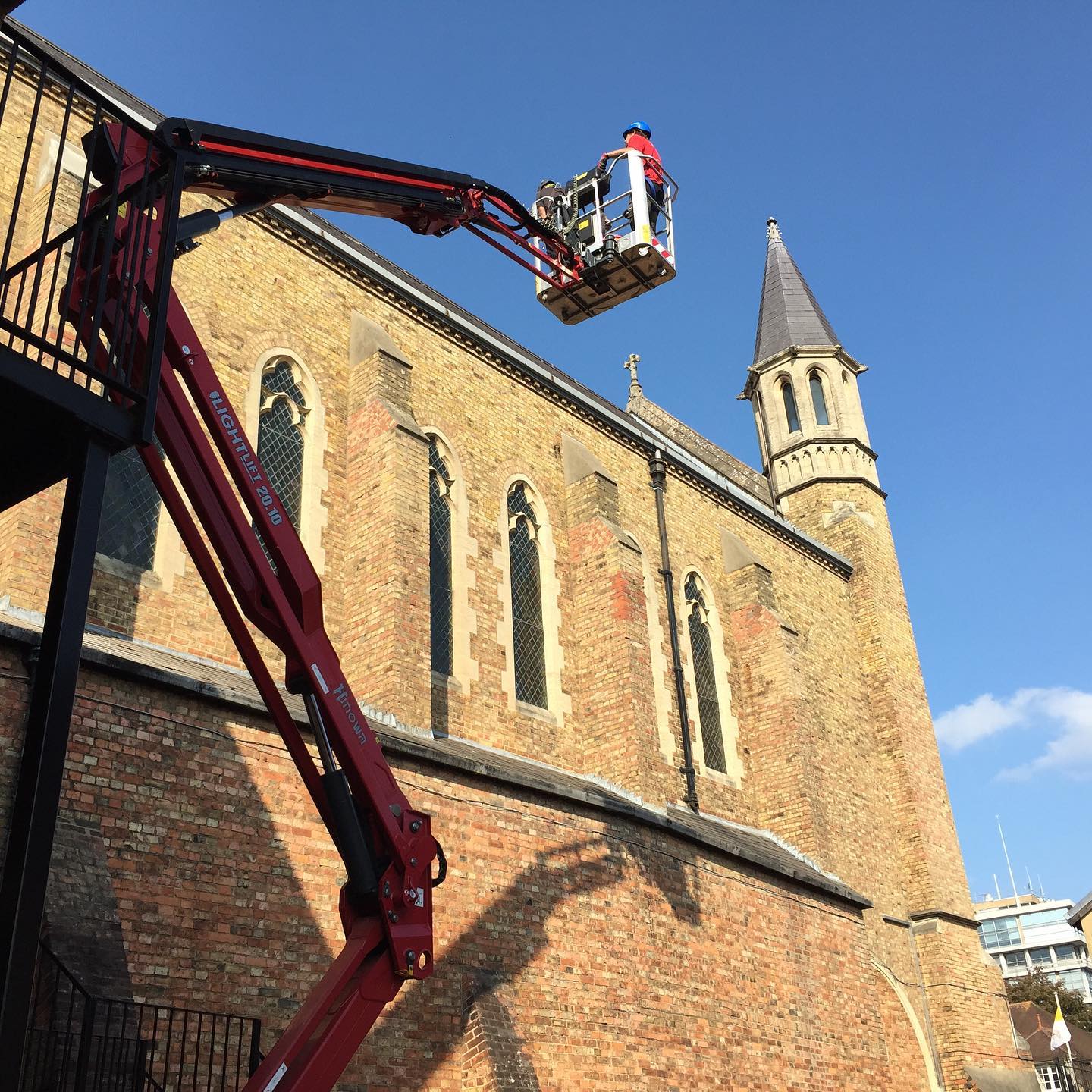
A lot of essential repairs were delayed in the last few months and are finally under way. At the moment all the loose render from the top of the church buttresses is being removed and replaced. You can see the lighter new render on the first buttress to the left. Quite a few roof problems should be fixed this week too. #oxfordoratory

View on Instagram

Fr Joseph Hamilton has been living with us for the last two years while studying at the university. This morning we wished him buon viaggio and grazie as he moves to Rome, where he will be taking up a new position in the Vatican. #oxfordoratory

View on Instagram