Current Church Opening Times

We are open for public Mass.
Services in bold are also streamed on our YouTube channel.
No booking is required to attend any Masses.

The current schedule is as follows:

Mass
Sunday 8:00 (EF), 9:30 (Sung English), 11:00 (Sung Latin), 12:30, 18:30
Mon–Fri 7:30, 10:00, 18:00
Saturday 10:00, 18:30 (Sunday Vigil)

Confessions
Mon-Fri 20 minutes before each Mass
Saturday 9:00–10:00; 17:30–18:30
Under our temporary safety measures it is not yet possible to hear confessions on Sunday.

Other services
Vespers & Benediction Sunday 17:00
Exposition of the Blessed Sacrament Saturday 17:30–18:30

The church is not open outside Mass and confession times for now.

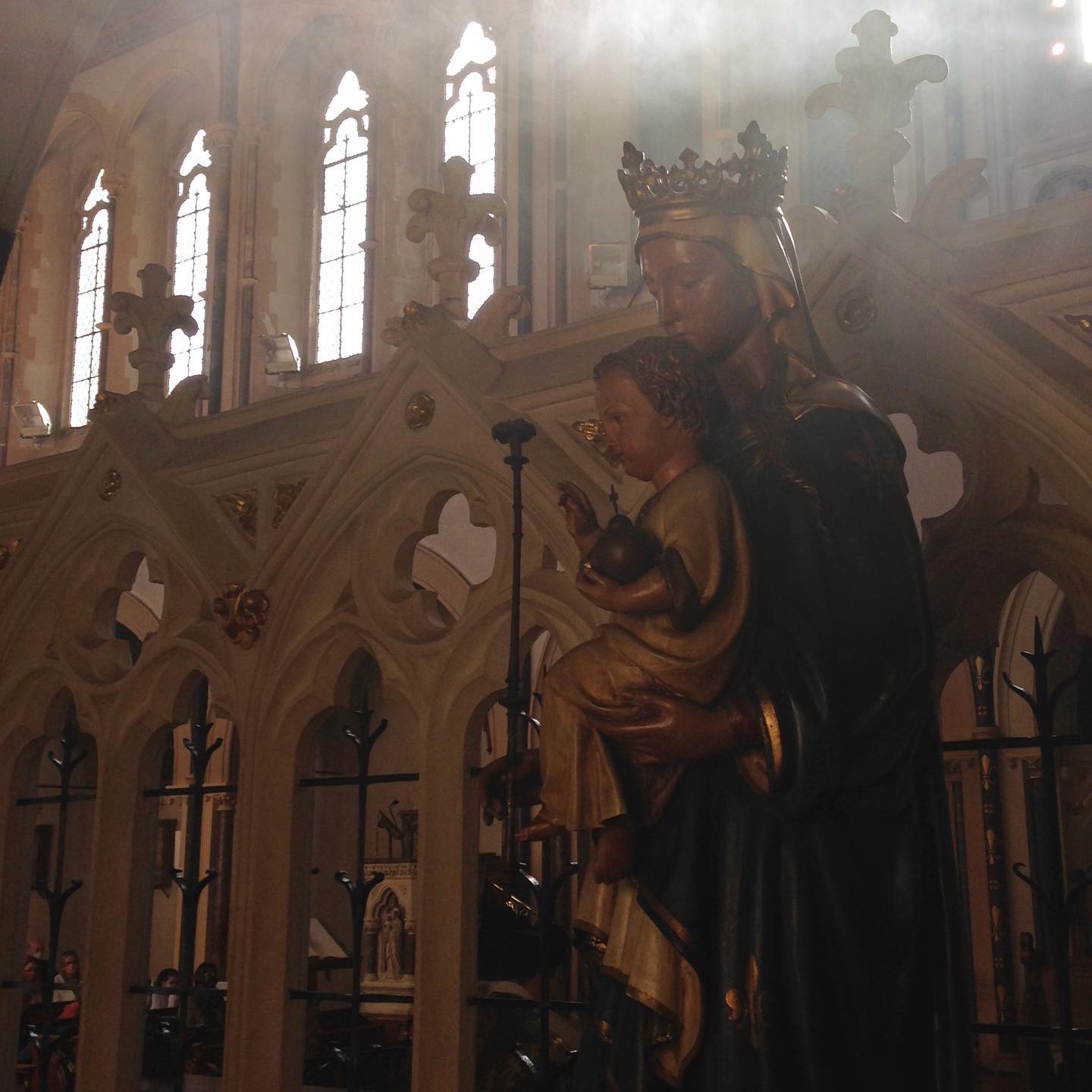
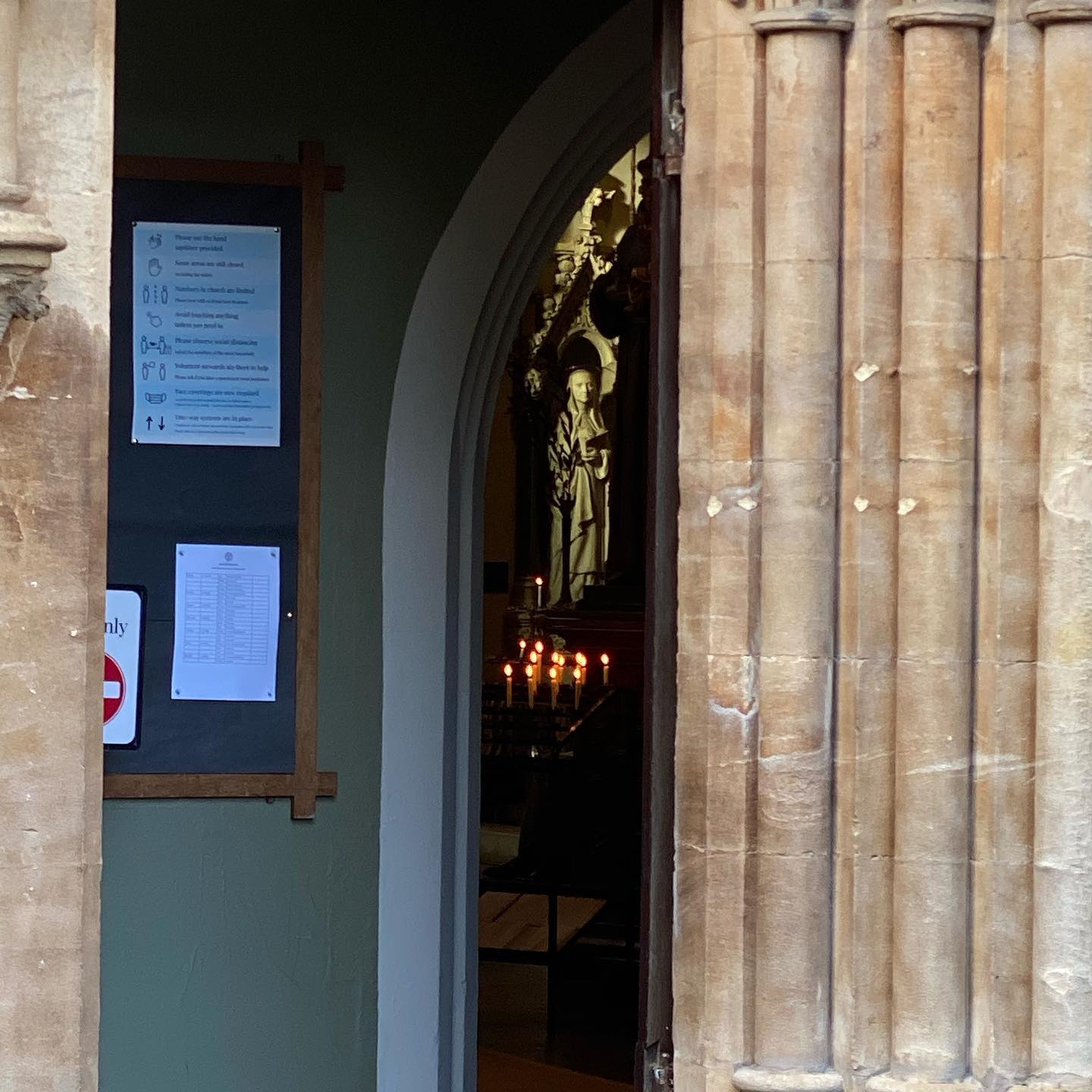
“Let nothing disturb you; let nothing frighten you. All things are passing. God never changes. Patience obtains all things. He who possesses God lacks nothing. God alone suffices.” – St Teresa of Avila and in the picture her statue is glimpsed through the open doors of the Oratory church. #oxfordoratory

View on Instagram

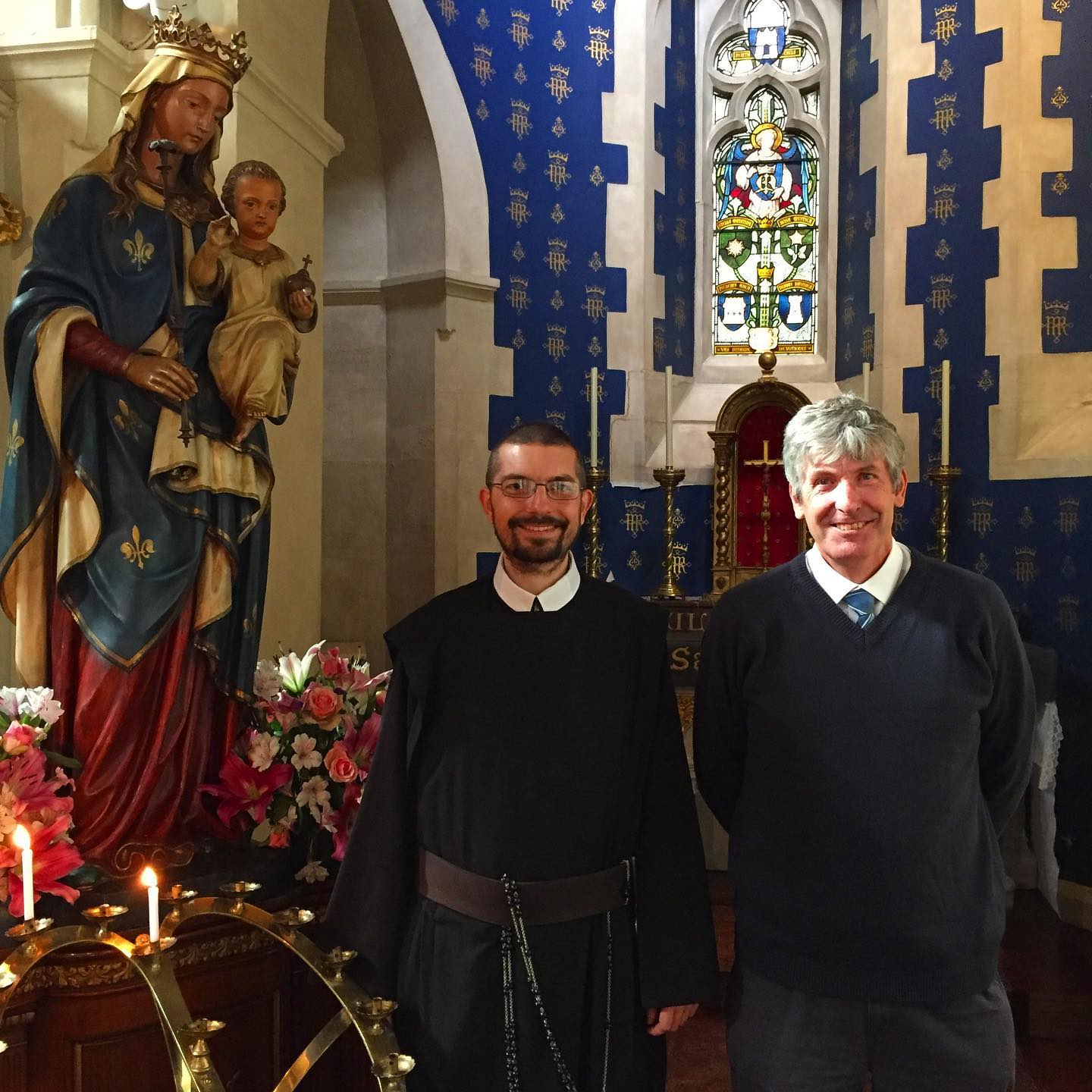
Congratulations to Fr Martin Mary FSSR who was ordained priest at the end of August, and today said Mass for his father for the first time. Fr Martin Mary will celebrate and preach at the 8am Mass this Sunday and give first blessings after. #oxfordoratory

View on Instagram

‘He knows what he is about’

A year ago today, the Fathers and some of our parishioners were in the Pope’s Cathedral of St John Lateran, together with bishops and priests of England and Oratorians from all over the world, for the Mass of Thanksgiving following the canonisation of St John Henry Newman our Cardinal. This was the end of an unforgettable weekend of prayer and celebration, culminating in the Holy Father enrolling St John Henry among the saints of the Church at a Mass in St Peter’s Square on Sunday. It was a moment of immense pride and joy for us: not only was Newman’s portrait hung in the very centre of the facade of the basilica, but our own Brothers Benedict and Henry had been chosen to be deacons for the Pope, standing next to the Holy Father as he canonised five new saints.

The celebrations continued back home in England, beginning with a lecture by the famous evangelist Bishop Robert Barron in the University Church here in Oxford, and then Masses of Thanksgiving in the London and Birmingham Oratories and Vespers in Westminster Cathedral. Yet in the midst of all the joy came a moment of profound sadness. Fr Jerome, who had been battling cancer for two years, died suddenly while some of the Fathers were visiting him in Sobell House. Fr Jerome had touched so many lives throughout his forty years of priesthood, through his extensive writings, through his preaching, and especially in the confessional. He was and is a great loss to the Oratory family and is still greatly missed. Our own Mass of Thanksgiving took place the day after Fr Jerome returned to the Father’s House, and while we were grieving our loss, we could give thanks to God not only for our new saint, but also for the life of another faithful Oratorian priest and scholar, and pray for his soul.

November saw more cause for Oratorian rejoicing as the Pope set up a new Oratory in Manchester and gave independence to the community in York. This was a bitter-sweet moment for, although we are grateful that our Cardinal’s dream to have an Oratory in every major city in this country is closer to being realised, our own community was halved to create the York Oratory.

No one could have guessed at the time how the world would change in the following months, as we were confronted with the coronavirus pandemic and entered into “lock-down”: no public Masses or sacraments for three months, including over the most sacred days of the Easter Triduum, and the unfamiliar experience of preaching, praying and celebrating via live-streaming. But this too has been bitter-sweet: many people who might never have had the courage to come to church before are now wanting to know more about our Lord and his Church and are under instruction to become Catholics, and many Catholics have rediscovered their hunger for the Eucharist and for Confession. We have begun a new Sunday Mass to accommodate all those wanting to come to church.

There are many times in the Christian life, even in the most difficult of times, when it is easy for us to sing, “Praise to the holiest in the height, and in the depth be praised”, and equally as many times when all we can ask is for the “kindly light” to lead us “amid the encircling gloom”. Newman is a saint not because of his theological writings on conscience or the development of doctrine, nor his cardinalatial red hat, but because he trusted and hoped in our God who “knows what He is about”, despite the sorrows and disappointments and failures of his life — and there were many. That trust and hope changed the religious landscape of our country, brought St Philip’s family to England, and has inspired countless men and women since.

We do not know what the next twelve months will hold for us. But we do know that there will be many causes for rejoicing, and many sorrows and losses. “Still, He knows what He is about.” In all of this, our Cardinal can be our guide:

God has created me to do Him some definite service. He has committed some work to me which He has not committed to another. I have my mission. I may never know it in this life, but I shall be told it in the next. I am a link in a chain, a bond of connection between persons. He has not created me for naught. I shall do good; I shall do His work. I shall be an angel of peace, a preacher of truth in my own place, while not intending it if I do but keep His commandments. Therefore, I will trust Him, whatever I am, I can never be thrown away. If I am in sickness, my sickness may serve Him, in perplexity, my perplexity may serve Him. If I am in sorrow, my sorrow may serve Him. He does nothing in vain. He knows what He is about. He may take away my friends. He may throw me among strangers. He may make me feel desolate, make my spirits sink, hide my future from me. Still, He knows what He is about.

St John Henry Newman (Abbot Cuthbert Brogan’s Sermon)

When I was a young student at St Benet’s Hall, in my early twenties, the Oratorians arrived in Oxford and suddenly the religious scene in this city became  much more exotic than it had been before. It became three dimensional. We heard things not heard for a long time, and we saw items of religious dress and liturgical objects we had only read of in the 1907 Catholic Encyclopaedia. More and more young faces poured into St Aloysius and a steady flow of converts crossed the Tiber. The Orthodox Bishop Kallistos Ware – used to describe the Church of England as a most generous mother, one who gives away most of the children to the other churches. I, being an Anglican convert, signed up for the Newman paper. And it gave me a lot of grief, reading acres of his 19th century prose proved no easy task. I discovered that there is no immediacy about Newman, but such subtlety, such fine articulation, requires the approach of what we Benedictines call lectio divina, reading and reading again and again until depths are fathomed and meaning emerges. All Anglican converts are, in a way, disciples of John Henry Newman, we have all followed that same route and recognise his struggles. Newman, slowly but surely, became a friend. For the first ten years or so of my priesthood, nigh every sermon looked to the Fathers of the Church for its inspiration and Newman for clarity of thought and purity of doctrine.

In those days, and they are not so long ago, we never imagined that Newman would be declared a saint. We knew there was talk of the cause in the background, but we frankly thought that the project was simply the result of an overactive Oratorian imagination. His vast intellectual output distracted us from his sanctity.  I had lived with the Passionist Fathers at the Shrine of Blessed Dominic Barberi before belong a monk, and so I tended to look to Barberi for holiness in this story, and to Newman for intellect. Indeed, one of my old monks – now long dead, was a great Newman fan. He loved Newman’s writings, but would insist, ‘He should not be beatified! He could be very quirky, and held grudges for years on end!’ When we reminded this monk that he himself had a rather spectacular track record for holding grudges, he replied, ‘but I am not up for beatification!’ So there you have it! Many spoke of their hope that Newman would be declared a doctor of the Church, and that his intellect might somehow thereby be canonised rather than the man himself. And so it is

When Newman was made a Cardinal he was inundated with letters of congratulation, but recalled that he was particularly pleased to receive the congratulations from the Abbot President of the English Benedictine Congregation, and that he was pleased simply ‘ because it came from the Benedictines’. This fact was enough for him. In his historical sketches he described the monastic life as free from corruption in its daily work, free from distraction in its daily worship.  And in this he recognised his own ideals. Newman was no monk, he did not live the monastic life, but it is true to say he lived a monastic life. The ora and labora – prayer and work – of our monastic tradition were the chief occupations of Newman, and what was his retirement at Littlemore if not a monastic sojourn?

His search was for the Truth. His intellectual project was a constant relegation to the periphery all that did not lead to the Truth or distracted form the Truth. And all this at tremendous personal cost. His was an ascetic life, a lifelong forsaking of all that does not lead to God. And his askesis was a search not for a thing but a person, the God who is Truth Himself, the Wa,y the Truth, and the Life. He was not seeking a theory but reality Itself. And his vocation was not a short project not a mere academic essay, not a sprint, but a marathon – a pilgrimage, the work of a lifetime, a work usque ad mortem – unto death – as St Benedict loves to say. Newman’s work was what the French like to call a travail de bénédictin – a Benedictine work – a work which rather like an illuminated manuscript, requires great patience and precision across many year.

One of the marvellous aspects of God is that he is at once utterly complex and utterly simple. Some of the saints have glimpsed this. St Benedict saw all this is, in a ball of fire. Julian of Norwich saw the same in a hazelnut held in her hand. Newman in the complexity of intellectual endeavour, found the simplicity which is God. And his key was humility, that he approached the sources of revelation – scripture and tradition – with profound humility. And so he was not left disappointed and his researches were fruitful. Humility means rootedness in the truth, the truth about ourselves as well as about God. This is the stuff of all the spiritual masters and Newman sits comfortably amongst those masters.

And so Newman is a saint, and a saint for our day. His reverence of the Truth is a corrective in our world of fake news, his intellectual honesty and humility is a corrective to arrogance and pride. His prophecy of what liberalism would do to the National Church he so loved has come true. What would Newman make of phrases such as ‘two integrities’? What of the relativism which threatens the Catholic Church of our day?

He is a saint of the mystery of the Church. If we are disillusioned with the Church today we can recall how Newman’s path to seeing the true dignity and nature Church was far from straight-forward or immediate. Likewise he is a saint of the liturgy, a wonder obscured and often disappointing today. His writings on the liturgy are a rich seam yet to be properly quarried, and reverence for St John Henry goes hand in hand with a profound respect for the Church’s godly and ordered worship and a love of its tradition. And we Benedictines were making the same discoveries in parallel. Just as the Oxford Movement began in 1833, so in the same year Dom Guéranger refounded the Abbey of Solesmes and discovered in the liturgy what Newman discovered through doctrine. Both held the Incarnation to be the main principle of Christianity. What Newman saw in the sacred deposit of doctrine developing organically down the centuries,  Dom Guéranger saw prolonged in the Sacred Liturgy. He believed the Sacred Liturgy to be the prolongation of the ‘great principle’ of the Incarnation in the Church of his today and of every age..

In celebrating Newman as a saint we celebrate theory turned in to practice. He made his doctrine his own, he practised what he preached. He gave flesh to the word in the concrete choices of his own life. This is holiness.

And his trust in divine providence is a lesson and a consolation to us all. When writing about early Benedictines he observes, they had no magnificent plan of work beyond the daily round of duties:  they let each day do its work as it came’. And in speaking of where God is to be found – he gives us some useful indictors. Pointing out that Moses saw the glory of God as he passed by, he explains how when we look back we can see God’s hand at work. We see His guiding hand in the teachers, the friends, the priests and religious, the various circumstances we have been through – in all these we see that who, what and where we are today is no accident but part of a plan gradually revealed in our lives. This looking back – gives us a confidence to live the present day with trust and the future with hope.  When John Henry looked back he could see his own life being crafted by God: his evangelical conversion as a boy, impressions of dogma impressed on his imagination, his failures at exams, his crises of confidence, the hurtful disputes, the parting of friends, the bitterness of separation from loved ones which his conversion engendered. In all these joys and vicissitudes we see this heavenly patron being prepared by God not only for the heroic witness of his earthly life, but also as his useless fullness to us as a heavenly patron.

Preaching here a few years back on St Philip’s Day I noted that St Philip Neri left the region of Monte Cassino for Rome and St Benedict left Rome for Monte Cassino. And so the Oratorian way and the Benedictine way travel the same route, a route which involves community life, the liturgy, music, prayer, joy, and hospitality. This is one reason why Benedictines and Oratorians often get along so well, and perhaps why our Dom Stanislaus lives so happily with the Oratorian community here in Oxford during term time – at least that’s his side of the story.

St Benedict tells us that as we run the way of God’s commands our hearts expand with the indescribable delight of love. What St Benedict tells us in the year 500 would be confirmed centuries later in that expansion of heart of St Philip. And from Newman we hear Cor ad cor loquitur – heart speaks unto heart. And so we give thanks to almighty God that St John Henry communicates so eloquently what St Benedict and St Philip held dear, and joins these two great patriarchs of ours in prayers for their sons.  We ask their prayer sand to them we join our own as we pray today for the Fathers of the Oratory, for the City of Oxford, and for the whole Church, the One, True Fold of the Redeemer, the vine which God’s own right hand has planted. Amen.
New Sunday Mass

Starting Sunday 11 October there will be an extra Mass on Sundays at 12:30pm.

This Mass will be said in English, without a sermon. We are trying to make it possible for everyone to attend Mass on Sundays without introducing a booking system.

The current schedule is as follows:

Mass
Sunday 8:00 (EF), 9:30 (Sung English), 11:00 (Sung Latin), 12:30, 18:30
Mon–Fri 7:30, 10:00, 18:00
Saturday 10:00, 18:30 (Sunday Vigil)

Confessions
Mon-Fri 20 minutes before each Mass
Saturday 9:00–10:00; 17:30–18:30
NB: Confessions will not be heard on Sundays for the time being.

Other services
Vespers & Benediction Sunday 17:00
Exposition of the Blessed Sacrament Saturday 17:30–18:30

The church remains closed for now outside Mass and confession times.

Live stream
The following Masses are streamed live on our YouTube channel:
Sunday 8:00, 9:30, 11:00, 17:00 (Vespers)
Mon–Fri 18:00
Saturday 10:00

The Rosary

Nestled at the foot of Mt Vesuvius, the town of Pompei near Naples is perhaps best known for its spectacular excavations of the Roman city buried there by a volcanic eruption in 79AD rather than as a place of miracles. Wonderfully, this place has become known for just that and has inspired deep devotion to Our Lady and the Holy Rosary. Just this past week we celebrated the memorial of a nineteenth-century lawyer, now Blessed, Bartolo Longo. Bl. Bartolo, having fallen into depression and anxiety after becoming entangled in occultism, was converted to the faith by a Dominican friar who led him to recite the Rosary. Turning his life to one of prayer and service of the poor as well as practicing law, Longo moved to Pompei where he was shocked at the erosion of the faith of the people. A friend gave him a painting of Our Lady giving the Rosary to St Dominic, and erecting this in a shrine to Our Lady of the Rosary with fervent prayer, many miracles began to be worked through Our Lady’s intercession. The great festival of Our Lady of the Rosary of Pompei has transformed the faith of thousands.

Today we keep the feast of Our Lady of the Rosary, and it is good to remember that as well as this day, the month of October has traditionally been a time for special focus on this most Catholic of devotions. There are fewer more iconic symbols of Catholic devotional life than that string of beads leading to and from the Cross. Down through the ages, the Rosary has been a particularly precious means to grow in intimate friendship with the Lord and to learn at the school of Our Blessed Lady always to fulfil God’s will.

It is the simplest of prayers, but it must be admitted that it can be challenging. The repetition does always lend itself to prayer, at first, but this is not a quick-fix sort of prayer. It is an old friend for life and takes time to grow into. Pope Benedict reminded us that rather than get in the way of contemplation, “the cadent repetition of the Hail Mary does not disturb inner silence but indeed both demands and nourishes it.” The silence comes to the surface of the words, not in spite of them, but rather as we realise their deeper meaning and the meaning of the mystery of the Lord’s life on which we ponder.

So many saints attest to the spiritual good which can be gained by praying the Rosary — Padre Pio called it his greatest weapon, and St Phillip too was never to be seen without the Rosary in his hand. As with the whole spiritual life, it must lead us to imitation of the Lord Jesus — something Bl. Bartolo Longo knew well. As he himself wrote, “Just as two friends, frequently in each other’s company tend to develop similar habits, so too, by holding familiar converse with Jesus and the Blessed Virgin, by meditating on the mysteries of the Rosary, we can become, to the extent of our lowliness, similar to them and can learn from these supreme models a life of humility, poverty, hiddenness, patience and perfection.”

How fitting it is that the greatest weapon in the spiritual life is actually a means to friendship — and the greatest of friendships at that.

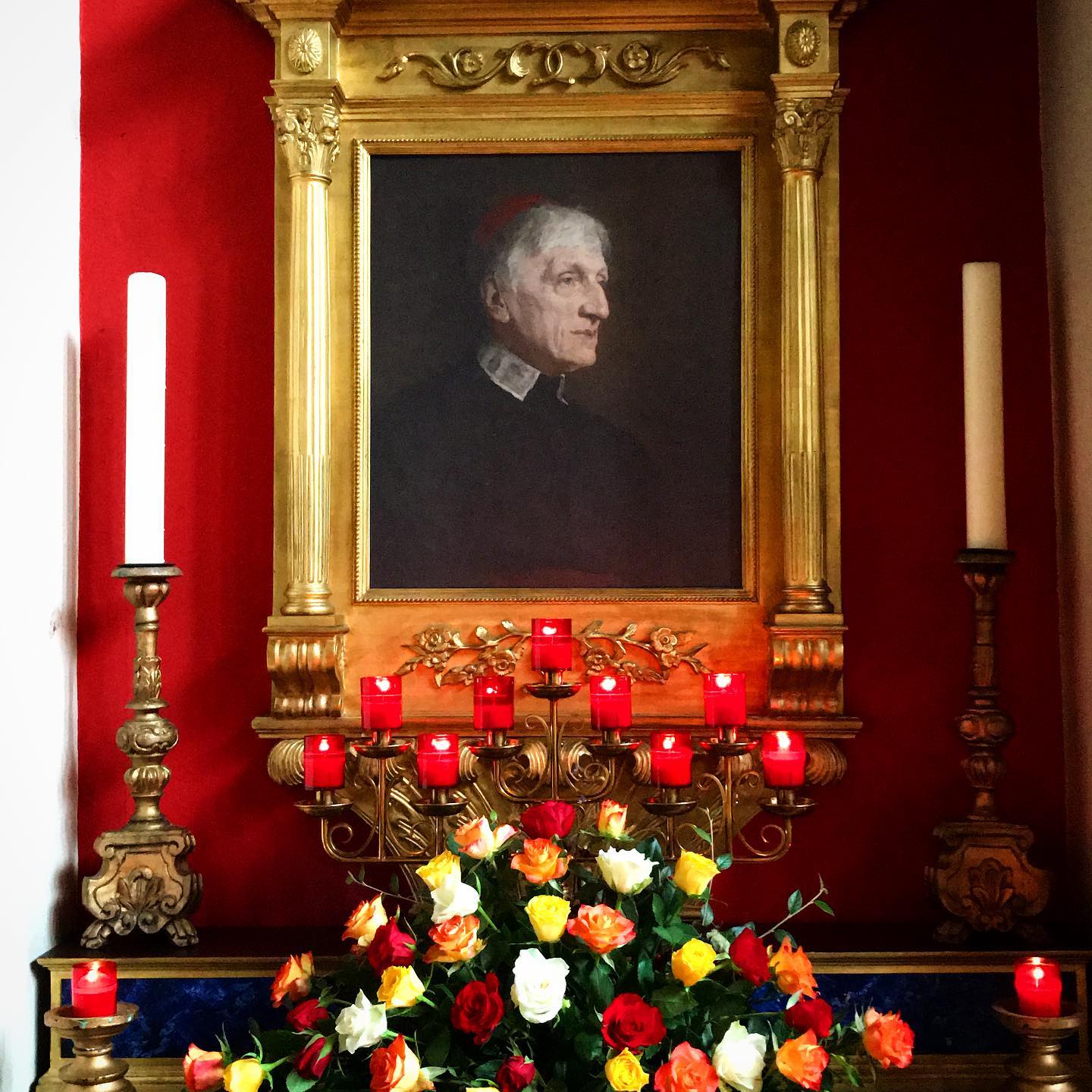
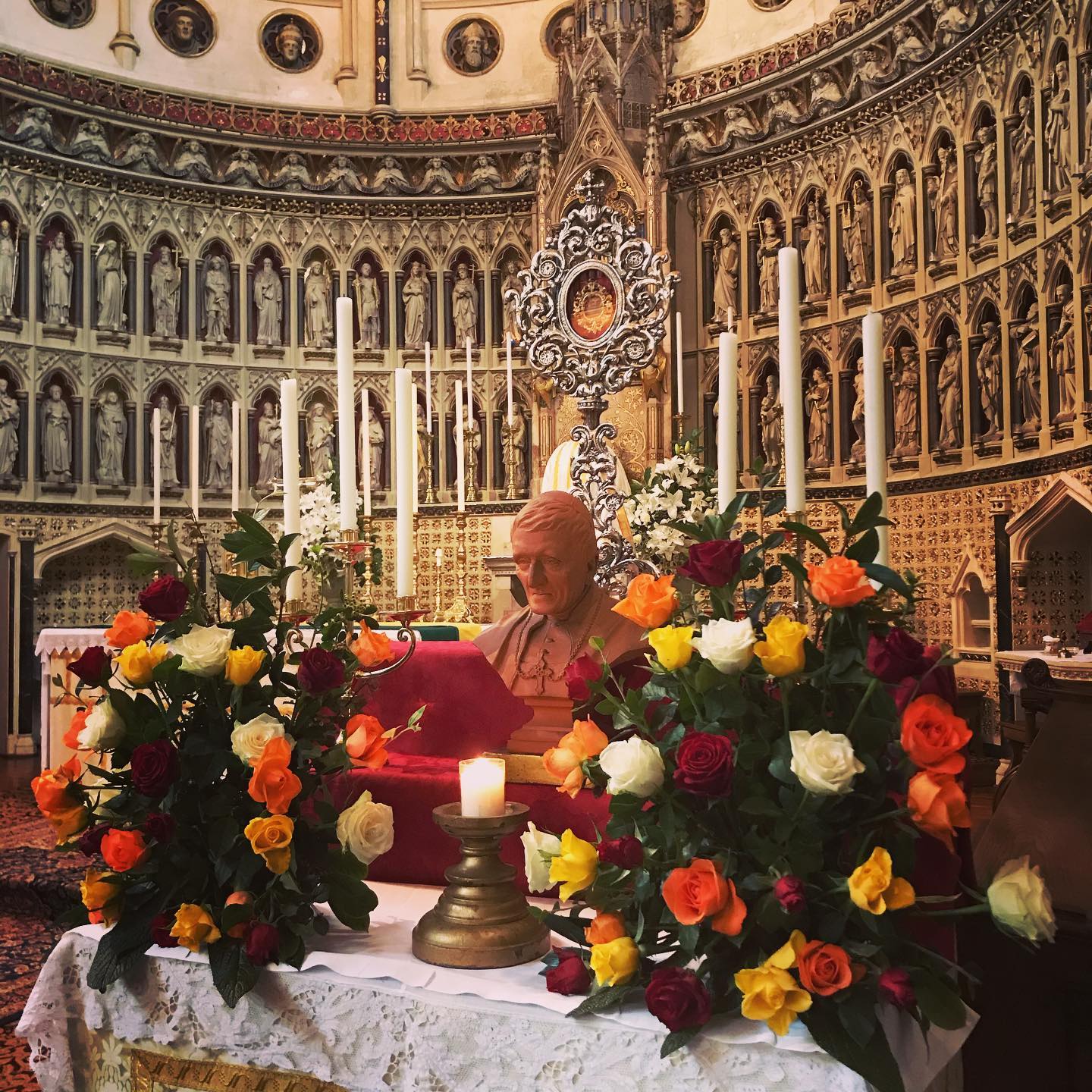
Join us tonight for day two of our triduum in preparation for St John Henry Newman’s feast day on Friday. (Day 1 is on YouTube if you need to catch up.) Abbot Cuthbert Brogan of St Michael’s Abbey Farnborough will preach at the Solemn Mass on Friday at 6pm. #oxfordoratory

View on Instagram