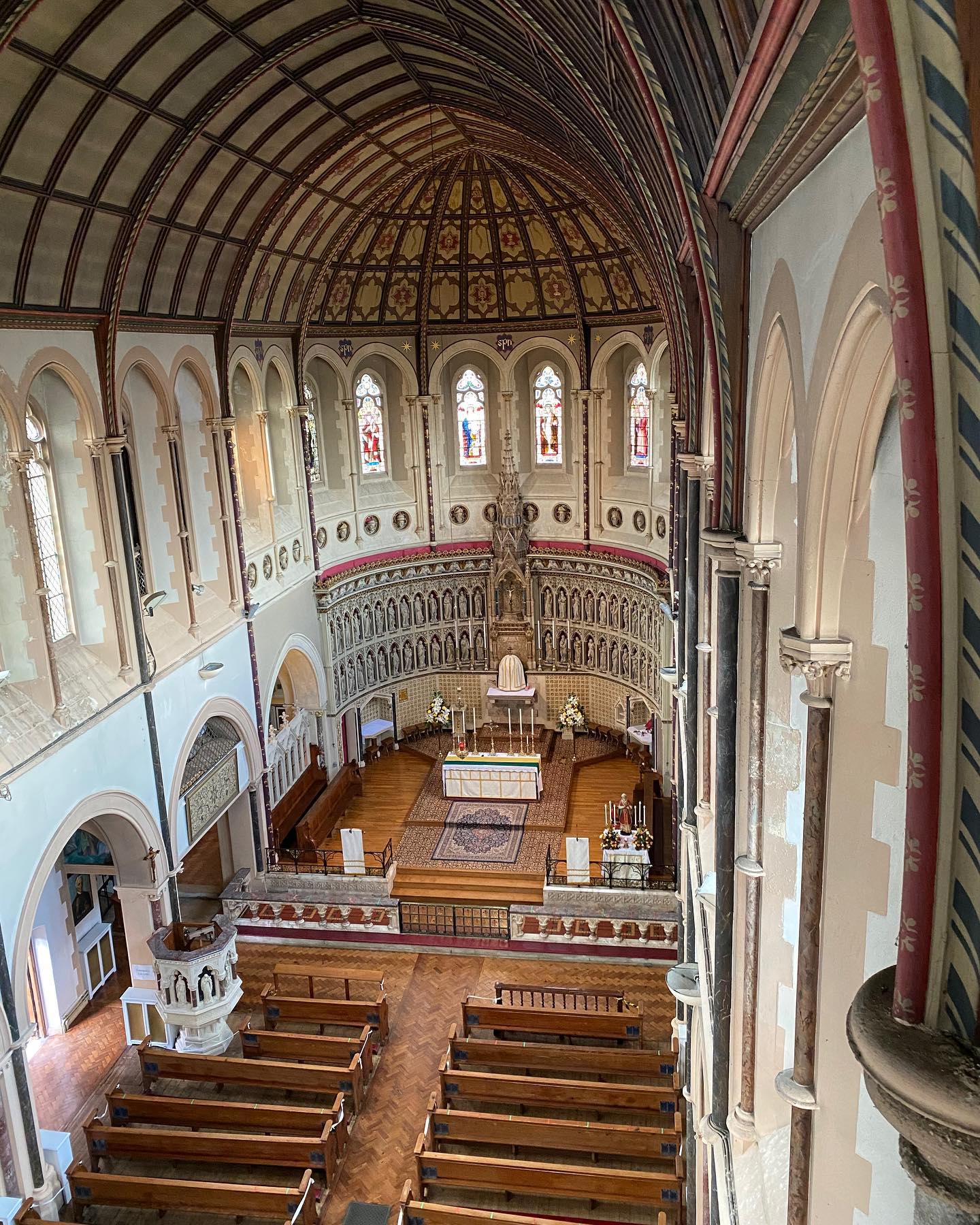
“The Holy Spirit is the master of prayer, and causes us to abide in continual peace and cheerfulness, which is a foretaste of Paradise.” — St Philip
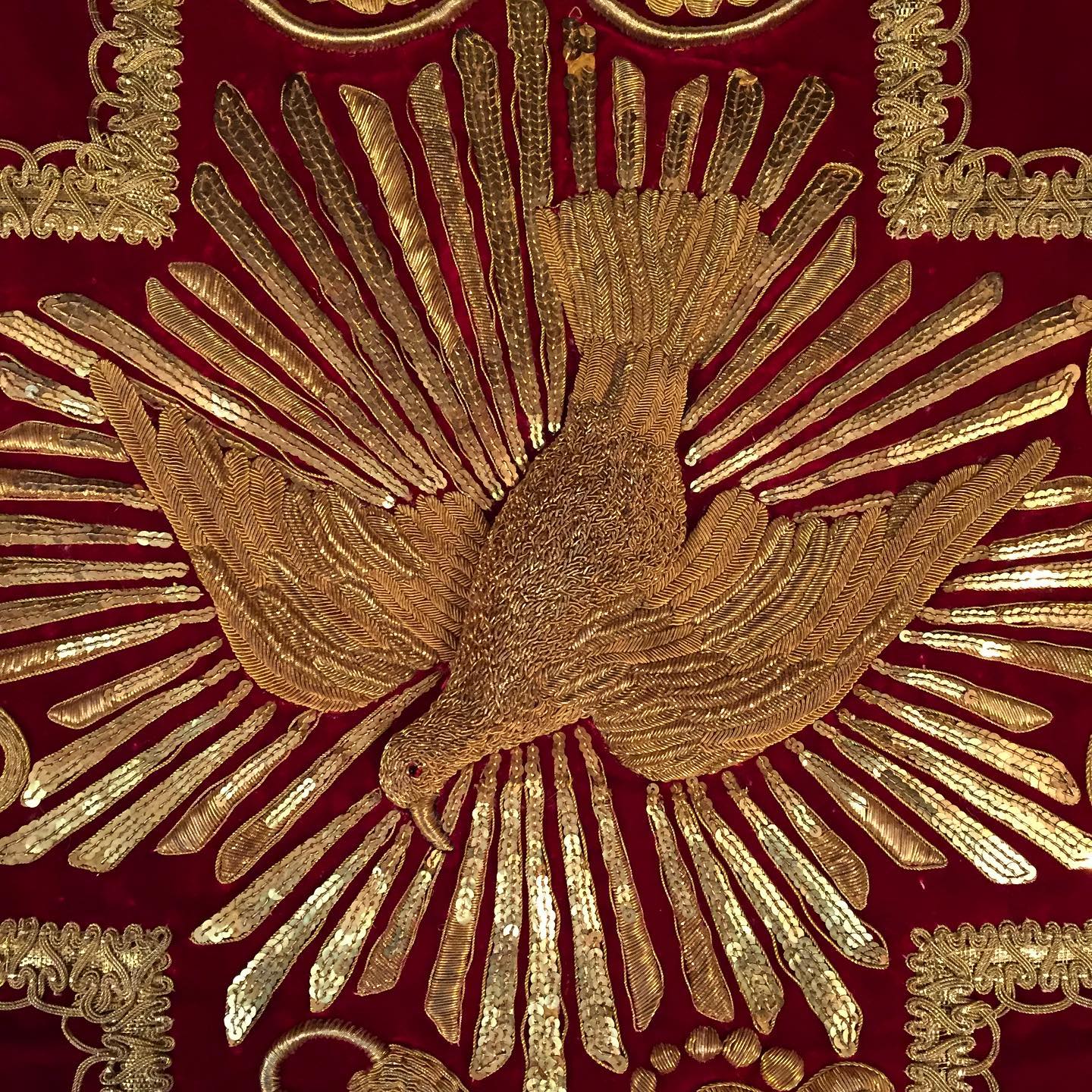
A detail of the Pentecost vestment used for Masses today. #oxfordoratory
“The Holy Spirit is the master of prayer, and causes us to abide in continual peace and cheerfulness, which is a foretaste of Paradise.” — St Philip
A detail of the Pentecost vestment used for Masses today. #oxfordoratory
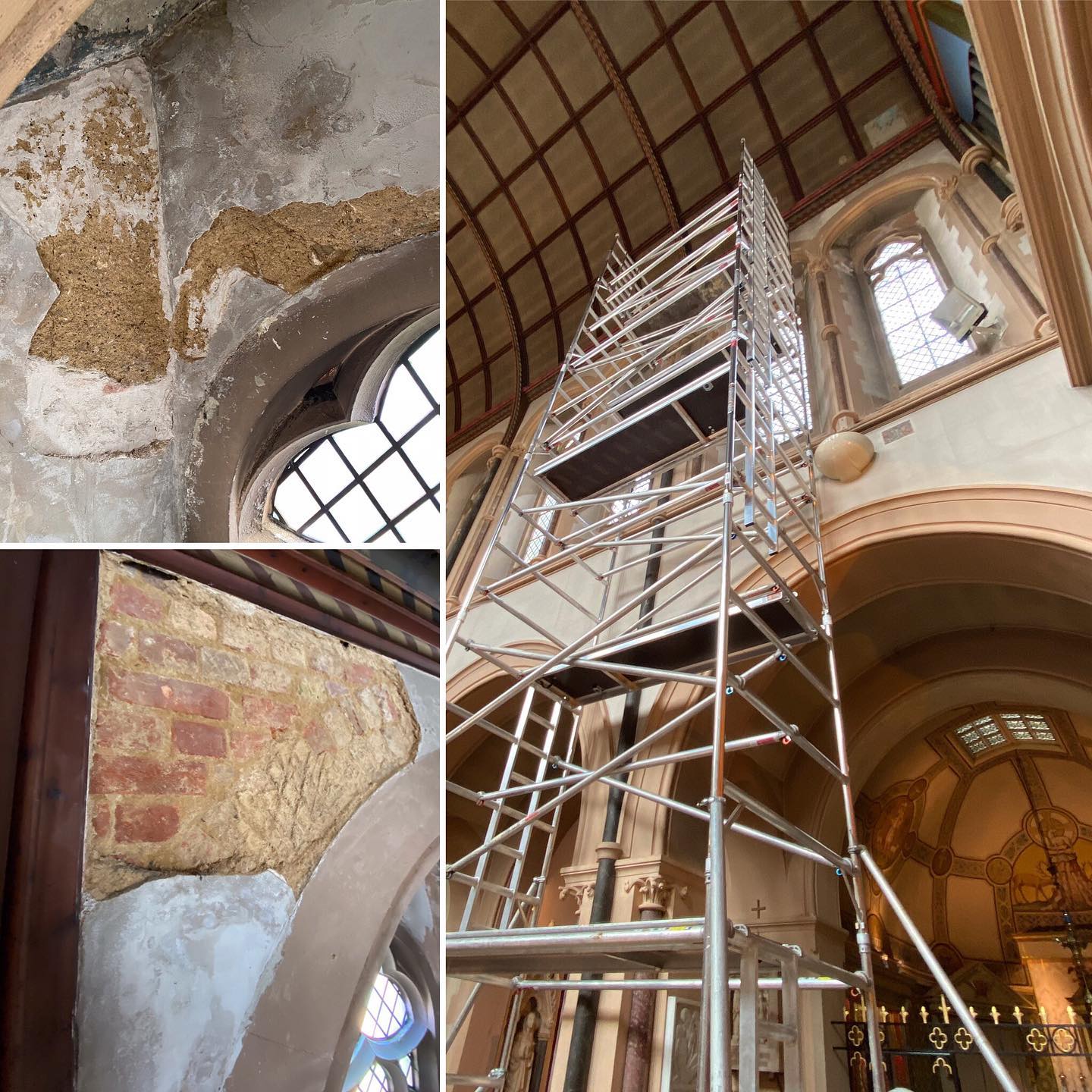
Emergency high level work earlier this week to remove loose plaster from around the windows. You might have noticed some of the pews at the back of church closed off for the last few weeks — there were heavy chunks of plaster ready to drop at any moment. It’s all safe now, and there is more space once again for people to come to Mass. Thanks to the volunteers who spent the day helping Fr Benedict to complete the work! #oxfordoratory
One of the themes of the Old Testament is that Israel was meant to be a people set apart: a holy nation, to point people towards God. God is completely holy, set apart, different, other from creation. Israel was meant to be holy, set apart, different from all other nations, as a reflection of God’s holiness, to point others towards him. In similar way, the Church is called to be holy, in order to point to God’s holiness. As St Peter writes, ‘You are a chosen race, a royal priesthood, a holy nation, God’s own people, that you may declare the wonderful deeds of him who called you out of darkness into his marvellous light.’ (1 Peter 2:9)
On his last night with his apostles, before his Passion, Christ prays that the the Church may be holy (John 17:17), like Israel, but he also asks: ‘that they may all be one.’ (John 17:21). We are not just to reflect God’s otherness. We are to be one in doing so — united, to reflect the unity of God.
The unity of the Church is important not just from a practical point of view, not just from an abstract theological point of view, not just because there is one truth and one Church founded by Christ, but because one of the purposes of the very existence of the Church is to direct others towards God by making his unity visible. It is a condition of people coming to faith in Christ, as he says himself, ‘may they be one… so that the world may believe that you have sent me.’ (John 17:21)
Our unity with each other is supposed to be proof that Jesus is who he says he is, and it comes about as a consequence of being one with him. When you think about it, we can’t all be united with Christ without being united with each other. So if we’re not united with each other, then our relationship with Christ is in trouble.
But what does it mean to be united? We’re using the word in several different ways here. There’s a unity of belief: believing the same things. There’s an ecclesial unity: the visible unity of the Church, or of different Christians all over the world. There’s a sacramental unity that is proclaimed and strengthened in Holy Communion, and there is the overall idea of our link, our unity with Christ himself by being part of his body. Each of these kinds of unity is tied up with the others of course. But there’s another kind of unity that matters: a person to person unity, a unity of will. Luckily for us, that unity isn’t simply a consequence of our willingness to agree with others, otherwise we’d all be doomed. It is a unity that comes as a gift from Christ, who says: ‘I have given them the glory you gave to me, that they may be one as we are one.’ (John 17:22)
That glory he gives us is the Holy Spirit. The Holy Spirit unites us with Christ, and so unites us with each other. He is the one that makes us able to join in this prayer with Christ, and to call God our Father.
In the Acts of the Apostles, St Luke tells us that in this period between the Ascension and Pentecost, the disciples were ‘steadfastly continuing in prayer with one accord.’ (Acts 1:14) That’s a more literal translation than you’ll find in most bibles. But even that’s not literal enough. That ‘one accord’ (homothumadon in Greek) means ‘with the same mind’, or even better, ‘with the same passion’. We don’t want to translate it as ‘passion’ because that makes it sound like something bad and out of control. But it gives us something of the idea that Luke is trying to convey. It’s not a stretch to say that the disciples prayed together with ‘the same intensity’ or ‘heat’ or even with ‘the same fire’. When we understand that, it’s no surprise that that prayer burst into visible flames on the day of Pentecost when the Holy Spirit revealed himself fully. If we are united in that kind of prayer, with the same Spirit burning within us, then there’s a chance that together we will be able to show Christ’s glory to the world, and then the world will also believe that Jesus is who we says he is.
New guidance has been released by the bishops to reflect the next stage of lockdown easing that begins on Monday 17 May.
From now on, we only need to have stewards on duty for busier Masses on Sundays and Feast days. We are all very grateful to all the volunteers who have made it possible to open the church over the last year.
The church only needs to be cleaned once a day. Again, thank you to everyone who has helped with this after Masses. The Fathers will clean the church at the end of the day before locking the church, which will allow the church to remain open for private prayer after the evening Mass until 7pm, and our opening times can now return to what they were before the start of the pandemic.
Some of the restrictions surrounding distribution of Holy Communion have also been relaxed. We will continue giving Holy Communion as we have been doing for the last few months, but this can now take place in the usual place within Mass.
Use of social distancing measures, masks and hand sanitiser will continue, and congregational singing is not allowed yet. Thank you all for your co-operation and patience with these measures, which have enabled us to keep our church open as much as possible over the last few months.
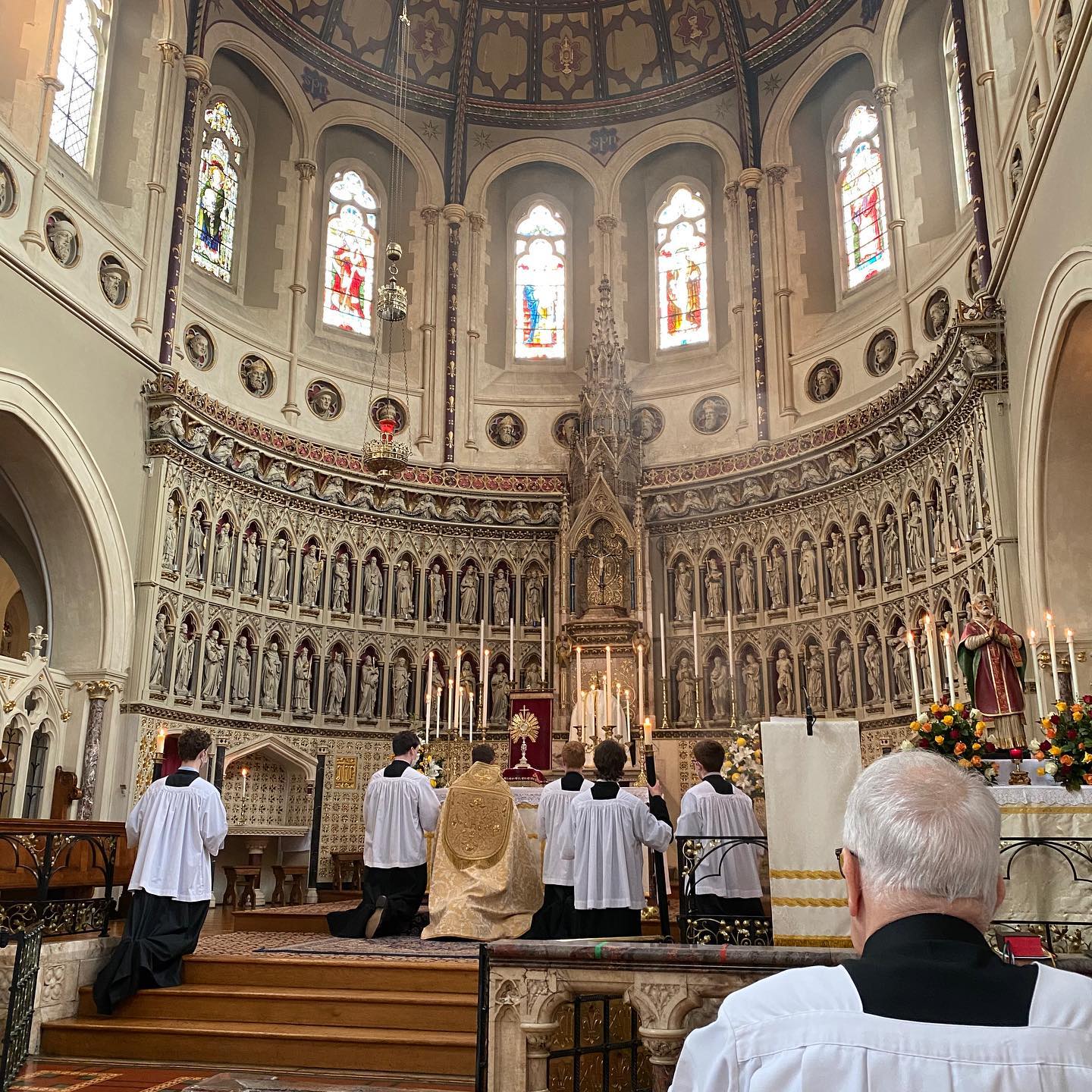
The novena in preparation for the feast of Our Holy Father St Philip began tonight, and continues each weekday after the evening Mass. #oxfordoratory
We are looking for an organ scholar to work with our Director of Music and choir, starting from September. This is an exciting opportunity for a suitably skilled organist to contribute to the vibrant musical life of the Oxford Oratory, while gaining experience of the traditional Catholic liturgy and sacred music performed to the highest standards. Full information is available here. Applications must be received no later than Friday 11 June.
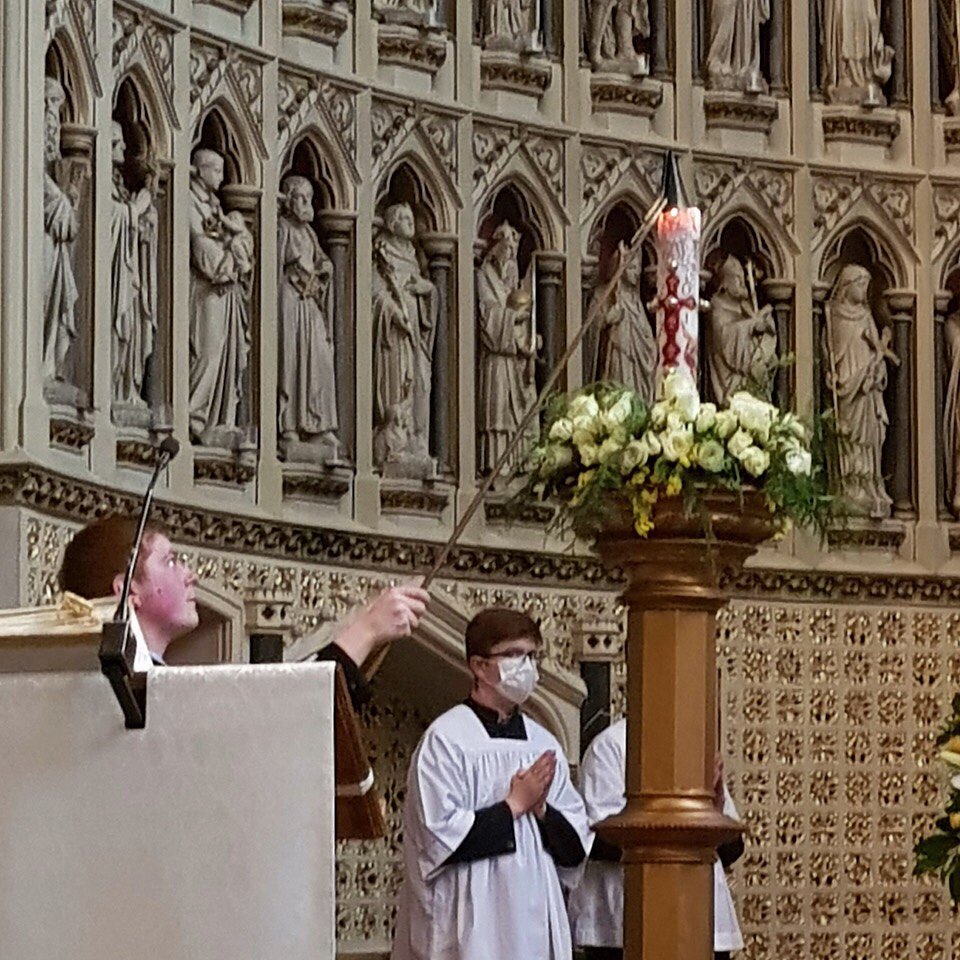
‘And so the Lord Jesus, after he had spoken to them, was taken up into heaven.’ The Paschal Candle has been a symbol of the risen Christ’s bodily presence among his disciples for 40 days. It is extinguished after the Gospel as he ascends into heaven. #oxfordoratory
The Oratory School is seeking to appoint for September 2021 a lay man or woman who is in full communion with the Catholic Church and fully in sympathy with the Oratorian ethos to the exciting new post of Coordinator of Spiritual Life. Click here for full information.
What, I wonder, did the apostles expect the day our Lord led them out to the Mount of Olives? One has the impression that, despite the presence of angels, the event passed off rather quietly. There were no shouts of joy and the sound of the trumpet was not heard. Nevertheless, St Luke tells us, the disciples returned to Jerusalem full of joy, burning with the exciting news that the Lord had passed into the heavens. They may yet have had to unpack the full theological significance of what they had just witnessed, but they knew then that it was important, and not a convenient means of providing a glorious exit for a risen, glorified body from the scene.
Yet, despite the joy they were experiencing as a result of Jesus’ departure and his commission to ‘go out and proclaim the gospel’, the apostles did not start out immediately to do this. Instead, they went to Temple in order to praise God, and then to pray with Our Lady in the Upper Room, waiting for the fulfilment of the promise of the Holy Spirit, the Advocate. They had learned, at last, that nothing of the years spent with the Master, neither the suffering, doubts and surprises surrounding his Passion and Resurrection, nor the promises he made to them in the forty days after that wonderful event, would be wasted.
Had we been there, we might well have been overwhelmed by the sense of loss. “He has gone. He has left us.” Given their past performance, we should not be surprised had we read that the Twelve had felt such sentiments of abandonment and fear, rather as a small child might feel on being sent off on a long journey without its parents, uncertain and perplexed and even afraid. The fact that those men did not go to pieces denotes some growth and maturing in faith and understanding. Pieces of the jig-saw were beginning to fall into place. They rejoiced because they had understood this much; that he was indeed ‘going to prepare a place for them’. As once he had told them that ‘where I am going you cannot come’, now he had made it possible that they could, and would, follow. They understood that he was the Way to the fulness of life in God’s presence, and that that life, which is eternal life, had already begun and that in time, where he, the Head had gone, they, the Body, would follow. The doubts they had experienced on the night of the Master’s arrest and on the day of his death, had been destroyed by the power of the Resurrection. They had found that they really could trust the Lord Jesus, who had clearly demonstrated to them that he was who he said he was and that he always kept his word. The apparent loss of the Ascension teaches us too that our gain is great.
If we feel the loss or absence of Jesus, it is, perhaps, because we want to keep him here — to build for him ‘an abiding city’, a kingdom of this world, a tent to dwell in, like Peter and his friends on the Mount of the Transfiguration. But we can’t. Like him, we must move on, fulfilling and finishing our journey here. There are disappointments and tragedies, as there are triumphs and delightful surprises. I suppose our motto should “Excelsior! Onward and upward!” We don’t always see the good we do or the fruit of our commitment. How many of the saints saw nothing but their failures, while we see with the benefit of hindsight their successes.
The Ascension is truly a glorious mystery, though the glory may not be wholly apparent from where we stand. All we may see is the departure and the resulting absence — but from God’s angle, it is surely very different and that is the viewpoint we must seek to capture, if we can, by faith. The glory of this event and which we celebrate liturgically is not here, it is in heaven where our hearts are supposed to be fixed. In Christ, our humanity has found its home, once more, with God — in the bosom of the Father. Certainly there should be shouts of joy and as for trumpets blasting out the good news, why not?