#oxfordoratory
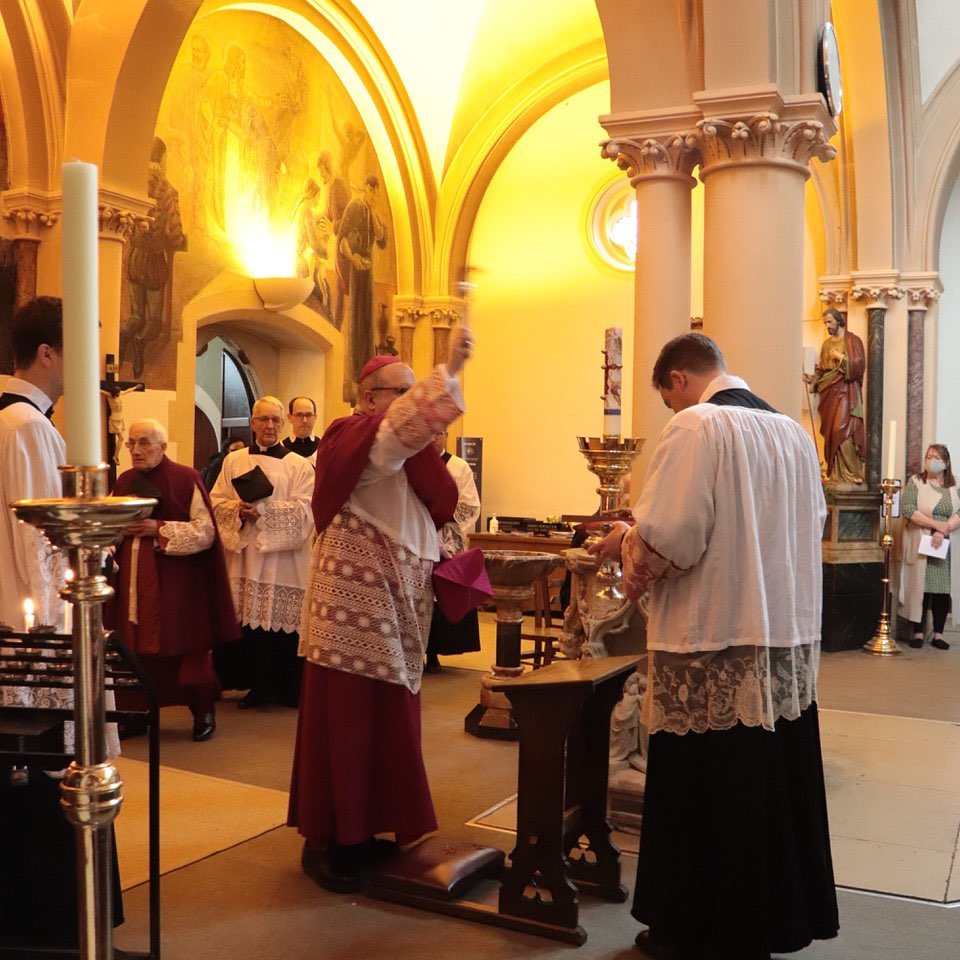
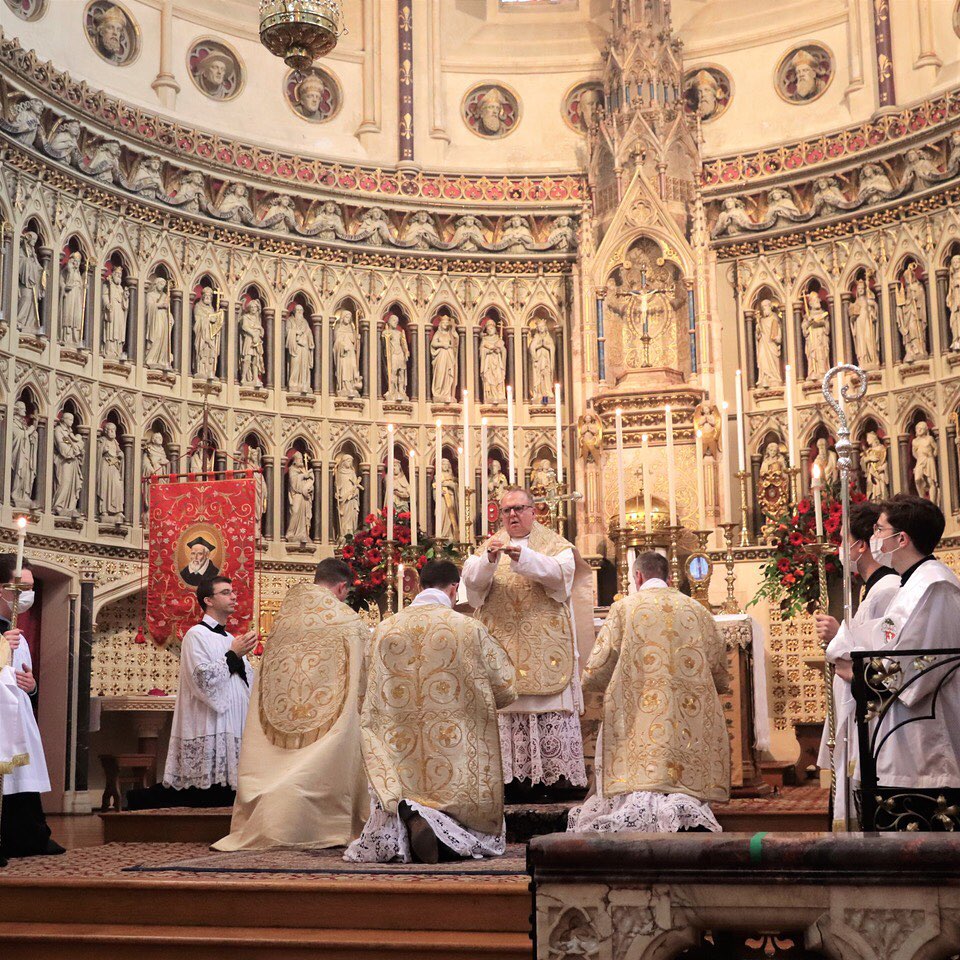
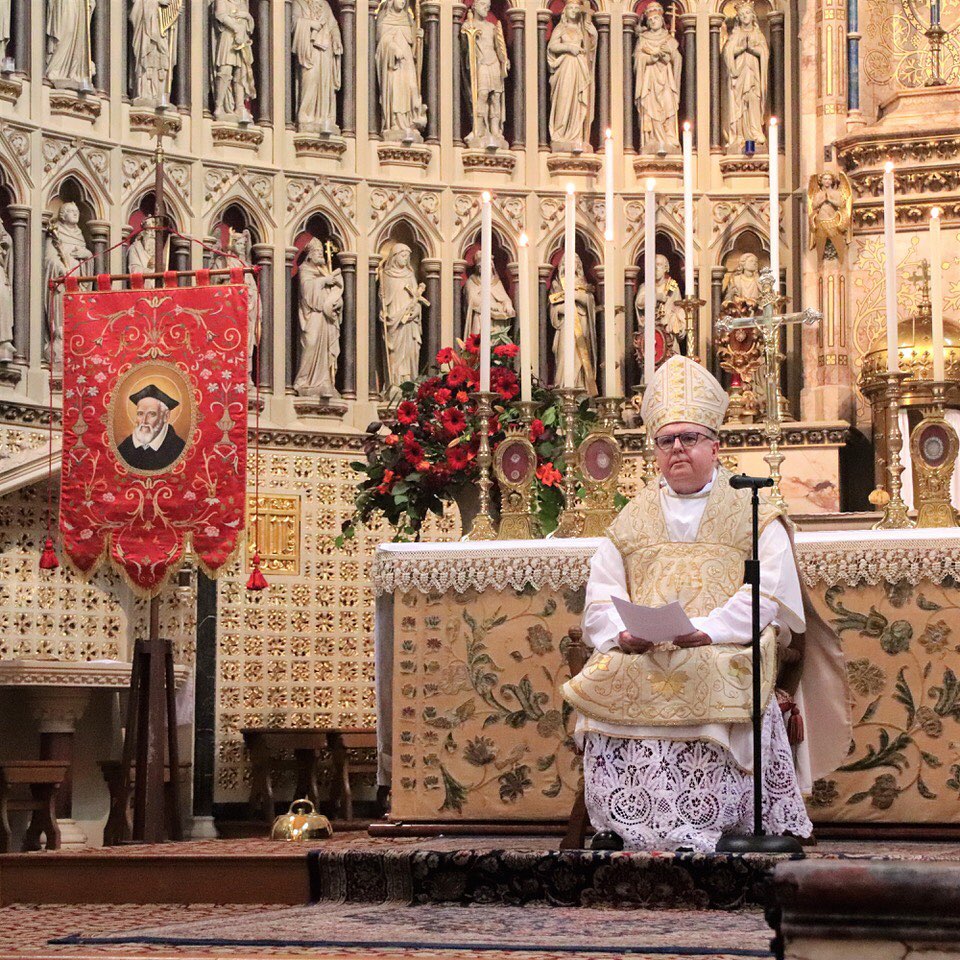
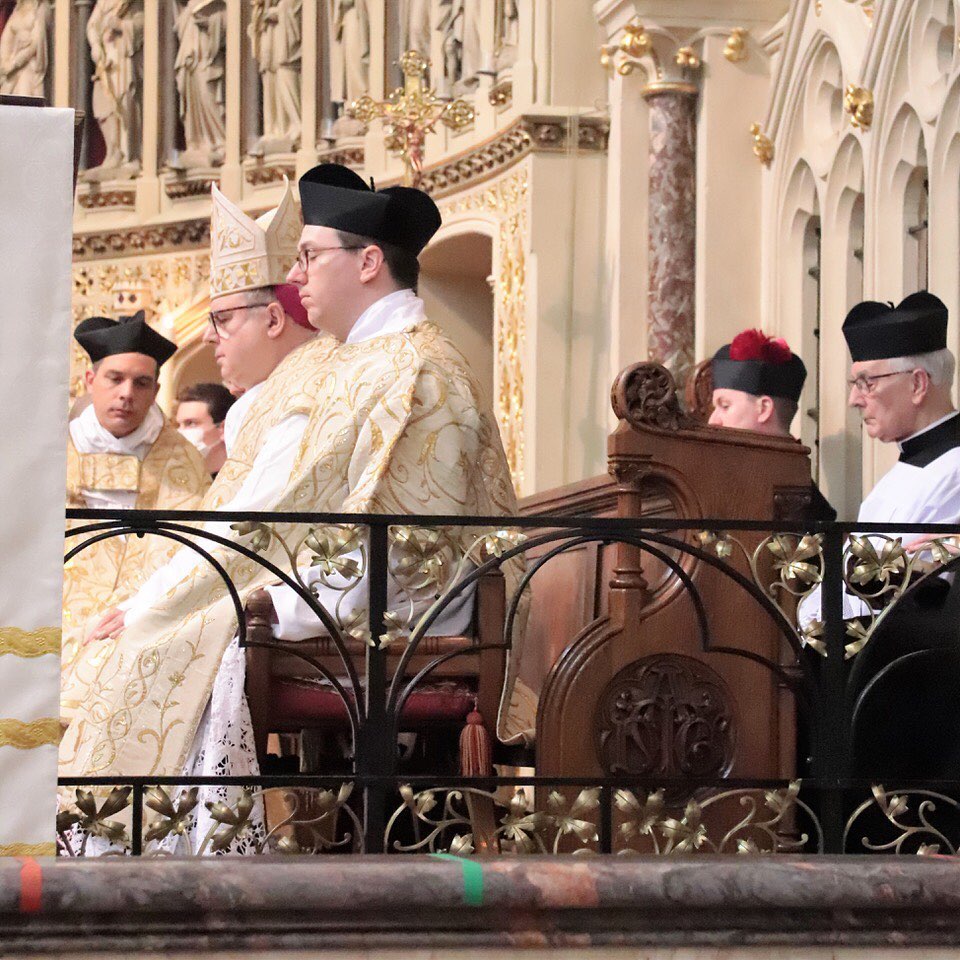
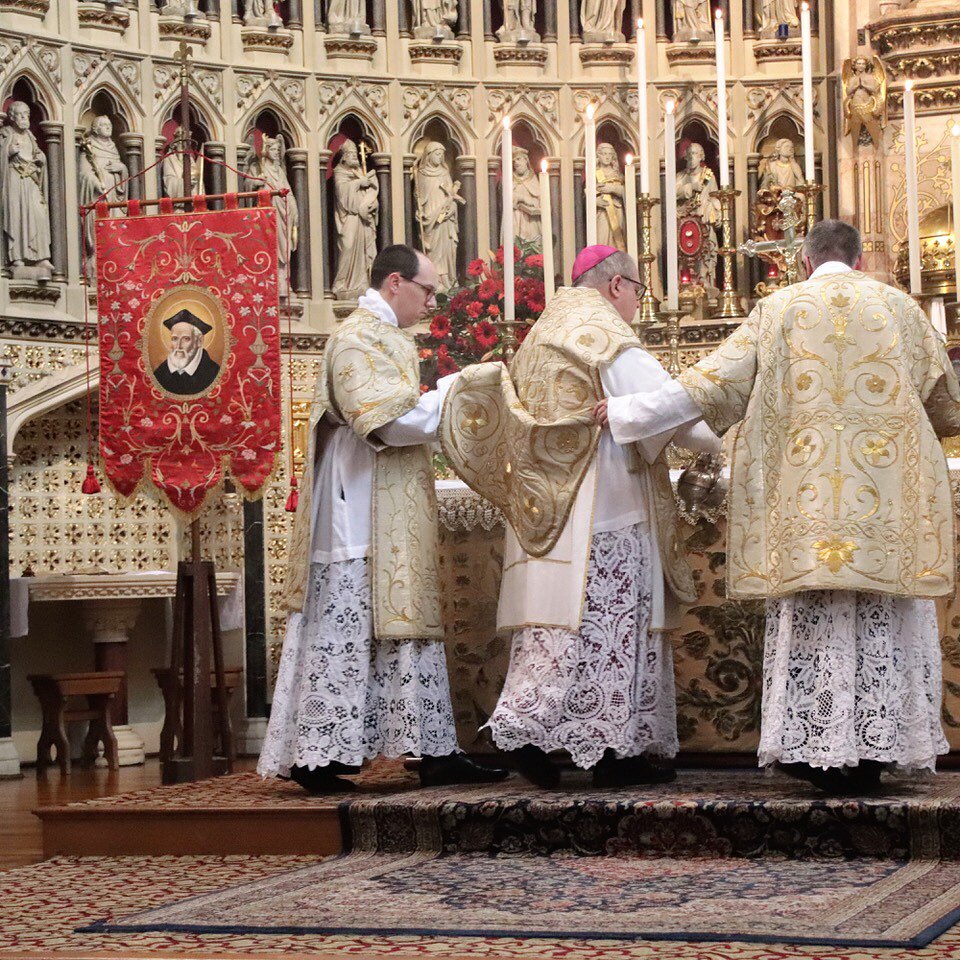
A joy to welcome Bishop Robert home to celebrate St Philip’s day with us last week. #oxfordoratory
We have two truly beautiful statues of the Sacred Heart here at the Oratory. One is in the entrance hall of the Oratory House, welcoming all who enter. The other is above our new Sacred Heart altar, consecrated last summer, and has been the focus of much devotion and prayer since the church was built. Most traditional pictures of the Sacred Heart, however, are somewhat off-putting, being a little too sickly sweet, or effeminate, or just a bit kitsch really. But it is an image that really is enduring and ubiquitous in Catholic culture. The emphasis these images place on the approachability of Christ, even to the point of softening his features a bit too much, is meant to communicate how human feelings and affections have been elevated through the Incarnation. Christ, who loves us, loves us in a way that we can appreciate and understand, and he makes himself available to us in our emotions. Christ can love us, and we can love him in return. Yet the traditional devotion to the Sacred Heart of Jesus has also stressed that the love of God in Christ is met, more often than not, by our refusal. The Heart of Jesus is not only radiant with love for us, but it is a wounded heart, encircled by thorns, and pierced — this is a Heart that we tried to kill, a love that we tried to extinguish.
But our attempts were frustrated by the willingness of Christ to love us even more.
In this respect, the Sacred Heart of Jesus is itself an image of the totality of the Incarnation, the totality of our God made man. The Incarnation is the revelation that God is love and that this love, resisting all our attempts to make it into something that serves our own selfishness, our own ego, will always look in this world like Jesus. What we did to this love, and continue to do to this love, is irrefutable evidence of how unlovable we are — at least from our vantage point. However, seen from the vantage point of God, our failure to love him enflames his passionate love for us all the more. If, in the narrowness of our human hearts, we fail to understand why God’s love in Christ would resist the usual human standards of justice — of tit-for-tat, an eye for an eye, revenge and retribution, standards that we all too readily impose — this might mean we actually begin to appreciate just how mysterious God’s love actually is.
God does not love us as we are accustomed to love each other. God does not love us because we deserve it or because we have earned it or because we have something that God needs that he lacks in his own nature. Instead, God is love. The Sacred Heart of Jesus is trying to make this point visually as its verbal expression seems at times harder to understand. Understanding all this is one thing. Accepting it is another.
The temptation to try to make God love as we love is particularly strong, especially given that if God loved us on our terms it would also mean that he would be just as inclined to hate on our terms as well. If God loved like we do, then he would be as harsh, and as judgemental, and as cruel, and as self-centred as we are — and as many people imagine him to be. It is hard to consider that humanity’s refusal of God, of love, which is shown in the cross, might be interpreted as the punishment we impose on God for not loving on our terms. That God in Christ transforms the punishment we impose on him into the means to love us even more, to save us and to draw us to himself, makes His love even more difficult to comprehend. And so we have the Sacred Heart, as it were, the human face of God’s love, God’s love shown to us in a way that is easier to grasp.
When we look at the image of the Sacred Heart, be it saccharinely sweet or artistically beautiful, French repository plaster, or delicately carved and painted like our own statues, we need to find in it a quiet, gentle reassurance that in all that I have done and all I have failed to do, in all of my refusals and failures to love, God is love, and in his Sacred Heart, he still loves me.
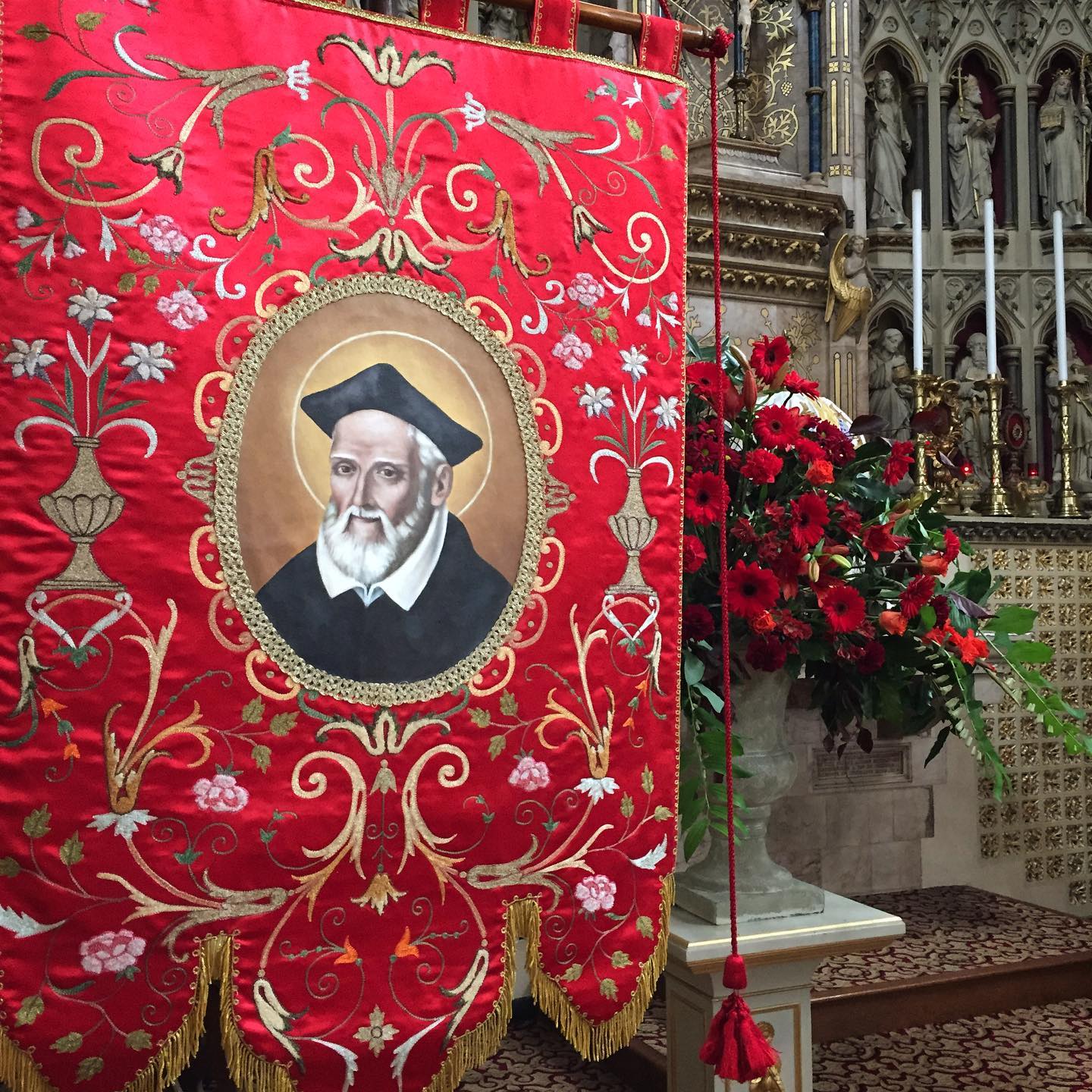
“The Solemnity of Saint Philip Neri, priest, who founded the Oratory at Rome, to preserve young men from sin, by exercises of spiritual reading, music, and works of charity. He shone with love for others, in the simplicity of the Gospel and the light of holy joy, in unbounded zeal, and the burning fervour of his service of God.” (from the Roman Martyrology for today)
Happy feast of Our Holy Father St Philip!
#oxfordoratory
Happy Feast! Each evening as we have prepared for St Philip’s day, the Fathers and a small congregation have gathered for the Novena in Preparation for the feast. The novena prayers are simple and heartfelt, calling on our Father’s aid for this little corner of the Lord’s vineyard which is never without need of help. As part of those devotions we read from St Philip’s life, giving us a sense of the fruits as well as the cause of Our Holy Father’s sanctity. It is particularly apt that this great feast falls around the time of Pentecost since the greatest cause of that holiness, and the turning point in his life, was shown on the Vigil of Pentecost, 1544, when praying in the catacombs of St Sebastian on the Via Appia in Rome. The Holy Spirit appeared to him as a ball of flame, entered into him and remained within his heart, a Pentecostal fire, for the rest of his life. From that moment he was changed — also physically, his heart was after all enlarged so much his ribs remained broken his entire life. He was taken over by the Spirit.
We, each of us, have our own Pentecosts. We receive the Holy Spirit at Baptism when our soul becomes a temple of his dwelling, and we receive Him again at our Confirmation with power, bringing His seven-fold gifts with renewed strength. But each time we call on the help of the Holy Spirit too, He comes to us to help us. Whilst our personal Pentecosts are not accompanied by tongues of fire, by the gift of languages, and other manifestations which were so clearly seen in the early Church, the effect on us is the same. The Holy Spirit comes to us to be for us a Paraclete, an “along-sider,” a friend for the campaign of life. Whereas an evil spirit, should it take over a poor soul, de-humanises that person, controls them and turns them into an automaton, the exact opposite is true with the Spirit of God. When the Holy Spirit takes possession of us we become more the person God wants us to be, we become even more truly ourselves, we become freer. The Spirit gives us a taste for the things of God, He tunes us in to God’s wavelength and makes us more amenable to the commands of the divine will, which seeks to bring about our good and the good of those around us. In short, He sanctifies us.
St Philip’s life is a good place to look for evidence of what that Holy Spirit can do in a well disposed soul — of course to an exceptional degree. If, in St Philip’s life, we see a certain compassion, courage, and a hatred of sin, all tied to his profound devotion (particularly to the Mass) and a radiant, beautiful joy, we see the work the Holy Spirit wants to do in us too. So many of St Philip’s characteristics and gifts are for him alone — what a tedious world it would be if we went around imitating his silliness without the saintliness to excuse it! But we should all imitate him in his prayerfulness, in his love of learning of the things of God, in his devotion to the Blessed Eucharist and in his zeal for winning souls for the Lord — this is what his Oratory, after all, is for: transforming men and women in the world into saints.
And whilst we pray that our ribs remain unbroken, we pray this St Philip’s day that our hearts will be enlarged with God’s own charity. We might pray that the Holy Spirit, that Pentecostal fire, who will see all those good works brought to fulfilment, may renew and kindle His flame within us. May it be said of each of us one day, please God, that after the pattern of St Philip, we too are on our way to be saints of “gentleness and kindness, cheerful in penance, and in precept winning” all those souls God sends to be in our life. And may St Philip at the last welcome us home to that better city of which we are citizens now and will be forever.