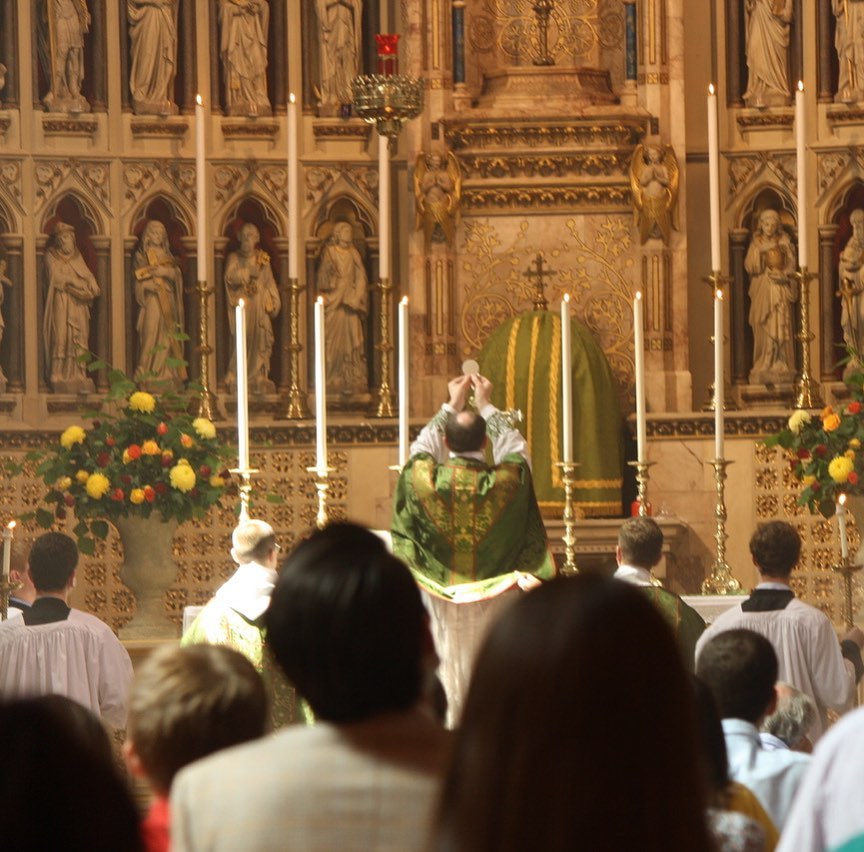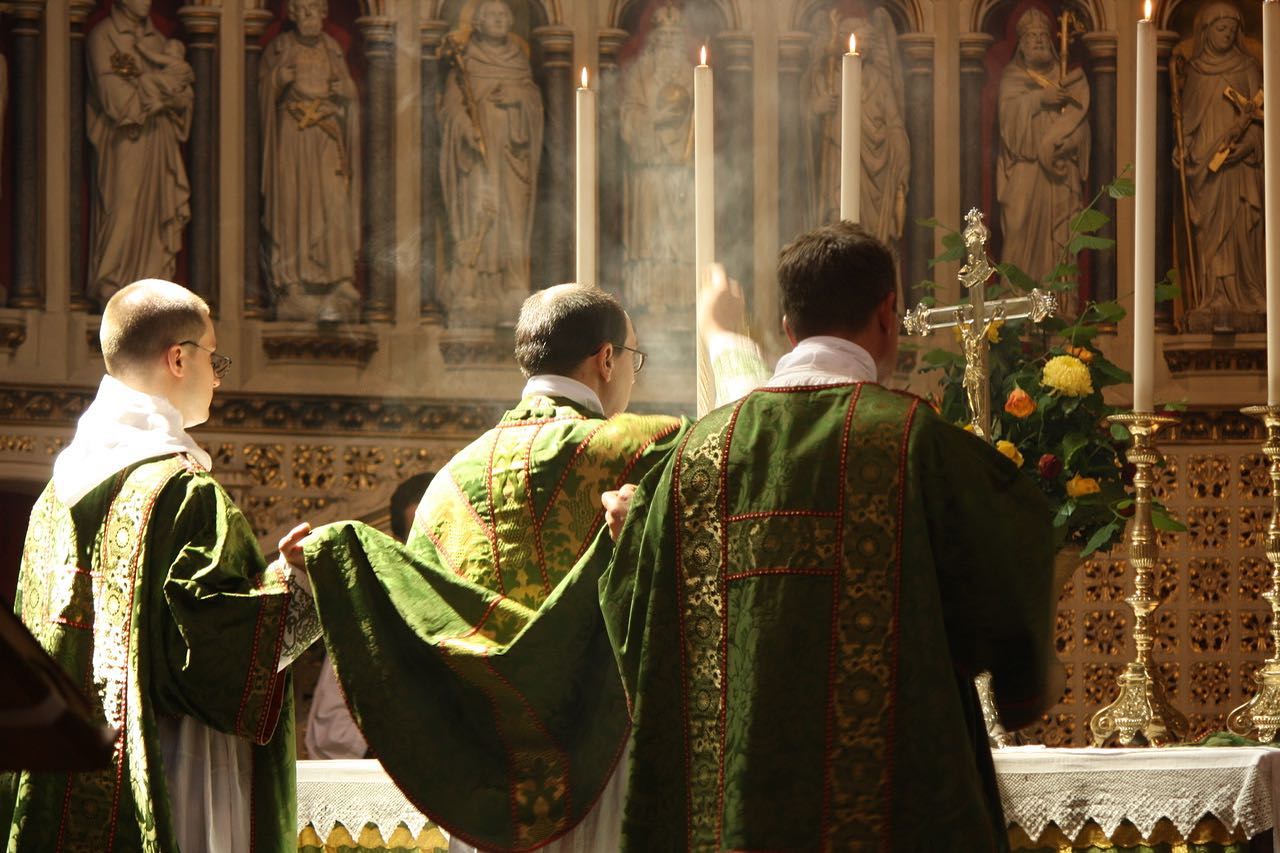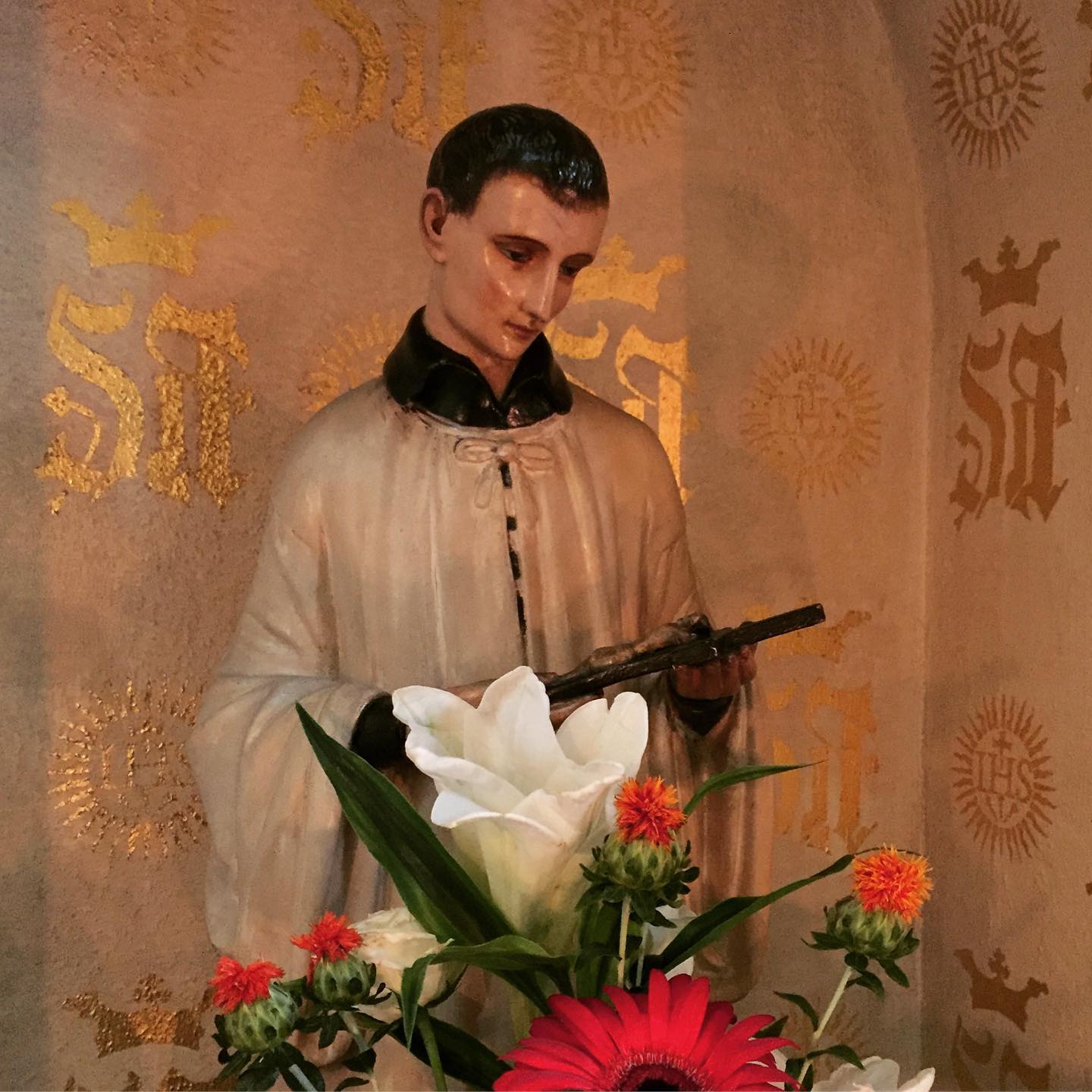
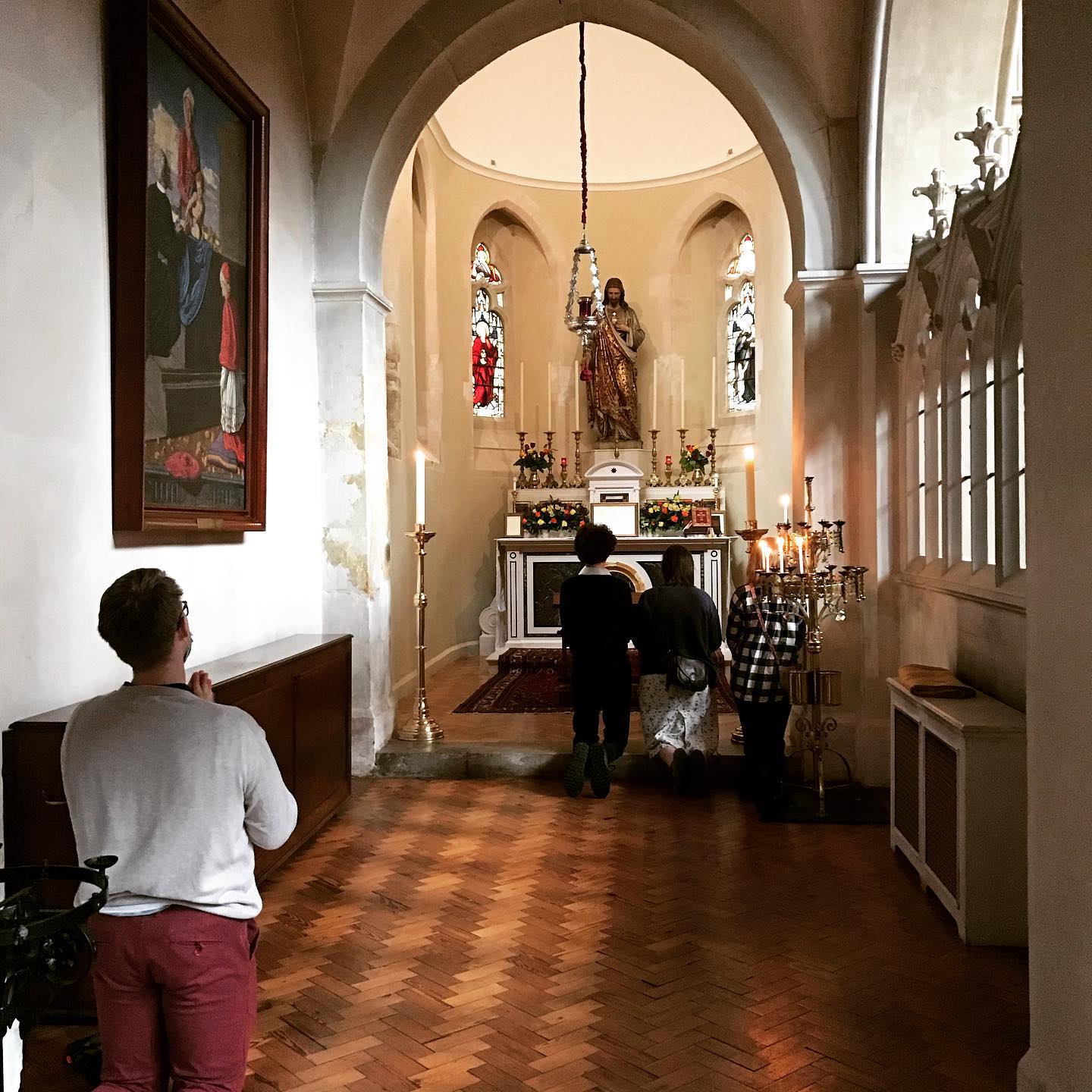
Pray for all those who call our church their home on the feast of St Aloysius Gonzaga. #oxfordoratory
Pray for all those who call our church their home on the feast of St Aloysius Gonzaga. #oxfordoratory
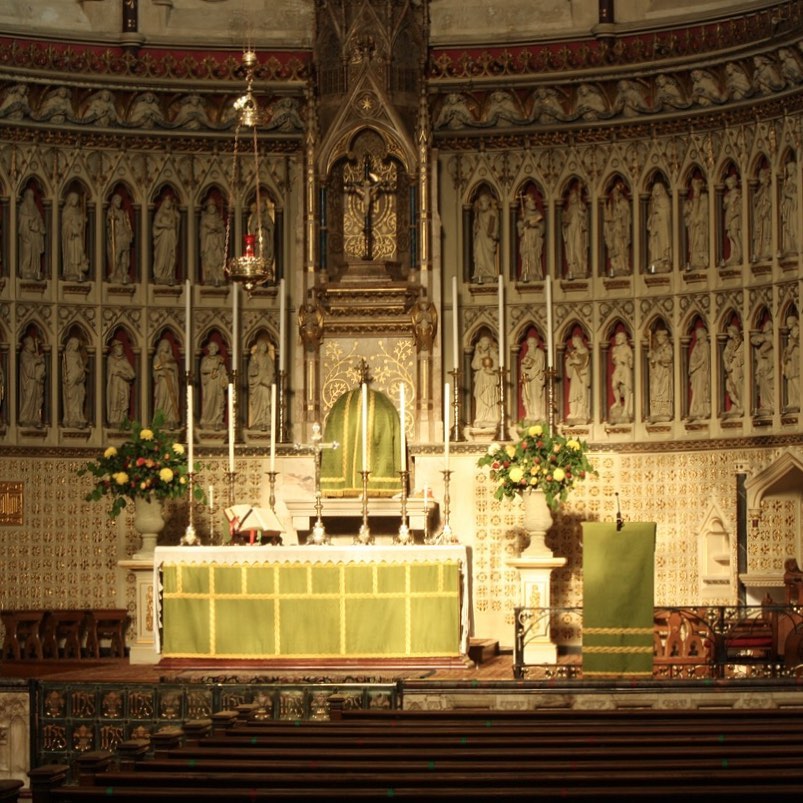
‘The early morning is the most beautiful, the most agreeable, and the least distracted time of the day; the very birds do then invite us to awake and praise God: so that early rising is helpful both to health and to holiness.’ From the Introduction to the Devout Life by St Francis de Sales.
Our church is a particularly beautiful place to pray on early summer mornings.
#oxfordoratory
While we may all suffer from distractions in prayer and find them unhelpful, not all distractions in the spiritual life are bad.
When it comes to the moral life, we often feel that the way to deal with temptations — especially those that begin as a thought or feeling in our heads — is to pray about them. If we do find ourselves falling to temptation, giving in and allowing it to take over our thoughts or even our actions, so often we tell ourselves that if only we had prayed harder, or more, we would have found the strength to say ‘no’.
The trouble is that when it comes to the temptations that start in the mind, prayer is not always the answer. If we enter into prayer saying to God, ‘I will not think about X… I will not think about X… I will not think about X…’ It’s fairly obvious what we’re going to end up thinking about. It could be something that has upset us or someone who has made us angry, something we’re thinking about doing but know we shouldn’t, or doubts and anxieties that there’s just no point in revisiting.
St Philip used to say of such things, ‘Only cowards gain the victory; that is to say, those who fly.’ And while that advice was meant in the first place as literally avoiding bad company and the near occasions of sin, it applies just as much to all kinds of troublesome thoughts. When they occur, he says, ‘We ought immediately to make use of our minds, and fix them instantaneously upon something or other, no matter what.’ And it’s the ‘no matter what’ that is interesting. The solution is to distract ourselves — with almost anything.
When unhelpful thoughts occur, we should think about something else. We all of us have that topic we find completely absorbing — that specialist subject, that skill, that hobby, that TV show, book, or favourite film, that area of life that when someone mentions it around us, the people in the room who know us all roll their eyes because they know that once we get started, they won’t be able to stop us. Those are the things we should be thinking about. They’re not things that are, in themselves, holy or sacred, probably. But the wonderful thing with God is that he can use even the ordinary and everyday to sanctify us. Our hobbies and interests, which apparently have very little meaning in the grand scheme of our salvation, suddenly get elevated and turned into tools for our sanctification.
People used to complain to St Philip that he allowed his spiritual children too much freedom. They ran around playing games, they were allowed to do what they liked, they made too much noise while they were messing around, and they just weren’t serious enough. His response was: ‘Let them chop wood on my back, so long as they do not sin.’ Chopping wood, playing games, even watching TV — these can all become tools to make us holy, if we allow them to distract us at the right time.
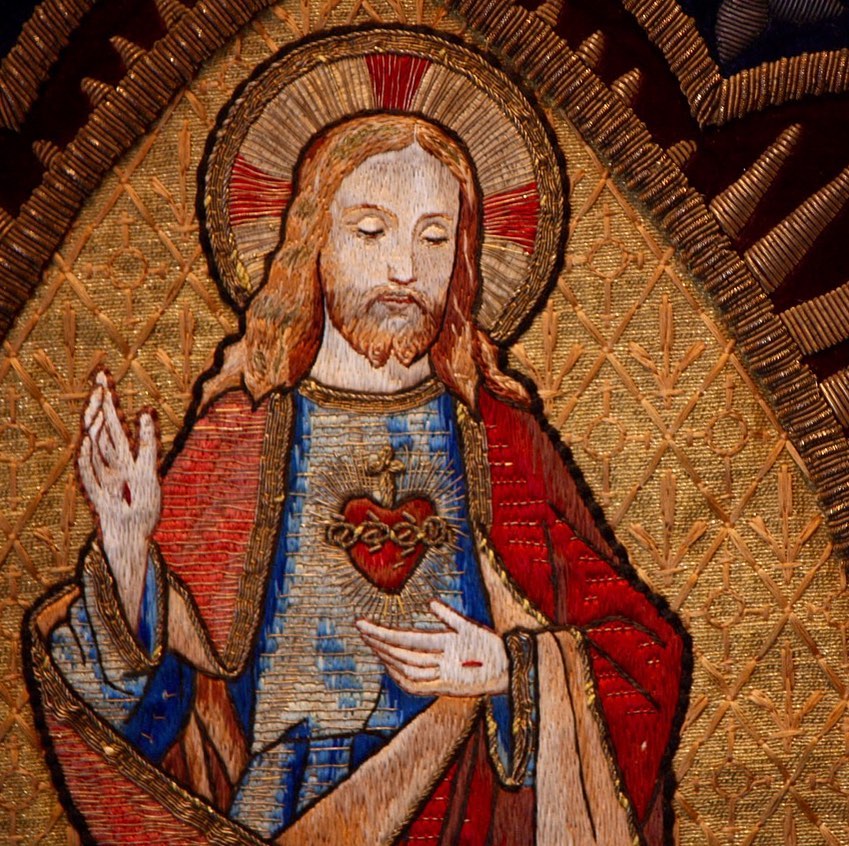
“Grant, O Lord, to thy Church assurance of freedom and immunity from harm; give peace and order to all nations, and make the earth resound from pole to pole with one cry: ‘Praise be to the divine Heart that wrought our salvation; to it be glory and honor for ever.’ Amen.”
A detail of the vestment for Benediction tonight. #oxfordoratory
You can download Archbishop Bernard’s Pastoral Letter for this Sunday here.
“My God, my Saviour, I adore Thy Sacred Heart, for that heart is the seat and source of all Thy tenderest human affections for us sinners. It is the instrument and organ of Thy love. It did beat for us. It yearned over us. It ached for us, and for our salvation. It was on fire through zeal, that the glory of God might be manifested in and by us. It is the channel through which has come to us all Thy overflowing human affection, all Thy Divine Charity towards us. All Thy incomprehensible compassion for us, as God and Man, as our Creator and our Redeemer and Judge, has come to us, and comes, in one inseparably mingled stream, through that Sacred Heart. O most Sacred symbol and Sacrament of Love, divine and human, in its fulness, Thou didst save me by Thy divine strength, and Thy human affection, and then at length by that wonder-working blood, wherewith Thou didst overflow.” From St John Henry Newman’s Meditations and Devotions. #oxfordoratory
Have you ever been praying, or trying to pray, and found that your mind has been engaged on some other train of thought, without your wanting or intending it? Distractions can plague us at almost level; indeed, praying without distractions is, for most of us, impossible, and it worries us. When this happens, our business is to gently shepherd those wandering thoughts back the centre; no need for fuss or anxiety, just a word or phrase will do, a sentence held in the heart.
The Carmelite Brother Lawrence of the Resurrection in his Spiritual Maxims advises his readers to ‘formulate a few words interiorly, such as: “My God, I am completely yours,” or “God of love, I love you with my whole heart,” or “Lord fashion me according to your heart,” or any other words love spontaneously produces.’ Two centuries later, St Thérèse of Lisieux, also a Carmelite, echoed these words with the simple admission that when she found herself dry or distracted in her prayer, she simply told God she loved Him, adding, “It’s not much but it keeps the fire going.”
Distractions come in many guises and from different sources, some are from external events acting on the senses, such as a noisy child, an itchy nose, the smell of cooking or the décor of the place in which you might be praying (“However did I think those curtains could go with that carpet?”) But there are those distractions that come bubbling up from within us, and these can be even more troublesome, because we carry them wherever we go; things like jealousy, an unhealthy attachment to something or someone, or an unchecked passion or a fear. These ties have to be cut, and quite often, it is only God who can loose the tie. We come to pray and find we can’t in certain circumstances and that is because our prayer is not yet wholly centred on God, which it must always be. It must begin with God, not with ourselves, not even with our spiritual wants. Our first words must always be words of worship. We must seek to know God as God; to know that He is Love, Truth, Life and Holiness, the object and end of our adoration.
Simplicity is the key-note here. Words can be so tiresome, for one can spend too much time trying to find the ‘right’ words with which to speak to God, to impress Him or win Him round to our way of thinking, knowing all the while that this is rather silly and futile.
Yet distractions will persist, like flies busily pestering us and spoiling our enjoyment of the sun. Perhaps, we have to learn to live with them, knowing that they are unimportant, whatever they seem to do to try to claim our attention.
I’ve always found the story of two Zen monks helpful: these two young men were returning to their monastery and needed to cross a river in order to reach it. ‘When they reached the ford thy saw a beautiful young woman who feared to make the crossing lest the waters were too strong for her. Young Zen monks are not supposed to have dealings with young women but the elder one, seeing her plight, put her on his shoulders and carried her to the opposite bank. After he had set her down, the two monks continued on their journey. They walked in silence for a mile or two, after which the young one exclaimed, “Whatever made you carry that young woman across the river?” “Good gracious,” came the reply, “are you still carrying her?” The older man had a level of detachment which freed him to render a kindness and a useful service to another. He deposited the woman safely on the other side and passed on without a further thought. More often than not, we are more like the younger monk, carrying our burdens and worries from one situation to another, never laying them down, so that they will always be a distraction when we come to our next occupation, which might well be prayer. These internal distractions, which come welling up to the surface just when we don’t want them, may well be worrying, tiresome and unwelcome, but they are there nonetheless and will usually remain with us until we face them, challenge them and offer them to God, even though we may be heartily ashamed of them, that He might extend his loving hand over us and heal them.
It’s good to be back at the Oratory and on such a special day as this! Since moving to Oxford over thirty years ago this church and community have been in my thoughts and prayers every day, and will continue to be so. I want to thank Fr Nicholas and the Fathers for inviting me today and for the friendship and support they have given me since my ordination as a bishop now seven years ago. This solemnity of St Philip is for me and probably for many of us redolent with so many memories. We think of past Fathers and remember past preachers, friends and guests. It is all part of what it is to be a spiritual follower of St Philip. Philip had a natural capacity for friendship — today is a family occasion. So let us enjoy being reunited today, especially in the aftermath of the pandemic.
Now living far away from my community I am able to look at the life and work of St Philip and the Oratory from another angle and to appreciate it with a fresh vision. There are a number of characteristics of the spirituality of St Philip which to my mind are unique and valuable. The first is a love of home. The sense of place and rootedness were so important to St Philip and remain so for his sons. From the time St Philip went to Rome as a youth of 18 until his death at 79 he never left the Eternal City. That may seem like a pious story but it is one that has a spiritual reality. Philip became part of the fabric of Rome, everyone knew him, most loved him and all revered him as one whose heart was aflame with the love of God. We love our home and community too and work from here encouraging others to be saints in their own homes by our prayer, preaching and the administration of the sacraments. It is hard to minister in one place for life and unheard of in the diocesan clergy and most religious orders. Nonetheless the rootedness of St Philip and his sons is deeply appreciated and is a source of inspiration to many.
Secondly, even in the Church we live in a highly organise and focussed world where aims and results are all important. St Philip had no great pastoral strategy yet he attracted people to the Lord like iron to a magnet. His ministry was not worked out and organised: he simply did what needed to be done at the moment. This might be caring for sick and poor pilgrims to Rome or helping a poor family or a struggling student. He touched the hearts and lives of many, both rich and poor, by his humour and his infectious personal love of God. Probably St Philip’s most distinctive ministry was in the Confessional, where he would spend whole mornings reconciling sinners to God and the Church. This remains one of the distinctive works of our Congregation. Our own St John Henry said that Philip didn’t try to change the world by force but to go with its flow, taking what is good in the world and sanctify that. He didn’t impose himself on others but coaxed them to holiness, step by step. “Love is his bond he knows no other fetter”. Sometimes to be too organised means missing the point, of which St Philip reminds us, that at the heart of our religion is love, and that is something that cannot be measured or quantified.
Another important part of St Philip’s teaching, and one which he constantly sought to instil in his followers, was the virtue of humility. He constantly gave God the glory and not himself. He always said that his achievements were the Lord’s. He would say that the Oratory was founded by our Lady, not Philip. It is by their quiet and constant fidelity the sons of St Philip “love to be unknown” and work without fuss at the humdrum priestly tasks of the day. These may seem undramatic but in fact add up to a powerful contribution to the life of the Church in this great city and elsewhere. It was Mgr Ronald Knox who said that we don’t talk about individual fathers at the Oratory but the Fathers as a whole, and that is true and as St Philip would have it.
Philip teaches us that faith brings new life, a fresh vision and renewed hope to our lives because at the heart of our faith is our living relationship with Christ in the Holy Spirit. It is only in Christ that we find true peace and fulfilment. As in St Philip’s time, the Church needs a true spiritual renewal and St Philip offers us a way forward as a model for a new evangelisation: a cheerful positive mentality, open to dialogue, an awareness of the needs of humanity and also importantly a love for the beauty of holiness, which is expressed above all through the liturgy.
No homily on St Philip would be complete without a mention of Mary, the Mother of God and true founder of the Oratory. Let us place ourselves under her maternal care and the under the patronage of St Philip that they may pray for us now and at the hour of our death. Amen.