God made it, God loves it, God preserves it

The burning bush, an image we might be so familiar with that we don’t find it so surprising, is an odd way for God to reveal himself to Moses. When God wants to give an image of himself, he uses something big, like the pillar of cloud or the pillar of fire that guided the Israelites through the wilderness. These images prevent us from thinking that God is small, that he is part of creation, that we could ever hope to define and limit him. A great cloud or a burning column of fire both inspire in us a sense of awe and mystery, which reflect in a small way that sense of awe and mystery we should have when we think about God.

The burning bush, on the other hand, seems small, dangerously close to an image or an idol that could be mistaken for God by someone who hasn’t quite understood him. God must choose to take this risk for a very particular reason then. There is something very particular to be taught to Moses and to us through this image.

As demonstrated by the various answers God gives to Moses when he asks his name, God reveals himself as the source of all being. The bush burns without being burnt up. It tells us something about God’s act of creation. He creates without being worn out. There is no limit to his energy and his activity. Creation is also not just a once-in-a-universe’s-lifetime event.

It’s so easy to think of creation like the flicking of a switch that starts the whole process off. We can sometimes reduce God’s part in creation to being the one who pressed the big button marked ‘Go’ that set off the Big Bang. But that would be to misunderstand what it means to create.

Creation is not just that initial bringing of things into existence. It is also continuing to hold them in existence. God continuously creates. That doesn’t mean there are lots of new things constantly popping into existence out of nothing, but simply that he continues to hold everything that currently is in existence.

Like the burning bush, God shares his being, without any loss of his own nature, without being burnt up himself.

This means God is intimately linked with every part of his creation at all times. The tiniest speck of dust would cease to exist unless he continued to hold it in being. Every moment of our existence is proof that God never forgets us.

At the same time that God is revealing all this about his being and creation, he is also showing his particular care for his chosen people within that creation. ‘The cry of the sons of Israel has come to me.’ Likewise, we can be confident that he hears us when we call on him.

Mother Julian of Norwich saw in a vision from God all of creation held in the palm of her hand, appearing insignificant and fragile:

He showed me a little thing, the size of a hazelnut, lying in the palm of my hand, as it seemed. And it was as round as any ball. I looked at it with the eye of my understanding, and I thought, ‘What could this be?’ And I was told, ‘It is all that has been made.’ I marvelled at how it could exist, for I thought it might suddenly fall into nothingness — it was so small. And I was given an answer in my thoughts: It lasts and ever shall, for God loves it. And in the same way, all things begin to be because of the love of God.

In this little thing I saw three properties. The first is that God made it. The second that God loves it. And the third, that God preserves it.

The whole of creation only continues in existence because God keeps it in being. It exists because God made it, God loves it, and God preserves it. And the same is even more true of each one of us.
Give thanks in and for everything

In his book A serious call to the Devout Life, the seventeenth century Anglican divine, William Law wrote:

Would you know who is the greatest saint in the world? It is not he who prays most or fasts most, it is not he who gives most alms or is most eminent for temperance, chastity or justice; but it is he who is always thankful to God, who wills everything that God wills, who receives everything as an instance of God’s goodness and has a heart always ready to praise God for it. All prayer and devotion, fasting stand repentance, meditation and retirement, all sacraments… are so many means to render the soul conformable to the will of God and to fill it with thankfulness and praise for everything that comes from God.

If we examine the lives of our favourite saints, we would doubtless find this to be so. Certainly we can find them praising God in all circumstances, turning calamities into blessings and keeping their eyes fixed firmly on Christ.

In the Liturgy we are often reminded of our need (our duty and our joy!) to give thanks to God ‘at all times and in all places’. This we know can prove to be exceedingly hard to do, because when things are going well, like the nine lepers, we simply forget to turn back to express our gratitude, and when things are going badly, we honestly don’t much feel like offering praise and thanksgiving.

Meister Eckhart counted praise and thanksgiving (in any circumstance!) as one of the hallmarks of a truly Christian life. But when disaster strikes, it is not the first thing we think of doing. Quite often, we simply rail at the Lord and ask, ‘Why me?’, ignoring the possible response: ‘Why not?’ 

Perhaps we can discern a distinction between praising and giving thanks to God IN all things and giving thanks FOR all things. I’m not sure we can really say thanks for cancer, redundancy, or domestic upheaval, but can we not, perhaps, continue to praise (or try to praise) God in these circumstances? Hugely challenging, I know, and we may fall far short in our efforts to do this. But the important thing is to offer God our praise in and for the circumstances. We are not praising the circumstances themselves, which may, or may not, be worthy of praise.

I said in a previous reflection that it was St Paul who urges us to give thanks in and for everything. The idea is totally in tune with what we know of his life. One example is found in Acts 16:23–25, when he and Silas were thrown into gaol at Philippi. Luke tells us how at midnight, their wounds smarting after a severe beating, the two men sang out the praise of the Lord.

When we are passing through testing times, it is often hard to see how praising and thanking God in that situation is going to bring about any good. Still, we offer those prayers in the power of faith and in doing so, we are placing the whole situation in the hands of God — and consequently the best hands — laying ourselves open to the outpouring of grace. The thought that we might perhaps have to wait years until heaven, to see our faith vindicated, may not seem much of a comfort to us, but the alternative is either to rage and rail, or to sink into a dejected silence of self-pity. I think the way of the saints is preferable to either of those: to offer up cheerful and loving prayer of praise and thanksgiving. It may take every ounce of strength and faith we have, but we will have achieved something by way of giving glory to God.

July Music

Sunday 4 July Solemn Mass 11:00
14th Sunday of the Year
Missa brevis Palestrina
Populum humilem salvum facies Palestrina
Transfige dulcissime Domine Biordi

Sunday 11 July Solemn Mass 11:00
15th Sunday of the Year
Mass in the Dorian mode Howells
Ad te, Domine, levavi a6 Lassus
Portio mea White

Sunday 18 July Solemn Mass 11:00
16th Sunday of the Year
Missa L’homme armé a4 Palestrina
Iustitiae Domini rectae Scarlatti
Oculi omnium Byrd

Sunday 25 July Solemn Mass 11:00
Our Lady of Oxford
Missa Or le tue forze adopra Anerio
Ave maria L’Héritier
Diffusa est gratia Nanino

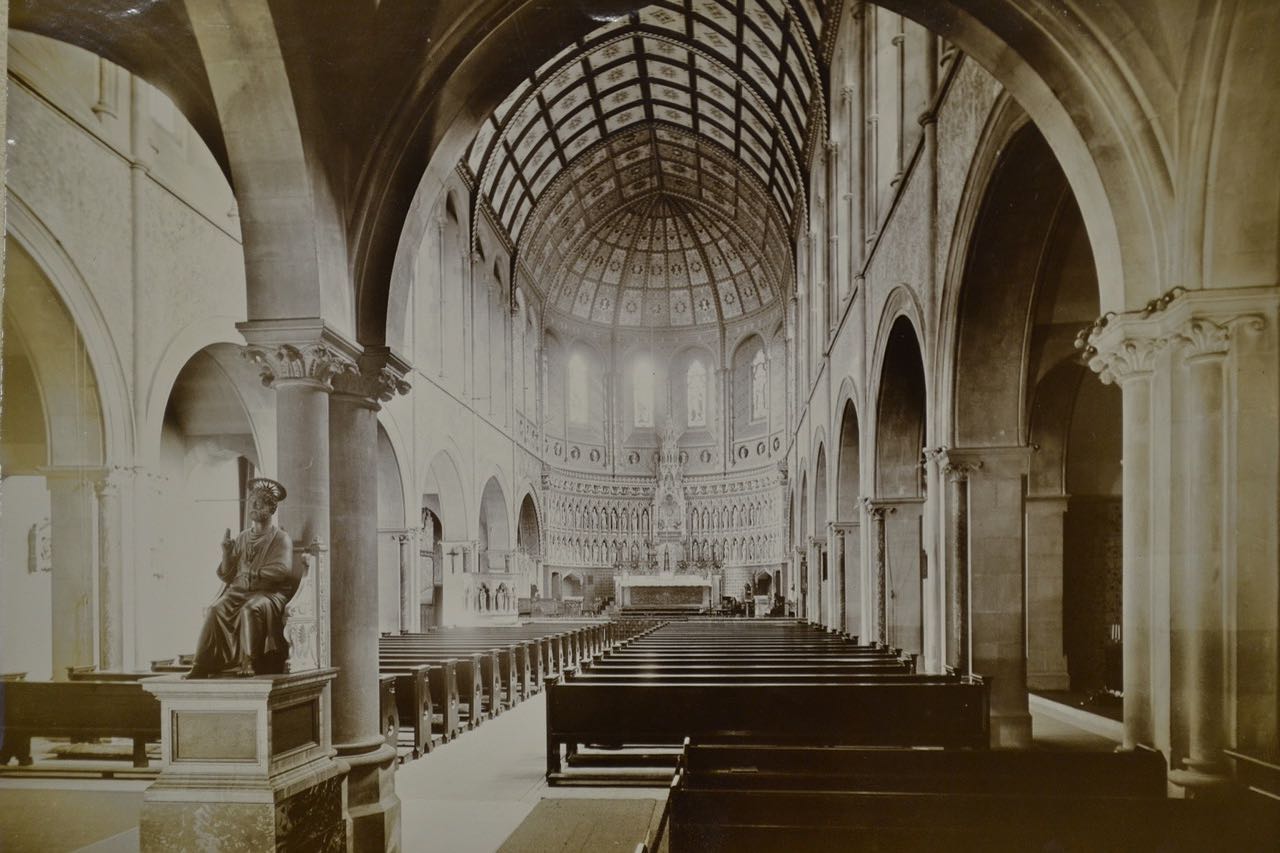
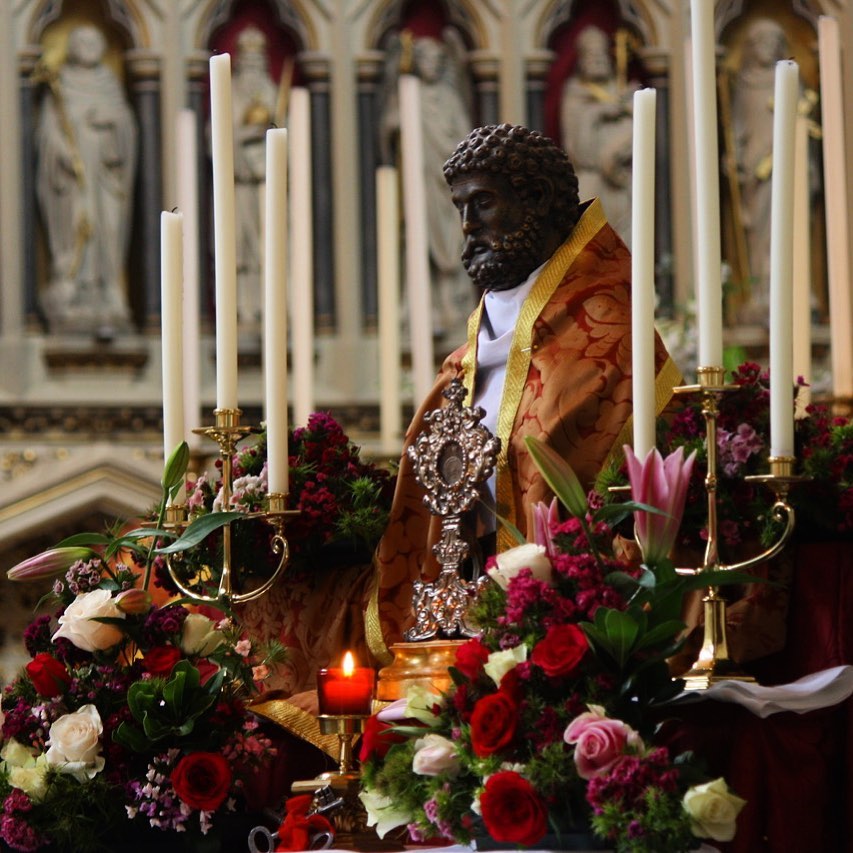
The head of St Peter that we use for our altarino was once attached to a body! The head is all that survives now, but perhaps one day Peter will again welcome visitors to our church from his throne, as he does in the photo from 1906. #oxfordoratory

View on Instagram

Ordinary Time

It always feels that once we have celebrated the fast of St Peter and St Paul, the summer has truly begun. After the drama of Lent, Passiontide and Easter, and the big extravagant feasts of the Ascension, Pentecost, Corpus Christi and the Sacred Heart — and our own particular celebrations of St Philip’s Day, St Aloysius, First Holy Communions and Confirmations — the Church’s liturgy settles back down into Ordinary Time.

At first, the designation might seem a bit peculiar, since the word “ordinary” is associated with things that are unimportant, insignificant, or just downright boring. In light of all the solemnities we have been celebrating, the next three months or so are rather uneventful, in the sense of being without a major liturgical event. But Ordinary Time is called “ordinary” not because it is common but simply because the weeks of Ordinary Time are numbered. The Latin word ordinalis, which refers to numbers in a series, stems from the Latin word ordo, from which we get the English word order. Thus, the numbered weeks of Ordinary Time, in fact, represent the ordered life of the Church — the period in which we live our lives neither in feasting (as in the Christmas and Easter seasons) or in more severe penance (as in Advent and Lent), but walking with the Lord in the years of his public ministry, in watchfulness and expectation of his coming again.

We hear again of the miracles and teachings of Christ so that we can be reminded, reaffirmed, consoled, and challenged in how we are living the Christian way of life. Through Ordinary Time, we Christians are told once again to forgive, love others generously, be healed and serve as instruments of healing, seek peace, live humbly, pray and trust in our Lord’s care for us. The readings at Mass during this season provide us with an opportunity to take stock of our lives and examine our consciences. Do I pray in the way Jesus taught? How do I love my neighbour? What in my life needs the healing power of Christ? Do I work for the coming of God’s kingdom? While it is true that we have heard these readings, and the prayers of the liturgy, many times before, the circumstances of our lives are always changing. What we heard God saying to us this time last year may be very different to what he says today — and how we respond to him may be different too. What is unchanging is the call of Jesus to follow him, to shoulder his yoke and learn from him.

This season of life, growth, and discipleship is also then a call to live in the present moment. Pope Francis reminds us that:

Today does not repeat itself: this is life. Place all your heart, your open heart, open it to the Lord, not closed, not hard, not hardened, not without faith, not deceived by sin. We go home with these words only: ‘How is my “today”?’ How is my today in the presence of the Lord? And how is my heart? Is it open? Is it firm in the faith? Is it led by the Lord? With these questions we ask the Lord for the graces which each of us needs.

Our Lady and St Joseph’s lives were not ordinary after the birth of the Messiah. The Apostles could not go back to everyday life after Pentecost. We cannot be untouched by the mysteries we have celebrated. Ordinary Time is anything but ordinary. The purpose and benefits of this season are rather extraordinary, indispensable, and fundamental to our following of the Lord Jesus. In fact, the season is one of the sources from which our lives are fed and upon which our celebration of the great solemnities of the year is grounded. If we don’t know the way of Jesus, how we can celebrate it? And if we celebrate the Incarnation, the Resurrection, the Descent of the Holy Spirit, or the working of God in the lives of the great saints, how we can not shape our lives and our behaviour in response? Ordinary Time, therefore, is the continuous echo of the Lord in the life of the church and in the hearts of those who love and follow him.

O blessed Peter, head and chief of the Apostles, you are the guardian of the keys of the heavenly kingdom, and against you the powers of hell do not prevail; you are the rock of the Church and the shepherd of Christ’s flock; you are great in power, wonderful in your heavenly bliss; you have the right of binding and loosing in heaven and on earth. The sea supported your footsteps, the sick upon whom even your shadow fell were cured of their ills. By the memory of that right hand which supported you on the waves of the sea, lift me from the ocean of my sins, and by those tears which you shed for your Lord, break the bonds of my offences and free me from the hand of all my adversaries. Help me, O good shepherd, that I may in this life serve Christ Jesus, that with your help, after the close of a good life, I may deserve to attain the reward of eternal happiness in heaven, where you are the guardian of the gates and the shepherd of the flock for ever and ever. Amen.

#oxfordoratory

View on Instagram

The birthday of St John the Baptist gets a bit neglected, falling among so many big feasts. But today we celebrate the first light of the Gospel being shed on earth, six months before the birth of Christ.

As for you, little child,
you shall be called a prophet of God, the Most High.
You shall go ahead of the Lord
to prepare his ways before him,

#oxfordoratory

View on Instagram

All or nothing?

Thomas Merton was no saint. He himself would have balked at the notion of being called a saint since he was very aware of his own weaknesses and his need of God’s grace and sanctification. Perhaps it was this awareness, then, that made him a fearless proponent of the marvellous workings of God’s love on poor sinners, and our need to witness to this. In his book “Thoughts in Solitude” he writes, “A life is either all spiritual or not spiritual at all. No man can serve two masters. Your life is shaped by the end you live for. You are made in the image of what you desire.” In Merton’s thinking, we have to unify our life by allowing Christ’s merciful love to reach every corner of it, and then we have to joyfully witness to that love.

We are coming to the end of something of a sacramental conveyor belt at the moment. All the deferred celebrations of First Holy Communion and Confirmation have come in a glut. It is truly impressive. Many of them, particularly the confirmandi, are young people, children from our parish and school. Others are teenagers, some are adults, even fathers and sons have been confirmed together, and others are confirmed as they are received into the Church. Each brings their own story, and each brings something in common — a desire to know and love Christ more, and a desire to love the Church more. These joyful celebrations are an encouragement to all of us, and, please God, might put fresh heart into even the most battle-weary of souls.

Merton’s lines from “Thoughts in Solitude” could be taken in two ways. One might, on first glance, think that he is promoting a kind of gung-ho, absolutism, where it is all or nothing, and there is little space for doubts or fears or questions. Perhaps he is saying something else. If we are made in the image of what we desire, perhaps it is possible for all of us, even those who may have drifted a little, to be made anew, to be made a new creation by looking again to see what it is our hearts really desire. When the worries about what the world tells us, and the thoughts about getting our own way can be set aside for a moment, what is more desirable to us than a love that always forgives, that leads us on from good to better, that heals us and makes us anew? Whether we experience him in the Sacrament of Penance, or in silence as the ‘prisoner of the tabernacle’, that is precisely what our Lord holds out to us, and it shapes us, it gives our life new meaning.

The rule of St Benedict, which was the guide of Merton’s life, reminds us that with the Lord, always we begin again. Whether our confirmation was a few years ago or forty, perhaps we can call on that Spirit which has been poured into our hearts to awaken a new desire for the one who gave all in sacrifice for us, and then see where that will take us.