Beauty

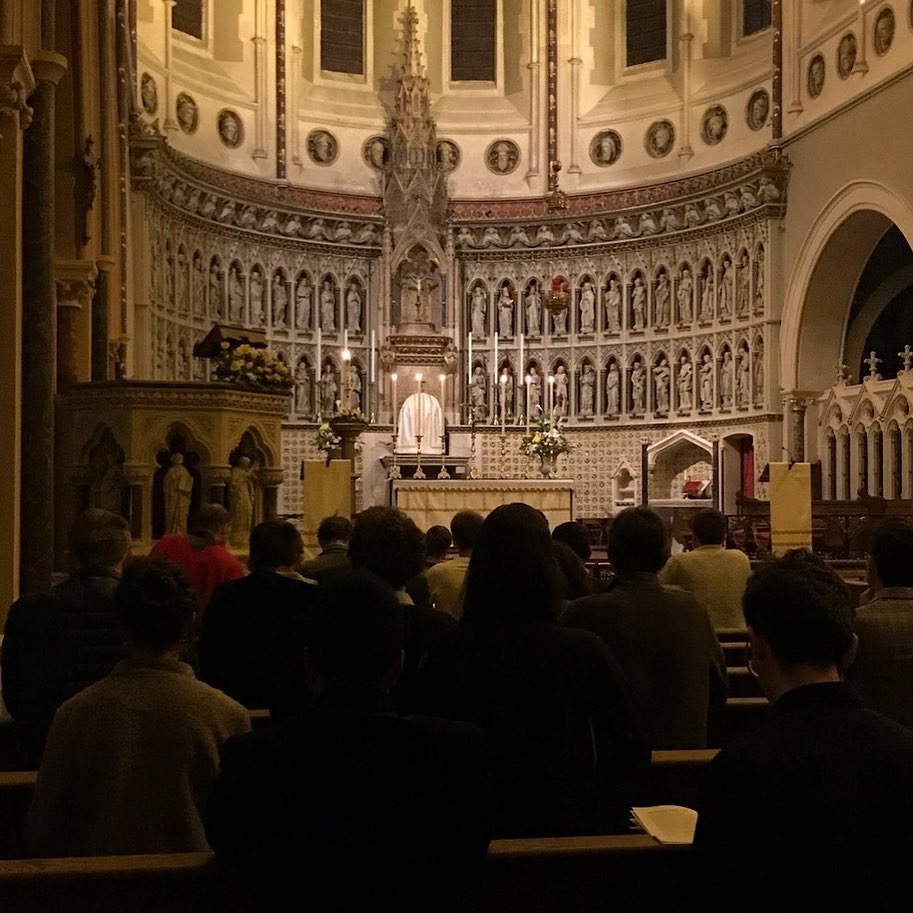
It is always dangerous to attempt to condense a particular tradition or spirituality into a single word. But if we were to attempt to explain what St Philip set out to do, and what his Oratories try to do in our own time, we could do worse than to focus on the word ‘beauty’. It is through beauty that we seek to convert the world. Which is not as superficial as it might at first sound. All beauty in this world has it source and origin in God, so what comes from God can be used to lead us back to him. St Augustine touched God by contemplating being; many great theologians have reached God by searching for truth. St Philip taught his followers to follow the path of beauty back to its source.

In the first place, Philip did this by taking what is good and beautiful in the world and putting it to sacred use. Beautiful music well sung, art and architecture used to illustrate the history of salvation and the lives of the saints, all of this man-made beauty can and should be used to elevate our hearts and minds to God, which is our definition of prayer. A sacred space, especially one resonating with sacred music, helps to block out the distractions of the world outside, leaving us free to think about God alone.

But we mustn’t think that these aids to prayer are only available to those living in close proximity to a spectacular Roman basilica. From his earliest years, Philip also appreciated the natural beauty of the countryside around Florence. He chose the small chapel built among the cliffs of Gaeta, floating above the sea, to pray in when discerning his vocation. He would lead groups into the Roman countryside for sermons and prayers in the summer months. And in his later years, he had a loggia specially constructed on top of the Roman Oratory so that he could pray while gazing into the night sky.

Oratorian spirituality could be too easily classified in the same category as Carmelite spirituality, after the pattern of Teresa of Avila. True, both saints were alive at the same time, both promoted mental prayer, were part of the spiritual powerhouse behind the counter-reformation, and were even canonised together in the same ceremony, as we remember especially this year. But if we dig a little deeper, far greater differences emerge. St Teresa confiscated St John of the Cross’s crucifix, for fear that his attachment to it might come between him and God, whereas Philip had no such fear of people using art to help them to pray. Teresa promoted an austerity that shunned even what is good in this world, while Philip directed what was good in the world to the service of God. Both approaches have their merits, both have made many saints, and both are legitimate expressions of Catholic spirituality. But they are certainly not the same.

Philip would say, ‘Human language cannot express the beauty of a soul which dies in a state of grace.’ And it was the beauty of holiness for which Philip strove above all. He encouraged his followers to read the lives of the saints, to seek inspiration in the beautiful lives of God’s holy ones. He instructed the Fathers to preach about the ‘beauty of virtue, as opposed to the deformity of vice’. The idea being that good people have an attractiveness that runs far deeper than their appearance, while sin, when we think about it, is actually repulsive.

The faith itself has its own beauty as well, which is why in the daily catechetical discourses of the Oratory, he insisted that there be no rhetorical flourishes from the speakers. They were to preach simply and plainly, because the truths of our faith have a beauty that speaks for itself, without the need for artistic embellishments.

In using the arts to help with prayer, the Oratory has always followed the principle that only our best is good enough for God. This is true of all the ways in which Philip used beauty. Yes, the best art, architecture and music we can afford should be put to God’s service, but also our best efforts in striving for virtue, our best efforts in prayer and charitable service are what God deserves as well. We must not confuse ‘best’ with ‘perfect’. Our best efforts at prayer and virtue may still leave much to be desired and much room for improvement. But as long as we can honestly say before God that we have tried our best, then we will have also given him what he is owed by us with as much love as we are capable of. And no one can ask for anything more beautiful than that.


These reflections are sent out each Wednesday to all those on our mailing list. Click here to sign up to our mailing list, and receive our Sunday E-newsletter and these reflections straight to your inbox.
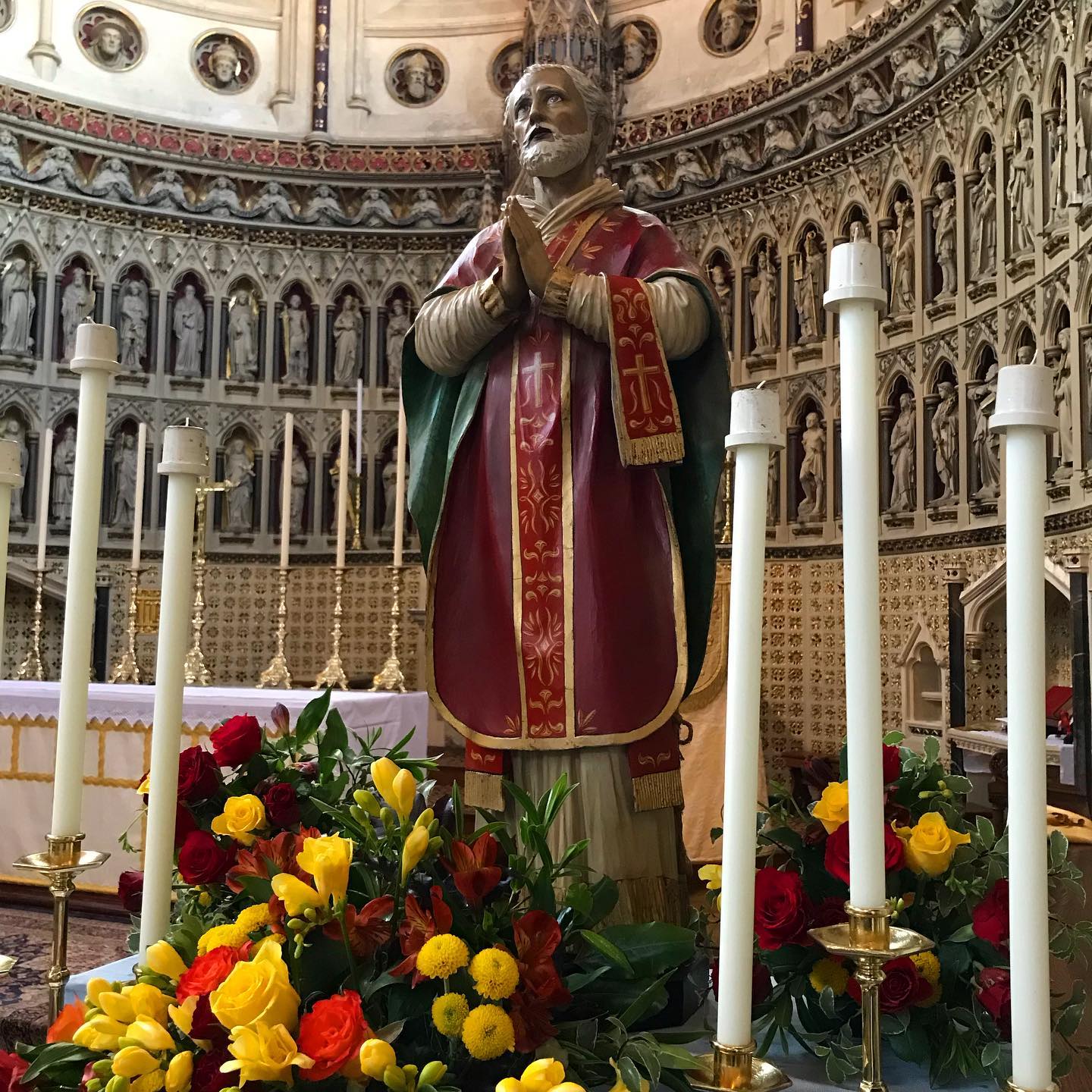
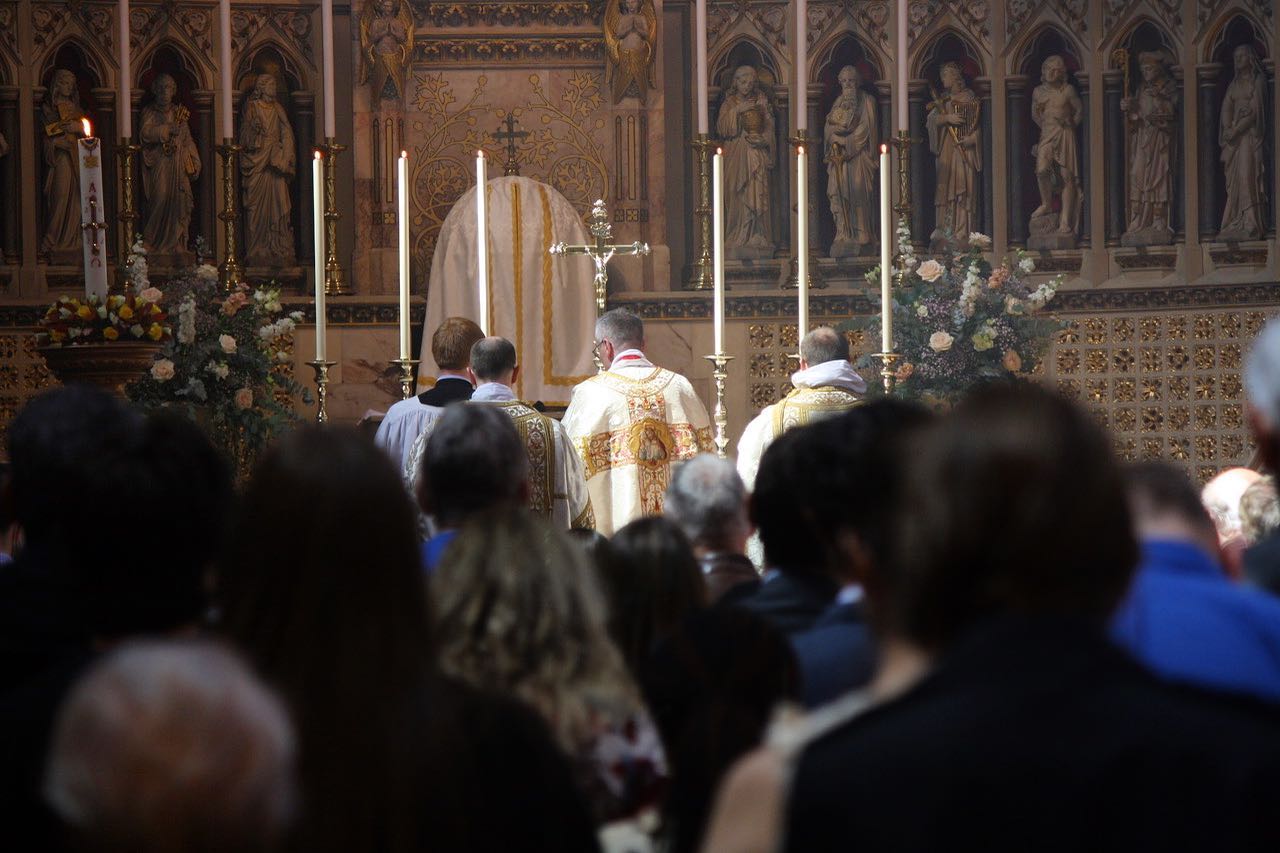
We are ready to begin the novena to St Philip after Mass this evening.

The Solemn Mass on his feast day will be celebrated by Cardinal Pell on Saturday 28 May at 11am.

O famous leader and loving Father, Saint Philip, be a true Father to us. Protect and govern always those who have been given to thee. Make us good and, being made good, reconcile us to God; and after this time of exile joyfully present us to the beloved Son of God, the Lord Jesus Christ our Saviour; may whose honour, praise and glory, unspeakable joy and perpetual bliss with the glorious Virgin Mary and the whole court of heavenly citizens remain without end for ever and ever. Amen.

#oxfordoratory

View on Instagram

The Peace of God

We all want peace and quiet. Perhaps it’s one of the things we most look forward to about death, the ‘eternal rest’ and the ‘perpetual light’, no more tears, no more sorrow. At least that is our hope. Yet, peace is also promised us, in some measure at least, here. Writing to the Colossians, St Paul says: ‘May the peace of Christ reign in your hearts.’ Furthermore, he tells us why: ‘because it was for this that you were called together in one body.’ (Col 3: 15)

In fact, the New Testament doesn’t seem to encourage us to search for peace, though St Peter does exhort his readers: ‘He who would love life and see good days, let him seek peace and pursue it.’ These, however, are not St Peter’s own words but are a quotation from Psalm 34. Peace, in New Testament thinking, is that quality which enters our lives, almost imperceptibly, as a consequence of living in right relationship with the Almighty. So we do not seek for peace as such, but the God of peace, by loving the things which will bring us peace. Seek God and you will find peace. We must first want God — though I think that the soul who wants God, has God. Only we don’t always know it, let alone, feel it.

As Christians, we seek God through the Son, whom Paul calls the image of the invisible God, the first born of all creation…reconciling us to Himself, making peace by the blood of the Cross. ‘He is our peace,’ Paul tells us, and this peace is ours, not as a result of any striving on our part, but as coming from our acceptance in faith of the saving work of redemption wrought by our Lord. Again, we may not always feel it with any special heat or intensity, though sometimes, after a really good confession, we may do so. Yet we cannot measure the depth of our peace by any sensible feelings. St Francis de Sales would often warn his readers against seeking ‘sensible consolations in prayer’. Seek not the consolations of God, but the God of consolation!

Of course, with the growth of Christ’s peace, we have to be prepared to endure the destruction of any false sense of peace, usually through suffering of some kind. This may leave us feeling that we have lost our sense of peacefulness, especially if external storms (circumstances and emotions) are raging around us. When these pass, we can find that we emerge strengthened and purified, with peace more deeply established, no longer dependent on anything other than the Lord.

‘Seek Peace and pursue it.’ But how to do this? I think, by entering into the peace that is already ours in Christ, and to renew those three Theological Virtues, Faith, Hope and Charity. Our prayers can be full of the seeking of God, especially if we use the Psalms: ‘O God, you are my God, for you I long…’ or ‘As the deer yearns for running streams, so my soul longs for you my God.’ The Psalter is full of such beautiful aspirations.

Following the example of our own St Philip, we should cultivate a true and loving devotion to the Holy Spirit, who will bring us, among other gifts and fruits, the peace of God. And as God’s peace enters into us, so we enter more fully into God.

Holy Spirit, give us for our hallowing, thoughts which pass into prayer, prayer which passes into love, and love which passes into life with Thee for ever. Amen.


These reflections are sent out each Wednesday to all those on our mailing list. Click here to sign up to our mailing list, and receive our Sunday E-newsletter and these reflections straight to your inbox.
Sunday Mass Obligation Restored

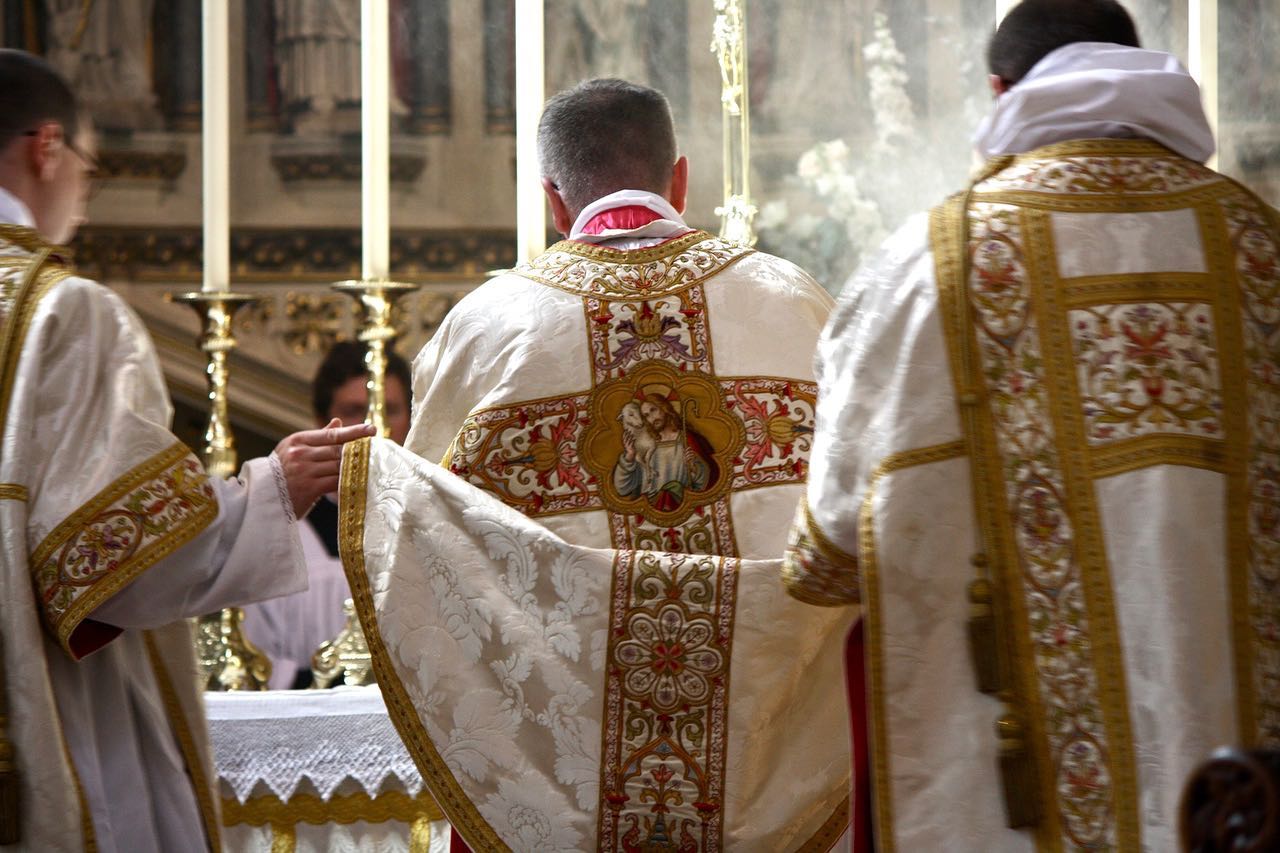
The bishops of England and Wales have reinstated the obligation to attend Mass on Sundays and Holy Days from Sunday 5 June, the feast of Pentecost.

The days on which all Catholics in England and Wales must attend Mass (unless legitimately impeded) are: every Sunday; the Nativity of the Lord (25 December); the Epiphany of the Lord (6 January); the Ascension of the Lord (Thursday after 6th Sunday of Easter); St Peter & St Paul (29 June); the Assumption of the Blessed Virgin Mary (15 August); All Saints (1 November).

The statement from the bishops is included in full below:

Returning to Mass at Pentecost

This is the bread come down from heaven (John 6:58)

A beautiful hallmark of the Catholic faith is the profound desire to participate in the Holy Mass and share in the Eucharist. We do so with deep gratitude and joy. The Eucharist gives the Church her identity – “The Eucharist makes the Church, and the Church makes the Eucharist.” It enables us to worship Almighty God, to support each other on our journey of faith, and to be a visible sign of faith in the world. This hallmark is supported and strengthened by the precept that our fundamental Christian duty is to worship God by participating in the celebration of Mass. Attending Mass on Sundays and Holy Days is the greatest of all privileges, sometimes referred to as “the Sunday Obligation.”

Since the beginning of the Covid pandemic, until the present time, we have shared with you our judgment that the situation of the last two years has meant that the Sunday Obligation has been impeded and has needed to be fulfilled in other ways. We thank God that this situation has now changed. The pressing challenges of the pandemic have lessened significantly. Most people have resumed the wide range of normal activities, no longer restricted by the previous Covid measures. We therefore believe that the reasons which have prevented Catholics from attending Mass on Sundays and Holy Days of Obligation no longer apply.

We understand there will still be some members of our congregations who, for reasons of health, do not feel safe enough to return to Mass. It has always been the understanding of the Church that when the freedom of any Catholic to attend Mass in person is impeded for a serious reason, because of situations such as ill health, care for the sick or legitimate fear, this is not a breach of the Sunday Obligation.

Our Catholic people and parishes have benefitted during these difficult times from the online streaming of Mass and other services. “Virtual viewing” of Mass online does not fulfil the Sunday Obligation. It may, however, be a source of continual spiritual comfort to those who cannot attend Mass in person, for example those who are elderly and sick, for whom the obligation does not apply. In this context, we recognise gratefully the ministry of those who administer Holy Communion to the elderly, sick and housebound.

We are grateful to our clergy, religious and lay faithful who have served our parishes, schools and communities with dedication and distinction throughout this pandemic. Now we look forward with renewed faith and confidence.

In the Holy Sacrifice of the Mass, the Lord’s Supper, the Lord Jesus entrusted to us the precious gift of Himself. With humility, we glory in being a Eucharistic people for whom attendance at Mass is essential. Looking forward to the forthcoming feast of Pentecost, we now invite all Catholics who have not yet done so to return to attending Mass in person.

As the Church needs the witness of the presence of each person, so too each believer needs to journey in faith and worship with their fellow disciples. Nourished by our encounter with the Risen Lord Jesus, fed with His Word and His Body and Blood in Holy Communion, and supported by the presence of each other, we receive strength week by week, to serve the Lord and glorify Him with our lives.

Approved by the Plenary Assembly of the Bishops’ Conference
Friday 6 May 2022

Paschal Joy

During the Preface of every Mass in Eastertide the Church describes herself as “overcome with Paschal joy”. This joy, which is to characterise the whole season, began at the Exultet of the Easter Vigil when the Deacon sang, “Rejoice, let Mother Church rejoice, arrayed with the lighting of [Jesus’ risen] glory, let this holy building shake with joy, filled with the mighty voices of the peoples.” Our joy at the Resurrection of Christ is expressed in all our hymns and prayers, and even the thrice-daily Angelus is replaced at this time with the Regina Caeli, “O Queen of Heaven, rejoice!” On Maundy Thursday the Lord told us that he had come into the world so that “my joy may be in you and your joy be complete!” The Easter season is meant to be the time when we celebrate the fullness of this joy — even though our experience of that fullness must wait until the life to come.

It is easy to be overcome with Paschal joy during the Gloria on Holy Saturday, or the Hallelujah chorus on Easter Day, or even when having that chocolate or glass of wine that we had given up for the forty long days of Lent. But then on Easter Monday or Tuesday, everything is back to normal. The BBC news is as depressing as before. The war in the Ukraine rages on. Our politicians continue to embarrass themselves and the country. Energy costs, rising taxes, all the worries and anxieties from before Easter are still with us afterwards. So what has happened to Paschal joy? How can we rejoice? Are we just pretending to be happy when we’re in church before returning to real life as soon as we leave Mass?

Joy, of course, is not happiness. Happiness is a feeling, an emotion, dependant on all sorts of circumstances outside of ourselves. Joy is not a feeling, it is our response of faith to God. It fills the hearts and lives of all who encounter Jesus and accept his offer of salvation, bringing them a peace, fulfilment and hope that sets them free from sin, sorrow, emptiness and loneliness. Christians can find joy even in suffering because of our knowledge of how Good Friday leads to Easter when we unite our crosses to the Lord. Jesus promised his disciples, “You will be sorrowful, but your sorrow will turn to joy… I will see you again and your hearts will rejoice, and no one will take your joy from you” (John 16:20, 22).

We are overcome with Paschal joy because the heart of our faith, of the Gospel, will always be the same, in good times and in bad, in poverty and prosperity, in sickness and in health: that God has revealed his immense love in the death and resurrection of Christ. As the Holy Father taught, “the fundamental proclamation of the Gospel is that Jesus Christ loves you, he gave his life to save you, and now he is living with you every day to enlighten, strengthen and free you. You are infinitely loved.” That is not to deny the grief of those who have to endure great suffering, but the Resurrection gives us hope: “If we think that things are not going to change, we need to recall that Jesus Christ has triumphed over sin and death and is now almighty. Jesus Christ truly lives… Christ, risen and glorified, is the wellspring of our hope, and he will not deprive us of the help we need”.

Jesus’ Resurrection is not an event of the past, it is a force which continues to permeate the world: we don’t celebrate what God did, but what he continues to do through the power of Easter. Often it does seem that it is hard to be joyful, when all around us we see persistent injustice, evil, indifference and cruelty. But we do also see that in the midst of darkness something new always springs to life and produces fruit — life breaks through, goodness and light re-emerge and spread, and hope can always be found, because the Lord has risen indeed!


These reflections are sent out each Wednesday to all those on our mailing list. Click here to sign up to our mailing list, and receive our Sunday E-newsletter and these reflections straight to your inbox.
A Prayer for Vocations on Good Shepherd Sunday

Lord Jesus Christ, Saviour of the world, we humbly beg of thee to revive in thy Church that spirit which thou didst so abundantly bestow on the Apostles. Call, we pray thee, very many to thy priesthood and to the religious life. And may zeal for thy glory and the salvation of souls inflame those whom thou hast chosen, may they be saints in thy likeness, and may thy Spirit strengthen them. O Jesus, give us priests and religious after thine own Heart!

#oxfordoratory

View on Instagram

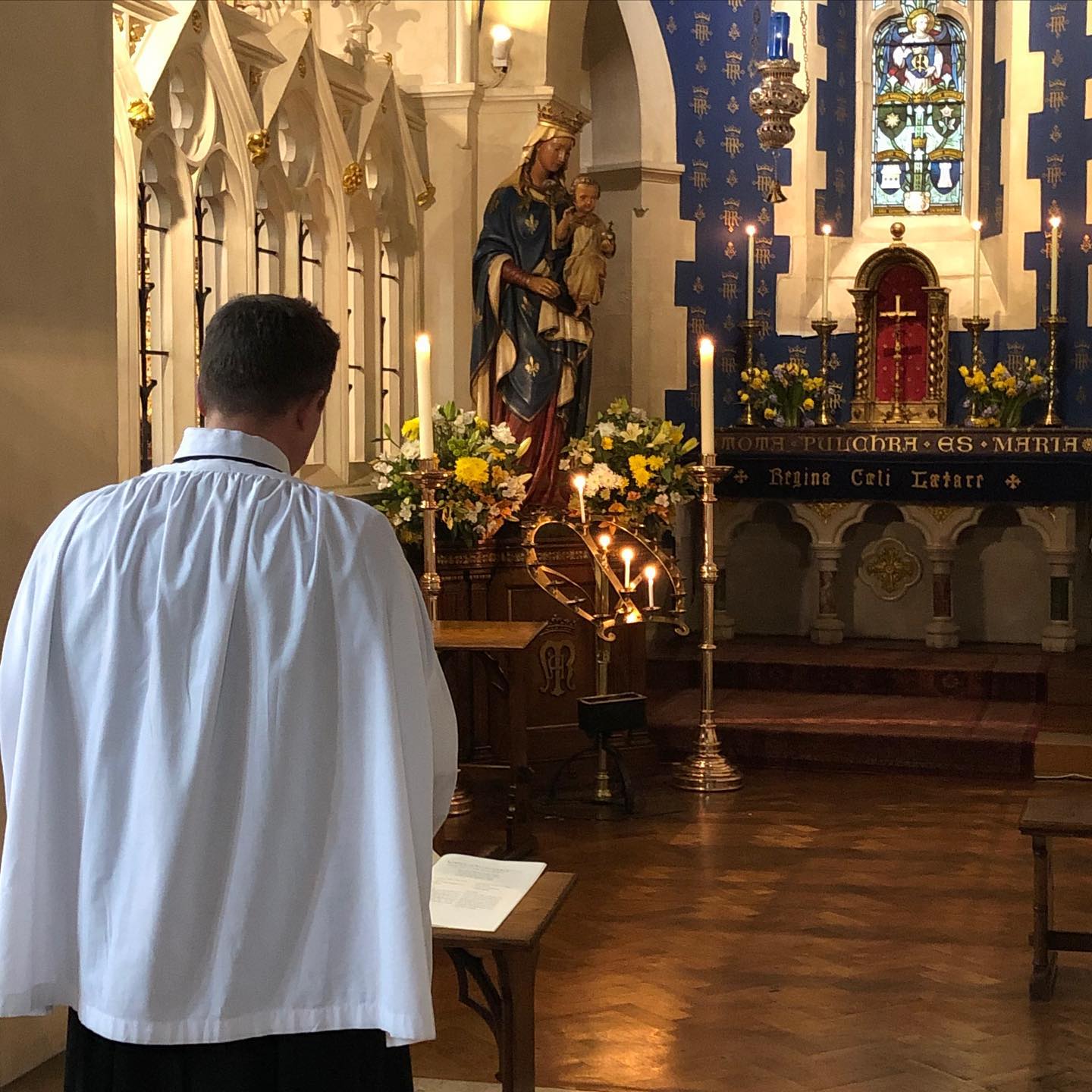
Our Lady in Eastertide

It was pouring with rain on the evening of 21st August 1879. At about 8pm a young woman, returning from her work as a housekeeper, saw a vision of three figures gathered around the gable wall of the parish church at Knock. Next to them on an altar was the Lamb of God, glorified beneath the cross, surrounded by angels. She alerted some locals, and so for two hours, fifteen people knelt in wonder in the pouring rain, reciting the rosary and looking upon the vision of Our Lady, flanked by St John the Evangelist and St Joseph. Our Lady gestured towards the lamb, but no word was spoken, there was no message given except what the people saw.

That village in the West of Ireland had suffered greatly from the dreadful famine which ravaged the country. Homelessness and emigration was rife, there was no food, no money, and even less hope. And there, in the midst of their suffering, Our Lady appeared.

In Easter time we are very much focused on the triumph of the Lamb who was sacrificed for us, dead no longer, but risen and glorified. We hear it in the readings each Sunday from St John’s Apocalypse, another vision of the victory won by the Lord. Our Lady points to that victory.

It has been said that that vision at Knock, rich in theological symbols, represents the Church — St Joseph, the carpenter, the patron of the universal church, her protector, and St John, dressed as a bishop in the vision, the theologian. Our Lady is the Mother of the Church, and by her calm presence she points us to her son’s victory, and to the Blessed Eucharist. There is a profound relationship, St John Paul II tells us, between Our Lady’s “yes,” her fiat, and the “amen” we say as we come to the altar rail to receive the Lord in Holy Communion. We receive him into our heart just as Our Lady had done so, even before she bore him in her womb.

Our Lady’s “yes” was her exceptional participation in the mystery of redemption, and our “yes”, our “amen”, whilst very ordinary, is no less significant for us. We participate in that sacrifice of Christ, a sacrifice which marks us, and we share in a foretaste of his glory which should in its own way shape how we live now. And we receive much strength from him as the food for our soul.

Our Lady points the way for us and by her intercession she helps us to get there and so we can say that we must be devoted to the Blessed Eucharist, the sacrament of Christ’s victory, in union with her.

The vision at Knock was intended to comfort a poor people who were suffering. That vision, like St John’s in the first place, is one of God’s ways of telling us, everything is going to be alright. We must follow Our Lady’s lead and allow that victory of the Lamb to shape how we live.

Lord God, thou hast given the Blessed Virgin Mary to thy Church as a beacon of unfailing hope. In thy goodness grant that those for whom life is a burden may find in her consolation and strength, and those who despair of salvation may find their hearts warmed and uplifted as they turn to her in their need. Through Christ our Lord. Amen.

May devotions in honour of Our Lady take place after the evening Mass every Tuesday in May.

#oxfordoratory

View on Instagram