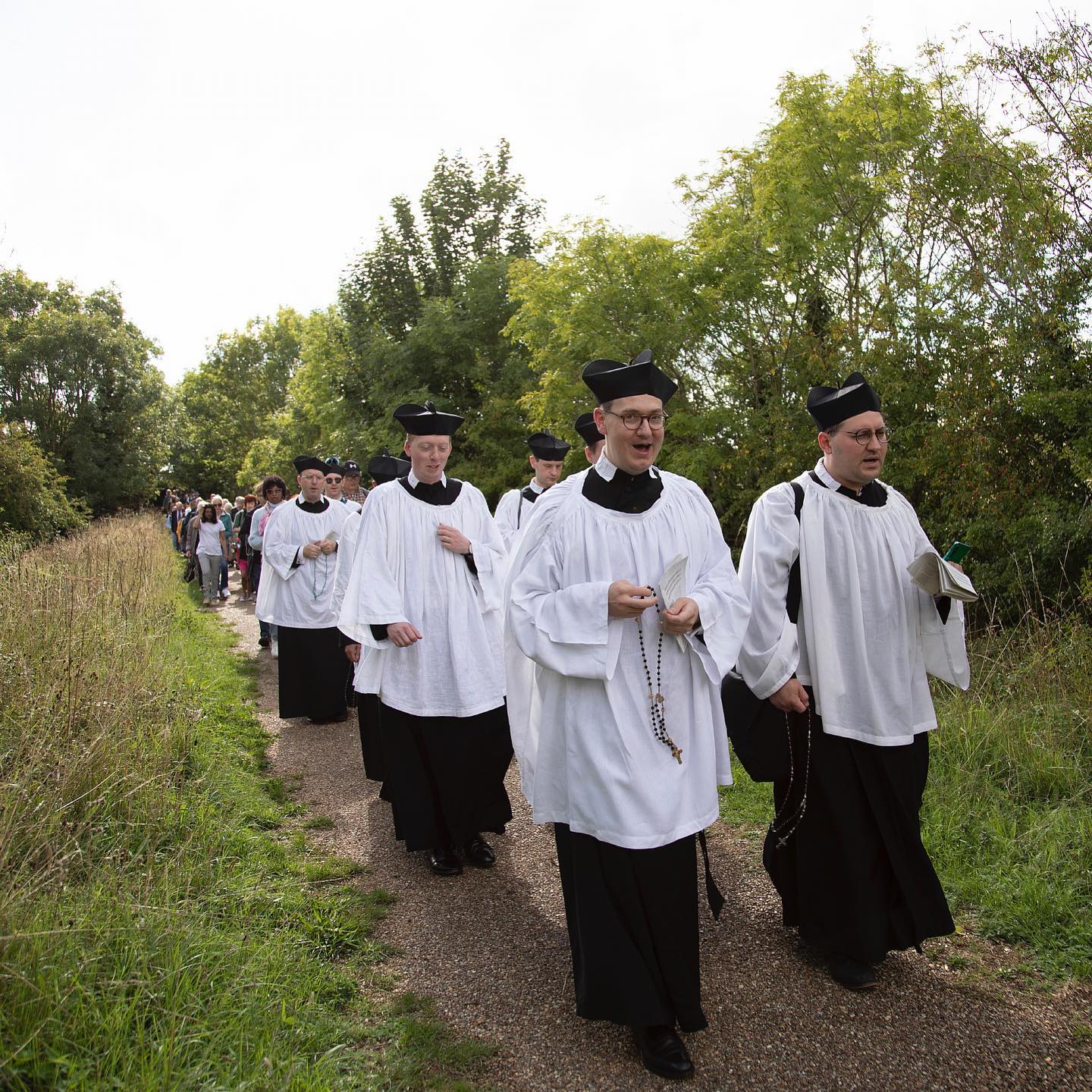
The National Catholic Shrine at Walsingham today is a mile from the site of the medieval Holy House. The walk gives plenty of time for singing hymns and praying the rosary!
#oxfordoratory
The National Catholic Shrine at Walsingham today is a mile from the site of the medieval Holy House. The walk gives plenty of time for singing hymns and praying the rosary!
#oxfordoratory
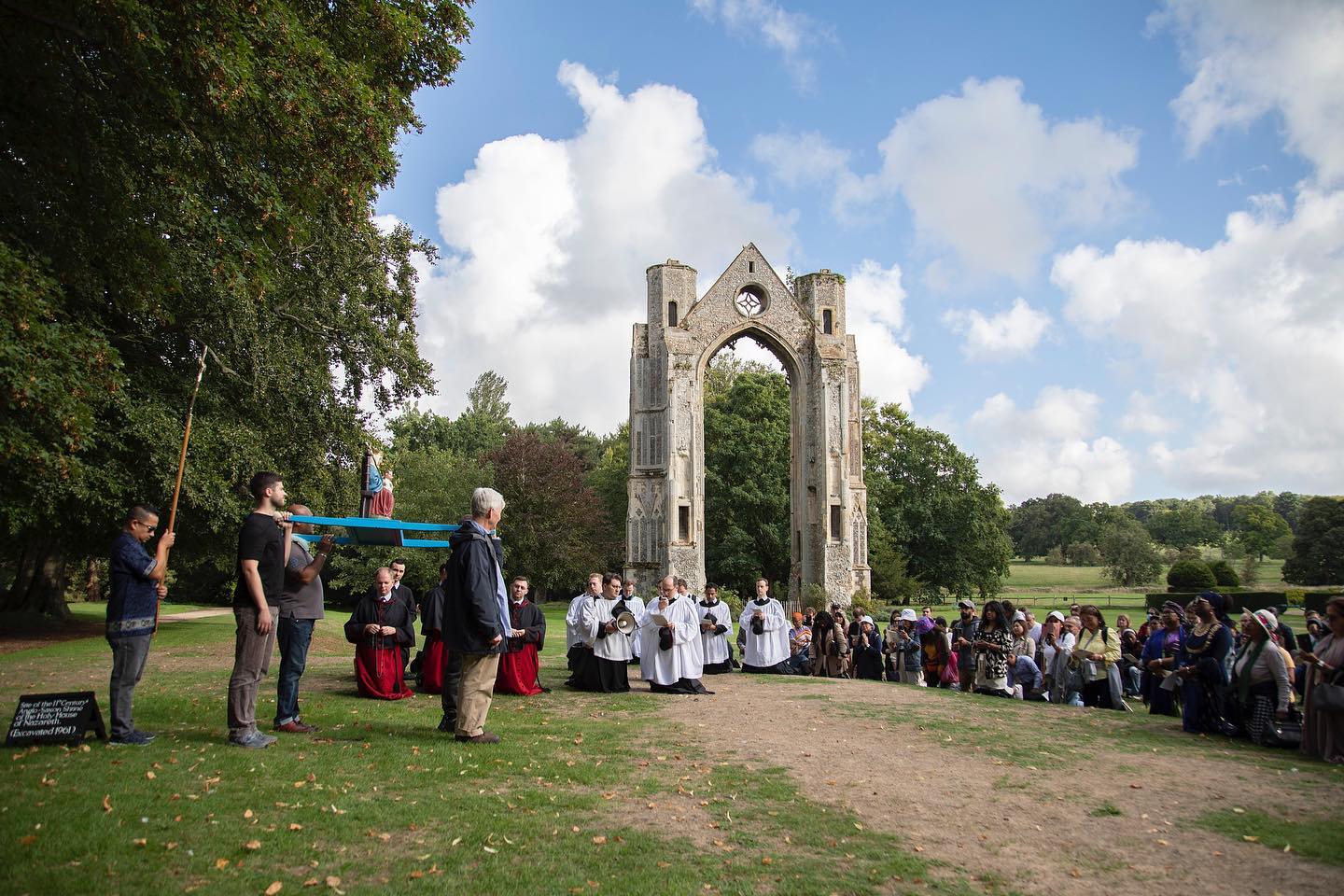
Last Saturday, pilgrims from all the Oratories in England gathered to pray before Our Lady of Walsingham. #oxfordoratory
The momentous events of the past few days have centred around two remarkable persons, our late and much-loved Queen, and our new King Charles. And yet throughout the solemn ceremonies and observances another Person, King of Kings, has received a prominence not often accorded him in these increasingly secular times. We have said or sung, “God save the Queen”, and then “God save the King”. Prayers and readings from Scripture have been broadcast across the world. Proclamations and oaths have been made in His name. The personal faith of both the Queen and the King have been widely spoken of. While most of this is part of so-called “civic religion”, forms and protocols of a bygone age kept for tradition’s sake, it is a comfort to people of faith to know that Our Lord and our Christian faith are still very much part of the fabric of British society, and that our country still turns to the Word of God and the language of faith to express both sorrow and the continuity of life.
Our faith is primarily in the resurrection of Jesus Christ, God Incarnate, who destroyed death so that we might have eternal life with him in heaven. But his victory over death still allows us space to grieve for those we have lost. We mourn the death of our Queen. As Cardinal Nichols said in his homily at the Solemn Requiem in Westminster Cathedral:
Our loss is profound and our sorrow immense. But we also know that her life continues, it is changed not ended. For as this earthly dwelling slowly turns to dust, we pray that she will gain an everlasting dwelling in heaven, where nothing of her great goodness is lost but rather brought to its fulfilment. In the words of St Paul, those who are baptised in Christ ‘went into the tomb with him and joined him in death, so that as Christ was raised from the dead by the Father’s glory, we too might live a new life’ (Rom. 6:4).
Both our sorrow and our hope bring us to the Lord in prayer. While it is only right that we remember and celebrate the Queen, we have a duty and a privilege to pray for her soul. The Cardinal continued:
Our particular calling, as the Catholic community, is to pray for her, to pray for the dead. I imagine that every bouquet of flowers placed to honour our late Queen, or as is often said, to ‘pay her our last respects’ is, at heart, a silent prayer for the repose of her soul. With the great gift of clear and steadfast faith, we can make explicit those silent prayers of so many and in doing so make our humble contribution to these days of mourning and sadness.
We will celebrate a Solemn Requiem Mass for Her Majesty the Queen at 11am on Sunday 18 September, and on the day of her funeral, Monday 19 September, all Masses will be said for her soul. Thus we will offer to God the highest prayer we can, uniting our sorrow and love for the Queen with the sacrifice of Christ himself. May her soul, and the souls of all the faithful departed, through the mercy of God, rest in peace. Amen.
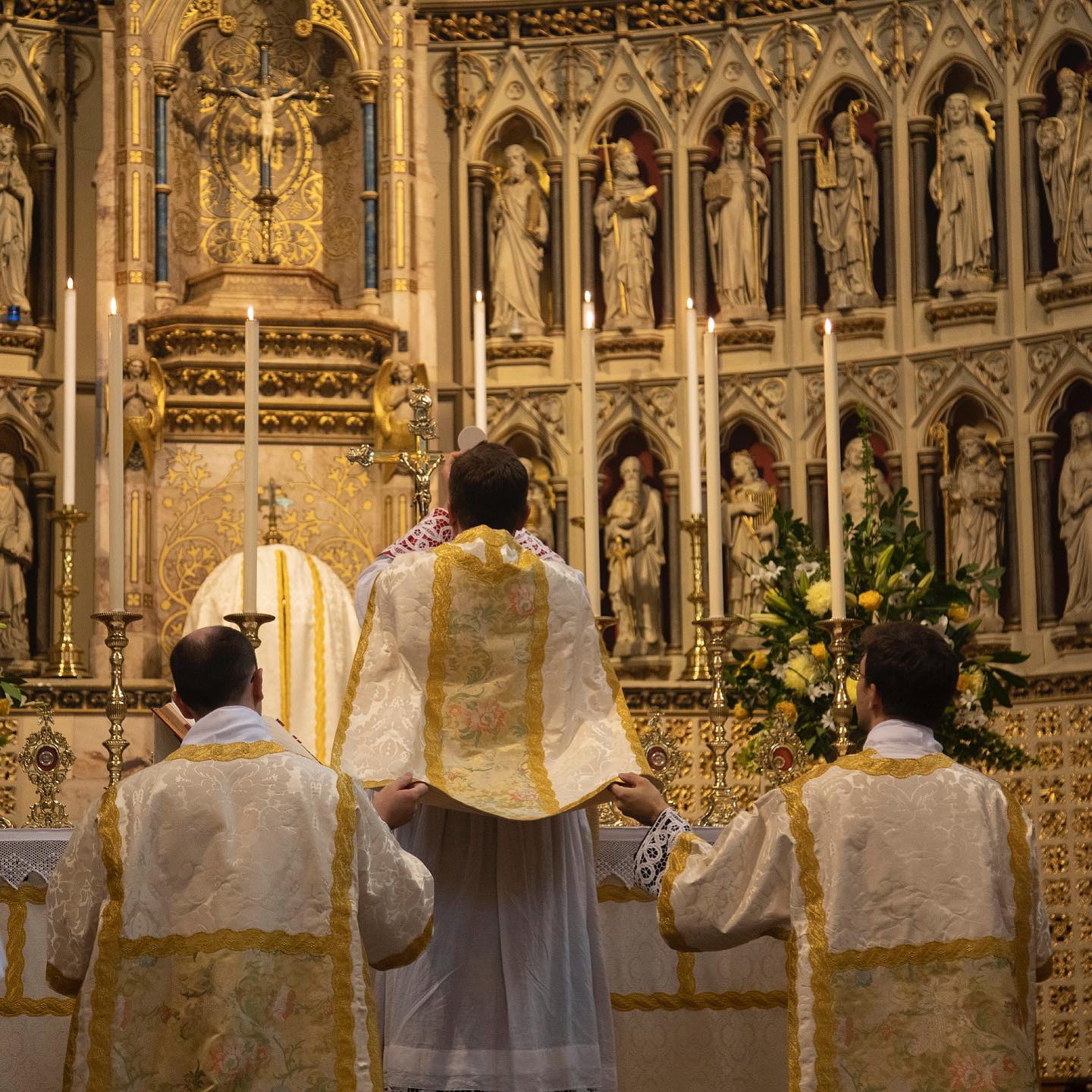
Last Thursday, Our Lady’s Birthday, marked 32 years of Oratorian life in Oxford.
#oxfordoratory
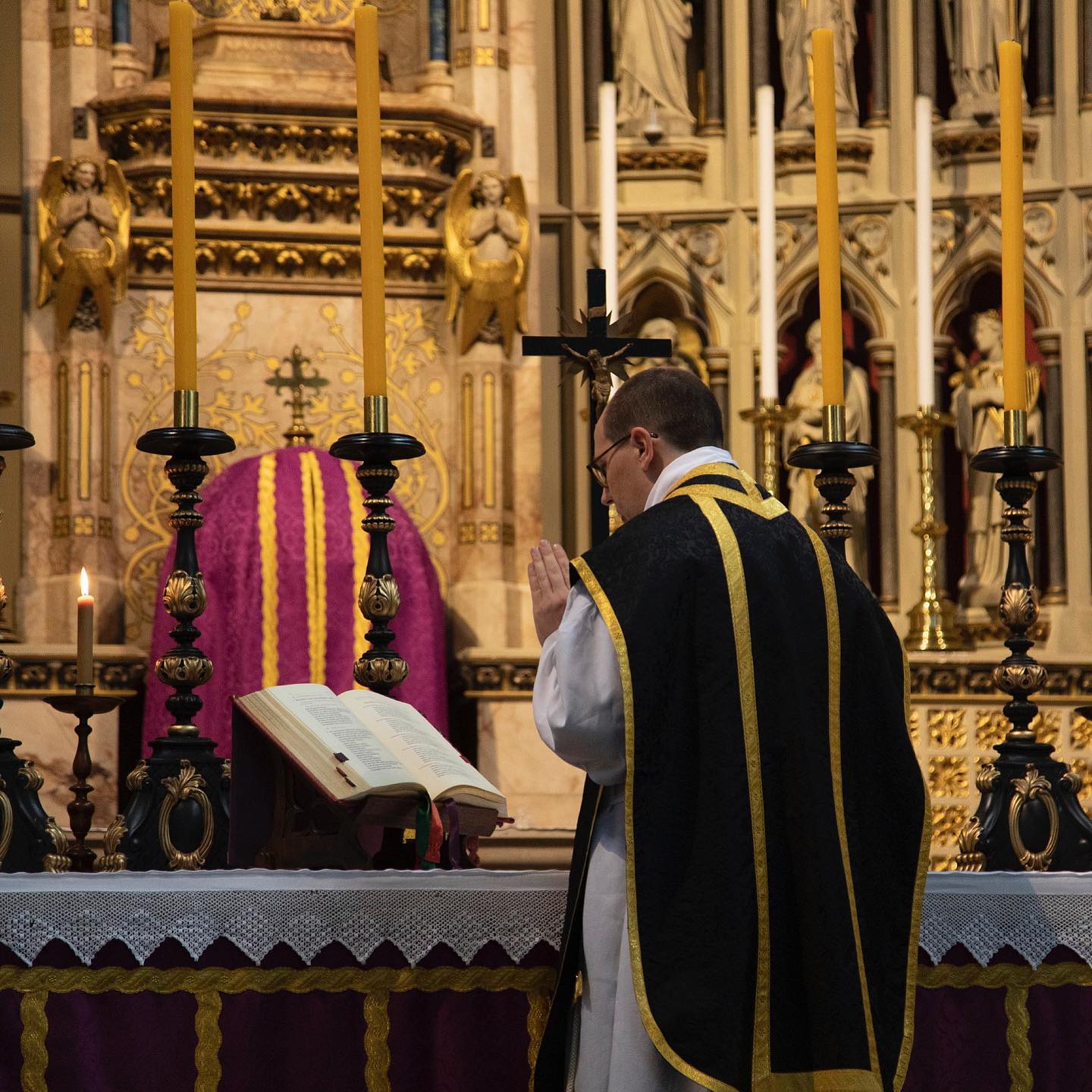
Masses yesterday were all offered for the repose of the soul of Her Majesty Queen Elizabeth II.
There will be a Solemn Mass of Requiem in the Extraordinary Form on Sunday 18 September at 11am.
Requiem Masses will again be said on the day of the funeral, Monday 19 September.
#oxfordoratory
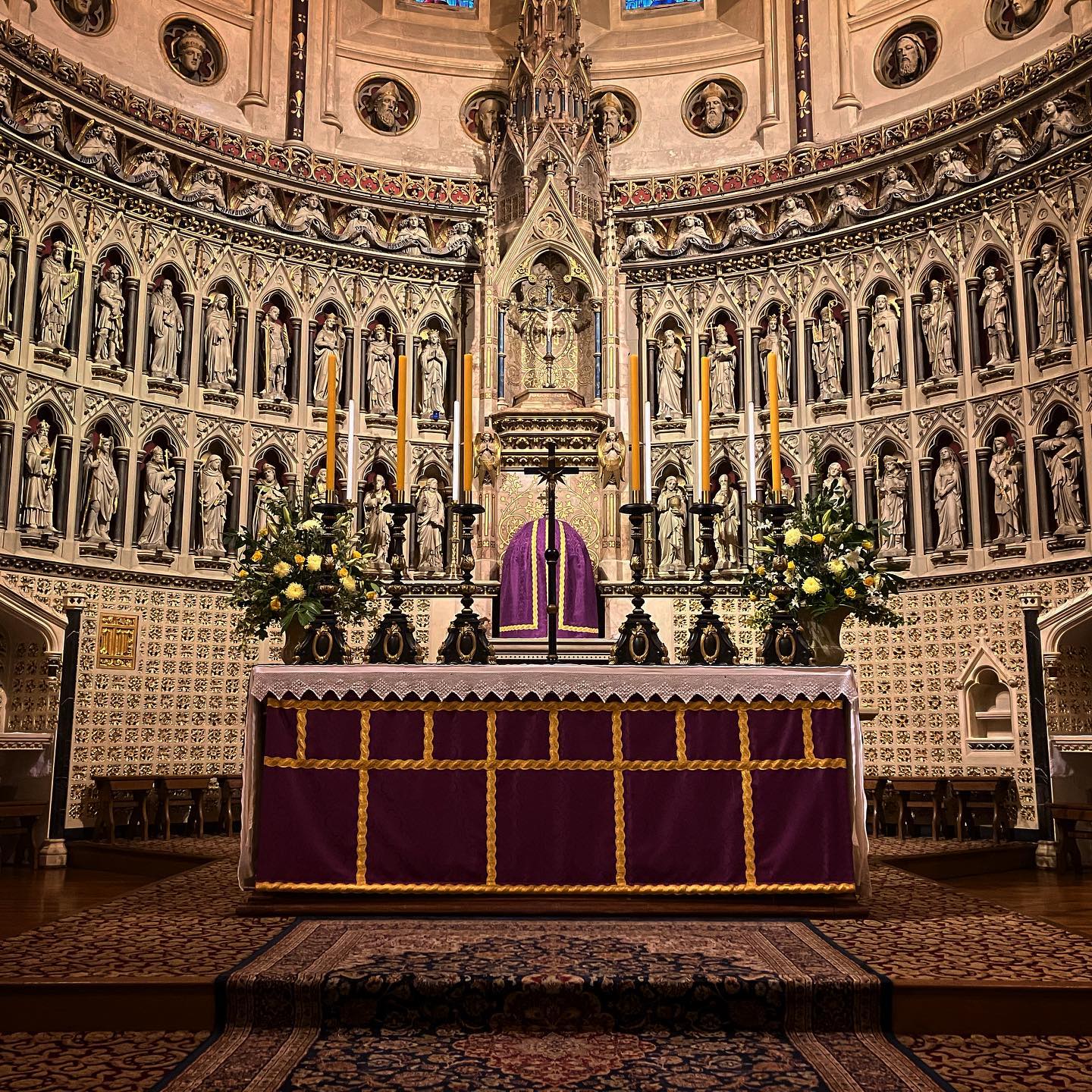
All Masses this Friday will be offered for the repose of the soul of Her Majesty the Queen. May she rest in peace.
Our weekly reflections are paused for the summer, so in their place there will be a short extract from how to pray in ten easy steps. This guide is taken from The Oratory Prayer Book, a new prayer book of old prayers that we are publishing and will be available in the coming months.
10. Don’t pray alone
The most important prayer ever made is Christ’s crucifixion, when he offered himself to the Father. All our prayers only work because they are joined with his, and that offering from the Cross is made present again every time we go to Mass. That’s why the Mass is such an important prayer that we have to join in with it at least every Sunday. The prayer we offer together in church is also a reminder that we are part of the same body, and that we are there to support each other in prayer. Sometimes when we find prayer difficult, we can be carried on the prayers of others. When we find prayer easy, that means it is our turn to carry them. We can also extend our Sunday experience by sharing times of prayer with others: friends, family, and others from our parish. Of course the saints and angels are also praying for us in heaven. Never forget to ask them to join their prayers to your own.
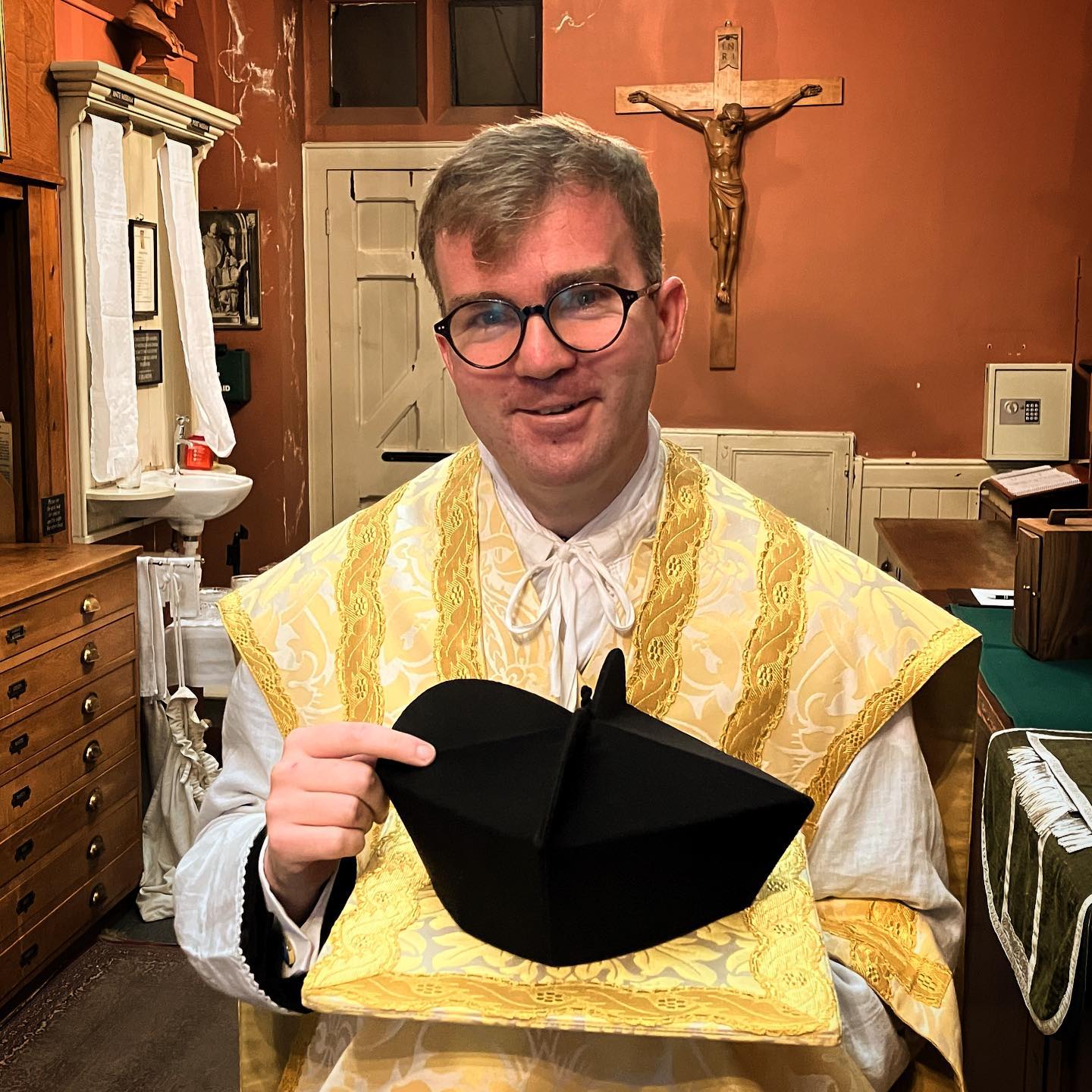
Congratulations to Fr Rupert, who celebrates 10 years of priesthood today.
#oxfordoratory
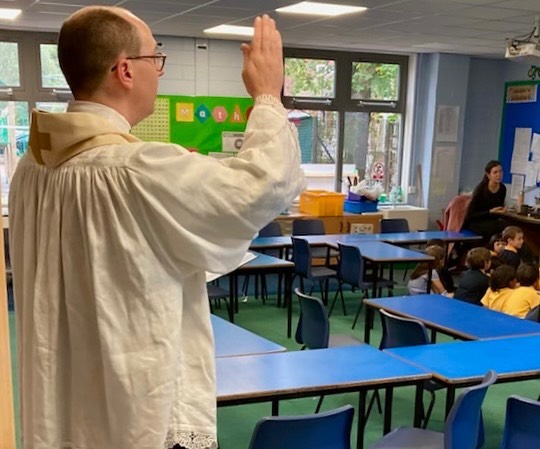
Today Fr Benedict blessed our primary school for the beginning of the school year.
#oxfordoratory
Sunday 4 September Solemn Mass 11:00
23rd Sunday of the Year
Missa Simile est regnum caelorum Lobo
Quasi cedrus Lassus
Cibavit eos Byrd
Fountain Reverie Fletcher
Thursday 8 September Solemn Mass 18:00
The Nativty of the Blessed Virgin Mary
Missa Ave virgo sanctissima Esquivel
Ave maria a5 Palestrina
Hoc corpus Robledo
Cantique Elgar
Sunday 11 September Solemn Mass 11:00
24th Sunday of the Year
Missa brevis Palestrina
Beati omnes Purcell
Domine, non sum dignus Aichinger
Dialogue on the Grands Jeux Couperin
Sunday 18 September Solemn Mass 11:00
25th Sunday of the Year
Missa Puisque j’ay perdu Lassus
Nisi dominus Carissimi
Sicut cervus Palestrina
A fancy BK62 Byrd
Sunday 25 September Solemn Mass 11:00
26th Sunday of the Year
Missa quarti toni Victoria
Super flumina Babylonis Palestrina
Quasi cedrus Guerrero
Fugue in C minor BWV582ii Bach