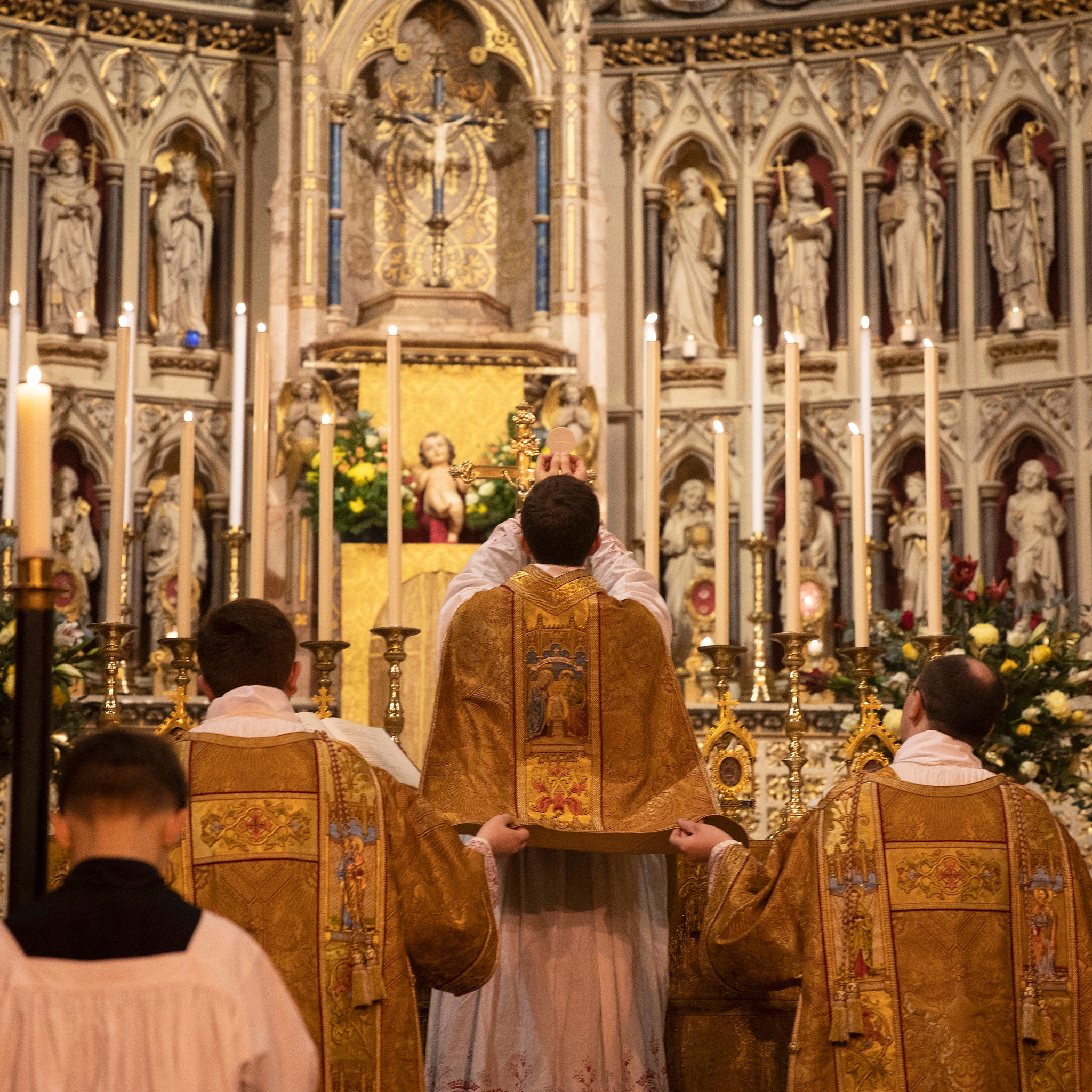
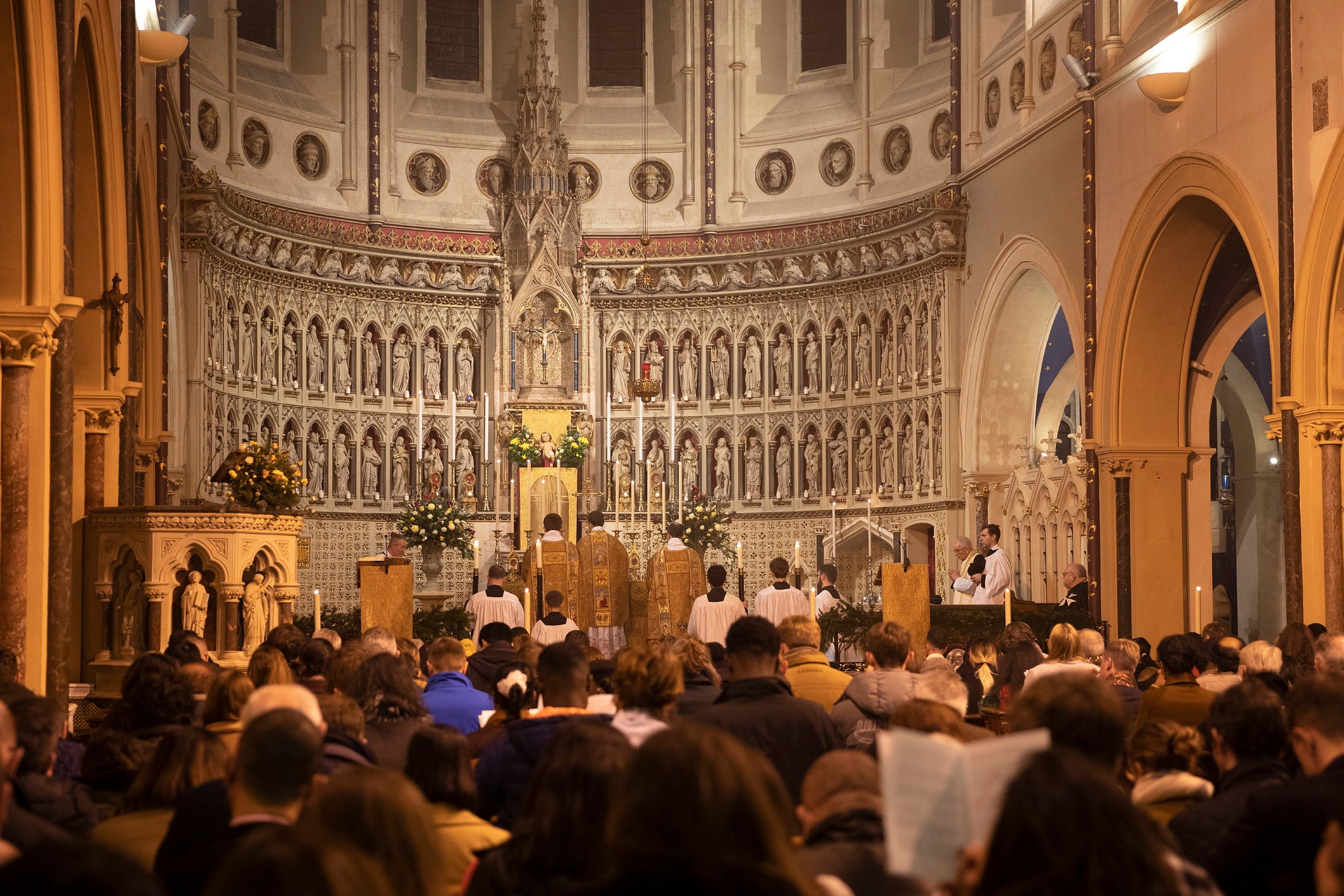
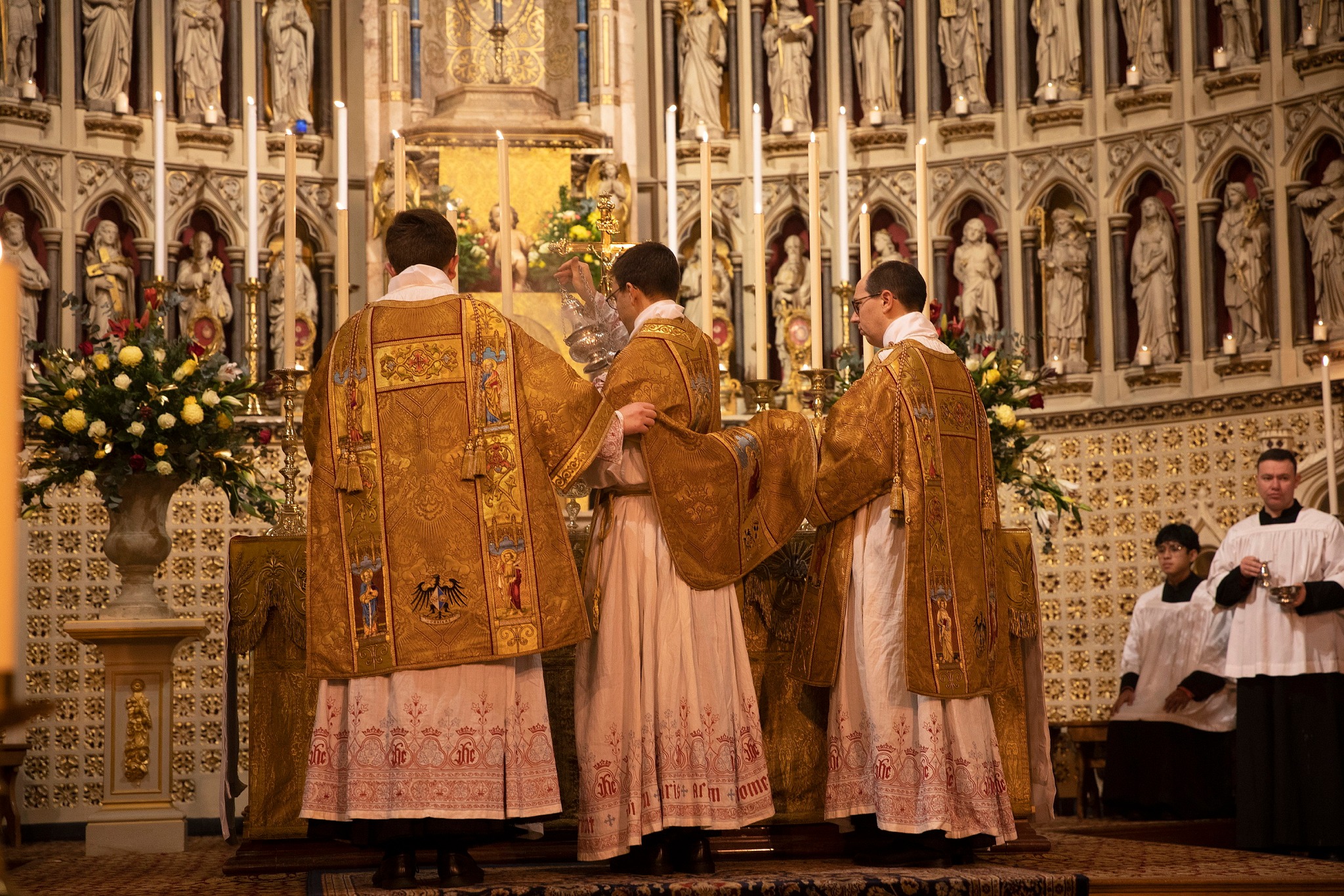
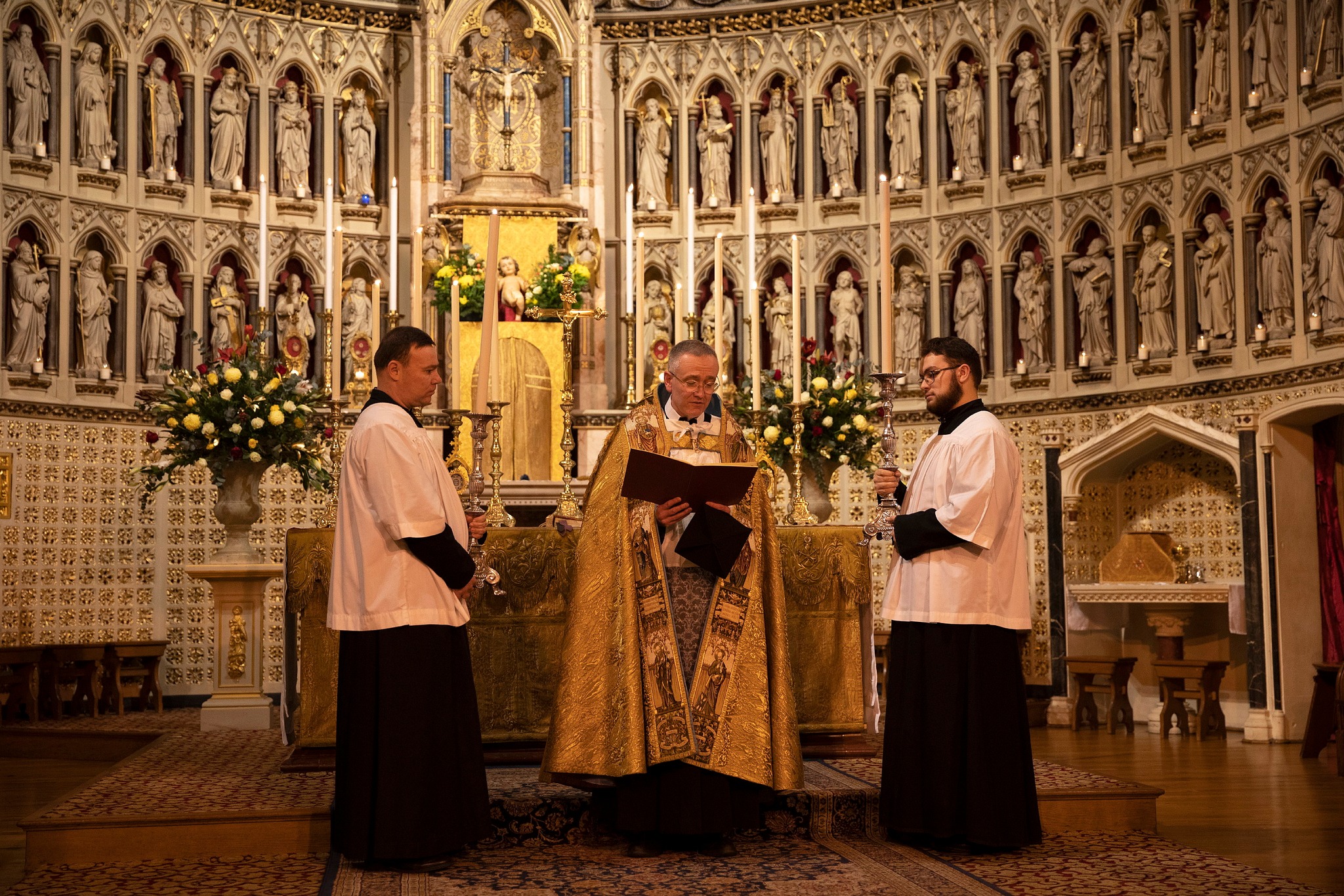
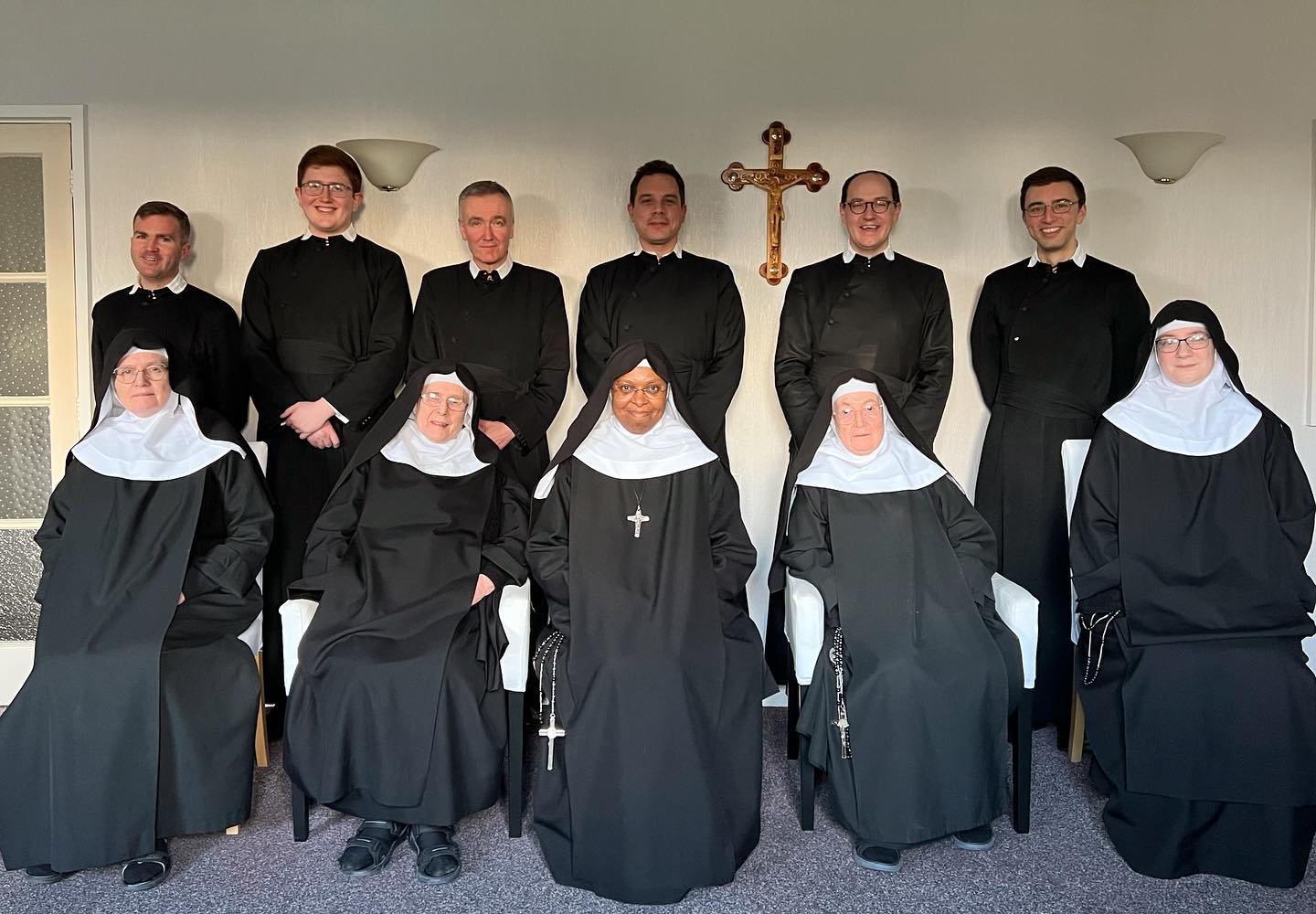
10 years ago, we welcomed the Sisters of the Blessed Virgin Mary into full Communion in our Church. The same day marked the foundation of their new Benedictine community, having previously been members of the Anglican Community of St Mary the Virgin in nearby Wantage. We try to celebrate the anniversary together each year with them in their current home in Birmingham, and it was a joy to be able to do so again after a few years’ interruption.

You can read their story here: www.sbvm.org.uk/our-story/

#oxfordoratory

View on Instagram

January Music

Sunday 1 January Solemn Mass 11:00
Mary, the Holy Mother of God
Missa Cum jubilo Plainchant
Alma redemptoris mater Plainchant
Christe redemptor omnium Plainchant
Ave maris stella Dandrieu

Friday 6 January Solemn Mass 18:00
Epiphany
Missa Tertia octavi toni Croce
Regis Tharsis Palestrina
Omnes de Saba Handl

Sunday 8 January Solemn Mass 11:00
The Baptism of the Lord
Missa O magnum mysterium Victoria
Tribus miraculis Marenzio
Sicut cervus Palestrina

Sunday 15 January Solemn Mass 11:00
2nd Sunday of the Year
Missa Brevis Palestrina
Tribus miraculis Palestrina
Videntes stellam magi Lassus

Sunday 22 January Solemn Mass 11:00
3rd Sunday of the Year
Missa Puer qui natus Guerrero
O bone Jesu Anchieta
Venite sitientes ad aquas Domini Monteverdi

Sunday 29 January Solemn Mass 11:00
4th Sunday of the Year
Mass for five voices Byrd
Bonum est confiteri Palestrina
Alma redemptoris mater Cavalli

O God, who in your unutterable providence willed that your servant Benedict be numbered among your high priests, grant, we beseech you, that he who governed on earth on behalf of your only begotten Son may be admitted to the company of your holy bishops forevermore. Through the same Jesus Christ, your Son, our Lord, who lives and reigns with you in the unity of the Holy Spirit, God, for ever and ever. Amen.

Eternal rest grant unto him, O Lord.
And let perpetual light shine upon him.
May he rest in peace. Amen.

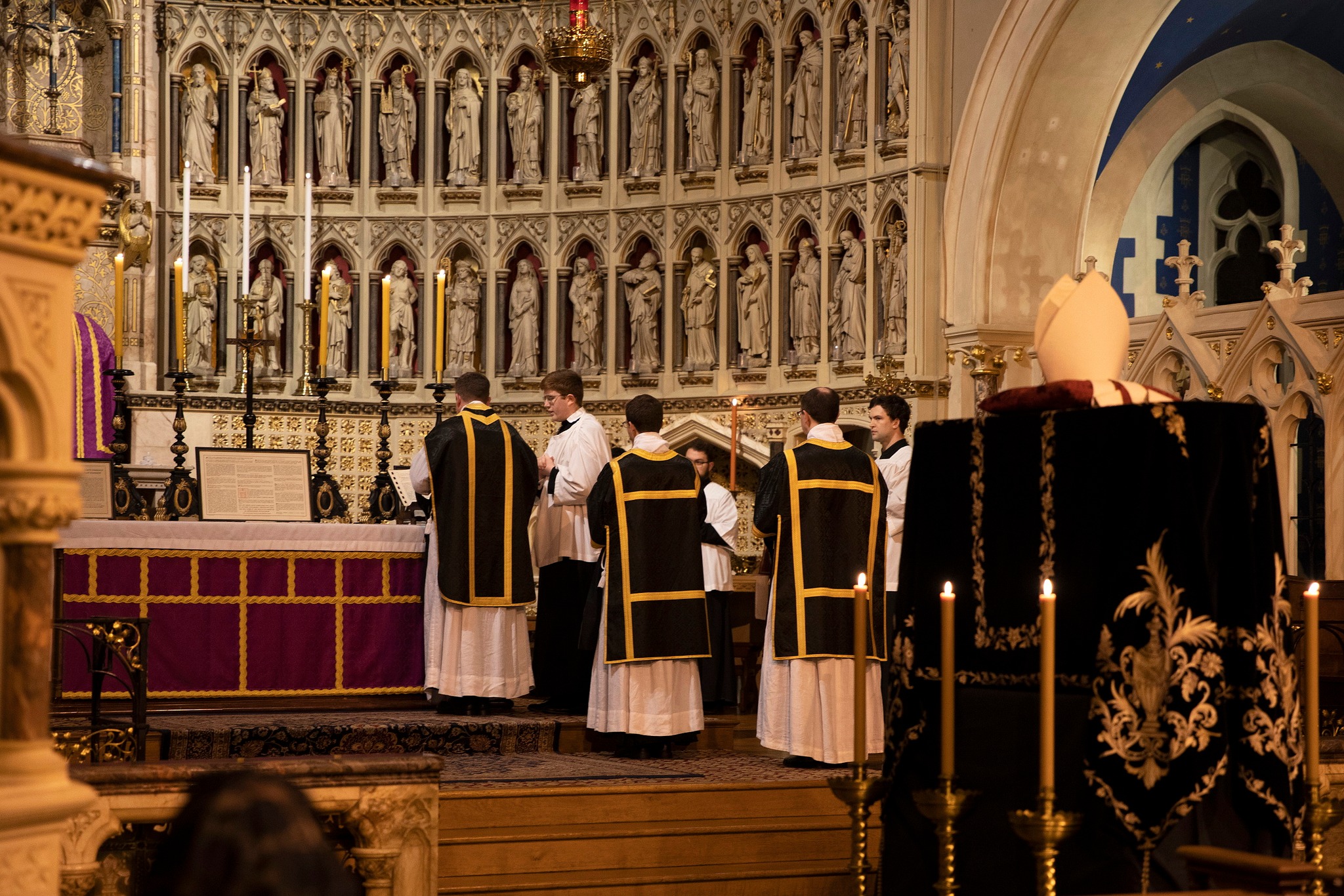
Solemn Requiem Mass for Pope Benedict XVI last night.

#oxfordoratory

View on Instagram

Benedict XVI

Much has been written in these last days about the legacy of our late Pope Emeritus, Benedict XVI: some good, some a misrepresentation of a man many of us never met in person. But we cannot ignore that he has been a huge figure in the Church and the world. Despite not meeting him in the flesh, so many of us have encountered him through his writings, and in those books and letters we see something of the inner life of this theologian-pope, something of his piety, and something of his goodness.

When he became Archbishop of Munich he chose as his motto some words from the first Letter of St John, Cooperatores veritatis — “Co-workers for the truth”. For Pope Benedict that truth was never an abstract idea, let alone a free-for-all based on whim or fashion, but rather that Truth was a person, Jesus Christ, and it was Benedict’s deep desire to ensure, through his teaching, his writings, the pastoral care of souls and his governance, that God in the person of Jesus Christ would be at the centre of the faith of the Church, our faith.

Faith in Christ was something he knew transfigured everything. At the World Youth Day in Cologne in 2005, he summed this up for the young people gathered there in a surprising way: “The happiness that you seek, the happiness you have a right to enjoy, has a name and a face: it is Jesus of Nazareth.” He compared our Christian journey to that of the Magi, journeying in search of a King, but most often we journey in our life of faith in search of meaning, in search of one who will satisfy the deepest desires of our heart, knowing that they will not be satisfied until we reach him. That one is Christ.

This core truth of Pope Benedict’s life informed all his work, especially his writings. As an academic, he wrote with great precision on all areas of Catholic theology, particularly about the Second Vatican Council (at which he was a theological adviser), but he also wrote very beautifully about the life of Jesus, on the moral life and the importance of serving the poor, about the virtues, and about beauty and the sacred liturgy. For Pope Benedict these were all inseparable from one another and presupposed one another. Our prayer demands of us the right worship of God which demands of us service of others and the life of virtue which in turn leads back to the offering of our whole lives to God, who leads us to that happiness in which is found authentic humanity. And this is also a sign of what heaven is like. God is our destination and it is our friendship with God in the Lord Jesus that shows us how to be truly human.

Such a faith makes demands of us, but they are happy demands. In his “Spiritual Testament”, published on the day of his death, Pope Benedict exhorted us to “Stand firm in the faith! Do not be confused!” If we trust in what the Lord has done for us, if we give our hearts in openness to him, we must respond to the graces he gives us in return. The late Pope Emeritus is often quoted as having said, “The world offers you comfort, but you were not made for comfort. You were made for greatness.” That challenge is picked up again in his wonderful encyclical letter, Spe salvi, where he says, “Man was created for greatness — for God himself; he was created to be filled by God. But his heart is too small for the greatness to which it is destined. It must be stretched.” It is in our response to the hope that God offers us, it is our desire for God that stretches our heart and the response we must make is our devotion, our prayer life, our participation in the sacraments and in our service of others. The Christian life prepares us for heaven because it enlarges our heart to receive what God offers us — himself.

Perhaps most telling are the last words of Pope Benedict’s life. On the morning of his death he was heard saying, Gesù, ti amo! — “Jesus, I love you”. As a last lesson from this saintly teacher, we could receive none better. May our whole lives be an expression of this phrase, may it colour all that we do and think and feel so that nothing can separate us from him. We pray that in that expression of love, Pope Benedict has been brought home to the one in whom he always hoped and whom he sought to share with the world.


There will be a Solemn Requiem Mass in our church for Pope Benedict tonight at 6pm.


These reflections are sent out each Wednesday to all those on our mailing list. Click here to sign up to our mailing list, and receive our Sunday E-newsletter and these reflections straight to your inbox.
Devoutly we approach thy cradle, Lord, to find the one of whom the prophets spoke, and here behold the mighty God of thunders lying helpless on the straw. O grant us some of this humility that we may conquer mightily the reign of sin within us. And grant us, too, the protection of thy gentle mother, whose tender eye and loving heart attend thy every wish; thou who livest and reignest with the Father and the Holy Spirit, one God for ever and ever. Amen.

#oxfordoratory

View on Instagram

Childlike innocence

We don’t spend very much time after Christmas thinking about Christ in his childhood. From the period between his birth until his first public appearance around the age of 30, the Gospels don’t say a lot. St Matthew tells us about things that happened to him, like the visit of the Magi and the flight into Egypt. The only account of something that Jesus himself did before the age of 30 is the story of him lost and found in the temple — a 30 second description to fill 30 years of life!

If we want to imagine what Christ was like growing up, we have to fill in some of the gaps from what we already know. And to do so is not a waste of time. Our Lord will have retained something of his childlike innocence throughout his life. Think, for example, of Our Lord’s sense of humour. He certainly had one (could he have been truly human without it?) but it’s one of those things that is very difficult to convey. The Gospels rarely attempt to do so.

And yet we can still fill in some of the gaps. Our Lord was perfect. He must have had a very good sense of humour then, and could surely have been very funny when he chose to be. When he wanted to, he must have been able to make the disciples roar with laughter as they trekked between the towns and villages of Galilee. And yet always he could have done so without having to resort to anything offensive or indecent. He would never have made a joke that was unkind or hurtful. He can’t have found enjoyment in the suffering of others. That childlike innocence must have stayed with him even as a fully grown adult, yet always without any sense of immaturity.

One of the reasons we might find it hard to imagine his human character in this way is, perhaps, because we so rarely encounter such innocence for ourselves among adults. But it’s not impossible, and just occasionally it does happen. It’s one of the things that made our own St Philip so attractive to people. St John Henry describes him in his litany as a ‘light of holy joy’ and ‘image of childhood’.

We might not always have been as innocent as Christ, but that shouldn’t stop us from trying to share more in those childlike parts of his character that he maintained for the rest of his life. And to do that, we have to think about those hidden years, where even in his obscurity, Christ is teaching us what we should be like ourselves.


These reflections are sent out each Wednesday to all those on our mailing list. Click here to sign up to our mailing list, and receive our Sunday E-newsletter and these reflections straight to your inbox.
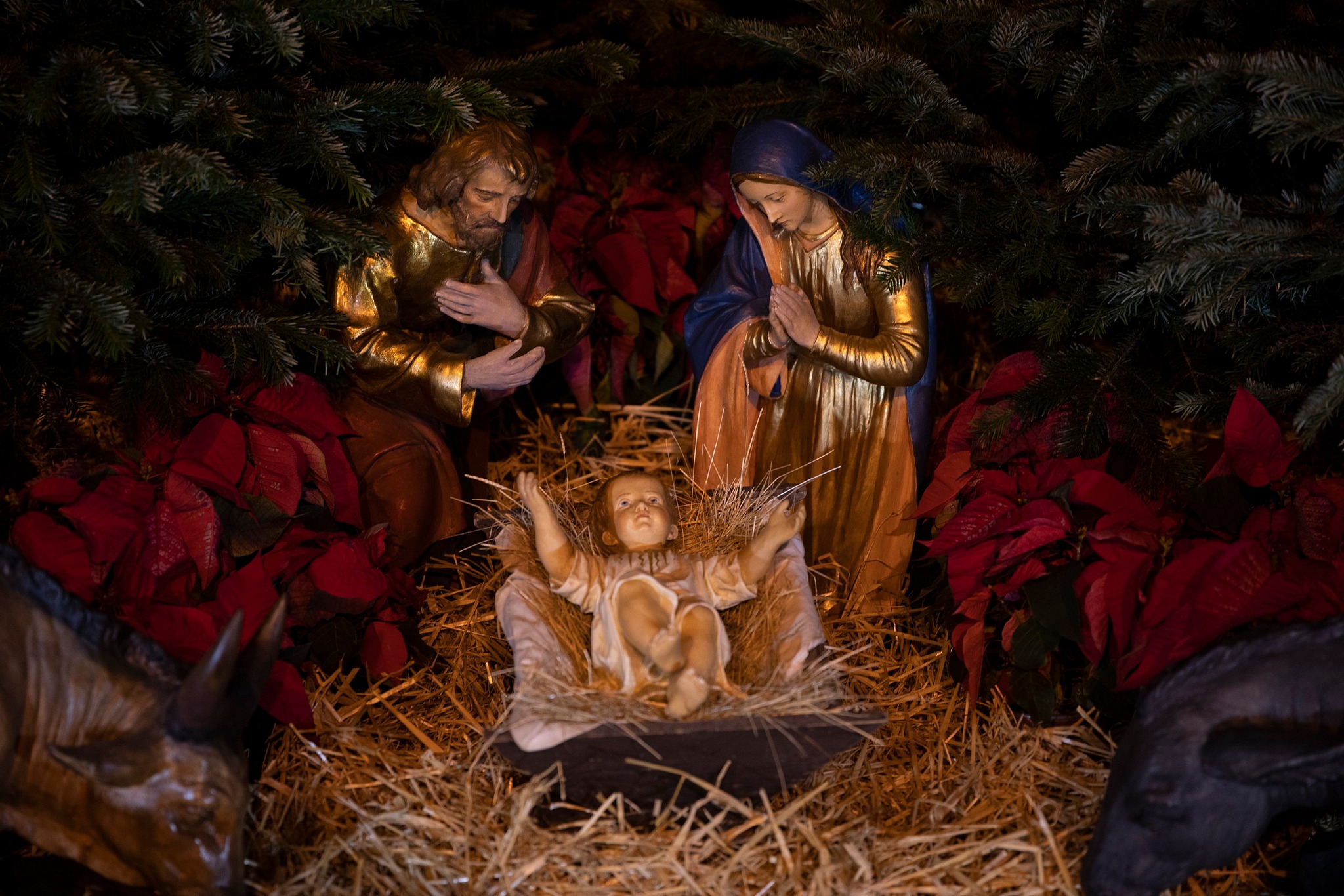
The Solemn Proclamation of Christmas is sung from the Roman Martyrology before Midnight Mass:

When ages beyond number had run their course from the creation of the world, when God in the beginning created heaven and earth, and formed man in his own likeness; when century upon century had passed since the Almighty placed his bow in the clouds after the Deluge, as a sign of covenant and peace; in the twenty-first century since Abraham, our father in faith, came out of Ur of the Chaldees; in the thirteenth century since the People of Israel were led by Moses in the exodus from Egypt; in around the thousandth year since David was anointed King; in the sixty-fifth week of the prophecy of Daniel; in the one hundred and ninety fourth Olympiad; in the year seven hundred and fifty two since the foundation of the City of Rome; in the forty second year of the reign of Caesar Octavian Augustus, the whole world being at peace, Jesus Christ, being eternal God and Son of the eternal Father, desiring to consecrate the world by his most loving presence, conceived by the Holy Spirit, after nine months had passed since his conception, in Bethlehem of Judah was born of the Virgin Mary, and was made man: The Nativity of Our Lord Jesus Christ according to the flesh.

#oxfordoratory

View on Instagram