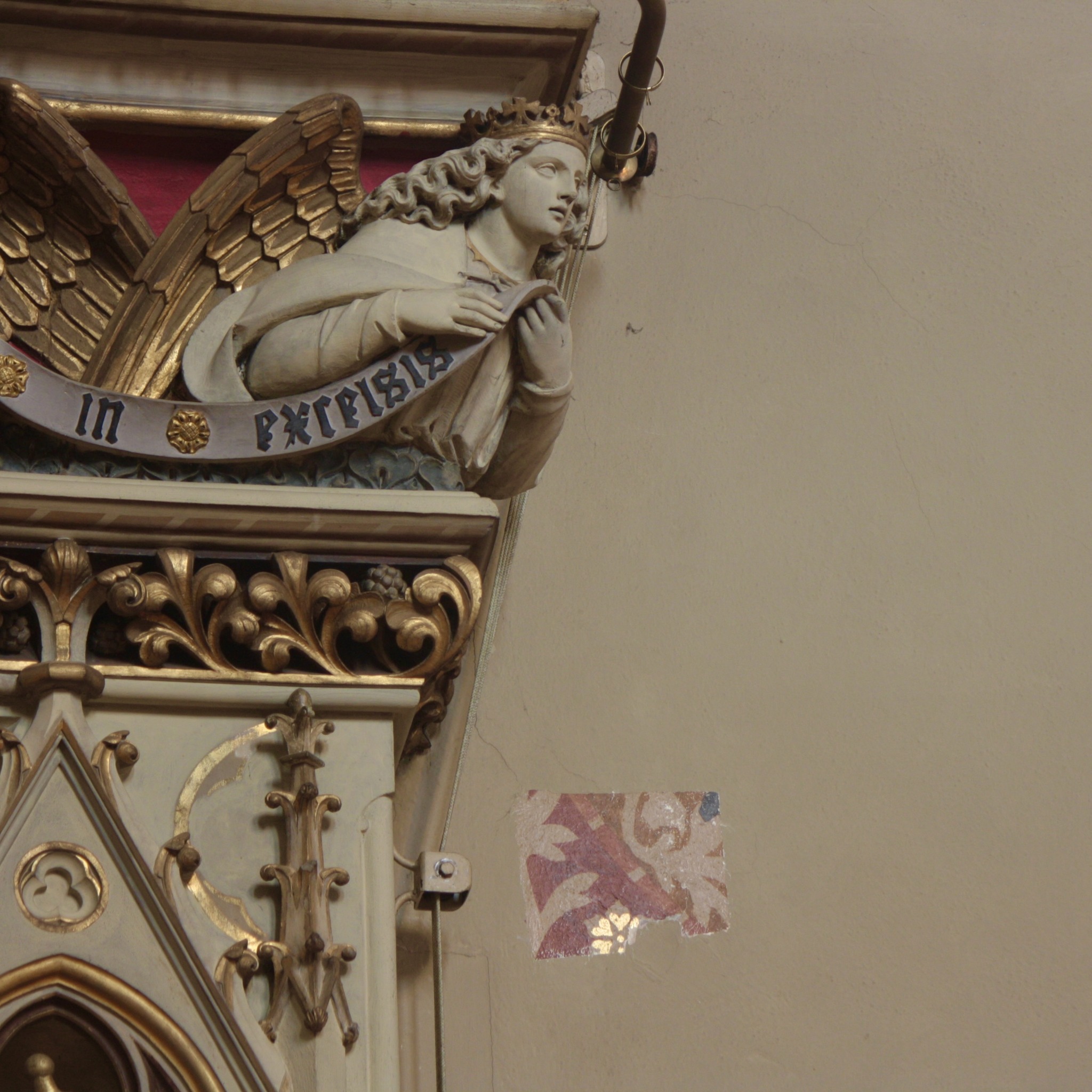
It’s been over a year since we uncovered some patches of the original sanctuary decoration, and discovered that more had survived than we thought. Wouldn’t it be nice to see what else is under the grey paint…
#oxfordoratory #oratory150
It’s been over a year since we uncovered some patches of the original sanctuary decoration, and discovered that more had survived than we thought. Wouldn’t it be nice to see what else is under the grey paint…
#oxfordoratory #oratory150

For many of us, obedience is not, perhaps, the most attractive virtue. Yet, it was the overriding principle of priestly life for Blessed Sebastian Valfrè, whose feast we kept yesterday. Since joining the Turin Oratory in 1651, at the age of 22, his life was marked by a strict obedience to his superiors and those in authority in the Congregation. Saint Philip insisted that, unlike for members of religious Orders or the Armed Forces, obedience for Oratorians is wholly voluntary, adding that if one wished to be obeyed, it was necessary to avoid giving too many orders. He left us few rules but insisted that those rules be followed and that the Fathers and Brothers obey the office holders in the Congregation without fuss. Blessed Sebastian took this very much to heart, deciding early on to obey without choosing what he would obey. He followed this principle to the letter, telling his novices that ‘he who walks by obedience goes safely to Heaven.’
Possibly the most striking example of Blessed Sebastian’s obedience is the incident of his proposed visit to Rome. This had been a long-cherished desire of his, to see the city in which Saint Philip had lived and become a saint. Once he had boarded the ship, he was handed a letter from the Provost — formerly a novice of his — which read ‘Fr Valfrè is to return home immediately.’ Without so much as a sigh, he said to his companion, ‘the journey to Rome is at an end, let us return home.’ It is hard for us to understand why or how Fr Ormea did such a thing, which seems both unkind and unjust, to his fellow priest. Yet, Blessed Sebastian’s characteristic response to the summons to return is a real lesson for us in humility and obedience. How easy it would have been for him, having opened the letter, to have affected ignorance of its contents. Instead, he chose simply to obey with a striking calmness in accepting the situation.
In his journey to humility, Blessed Sebastian obeyed all in the community: he would call the Porter’s bell the voice of God and drop everything when it called him, echoing Saint Philip who would leave off praying at the call of charity, saying, ‘we must leave Christ for Christ’. If the doctor gave him some treatment, he followed it rather than doing what he thought best. He ate the food that was put before him, without complaint.
None of this was easy. Nevertheless, Blessed Sebastian understood prompt obedience as a means of mortifying the razionale, which Saint Philip called the best way to holiness. ‘Obedience,’ said Blessed Sebastian, ‘is the chart by which the navigator can steer to sanctity. If the chart is correct, all will be well; but if it be faulty, woe to the poor navigator.’ Hence, he chose to live in perfect obedience, at least such as might be humanly possible. Giving up his own will and desires and submitting to those in legitimate authority over him cannot have been easy. But, ultimately, his will was to do the will of God. For this purpose he adopted the attitude Respice finem: look to the end for which we strive. For him, as for all of us, that is holiness and union with God.

New stock for the bookshop! Open weekdays 10:30 to 6pm and after all weekend Masses. #oxfordoratory

Today we celebrate the feast of that great Oratorian bishop and Doctor of the Church, St Francis de Sales. Last year we reflected on his own life as an Oratorian and the Oratory he founded at Thonon in Savoy. For anyone familiar with St Philip, the Oratorian influence upon the life and writings of St Francis de Sales is evident in abundance: the familiar style, the desire to be “all things to all men”, the practical encouragement to holiness for everyone — whatever their state in life — and above all the desire to bring others, gently but certainly, into a life of joyful striving for virtue.
This commonality of St Philip and St Francis was recognised by St John Henry Newman — a great devotee of St Francis. Still today in the Birmingham Oratory visitors are able to see in our Cardinal’s room the portrait of St Francis above his private altar. It was St Francis’ description of mystical theology from his Treatise on the Love of God ‘cor cordi loquitur’ ‘heart speaks to heart’ which Newman made his own in his slightly modified ‘cor ad cor loquitur’. Like St John Henry and St Philip, St Francis both preached and lived the essential of the Oratorian vocation — to speak to the heart. At a time when his own people were subjected to many and passionate attempts to draw them away from the Church, St Francis employed the familiar style of St Philip in his preaching and in his writing gently to persuade them to return to the truth, the truth he presented as ever attractive and reasonable. St Francis understood too the importance of friendship, and that for him, as for St Philip, everybody could become a friend and so be led in turn to the Friend of us all.
And St Francis was the friend of all who sought God — from royalty to the most despised and dejected — and he was at home with them all. Evelyn Underhill rather lampooned St Francis by summing up his teaching and style with the phrase “Yes, indeed, my dear Duchess, as Your Grace so truly observes, God is love”. But that misses the point. St Francis understood what Underhill did not — that style and sweetness are all combined to bring souls to know God in their own place and in words and language that actually mean something to them. It was his understanding of this that has earned St Francis the title of ‘The Gentleman Saint’. In The Idea of the University, Newman tells us what this means and gives us all, ladies and gentleman alike, something to which we must aspire and for which we must strive to become:
It is almost a definition of a gentleman to say he is one who never inflicts pain. This description is both refined and, as far as it goes, accurate. He is mainly occupied in merely removing the obstacles which hinder the free and unembarrassed action of those about him; and he concurs with their movements rather than takes the initiative himself. His benefits may be considered as parallel to what are called comforts or conveniences in arrangements of a personal nature: like an easy chair or a good fire, which do their part in dispelling cold and fatigue, though nature provides both means of rest and animal heat without them. The true gentleman in like manner carefully avoids whatever may cause a jar or a jolt in the minds of those with whom he is cast; — all clashing of opinion, or collision of feeling, all restraint, or suspicion, or gloom, or resentment; his great concern being to make every one at their ease and at home. He has his eyes on all his company; he is tender towards the bashful, gentle towards the distant, and merciful towards the absurd; he can recollect to whom he is speaking; he guards against unseasonable allusions, or topics which may irritate; he is seldom prominent in conversation, and never wearisome. He makes light of favours while he does them, and seems to be receiving when he is conferring. He never speaks of himself except when compelled, never defends himself by a mere retort, he has no ears for slander or gossip, is scrupulous in imputing motives to those who interfere with him, and interprets every thing for the best. He is never mean or little in his disputes, never takes unfair advantage, never mistakes personalities or sharp sayings for arguments, or insinuates evil which he dare not say out. From a long-sighted prudence, he observes the maxim of the ancient sage, that we should ever conduct ourselves towards our enemy as if he were one day to be our friend. He has too much good sense to be affronted at insults, he is too well employed to remember injuries, and too indolent to bear malice. He is patient, forbearing, and resigned, on philosophical principles; he submits to pain, because it is inevitable, to bereavement, because it is irreparable, and to death, because it is his destiny. If he engages in controversy of any kind, his disciplined intellect preserves him from the blunder.
It is the description not only of the person we would all aspire to be, but also of a person whose company we enjoy and search out — this is the key. We will have such a greater field for bringing souls to God if we allow ourselves to be the sort of person that others want to be with, the sort of person that lets people know that they do matter, and that God does too. That is the school of St Francis, as it was of St Philip and of St John Henry. Please God we will make it ours.

St Joseph Vaz, whose feast we celebrate today, is an unusual Oratorian saint. St Philip was given the prophecy that Rome should be his Indies — his mission territory — and he never again left the Eternal City. His example is the basis for our practice of remaining in one community for life, exemplified by other Oratorian saints and beati like Bl. Antony Grassi. St Joseph, however, bucks the trend: he, like St Philip, felt the call to travel to a distant land in the Indies to convert the people there to the Faith. But he, in fact, went there. His mission was a very successful one (it is not without reason he is called the Apostle of Sri Lanka) but perhaps, on the face of it, not a particularly Oratorian one.
However, among all our saints and beati, St Joseph Vaz is perhaps the most impressive example of a different virtue St Philip held dear: perseverance. The modern world is so filled with distractions and new possibilities that simply sticking at one thing and seeing it through is almost a rarity. Our desire for instant gratification means that we all-too-easily give up when the going gets tough. St Joseph offers us a different example, however. Our intrepid missionary clearly took St Philip’s emphasis on perseverance to heart, pushing through the misgivings of his superiors about undertaking such a dangerous mission, and never thinking of giving up and returning to the safety of home, even amid bouts of disease, hunger and imprisonment. The fruits of his perseverance were obvious: by the time he died, tens of thousands had been baptised or returned to the One Fold of the Redeemer from the Dutch Calvinism which had spread on the island, and he is remembered as Sri Lanka’s Apostle.
In today’s world we are faced with so many horrors — wars, natural disasters, financial catastrophes — that it is all too easy to grow apathetic towards the needs of those around us, and to look only to satisfying ourselves as life’s ultimate goal. St Joseph Vaz, however, gives us a perfect example of how we really ought to live our lives as Christians, serving those who are in need without counting the cost. When he felt the call from God to travel to Sri Lanka and preach the Gospel there, he did not go merely out of a sense of duty towards God, but out of a real love for those he saw languishing without the benefit of the sacraments. Most of us will not receive that same call that St Joseph Vaz heard from God, to travel to distant lands in the Indies and re-found the Church there from almost nothing. But this is not to say that we have no work of evangelisation to do! Our own world is not so unlike the Sri Lanka of the late seventeenth century: so many people have heard the Gospel but set it aside in the face of societal pressures, and increasing numbers have indeed never heard it at all. Even if we cannot replicate the glories of St Joseph’s mission to Sri Lanka, we can at least imitate him in the love he felt for those Sri Lankans who were not members of Christ’s Church, the love which moved him with such compassion that he was willing, if necessary, to lay down his life for their salvation.
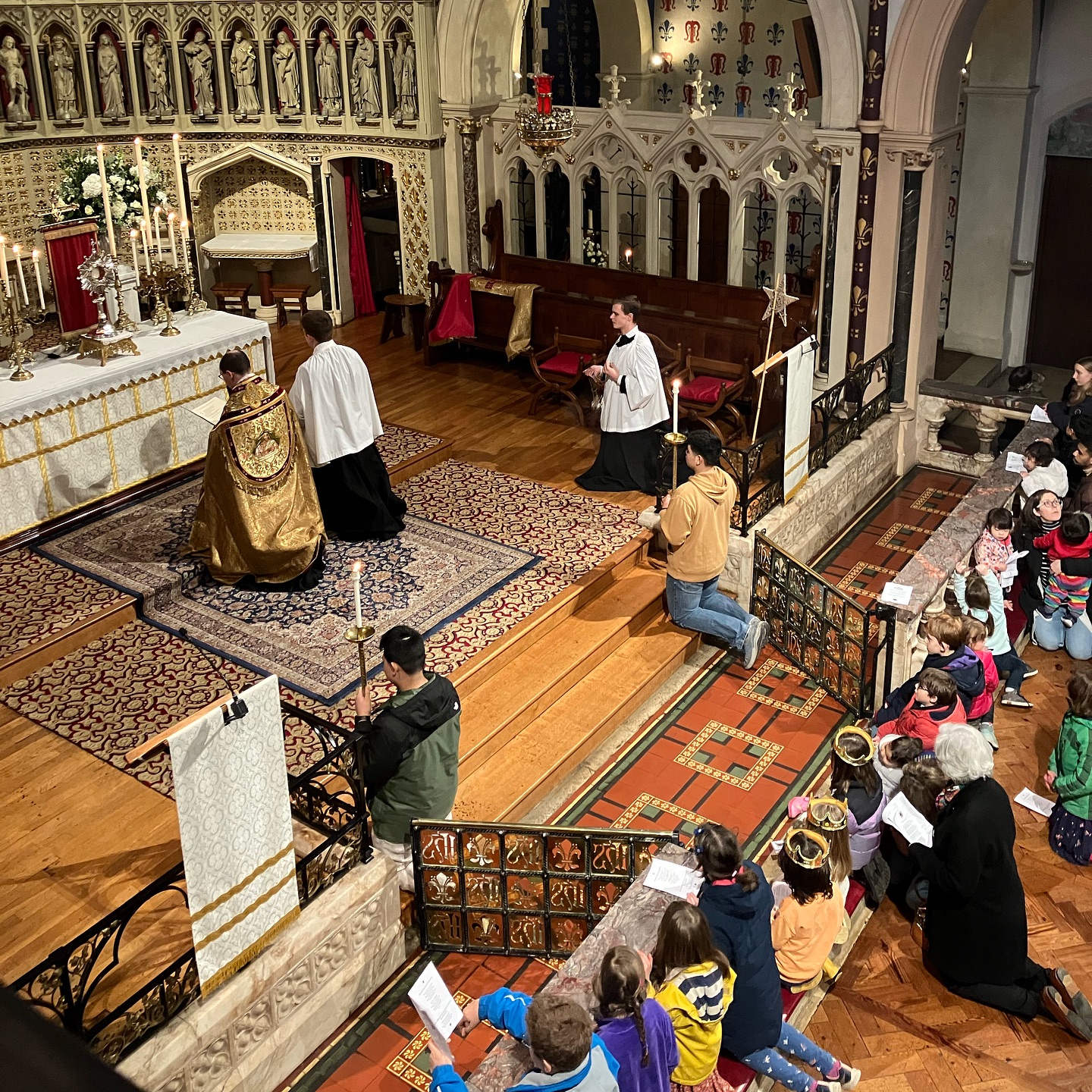
“When they saw the star, they rejoiced exceedingly with great joy; and going into the house they saw the child with Mary his mother, and they fell down and worshipped him.”
Children’s Epiphany Benediction
#oxfordoratory
Sunday 7 January Solemn Mass 11:00
Epiphany
Missa Pastores quidnam vidistis Clemens
Reges Tharsis Palestrina
Magi viderunt stellam Victoria
Wie schön leuchtet der Morgenstern Buxtehude
Sunday 14 January Solemn Mass 11:00
2nd Sunday of the Year
Missa brevis Palestrina
Jubilate Deo Palestrina
Magi veniunt ab oriente Clemens
Wie schön leuchtet der Morgenstern Pachabel
Sunday 21 January Solemn Mass 11:00
3rd Sunday of the Year
Missa Ego sum qui sum Rogier
Beati omnes Purcell
Alma redemptoris mater L’Héritier
Fugue in G minor BWV 578 Bach
Sunday 28 January Solemn Mass 11:00
4th Sunday of the Year
Missa Nasce la gioja mia Palestrina
Bonum est confiteri Palestrina
Alma redemptoris mater a5 Victoria
Carillon de Longpont Vierne
The visit of the Magi at Epiphany presents us with two very emotional responses to the announcement of Christ’s birth. The difference between them is striking: “When Herod the king heard this, he was troubled, and all Jerusalem with him.” (Matt. 2:3) But the Magi, “when they saw the star, rejoiced exceedingly with great joy.” (Matt. 2:10)
Herod feared what might come to pass, and his unrest disturbed his subjects in Jerusalem. Herod was afraid of uncertainty, of no longer being king, and no longer having control over his own future. As it happens, Herod couldn’t control his future, and just a few years later, he ended up dying one of the most gruesome deaths ever recorded, suffering from all kinds of diseases and parasites.
The wise men set out in faith, and rather than being afraid of what might happen, they rejoiced in what had happened. God had become man, in history, for our salvation. If the sight of the star announcing that was enough to make the magi “rejoice exceedingly with great joy,” how much more should we rejoice, we who know not only that God became man for us, but we who also have the great privilege of knowing that God-man, Jesus Christ, who calls us to life with him.
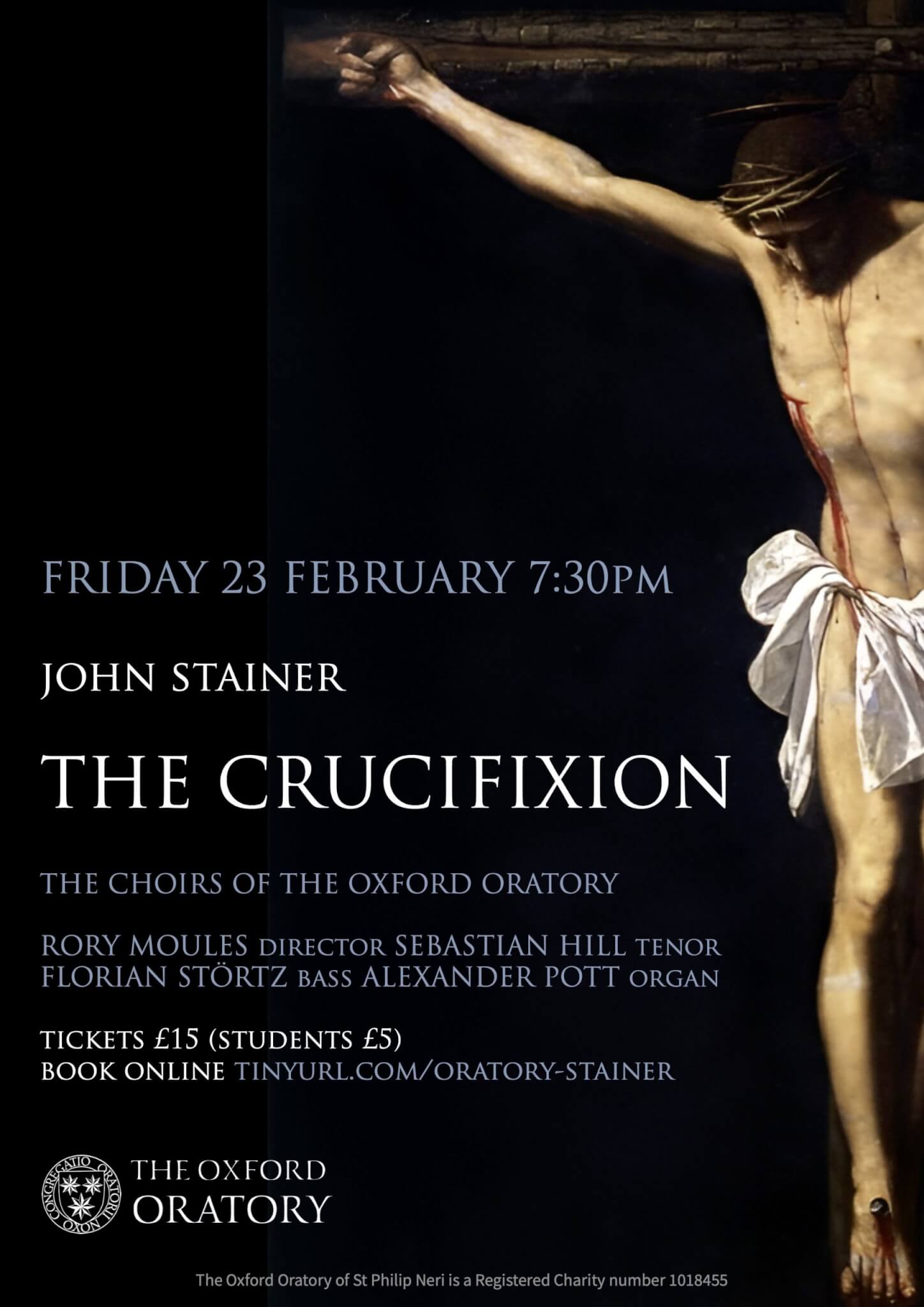
Join us for a performance of Sir John Stainer’s masterpiece The Crucifixion at the Oxford Oratory on Friday 23 February at 19:30.
The fully professional Oratory Choir under the direction of Rory Moules will welcome back award-winning soloists Sebastian Hill (Tenor) and Florian Störtz (bass).
Standard tickets £15 (students £5). Book online.
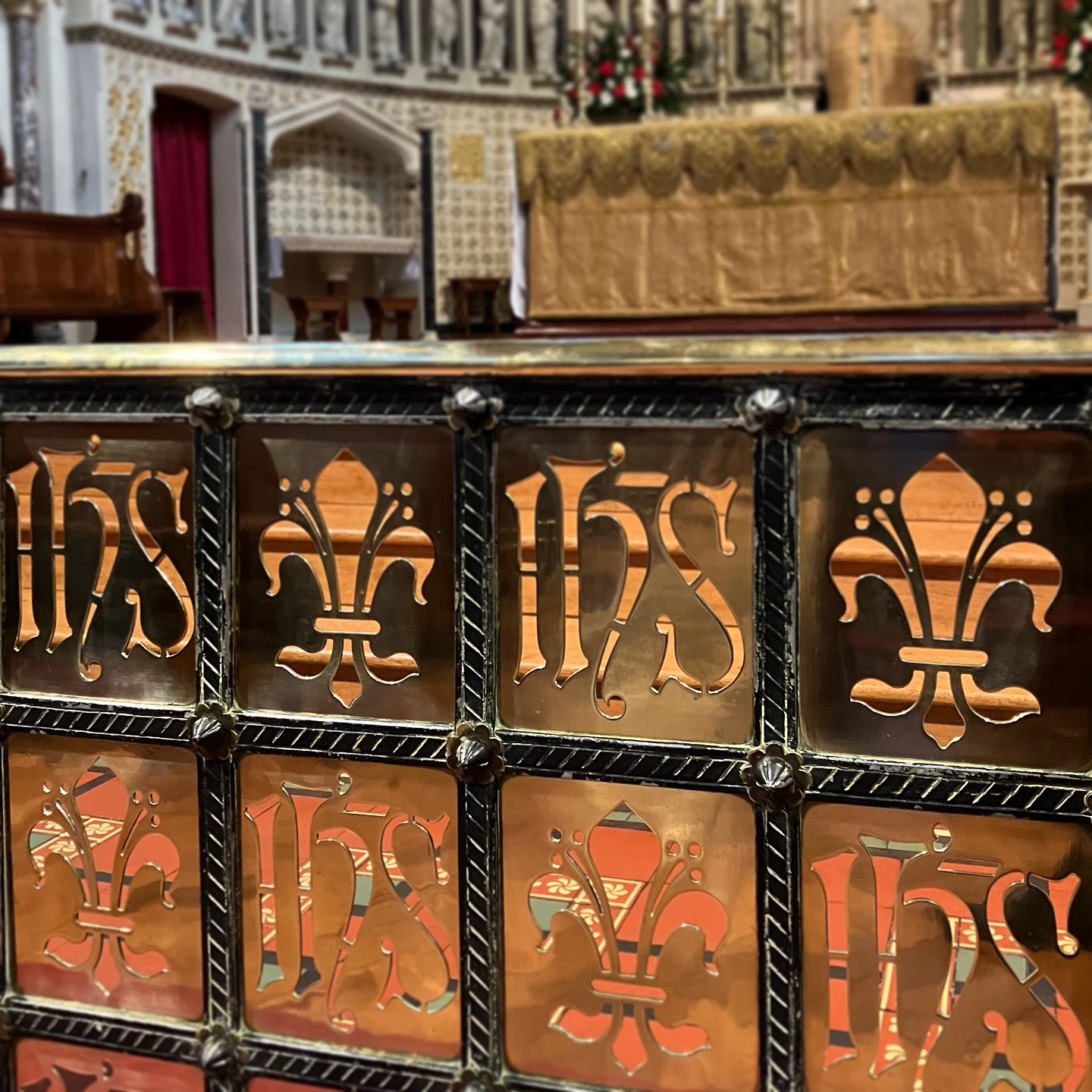
The Holy Name of Jesus appears all over our church, like on the sanctuary gates here. #oxfordoratory