
Our Adult Catechism class got off to a good start last night. Please pray for all those preparing to enter the Catholic Church. #oxfordoratory
Our Adult Catechism class got off to a good start last night. Please pray for all those preparing to enter the Catholic Church. #oxfordoratory
Today, Wednesday 16 October, a private member’s bill is being introduced to Parliament that seeks to make assisted suicide legal in our country. This is not a debate that starts and ends today, and will continue for a number of months before the final vote. It does, however, raise crucial questions about the fundamental dignity of every human life, and the care and protection that society should provide.
Cardinal Vincent Nichols, Archbishop of Westminster, has written a pastoral letter that was read out in his diocese this past weekend. The Cardinal offers three key points for Catholics to consider as this difficult debate begins.
Firstly, the Cardinal writes, we should be careful what we wish for: legislation permitting euthanasia in certain extreme cases is a slippery slope to far greater moral evil:
The evidence from every single country in which such a law has been passed is clear: that the circumstances in which the taking of a life is permitted are widened and widened, making assisted suicide and medical killing, or euthanasia, more and more available and accepted. In this country, assurances will be given that the proposed safeguards are firm and reliable. Rarely has this been the case. This proposed change in the law may be a source of relief to some. But it will bring great fear and trepidation to many, especially those who have vulnerabilities and those living with disabilities. What is now proposed will not be the end of the story. It is a story better not begun.
The Cardinal’s second point is that the slippery slope goes from a right to die to a duty to die, and that by removing laws that prohibit an action in favour of laws that permit something we change the attitudes of society — that which is permitted is often and easily encouraged:
Once assisted suicide is approved by the law, a key protection of human life falls away. Pressure mounts on those who are nearing death, from others or even from themselves, to end their life in order to take away a perceived burden of care from their family, for the avoidance of pain, or for the sake of an inheritance. I know that, for many people, there is profound fear at the prospect of prolonged suffering and loss of dignity. Yet such suffering itself can be eased. Part of this debate, then, must be the need and duty to enhance palliative care and hospice provision, so that there can genuinely be, for all of us, the prospect of living our last days in the company of loved ones and caring medical professionals. This is truly dying with dignity. The radical change in the law now being proposed risks bringing about for all medical professionals a slow change from a duty to care to a duty to kill.
Legalising euthanasia would profoundly change the relationship between doctors and nurses and their patients. It would also damage trust within families. The sick and elderly often worry that they are a burden on others or on the NHS, and could easily feel pressurised into asking for help to end their lives. It is a fact that in countries where euthanasia is legal, resources for palliative care hospices and funding for research into better treatments for those nearing the end of their lives have been tragically reduced. The much-publicised pressures on existing healthcare services, and the national cost of living crisis, are only going to make the slope more slippery, despite the best motives of politicians.
The final point Cardinal Nichols makes is that being forgetful of God belittles our humanity:
The questions raised by this bill go to the very heart of how we understand ourselves, our lives, our humanity. For people of faith in God, the first truth is that life, ultimately, is a gift of the Creator… Every human being is made in the image and likeness of God. That is the source of our dignity and it is unique to the human person. The suffering of a human being is not meaningless. It does not destroy that dignity. It is an intrinsic part of our human journey, a journey embraced by Christ Jesus himself. He brings our humanity to full glory precisely through the gateway of suffering and death.
One of the fundamental concerns — and awful warnings — surrounding this bill is that it will give a person of sound will and mind the right to end their life:
We know, only too well, that suffering can bring people to a most dreadful state of mind, even driving them to take their own lives, in circumstances most often when they lack true freedom of mind and will, and so bear no culpability. But this proposed legislation is quite different. It seeks to give a person of sound will and mind the right to act in a way that is clearly contrary to a fundamental truth: our life is not our own possession, to dispose of as we feel fit. This is not a freedom of choice we can take for ourselves without undermining the foundations of trust and shared dignity on which a stable society rests.
So what can we as Catholics, as people of faith, do?
Firstly, we can and must pray. We pray for those facing the end of their lives with much pain and suffering, that they may receive the care and support they need to live their final days with respect for their dignity. We pray for our politicians, healthcare professionals, and our country, that wisdom and compassion may guide their decisions.
Secondly, we should become better informed about the serious moral issues associated with the legislation of assisted suicide and the need for better palliative care for the dying. We should urge all Catholics and people of goodwill to do the same, and be willing to have discussions with our family, friends and colleagues.
Thirdly, we can write to our local MPs to express our concerns. We cannot fulfil our vocation to be salt, light and leaven in the world if we are not prepared to stand up against error and evil, and call our society back to the Lord, who is the way, the truth and the life for all people.
Letters are more effective than emails, and so you can address your letter to:
[Name of MP]
House of Commons
London SW1A 0AA

First day of term! As well as welcoming all the new and returning students to Mass this weekend, three of our own brothers are off to Blackfriars today. Br Ambrose begins his first of five years’ study today, and Br Vincent and Br Clement have another year of philosophy to look forward to. Pray for them!
#oxfordoratory
Oratory Young Adults meetings include a time of discussion, catechesis, conversation and prayer. Refreshments are available from the Cafe Neri bar from 7:30 and the main discussion begins at 8pm. Adults aged 18 to 35 are welcome to come along.
25 October — What’s in a name? Who to talk to when you pray
God reveals himself to us under many names and titles throughout history. But how should we use all these different names? Is it a problem if we speak to God the Father more than God the Son? Or the other way round? Thankfully the answer is not only straightforward — it is extremely practical and will help us in our life of prayer. Come along to find out how we are taught to speak to God in the Gospel.
15 November — Hell
Often neglected and much avoided, but however uncomfortable it may make us to think about, Christ talks about hell and we have to listen. As St Philip warned: “He who does not go down into hell while he is alive, runs a great risk of going there after he is dead.” So come and enjoy an evening of discussing hell as we focus on not going there ourselves.
6 December — Not making the same mistakes: Why did Mary say yes?
The whole of human history hinged on that moment when Mary said “yes” to God’s plan. But what made her succeed in doing God’s will where so many others fail — from Adam and Eve all the way to ourselves. Join us as we think about how Mary’s example can help us to say “yes” to God too.
24 January — “It doesn’t get easier, you just get faster” — Progress in the spiritual life
St Paul didn’t have a bike, which is why he could only compare the Christian life to training for a race or a boxing match. But have you ever thought that cycling could help you to understand the spiritual life? Come and find out how.
21 February — How do I hear the voice of God?
Sometimes we think it would all be easier if God just spoke to us directly and told us everything we need to know. God is trying to communicate with us at all times, even if we’re not really listening. So how can we get better and listening, and what does God have to say to us? That’s what we’re discussing in this month’s OYA.
7 March — Pray at all times: Finding time to do everything else
Scripture tells us to “pray at all times” — but isn’t that impossible? Even the holiest saints need to stop to eat and sleep, and we have so many other responsibilities to take care of too. In fact, this commandment is something we can all put into practice without running away to a monastery. Come along to find out how.
2 May (in place of April meeting) — God wants you to eat biscuits
It might not sound very cheerful, but nothing quite puts life into perspective more than the prospect of an imminent death. Find out how the thought of death actually helps us to make the most of this life, to find enjoyment in the good things God gives us, and (very importantly) why God wants you to eat the biscuits…
23 May — You are God’s work of art: The Catholic response to gender & sexuality
Traditional Christian teaching on relationships is not very popular in the world today. And as Christians living in the world, we can feel surrounded by challenges to our own purity, to say nothing of the tough questions we face about sexuality and gender identity. But these are not entirely new ideas, and Christianity has some very beautiful things to say on the topic. Come along to find out more.
13 June — “Impossible to imagine, not difficult to believe”
One of the strangest things we believe is that whenever Mass is said, Jesus Christ makes himself fully present, but we have no way of detecting his presence, since he remains hidden under the appearances of bread and wine. “Impossible to imagine,” as St John Henry Newman said, “not difficult to believe.” Come and join us a we explore the great mystery that is the Blessed Sacrament.

Born in London in 1801, St John Henry Newman was for over twenty years an Anglican clergyman and Fellow of Oriel College, Oxford. His studies of the early Church led him progressively towards Catholicism, and in 1845 he embraced “the one true fold of the Redeemer”. In 1847 he was ordained priest and went on to found the Oratory of St Philip Neri in England. He was a prolific and influential writer on a variety of subjects. In 1879, he was created Cardinal by Pope Leo XIII. Praised for his humility, unstinting care of souls and contributions to the intellectual life of the Church, he died in Birmingham on 11 August 1890.
From the Divine Office for today’s feast.
#oxfordoratory
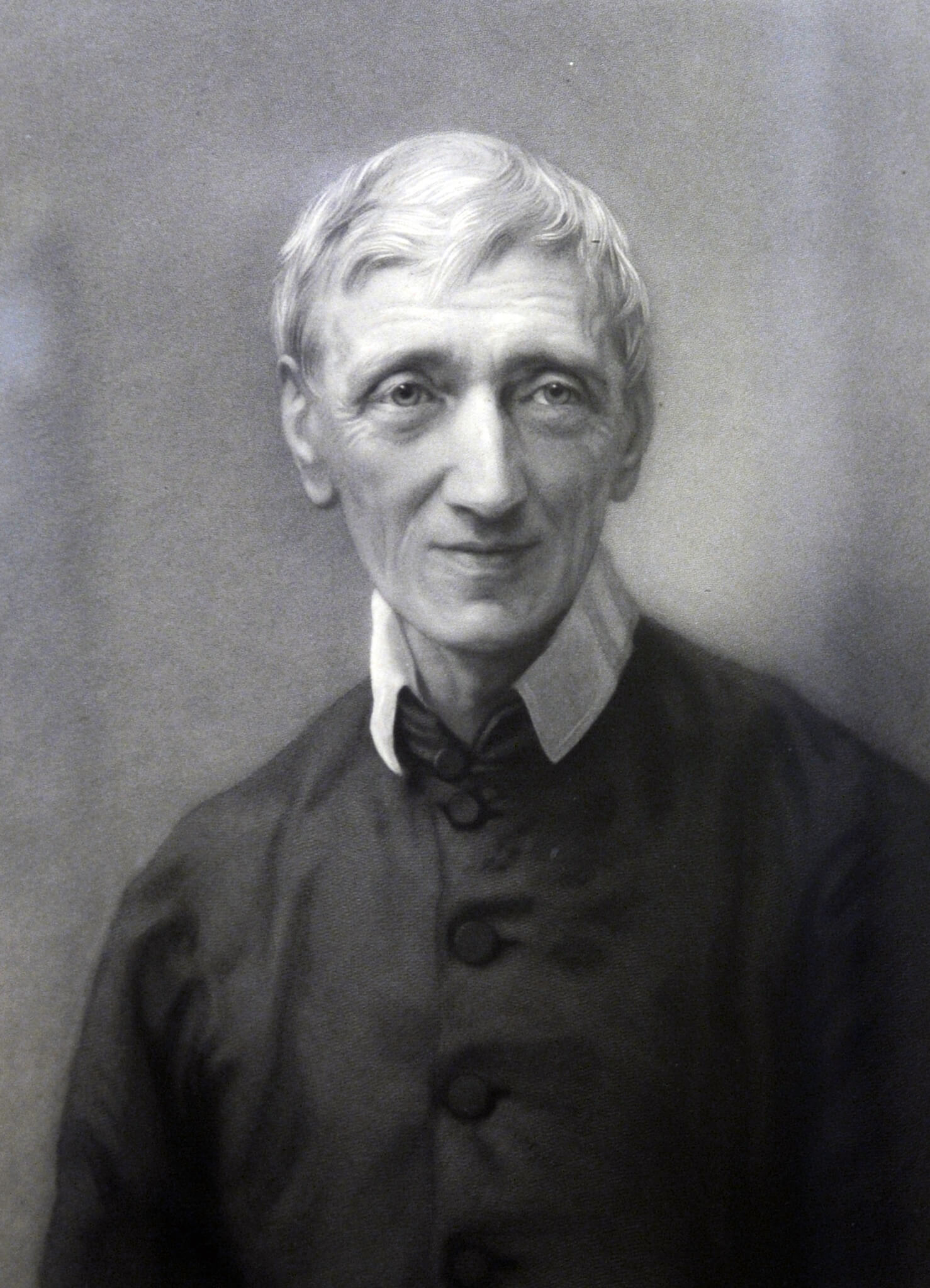
“Philip, my holy Patron, teach me by thy example, and gain for me by thy intercessions, to seek my Lord and God at all times and in all places, and to live in his presence and in sacred intercourse with him.”
St John Henry Newman is often remembered through his titles of Cardinal and theologian. However, he was first and foremost an Oratorian, a son of St Philip Neri who sought the inspiration of his patron throughout his life. While St John Henry produced deeply intellectual theological works throughout his life, these stand in strong contrast with his meditations and devotions written to be used in the Oratory. These prayers are simple, deeply honest and profound, composed for parishioners (who for the most part were Victorian Birmingham factory workers), and offered clear insights into the essentials of Christian life. They reflect Newman’s pastoral care, which is often overlooked by the focus on his theological works, and they stand on a foundation of love and admiration for God, Our Lady, and St Philip.
The admiration St John Henry had for St Philip’s habit of prayer is palpable throughout his own meditations. The English saint remarks about St Philip with great fondness that “the servant of God gave himself up to prayer, until he acquired such a habit of it, that, wherever he was, his mind was always lifted up to heavenly things.” Prayer was a way for St Philip to get closer to heaven while on earth, to be able to connect the worldly to the heavenly. With St John Henry’s description of prayer as speaking and listening to God, we reach a somewhat obvious but often forgotten conclusion: in order to grow in personal holiness and to strengthen our relationship with God we must, quite simply, be in constant communication with him. Newman makes St Philip’s advice on prayer his own: “When one of his penitents asked him to teach him how to pray, he answered, ‘Be humble and obedient, and the Holy Spirit will teach you.’”
Newman’s meditations and devotions are not, therefore, simple because of their intended audience; they are simple because prayer is meant to be a simple but constant exchange of heart speaking to heart. And to make this exchange with even greater love, he invoked this assistance of his holy Father: “O my God, when shall I learn to love nothing else but thee? Gain for me, O Philip, a pure love, a strong love, and an efficacious love, that, loving God here upon earth, I may enjoy the sight of him together with thee and all saints, hereafter in heaven.”
St John Henry Newman now sits in heaven, together with our Holy Father St Philip, enjoying the sight of God. We pray that we may be inspired to love God in the same simple way that St John Henry was inspired by St Philip, so that, one day, we may also sit in heaven with them and enjoy that same sight.

The heavy rain didn’t stop our pilgrims from completing the annual Night Walk, retracing Blessed Dominic’s journey to Littlemore, where he received St John Henry Newman into the Catholic Church on 9 October.
Lead, Kindly Light, amidst th’encircling gloom,
Lead Thou me on!
The night is dark, and I am far from home,
Lead Thou me on!
Keep Thou my feet; I do not ask to see
The distant scene; one step enough for me.
#oxfordoratory

“…like a householder who brings out of his treasure what is new and what is old.”
Dom Stanislaus has been helping out this weekend while two of the Fathers are at the Oratory’s General Congress in Rome.
#oxfordoratory

A copy of Lead, kindly Light, written by St John Henry Newman himself.
Join us for the celebrations in honour of our Cardinal, beginning tomorrow.
There are devotions in preparation for the feast after Vespers on Sunday, and after the evening Mass on Monday and Tuesday.
The Night Walk to the College at Littlemore sets off at 7:15pm on Tuesday, following Blessed Dominic’s journey on the anniversary of the St John Henry’s reception into the One Fold of the Redeemer.
The feast itself is on Wednesday. Join us for the Solemn Mass at 6pm, where we will welcome Fr Guy Nicholls of the Birmingham Oratory as our guest preacher.
#oxfordoratory
Sunday 6 October Solemn Mass 11:00
27th Sunday of the Year
Missa ad fugam Palestrina
Quam pulchri sunt Victoria
O sacrum convivium Sweelinck
Wednesday 9 October Solemn Mass 18:00
St John Henry Newman, Our Cardinal
Missa O quam gloriosam Victoria
Veritas mea Malcolm
Beatus vir Monteverdi
Marche Pontificale Widor
Sunday 13 October Solemn Mass 11:00
28th Sunday of the Year
Mass for five voices Byrd
Vir erat in terra Palestrina
O salutaris hostia a6 Byrd
Fugue in G minor Bach
Friday 18 October Solemn Mass 18:00
Forty Hours: Solemn Mass of Exposition
Missa Lauda Sion Palestrina
Sacerdotes Domini Palestrina
Ego sum panis vivus Palestrina
Sunday 20 October Solemn Mass 11:00
Forty Hours: Votive Mass of the Sacred Heart
Missa Vidi speciosam Victoria
Improperium expectavit Palestrina
O nomen Jesu, nomen dulce Ferrabosco
Sunday 20 October Solemn Vespers 17:00
Forty Hours: Vespers of the Blessed Sacrament
Pange lingua Palestrina
Magnificat Quinti Toni Hassler
Tantum ergo de Severac
Allegro Assai Vivace (Sonata 1) Mendelssohn
Sunday 27 October Solemn Mass 11:00
30th Sunday of the Year
Missa Brevis Palestrina
Domine vivifica me Lassus
O bone Jesu Anchieta
Nun danket alle Gott Karg-Elert