Father Dominic and St Philip’s School in Rome

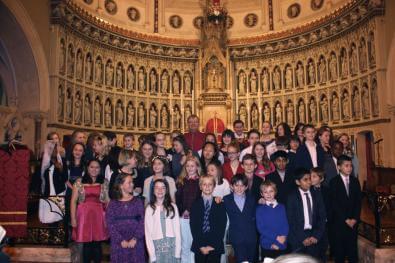
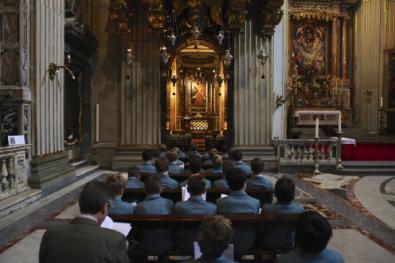
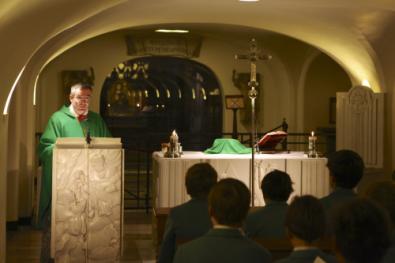
Fr Dominic and the boys of St Philip’s School, London, where he is chaplain, have just returned from a visit to Rome. During the four day pilgrimage the boys attended Mass at Santissima Trinita dei Pellegrini, at St Philip’s Shrine in the Chiesa Nuova and at the Tomb of St Peter.

1352806027.jpg

1352806474.jpg

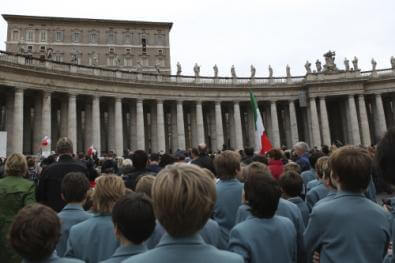
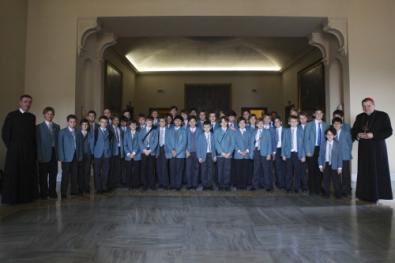
The boys also attended the Angelus in St Peter’s Square when the Holy Father addressed them directly. 1352806519.jpg The boys also had a private audience with His Eminence Cardinal Burke:

1352805989.jpg

Women’s Oratory Pilgrimage to Rome

1351875712.jpg

At the end of October the Women’s Oratory went with Fr Anton on Pilgrimage to Rome to mark the beginning of the Year of Faith.

1351875362.jpg

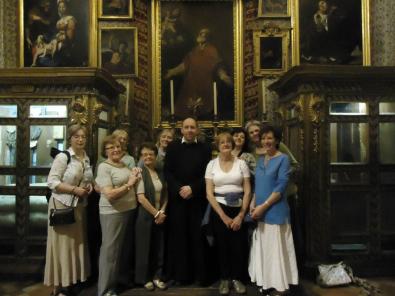
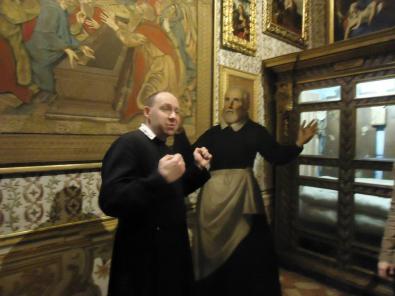
We went to the Chiesa Nuova and had Mass at the altar which contains the body of St Philip Neri. Afterwards we had a tour of his rooms. This picture shows us standing in front of the famous painting of St Philip by Guido Reni. In the right of the photograph you can see the confessional used by St Philip.

1351875380.jpg

Clearly Fr Anton got rather excited talking to the Women about St Philip!

1351875413.jpg

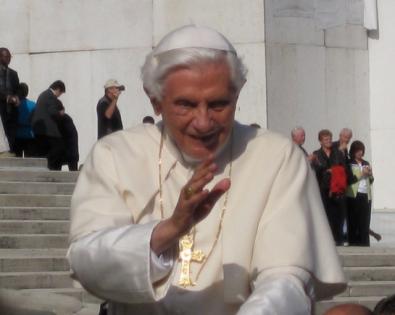
On Wednesday we went to the General Audience in St Peter’s Square to pay homage to the Holy Father and to receive his blessing. This photograph shows how close we got to him at the end of the Audience as he passed by.

1351875759.jpg

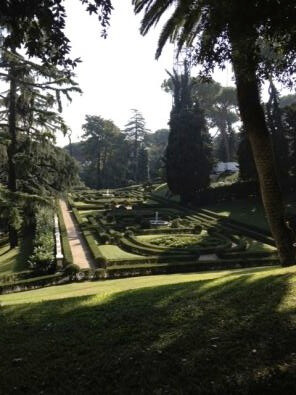
We enjoyed a beautiful private tour of the Vatican Gardens on the Thursday morning which lasted two hours. It was very warm and sunny.

1351875680.jpg

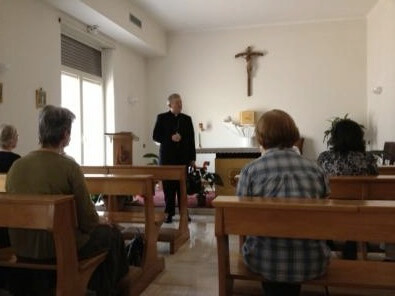
Our Archbishop was in Rome for the Synod. He very kindly visited us in the Convent Chapel where we were staying. He spoke to us about the Year of Faith. He brought with him a first class relic of Bd Dominic Barberi, our Archdiocese’s Patron for the Year of Faith, which he placed on the altar. He led us in prayer and then we had an opportunity individually to venerate the relic.

1351875607.jpg

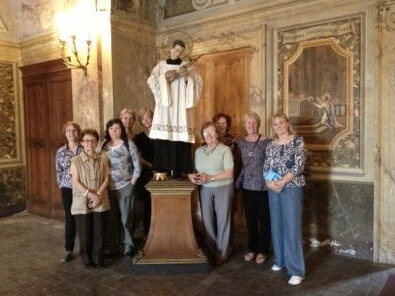
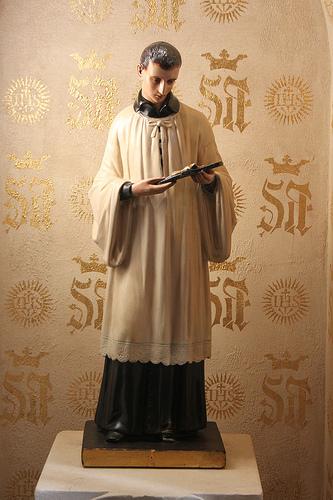
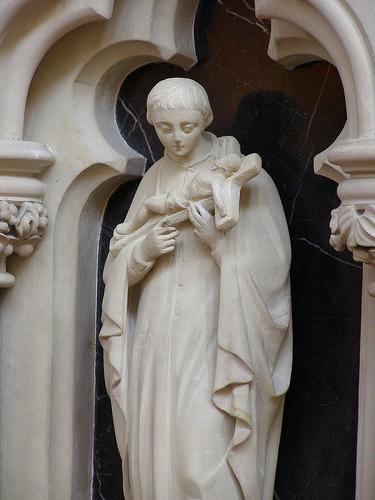
Finally, we visited the patron of our Parish, St Aloysius Gonzaga. We had Mass at the altar which contains his body in the Church of Sant’Ignazio. Afterwards we had a private tour of his rooms. This picture is taken in what was the Recreation Room for Jesuit Scholastics in the sixteenth century. It was much plainer at that time. The statue of St Aloysius shows him treading on a crown, showing how he rejected the riches of this world for the riches of God’s grace and the Kingdom of Heaven.

Filipino Pilgrimage to Our Lady of Oxford

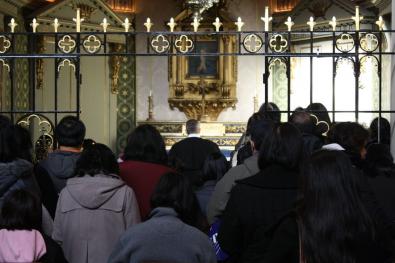
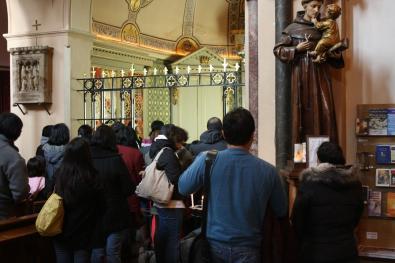
55 members of the Filipino Community Prayer Crusade of West London made a pilgrimage today to the shrine of Our Lady of Oxford in our church.

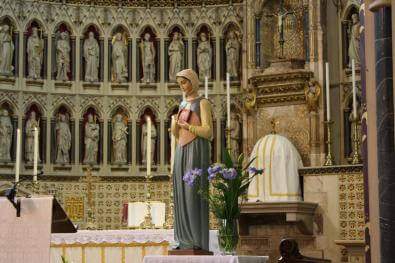
The image of Our Lady was acquired by Hartwell de la Garde Grissell and was granted a partial indulgence for all who recite the Salve Regina or the Litany of Loreto before it.

1351953830.jpg

1351953807.jpg

The Forty Hours 2012

1350150799.jpg

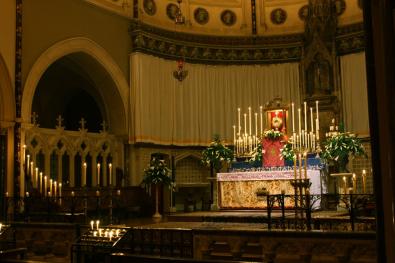
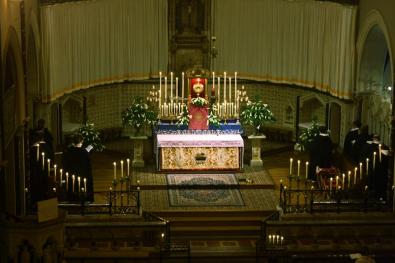
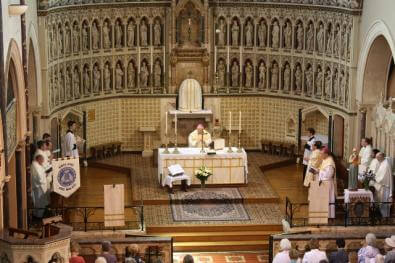
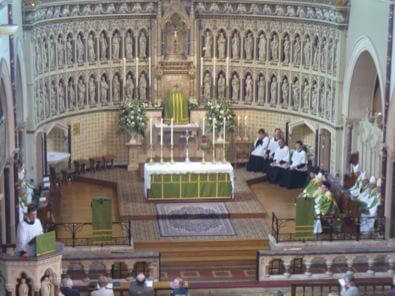
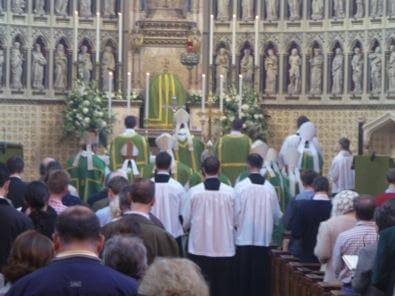
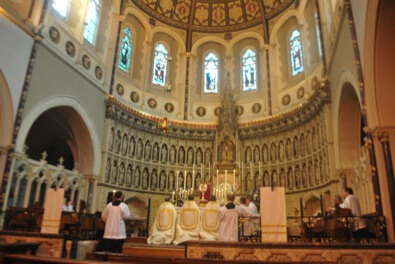
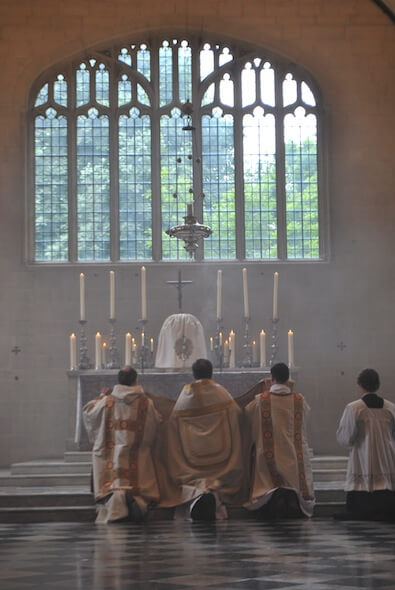
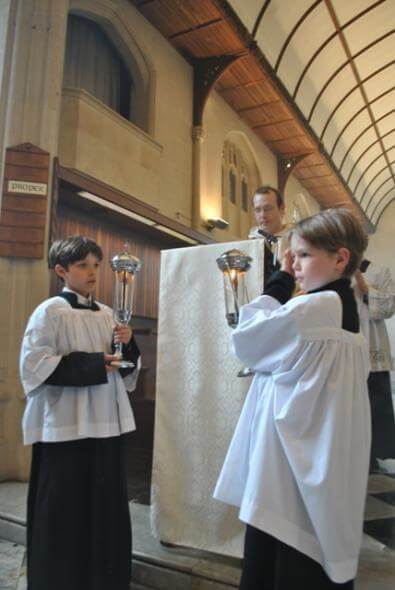
On Friday our Forty Hours began with a Solemn Mass of Exposition.

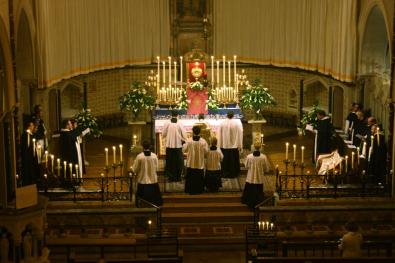
At midnight the Dominicans from Blackfriars came to sing Compline before the Blessed Sacrament:

1350150652.jpg

Our Holy Father St Philip used to say that everything that was good in him he had learnt from the Dominican Fathers at San Marco in Florence. In Rome he would take the Dominican novices on picnics, and was given the key to the Church of the Minerva so that he could let himself in to Compline there. It was at the Minerva that the Forty Hours was held to pray for a favourable judgement on Girolamo Savanarola. St Philip, who had a great devotion to Savanarola, stayed praying for the whole forty hours – but fell into an ecstasy. When he came round, he declared that the thing for which they had been praying had been granted. It was later discovered that the Pope had judged in favour of the Dominicans at just that moment. It seems highly appropriate then that the Dominicans should come to pray Compline during our Forty Hours, and we may hope that our own prayers before the Blessed Sacrament may be just as efficacious!

Compline was followed by Benediction:

1350150665.jpg

The night vigil continued, with Matins and Lauds sung by the Sisters of the Work and then Mass at 6pm. This evening there has been a Mass for Peace and the church closes at midnight.

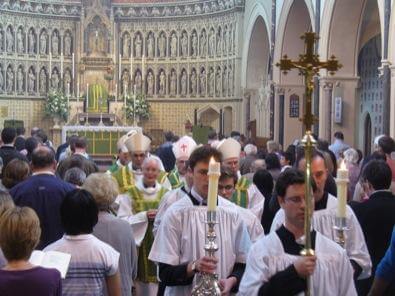
The Blessed Sacrament will be exposed again after the Solemn Mass on Sunday 14th – of the Sacred Heart – and the Forty Hours will conclude with Solemn Vespers, a Procession and Benediction at 5pm.

Catholic Women’s League Celebrates 150 years since the birth of its founder.

1342023216.jpg

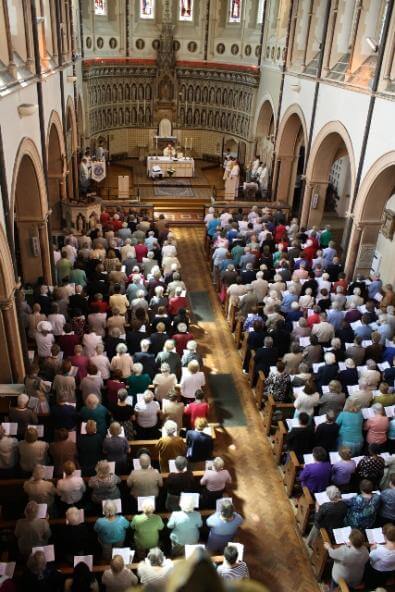
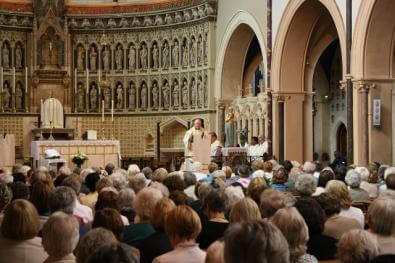
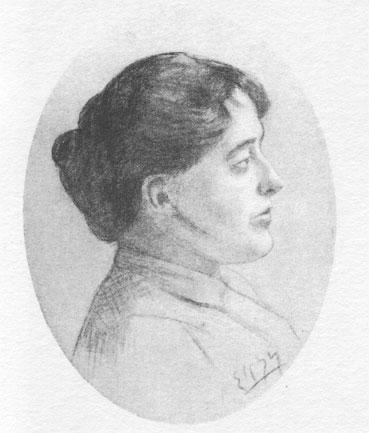
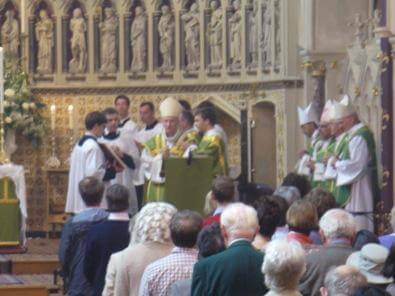
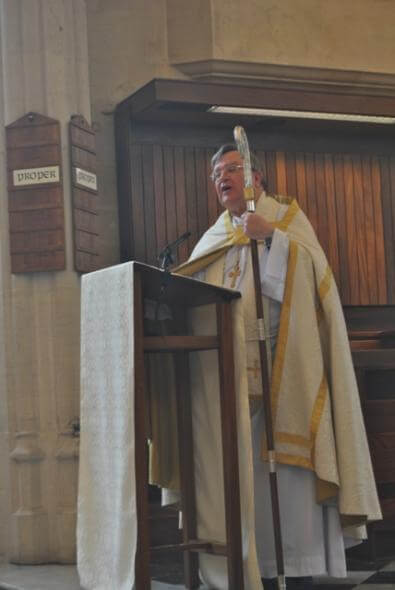
Today the Right Reverend Peter Doyle, Bishop of Northampton, assisted by Bishop William Kenney CP, celebrated Mass in our Church for nearly 400 representatives of the Catholic Women’s League. The League was founded in 1906 by Margaret Fletcher, a parishioner at St Aloysius’, and this year sees the 150th anniversary of her birth in 1862.

1342023137.jpg

In September 1906, at a Catholic conference held in Cavendish Square, a small group of women proposed the idea that an association of Catholic women could be formed, with the aim of giving weight to and promoting Catholic principles in English social and national life. A year later, reports of that meeting referred to those ladies as the founders of the League, but it was a Miss Margaret Fletcher who had first propounded the idea, and the group of ladies at Cavendish Square had allied themselves with her as their leader.

1342022197.jpg

Margaret Fletcher, the daughter of an Anglican clergyman, was born in Oxford (in the then new suburb of Park Town) in 1862. The latter part of the 19th century was an exciting time for women. It was the age of improved educational methods, especially for girls. Oxford High School, which Margaret attended, was one of the pioneers in this field. It opened in 1873 and had two new features – no class distinction and no denominational religious instruction, so that no creed was to be at a disadvantage, except the Catholic one. Indeed, in her autobiography ‘O Call Back Yesterday’, Margaret recalls the distress and dismay shown by staff at the news that the father of one of the pupils had converted to Catholicism.

At 17, Margaret went to the Slade School of Art, but throughout her time there felt frustrated because women students were not given the same opportunities to study as were their male counterparts. She then went to Paris to continue her studies, living with other students and nationalities, discussing life, religion and politics with a growing awareness of the international dimensions involved. Margaret returned home for a while to run the family home after the death of her mother, but, all the while, inside her was building the urge to fight for improved educational opportunities for women. A deeply religious woman, Margaret could never blindly accept everything she was taught, and, when reading the writings of St John of the Cross, she decided to become a Catholic. Having sought the advice of a priest friend who sent her to the Jesuit church in Farm Street, she was received into the faith on 9th September 1897. Returning to Oxford, she took an active part in parish work and also became friendly with Mary Miller, who, having travelled widely on the continent doing research work on Catholic secondary education for girls, told Margaret how impressed she was by a newly founded Catholic organisation in Germany.

This organisation had been brought into being by the hierarchy as an alternative to the secular National Council of Women. Margaret and Mary had many discussions on the topic of education, the outcome of which was that Margaret, having obtained permission from Cardinal Bourne, launched a new quarterly called ‘The Crucible’. With the aim of arousing the interest of teachers and schools in getting better social education for women, The Crucible ran for eight years and it was in one of its last issues that the proposal for forming a league of Catholic women was made, for Margaret saw that Catholic women would have a great responsibility in the future. She saw too that they must be organised not only in England but throughout the world.

1342023260.jpg

In 1906 a national Catholic conference was held in Brighton, and permission was given to distribute a pamphlet about the proposed league. From then on things moved steadily forward. Margaret Fletcher became president and Ada Streeter agreed to act as secretary. In the choice of members, Margaret Fletcher insisted that the League needed women with “balanced ommonsense”, and that they should “utilise the average woman in convincing the Catholic world that business-like methods and intellectual gifts are excellent weapons in the service of God”.

By the end of 1907, the Catholic Women’s League had held its first general meeting under the presidency of the Archbishop of Westminster, and had sent from there a message of filial homage to His Holiness Pope Pius X and received through Cardinal Merry del Val the Holy Father’s “affectionate blessing”. ‘The Tablet’ described the meeting as “deeply significant of the times, and one calculated to have far reaching consequences in the Catholic life of the country”.

The League today is still flourishing and proving to be every bit the “weapon for God” that Margaret Fletcher first envisioned.

Margaret Fletcher is still remembered by some of our older parishioners. She was apparently known as “Catty Fletcher” because of the large number of cats she owned! Miss Fletcher died in 1944. Her Requiem was held in our church and she is buried at Begbroke.

St Margaret Clitherow is the patron saint of the League:

1342022680.jpg

Homily for St Aloysius’ Day by Fr Michael Holman SJ

1340728373.jpg

We were very happy to welcome Fr Michael Holman SJ to preach at the Solemn Mass for St Aloysius’ Day on 21st June. Fr Holman is the former Provincial of the British Jesuits and is now Principal of Heythrop College. Here is his homily:

Six years ago I was in Nairobi, as it turned out for little more than 24 hours. I was changing ‘planes on my way back to London from a visit to the Jesuits working in South Africa.

Fr Terry Charlton, the chaplain in Kenya to our Ignatian lay organisation, CLC, the Christian Life Community, asked if I might like to visit their new school which is dedicated to St Aloysius Gonzaga. Given my own background in secondary education, I said I would be delighted.

We travelled in his 4×4 truck to the township of Kibera on the outskirts of the city, reputed to be the largest slum district in Africa. It teemed with people living hugger-mugger in sheds made with whatever wood could be found and (if they were fortunate) a sheet of corrugated iron for a roof. Women washed clothes in a plastic bucket in the streets and crowds of young boys chased footballs made of plastic bags all crammed together and tied up with string. “How are you?” they asked and before I could answer they replied “I am very well, thank you”.

The school itself, since rebuilt, was then little more than a slum. One class led into another. Small children and larger children sat attentively in rows. Resources were very poor: a blackboard and chalk, a few exercise books and biros. The teachers were members of CLC and had taken a pay cut in order to teach these children who were, for the most part, orphans whose parents had died from AIDS.

The school was and still is inspired by the example of St Aloysius, this transparently and genuinely good young man whom we remember this evening and who died in Rome on this day in 1591 at the age of 23. He died from the plague which he contracted while nursing the sick.

Nearer to home, we have a school in Glasgow in which for over 150 years young people growing up have been entrusted to the protection, the prayers and the patronage of St Aloysius. This morning, at the mass which celebrated his feast day and concluded the school year, the students will have sung his hymn which includes the refrain “Quid est hoc, quid est hoc, ad aeterna gaudia?” “What is all this compared with the joys of eternity?”

Today and each year, those students celebrate a young man for whom the joys of this world were as nothing compared with what is promised in the life to come. The decisions Aloysius made – to enter religious life and in the process to struggle with the opposition of his father, the Marquis of Castiglione, and to renounce his birthright – were made with his eyes fixed on what mattered most. In these times when we are all, young people most especially, the object of hard sell reinforced with so many sexualised images, it is important to have a patron who helps keep our eyes fixed on what matters most and to make our daily choices accordingly.

Just this last week-end, I attended the annual meeting of the heads of Jesuit theology colleges in Europe. The meeting took place in Naples. On Sunday night we visited the seminary the Society of Jesus runs for the southern dioceses of Italy and we had supper on the terrace overlooking the city and the bay, with views over towards Mount Vesuvius and the isle of Capri. The seminary is dedicated to St Aloysius.

Liker many centres of theology these days, it gives a particular shape to the formation it offers. I see it as providing an education at depth, the kind of depth which comes about when what is learnt is integrated with how students live and in such a way that they can witness effectively to the Gospel to the people of today because they have taken the trouble to understand them.

One imagines that at this very moment on that same terrace with that incomparable view, the 90 or so students and their professors are celebrating their patron whose life displayed a similar integrity and depth as his passionate love for Christ found its expression in his whole-hearted service of some of the poorest in society.

Far from being just a plaster-caste statue or a stained glass window, therefore, St Aloysius – be it in Glasgow or Naples, Nairobi or (I am sure) here in Oxford – lives on in minds and hearts made altogether better by his patronage and his example.

As for myself, what strikes me most about St Aloysius these days? It is the challenge he issues to think seriously about holiness, to consider how our deepest longings really can be satisfied when we live in union with Christ. I have come to see that this is also the source of our apostolic effectiveness. As the previous superior general of the Jesuits, Fr Peter-Hans Kolvenbach wrote, it is “intimacy with Christ which leads naturally to the desire to share that intimacy with others”.

Aloysius is characteristically portrayed by his iconographers as wearing a cassock and surplice with the lily of innocence in one hand while gazing longingly at the crucifix he holds in the other.

For many years, to my shame, I was not much helped my these images but now I find myself more and more drawn to look again and to watch as Aloysius contemplates the figure of Christ dying on the cross. As some of us will have read in the divine office this morning, he wrote just before his death to his mother to explain how he was lost and overwhelmed in the immensity of this love, “as deep as the sea and as boundless”.

I am lost in admiration for this young man so much inspired by love. Aren’t you?

I feely confess that I would so much like to share more deeply in that love myself, to share it with others and like Aloysius to get my life in shape so that this love became the foundation of the every day decisions and choices I make. Wouldn’t you?

And I would like that love to find expression in my service of the poor so that I might understand what it means to live a life of integrity and holiness in my life as a priest and a Jesuit and so more convincingly teach others to do the same.

Father, you graced Aloysius with an overwhelming love of your Son and so made him an effective instrument of your love for those who have least. Touch us, we pray, with that some love and help us speak of that of love to others, with words, yes, but with our lives, still more. Through Christ our Lord. Amen.

St Aloysius Gonzaga, pray for us.

1340728386.jpg

Corpus Christi Procession 2012

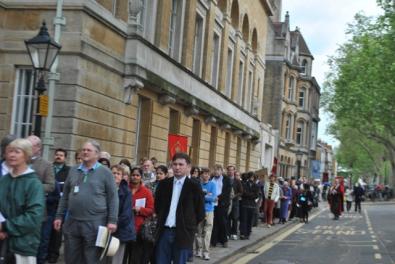
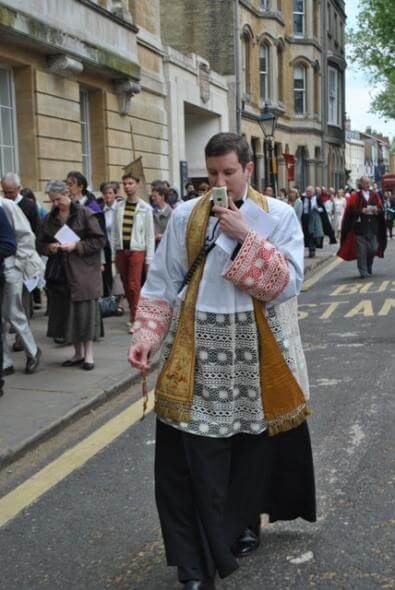
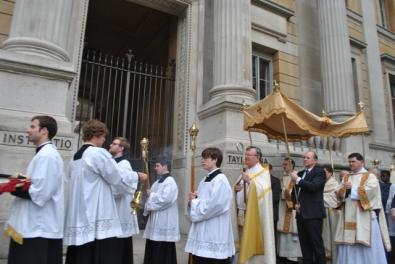
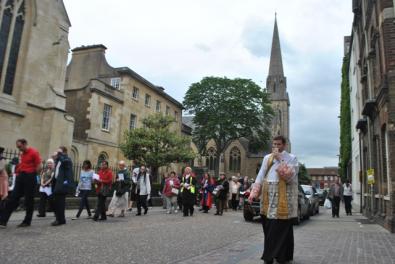
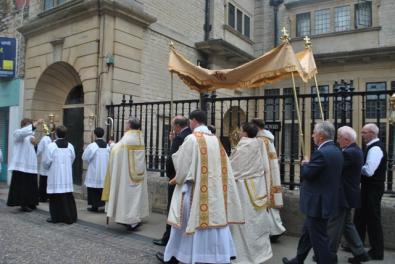
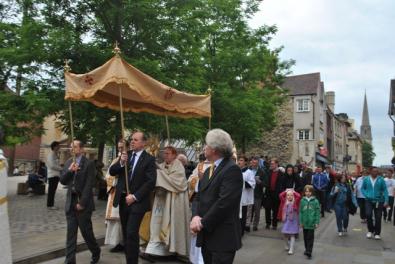
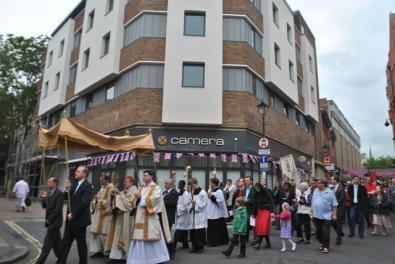
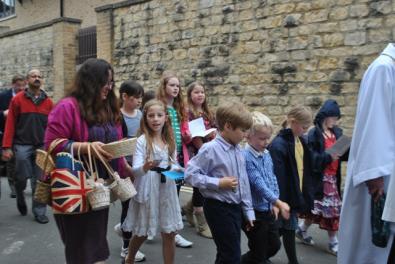
The rain held off just long enough to enable the Blessed Sacrament to be carried in procession once again through the streets of Oxford, followed by an impressive crowd of people.

We began as usual at the Oratory:

1339445007.jpg

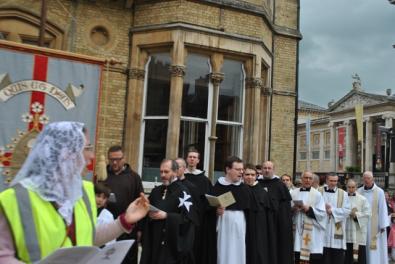
And stopped at Blackfriars:

1339445328.jpg,

The Gospel was proclaimed:

1339446292.jpg

Bishop William Kenney, C.P. preached:

1339446333.jpg

1339446361.jpg

The procession continued on its way:

1339446499.jpg

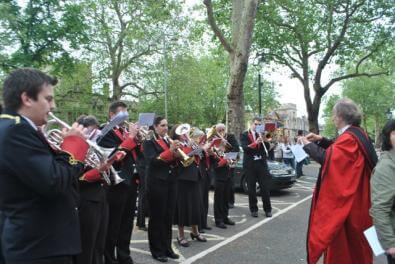
Accompanied by the Witney Town Band:

1339446434.jpg

And a megaphone:

1339446455.jpg

1339446523.jpg

1339446557.jpg

1339446607.jpg

1339446630.jpg

1339446711.jpg

Earth’s light and Jubilee:

1339446741.jpg

1339446807.jpg

Finally arriving at the University Chaplaincy for Benediction, followed by tea.

1339446782.jpg

Diamond Jubilee Celebrations

Yesterday, to celebrate the Diamond Jubilee of Her Majesty the Queen, the Solemn Mass was offered for the Queen. Mozart’s Coronation Mass was sung, accompanied by instruments, and Sir Hubert Parry’s Coronation Anthem “I was Glad” was sung at the Offertory.

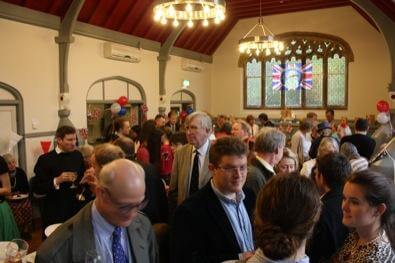
After Mass we joined our friends from St Giles’ Church for a splendid Jubilee Party in their church hall.
1338806503.jpg

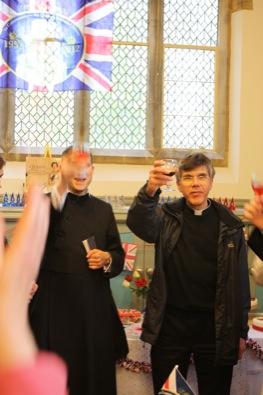
A toast was proposed to the Queen and two verses of the National Anthem were sung.
1338806245.jpg

Our thanks go to the Vicar of St Giles’, the Rev. Dr Andrew Bunch, and to the St Giles’ congregation for welcoming us so warmly.

There was a competition for the best 1950s outfits, with prizes awarded.

Fr Richard had clearly made the most effort of any of the male entrants: he had borrowed some Jesuit “wings” from Campion Hall, slicked down his hair, and appeared as a 1950s Jesuit.
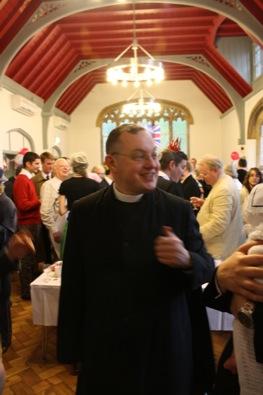
1338806671.jpgHe won third prize.

In second place was Mrs Hannah Chegwyn:
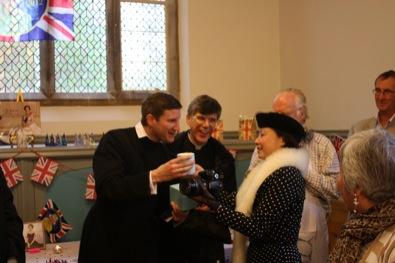
1338806314.jpg

And in first place was Miss Tessa Caldecott:
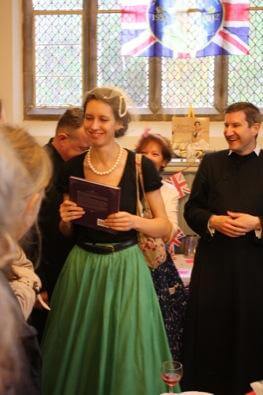
1338806379.jpg

Despite the wet weather, a good time was had by all.
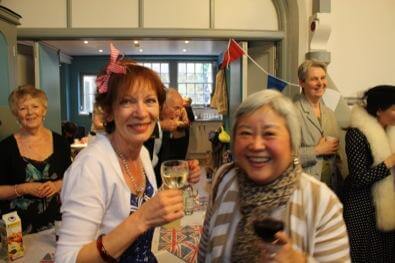
1338806619.jpg

1338806434.jpg

Sermon – 3rd June 2012

Trinity Sunday – Diamond Jubilee of Her Majesty the Queen

It was on the eve of Coronation Day that the first ever evening Mass was celebrated in this church and in other churches up and down the kingdom, as Catholics came together to pray for their new Sovereign. Sixty years on, on this Diamond Jubilee of Her Majesty the Queen, we come together again in a spirit of tremendous thanksgiving to Almighty God that our prayers have been so richly answered in a monarch who has been so steadfast and faithful, who is so public an example of a deep Christian faith and who has never wavered from the promise she made on her twenty-first birthday: “I declare before you all that my whole life whether it be long or short shall be devoted to your service”

Most of us here were born during the reign of Queen Elizabeth II, and perhaps we are so used to her dependable commitment to duty and service that we take it for granted. It is worth remembering that these virtues in rulers are comparatively rare. There have been far more Stalins, Maos and Elizabeth Tudors than there have been the likes of Edward the Confessor or Baudouin King of the Belgians. Even the greatest kings of the Old Testament were far from ideal: David famously had Uriah the Hittite killed so that he might seduce Bathsheba, and Solomon in his old age was turned away from true religion by his foreign wives and whored after strange gods. Indeed the great majority of kings in the Bible are faithless tyrants rather than true servants of God. Hence the need for us to thank God for what we have been given and to heed St Paul’s command to pray for kings and rulers and to remember that we have our own part to play in creating a Commonwealth that is just and godly. In 1947, the then Princess Elizabeth expressed this partnership thus:

“But I shall not have strength to carry out this resolution alone unless you join in it with me, as I now invite you to do: I know that your support will be unfailingly given. God help me to make good my vow, and God bless all of you who are willing to share in it.”

It is our Constitution’s foundation upon a Christian conception of monarchy that is its greatest strength and the protection of every freedom and truth that we possess. The Queen did not scheme or plot her way to the throne, she did not arrive by intrigue or personal ambition, instead she accepted a vocation chosen for her – as is expressed in the most sacred moment of the Coronation rite, when the monarch is anointed with chrism as a sign of God’s election. Our present coronation ritual derives from that devised by St Dunstan for the crowning of King Edgar at Bath in the year 973. It is a reminder to the Sovereign and to us that Christian monarchy is not so much about power as service and that the Queen too is a subject of the King of kings to whom all sovereignty and power belong.

In her first televised Christmas broadcast in 1957, our Queen spoke of the importance of having faith as the foundation of a civilized society. She spoke about:

“The trouble (that) is caused by unthinking people who carelessly throw away ageless ideals as if they were old and outworn machinery.

They would have religion thrown aside, morality in personal and public life made meaningless, honestly counted as foolishness and self-interest set up in place of self-restraint.

At this critical moment in our history we will certainly lose the trust and respect of the world if we just abandon those fundamental principles which guided the men and women who built the greatness of this country and Commonwealth.”

At the heart of our national life is not a flag, or an abstract idea or even a lofty ideal, but a human being. It is after all human beings that make up a society, and any state which becomes impersonal risks existing for its own sake rather than for its people. As we celebrate Trinity Sunday, we can see that God Himself is not a theoretical principle, but a personal being, and that for all eternity it is love continually shared between the Father and the Son in the Holy Spirit that is the ground and being of everything. Love is what gives everything meaning.

Our Queen once said:

“I cannot lead you into battle, I do not give you laws or administer justice but I can do something else, I can give you my heart and my devotion to these old islands and to all the peoples of our brotherhood of nations.”

That is what today is all about: personal devotion, loyal service, the giving of one’s heart in love. So from this Jubilee we can take something more than the enjoyment of an extra bank holiday. In the scriptures, a jubilee is an occasion to forgive debts, to free slaves, to give rest to the land. A jubilee is not only an occasion to look back but also a new beginning. Remember that each one of us too has been anointed with chrism in Baptism, that we have been given a share in Christ’s role as prophet, priest and king and that we have our own vocations to carry out faithfully. For those who are young and still discerning their future, they can resolve to turn their backs on ambition, on seeking comfort and self-interest and instead to ask the question, “What is the Lord’s will for me? How can I best serve Him and His Church?” This is the secret to real happiness. For those whose calling is already clear, we each have our own part to play in building up the kingdom of God. For married couples: they have the task of sanctifying their spouses and their children; single people: to live chastely as a sign of the reality of God’s promises; religious: to model themselves on Christ; priests: to be servants of God’s people. We may not feel that our Queen has always had the best advisors or the wisest of ministers, but if that is so, that is our own responsibility. If she has done her part, it is up to us to do ours.

Earthly kingship is only an imperfect, dim shadow of the Lord’s eternal dominion over all creation. We can begin to make our own response to the blessings that God has bestowed on us in these sixty years of stability by resolving to be true to the Lord’s calling, however costly it may be, and by renewing our prayers today for Elizabeth our Queen, that she may be granted wise counsellors, faithful parliaments, peaceful realms, devoted subjects, health and further years to reign over us, and in the world to come, everlasting life. God save the Queen.