Immaculate Conception Sermon

Here is the sermon preached by Fr John Flynn, lecturer at St Mary’s College, Oscott, for the Immaculate Conception last Monday.

Like new…

The solemnity of the immaculate Conception perplexes many people, Catholics included. I am not simply talking about the common confusion with the Virgin birth. The perplexity arises because the immaculate Conception seems to make no sense: no sense that God would need Mary to remain sinless in order to carry out his work of redemption.

The other evening in a Birmingham car park, the window of my car was smashed in by someone wanting the radio. Three hours later the Autoglass man had completed his wonderful work and was about to leave when he noticed a scratch on the new pane. It was only a little scratch, but it was certainly there. He is going to come back with a replacement.

It struck me that the car would have worked fine with the scratched window, but for it to be made like new, the work is going to be re-done.

God does not need the immaculate Conception to carry out his redemptive plan. But it was what he chose to do, so as to make humanity like new.

The immaculate Conception was not necessary in the sense of God’s being obliged to preserve Mary from sin right from the start. As a loving Father he simply sees it fitting that Mary should receive this grace. She is a fitting recipient of this gift, just as a crystal glass is better for receiving a fine wine than a plastic cup.

So, the human race is made like new at Our Lady’s immaculate Conception. St Anselm proclaims to the Mother of God, “Through you sky, stars, earth, rivers, day, night, and all things what are meant to serve man have in a way come back to life, enriched with a new grace that words cannot describe” (cfr St Anselm, Discourses).

“Full of grace” implies just that: an overflowing of grace in his chosen vessel. There is simply no lack of goodness in her. St Ephrem the Syrian says in his Poem to Christ, “You, and your Mother are alone in this. You are wholly beautiful in every respect. There is in you Lord, no stain, nor any spot in your Mother”.

The Church has always had a sense of this. We know that there was a fifth-century feast called the “immaculate Conception” celebrated in the Syrian church on 9th December, withdrawn because of the rise of the Monophysites, who could not countenance the idea of Mary’s complete sinlessness from the beginning.

Of course the question about Our Lady’s sinlessness from the moment of her conception has caused consternation even among the saints. Hence St Bernard, one of the greatest Marian apologists, said, “This sanctification, if it annihilates sin, makes holy her birth but not her conception” (Epistle 174). Aquinas speaks in a similar fashion.

Whatever may be the details of the theological question, the fact is that the Church came out in favour: it was Blessed John Duns Scotus who argued decisively that it was fitting for Christ’s exalted relationship with Mary that his mother should be preserved even from the moment of conception. And that is what the Church officially promulgated in 1854.

So the Church teaches that a prevenient grace is given to Mary. This means that Mary receives a gift in anticipation of Christ’s redeeming death on the Cross for the rest of us. What we receive thanks to the merits of Christ’s death on the Cross, Mary has received, also thanks to those merits, but before the event. That is what is prevenient: an anticipation of what was to happen on Calvary.

So much for the theology. But why is it important that Mary is immaculately conceived?

With the co-operation of the one who is full of grace, God has found a fitting vessel which has become like new, no scratches, “holy and spotless … according to his own kind purposes” (Ephesians 1: 4,5).

And what are his purposes? To bring each of us into communion with him and with one another.

If Our Lady is made into the new man, then we surely, as fellow members of the human race, can follow that path, sharing in something that the Mother of God has already received.

The moment of the immaculate Conception is the moment of meeting between God and man. It is the space for God to come to us. So it is not just a special celebration of Mary’s hotline to the Almighty. This is important, because one of the tragedies besetting today’s Christians – as Mother Teresa said – is that we live in isolation, surrounded by each other, but basically lonely.

This is the secret of today’s feast: the immaculate Conception is our antidote to isolation.

When the angel says “full of grace”, he is pledging that we are no longer alone. The angel is hailing the sinless one, not simply the one who is “highly favoured” (as some poor translations would have it). Pope Francis at the weekend got the crowds to repeat three times “full of grace”. There is something in this expression for all of us. Mary, closest to God of all our race thanks to this grace, still remains part of our race. She is in communion with each one of us.

She was kept free from sin for the sake of her Son, but also for our sakes. Through her sinlessness we are given help in our struggle against the poison of sin that whispers in our ear, “there is no way out of your situation”; “stay where you are”. God of course could speak directly to us, and does. Of course he does not need Our Lady. But in choosing Mary as a go-between, God is giving us a great gift for those within and those apparently without the Church.

Our Lady’s sinlessness keeps her “entirely focused”, we might say today. This focus took her right to the Cross. As the one who was prophesied to crush the head of the serpent (cfr Gen. 3: 9-15,20), she fulfils that prophecy by staying close to her Son on Calvary. There remains a strength in the heart of the Blessed Virgin Mary which is supernatural. And she shares that strength with us if we would turn to her.

So on this wonderful Solemnity, we should do two things as we wish well the Fathers on this their second patronal feast day: first, remember Syria, in a way the liturgical birth-place of this feast, suffering so appallingly as she is. Second, recognise how much we need communion with Mary, the spotless one, the one with no scratches; let us pray to her that she obtain for us whatever we need to become saints, and be saved for eternal life.
Rorate Mass tomorrow

rorate_oxon_2010

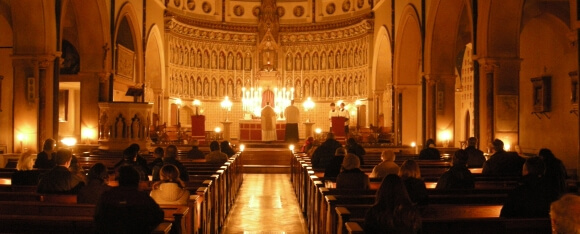
Tomorrow morning (14th December) will take place our traditional Rorate Mass at 7am. This will be a sung Mass in the extraordinary form in honour of Our Lady, as part of our Advent preparations.

St Peter’s Relics

st_peter


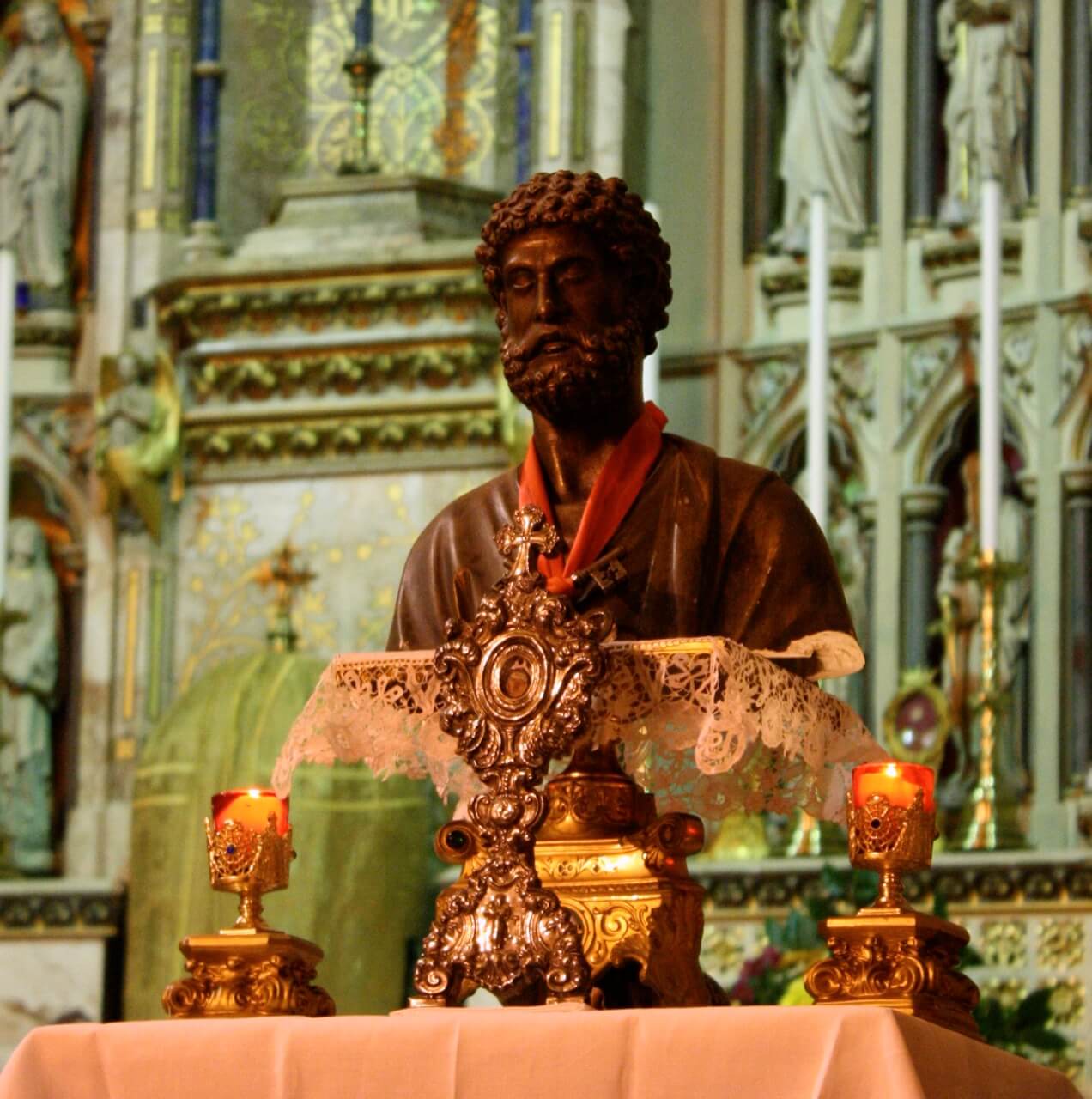
To celebrate the end of the Year of Faith, Pope Francis is exposing the relics of St Peter for public veneration for the first time. We will join the Holy Father by exposing our own (smaller!) relic of St Peter for veneration. There will be individual blessings after every Mass this Sunday.

Fr Richard’s Induction

painting

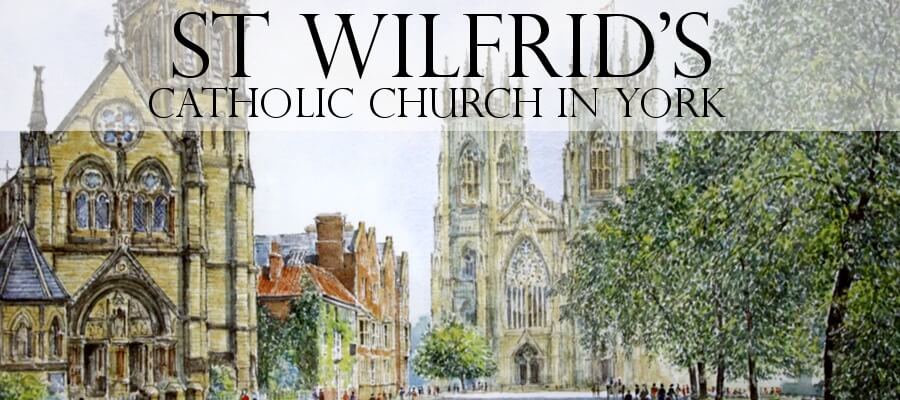
Fr Richard will be inducted as Parish Priest of St Wilfrid’s York on Friday 20th December at 6pm. A coach has been booked to take any parishioners from here who would like to go to support him. It will leave Oxford at 11am on Friday 20th, and then leave York the next day, also at 11am. The cost will depend on the number who book. Please sign the list in the Porters’ Lodge if you would like to come. There is a wide selection of hotels and B&B accommodation in central York, so those coming are asked to make their own arrangements. The postcode of St Wilfrid’s is YO1 7EN.

Fr Robert Barron’s Catholicism

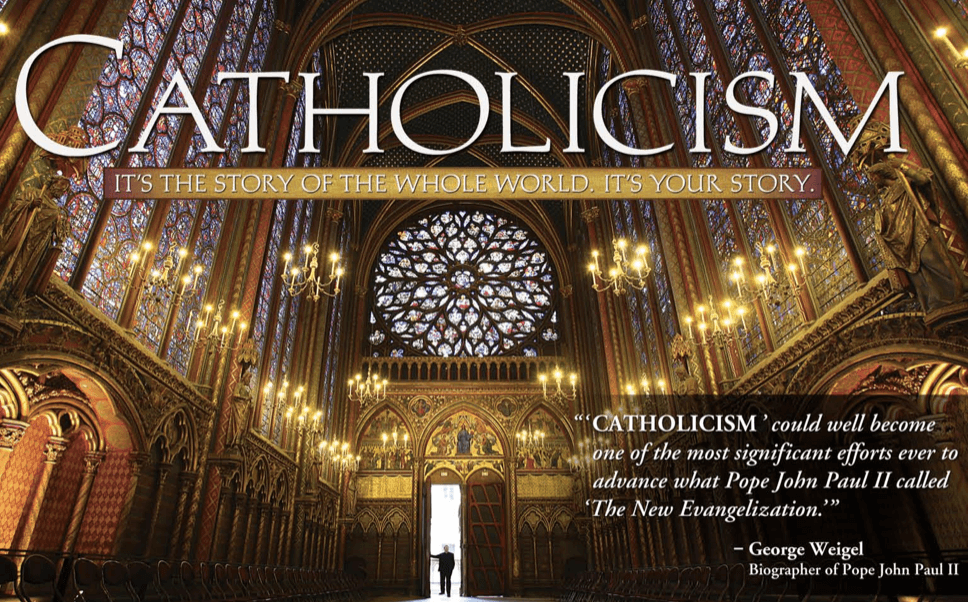
Following the popularity of the Evangelium course, we will be showing the highly-acclaimed Catholicism by Fr Robert Barron, on Saturdays from 18th January at 11am.

There are ten DVDs – so the last one will be on Saturday 22nd March – and each session will conclude with questions and a discussion. As with Evangelium there will be tea and coffee served in the Parish Centre from after the 10am Mass until 11 o’clock.

Catholicism_0

Special Mass for the People of the Philippines

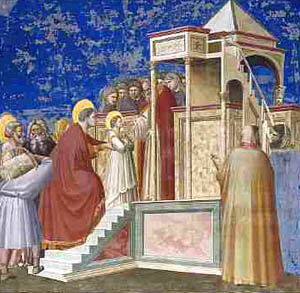
As well as a second collection this coming Sunday, we will also be offering a special Mass for the people of the Philippines on Thursday 21st November – the feast of the Presentation of the Blessed Virgin Mary in the Temple – at six o’clock in the evening. The Holy Sacrifice of the Mass will be offered for all those killed, injured, bereaved or affected in any way by Typhoon Haiyan.102_GiottoDi Bondone

Collection for the Philippines

PHILIPPINES-TYPHOON/

There will be a second collection this coming Sunday (17th November) to aid the relief effort in the Philippines, following the devastation caused by Typhoon Haiyan.

“I wish to express my closeness to the people of the Philippines and of that region. Unfortunately there are many victims and the damage is enormous. We pray now in silence … for our brothers and sisters, and we will seek to also send concrete help.” – Pope Francis.

Stabat Mater

988763_536353749779823_1426597932_n

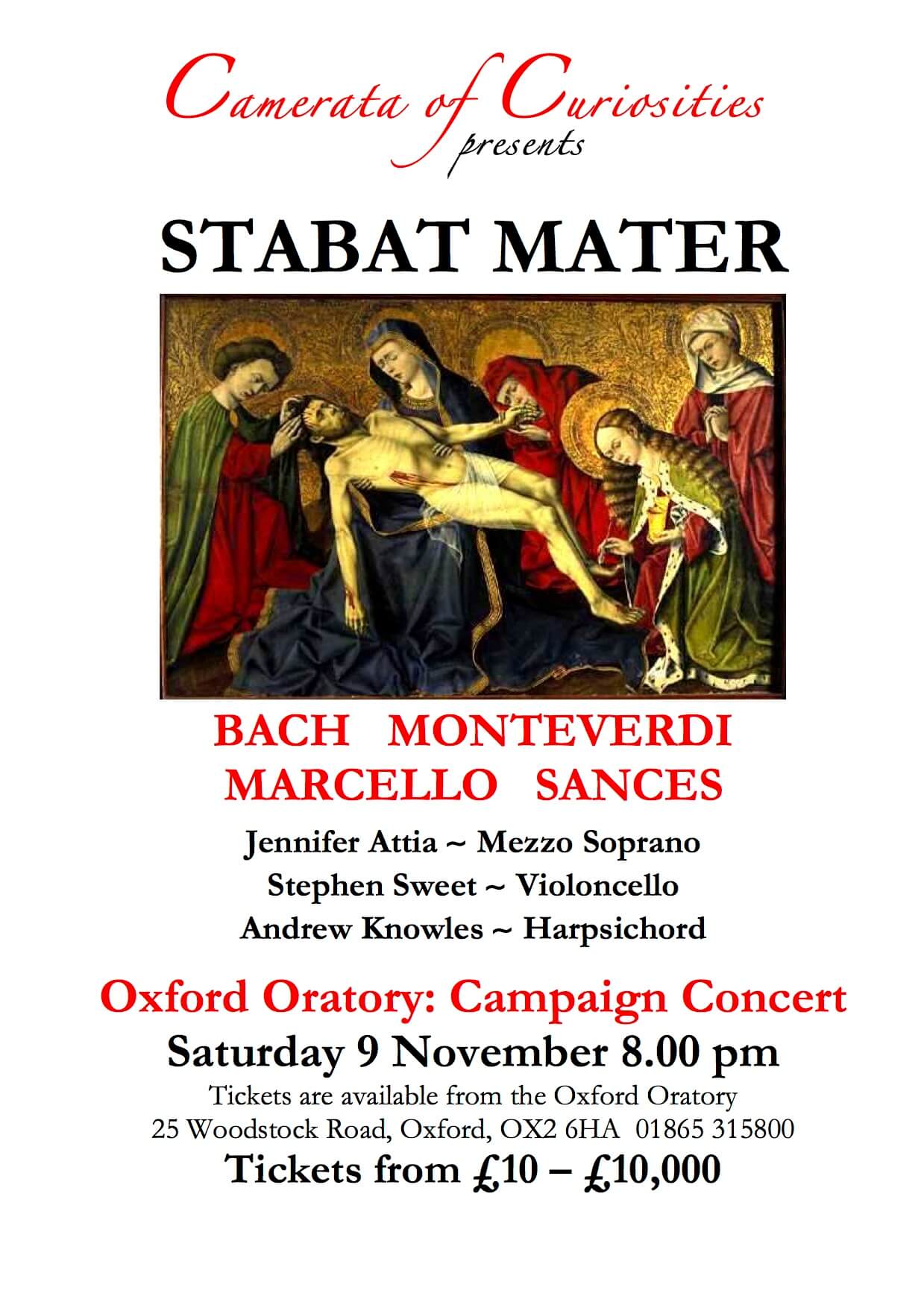
Thanks go to the Camerata of Curiosities for giving an inspiring concert on Saturday in aid of our Campaign. Jennifer Attia, Stephen Sweet and Andrew Knowles performed an exquisite selection of pieces, mostly from the Baroque period of the beginnings of the Oratory.

Particularly appreciated was the “Deh piangi anima mia” from 1583. This is one of the laude which St Philip and his followers would have sung at the end of one of their walks and picnics, when the company would have recreated themselves with games and music, heard a sermon delivered by a child, and finished by singing one of these very simple but beautiful, vernacular spiritual songs. It was wonderful to hear the sound from St Philip’s Rome coming to us afresh – and we hope that there will be other opportunities to do the same.

Camerata of Curiosities – this Saturday

CoC Oxford Oratory Email Flyer

STABAT MATER

Jennifer Attia ∼ Mezzo Soprano

Stephen Sweet ∼ Violoncello

Andrew Knowles ∼ Harpsichord

Oxford Oratory Campaign Concert

Saturday 9 November 8.00 pm

25 Woodstock Road, Oxford, OX2 6HA

Contact Fr Daniel on 01865 315800

Tickets from £10 – £10,000

Try your luck on the door by just turning up!

O viridissima virga – St Hildegard of Bingen 1098 – 1179

Pianto della Madonna: Stabat Mater – Giovanni Sances 1600–1679

Fantasia of foure parts – Orlando Gibbons 1583–1625

Salve, O Regina – Claudio Monteverdi 1567–1643

Allettamento VI (1714) – Giuseppe Valentini 1680–1740

Largo – Allegro – Andante – Presto – Vivace

Suite for Violoncello: Prélude BWV 1008 – J S Bach 1685–1750

Cantabo Domino – Alessandro Grandi

Interval – during which drinks will be served

Variazioni sopra il Ballo del fiore – Romanesca

O quam tu pulchra es – Alessandro Grandi 1586–1630

Duetto IV BWV 805 – J S Bach 1685–1750

Salmo Decimoquinto – Benedetto Marcello 1686–1739

Le cygne – Camille Saint-Saëns 1835–1921

Ave Maria – G Caccini 1546–1618

Deh piangi anima mia – Il Primo Libro delle Laude 1583

Here is a review of a previous performance by the ensemble in September at St Etheldreda’s, Horley (Taken from the journal of the British Society for Eighteenth-century studies):

What could intrigue me more than an evening in St Etheldreda’s Church near Banbury with Oxford’s most exciting new ensemble? The Camerata of Curiosities, recently founded by Andrew Knowles, consists of Jennifer Attia (mezzo soprano), Stephen Sweet (violoncello), and Andrew Knowles (organ and harpsichord), and specializes in presenting some of the most beautiful yet over-looked treasures of the musical repertoire. I expected nothing less than devastatingly exquisite diversions of entertainment – and I was not to be disappointed.

The varied programme began by launching straight into an energetic pot-pourri of traditional dances Romanesca e Passamezzo Antico, which included ‘Greensleeves’ and ‘Pastime with Good Company’, for good measure; a perfect choice given the wonderful acoustic of St Etheldreda’s! All three performers unexpectedly ended by singing a trio, providing us with a glimpse of their astonishing versatility. As audience members, this titillated our palettes because the list of composers was mostly obscure and I, for one, was certainly unfamiliar with the likes of Christian Ritter (1645/48 (?) – after 1725 (?)). Andrew Knowles’s helpful introductions were both pertinent and entertaining; they added much to the pleasant ambiance and relaxed atmosphere of this professional presentation. His enthusiasm was very evident and captivating.

We were then treated to the Pianto della Madonna: Stabat Mater by Italian baroque composer Giovanni Sances (1600–1679), which depicts Mary the mother of Christ almost howling at the foot of the cross. Jennifer Attia captured the spiritual integrity of that unique agony in her stunning interpretation, creating a hauntingly beautiful performance. The dramatic inflections at “Emissit spiritum” were almost like halting speech. Her renditions of Salve, O Regina by Claudio Monteverdi (1567-1643) and the energetic Cantabo Domino by Alessandro Grandi (1586-1630), the organist of St Mark’s, and the aforementioned Christian Ritter’s O amantissime sponse proved as affecting. I was won over by her graceful ornamentation and flights of fanciful runs scattered at appropriate points with trilli, tremoli and ribatutte di gola which nevertheless kept beautifully rhythmic. This was intelligent singing of the highest calibre. The audience certainly appreciated her gift for communication, beautiful tone, and sustaining power.

Jennifer Attia was ably accompanied by the continuo (cello and either harpsichord or organ), although arguably the bass line could have been more prominent at times. The organ was tuned to A=447, and this meant that the harpsichord also needed to be tuned up to this pitch; the intonation was occasionally temperamental (pun intended), but these are minor quibbles. The seating in the nave of the church was turned to face the west door because the organ is situated at this end of the church; I liked this seating arrangement as one felt included in their chamber music-making.

The Praeludium in G from Johann Sebastian Bach’s unaccompanied cello Suite BWV 1007 was played with a sense of majestic commitment and style. I also enjoyed Stephen Sweet’s performance of Le Cygne from the Carnival of Animals by Saint-Saëns – an intriguing choice in that this was coupled with Jacques Arcadelt’s (ca. 1507-1568) Il bianco e dolce cigno and, inevitably, The silver swan by Oxford composer Orlando Gibbons (1583-1625), the four parts of this familiar madrigal covered by the two instruments and solo voice.

The informative ‘History and Development of the Church’ booklet, with text by Margaret Condon, who attended the concert, states that:

The eighteenth century domestic chamber organ was given by Pinwell c.1872, shortly before his retirement. It was restored in 1967 in memory of Commander O. Piggott, and given electric bellows. According to an inscription on one of the pipes, the organ was built in 1765 by John Irvine, a little-known London organ builder.

Andrew Knowles discovered its potential beauties as a recital instrument whilst accompanying a performance of John Stainer’s Crucifixion on Good Friday 2013. Unfortunately, the story that Handel possibly played on the instrument in relation to his employment at Cannons (the seat of his patron, the 1st Duke of Chandos) from August 1717 until February 1719 is apocryphal. Nevertheless, at the end of Handel’s stay at Cannons, the Duke and his friends famously helped him establish a new opera company in London – the Royal Academy of Music.

Andrew Knowles certainly displayed the organ’s virtuosic capabilities when he put the instrument through its paces in Bach’s Duetto IV (BWV 805), which was intimate and yet contrapuntally complex with cordons of chromaticism – Knowles made God’s ineffability sound effortless. I was particularly intrigued by his own Voluntary in D, made up of different works by John Stanley (1712-1786). This showed off the organ’s various stops, such as the cornet and the trumpet, including a piano – forte echo effect operated by two foot pedals. The organ had obviously been lovingly restored, but not changed, which rendered the performance all the more fascinating. We ended the official programme with Charles Gounod’s famous Ave Maria but with an added frisson. There is a 1904 recording which has a late nineteenth-century violin descant added as a countermelody. Andrew Knowles had transposed this down an octave for Stephen Sweet to play – a highly effective arrangement. We were finally sent on our way with a shamelessly hilarious performance of Rossini’s Il duetto buffo di due gatti, with a Persian kitten and Ginger Tom accompanied by the versatile Stephen Sweet on keyboard. Absolutely fantastic!

The beautifully-designed programme of musical rarities announced that the Camerata of Curiosities was to present Stabat Mater and, below a picture of the Pietà, listed the featured composers as Bach, Monteverdi, Handel and Sances. In the event, Andrew Knowles chose to replace the originally planned Handel Suite VII in g minor with the Stanley Voluntary, and this explains the mysterious absence of the former from the programme. Jennifer Attia’s voice is ideally suited to Handelian oratorios and operas and I would have welcomed a burst of an aria or two during the course of this delightful evening – even though that might not have fitted the bill as a curiosity. Perhaps next time?