This summer, we will be sharing the lives of some of the early fathers of the Roman Oratory. These less well known fathers might not have been raised to the altars, but their holy lives still contain many lessons for us today.
I suspect, dear reader, that Fr Pietro Consolini is not someone you will have heard of. In many respects, this is all well and good — the love of being unknown is something our Holy Father St Philip prized, after all. But having said that, Fr Consolini is more important for us today than his lack of fame might suggest.
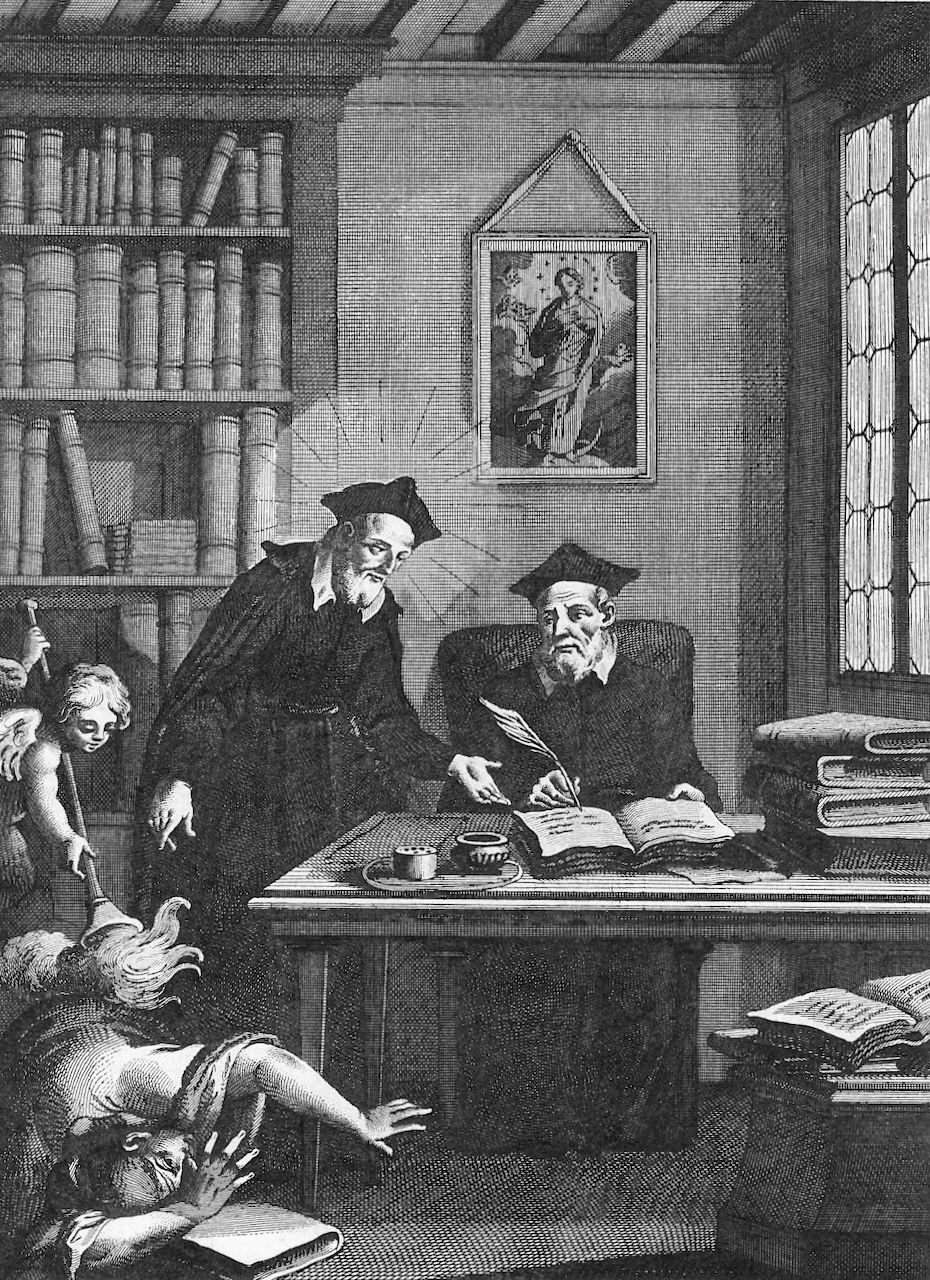
Fr Consolini’s vocation story is quite extraordinary. Born in Monteleone, near to Fermo, in 1565, he first came to Rome in 1590 to continue his studies. There, he stayed with his uncle, who was a priest at San Giovanni dei Fiorentini, the church which St Philip had been given at the very start of the Oratory’s existence as a formal Congregation of priests, serving his wider group of disciples. The Oratorian connection with that church clearly still persisted, despite the Congregation having moved to the Vallicella in 1575, because it was through his uncle that Pietro was introduced to the Exercises. St Philip took a shine to him, telling him, “Now then, my son, you must become one of us!” Consolini, however, was not so hasty, and replied that he would not wish to make a firm choice of a state of life without mature reflection and the advice and approbation of his uncle.
While he admired the prudence of the young man’s response, St Philip was not to be stopped: he proposed Consolini to the Congregation, and had him accepted by the Fathers, without Consolini’s knowledge. Despite the unusual circumstances, he sought and gained his uncle’s support, and entered the Congregation in the same year he arrived in the Eternal City, remaining in it until his death in 1643.
Even though Fr Consolini only knew our Holy Father for five years before the latter’s death in 1595, he became one of St Philip’s closest disciples. When St Philip was dying, it was to Consolini that he finally revealed the story of his Pentecost experience, which he had kept secret for fifty-one years. This closeness with our Holy Father made him the obvious choice to draw up our first Constitutions, which he wrote in 1612. Although these are no longer in force, they are still an authoritative account of the life St Philip wanted the Fathers of his Congregation to lead, written by one who knew him so intimately.
It would be easy for us to think that Fr Consolini’s life is only really of interest to the Fathers and Brothers of Oratories around the world, but I think he has much more to offer than that. His great example to all of us is his love and devotion to our Holy Father St Philip. Just like St Philip, Fr Consolini emphasised the importance of humility and charity in the Christian life — and, above all, that these are not just the preserve of priests and religious, but something for all of us, no matter our state in life. It is all too easy, when we read the lives of the saints (and even of holy people who have not been canonised, like Fr Consolini), to think that the examples of these virtues they set for us are somehow unattainable for poor sinners like us. Fr Consolini — and St Philip too — want us to know that that is not the case. Growing in holiness is hard work, but it is worthwhile work: God is calling each and every one of us to closer and closer friendship with him. We have only to accept that call.
Fr Consolini has not been canonised — not, I think, from any lack of holiness, but because those Fathers he left behind when died knew his humility and his love of being unknown. In his lifetime, he had only made his contributions to the process for St Philip’s canonisation under obedience, not because he didn’t think St Philip was in heaven, but because he knew how much weight St Philip himself placed on humility. Even though he has not (yet!) been declared a saint, Fr Consolini gives us a great example of loving God, and loving our neighbour — an example which we would all do well to follow.
This summer, we will be sharing the lives of some of the early fathers of the Roman Oratory. These less well known fathers might not have been raised to the altars, but their holy lives still contain many lessons for us today.
Saint Philip Neri is known as the Saint of Joy, and we may be inclined to think that it was easy for him and for his disciples to be joyful when they were having picnics in sunny vineyards outside Rome. Cesare Baronio shows us that this was not the case and looking at how Saint Philip sparked this Holy Joy in his life will help us to see what that true Joy means for us too.
The first step was to make sure that he didn’t take himself too seriously: we might think of the humorous story of his being sent to a wine shop to sample each wine, before buying half a litre of the cheapest stuff they had. While some of us may joke that we would happily accept such a penance, this must have shocked the sombre young man raised in an era of far stricter social codes. The point is that Joy comes from a love and trust of God, and that requires us to think more of him than of ourselves. In a certain sense, this comes with not taking ourselves, or the task we are undertaking, too seriously, and enjoying the recreations we receive as they come.
The next step was to broaden the scope of his Joy. As a young priest, Father Cesare was fond of saying Masses for the Dead and preaching about Death, Judgement, Heaven, and Hell, as if that were the only circumstance into which one can invite God. Saint Philip told him to apply himself to church history, because we must realise that Joy, even when considered in the supernatural sense, doesn’t just belong in sombre preaching or at times of prayer but throughout our life and in all of our interests and work. We must feel a freedom about being able to spend our time in a variety of useful ways, while welcoming God — and the Joy he brings — into them.
Finally, true Joy must survive in hardship and Baronio quickly came to know this well. Whether he was inscribing Cesare Baronio—perpetual cook above the stove, or exclaiming “I have trodden the winepress alone” in relation to the lack of support he received in compiling a complete history of the Church, Father Cesare was a man acquainted with hardship and able to preserve his Joy in it. Because he had been trained in this when cooking or writing, he was able to remain full of Joy when unwillingly burdened with the responsibilities of being the first Provost of the Roman Oratory after St Philip, and even as a Cardinal, clinging to a column in the Sistine Chapel and exclaiming “I won’t be Pope!”
Thus, in Cesare Baronio we have an example of Holy Joy that we can learn, a Joy that stems from Humility, permeates every aspect of our lives, and endures through every hardship. Above all, we see that this Joy comes through practice, and I recommend that is what we do!
This summer, we will be sharing the lives of some of the early fathers of the Roman Oratory. These less well known fathers might not have been raised to the altars, but their holy lives still contain many lessons for us today.
The next time you are enjoying a glass (or bottle) of Montepulciano d’Abruzzo you can turn your thoughts to one of the first companions of St Philip: Francesco Maria Tarugi, who was from there. He was the son of the imaginatively named Tarugio Tarugí, a senator of Rome, nephew of the Cardinal of Porto, Antonio del Monte and cousin of Pope Julius III. Francesco Maria’s life took him to Rome where, like many of St Philip’s first disciples, he was a well-connected young man at court.
It was in 1555 that he began to confess to St Philip. Tarugi had been struck by the fact that one day, soon after meeting St Philip, he took him with him to pray. Tarugi was new to mental prayer, but St Philip was able to introduce him to prayer so joyfully that the first time they prayed together a whole hour passed without him realising it.
Tarugi began his spiritual life with great fervour, and he began to feel the desire to become a Capuchin. Eventually, St Philip gave him the desired permission, but on this condition: that if he encountered difficulties along the way, he should realise that God did not want that state of life from him; otherwise, if he had travelled the path with ease, then he should interpret it as the Will of God and follow it to the end. Having accepted this condition, he took leave of St Philip. During the journey, his horse stumbled and fell, causing poor Tarugi to fall off so badly that he could not continue the journey. But that was not enough to discourage him. As soon as he could, he continued his journey and arrived at the monastery. As it happened, the friar to whom he had been directed was no longer there, nor had the other friars received any instructions regarding him. He recognized in all these obstacles the advice of St Philip and, returning to Rome, he went to find him and to tell him everything that had happened to him. Thus, he entered the Congregation with St Philip and he would say later: “At that point I felt within me such an extraordinary and new joy of heart that, even though more than 52 years have passed, I have never lost it.”
St Philip made good use of his talents to transform them into the instruments of his mortification. In fact, he showed that he did not approve and always declared himself dissatisfied with what Tarugi said; sometimes he scolded him, accusing him of going to preach to others what he did not observe for himself; other times, after Tarugi had aroused great emotion and applause in the people with his spiritual fervour, St Philip took over, went to sit on the same chair and summarized the topic discussed, humiliating himself and Tarugi, by saying that they were only good at talking and did not live at all the virtues that they preached to the people.
Tarugi advanced with great strides in Christian perfection, with such dependence and submission to the Saint that all this would become, when he was now advanced in years, a reason for his personal glory. Expressing his inner joy, he said: “I am proud that in our Congregation there is peace and there is charity, and I would not want this bond to be broken; even if other perfections were lacking, since this one is there, we can be content, because it never remains alone.”
When later he had to leave and become a bishop he never ceased to mourn the loss of his treasure. He wrote to the Fathers of the Congregation to ask for the favour that his name not be erased from the list of Fathers that was kept in the doorway, saying: “As I am written on the tablet, so I want to think that I am written in your hearts, just as each of you is engraved in mine: and when you leave the house and return, I beg you for charity, that you raise your eyes to my name and sigh for me to the Lord, because I am written in a place of tranquillity and peace, while at present I must be found in the sea among winds and waves, rocks and monsters.”
Tarugi lived his vocation with a perfect and loving observance of the life of the Congregation and with a total abandonment of himself into the hands of St Philip. He attributed to himself as the highest honour to perform the most humble services in the house: cooking, sweeping the floor in church, preparing and serving with every attention at table, and all the other works of Christian humility, which shone in him as much as his great qualities and the esteem he had received in Rome.
In 1576 Tarugi, having been requested several times, moved to Naples and, with the consent and joy of the entire city, began a Congregation of the Oratory. He remained in Naples for six years, until Pope Clement VIII ordered that he be recalled to Rome. Tarugi willingly accepted the call to Rome, due to his great desire to see his father Philip again, without thinking in the least about what would instead befall him. In fact, the joy he felt in seeing St Philip again soon turned to sadness, because rumours began to spread that the Pope had decided to make him bishop in Avignon. Despite his own protests Tarugi left Rome for Avignon, immediately showing himself to be a worthy Pastor and a zealous Prelate. He had to struggle much to eradicate the abuses that had been practiced for a long time among his people. No less work was given to him by the monasteries of nuns, which by now had settled well into the reigning circle of laxity. He worked with paternal zeal to promote as many things as he could for the glory of God and for the salvation of souls. All the Prelates of his time greatly admired him for his exemplary nature; his fame spread everywhere; he was now considered the living example of the perfect bishop.
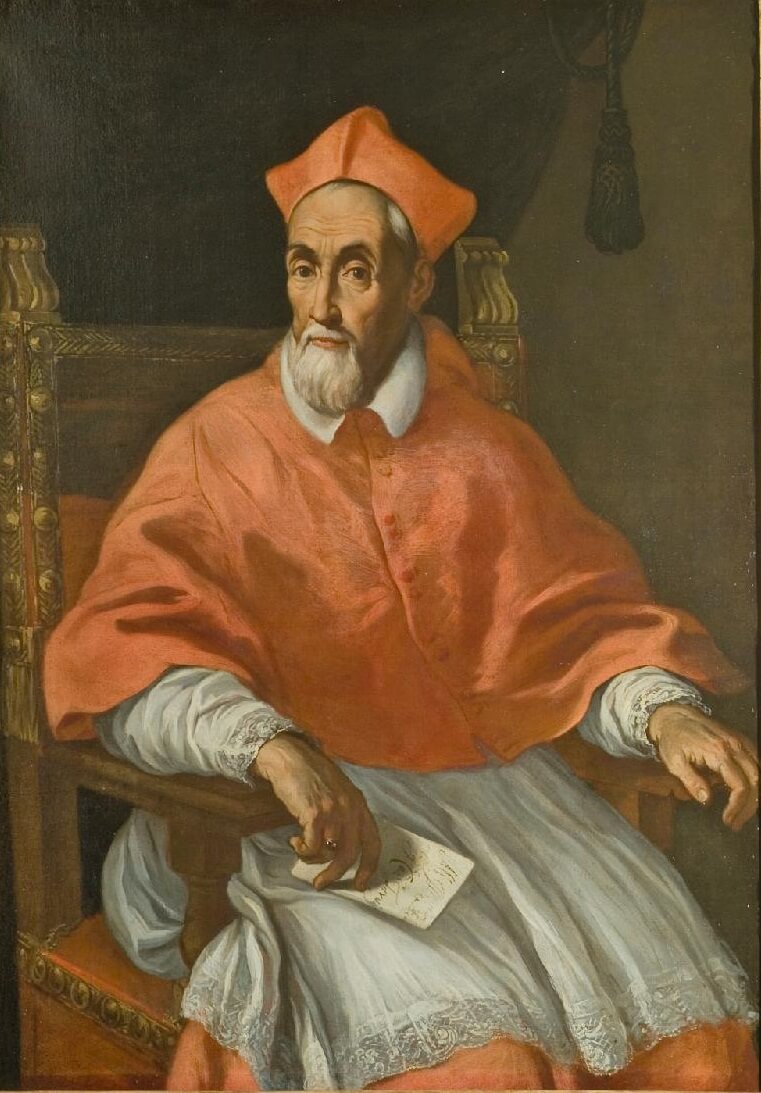
Meanwhile, Clement VIII destined Tarugi to the Cardinalatial dignity and, together with Cesare Baronio, created him Cardinal on 5 June 1596. To have him closer and to avail himself of his work, but also to offer him a healthier place, considering his advanced age, the Pope transferred him from the seat of Avignon to that of Siena, thus bringing him much closer to his native Montepulciano. Eventually though he was called back to Rome by the pope and was lodged in the Papal Palace. But the Pope, this time, could make little use of him, since Tarugi, already advanced in years, was struck by a cerebral stroke which, even if it did not take his life, did not allow him to be functional for some time. After some time, he recovered and resumed his usual duties. However, he felt increasingly debilitated and now wanted only to prepare for death, so he asked permission from the Pope (who was already Paul V) to be able to return to live with his Fathers and Brothers in Vallicella, far from any other occupation. To better prepare himself for that final step, he also asked to be able to renounce the Cardinalate. The Pope granted his first request, but did not want to hear about the second.
Returning to the Vallicella, he threw himself into prayer and devotional exercises, to such an extent that it was necessary to command him to moderate himself. A few months before his death, he was again struck by another stroke, which left him forever affected in the articulation of words. Yet the good old man dragged himself around the house more than he could and never abandoned his devotional exercises. It was 3 June when he had the third recurrence of his illness, and this time he was confined to bed and asked for the Holy Viaticum. He survived this last attack for another eight days, during which he asked and received the grace to receive communion every morning. He received extreme unction and a prayer of recommendation for his soul was said. The Father Provost asked him to bless the Congregation, and he, no longer able to utter a word, simply raised his hand and blessed it; he did the same for the Congregation of Naples, which he loved so much. He then received in his hands the rosary and the crucifix that had belonged to Saint Philip, kissing them affectionately. And amid the prayers of the Fathers, all present, he finally gave up his soul to his Redeemer. It was June 11, 1608. In compliance with what he had asked, after the funeral, he was buried among those of the Congregation, under the High Altar of his Church.
He proceeded, in everything, with a generous trust in God. In all the affairs he had to undertake he relied solely on his firm hope in God, for this reason the first thing he did, and what he ensured others did as well, was to pray. He loved Saint Philip, and desired only to be a true son of the Saint, and so would repeat Our Holy Father’s words in every difficulty: “Therefore, prayer…”
Sunday 3 August Solemn Mass 11:00 18th Sunday of the Year Missa Simile est regnum caelorum Victoria Ave Maria L’Heritier O sacrum convivium Marenzio
Sunday 10 August Solemn Mass 11:00 19th Sunday of the Year Missa Aeterna Christi munera Palestrina Super flumina Babylonis Palestrina Salve Regina Esquivel
Sunday 15 August Solemn Mass 18:00 The Assumption of the Blessed Virgin Mary Missa Vidi speciosam Victoria Ave Virgo Sanctissima Guerrero Gaude Maria Virgo Victoria
Sunday 17 August Solemn Mass 11:00 20th Sunday of the Year Missa Simile est regnum caelorum Lobo Immittet angelus Domini Lassus Caro mea Guerrero
Sunday 24 August Solemn Mass 11:00 21st Sunday of the Year Missa Brevis Gabrieli Expectans expectavi Rossi Ego sum panis vivus Palestrina
Sunday 31 August Solemn Mass 11:00 22nd Sunday of the Year Missa Brevis in C Mozart Laudate Dominum Mozart Ave verum corpus Mozart
St John Henry Newman will soon be declared a Doctor of the Church!
The Holy Father agreed the request today, in recognition of Our Cardinal’s lasting contributions to our understanding of the faith.
The actual declaration will take place at a later date, which has not yet been announced, but will likely be in the coming months.
Yesterday we kept the feast of Saints Mary, Martha and Lazarus. Until 2021 this was only the feast of St Martha, but the late Pope Frances added her two siblings to this feast to make a commemoration of all three. The three of them and their life together — especially their life together with the Lord — teach us much.
We can see in these three something of the priorities of the Christian life. Martha offered the Lord hospitality; she welcomed him in to their home and their life. Mary sat at his feet and listened to his words. Lazarus sprang out of the tomb at the command of the one who defeats even death. Three priorities, if you will, that should always be active in our Christian life.
The first is creating a place of welcome for the Lord in our heart. He should be the ever welcome guest and by avoiding sin we make that place ever ready to receive his grace to sanctify us. The second is that we should be listening to him. His words should find an ear in us, the ear of our heart that takes them and meditates upon them. His words should be the refrain of our life, the soundtrack to all that we think and do. And finally we should be responsive — we should act upon what he says. For Lazarus, this gave new life after he had been shut up in the tomb, and this new life at the last is promised to us too but so is new life now, given in greater measure the more we respond to the Lord’s commands. If we discern his will and put it into action, new life here and now is the reward.
There are also two further aspects of their life that are hugely important in the story of these three saints and the first is friendship. The love that they offer the Lord is the love of friendship which is, as St Thomas Aquinas tells us, the highest form of love since it is the very love that God has in himself. Perhaps it is a little fanciful, but there is something about the three of them, inviting the Lord into their home that could remind us of that famous icon of the Trinity, sitting at table and waiting to invite us into their life. The goodness and virtue in these three siblings mirrors that divine life, even if just a little, and we can but imagine what good things came from it. Perhaps our prayer to these holy siblings, in addition to a renewal in our own Christian life after their example, is for the gift of friendship, the gift of that homely welcome that is a little echo of the very life of God.