The St Rupert Pilgerweg

photo 2

St Rupert brought the faith to the parts of Bavaria and Austria now known as the “Rupertiwinkel” around the year 700 A.D., and founded the Archdiocese of Salzburg. Some young parishioners have been walking with Fr Daniel along the pilgrim way of St Rupert, from Altötting to Salzburg.

We began at Altötting – a beautiful shrine of Our Lady. Here is the group admiring the ex voto plaques around the Gnadenkapelle:

SAM_1906

An immensely popular local saint is Conrad of Parzham, over whose tomb we were able to celebrate Mass:

SAM_1961

We were also privileged to have Mass in the Gnadenkapelle itself, where the much-venerated statue of Our Lady is surrounded by urns containing the hearts of the Kings of Bavaria: photo 1-1SAM_1604SAM_1608

One of the Capuchin friars gave us a special blessing before we began our walk:

photo 3-1photo 2-1

From Altötting we walked to Hirten, and then on to Tittmoning, where the young Joseph Ratzinger lived as a small boy on the main square. He described Tittmoning as “my childhood’s land of dreams”.

SAM_1752 Then we walked on to Waging, and thence to Laufen, where we crossed over the bridge into Austria. At Waldprechting, we had Mass in the ancient chapel of St Nicholas:

photo 3

We walked from Seekirchen and then into Salzburg itself, where St Rupert is enshrined in the Benedictine Abbey Church of St Peter.

After Mass in the Lady Chapel at St Peter’s:

SAM_1760

The local shrine of Our Lady in Salzburg is the magnificent church of Maria Plain, where Fr Daniel blessed our St Rupert’s pilgrim badges:

SAM_1644SAM_1646

Outside Maria Plain:

photo 4

The route is extremely well sign-posted, and takes the walker through a great variety of different landscapes.

photo 1

photo 5

St Rupert – pray for us.

New novice clothed

IMG_6619

Please pray for Brother Adam Fairbairn, who was clothed in the habit of Our Holy Father St Philip this evening.

IMG_6630

Br Adam has just completed a month’s postulancy here in Oxford. He has been working in York at St Wilfrid’s as a pastoral assistant since December. He will now return to York as the first novice of the community there, but we will still get a chance to see him as he makes regular visits to Oxford over the course of the next year.

Please remember to keep the Oratorian community in York in your prayers, and ask that God may bless both the house in Oxford and the house in York with many good vocations in the years to come.

IMG_6617


The Last Judgement at Fairford

IMG_6558_2

The Wednesday Morning Group had an enjoyable trip this week to Fairford in Gloucestershire, to see the Church of St Mary the Virgin, which has the most complete set of pre-Reformation stained glass windows in England. The church, built in 1499, escaped the ravages of the destroyers and its windows make a beautiful meditation on the Gospels. The West window depicts the Last Judgement – Sir John Betjeman chose the lower half as his luxury item on Desert Island Discs!

Here are Adam and Eve in the Harrowing of Hell:

IMG_6604_2

And here is the group by the porch of the church:

IMG_6610

Pray for the Christians of Iraq

iraqui-christians

Our parish has recently hosted two retreat days for young people belonging to the Melkite Catholic parish in London. Fr Shafiq, the Parish Priest, has written to ask for our prayers for the Christians of Iraq, whose ancient churches are being destroyed, whose houses are marked for destruction, and who are being given the choice of flight or death.

Fr Shafiq writes:

“Dear brothers & sisters,

In solidarity with our suffering brothers and sisters of Mosul, the Eastern
Iraqi churches led by the Syrian Orthodox Archbishop Toma Dawood, Syrian
Catholic Monsignor Nizar Semaan, Chaldean Catholic Father Nadheer, Ancient
Church of the East Corepiscopos (Khoury) Fr Dr Khoshaba, Eastern Assyrian
Father Tony and others are joining forces together with their communities
and supporters from all parts of Britain in a demonstration in London on
Saturday 26th July.

The assembly will start at 11:30 near Parliament Square.
Then the demonstrators will move from the assembly point to stand in solidarity outside the Parliament building for a period of time followed by a march towards 10 Downing Street.
We look forward to your participation to illustrate your solidarity with the displaced and suffering Christians of Mosul and Iraq.
Please pass this on to as many people you know as possible.
The event will be covered by the media.

Please attend if you possibly can and encourage your friends and family to do same.

Abouna (Fr.) Shafiq
The Melkite parish in London

During his Sunday Angelus, Pope Francis told the persecuted Christians of Mosul that he was with them in solidarity, urged the faithful to pray for them, and appealed for aid for these people who have been “stripped of everything“.

After the Islamic State of Iraq and Syria (ISIS) threatened to kill them if they don’t convert to Islam or pay tax, they began implementing their threats by burning a 1,800 year old church in the city.

One small hopeful development was witnessed yesterday, however, when Baghdad Muslims reached out in solidarity to their Christian brothers and sisters, joining them at the end of Mass on Sunday for a special service in the Church of Mar Girgis. Many bore signs that read “I am an Iraqi Christian”.

The Chaldean Catholic Patriarch has issued the following message:

“To the people of conscience and good will in Iraq and the world.
To the voice of the moderates, our Muslim brothers and sisters in Iraq and the world,
To all concerned about the continuation of Iraq as a nation for all its citizens,
To all leaders, thinkers, and human rights activists,
To all defenders of the dignity of the human person and the freedom of religions,

Peace and God’s Mercy!

The takeover of the Islamist jihadists of Mosul and their announcement of an Islamic state, and after days of composure and anticipation, the situation had turned negative on the Christians of the city and surrounding areas. The first signs of this reversal were the kidnapping of the two nuns and three orphans who were released after 17 days, We were encouraged by this development and we considered it a glimmer of hope, and a breakthrough. Only to be surprised by the latest developments, the Islamic state issued a statement calling on Christians openly to convert to Islam, and either pay Jizya without specifying a ceiling, or leave their city and their homes, with their clothes only, without any luggage, and issued a “fatwa” that the homes will become the property to the Islamic state. They have marked the letter “N” on the homes of Christians for “Nazarenes”!!! As they have marked on the homes of Shiites with the letter (R) for “Rejectors”. Who knows what is holding in the coming days as the laws of the Islamic state is based on what they claim to be the Sharia law, including the redefinition of identities on the basis of religion and sectarianism.

These requirements offend Muslims and the reputation of Islam, which says “you have your religion and we have ours,” and “There is no compulsion in religion”, and it is in contradiction of a thousand and four hundred years of history and a lifetime of the Islamic world, and coexistence with different religions and different peoples, east and west, respecting their beliefs and living in fraternity. The Christians and in particular in our East, and since the advent of Islam, have shared together sweet and bitter memories, their bloods were mixed in defence of their rights and their land, and together they built, cities, civilization and heritage. It is shameful that Christians are being rejected, expelled and diminished. It is obvious that this would have disastrous consequences on the coexistence between the majority and the minorities, even among Muslims themselves, in the near and long term. Hence, Iraq is heading to a humanitarian, cultural, and historical disaster.

Therefore we call unto them, a warm, brotherly, urgent and serious call, and we appeal to our fellow Iraqis who support them to reconsider their strategy, and respect the unarmed innocent people, of all ethnicities, religions and sects. The Quran commands respect to the innocent, and does not call to seize the property of people forcibly, it calls on helping the widow, the orphan, the destitute and the defenseless, and even recommend to help the seventh neighbour. We also call on Christians in the region to adopt rationality and acumen, and calculate their options well and understand what is planned for the area, and come together in love and think through together and in solidarity to build confidence in themselves and their neighbours, gathering around their church, being patient, enduring and praying until the storm passes.”

+ Louis Raphael I Sako
Patriarch of the Chaldean Catholic Church

0331_World_IraqEaster_full_600

Twenty-five years of priesthood

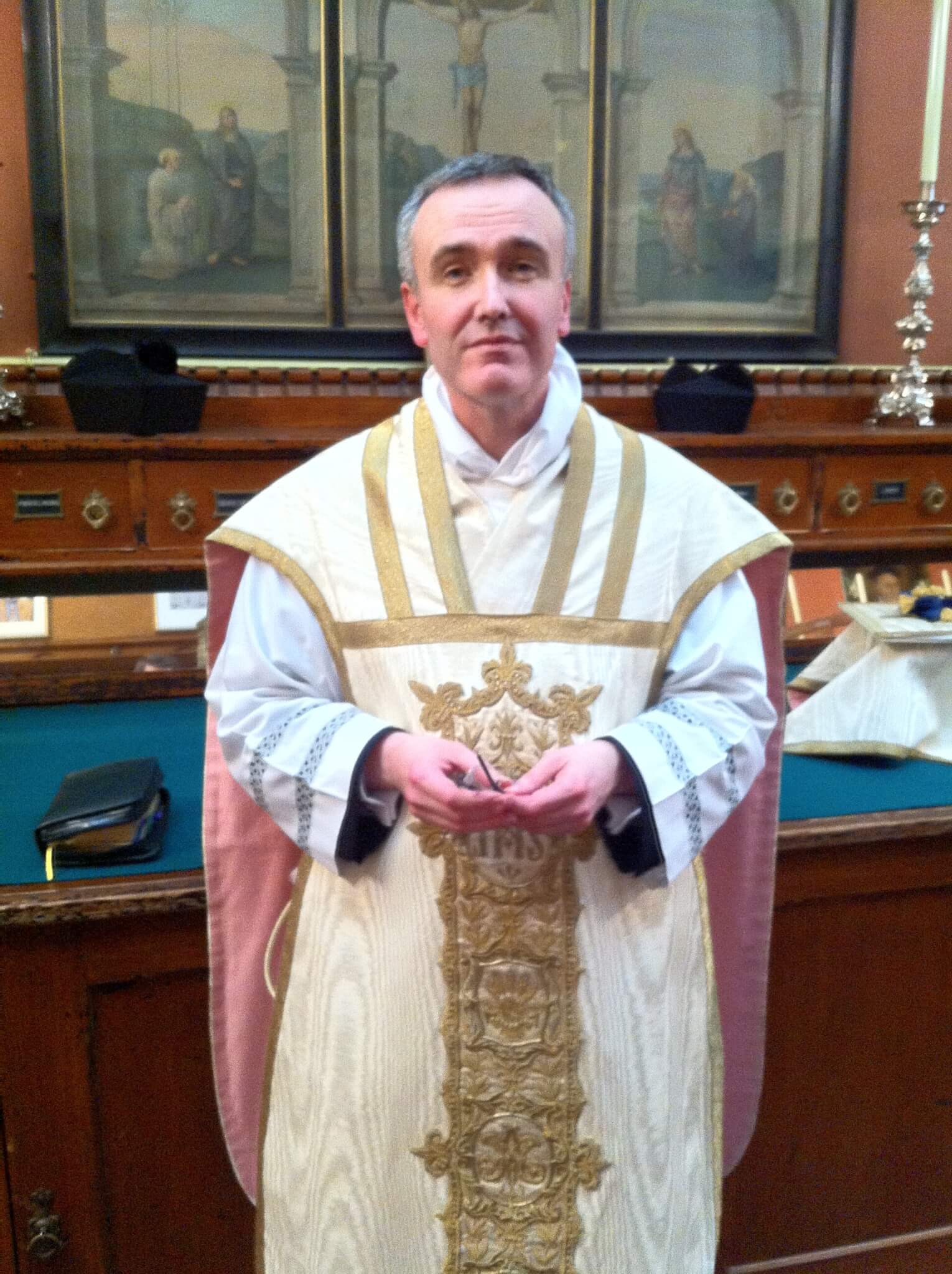
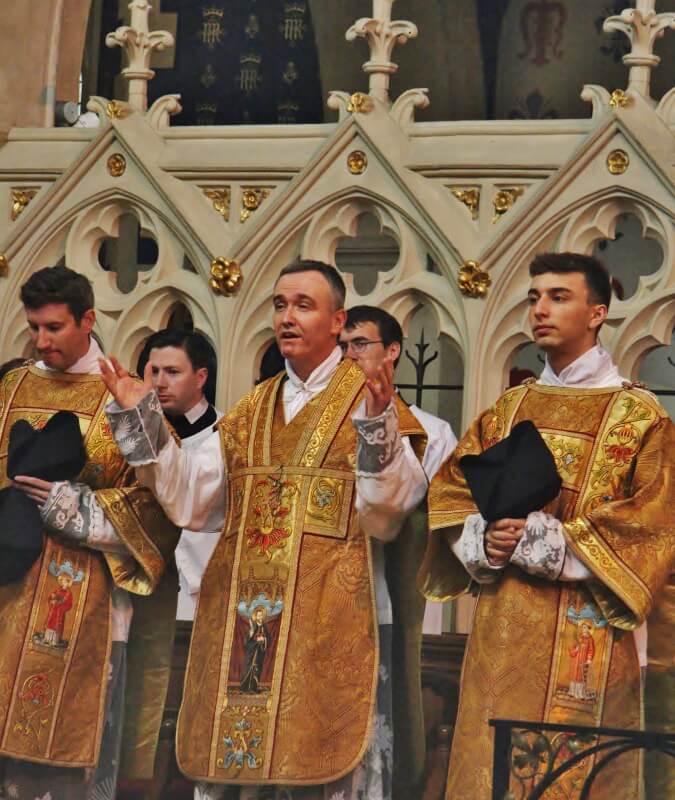
Father Dominic celebrated the evening Mass on the feast of St Mary Magdalene, wearing the same vestment in which he was ordained on the same day in 1989.

photo

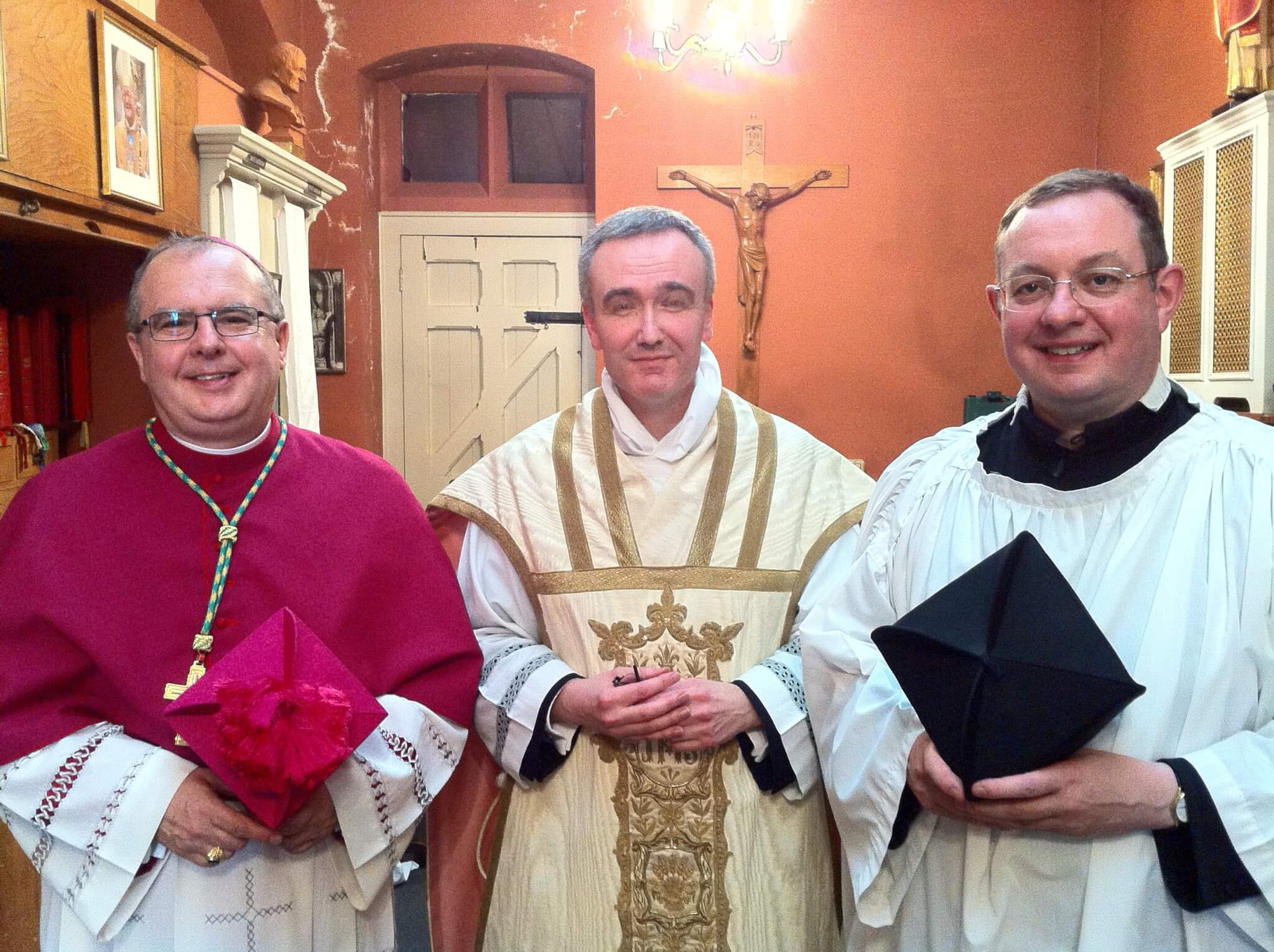
Bishop Robert preached at the Mass, and Fathers also came down from York. Here are the original “Birmingham Three”, who arrived in Oxford in 1990. From left to right: Bishop Robert Byrne, Fr Dominic Jacob and Fr Richard Duffield.

photo-13

Father Dominic’s Silver Jubilee

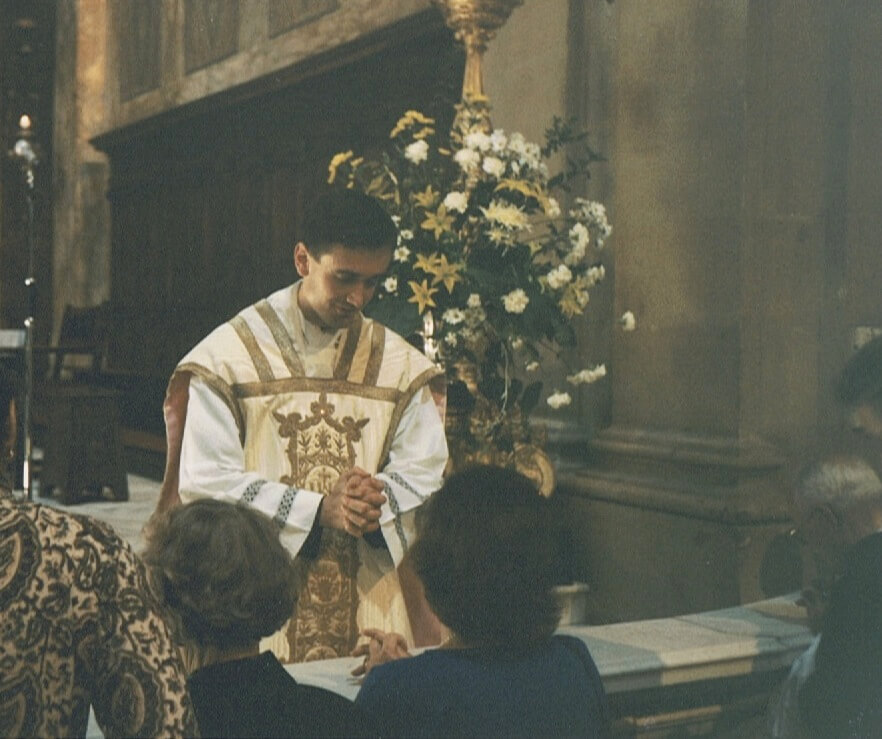
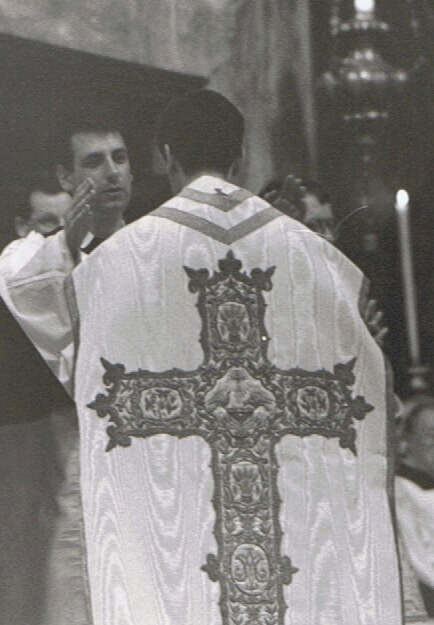
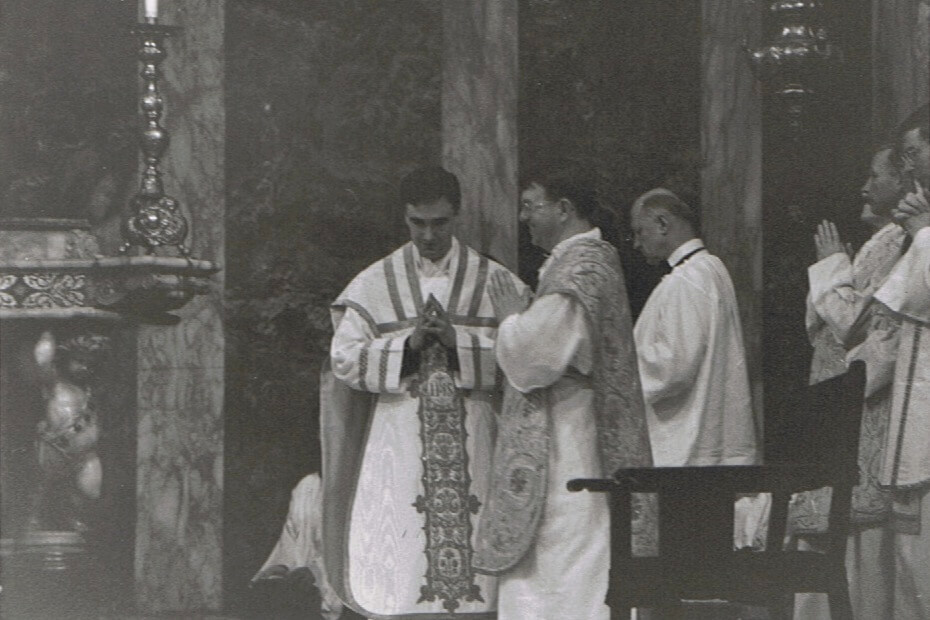
On 22nd July 1989, Fr Dominic was ordained priest at the Birmingham Oratory. Here he is giving first blessings on that day:
Fr Dominic1
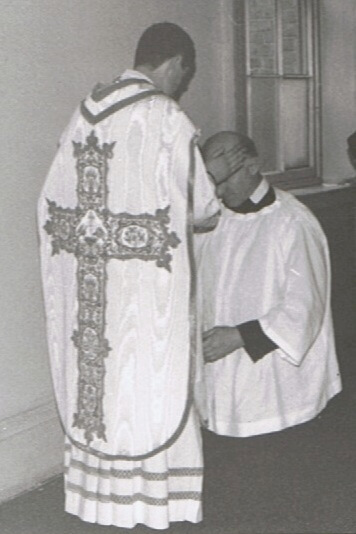
A first blessing for Fr Michael Napier, then Provost of the London Oratory and Apostolic Delegate of the Holy See to the Confederation of the Oratory:
Fr D5
And a first blessing for the youthful Br Richard Duffield:
Fr D3
The sign of peace during the ordination Mass from Fr Ignatius Harrison, now Provost of the Birmingham Oratory:
Fr D7
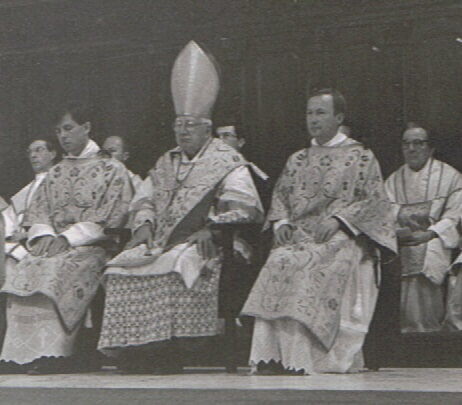
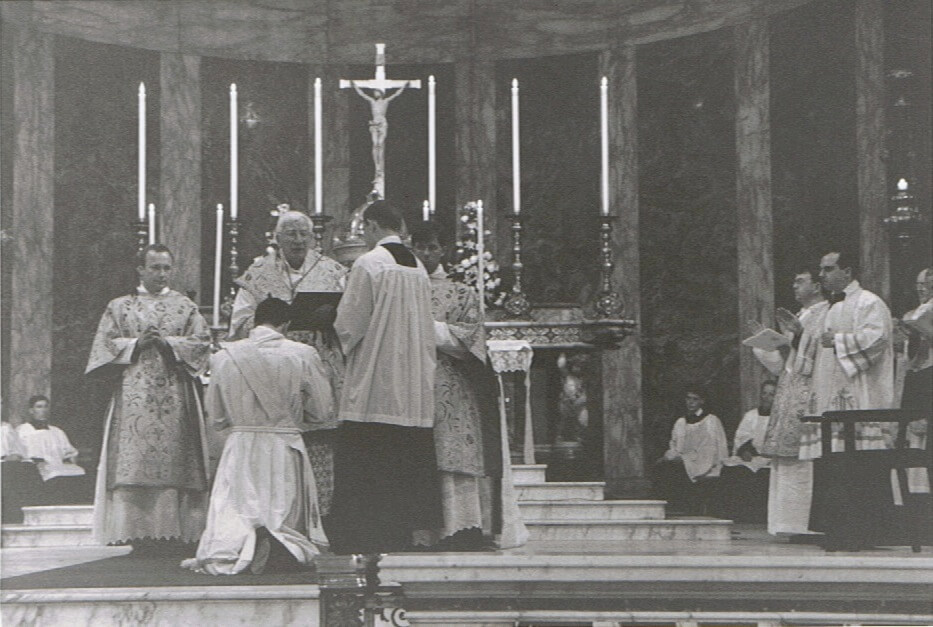
Fr Dominic was ordained by Bishop Joseph Cleary, Bishop of Cresima and auxiliary in Birmingham:
Fr D6Fr D2
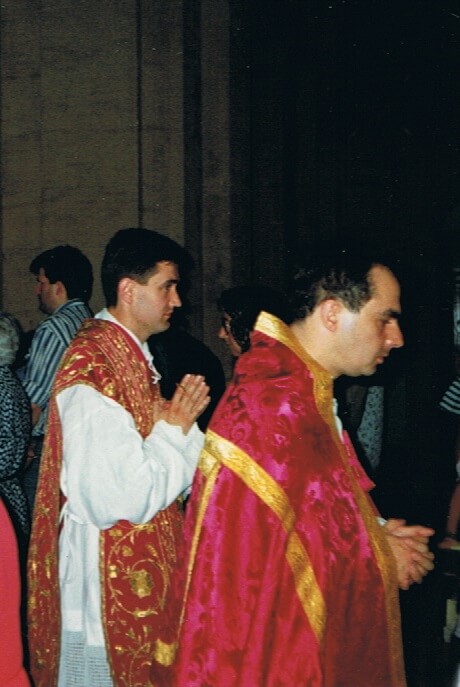
Here is his first Mass, assisted by Father (now Bishop) Robert Byrne:
Fr D10Fr D9 First Mass

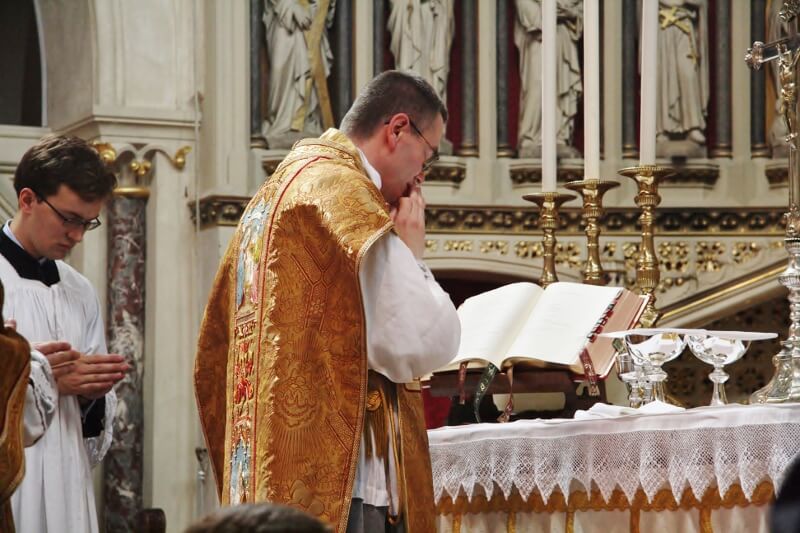
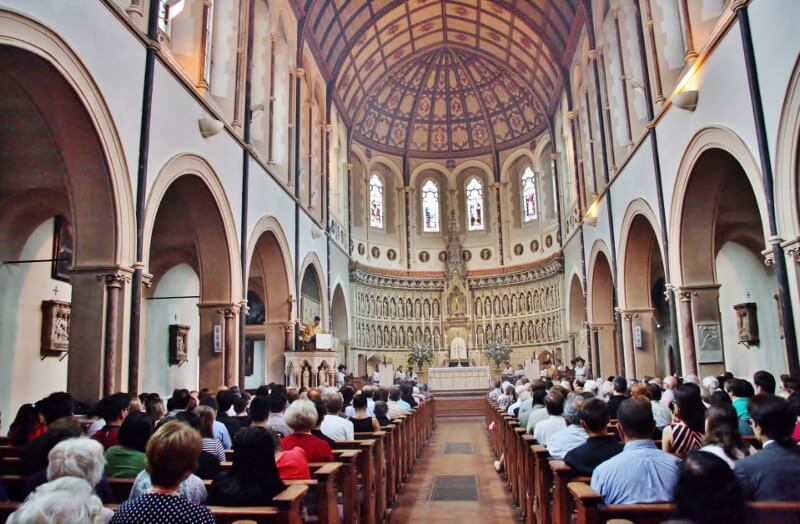
Today, Fr Dominic offered a Votive Mass of Christ the High Priest, in thanksgiving for his Silver Jubilee:

IMG_6382 (800x533)

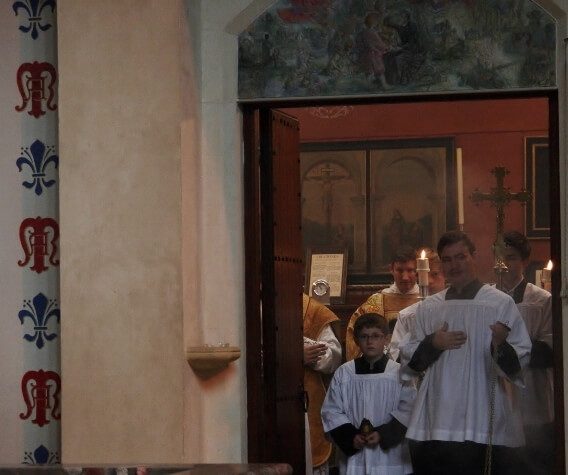
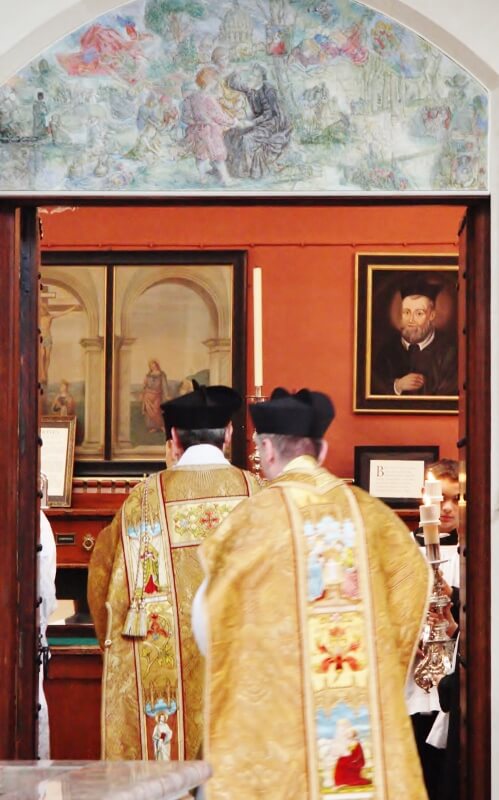
The entrance procession:

IMG_6314 (800x677)

IMG_6321 (800x533)IMG_6319 (532x800)

The Gloria:

IMG_6324 (675x800)

During the Sermon:

IMG_6342 (800x524)

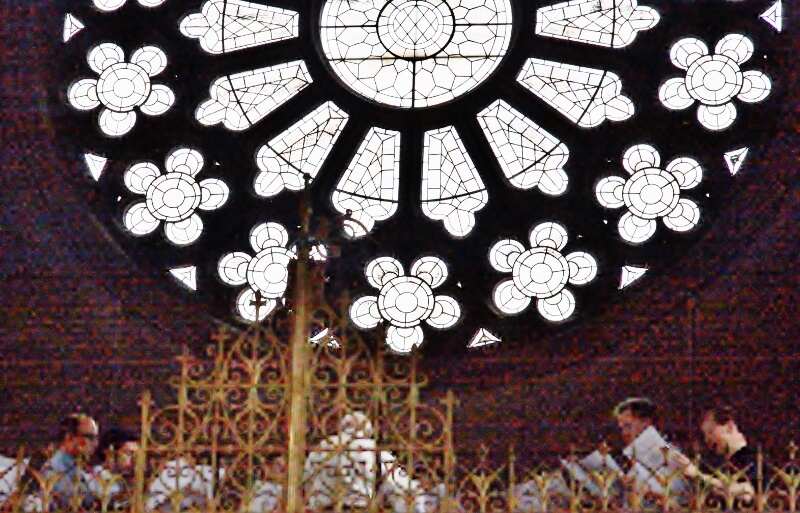
The choir sang a specially composed Salve Regina by Edward de Rivera, and a new Mass written by Andrew Knowles: the “Missa Respice de Caelo”, which drew upon themes from different pieces in honour of St Philip, such as “This is the Saint”, Sewell’s “Pangamus Nerio” and “Respice de Caelo”, and “O Filippo!”.

IMG_6402 (800x513)

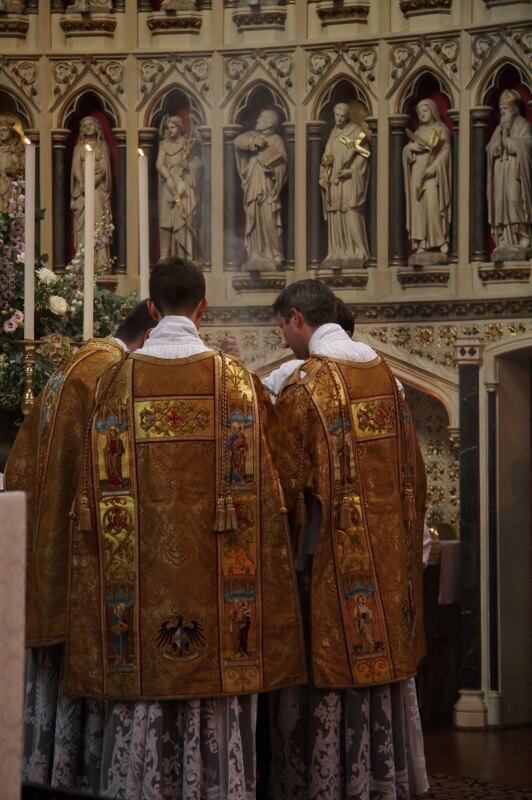
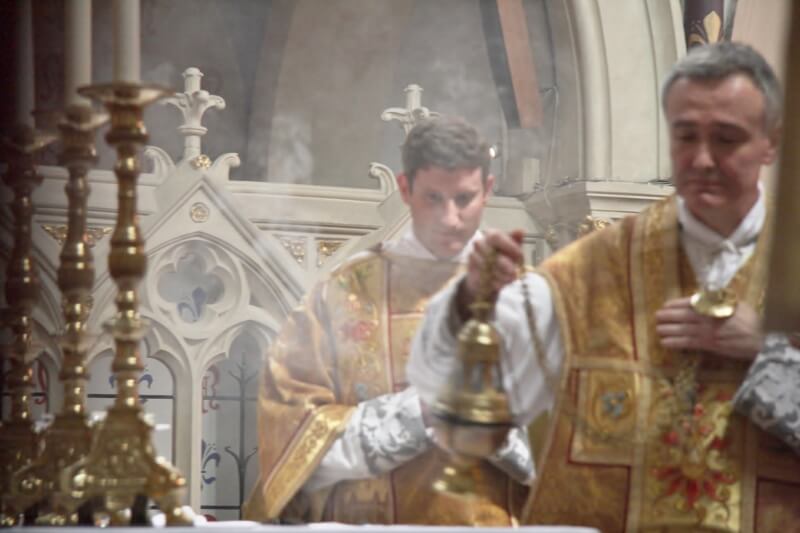
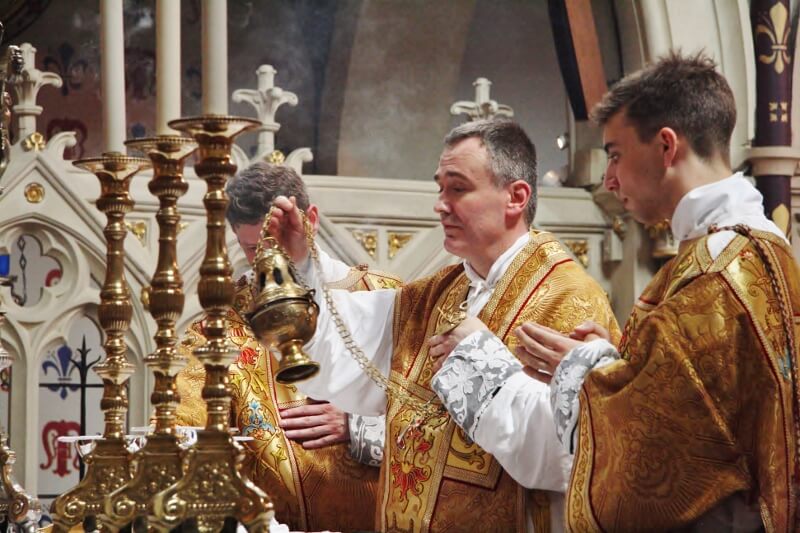
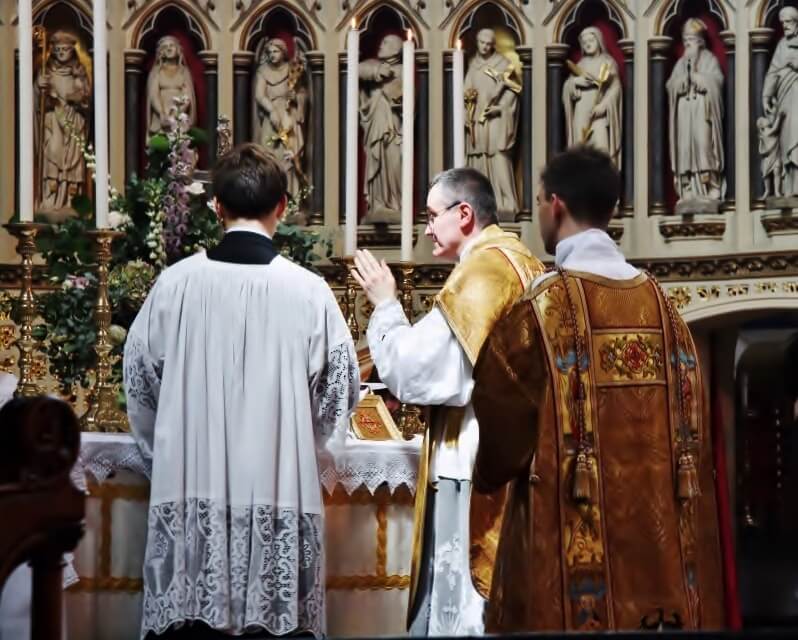
Incensing the altar:
IMG_6371 (800x533)

IMG_6368 (800x533)

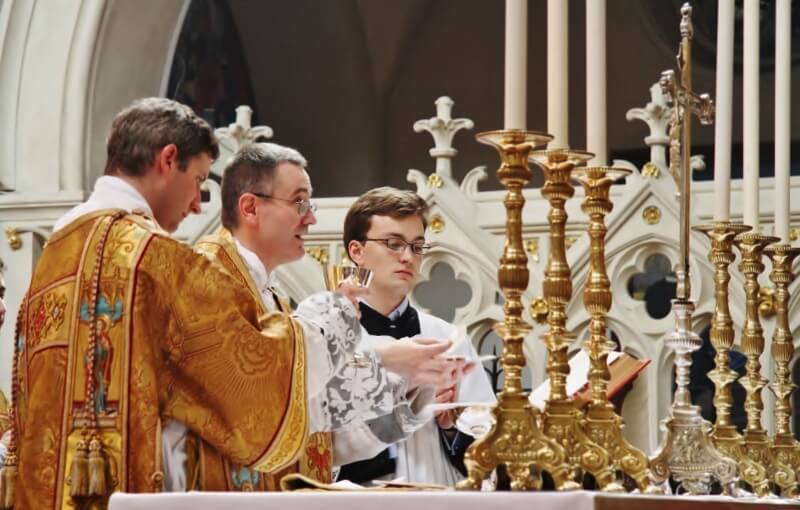
The Canon of the Mass:

IMG_6376 (800x520)IMG_6373 (800x642)IMG_6384 (800x512)

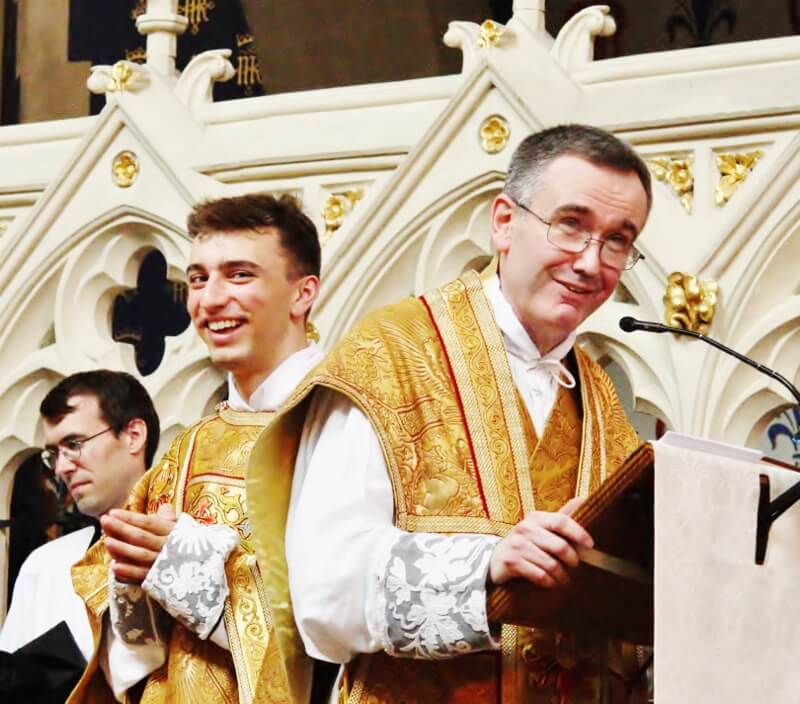
Fr Dominic says a few words at the end of Mass:

IMG_6413 (800x704)

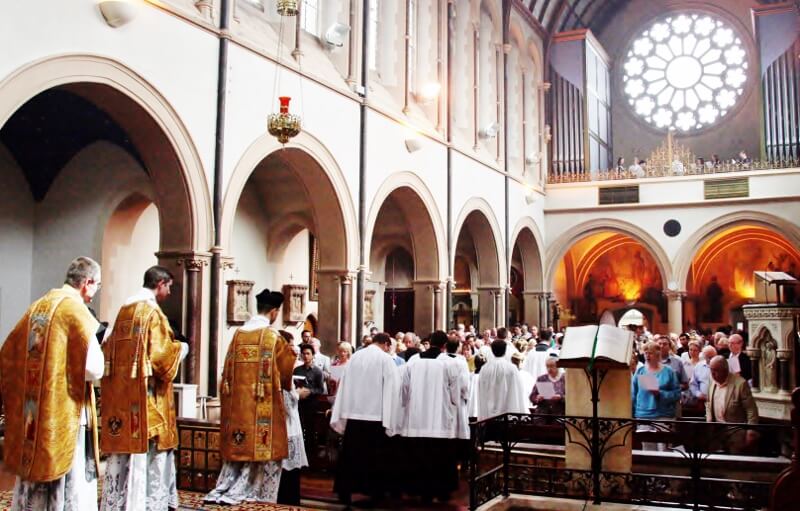
The procession at the end of Mass:

IMG_6419 (800x511)IMG_6422 (499x800)

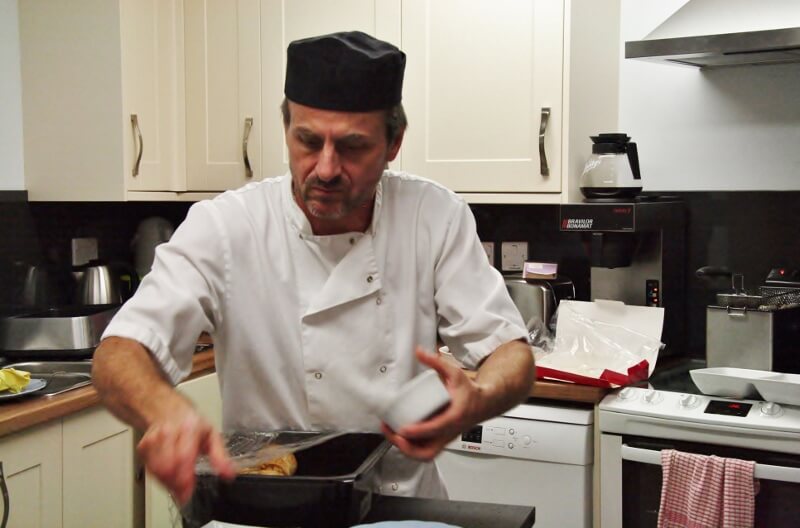
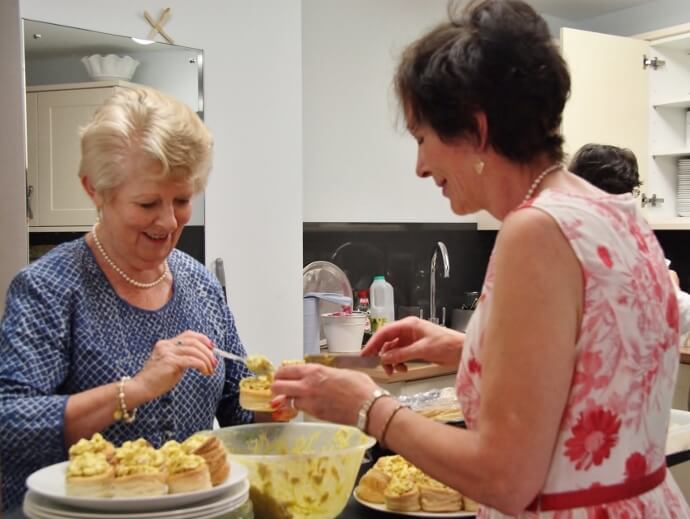
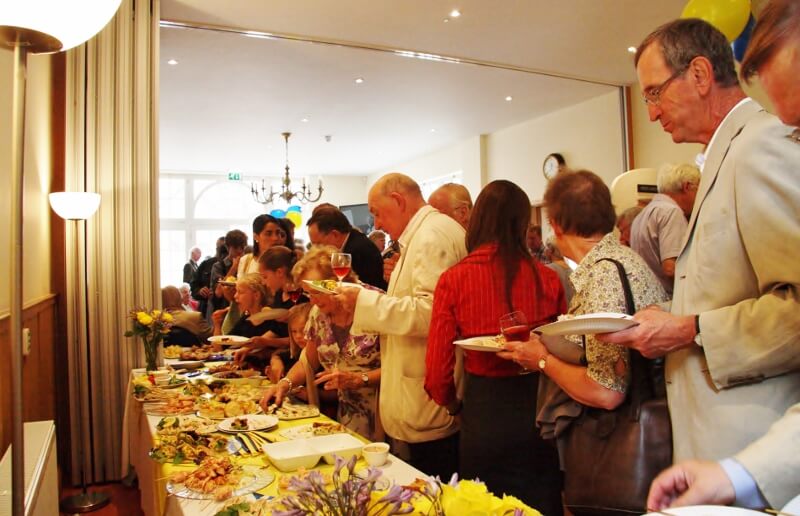
Afterwards there was a party in the Parish Centre. Here it is being prepared:

IMG_6427 (800x528)IMG_6350 (800x533)

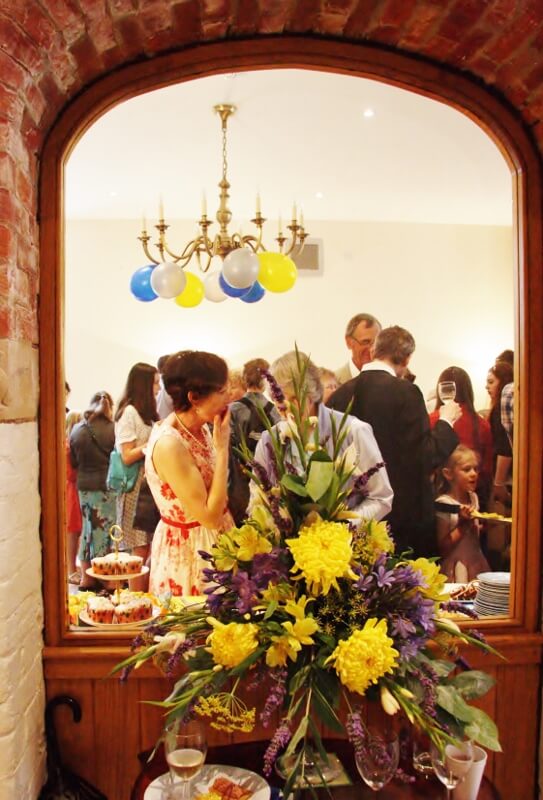
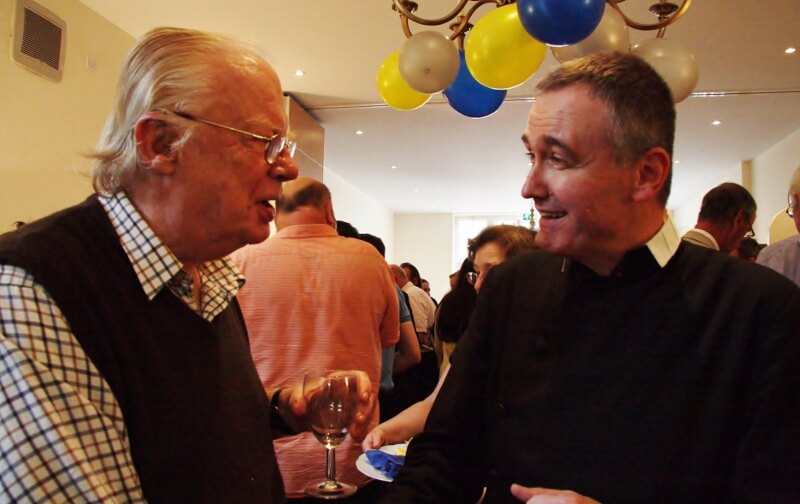
Our parishioners enjoying themselves:

IMG_6453 (800x520)IMG_6432 (543x800)IMG_6430 (800x516)

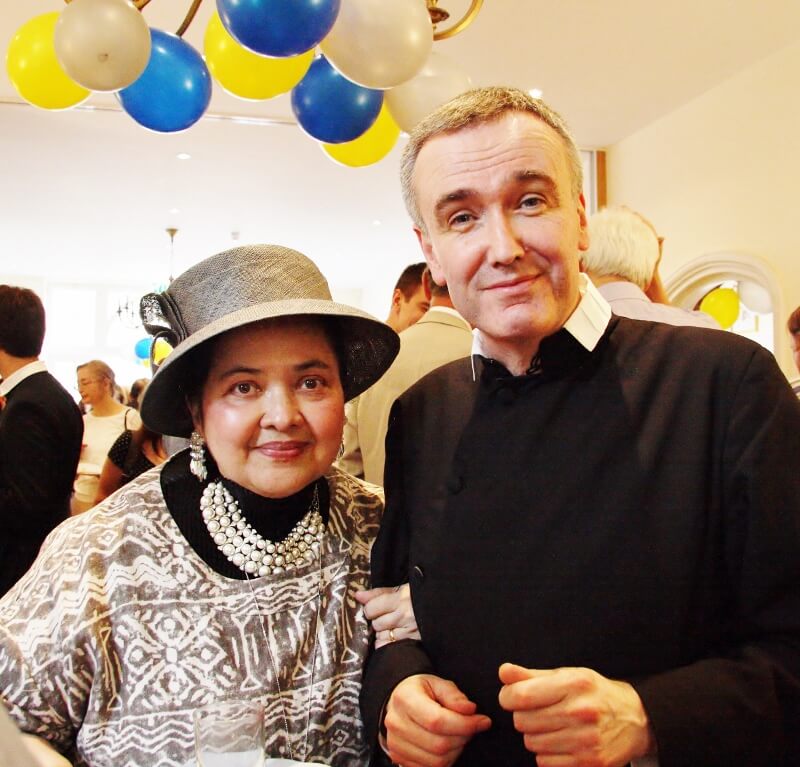
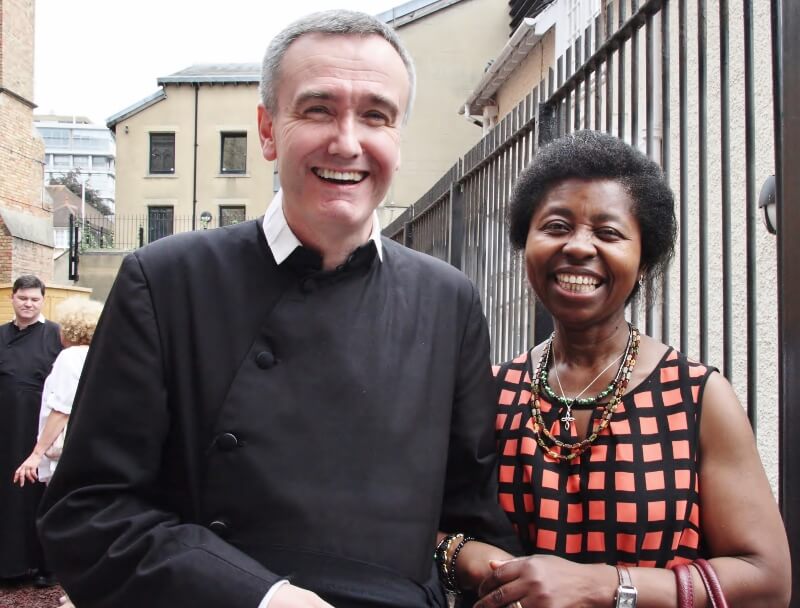
Greeting the Silver Jubilarian:

IMG_6443 (800x596)IMG_6437 (800x767)IMG_6435 (800x504)
IMG_6485 (800x608)

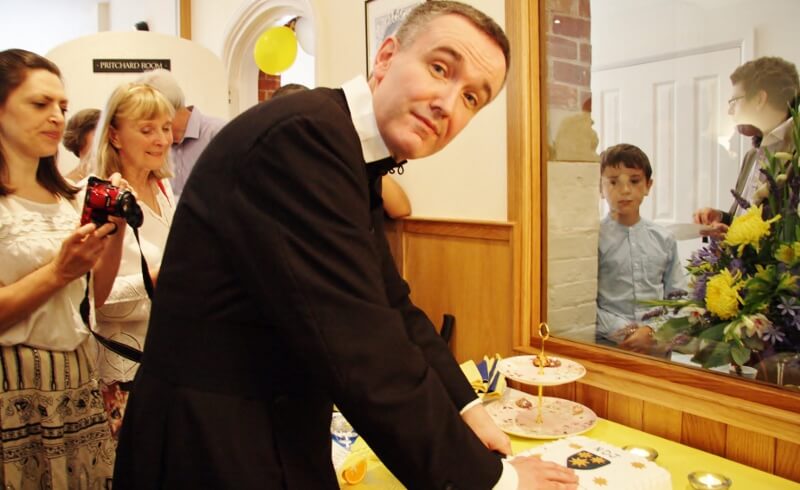
The cutting of the cake:

IMG_6470 (800x490)

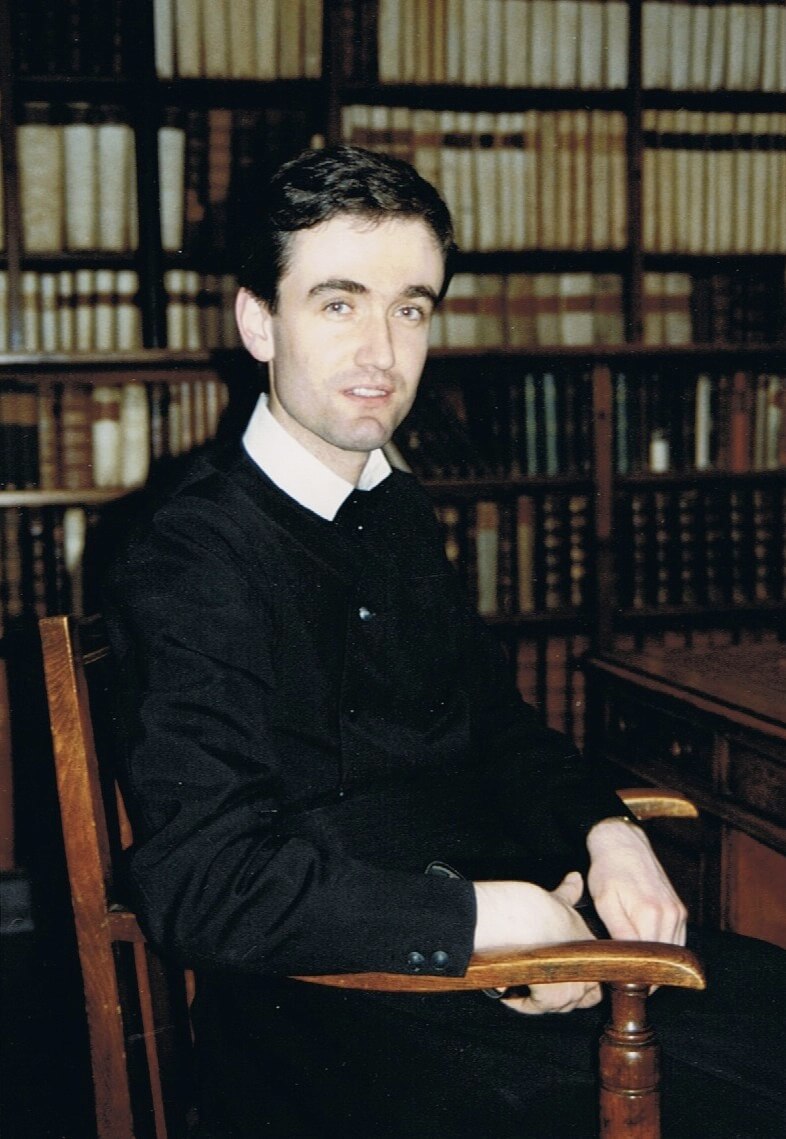
Then and now:

Fr D4IMG_6455 (800x501)Fr D8

Ad multos annos!

Assisted Dying Bill: Special time of Prayer

There will be half an hour of exposition of the Blessed Sacrament on Thursday evening (17th July) after the 6pm Mass to pray for the rejection of the Assisted Dying Bill in the House of Lords, which will be debated the following day. The English bishops have asked for special prayers to be said throughout the country.

To find out how to write to a peer, expressing your opposition to this bill, see the Bishops’ Conference website:
here

What the Bill Says

Lord Falconer’s Private Member’s Bill seeks to legalise what it calls ‘assisted dying’. In plain language, this means licensing doctors to supply lethal drugs to terminally ill patients who request them in order to commit suicide and who are thought to meet certain criteria – that they had a settled wish to end their lives, that they have the mental capacity to make the decision and that they are not being coerced or pressured.

What does the Church say about assisting suicide?
In a message addressed to Catholics in Ireland, Scotland, England and Wales, Pope Francis said, “Even the weakest and most vulnerable, the sick, the old, the unborn and the poor, are masterpieces of God’s creation, made in his own image, destined to live for ever, and deserving of the utmost reverence and respect”.

The Church supports high quality care for the dying and protection for the weak and vulnerable.

The Church teaches that life is a gift from God (John 10:10) and that suicide is the ultimate inability to accept the gift of life. Although attempting suicide should be treated with compassion rather than with blame, suicide should never be encouraged or promoted. Moreover the Church teaches that deliberately ending or helping to end someone else’s life, even if that person may have requested it, is wrong. Those who take someone else’s life take to themselves the power of life and death, which ultimately belongs to God.

What’s Wrong with the Bill
I. This Bill would:

– fly in the face of social attitudes to suicide. While as a society we treat people who attempt suicide with compassion and understanding, there is widespread acceptance that suicide is not something to be encouraged or assisted. Lord Falconer’s Bill stands this perception on its head.

– reinforce pressures on vulnerable people. The advocates of the bill tend to forget the background against which they are seeking to change the law. Recent examples of neglect in care homes as well as the many pressures faced by the elderly, disabled and vulnerable, who often feel a burden in a society focused on health, youth and beauty, should provide ample warning about the dangers of removing the vital protections afforded by the current law. As well as opening the door to abuse, legalising assisted suicide risks sending the message that a patient’s life is no longer worth living and could easily confirm a patient’s worst fears that the patient would be better off dead. We should be focusing instead on caring for vulnerable people and on supporting the message of the value of each person.

– remove the deterrent of the present law. Someone who was minded to put pressure on a relative to end their life for personal gain or for other malicious reasons would have nothing to fear other than that a request for assisted suicide might be refused. Under the present law they would have to reckon with a spotlight being shone on their actions after the event and of any malicious intent coming to light.

– replace the firm boundary of the present law with a purely arbitrary one. The present law rests on the clear principle that we do not involve ourselves in deliberately bringing about the deaths of others. An ‘assisted dying’ law says that there are some people whose deaths it is acceptable to hasten. Such an arbitrary boundary is hard to defend against extension to others – if the terminally ill, why not the chronically ill or people with disabilities? If the underlying principle of the Bill is the relief of suffering, there is no logic in the selection of terminal illness as a criterion.
II. More specifically, this Bill:

– contains no specific safeguards to protect the vulnerable. All it contains is a few criteria – mental capacity, settled wish, freedom from coercion. But it mandates no minimum steps that a doctor must take to ensure that these criteria are met.
places responsibility for assisting suicide on the shoulders of doctors. But most doctors do not regard assisting suicide as an acceptable part of clinical practice and would not participate in it if it were to be made legal. Consequently many people seeking assisted suicide would have to find, or be referred to, a minority of doctors they had never met before who would know nothing of them beyond their case notes.

– would encompass large numbers of people. A qualifying person would need to be diagnosed as having “an inevitably progressive condition which cannot be reversed by treatment”. But this could include chronic conditions such as Parkinson’s, MS and heart disease as well as other relatively-short trajectory illnesses, like cancer. Such chronic and incurable conditions, while life-shortening, are not terminal illnesses in the normally understood sense of the term but, for some patients (eg the elderly or frail), they could easily attract a prognosis of “reasonably expected to die within six months”. Even in what is normally seen as terminal illness accurate prognosis is fraught with difficulty. The Royal College of General Practitioners told Lord Mackay’s select committee in 2004 that, with prognoses at a range of more than a week or two, “the scope for error can extend into years”.
ignores the problems of mental capacity assessment. The Bill requires people requesting assisted suicide to have “the capacity to make the decision to end their life”. But what sort of capacity is that? When doctors assess capacity, they do so with a view to protecting patients from self-harm, not to clearing the way for their suicide. Mental capacity can be affected by all kinds of things, including depression (a frequent concomitant of serious illness) and the effect of medication that is being taken to relieve the symptoms of serious illness. Yet the bill assumes that doctors would be able to determine whether or not a patient has mental capacity without a referral to a psychiatrist for specialist assessment.

– offers information on end of life care but not experience of it. The bill requires that the qualifying person has been fully informed of the palliative, hospice and other care which is available to someone seeking assisted suicide. But, even if it is available (and in some parts of the country it is not), it is not enough just to be informed. As Help the Hospices wrote in evidence to Lord Mackay’s select committee, the promise of pain control is radically different to experience of pain control and a decision to seek ‘assisted dying’ without having had the opportunity to experience good end of life care could not be said to be fully informed.

Concert by the Camerata of Curiosities

IMG_6237

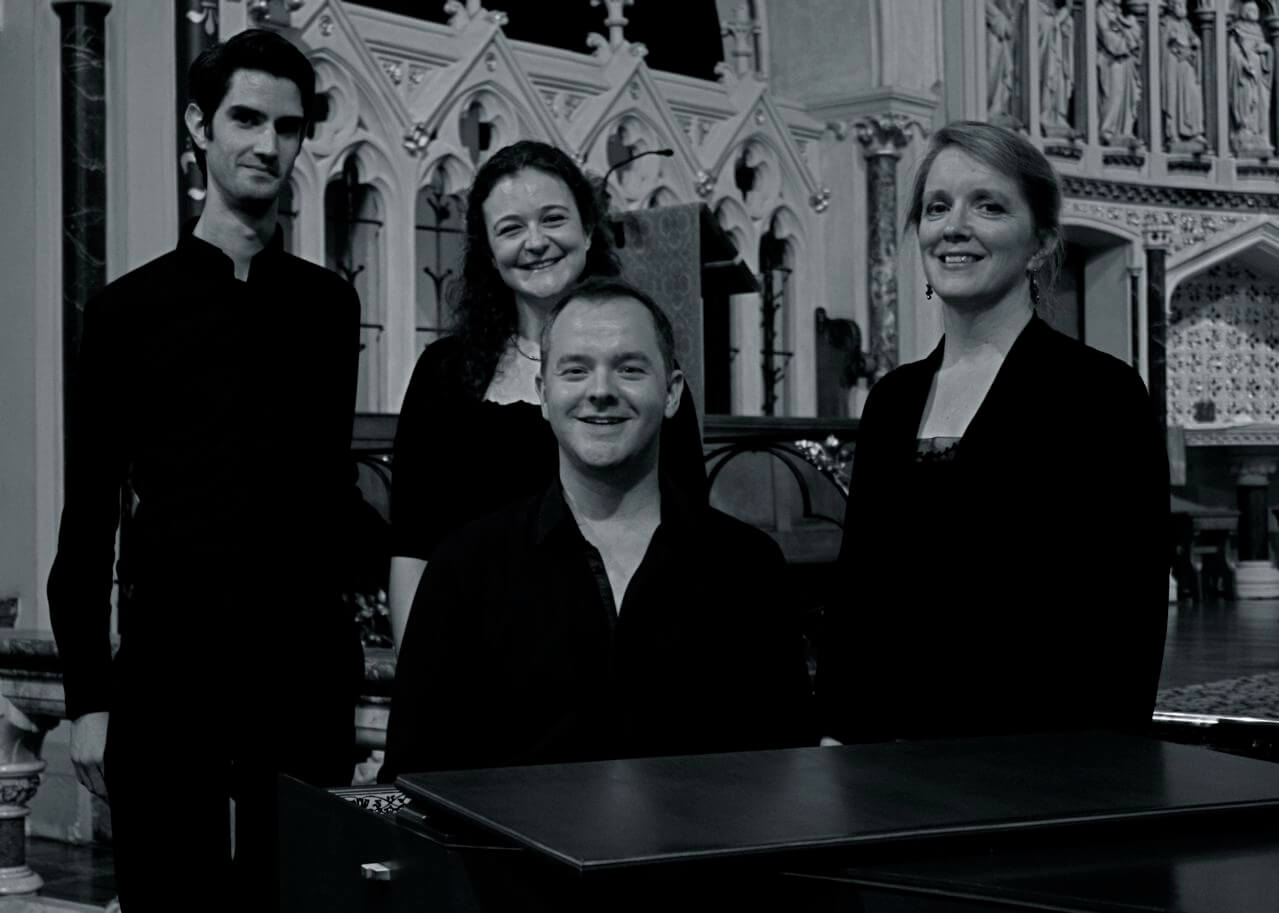
We were treated on Saturday evening to a concert by the Camerata of Curiosities:

Jennifer Attia ~ Mezzo Soprano

Stephen Sweet ~ Violoncello

Andrew Knowles ~ Harpsichord

and with the renowned soprano Emily Van Evera as a guest star.

All the pieces were baroque – from the time of the beginnings of the Oratory, and included music by John Blow, Domenico Scarlatti, Claudio Monteverdi, J S Bach, Alessandro Grandi, Isaac Posch and George Frederic Handel.

A remarkable piece for the birth of Our Lady by Barbara Strozzi was movingly sung by Emily Van Evera, and the evening finished with the Office Hymn for St Philip “Pangamus Nerio”, reconstructed from a manuscript from Santa Maria della Fava in Venice.

Our thanks go to the performers for such an enjoyable evening, which was in aid of the Oratory Campaign.

Blessed Sacrament Procession and Blessing of a new Peace Garden at St Aloysius’ School

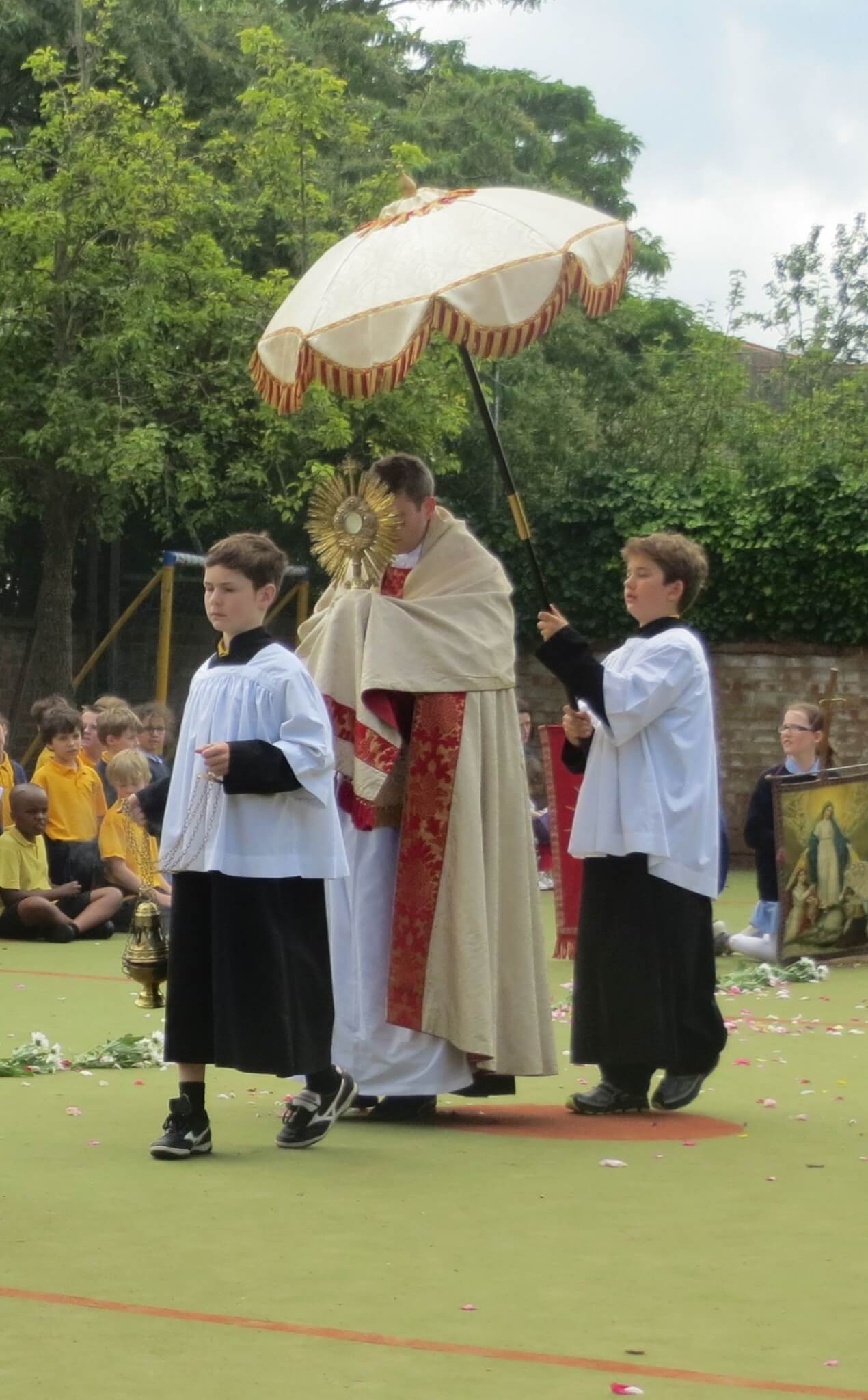
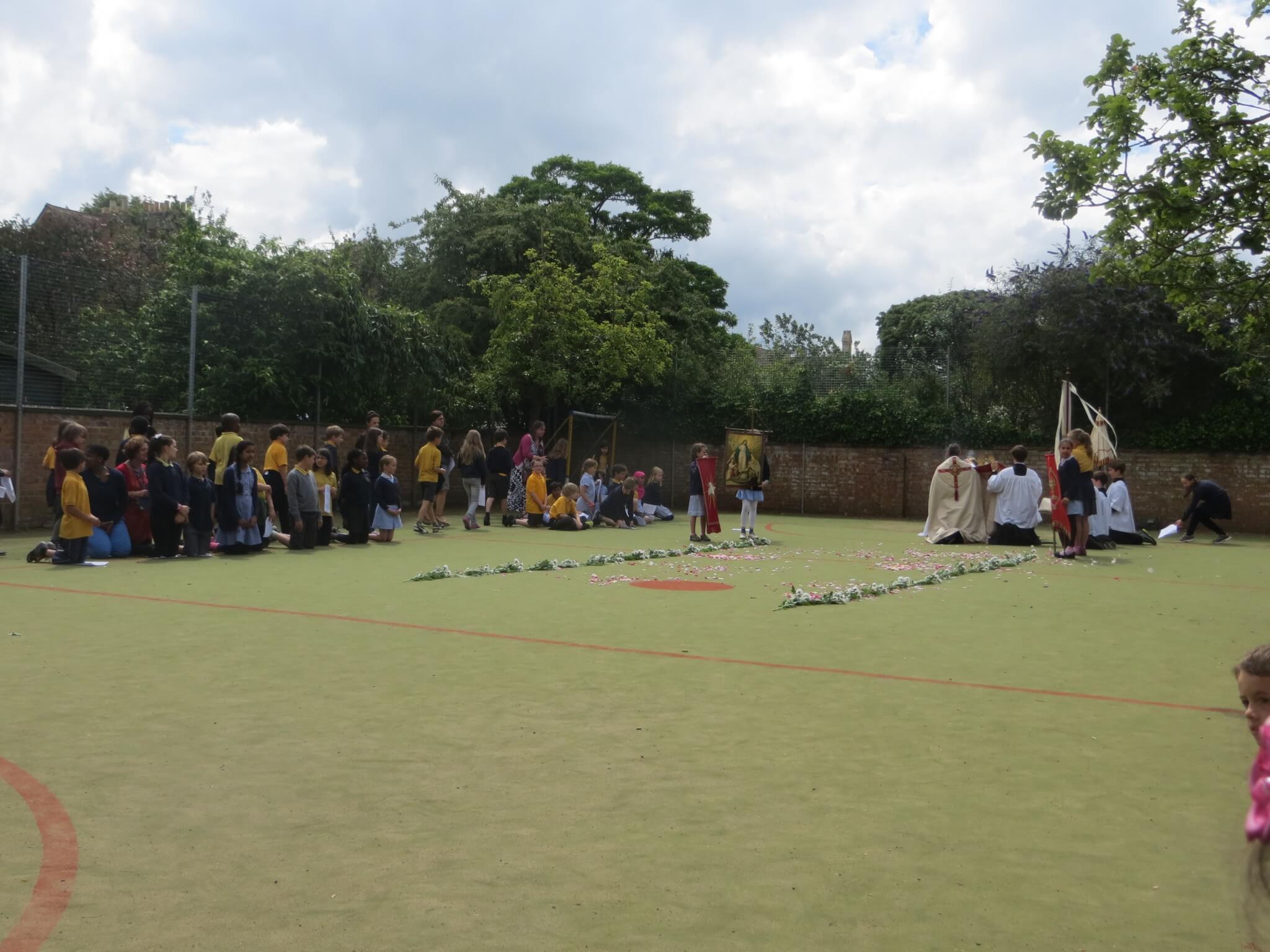
On the Solemnity of the Sacred Heart, an interval in between rain showers enabled us to go outside for the Blessed Sacrament Procession.

3

Flowers were scattered, banners were carried, the children sang the Tantum Ergo, and Benediction was given.

21

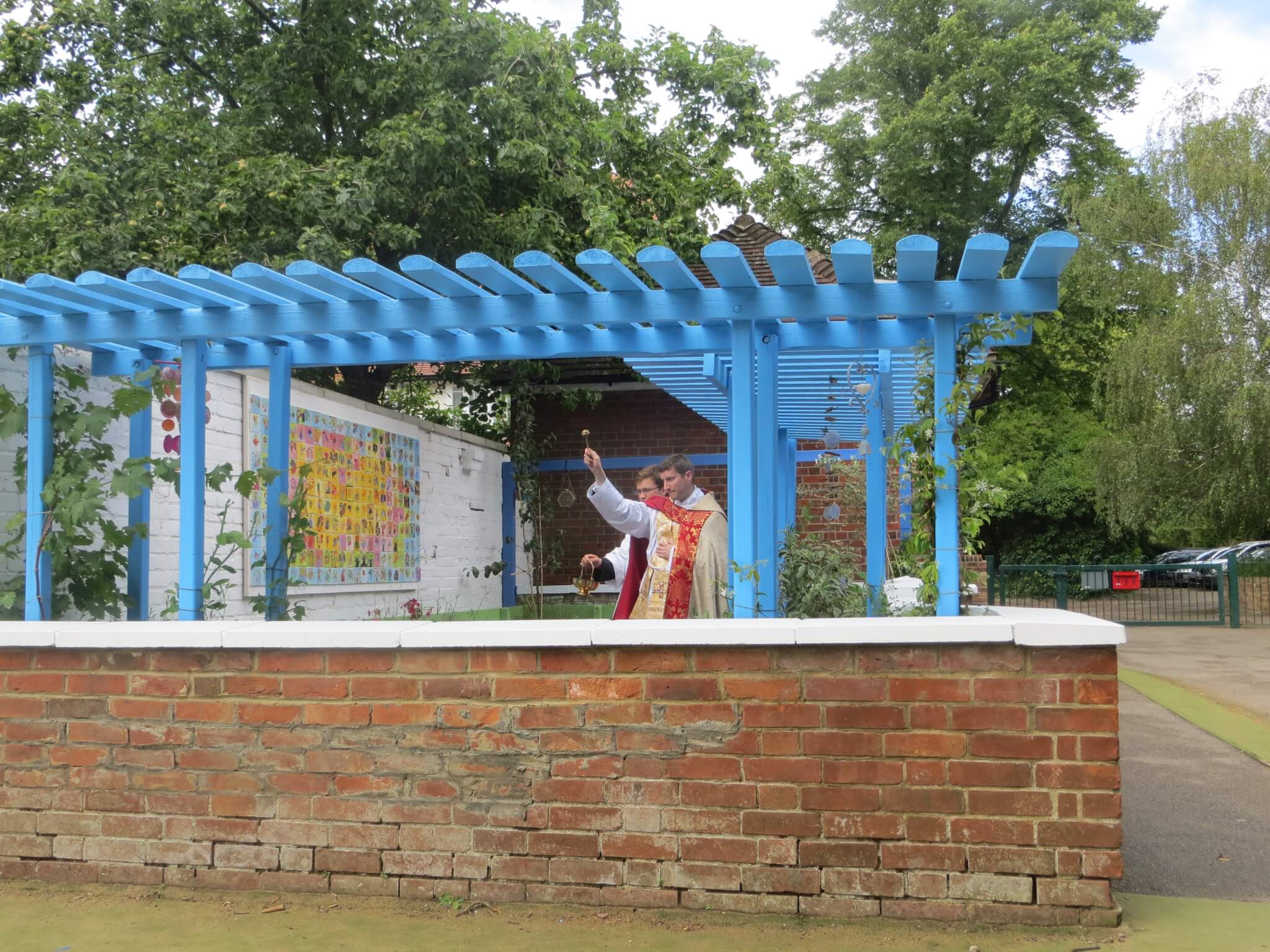
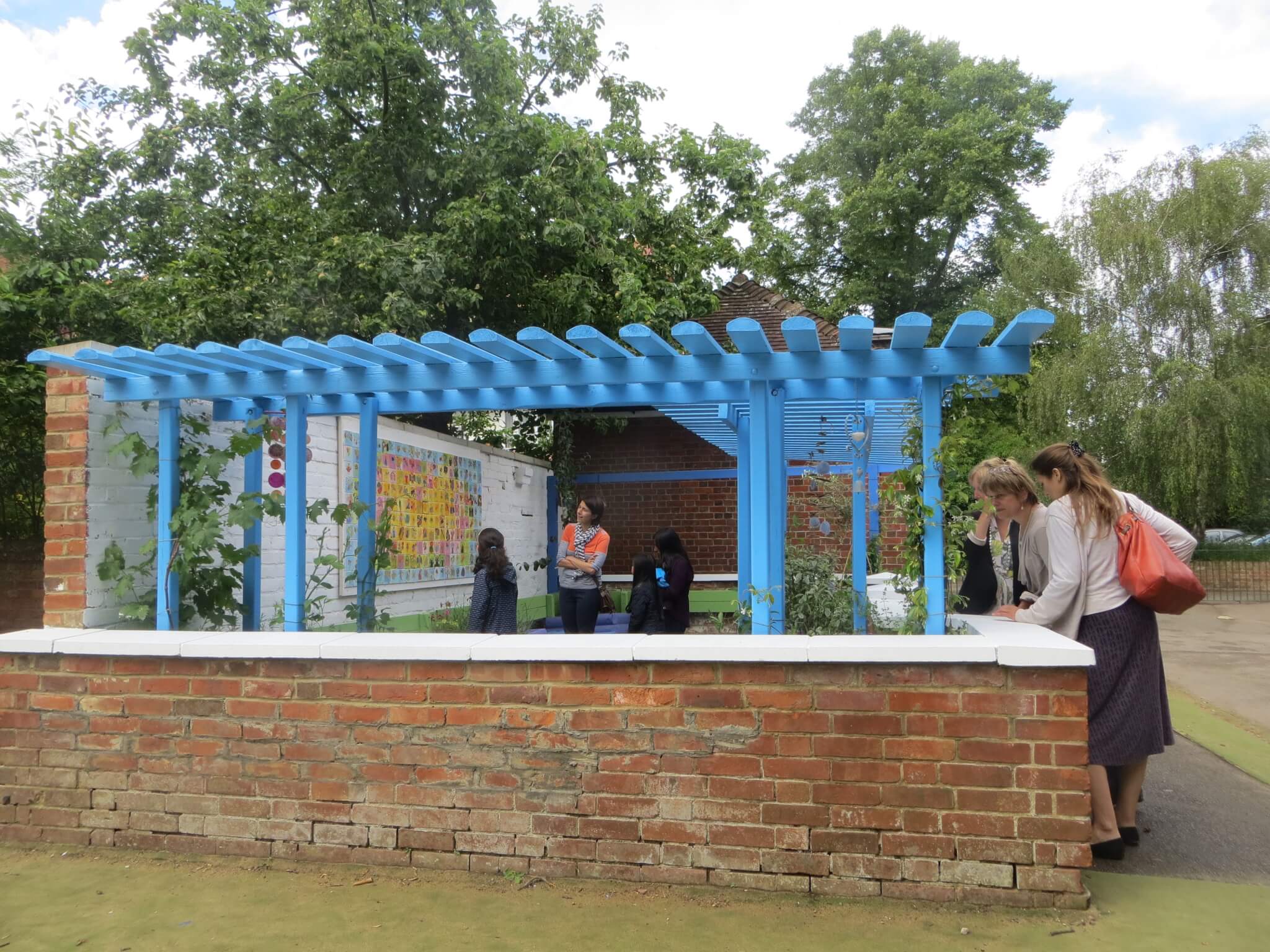
After the Procession the new ‘Peace Garden’ was blessed. This has been created, by the generosity of parents, in the old greenhouse, and is in memory of Angela Clare (née Sloan), who was both a pupil and a teacher at St Aloysius’. Members of Angela’s family were present for the Mass, Procession and blessing of the garden.

IMG_4526

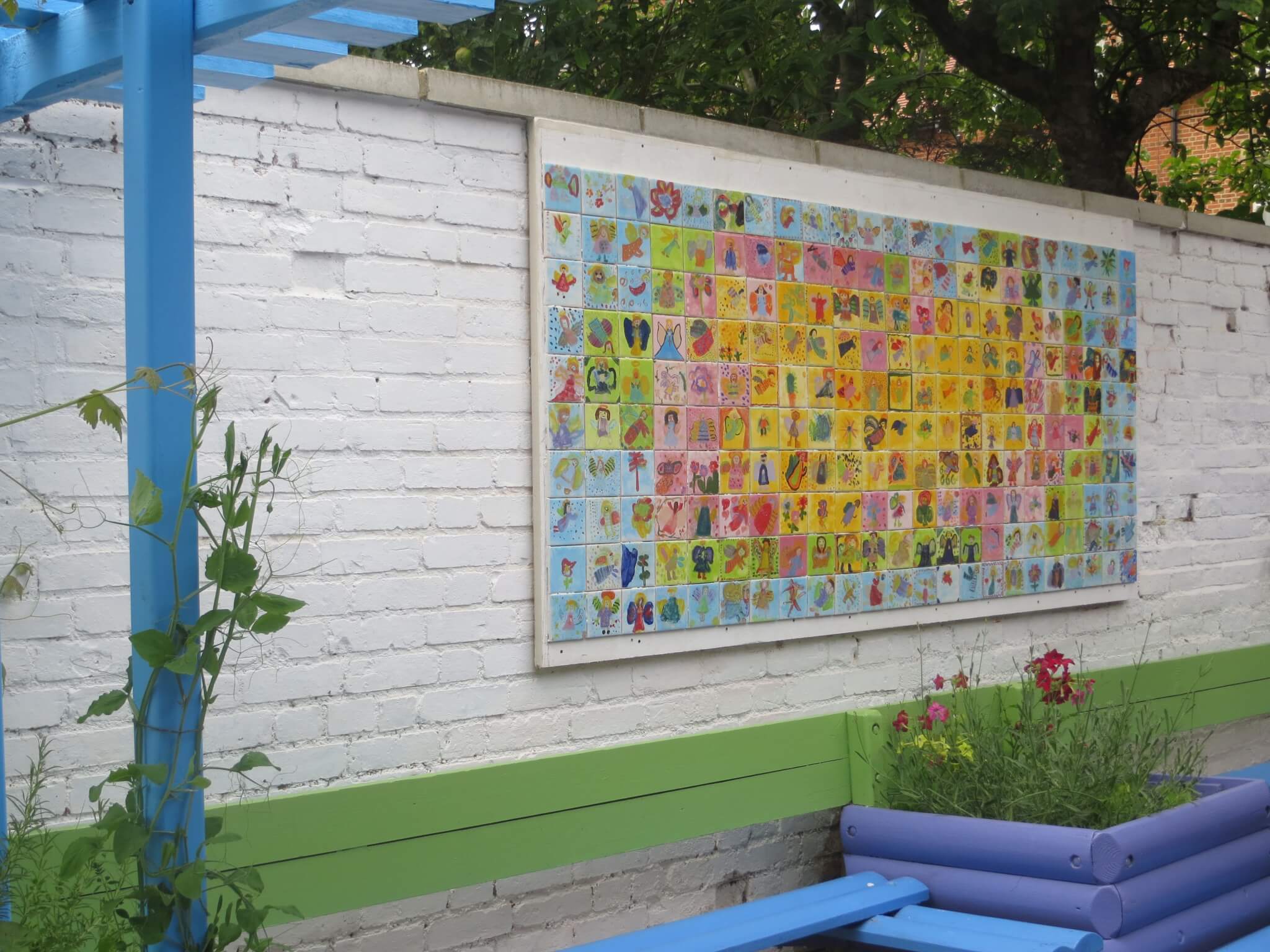
Every child in the school has made a ceramic tile with an angel on it:
6
Here is the prayer used to bless the garden:

O God, Author of Peace and giver of all joy,
Who created our first parents in a garden,
And Whose Son, our Saviour Jesus Christ
prayed in the Garden of Gethsemane
on the night before He died,
and who rose from the dead and appeared
to St Mary Magdalen also in a garden,
We, Your servants, ask You graciously
to bless + this garden
which has been created in Your honour.

We dedicate this place to the honour and glory
of the Sacred Heart of Jesus.
May all who come here find that peace which passes all understanding, which only You can give.
May their hearts be touched by the love
flowing from the Sacred Heart,
so that they may be instruments of harmony, peace and charity among all those whom they meet.

We ask also that rest and peace be given
to all the faithful departed, especially to Angela,
whom we remember in this place,
so that all of us may come at last to that new Eden,
where all will be light and happiness.

We ask this through the same
our Lord Jesus Christ Your Son,
who lives and reigns with You in the unity of the Holy Spirit, one God for ever and ever.
Amen.
5