Twenty-five years of priesthood

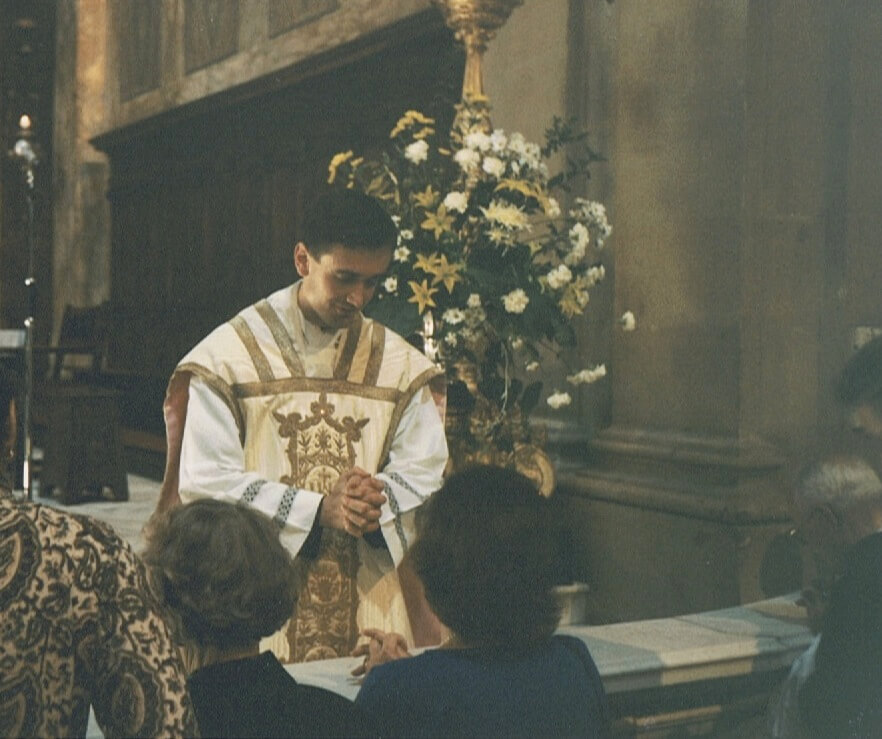
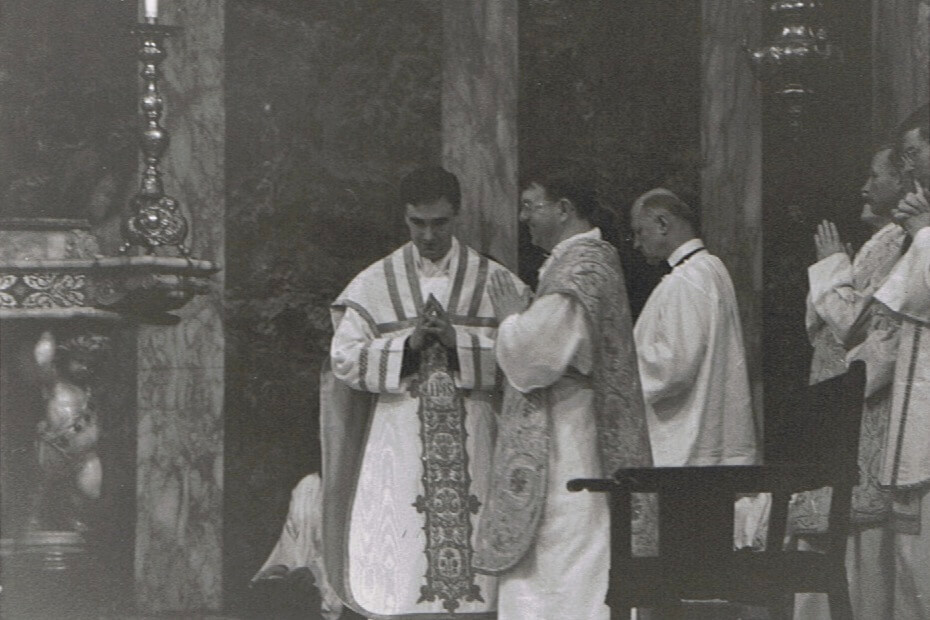
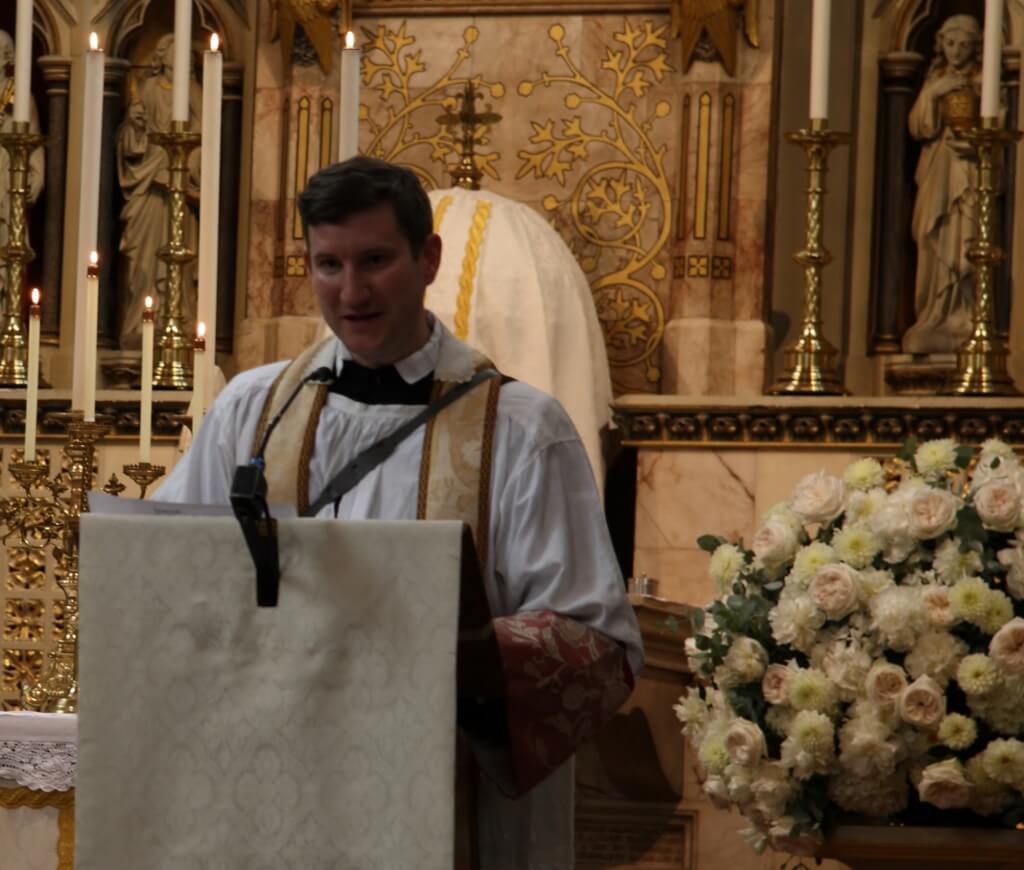
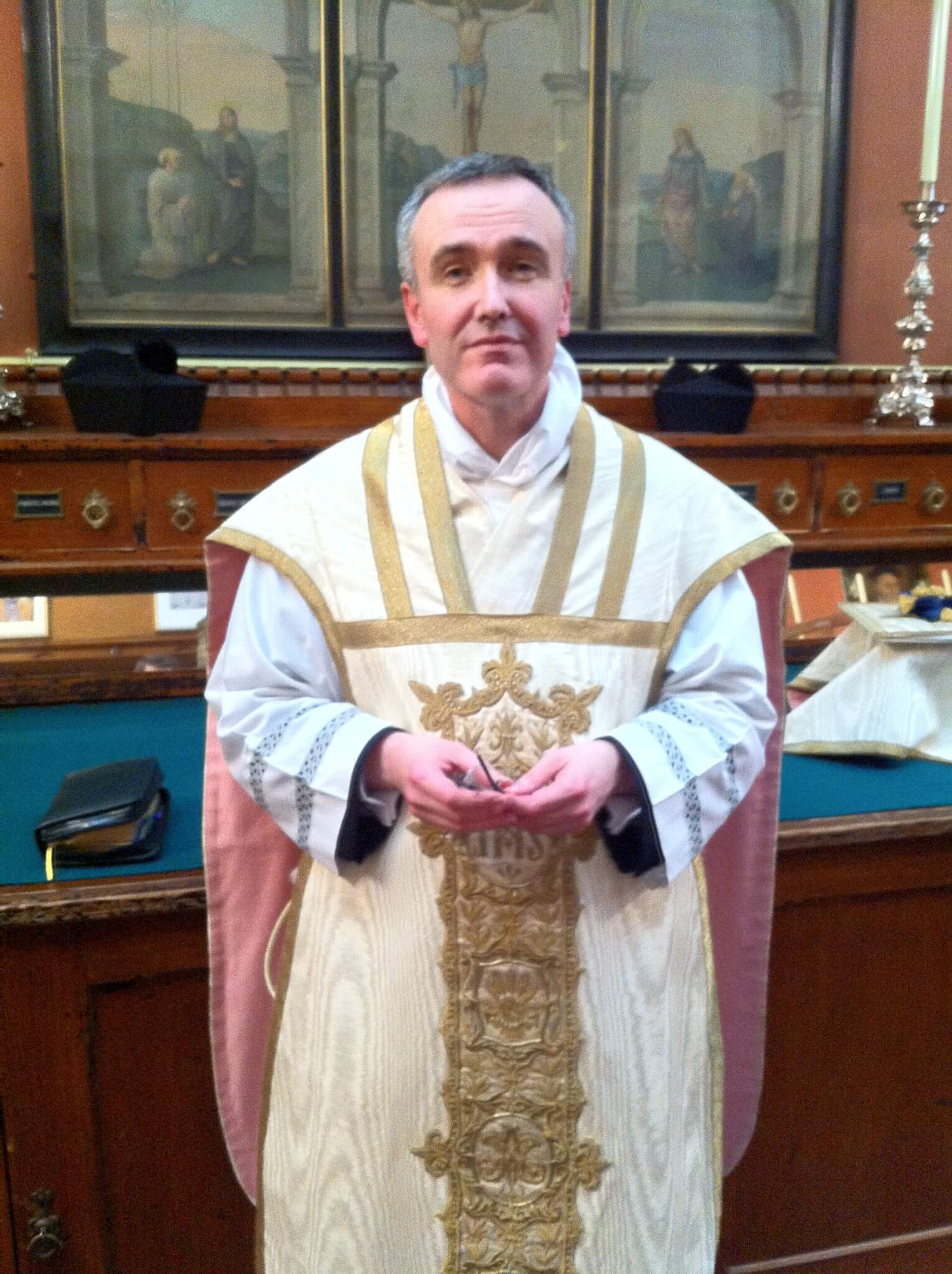
Father Dominic celebrated the evening Mass on the feast of St Mary Magdalene, wearing the same vestment in which he was ordained on the same day in 1989.

photo

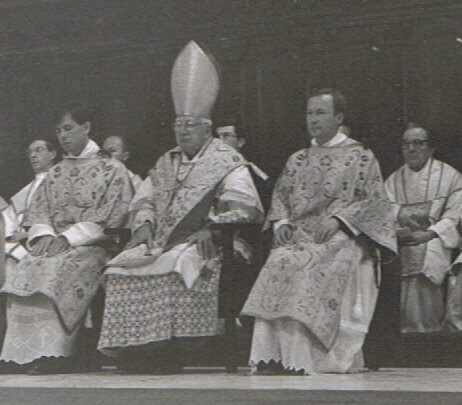
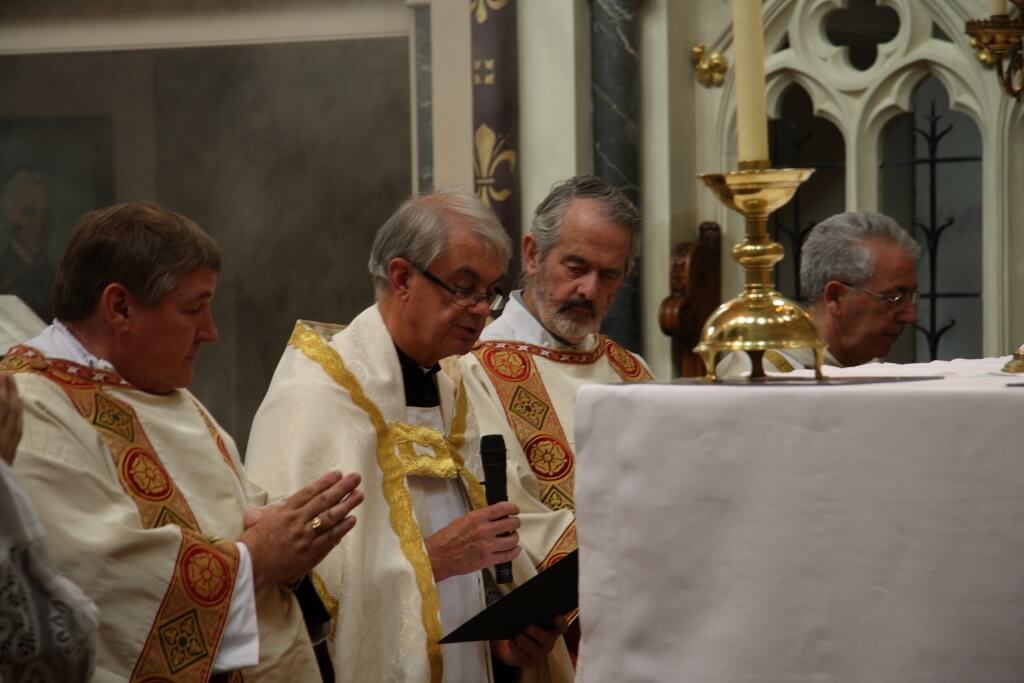
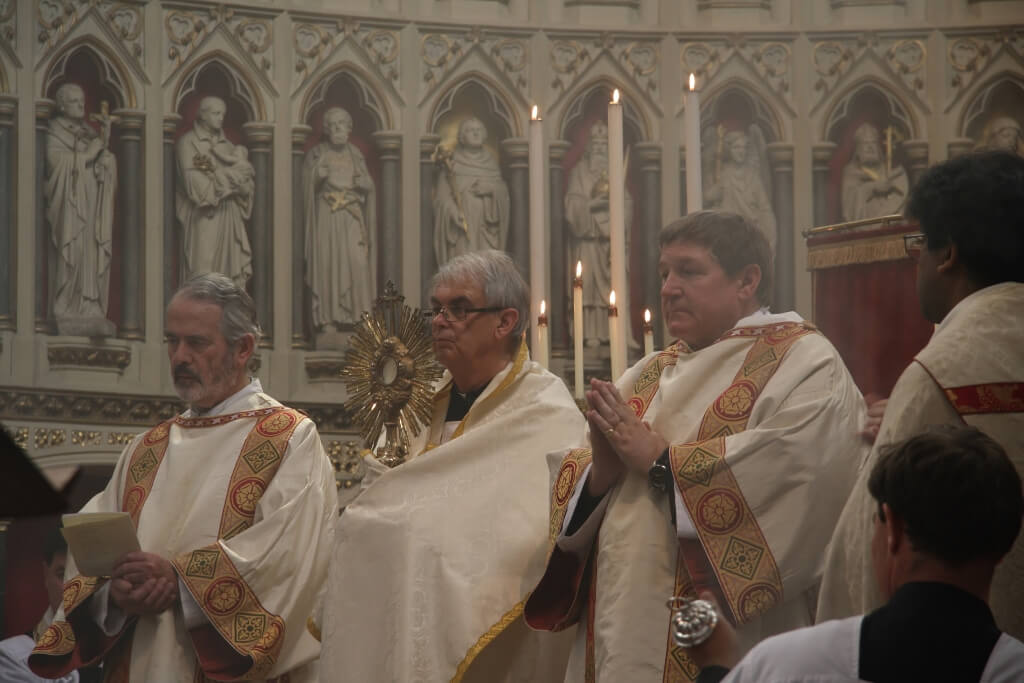
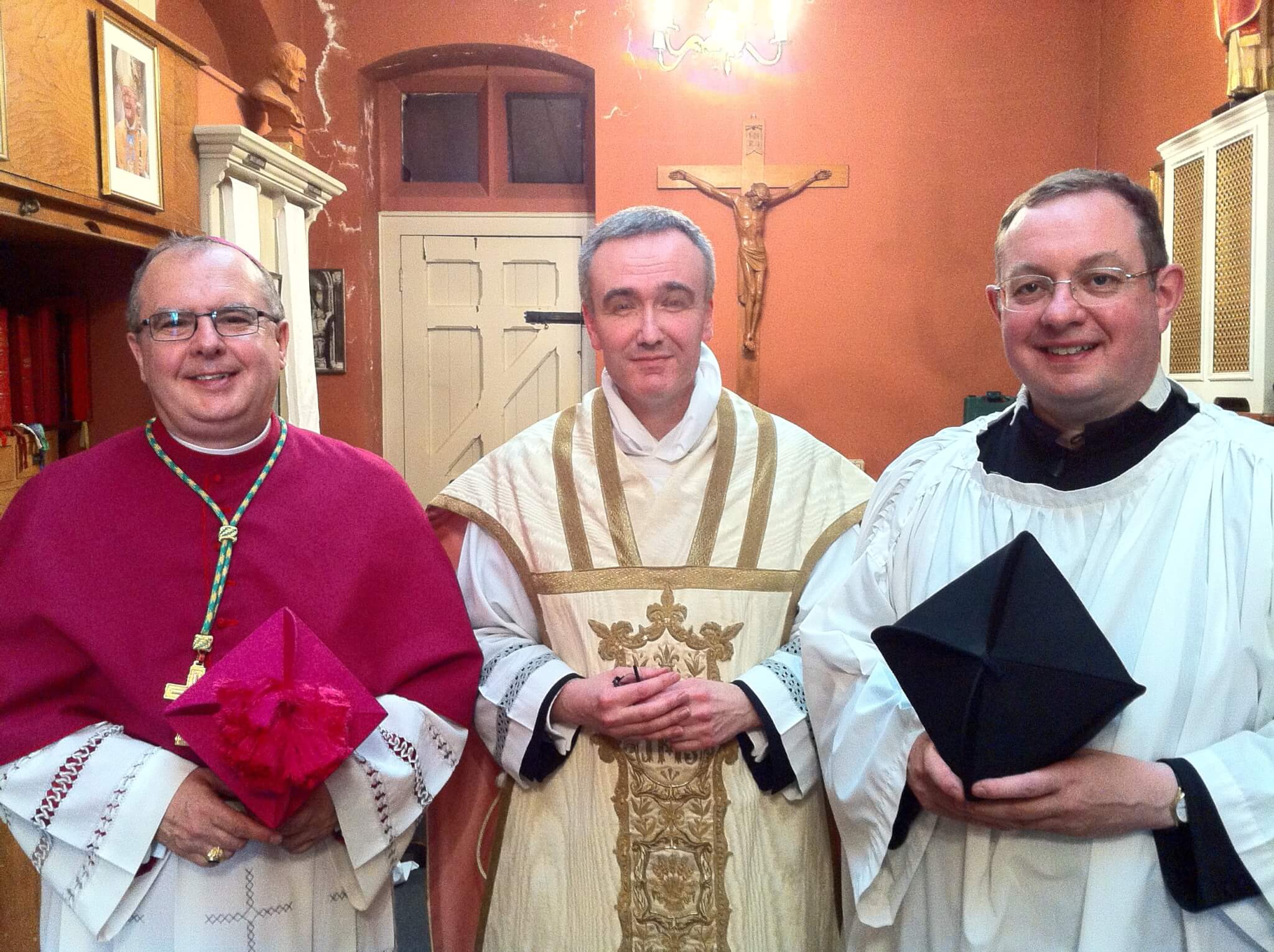
Bishop Robert preached at the Mass, and Fathers also came down from York. Here are the original “Birmingham Three”, who arrived in Oxford in 1990. From left to right: Bishop Robert Byrne, Fr Dominic Jacob and Fr Richard Duffield.

photo-13

Father Dominic’s Silver Jubilee

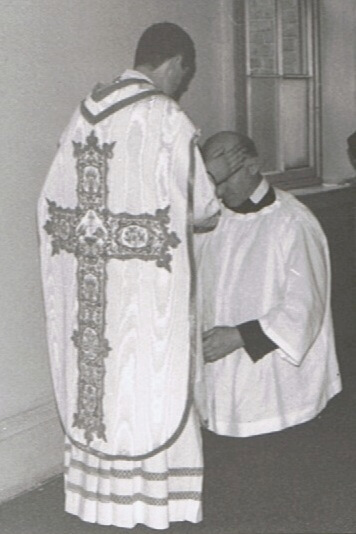
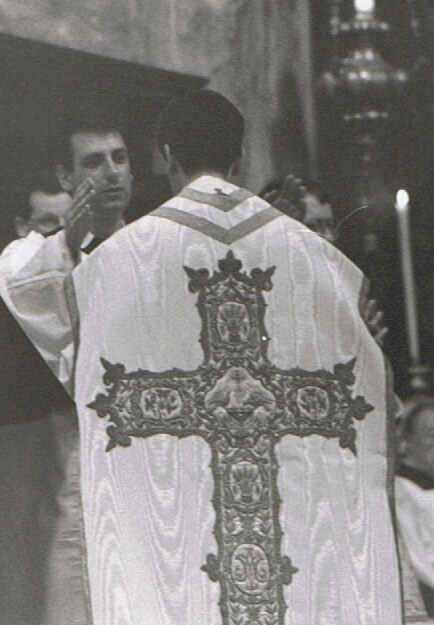
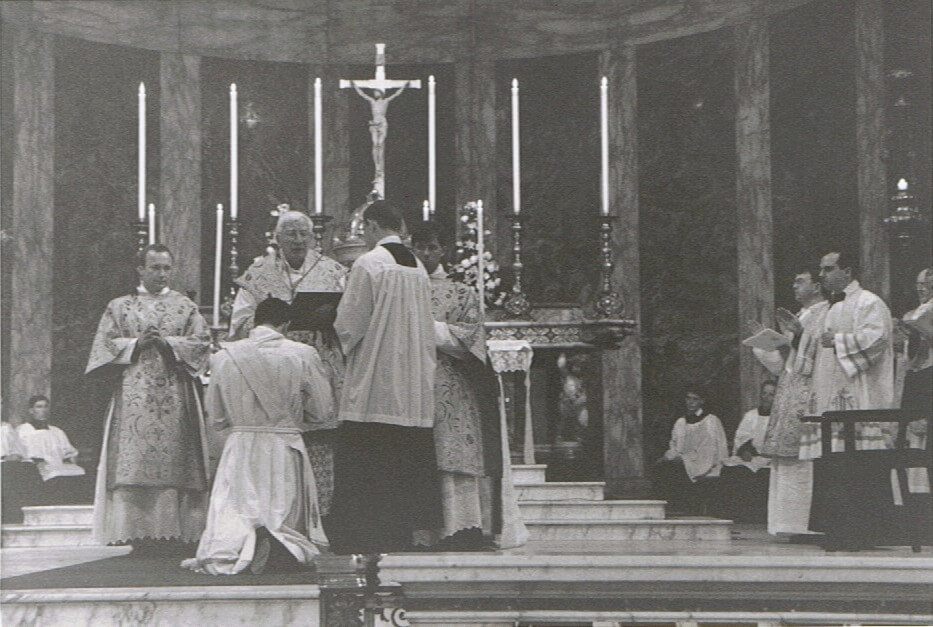
On 22nd July 1989, Fr Dominic was ordained priest at the Birmingham Oratory. Here he is giving first blessings on that day:
Fr Dominic1
A first blessing for Fr Michael Napier, then Provost of the London Oratory and Apostolic Delegate of the Holy See to the Confederation of the Oratory:
Fr D5
And a first blessing for the youthful Br Richard Duffield:
Fr D3
The sign of peace during the ordination Mass from Fr Ignatius Harrison, now Provost of the Birmingham Oratory:
Fr D7
Fr Dominic was ordained by Bishop Joseph Cleary, Bishop of Cresima and auxiliary in Birmingham:
Fr D6Fr D2
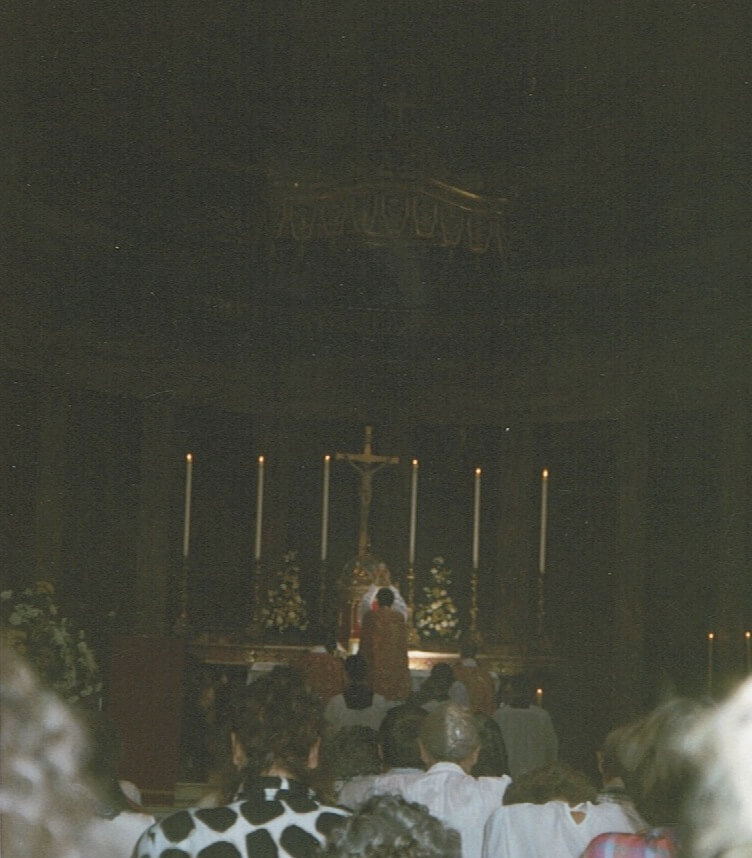
Here is his first Mass, assisted by Father (now Bishop) Robert Byrne:
Fr D10Fr D9 First Mass

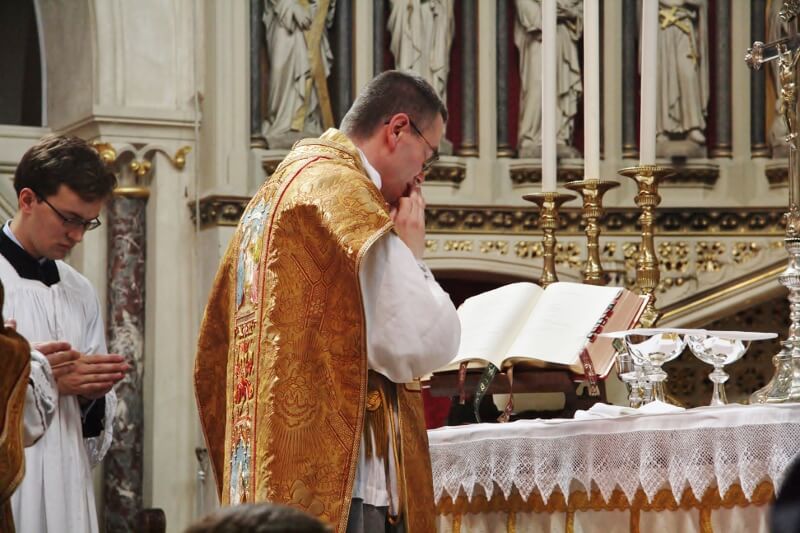
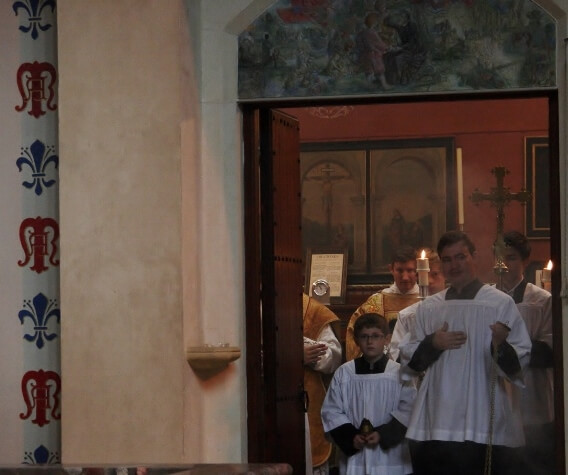
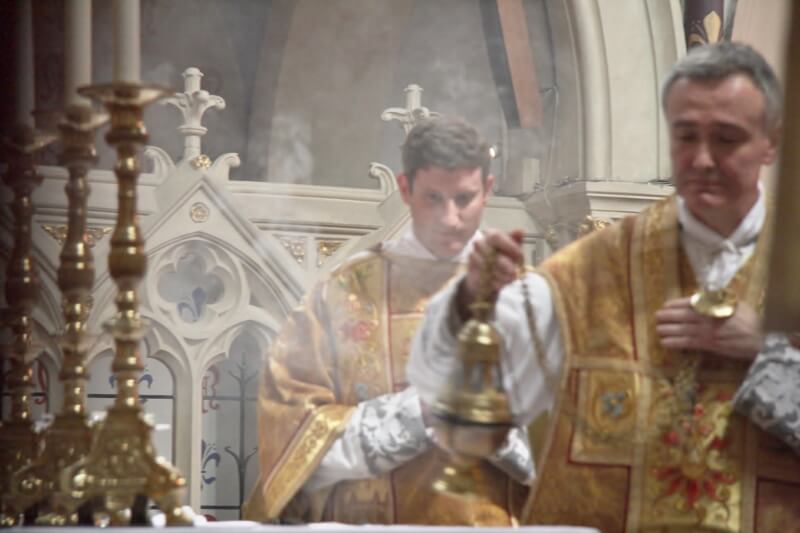
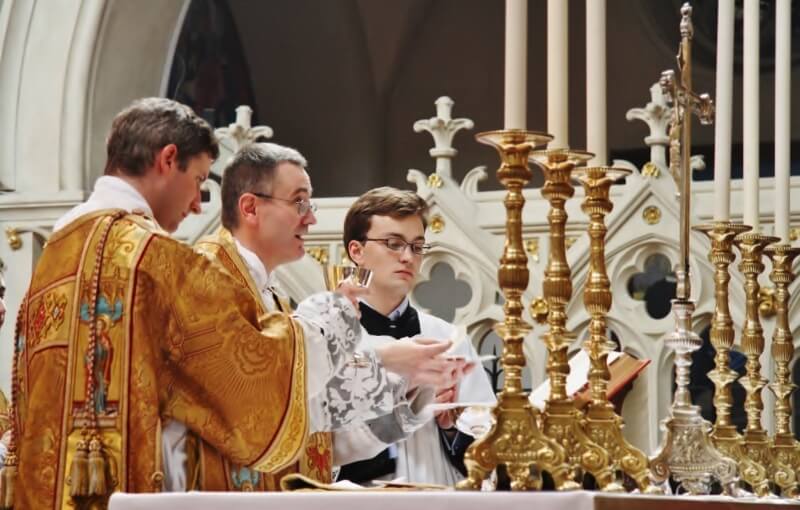
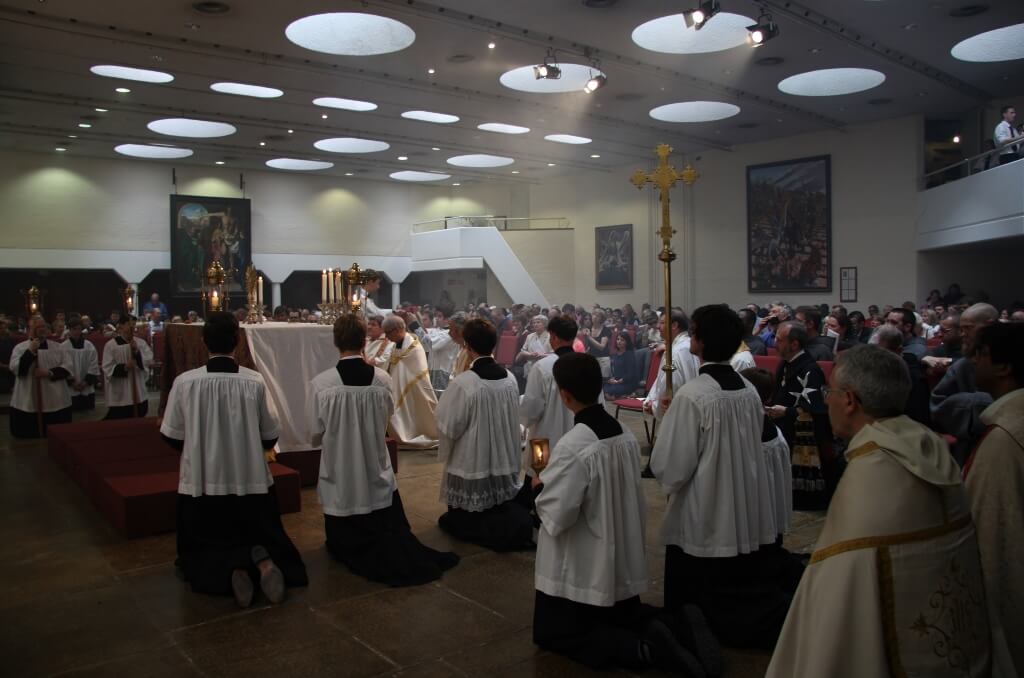
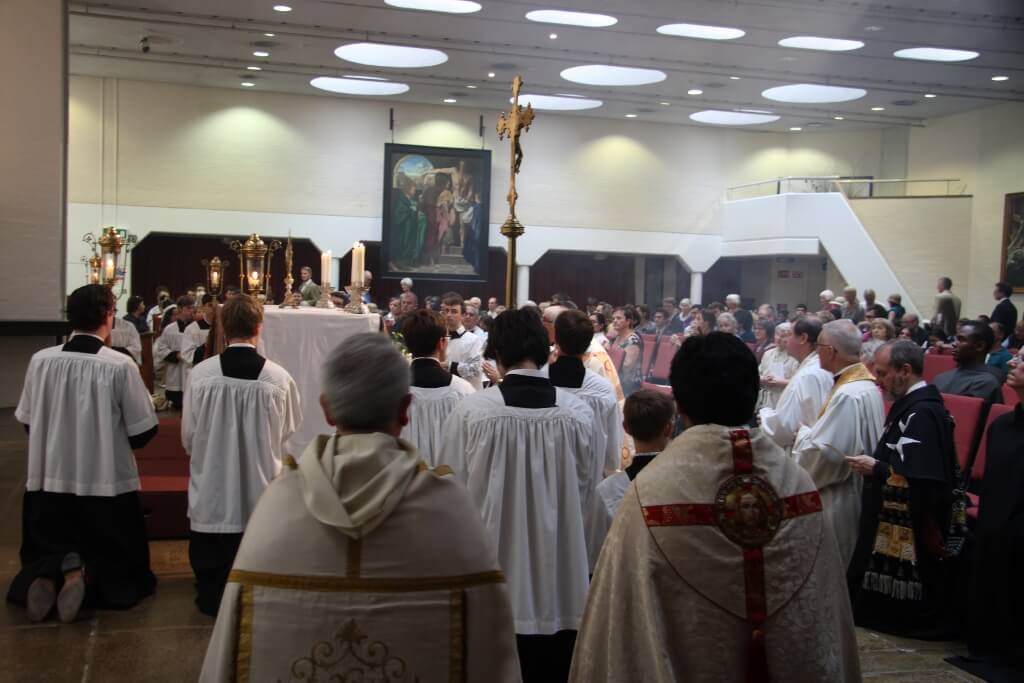
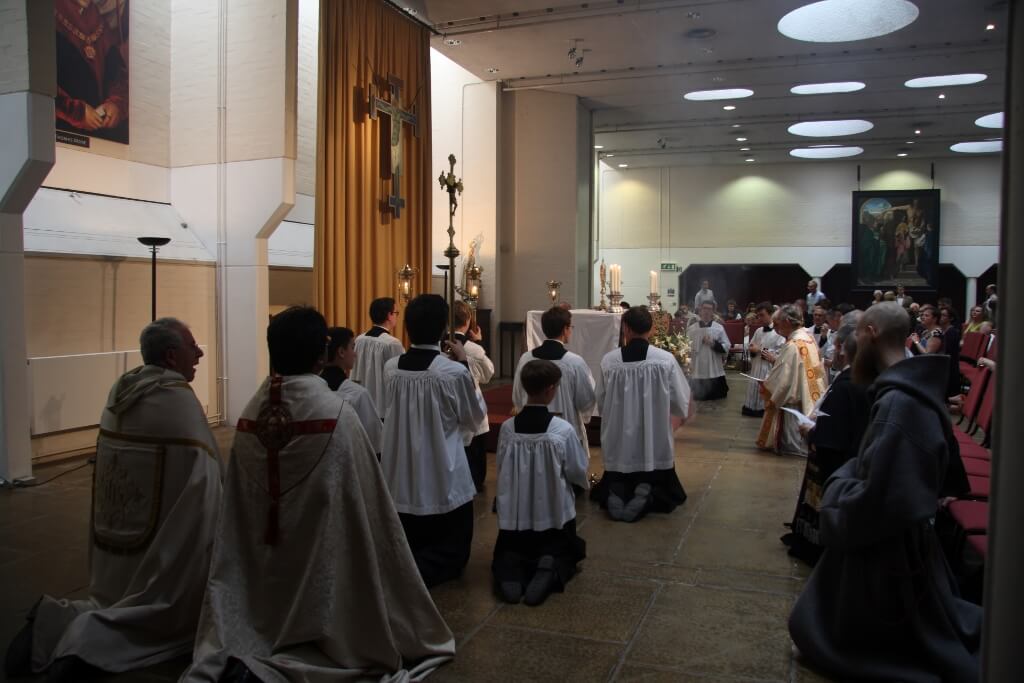
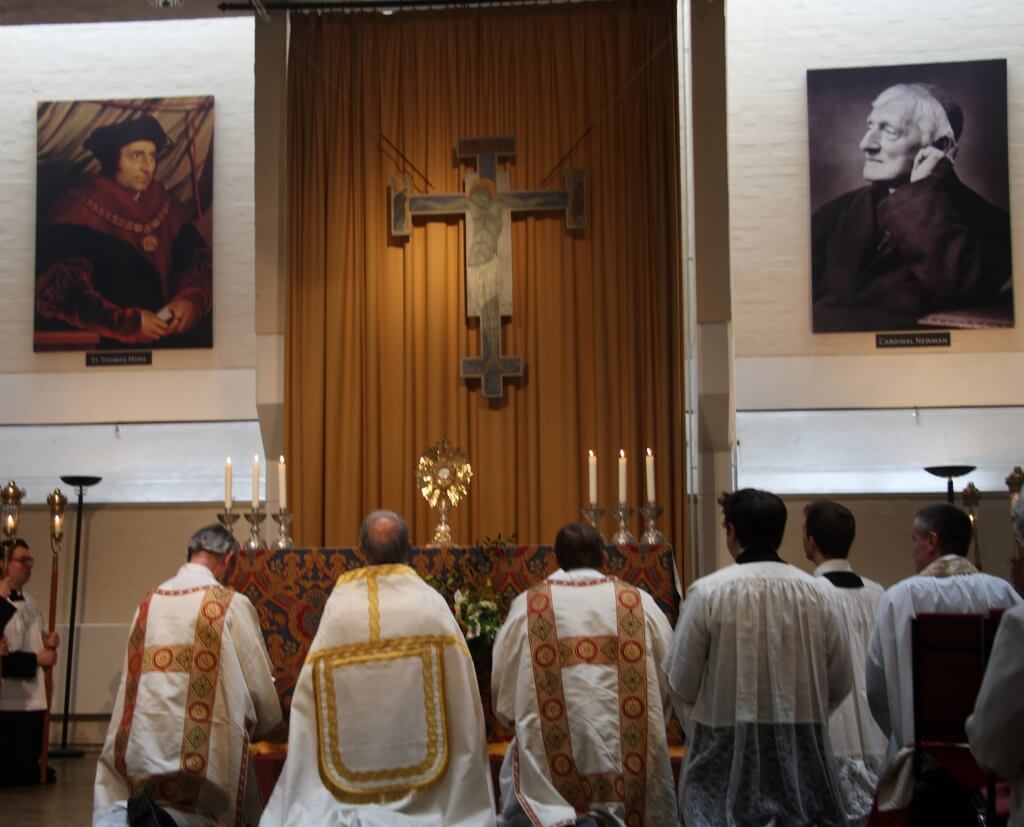
Today, Fr Dominic offered a Votive Mass of Christ the High Priest, in thanksgiving for his Silver Jubilee:

IMG_6382 (800x533)

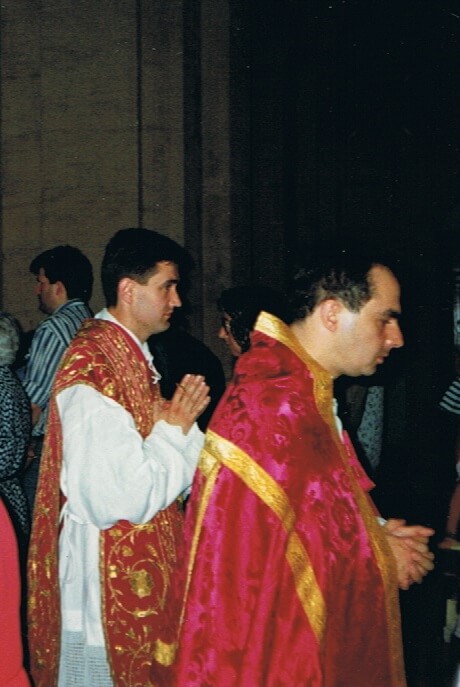
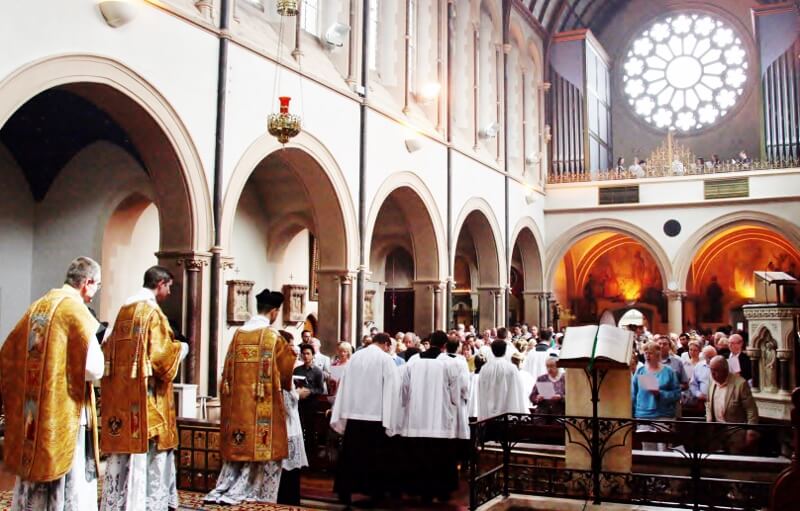
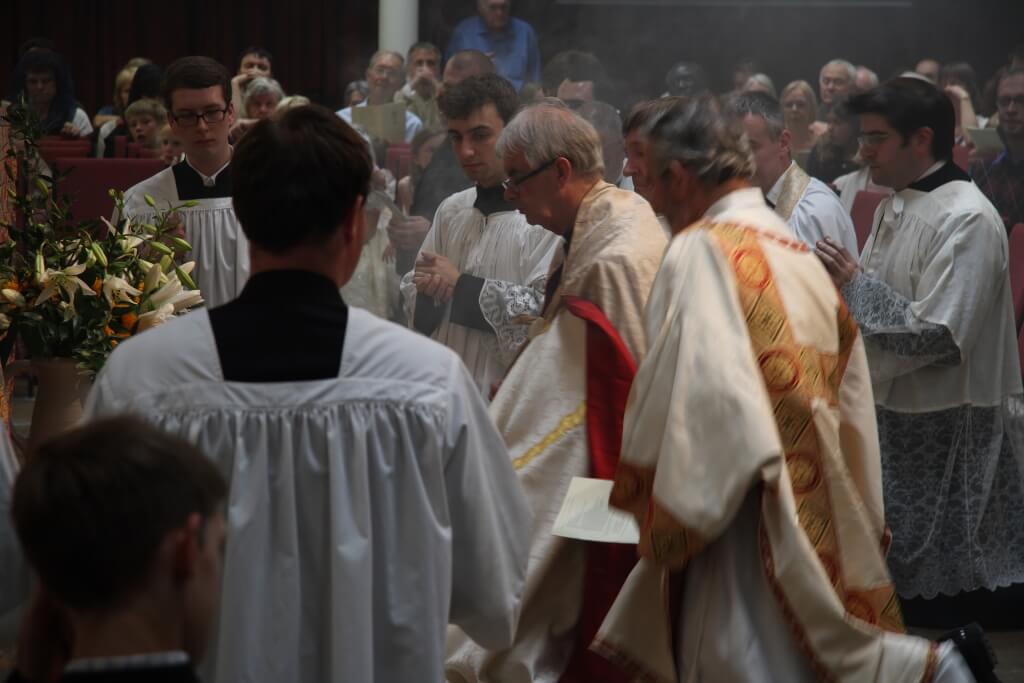
The entrance procession:

IMG_6314 (800x677)

IMG_6321 (800x533)IMG_6319 (532x800)

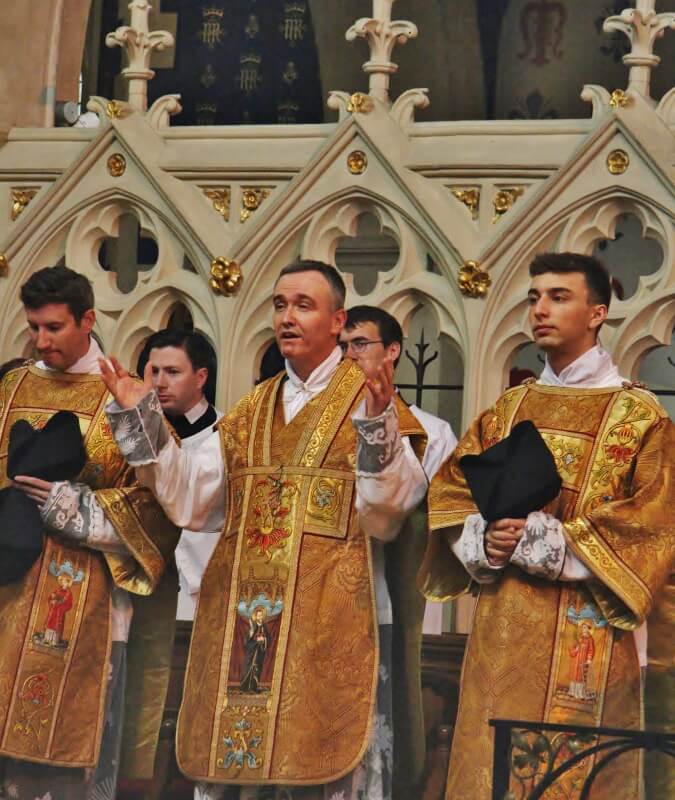
The Gloria:

IMG_6324 (675x800)

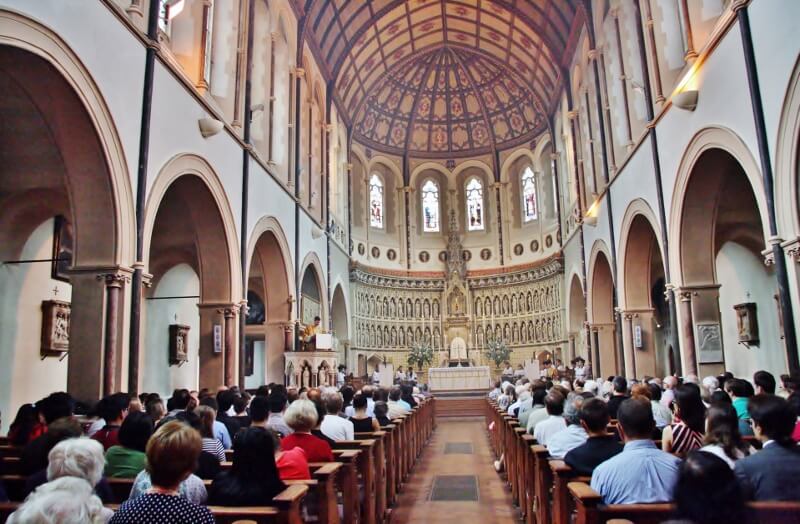
During the Sermon:

IMG_6342 (800x524)

The choir sang a specially composed Salve Regina by Edward de Rivera, and a new Mass written by Andrew Knowles: the “Missa Respice de Caelo”, which drew upon themes from different pieces in honour of St Philip, such as “This is the Saint”, Sewell’s “Pangamus Nerio” and “Respice de Caelo”, and “O Filippo!”.

IMG_6402 (800x513)

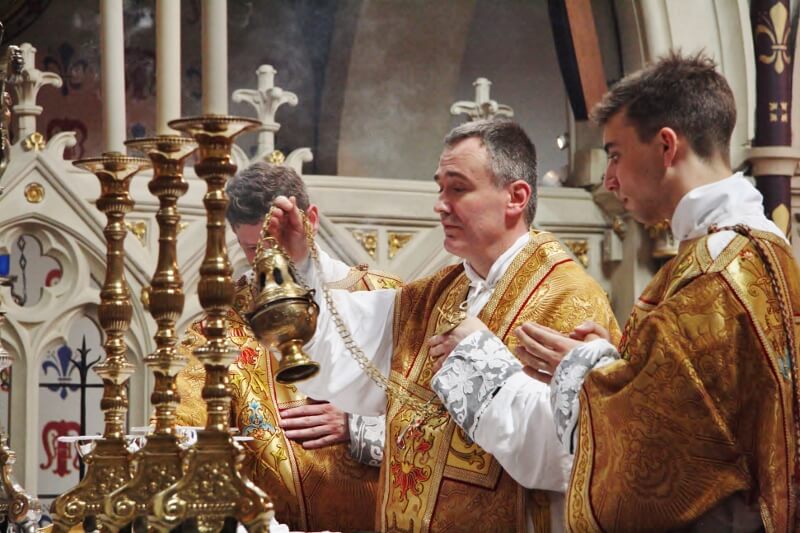
Incensing the altar:

IMG_6371 (800x533)

IMG_6368 (800x533)

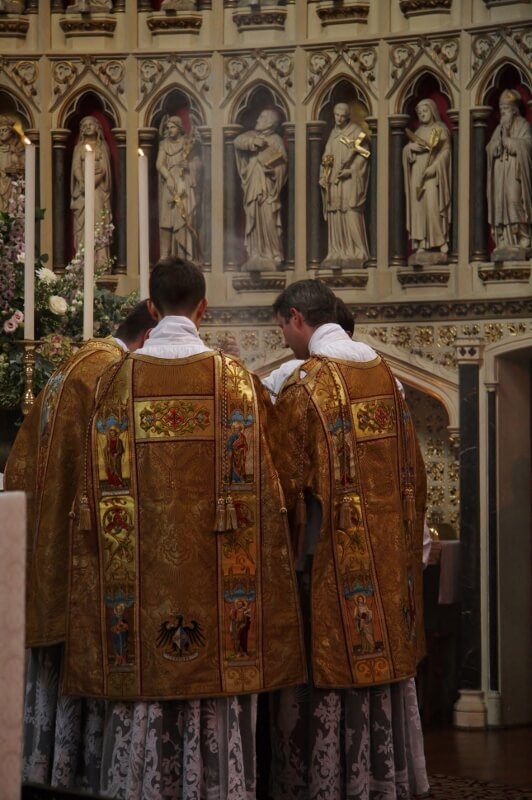
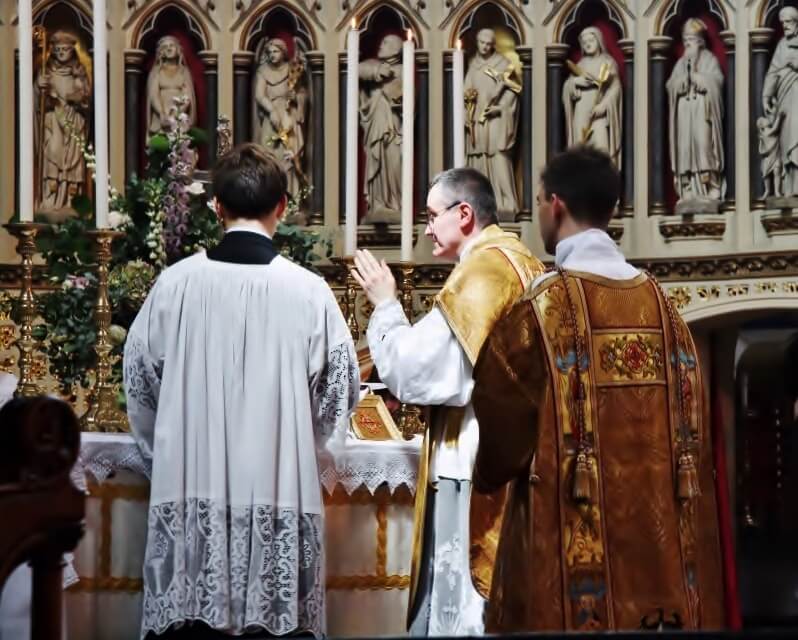
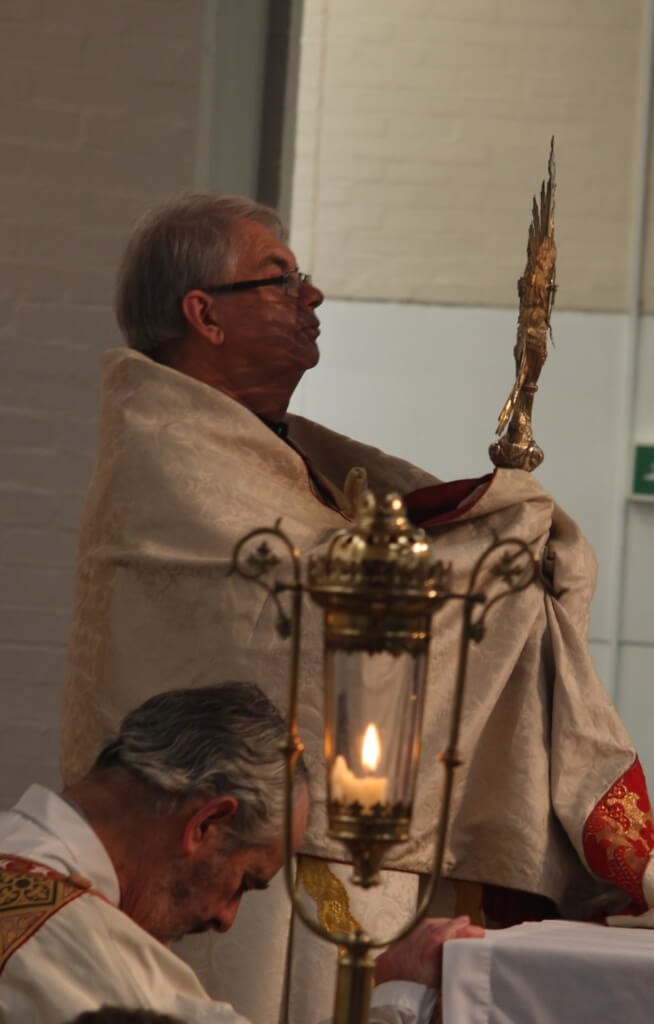
The Canon of the Mass:

IMG_6376 (800x520)IMG_6373 (800x642)IMG_6384 (800x512)

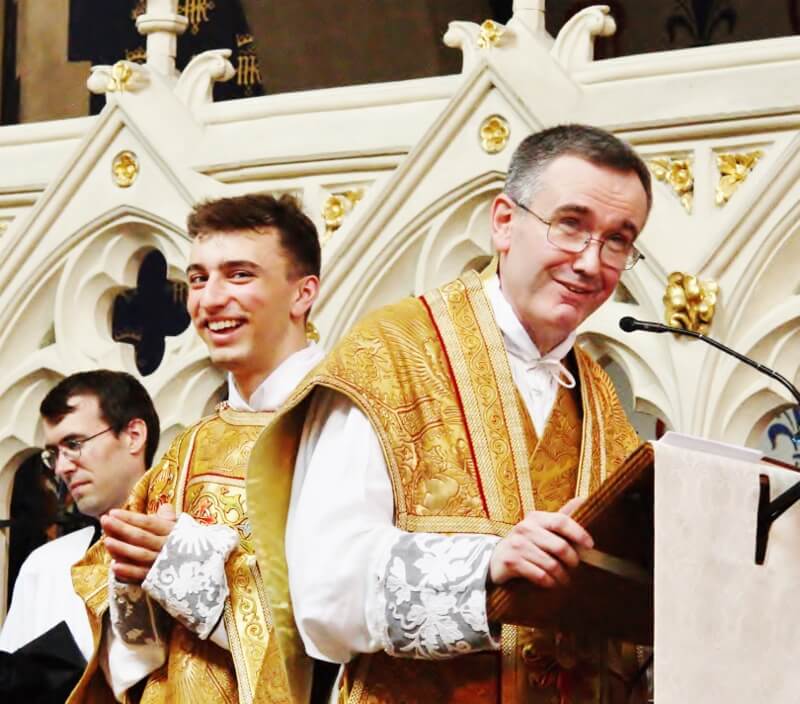
Fr Dominic says a few words at the end of Mass:

IMG_6413 (800x704)

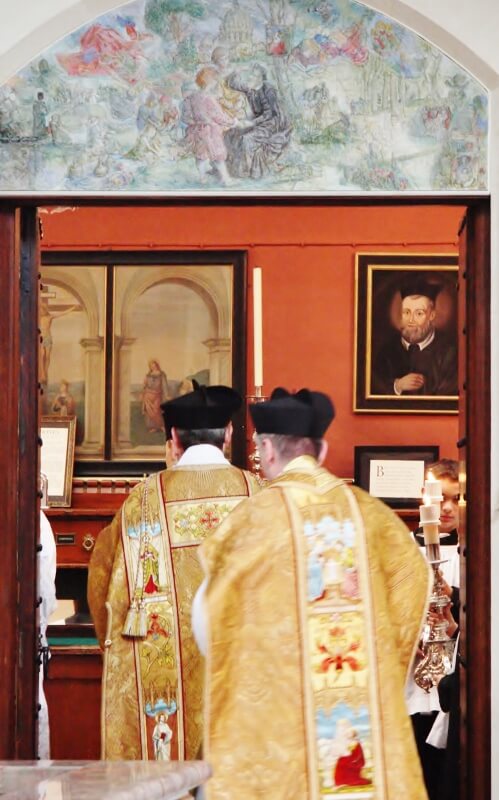
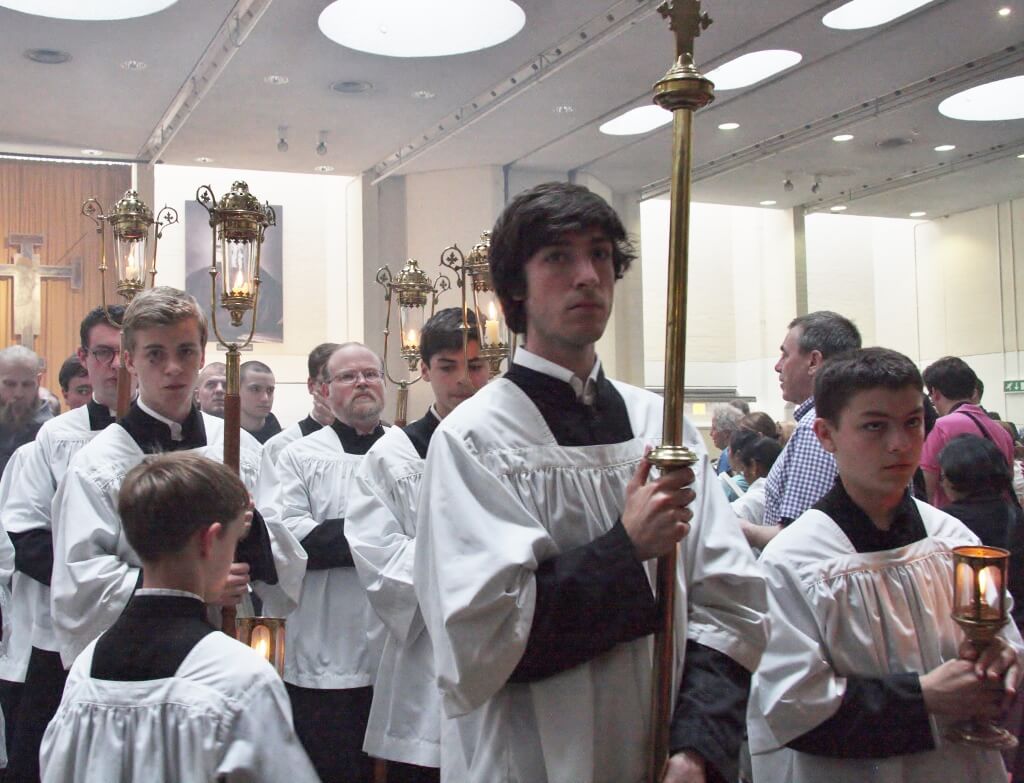
The procession at the end of Mass:

IMG_6419 (800x511)IMG_6422 (499x800)

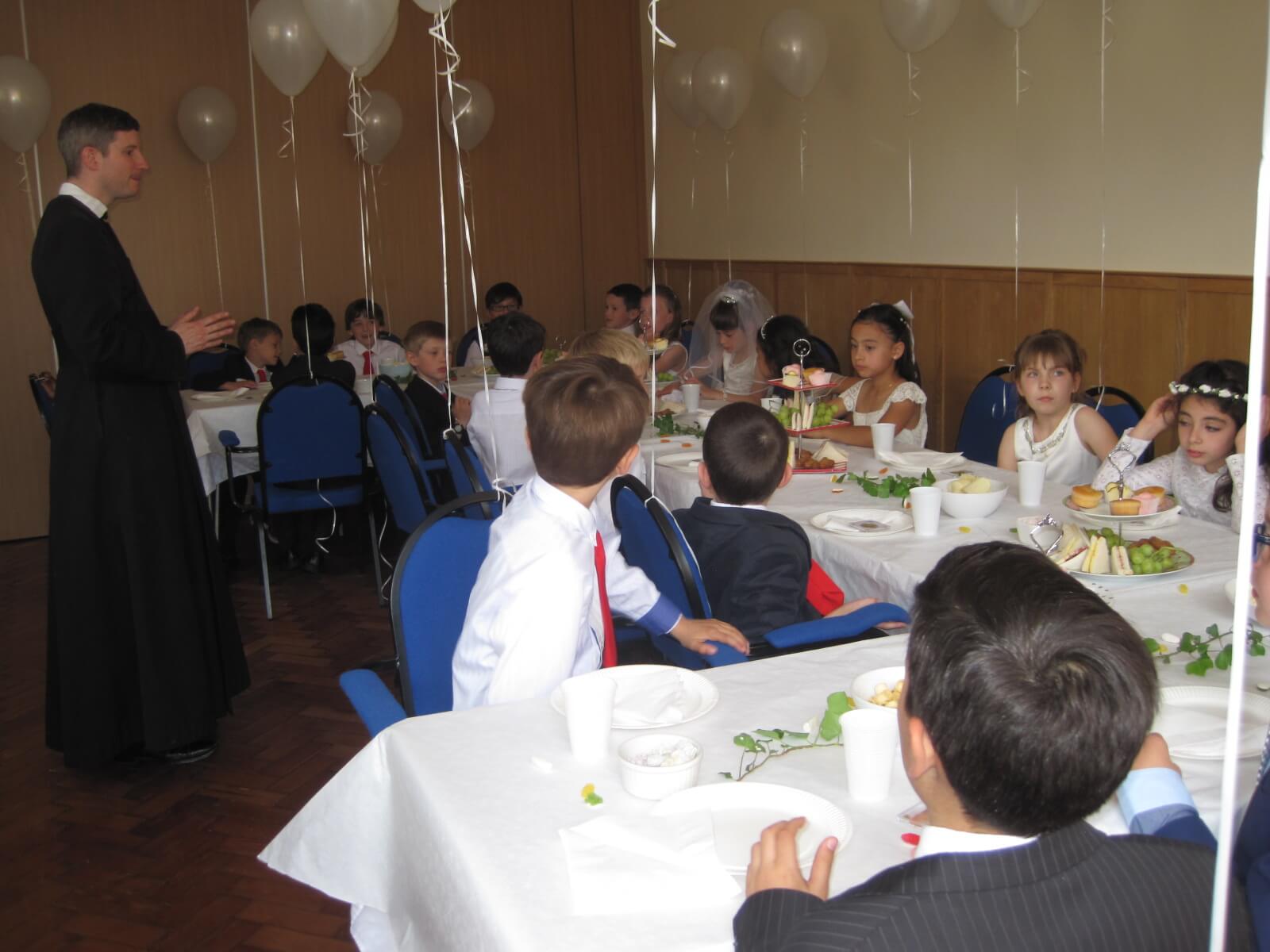
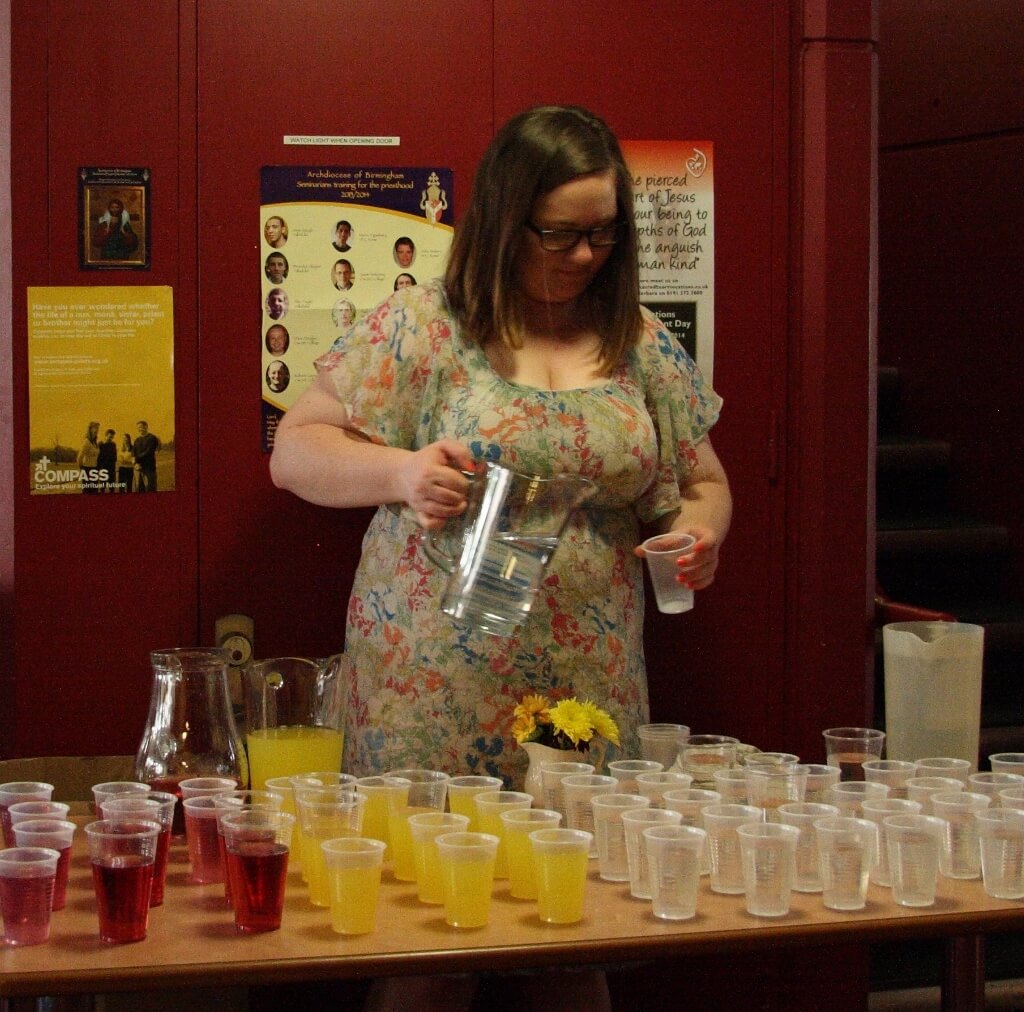
Afterwards there was a party in the Parish Centre. Here it is being prepared:

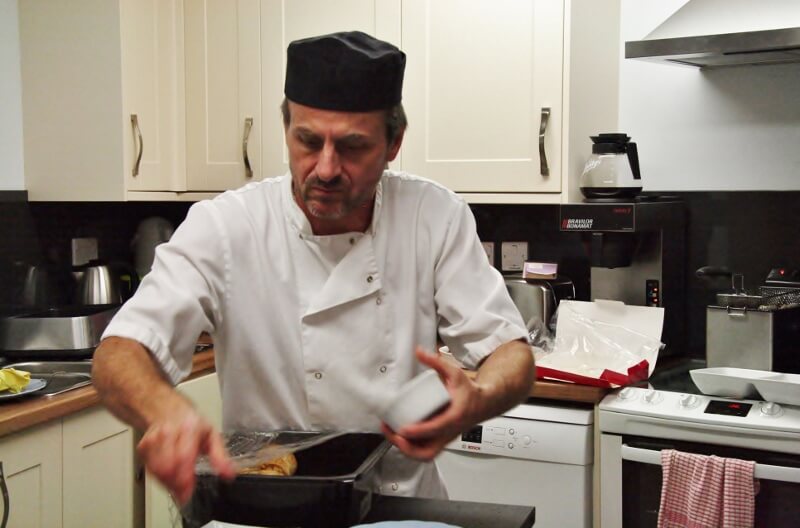
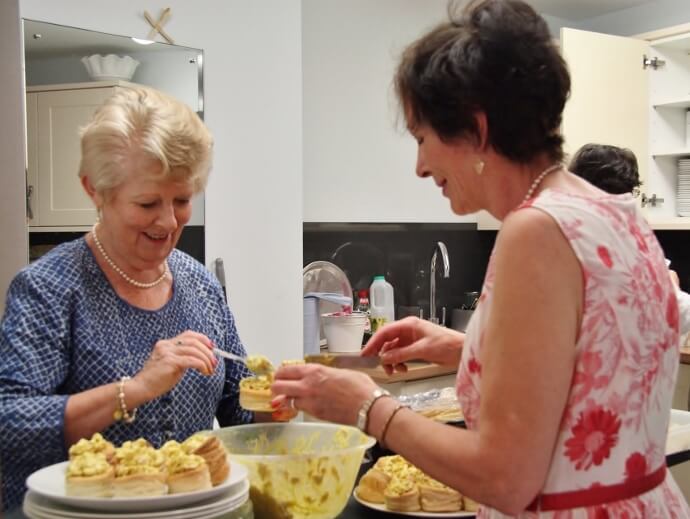
IMG_6427 (800x528)IMG_6350 (800x533)

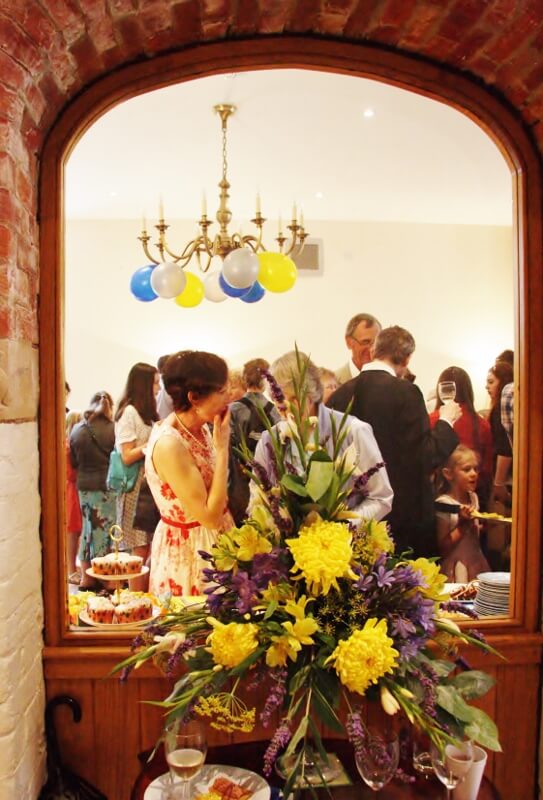
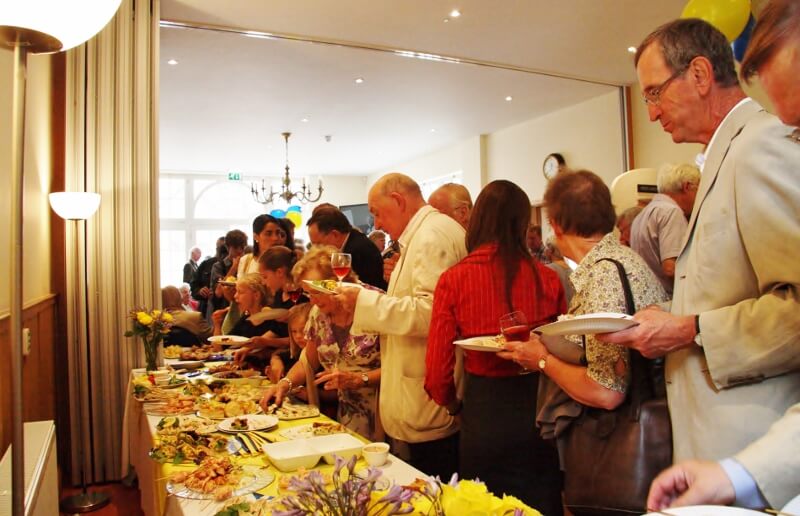
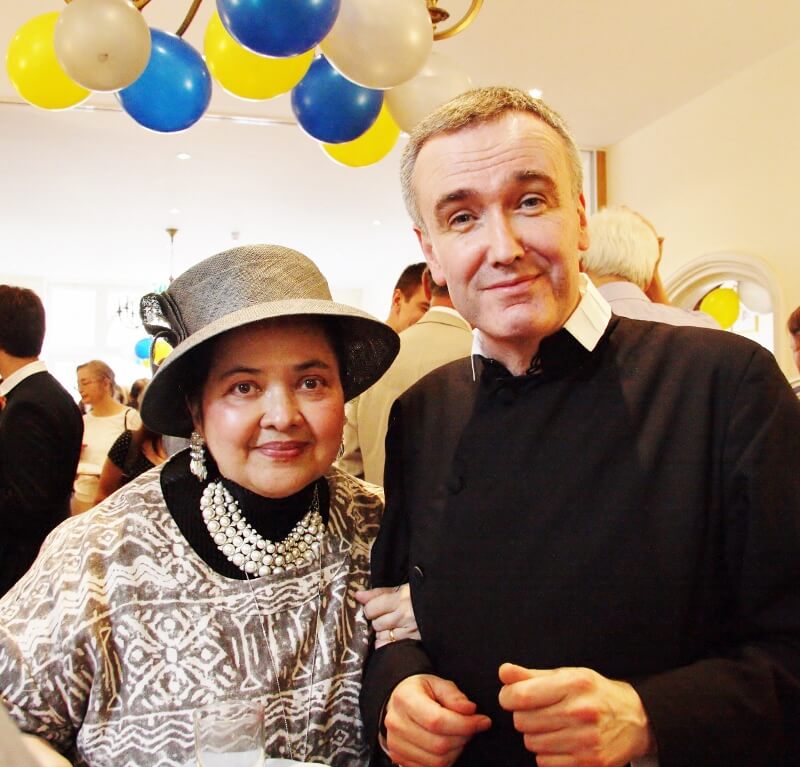
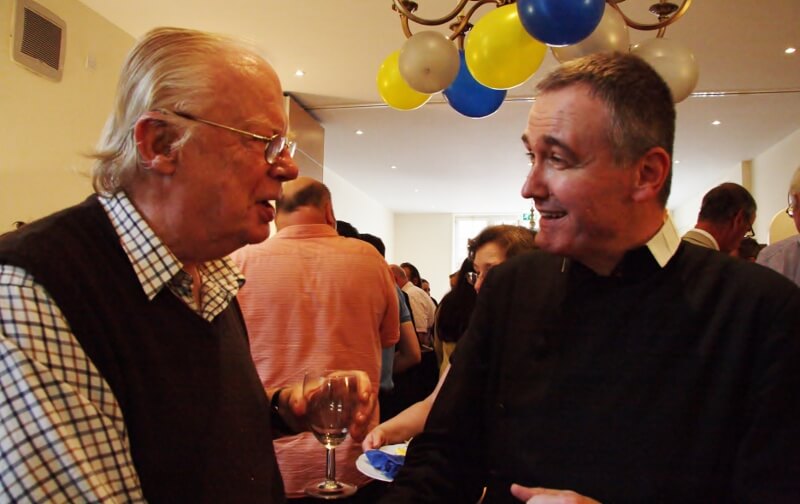
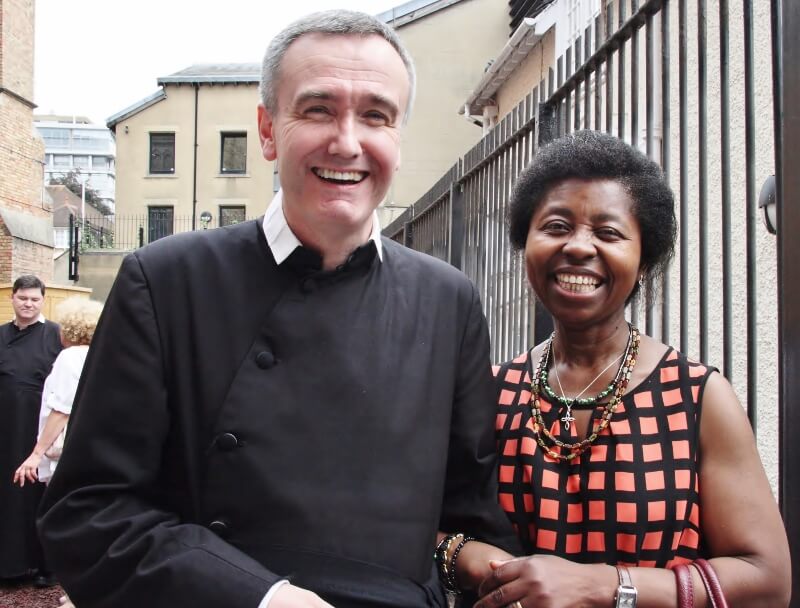
Our parishioners enjoying themselves:

IMG_6453 (800x520)IMG_6432 (543x800)IMG_6430 (800x516)

Greeting the Silver Jubilarian:

IMG_6443 (800x596)IMG_6437 (800x767)IMG_6435 (800x504)
IMG_6485 (800x608)

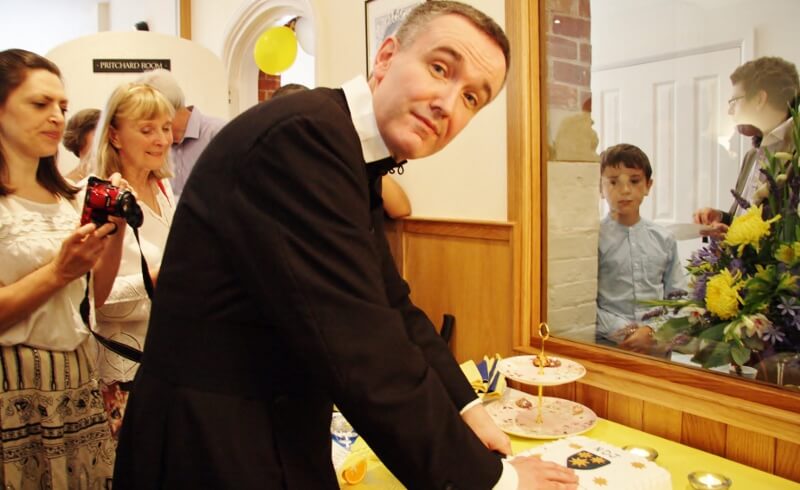
The cutting of the cake:

IMG_6470 (800x490)

Then and now:

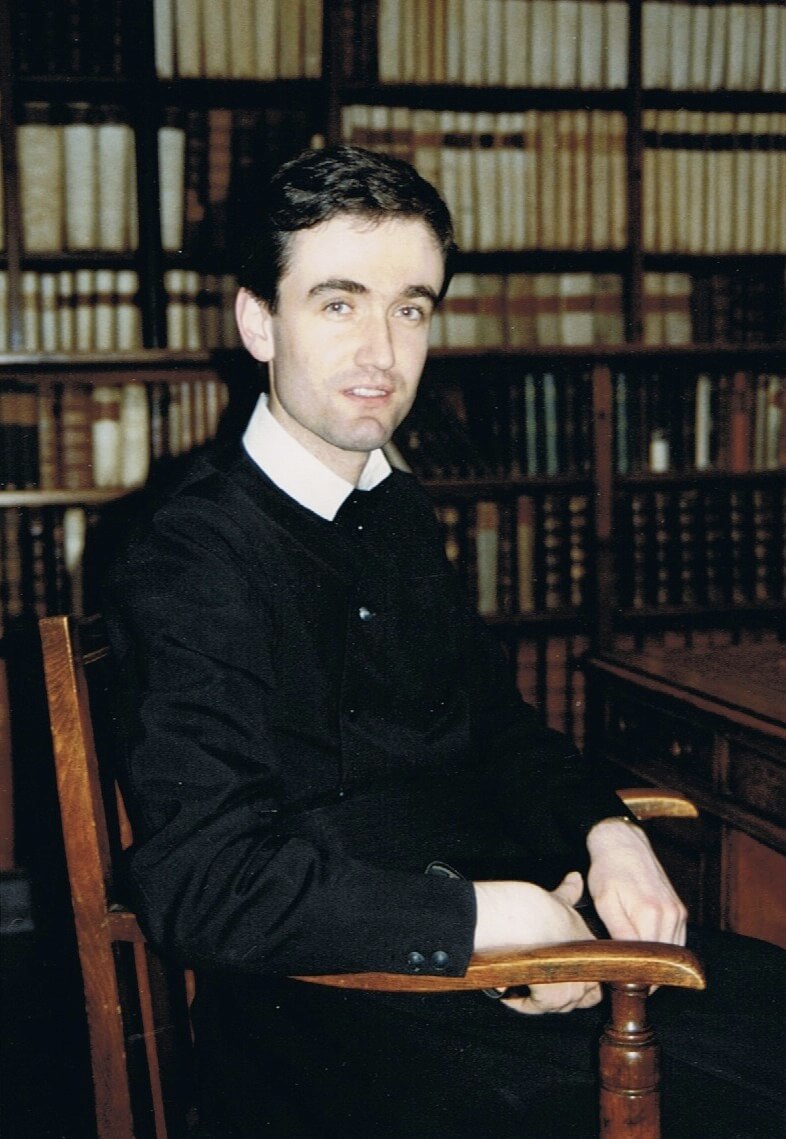
Fr D4IMG_6455 (800x501)Fr D8

Ad multos annos!

Assisted Dying Bill: Special time of Prayer

There will be half an hour of exposition of the Blessed Sacrament on Thursday evening (17th July) after the 6pm Mass to pray for the rejection of the Assisted Dying Bill in the House of Lords, which will be debated the following day. The English bishops have asked for special prayers to be said throughout the country.

To find out how to write to a peer, expressing your opposition to this bill, see the Bishops’ Conference website:
here

What the Bill Says

Lord Falconer’s Private Member’s Bill seeks to legalise what it calls ‘assisted dying’. In plain language, this means licensing doctors to supply lethal drugs to terminally ill patients who request them in order to commit suicide and who are thought to meet certain criteria – that they had a settled wish to end their lives, that they have the mental capacity to make the decision and that they are not being coerced or pressured.

What does the Church say about assisting suicide?
In a message addressed to Catholics in Ireland, Scotland, England and Wales, Pope Francis said, “Even the weakest and most vulnerable, the sick, the old, the unborn and the poor, are masterpieces of God’s creation, made in his own image, destined to live for ever, and deserving of the utmost reverence and respect”.

The Church supports high quality care for the dying and protection for the weak and vulnerable.

The Church teaches that life is a gift from God (John 10:10) and that suicide is the ultimate inability to accept the gift of life. Although attempting suicide should be treated with compassion rather than with blame, suicide should never be encouraged or promoted. Moreover the Church teaches that deliberately ending or helping to end someone else’s life, even if that person may have requested it, is wrong. Those who take someone else’s life take to themselves the power of life and death, which ultimately belongs to God.

What’s Wrong with the Bill
I. This Bill would:

– fly in the face of social attitudes to suicide. While as a society we treat people who attempt suicide with compassion and understanding, there is widespread acceptance that suicide is not something to be encouraged or assisted. Lord Falconer’s Bill stands this perception on its head.

– reinforce pressures on vulnerable people. The advocates of the bill tend to forget the background against which they are seeking to change the law. Recent examples of neglect in care homes as well as the many pressures faced by the elderly, disabled and vulnerable, who often feel a burden in a society focused on health, youth and beauty, should provide ample warning about the dangers of removing the vital protections afforded by the current law. As well as opening the door to abuse, legalising assisted suicide risks sending the message that a patient’s life is no longer worth living and could easily confirm a patient’s worst fears that the patient would be better off dead. We should be focusing instead on caring for vulnerable people and on supporting the message of the value of each person.

– remove the deterrent of the present law. Someone who was minded to put pressure on a relative to end their life for personal gain or for other malicious reasons would have nothing to fear other than that a request for assisted suicide might be refused. Under the present law they would have to reckon with a spotlight being shone on their actions after the event and of any malicious intent coming to light.

– replace the firm boundary of the present law with a purely arbitrary one. The present law rests on the clear principle that we do not involve ourselves in deliberately bringing about the deaths of others. An ‘assisted dying’ law says that there are some people whose deaths it is acceptable to hasten. Such an arbitrary boundary is hard to defend against extension to others – if the terminally ill, why not the chronically ill or people with disabilities? If the underlying principle of the Bill is the relief of suffering, there is no logic in the selection of terminal illness as a criterion.
II. More specifically, this Bill:

– contains no specific safeguards to protect the vulnerable. All it contains is a few criteria – mental capacity, settled wish, freedom from coercion. But it mandates no minimum steps that a doctor must take to ensure that these criteria are met.
places responsibility for assisting suicide on the shoulders of doctors. But most doctors do not regard assisting suicide as an acceptable part of clinical practice and would not participate in it if it were to be made legal. Consequently many people seeking assisted suicide would have to find, or be referred to, a minority of doctors they had never met before who would know nothing of them beyond their case notes.

– would encompass large numbers of people. A qualifying person would need to be diagnosed as having “an inevitably progressive condition which cannot be reversed by treatment”. But this could include chronic conditions such as Parkinson’s, MS and heart disease as well as other relatively-short trajectory illnesses, like cancer. Such chronic and incurable conditions, while life-shortening, are not terminal illnesses in the normally understood sense of the term but, for some patients (eg the elderly or frail), they could easily attract a prognosis of “reasonably expected to die within six months”. Even in what is normally seen as terminal illness accurate prognosis is fraught with difficulty. The Royal College of General Practitioners told Lord Mackay’s select committee in 2004 that, with prognoses at a range of more than a week or two, “the scope for error can extend into years”.
ignores the problems of mental capacity assessment. The Bill requires people requesting assisted suicide to have “the capacity to make the decision to end their life”. But what sort of capacity is that? When doctors assess capacity, they do so with a view to protecting patients from self-harm, not to clearing the way for their suicide. Mental capacity can be affected by all kinds of things, including depression (a frequent concomitant of serious illness) and the effect of medication that is being taken to relieve the symptoms of serious illness. Yet the bill assumes that doctors would be able to determine whether or not a patient has mental capacity without a referral to a psychiatrist for specialist assessment.

– offers information on end of life care but not experience of it. The bill requires that the qualifying person has been fully informed of the palliative, hospice and other care which is available to someone seeking assisted suicide. But, even if it is available (and in some parts of the country it is not), it is not enough just to be informed. As Help the Hospices wrote in evidence to Lord Mackay’s select committee, the promise of pain control is radically different to experience of pain control and a decision to seek ‘assisted dying’ without having had the opportunity to experience good end of life care could not be said to be fully informed.
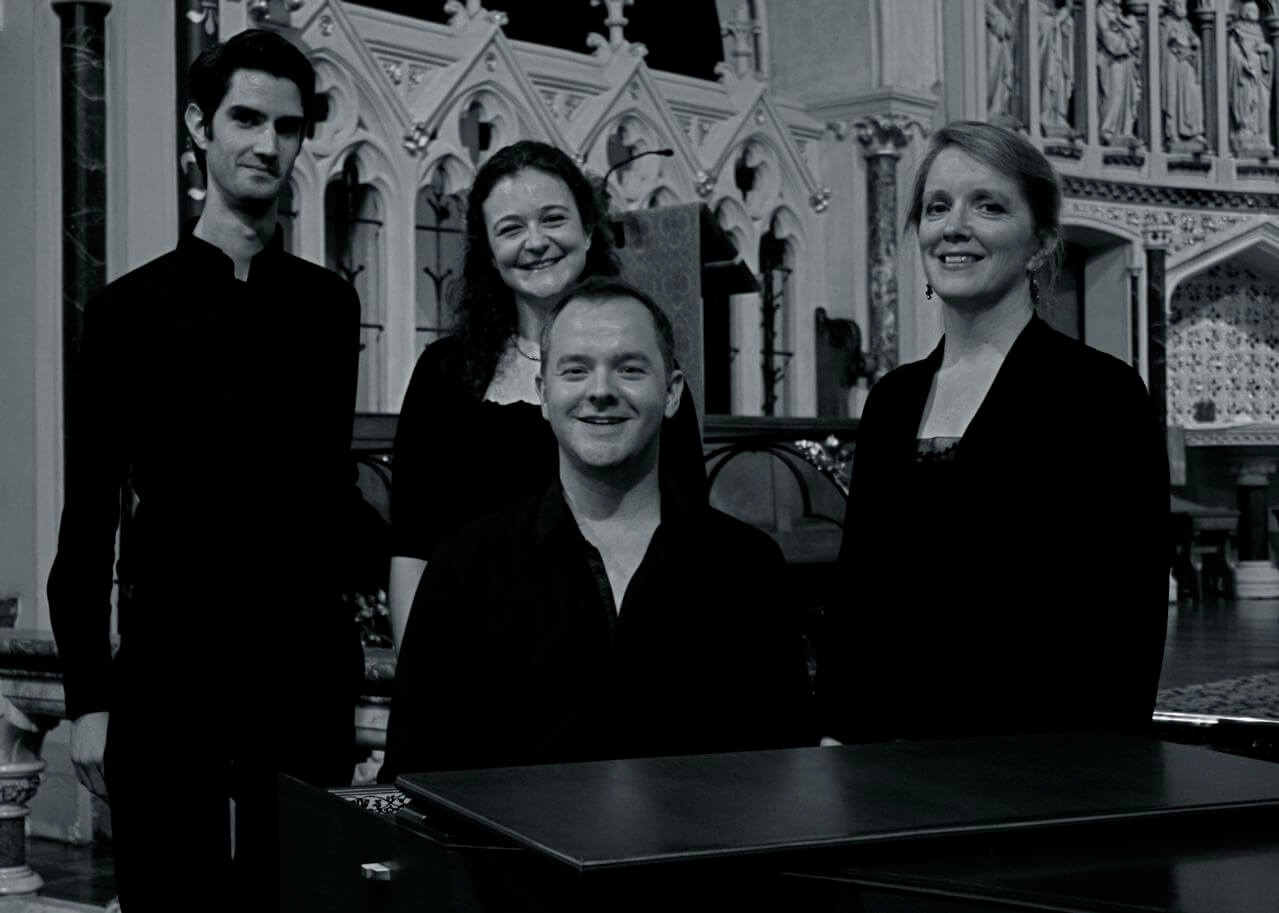
Concert by the Camerata of Curiosities

IMG_6237

We were treated on Saturday evening to a concert by the Camerata of Curiosities:

Jennifer Attia ~ Mezzo Soprano

Stephen Sweet ~ Violoncello

Andrew Knowles ~ Harpsichord

and with the renowned soprano Emily Van Evera as a guest star.

All the pieces were baroque – from the time of the beginnings of the Oratory, and included music by John Blow, Domenico Scarlatti, Claudio Monteverdi, J S Bach, Alessandro Grandi, Isaac Posch and George Frederic Handel.

A remarkable piece for the birth of Our Lady by Barbara Strozzi was movingly sung by Emily Van Evera, and the evening finished with the Office Hymn for St Philip “Pangamus Nerio”, reconstructed from a manuscript from Santa Maria della Fava in Venice.

Our thanks go to the performers for such an enjoyable evening, which was in aid of the Oratory Campaign.

Blessed Sacrament Procession and Blessing of a new Peace Garden at St Aloysius’ School

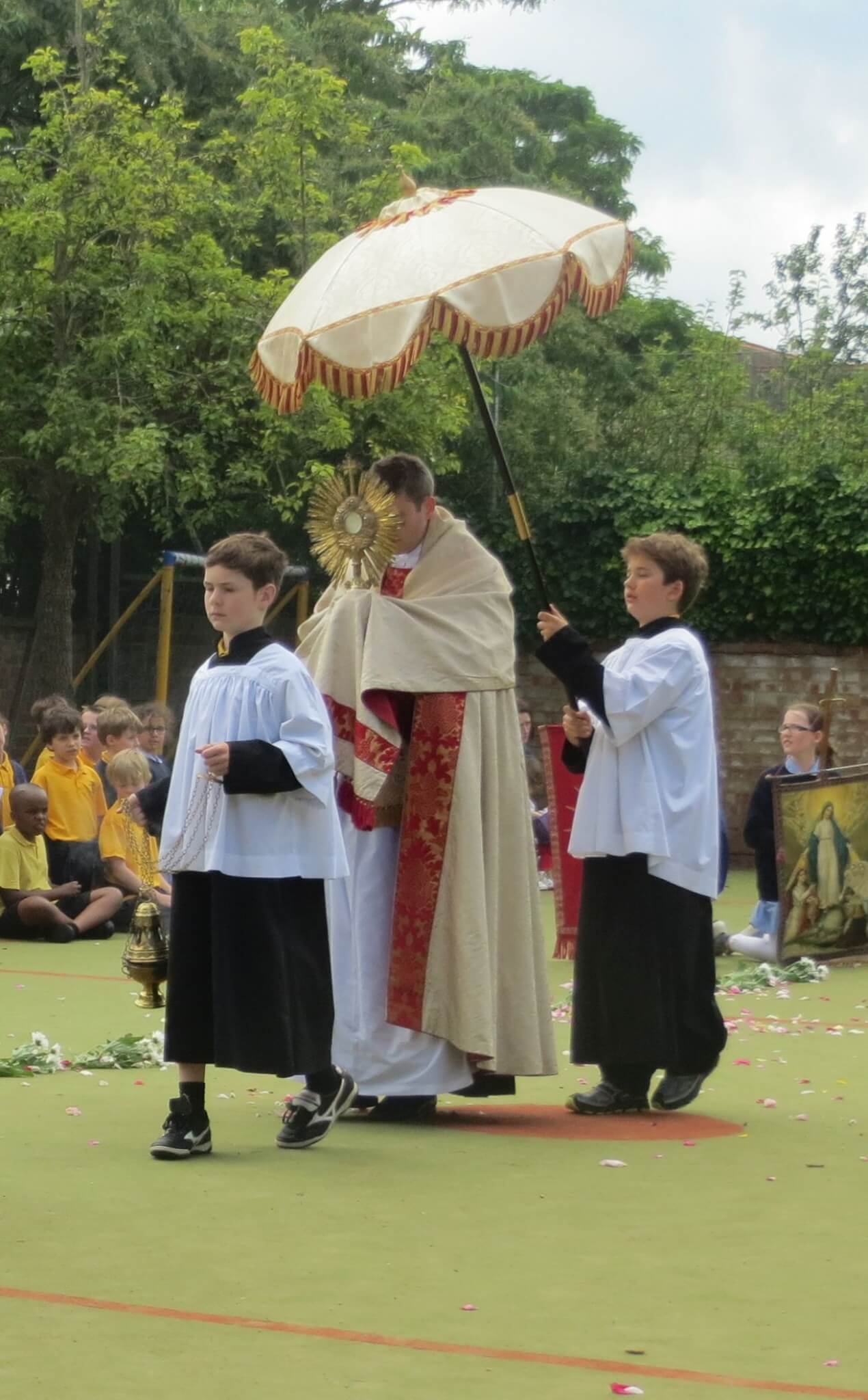
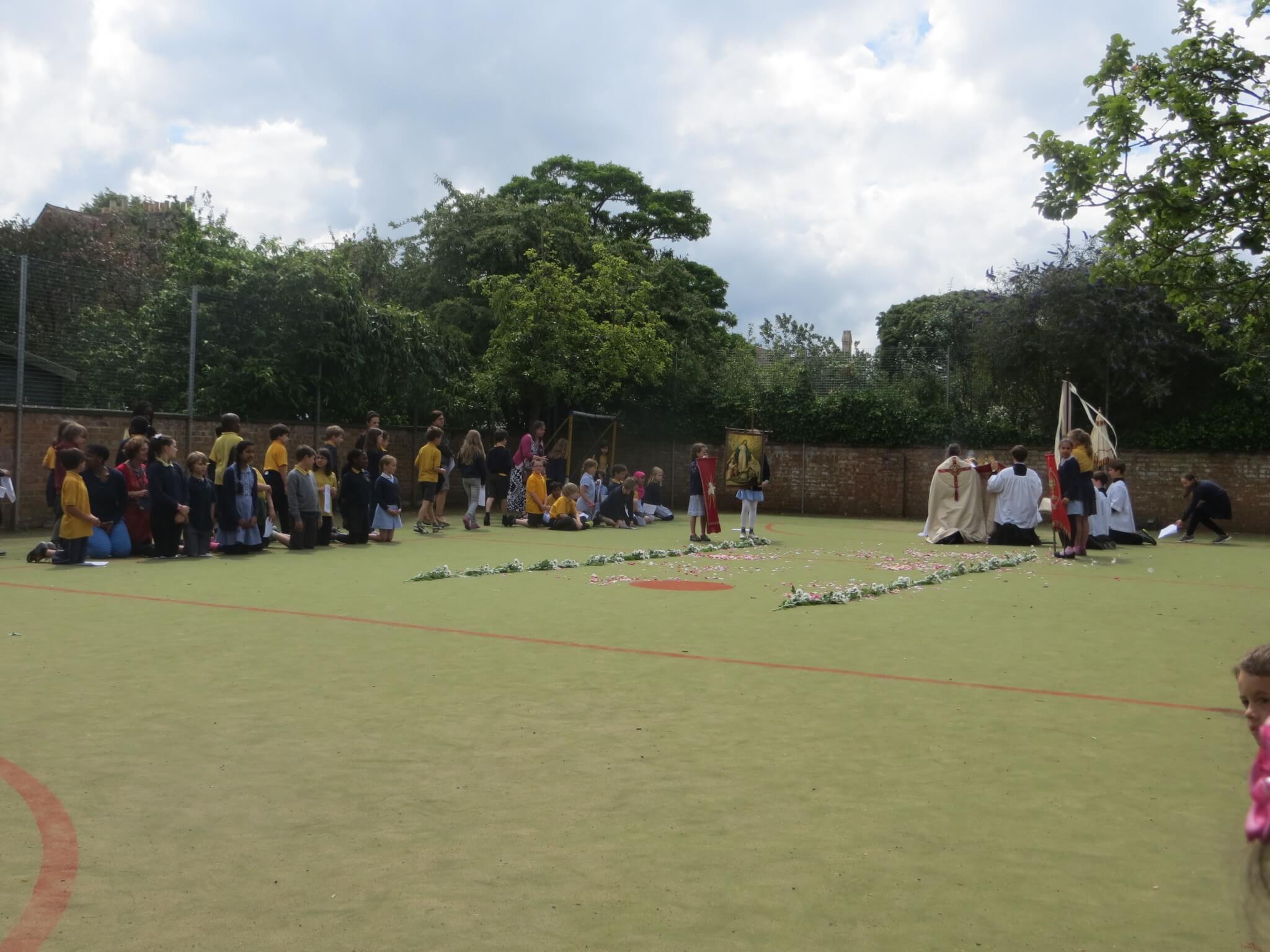
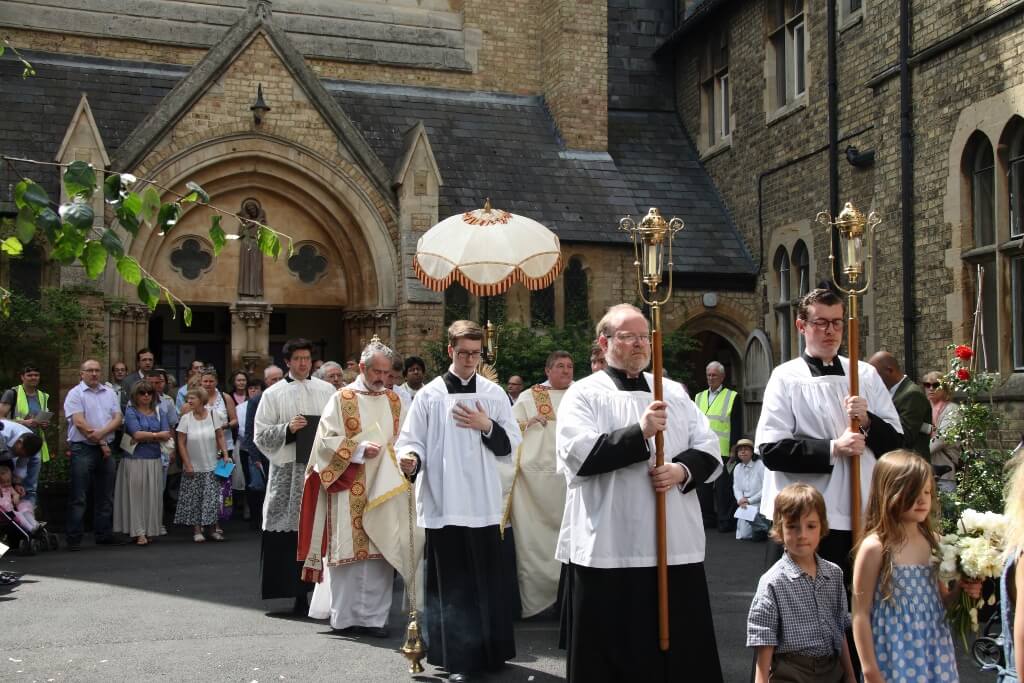
On the Solemnity of the Sacred Heart, an interval in between rain showers enabled us to go outside for the Blessed Sacrament Procession.

3

Flowers were scattered, banners were carried, the children sang the Tantum Ergo, and Benediction was given.

21

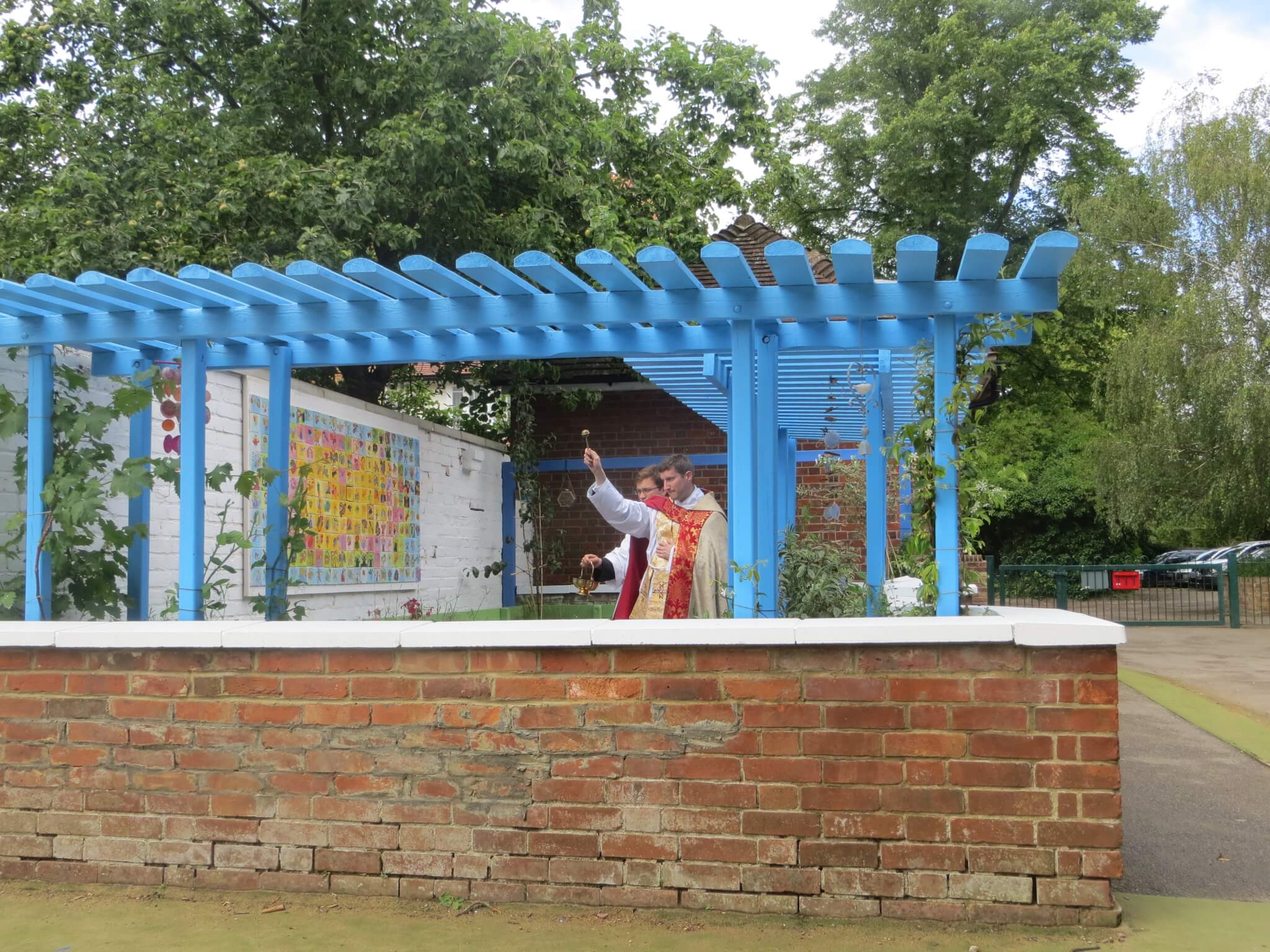
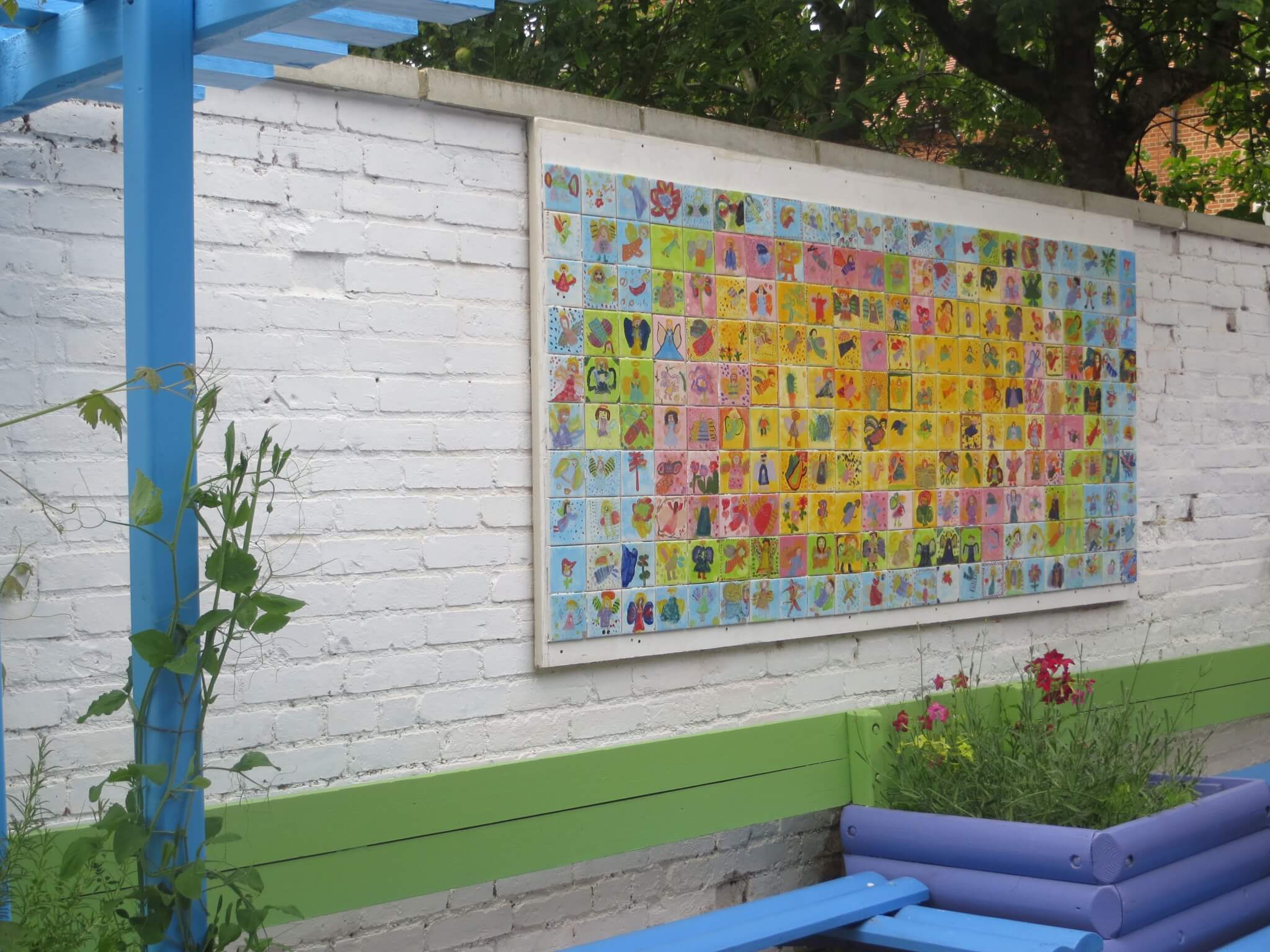
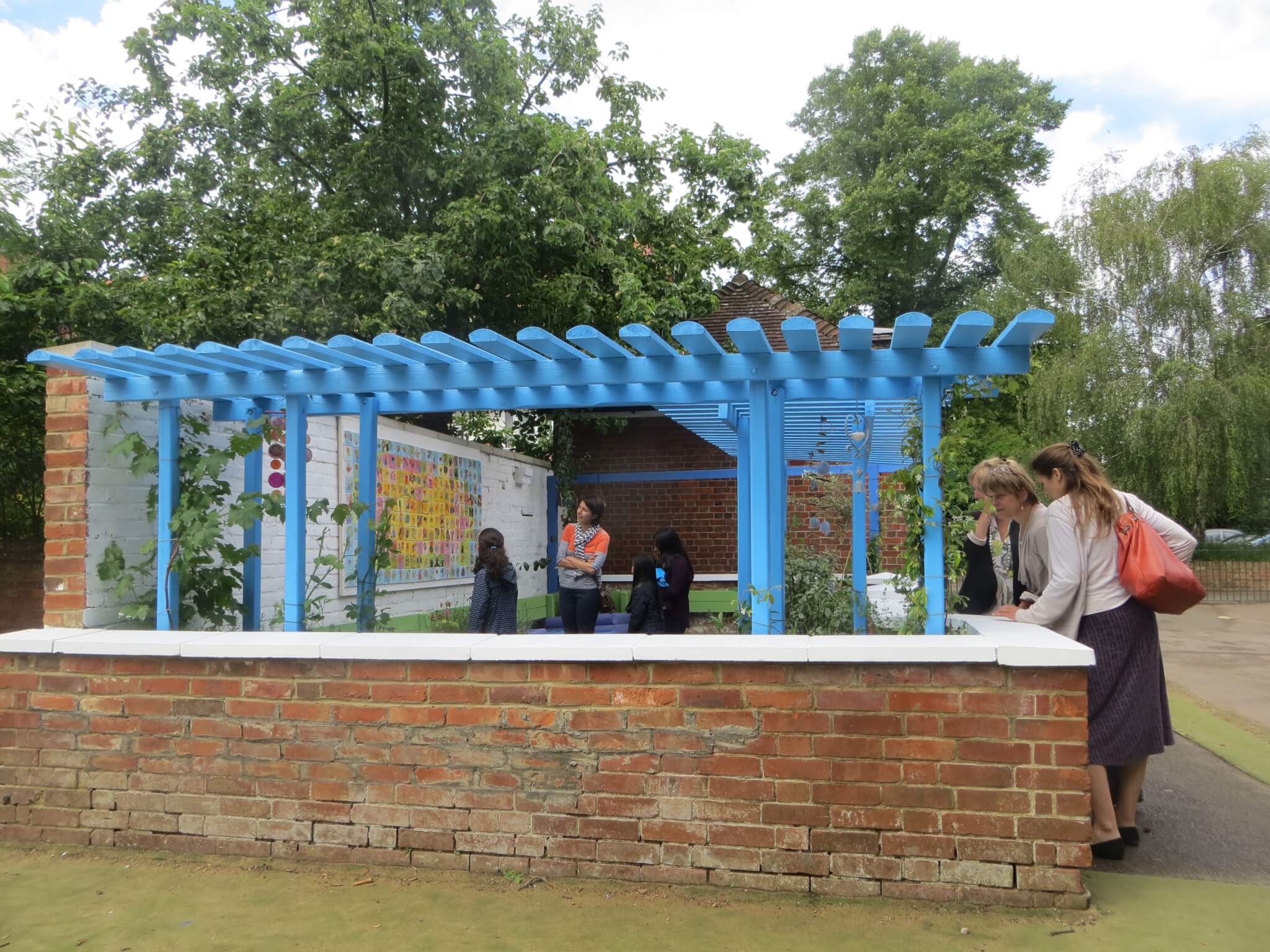
After the Procession the new ‘Peace Garden’ was blessed. This has been created, by the generosity of parents, in the old greenhouse, and is in memory of Angela Clare (née Sloan), who was both a pupil and a teacher at St Aloysius’. Members of Angela’s family were present for the Mass, Procession and blessing of the garden.

IMG_4526

Every child in the school has made a ceramic tile with an angel on it:
6
Here is the prayer used to bless the garden:

O God, Author of Peace and giver of all joy,
Who created our first parents in a garden,
And Whose Son, our Saviour Jesus Christ
prayed in the Garden of Gethsemane
on the night before He died,
and who rose from the dead and appeared
to St Mary Magdalen also in a garden,
We, Your servants, ask You graciously
to bless + this garden
which has been created in Your honour.

We dedicate this place to the honour and glory
of the Sacred Heart of Jesus.
May all who come here find that peace which passes all understanding, which only You can give.
May their hearts be touched by the love
flowing from the Sacred Heart,
so that they may be instruments of harmony, peace and charity among all those whom they meet.

We ask also that rest and peace be given
to all the faithful departed, especially to Angela,
whom we remember in this place,
so that all of us may come at last to that new Eden,
where all will be light and happiness.

We ask this through the same
our Lord Jesus Christ Your Son,
who lives and reigns with You in the unity of the Holy Spirit, one God for ever and ever.
Amen.
5

First Holy Communions

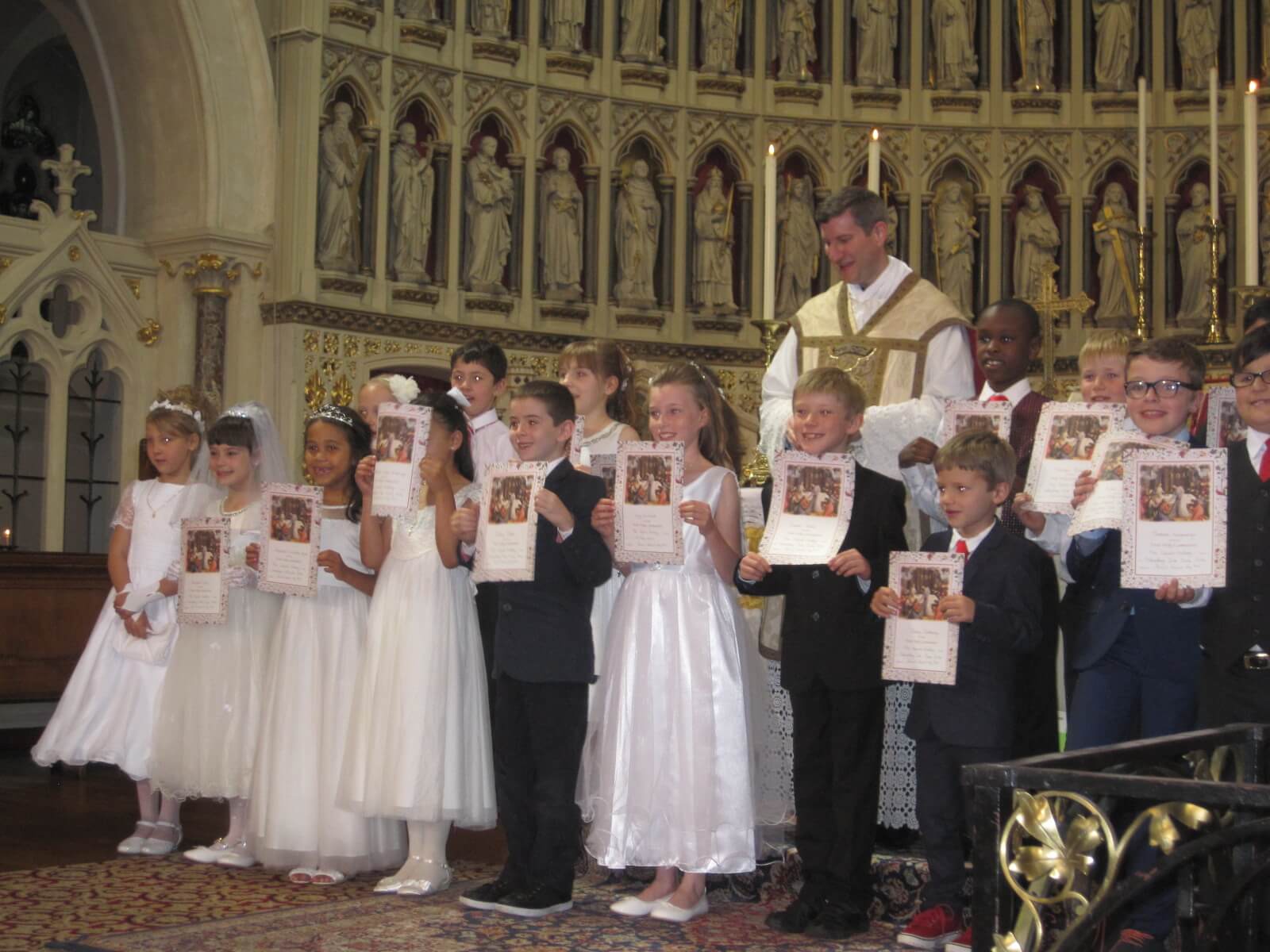
Congratulations to the 36 children who made their First Holy Communions in our church last weekend. The children from St Aloysius’ School did so on Saturday, the Solemnity of St Aloysius, and other children from the parish on Sunday, the Solemnity of Corpus Christi.
Some of the first communicants with Fr Daniel after Mass:

179
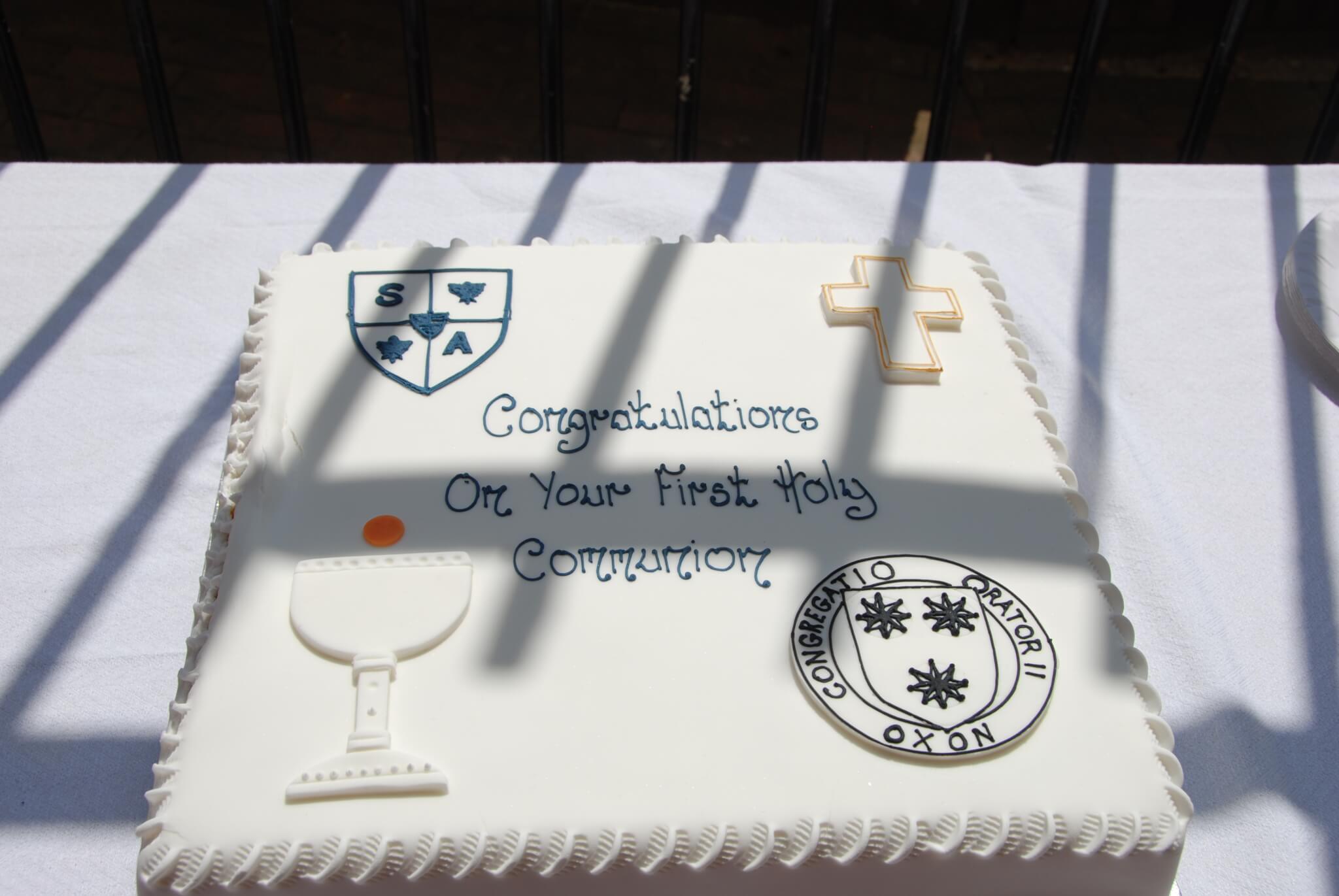
The cake:

107
Mr Walker, Head Teacher of St Aloysius’ School, cutting the cake:

109
The children enjoying the cake and other delights at their First Communion Breakfast:
187

Corpus Christi 2014

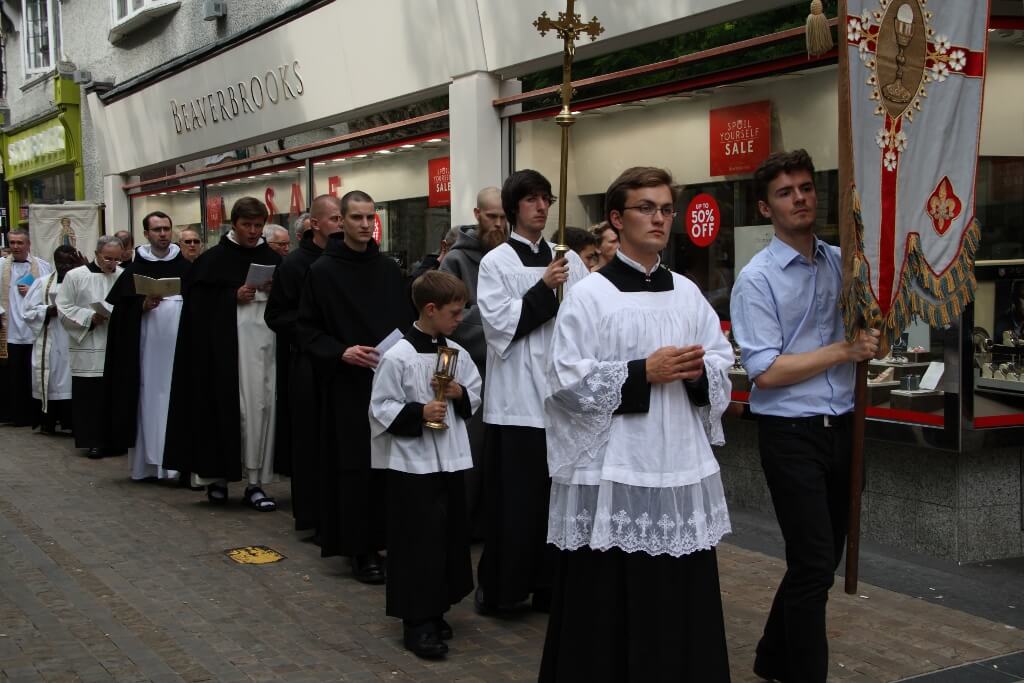
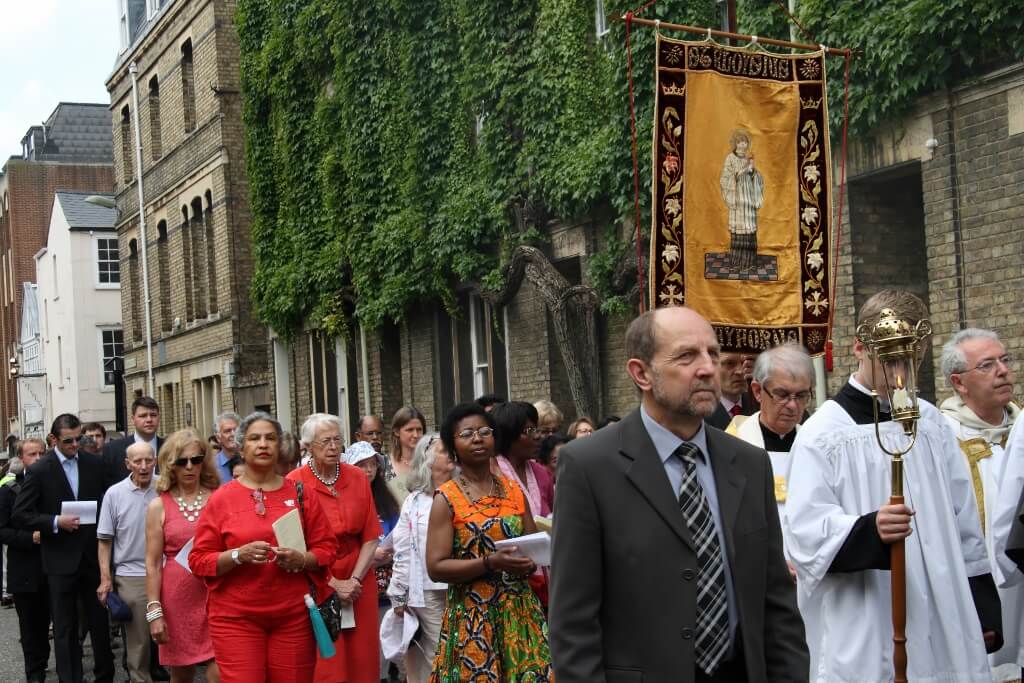
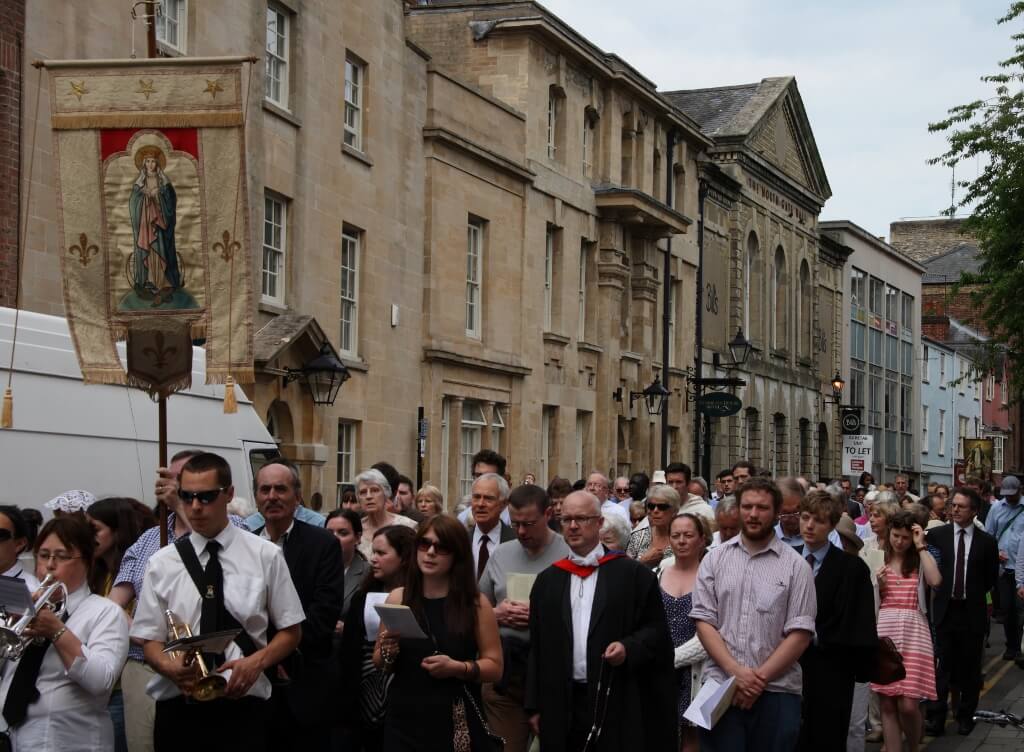
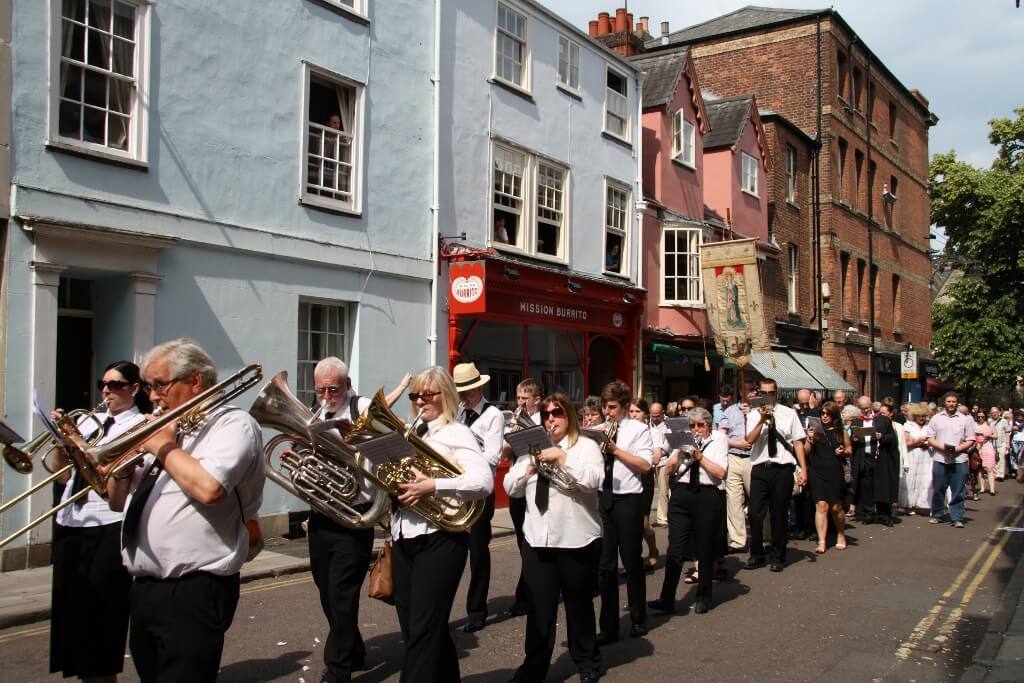
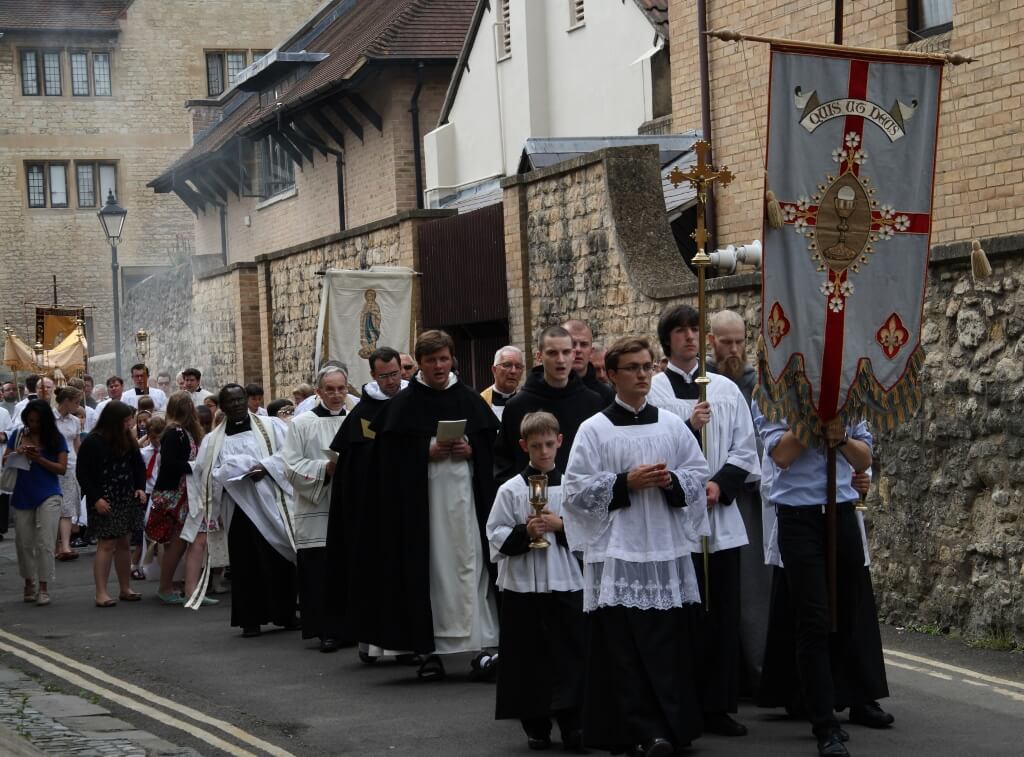
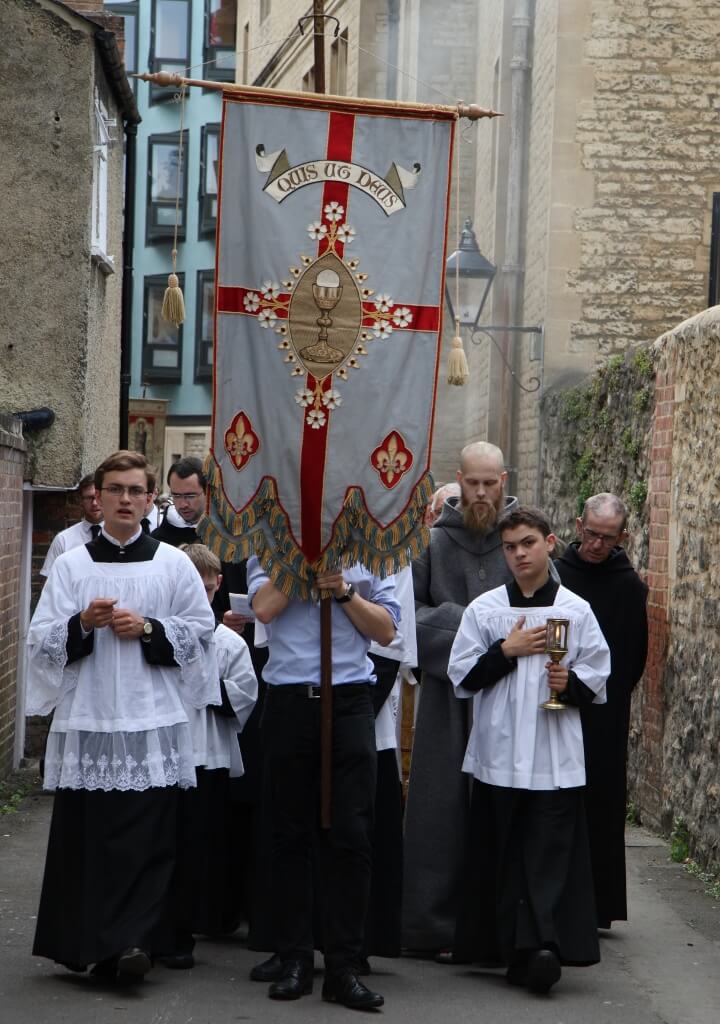
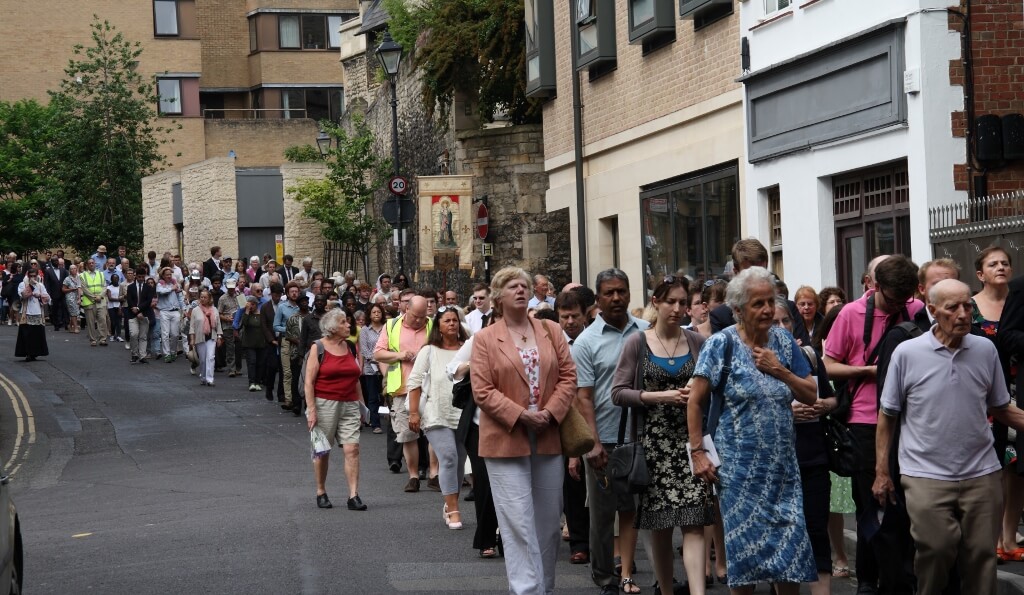
It was a beautiful, sunny day for the fifteenth annual North Oxford Deanery Corpus Christi Procession.

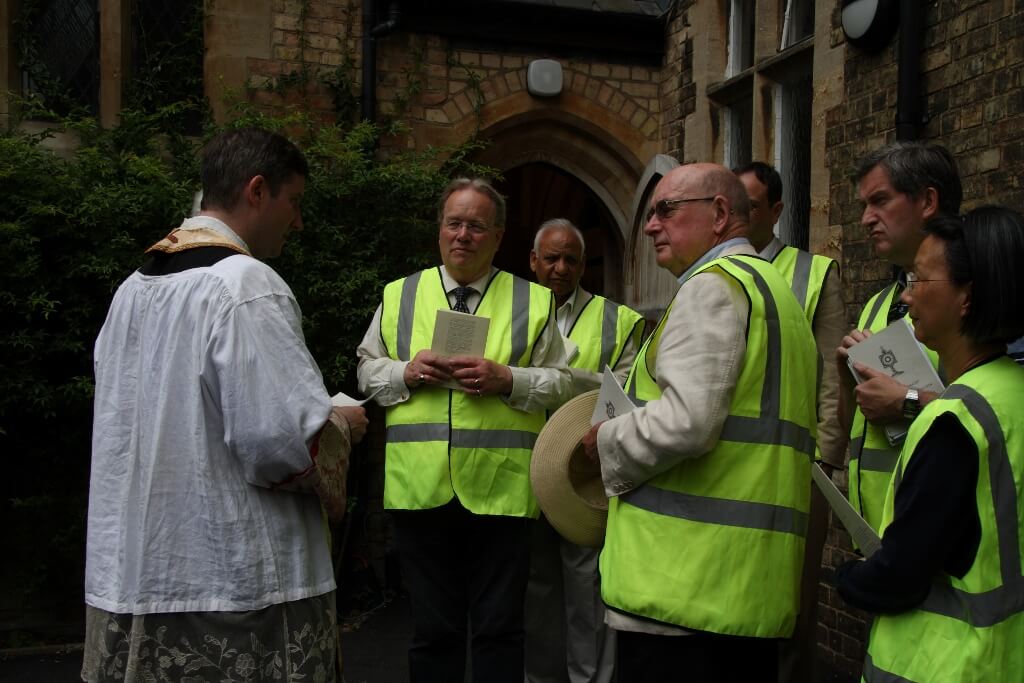
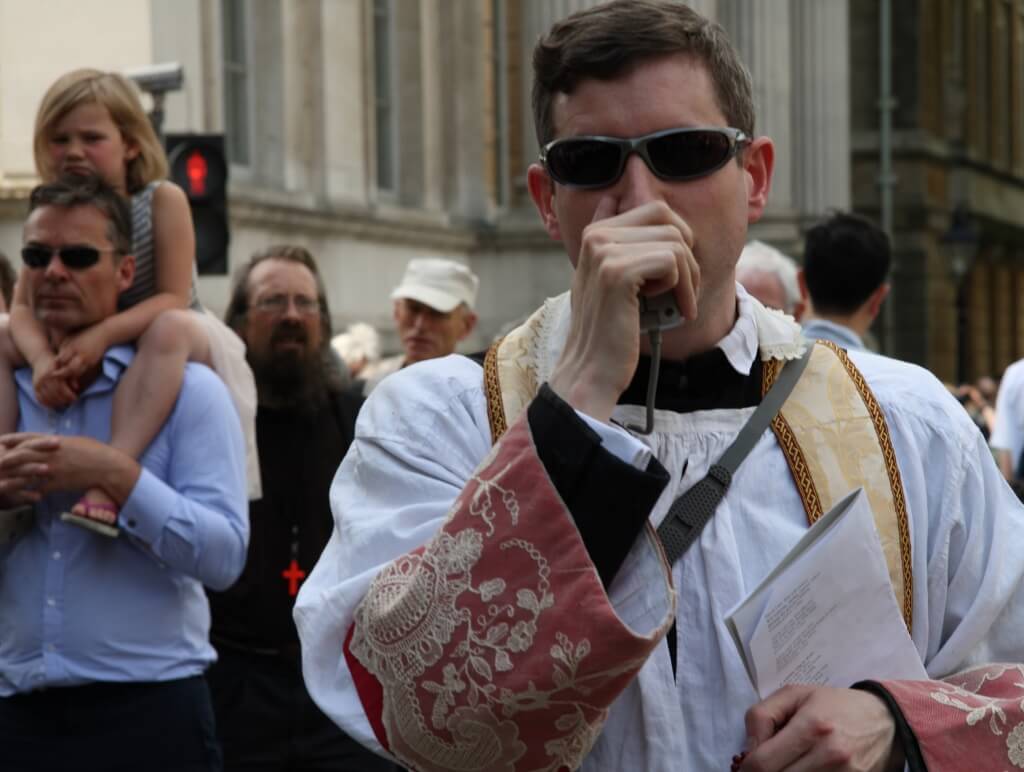
Many people contributed to making the procession a great success. The marshals were briefed about keeping us safe:
IMG_6041 (1024x683)
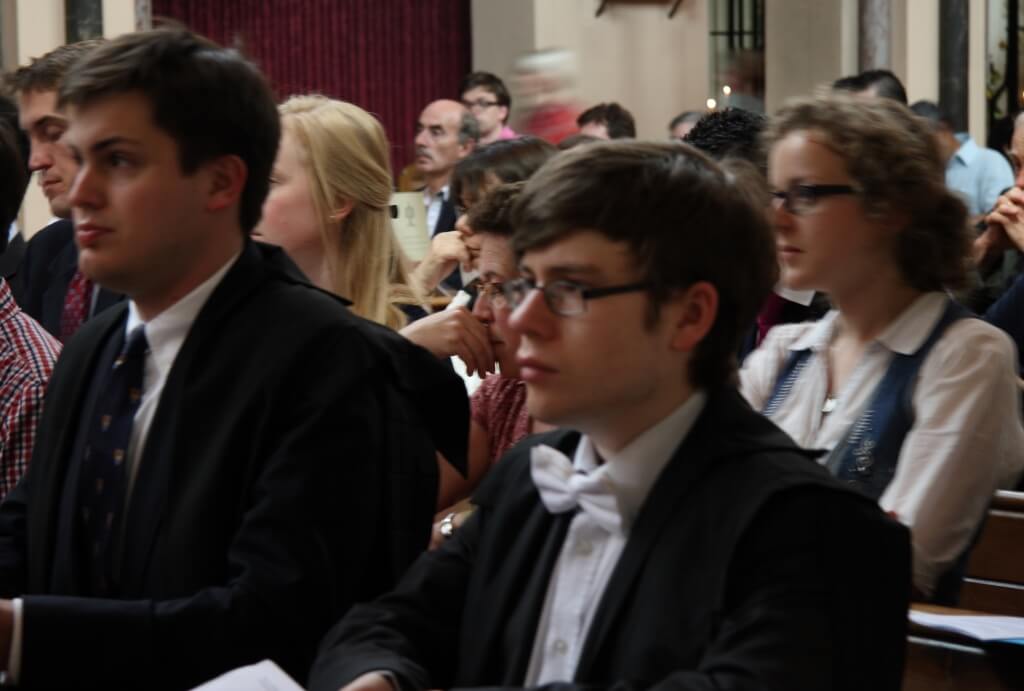
As was the congregation:
IMG_6043 (1024x870)

IMG_6047 (1024x691)

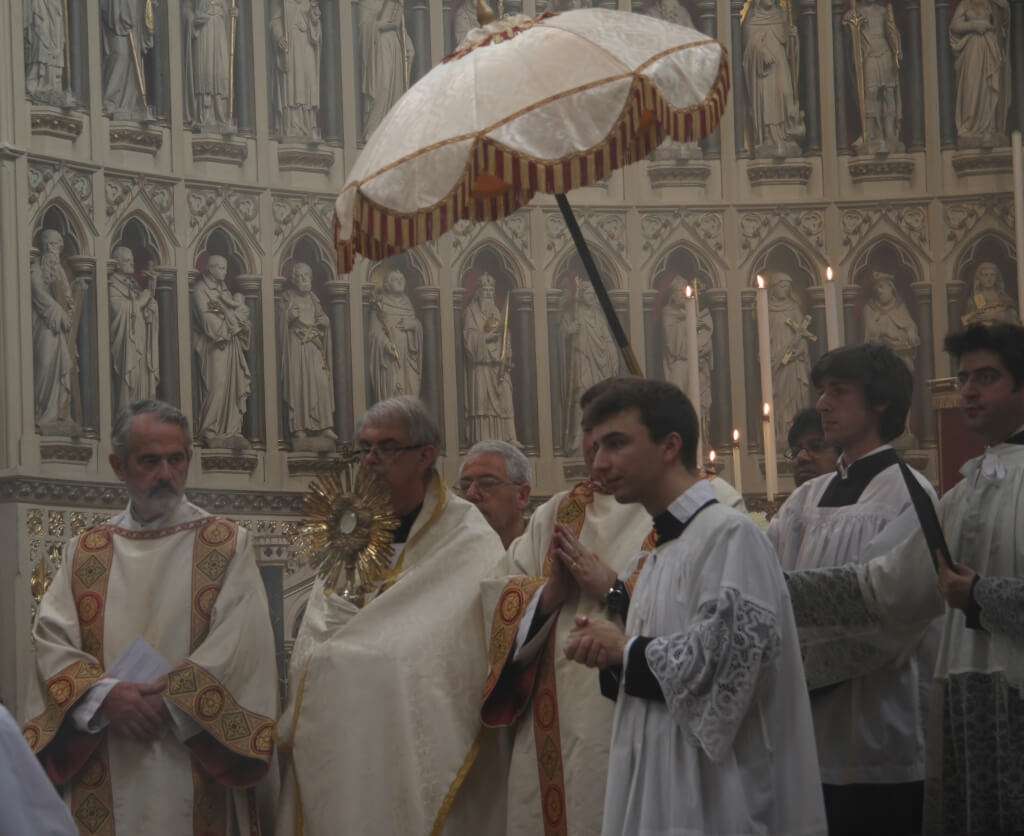
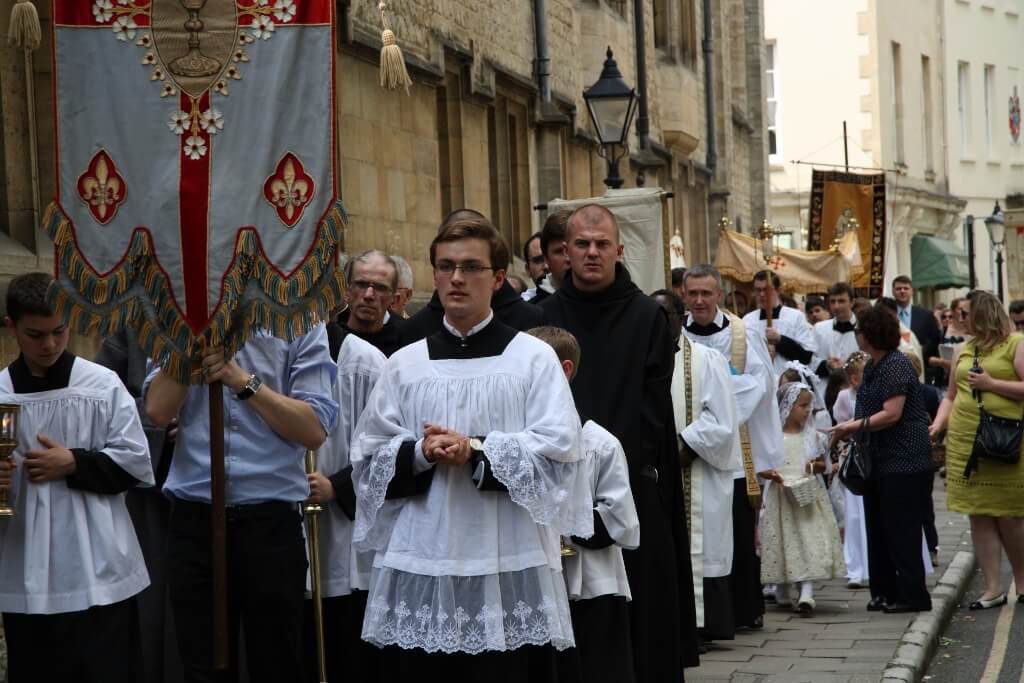
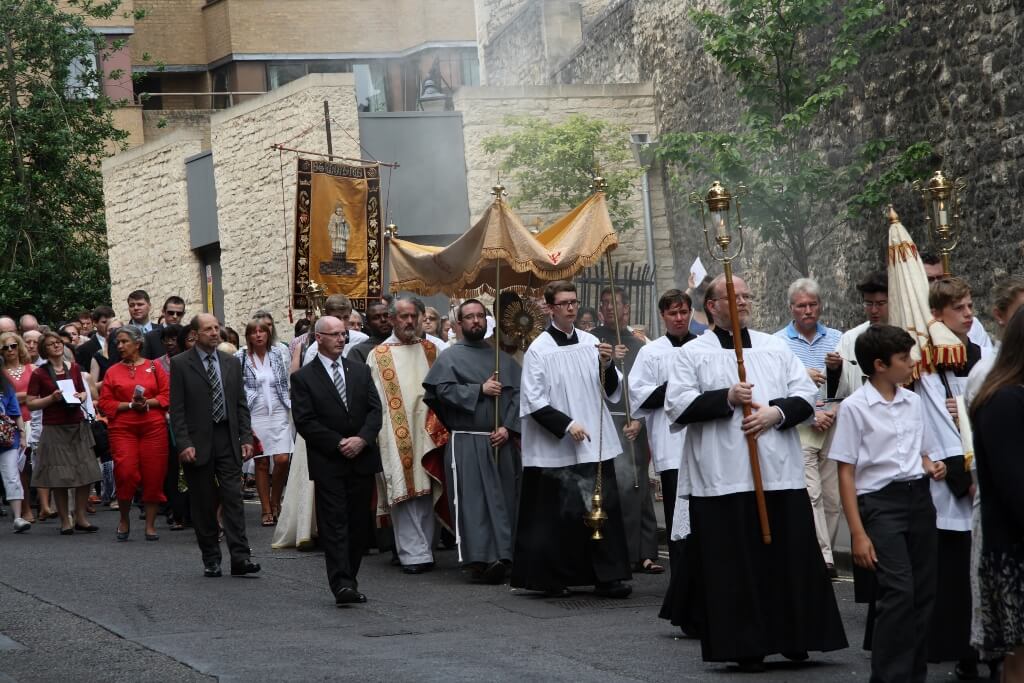
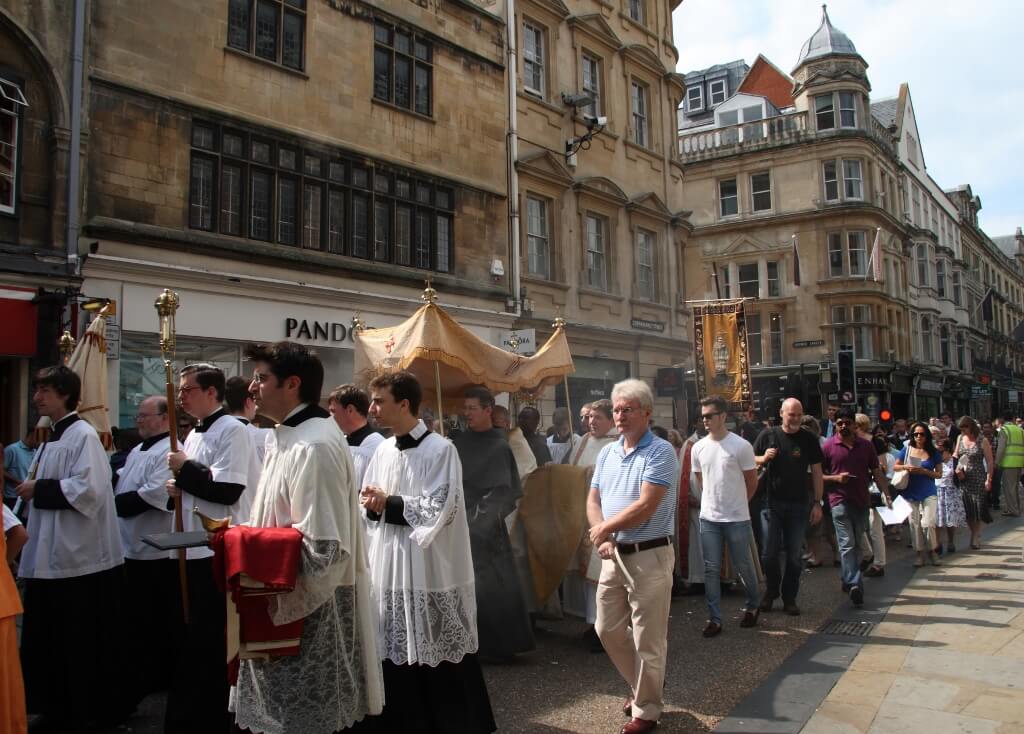
The Dean, Fr John Hancock, carried the Blessed Sacrament from the Oratory to Blackfriars:

IMG_6050 (1024x683)IMG_6052 (1024x683)IMG_6055 (1024x836)IMG_6060 (1024x726)IMG_6061 (1024x683)IMG_6091 (1024x683)

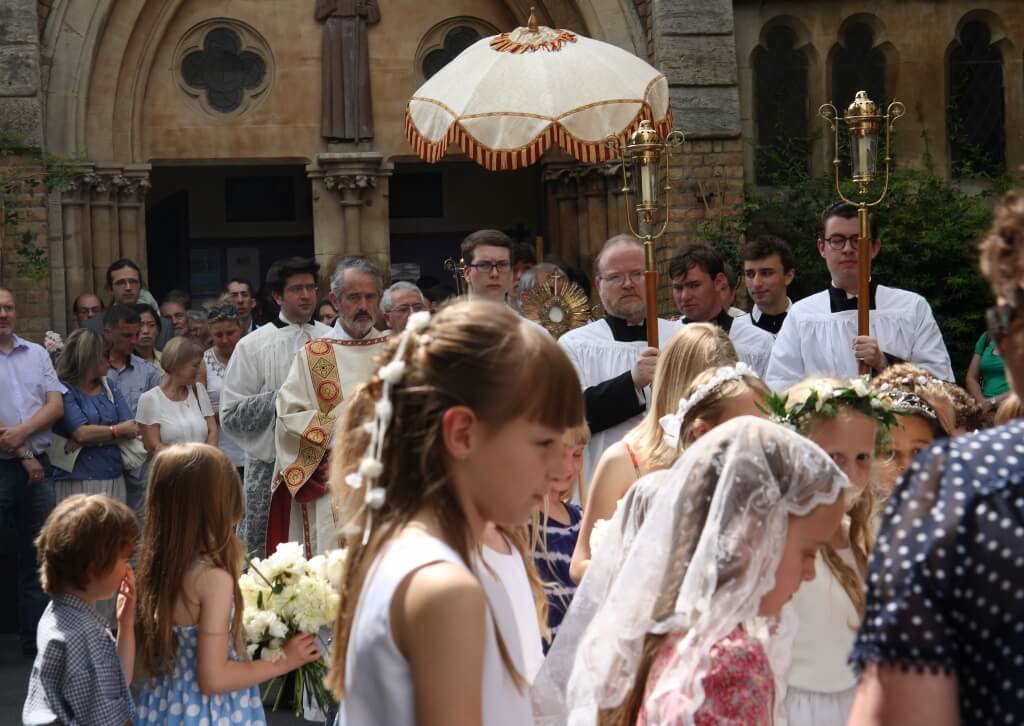
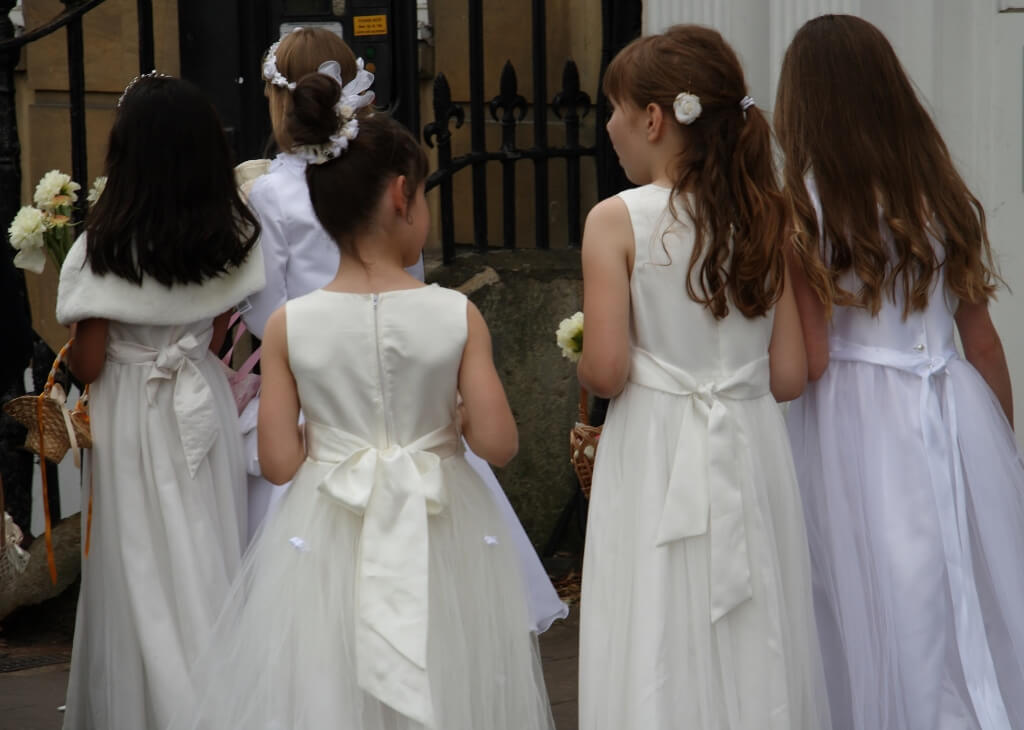
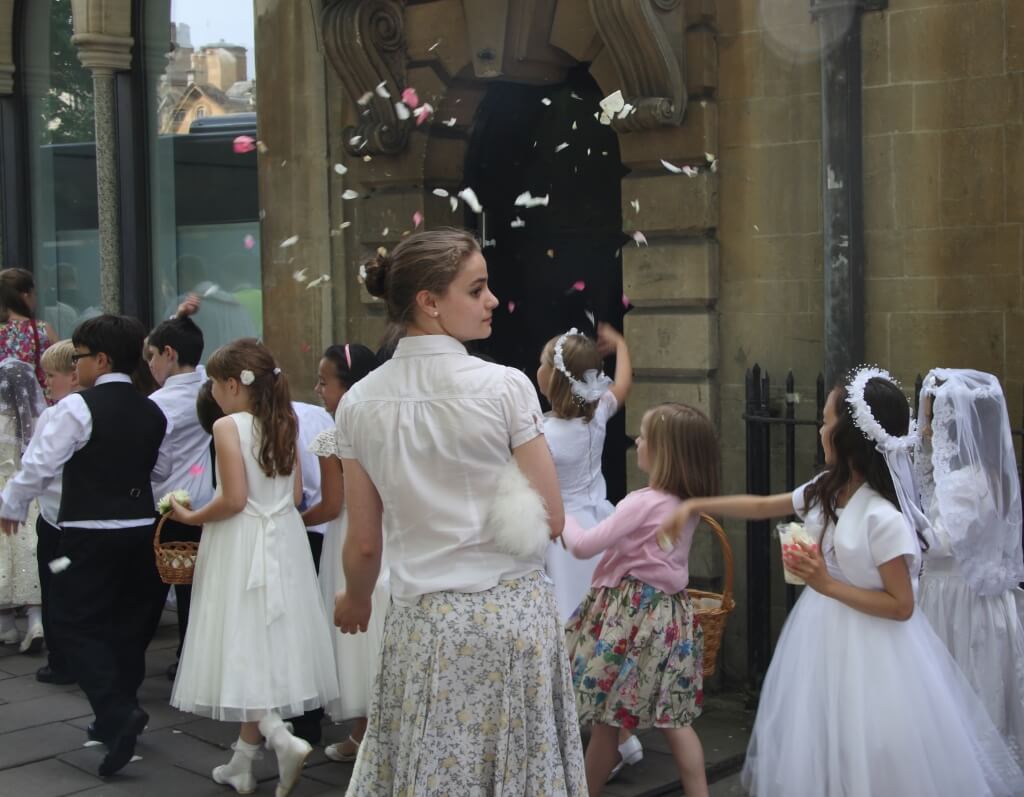
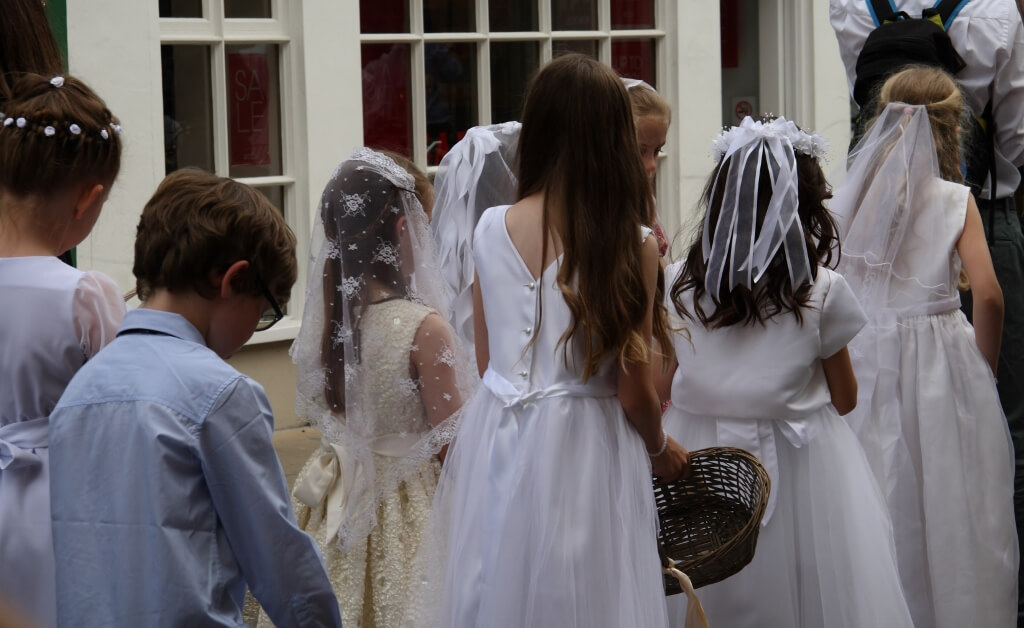
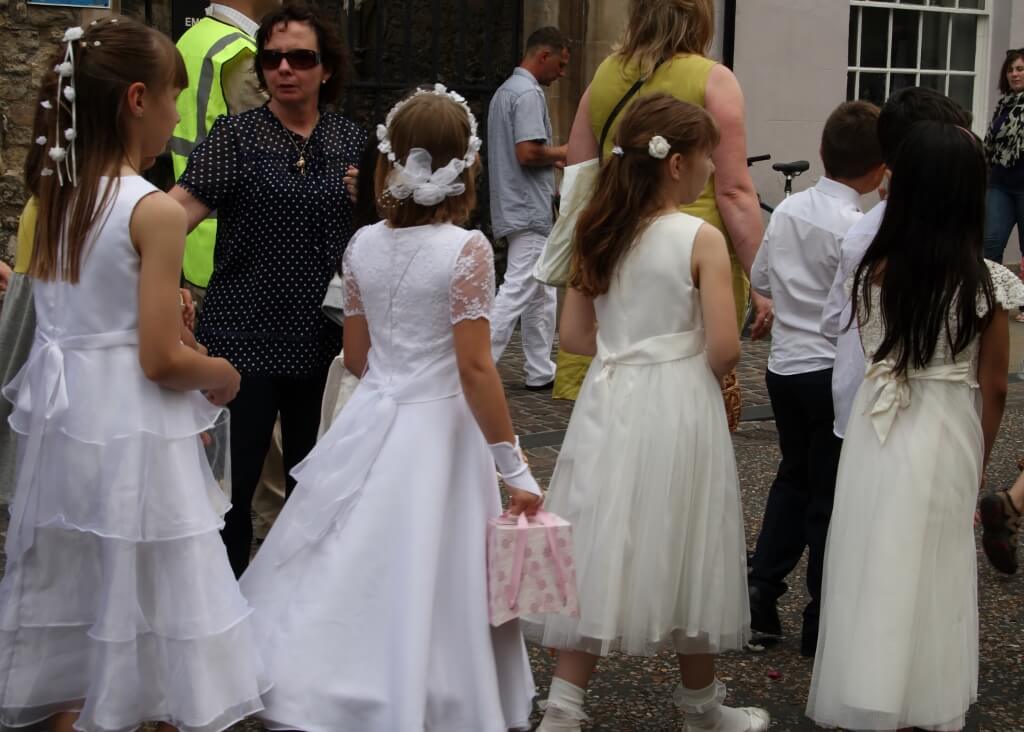
The children who had made their First Holy Communion this weekend scattered rose petals before the Blessed Sacrament:

IMG_6070 (1024x730)
IMG_6117 (1024x797)
IMG_6177 (1024x628)IMG_6171 (1024x732)

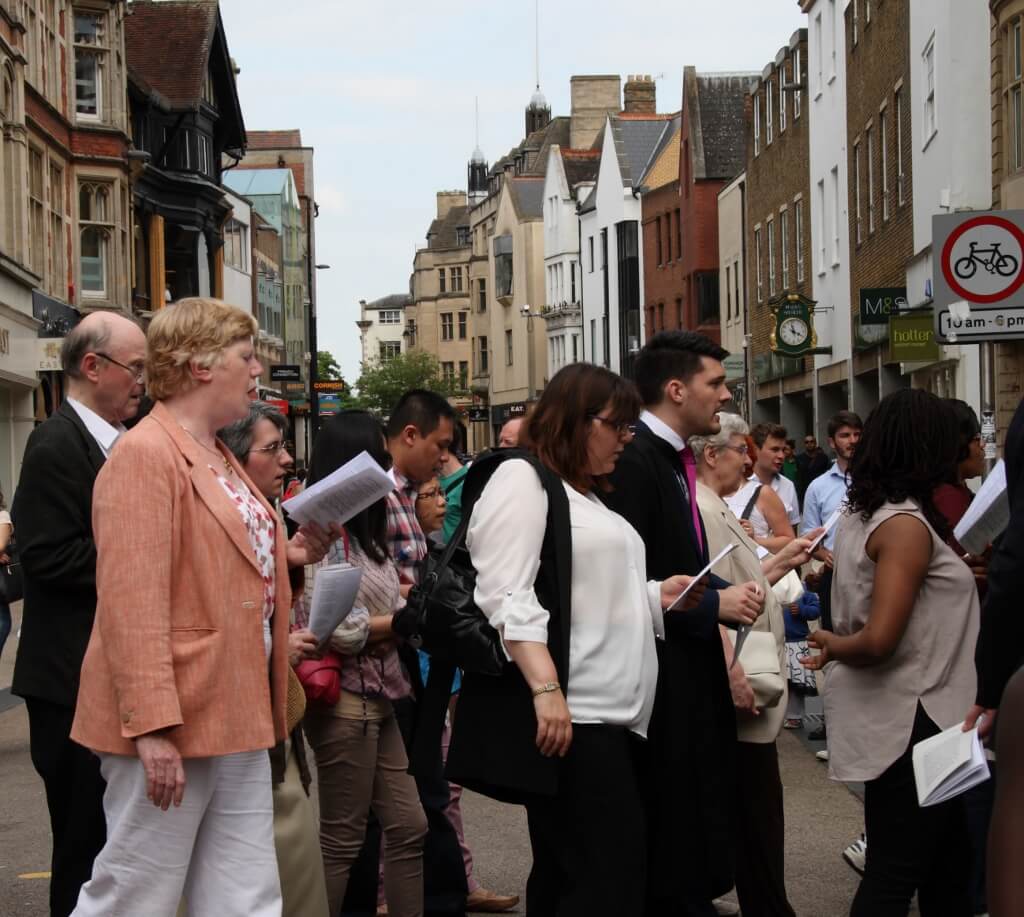
We alternated between saying the Rosary and singing Eucharistic hymns, accompanied by the Witney Town Band:

IMG_6138 (1024x772)IMG_6082 (1024x683)IMG_6111 (1024x667)

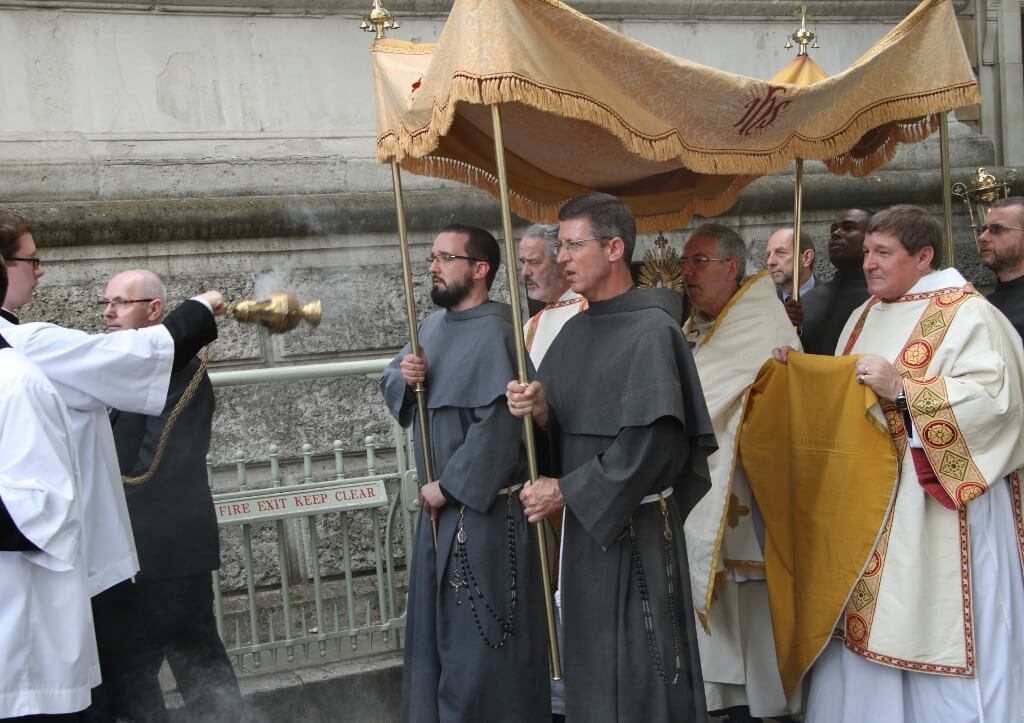
The canopy over the monstrance was carried by the Conventual Franciscan Friars:

IMG_6068 (1024x781)IMG_6127 (1024x723)IMG_6196 (1024x683)

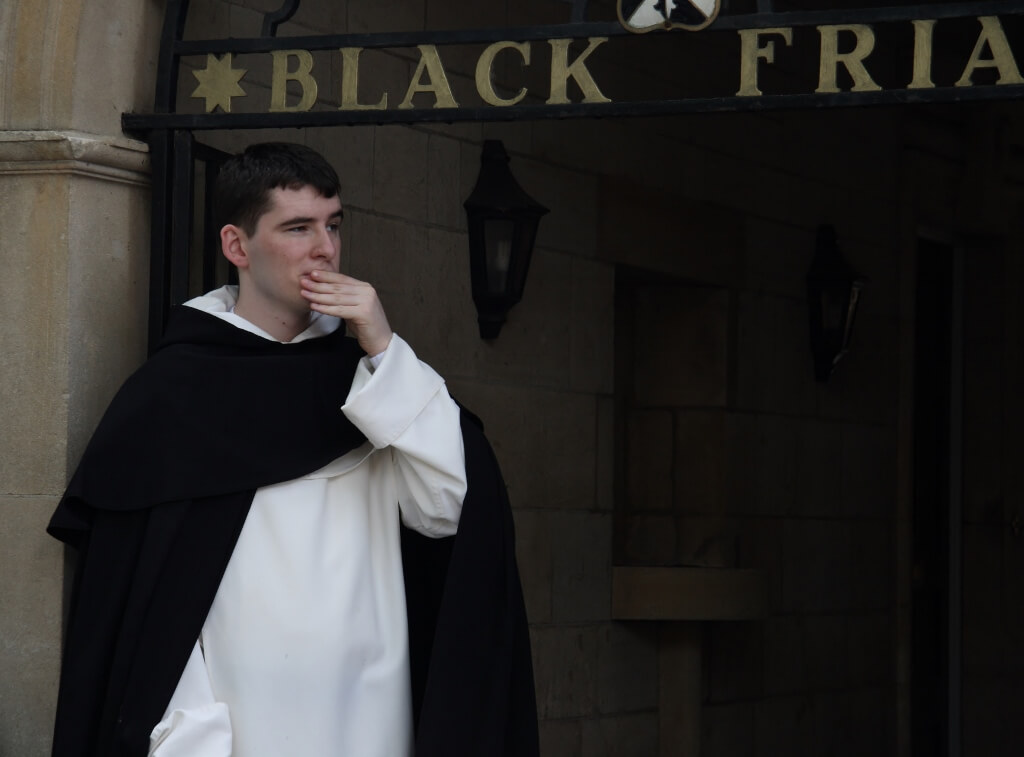
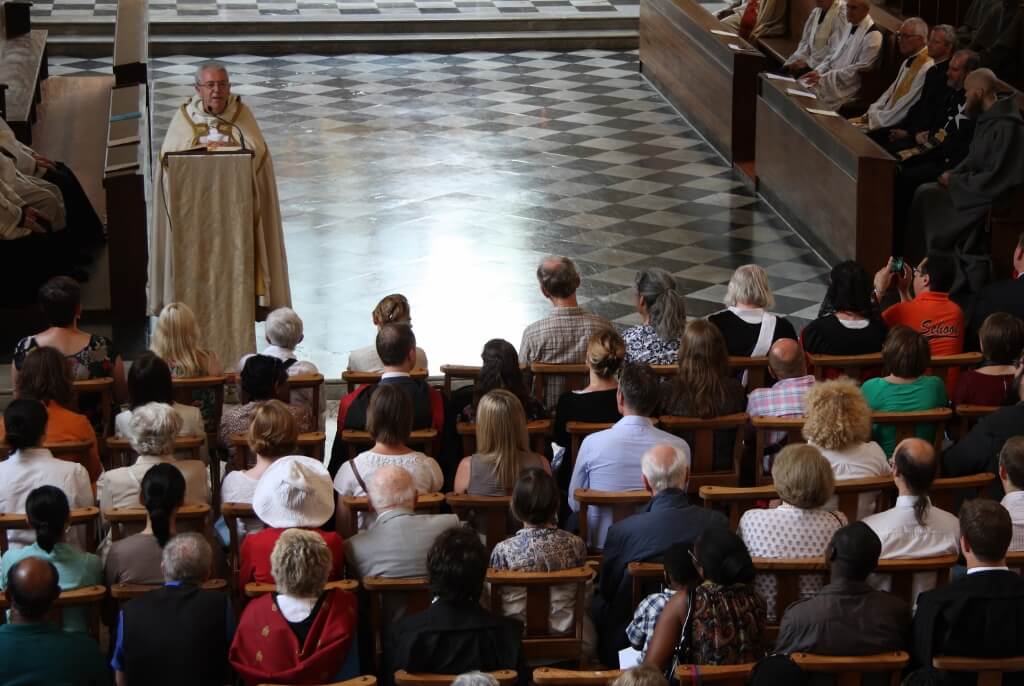
At Blackfriars the Dominican friars sang the Lauda Sion and Fr Robert Ombres, O.P. preached a fine sermon:

IMG_6092 (1024x757)IMG_6105 (1024x686)IMG_6102 (787x1024)

Fr Ombres then carried Our Lord along the Cornmarket and down St Michael’s Street:

IMG_6114 (1024x825)

IMG_6179 (1024x683)IMG_6169 (1024x683)IMG_6163 (1024x752)IMG_6159 (1024x683)IMG_6145 (1024x734)

Fr Dushan Croos, S.J., Chaplain to the University of Oxford, then carried the Blessed Sacrament to the Chaplaincy:

IMG_6186 (1024x917)

IMG_6208 (1024x683)IMG_6206 (1024x757)IMG_6205 (720x1024)IMG_6200 (1024x595)

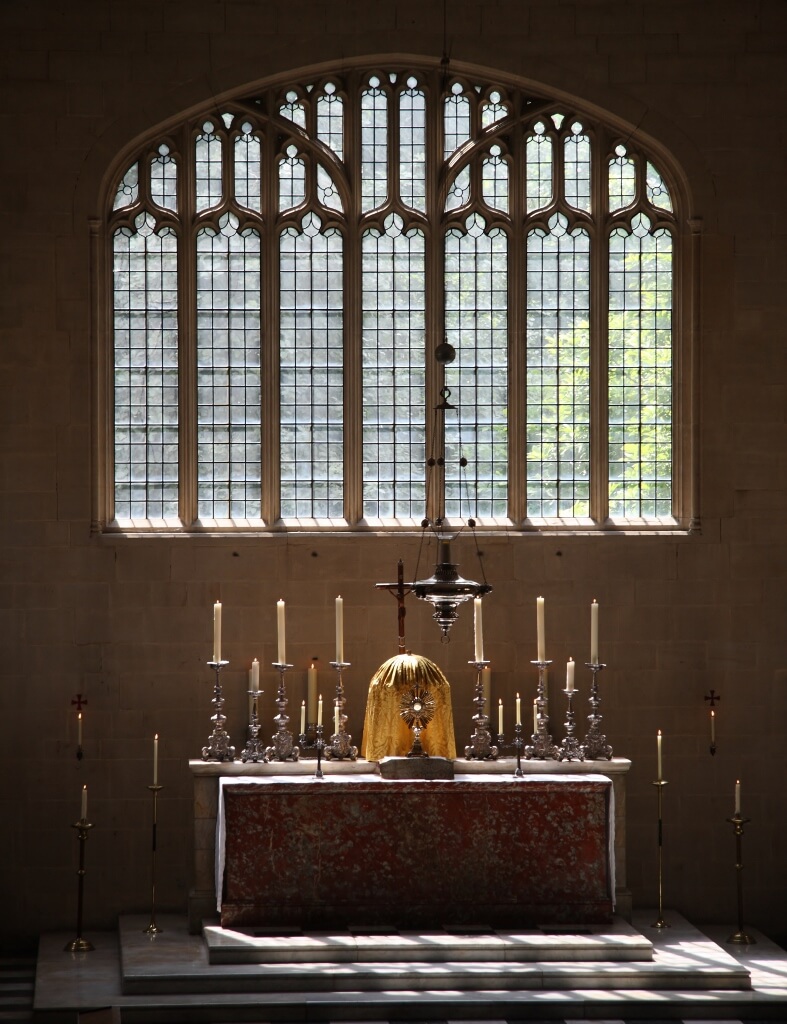
At the Old Palace, the Dean gave Benediction, before the singing of the Salve Regina and Faith of our Fathers:

IMG_6239 (1024x678)IMG_6233 (654x1024)IMG_6230 (1024x683)IMG_6222 (1024x683)IMG_6220 (1024x683)IMG_6218 (1024x827)
IMG_6246 (1024x783)

We then concluded with some very welcome refreshment!

IMG_6248 (1024x1012)

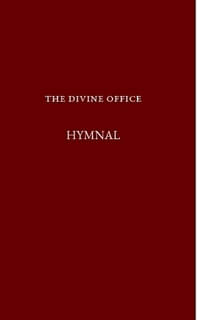
New book: The Divine Office Hymnal

product_thumbnail.php

This pocket-sized book contains English translations of the traditional Latin hymns of the Roman Breviary. It contains four sections:

  • The Hymns of the Psalter
  • The Proper of the Season
  • The Common of Saints
  • The Proper of Saints

It is designed to act as a supplement to the English edition of the Divine Office, and is small enough to be carried easily with a breviary, but can also be used as a hymn book in its own right.

hymnal

It is no simple task to narrow the selection of hymns from all of the excellent translations available, but it is hoped that most of the favourite and well-known translations are included. Among the list of translators are Rev. John Mason Neale, Fr Edward Caswall (of the Birmingham Oratory), Mgr Ronald Knox, as well as many others.
It is available to buy from Lulu.

Our other books can be seen in the Publications section of the website.

St Anthony Unveiled and Blessed

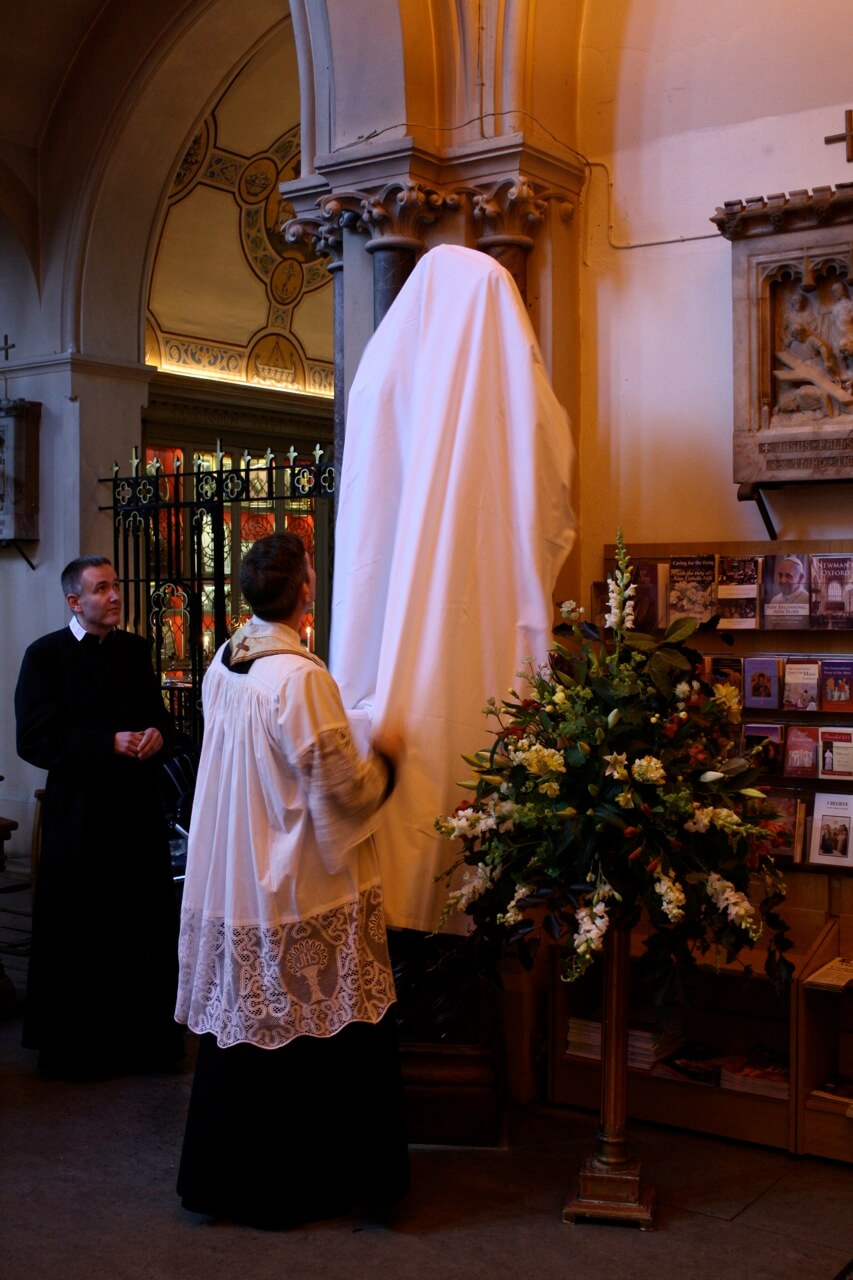
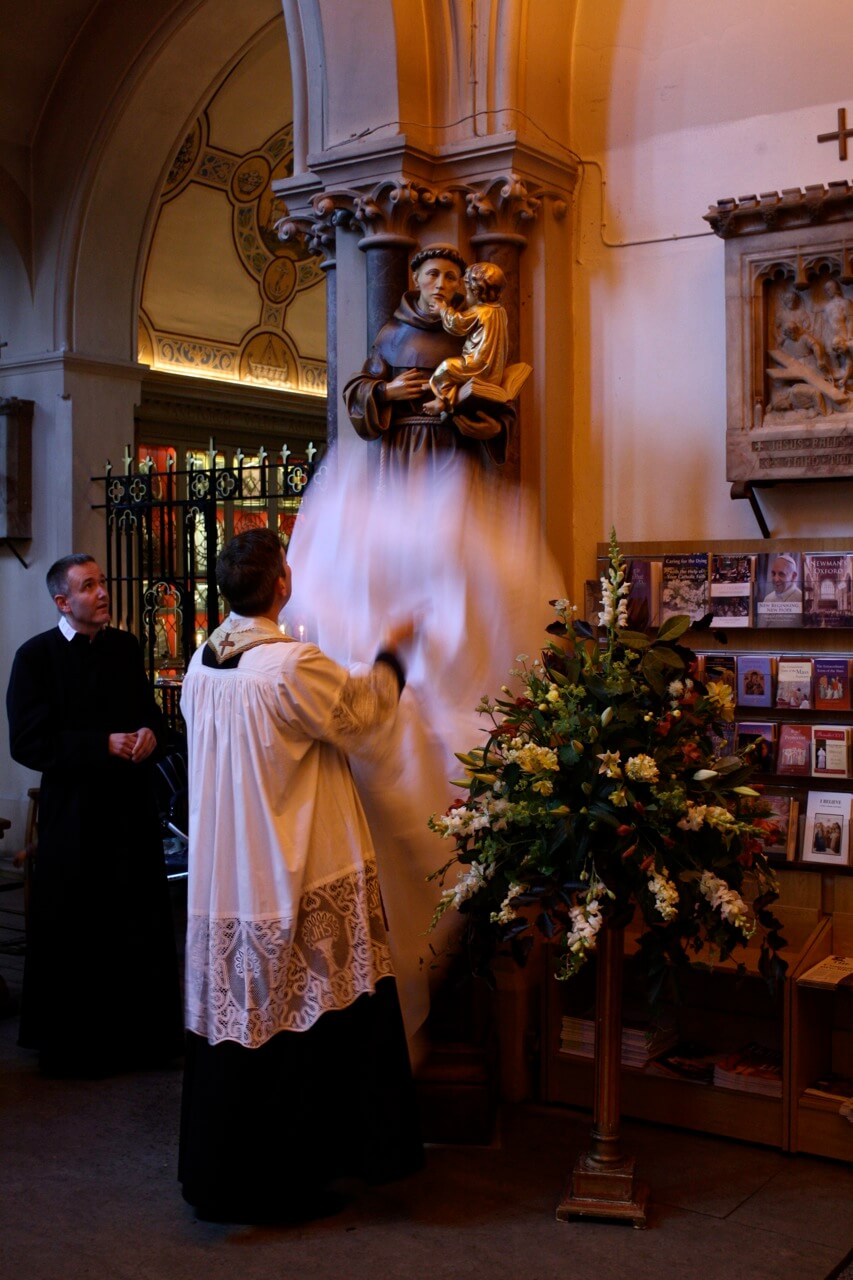
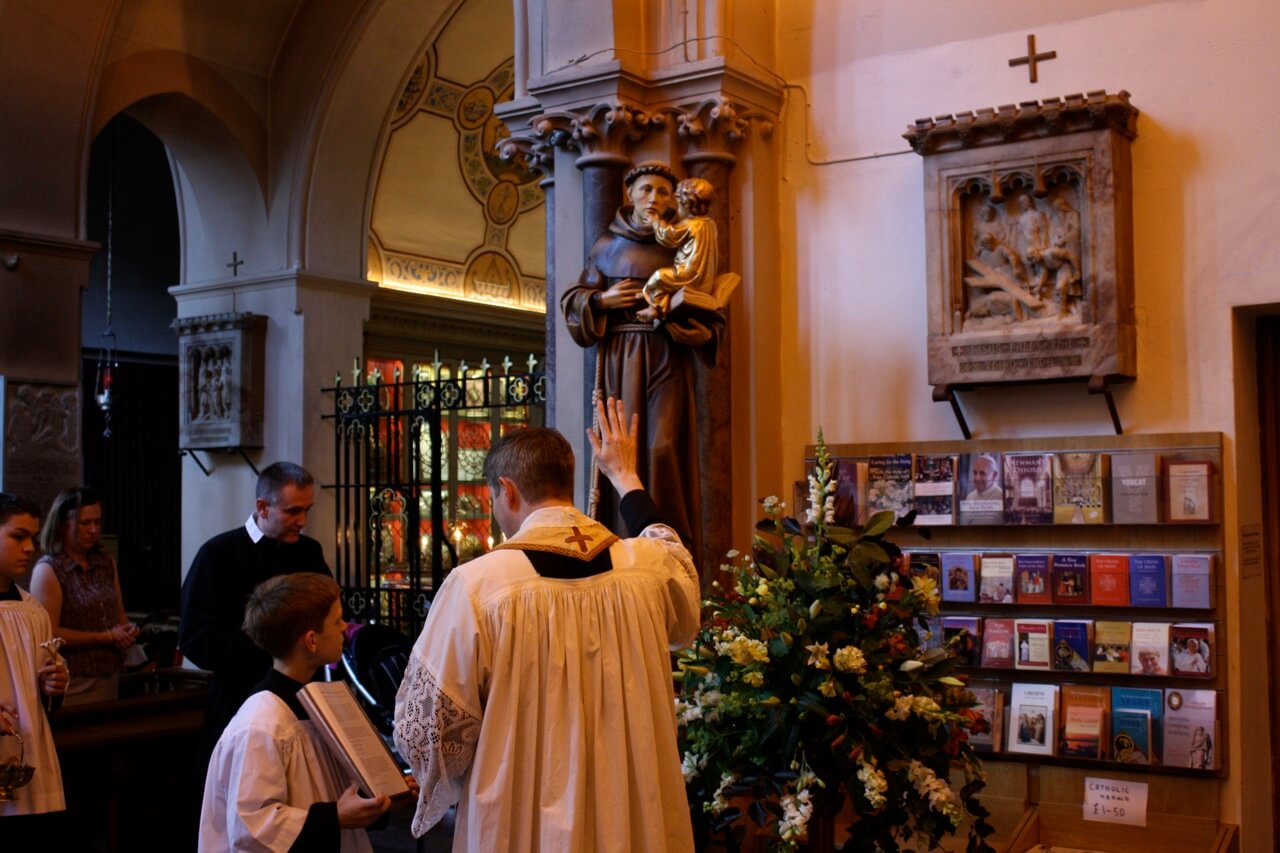
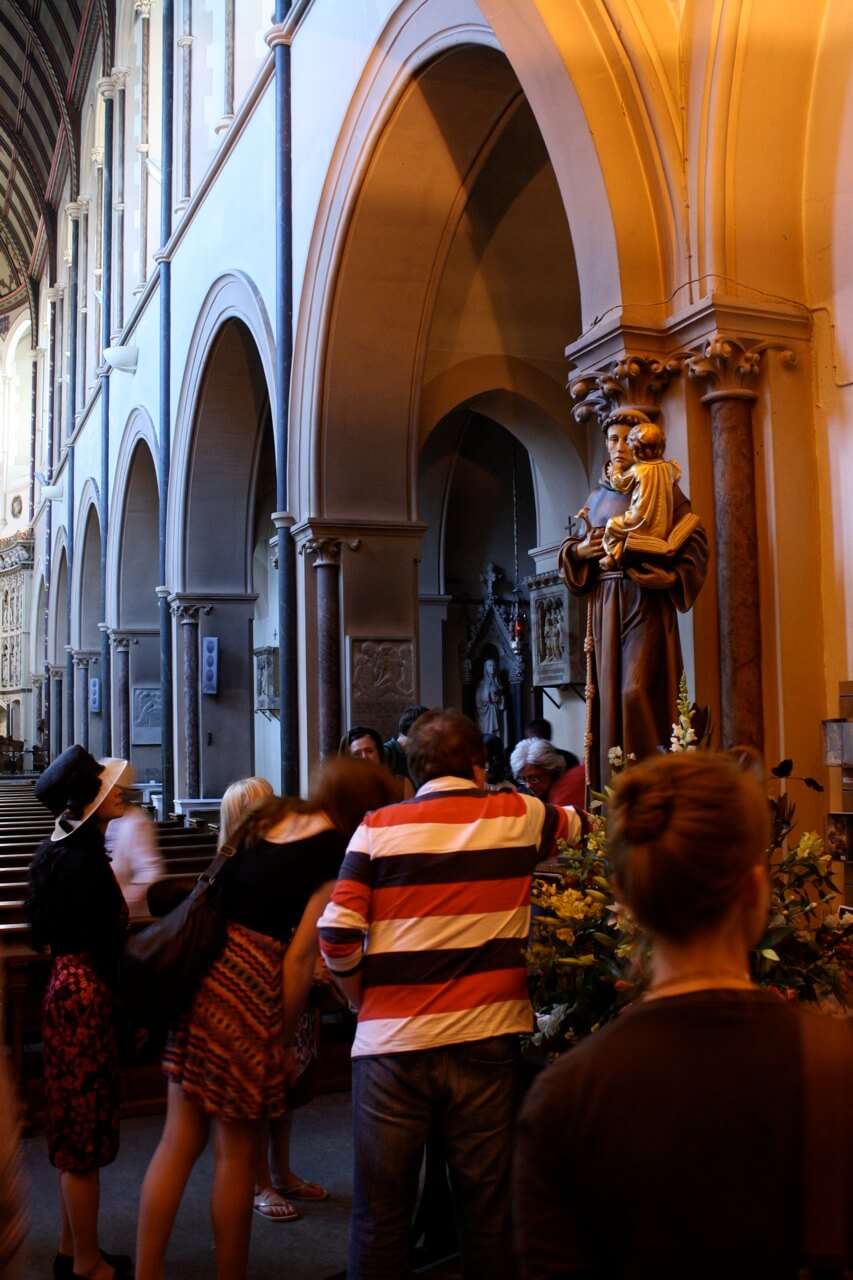
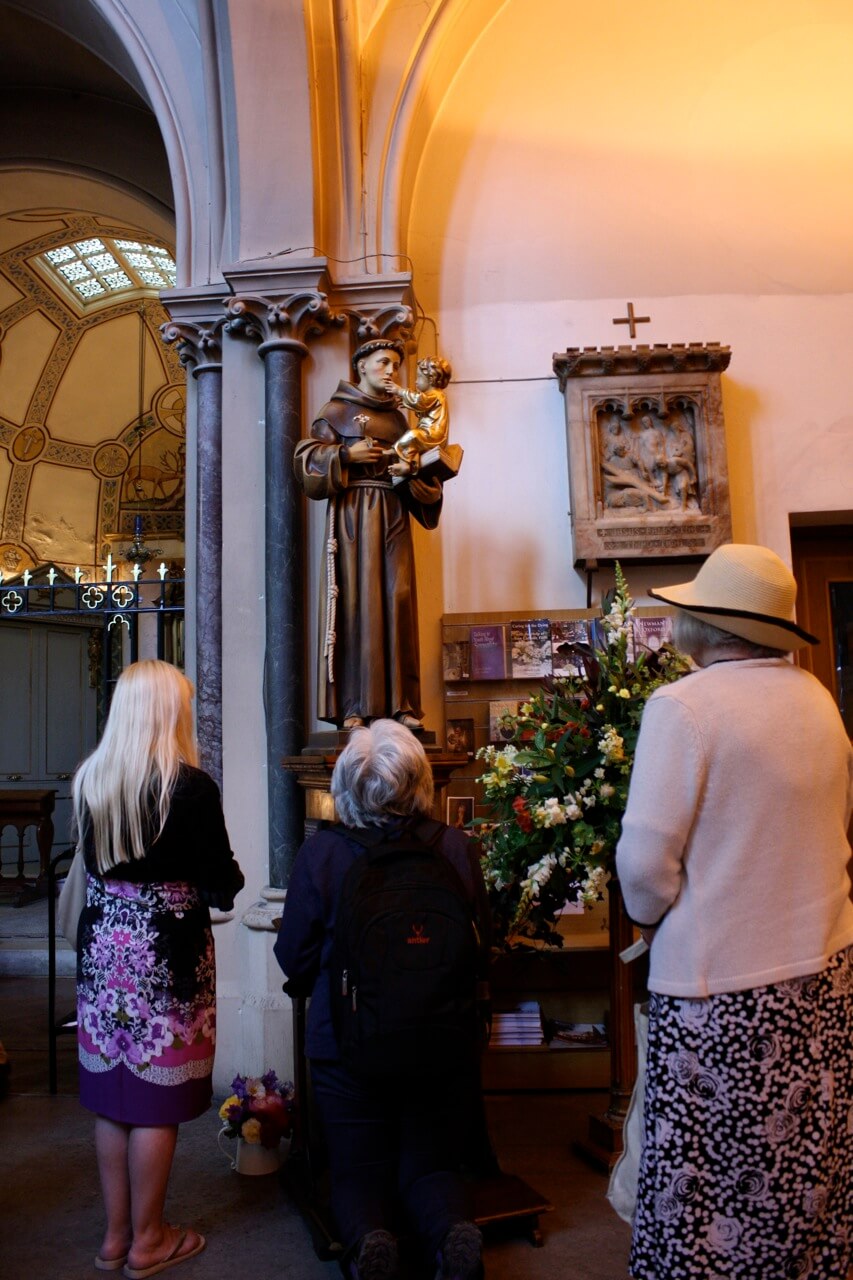
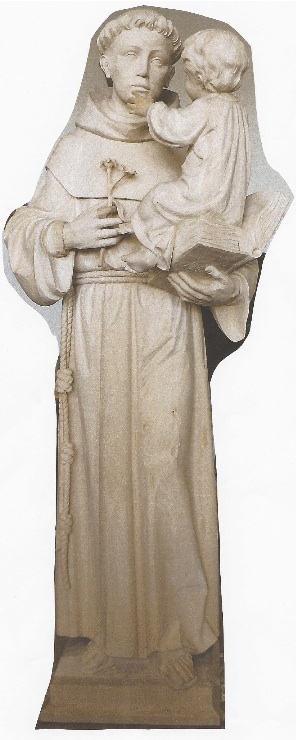
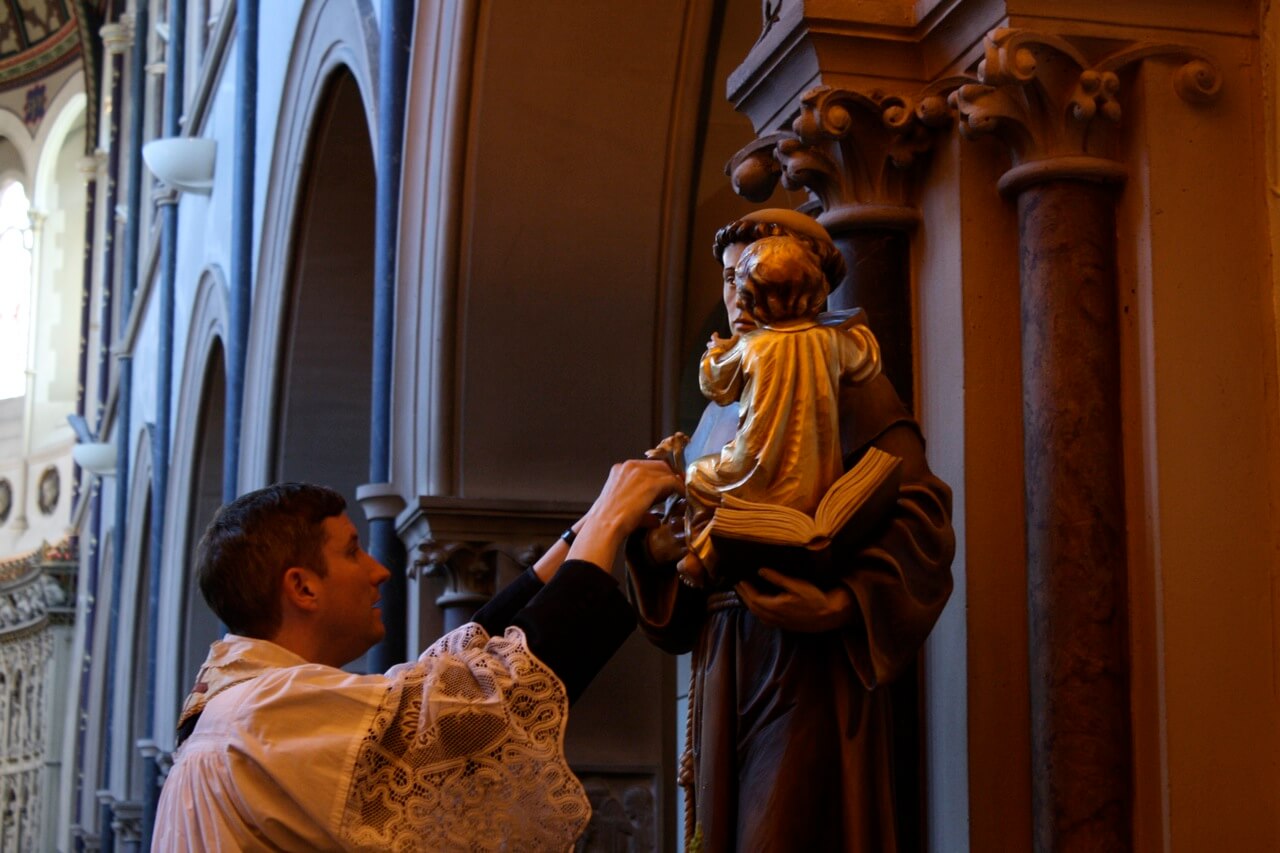
Today the new statue of St Anthony was unveiled and blessed.
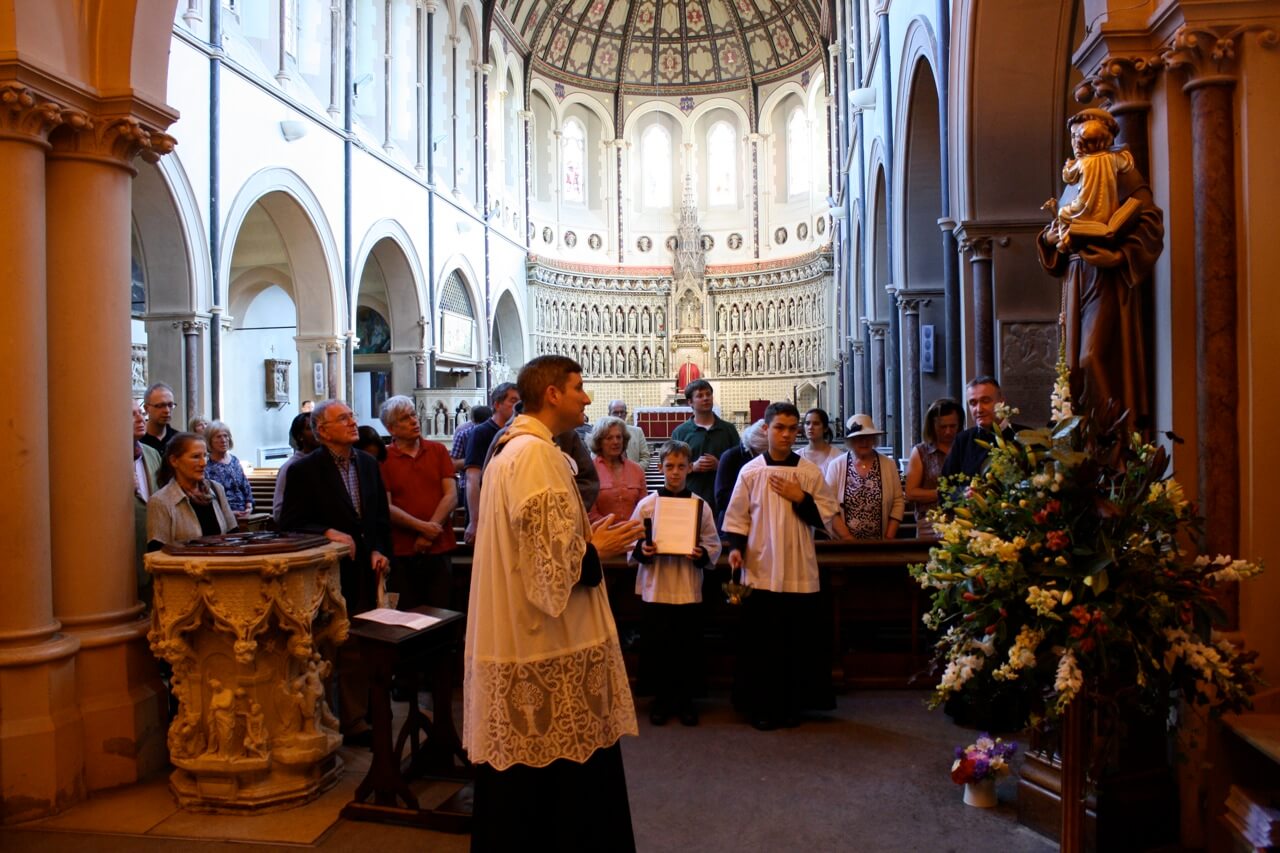
IMG_6196

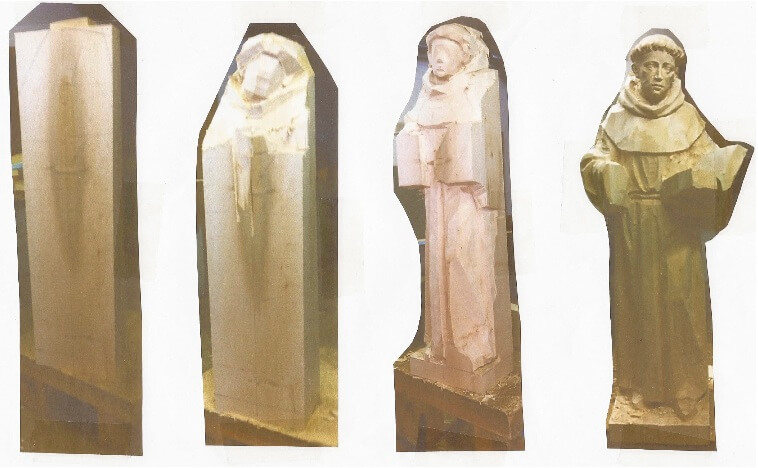
The statue has been carved in Germany by Ewald Böggemann, using photographs and the remains of the old statue. It took over 250 hours to carve.
IMG_6197 IMG_6199

The two-flowered lily that St Anthony holds had been carved separately, and was placed in the hands of the statue. The lily is associated with a particular miracle worked through the intercession of St Anthony — a lily was once placed in the hands of a statue of him and sprouted a second flower, which proved to have miraculous healing powers. We prayed that all who come to St Anthony for help in their illness might be healed through his intercession.

IMG_6207 IMG_6209

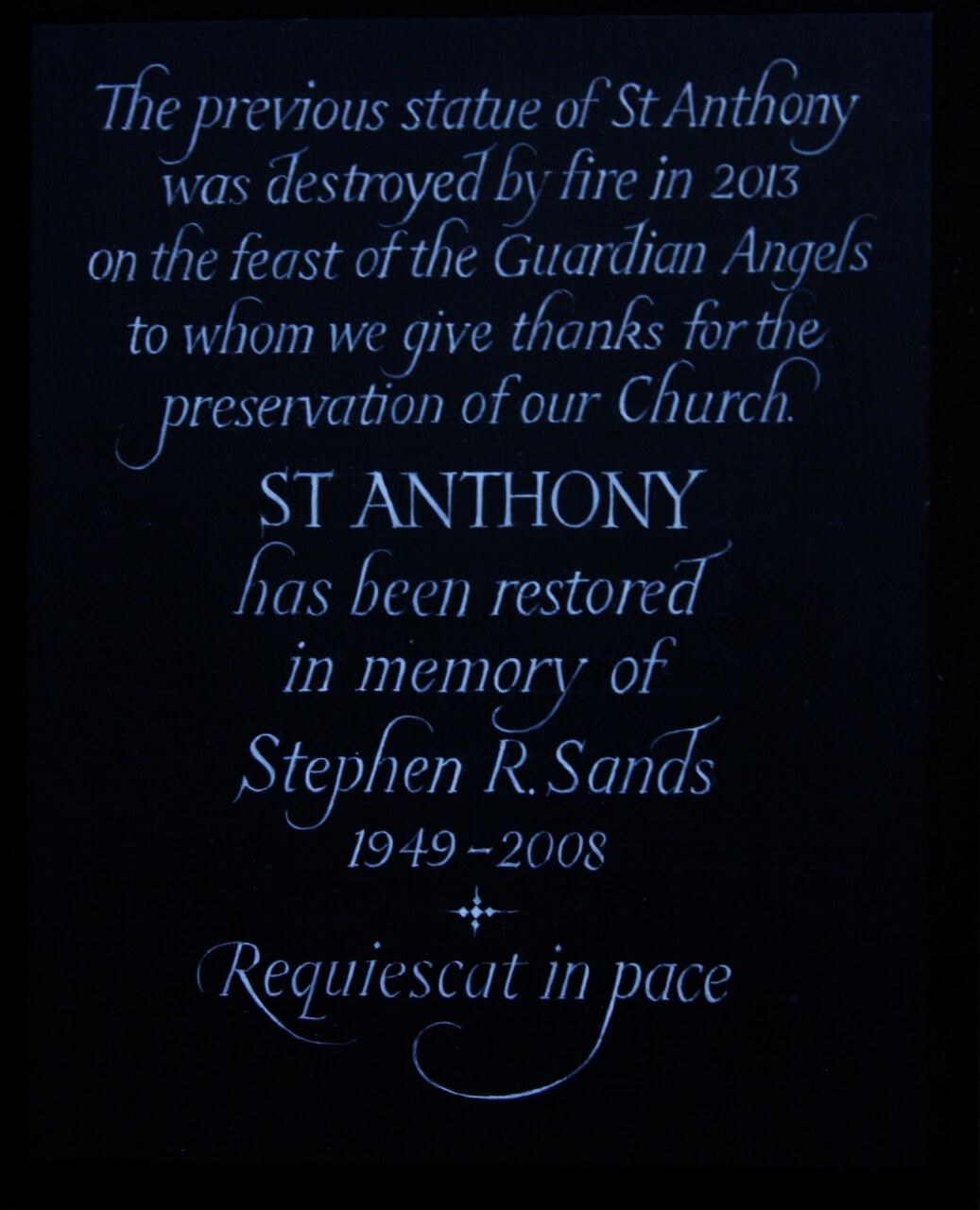
The original statue was discovered on fire on the feast of the Guardian Angels. The following prayer was used to thank God for the continuing protection of his angels:

O ever-loving Lord, we give you thanks for the preservation of this our church from serious damage and destruction by fire through the intercession and watchfulness of your holy angels. Grant that all who enter this building may be filled with a sense of wonder and awe in your presence, and, experiencing love and fellowship in this place, may give their lives over to you whose service is perfect freedom, and come at length to enjoy the bliss of heaven with all your saints and angels. We ask this in the Name of Jesus Christ our Lord, who lives and reigns with you, in the unity of the Holy Spirit, one God, forever and ever. Amen.

IMG_6211 IMG_6213 IMG_6216 IMG_6219

There are also some pictures of the statue in progress:

st-anthony-in-progress st-anthony-bare