Who are you?

What is the most important characteristic for a person to have? That’s one of the questions we thought about in Young Oratory this week. And having considered the merits and pitfalls of cheerfulness and wisdom, of patience and fortitude, of love and kindness, in the end, we settled on the answer ‘being a good person’. Which is by no means a bad one. Especially once it was expanded to ‘being a virtuous person.’ It just turns out that choosing a particular virtue to prize above all others is not an easy thing to do.

It’s not essential to know the names of all the virtues and have a complete understanding of how they work in order to be a good person. But it is a good thing to think from time to time about the characteristics in a person that we really value, and to ask ourselves if we have them. Our particular virtues and vices, our strengths and weaknesses, give us the genetic make up of our moral character. And they’re an essential part of the answer to the question, ‘Who am I?’

When we go to confession, it can be tempting to approach the process with a checklist mentality. We look at an examination of conscience and think: no, no, sometimes, no, yes, no, once… Viewed like this, sin becomes the infringement of arbitrary and meaningless rules. God and the Church tell us not to do certain things, and while we may really be trying our best to obey, it will be a struggle if we can’t see how these actions are related to who we are.

When we go to confession, we should imagine that our Father is asking us a series of questions, the first of which is, ‘What kind of person are you?’ And to begin answering that, we confess our sins. And then God asks us, ‘Is that really who you are? Is that who you want to be?’

If you met someone for the first time and were trying to tell them about yourself, the list of sins from your last confession would probably not be your starting point. Our sins capture a very tiny snapshot of our character. They are not who we are. But they do describe who we are in danger of becoming.

God sets before us a choice: to be the person defined by what we have just described, or to be better than that. We don’t like it when people notice our moral failings. And that’s the right kind of instinct to have — to know that we are meant to be better than that. But rather than just trying to conceal our weaknesses, we should be trying to overcome them. We don’t avoid sin because it’s against the rules, but because it makes us into someone we don’t want to be.

And when God forgives us, he confirms that he made us for more than this. He brings us that one step closer to being the saint we’re meant to be, and the good person that we actually want to be.

Confession is the one sacrament we are able to make easily available at the moment. That is no small help. The Church encourages us to make a special effort to go to confession during Advent, but why wait a week? Now is the perfect time to make sure that you are really becoming who God wants you to be.

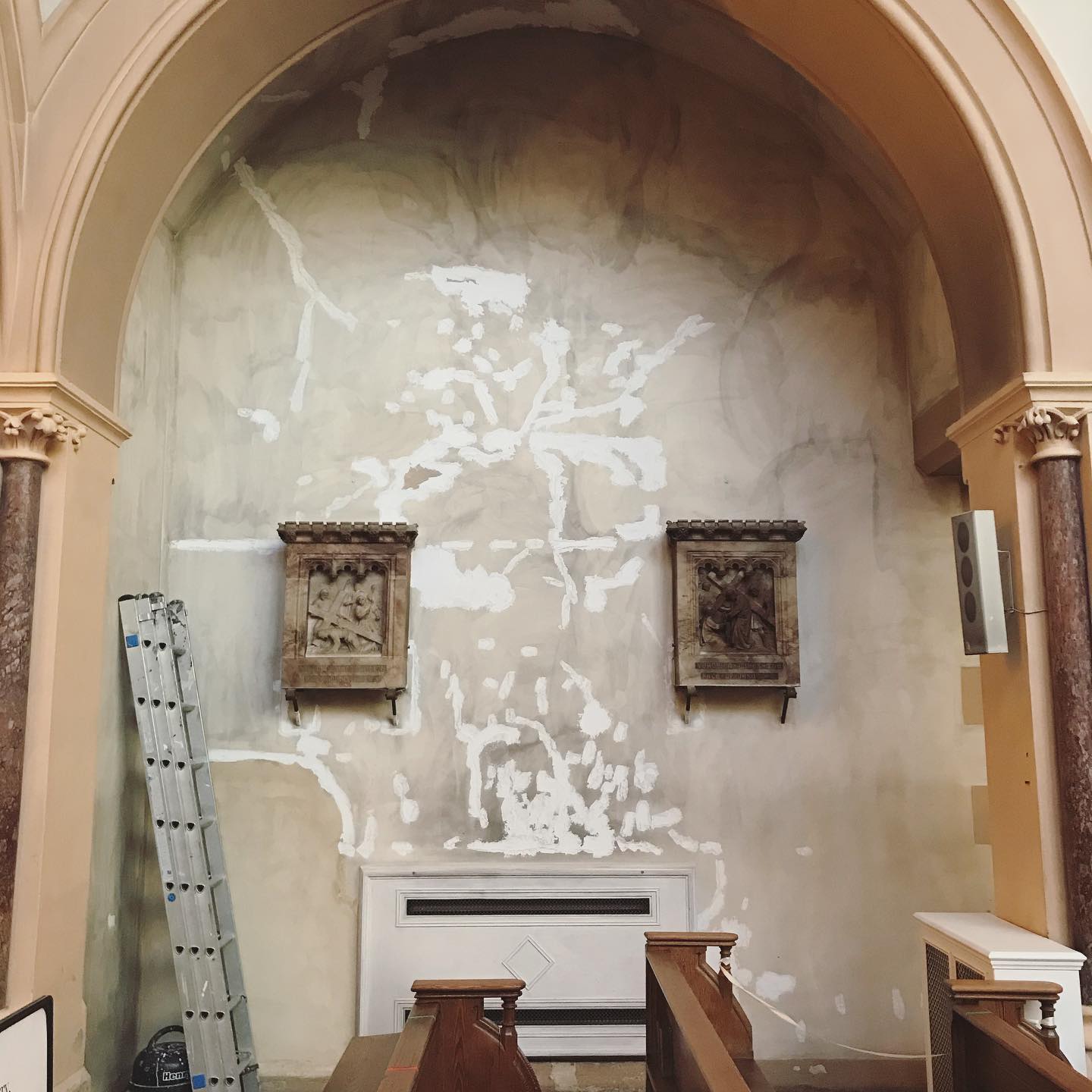
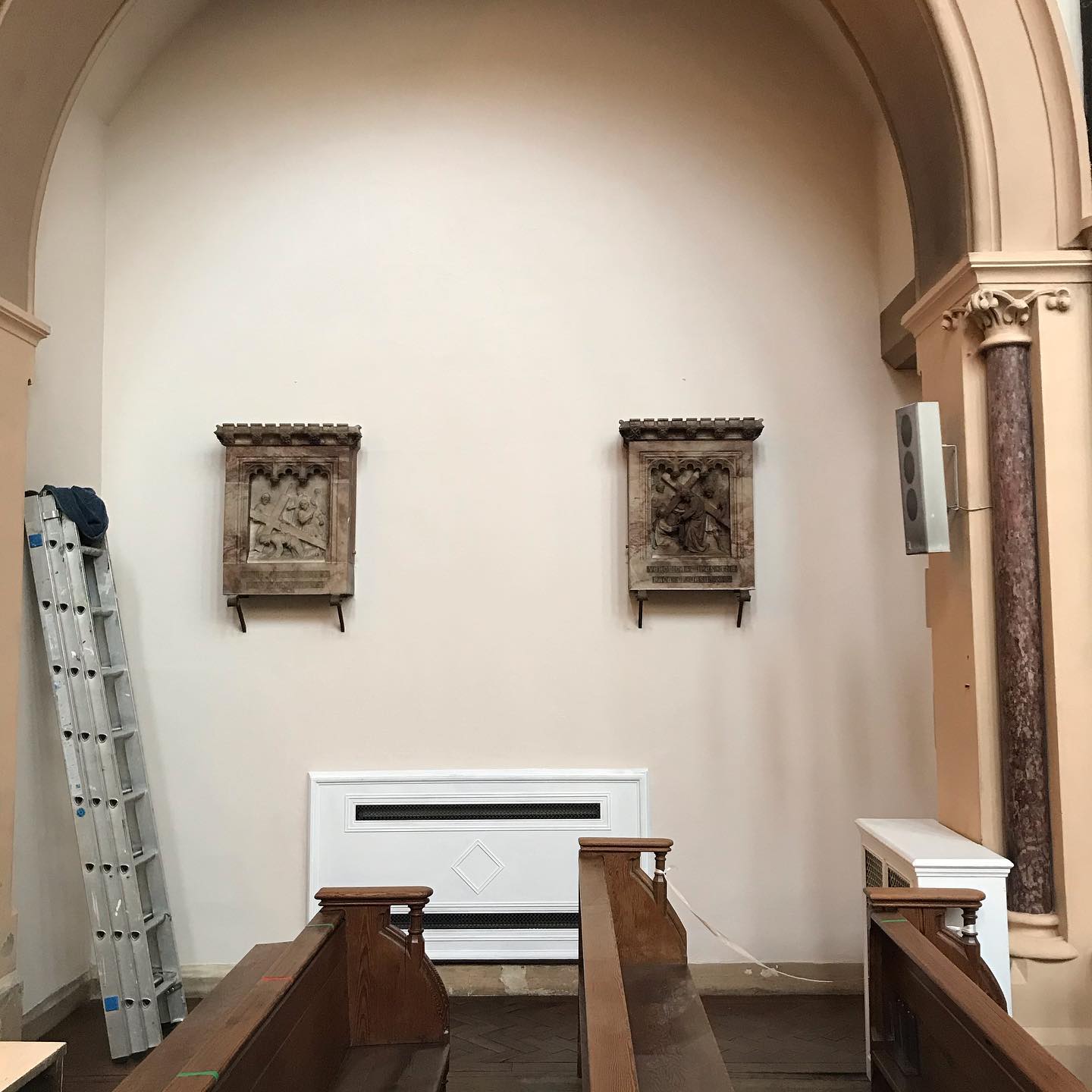
“In passing from a bad state to a good one there is no need of counsel, but in passing from a good one to a better, time, counsel, and prayer must go to the decision.” St Philip’s advice has been put into practice in cleaning up this corner of the church. Restoring the more colourful decoration will take a bit longer… #oxfordoratory

View on Instagram

Bringing to God what is

Last time I posted the weekly reflection, I wrote about how some of us had found prayer either difficult or well-nigh impossible during the first period of lockdown. I wonder if it has it been any easier for you this second time round? Have you grown through the trying situation or have your ideas about the purpose and practice of prayer changed at all? It is to be hoped.

Someone once said that you should never go into a meeting unless you know (and perhaps are sure of getting) what you want to bring away from it. It’s a thought, and could even have a bearing on how we approach prayer. Certainly we could begin with the end in mind. And the end is what? Is it merely to get out of God what we want? That way lies disappointment and we know it.

‘Prayer is simply bringing to God what is.’ By this, I mean that we must be totally honest when we come to prayer, both with Lord and with ourselves. There’s really no point in pretending or playing a part, which does no good at all and is simply a waste of time. Our life should be our prayer, since all we have to offer God is what we are. This is the point of it.

St John Climacus said that ‘Prayer is a pious way of forcing God’. I copied that into my common-place book some years ago and am now not so sure about it at all. Perhaps he had greater faith than I do? It just seems rather mercenary and, besides, God is surely not taken in by our blandishments nor is he deflected from His own vision or plan by our games. That He loves to be asked, I have no doubt, but do we always ask such things as accord with His Will?

Prayer doesn’t seem to me to be an easy way of getting what we want but a difficult way of becoming what God wants us to be. I’ve always loved Mother Cornelia Connolly’s most often quoted line: ‘Be yourself, but make that self what God wants it to be.’ That’s what we’re praying for. It’s certainly what we should be wanting to happen in our lives, that we become the men and women the Lord wants us to be, the saints He sees we can be. In this case, prayer seems to be more — or at least as much — about offering as it is about receiving. The spiritual writer, Fr Robert Llewelyn, makes a very encouraging point about this, which is well worth quoting in full:

If we are able to see prayer in this way [as offering]…we shall be relieved of all desire to make prayer successful. All sorts of thoughts may steal into our minds during prayer. Does this prayer help? Is it strengthening? Is it of any value for the person I am holding up before God? If we can see prayer as an offering we can ignore all these thoughts. A child doesn’t make an offering to his mother that he may be helped or strengthened. The offering is simply to be offered as a token of love.

How liberating is that! So often we spend our prayer time thinking or worrying about our prayer, going over it and remaking it, as though it had to be perfect. This is not ‘paying loving attention to God’, it’s paying too much attention to ourselves and what we are doing. Just remember St Catherine of Siena’s comment: ‘the art of prayer is that there is no art.’ Another useful piece of advice comes from the great Irish Jesuit Fr John Sullivan: ‘In prayer, don’t mind the scaffolding, get at God,’ which is the purpose of all prayer.

So shall we continue to try to pray, to offer and to love.

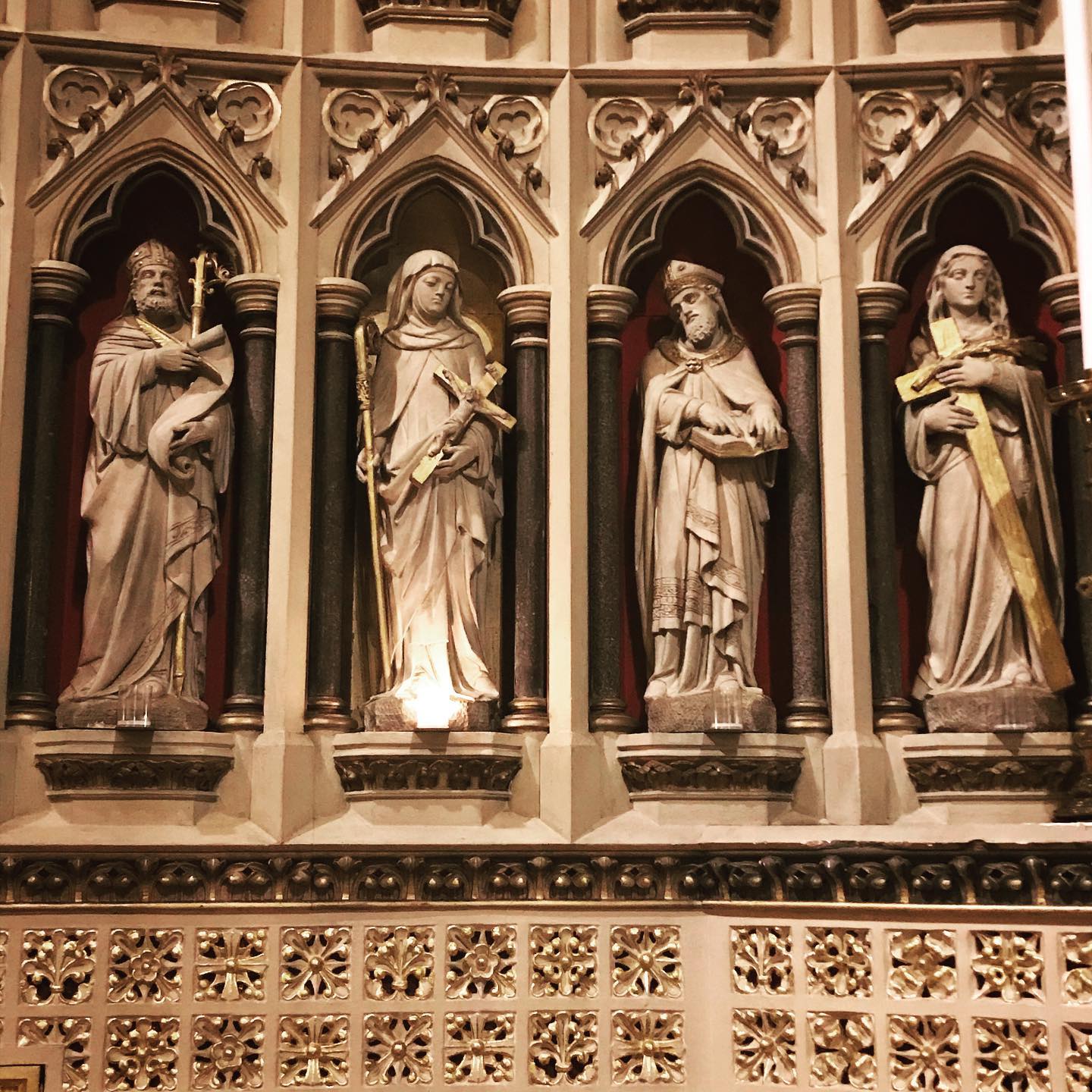
St Gertrude (whose feast day also falls today) and St Ambrose had nothing to do with each other in life, so why are they the only two saints on our reredos looking at each other? They were given in memory of a husband and wife, Ambrose and Gertrude. He was clearly very devoted to her, because when she died he also commissioned the stained glass window of St Gertrude in the Lady Chapel. #oxfordoratory

View on Instagram

Friends with death

When I first joined the Oratory, one of the first places I was taken to by Fr Robert was Wolvercote Cemetery, just up the road — most famous for being the burial place of J R R Tolkien. But the purpose of that trip was not to say a prayer over the grave of that great Catholic author — although of course we did. Rather, we went to a little fairly empty section of the graveyard, in the far corner, under a tree. There, I was told, one day I would be buried. Rather a startling thing for a young man to be told, I think! And every All Souls’ day, when visiting Wolvercote Cemetery to bless the graves of those we have known, that little plot of ground is always given an extra large splash of Holy Water just in case it should be required in the coming year. Last year it was required, and now Fr Jerome’s body lies there in peace, awaiting the resurrection of the dead among so many deceased friends and parishioners.

Our annual visit to Wolvercote Cemetery is always sobering but salutary. In a world where we very pointedly hold death at bay — ignore it, sanitise it, euphemise it — visits to where the Fathers will be buried helps put death into something of its proper perspective, and that is a good thing. La Rochefoucald once wrote that “death and the sun are not to be looked at steadily.” Perhaps, but not to look at death at all cannot be right.

With good reason each year the Church gives us this month of November, of the Holy Souls, to encourage us to look at death and reflect on it — to get better in touch with the mystery of our own mortality as well as the mystery of our immortality, and the immortality of countless ranks of brothers and sisters who have gone before us — some, maybe as recently as last week; others, maybe last year, or many long years ago.

But getting ‘in touch’ with these things is not enough. Touching is too tentative. The Church invites us to come face-to-face with mortality: to make friends with it, strange as that may seem. The Church invites us to do as St. Francis of Assisi did, to come to the point where we think of death as “Sister Death” — where we look upon the hour of its arrival, an hour known only to God, as a gift which God will give in his own good time, a most surprising and paradoxical gift because, while it looks like the end, it is really only the beginning — the very path to life in its fullness. It was for our Lord, and it will be for us.

We wear black vestments at Requiem Masses because our reflection on death is tinged with sorrow — a sadness because we miss those we have loved who have died, because we mourn their passing, and want to express that loss in a tangible way; and a sorrow because we know, as well as we know our own selves, that those who have died were not perfect, they could have been better, they could have loved more. And that is a great sadness — all that human fault and failing, all that debris of our struggle with sin and selfishness, all, as the hymn puts it, “those chances we have missed, the graces we resist”.

Our hearts are divided, we seek after things which can only give us temporary happiness, we become attached to all sorts of rubbish, we have to live with the consequences of our actions. Nothing which is imperfect can enter heaven, so if through prayer and penance in this life, we have not yet been purified of all that sin and selfishness, then we still need to go through some purifying process before entering the eternal presence of God. What that process is like it is not for us to speculate, but we call it purgatory.

But the Black does not imply that that sadness is a defeat, nor that purgatory is a final destination. It is not defeat that we look at this day or any day. It is victory. The victory of Christ: the triumph of light over darkness, of hope over fear, of life over death. Every Mass we celebrate brings us into the closest possible contact with the central mystery of the Christian faith: the mystery of the death and resurrection of Jesus, the mystery of life that always has the last word no matter how convincing or seemingly final the word spoken by death.

And so we pray this month for those who have gone before us, for our friends and family, for the parishioners we have lost, for those who went off to fight for King and Country and never came home again, for those who died tragically in accidents or from sickness and disease, and for those who went home to the Father after a long and happy life, having done their own little bit towards the building of God’s kingdom in this world.

We pray for those whose love has shaped and formed us — family and friends who have been separated from us by death but with whom we are still very much united in the Communion of Saints. And we pray also for ourselves too, we who are still on this great journey of life. We pray with confidence, quiet confidence, the confidence voiced by the beleaguered and all-but-defeated Job who stubbornly clung to the belief that his Redeemer lived, and that he himself would one day see God in his own flesh, with his own eyes. We pray with the kind of confidence voiced by St. Paul when he dared to look death in the face with defiance and ask: “O death, where is thy victory? O death, where is thy sting?”

This ancient practice of the Church — praying for the dead — is grounded in the doctrine of the Communion of Saints. We believe that God’s holy people is made up of those who have passed from this life and those who are still living; and we believe that among those who have died are the saints in glory and those still being shaped and formed for glory. The Communion of Saints says that there is a communion between the living and the dead — that death cannot separate us from the love of God, nor from each other. It is a communion best expressed by prayer — ours for them, theirs for us — and the highest prayer we can make is to offer the Sacrifice of the Mass with Christ our Lord.

May the beauty and wonder of our faith give voice to the deepest longings of our hearts. May it help us come to terms with death — even to make friends with death. May it bring us close in prayer and in love to all those who have gone before us in the sleep of death.

At the end of our Cardinal’s poem The Dream of Gerontius, the prayer of a dying man, the angel carries the soul of Gerontius towards heaven. The angel describes how he carries the soul softly and gently through the cleansing waters of purgatory and then brings the soul to the throne of heaven:

Softly and gently, dearly-ransomed soul,
In my most loving arms I now enfold thee,
And o’er the penal waters, as they roll,
I poise thee, and I lower thee, and hold thee.
And carefully I dip thee in the lake,
And thou, without a sob or a resistance,
Dost through the flood thy rapid passage take,
Sinking deep, deeper, into the dim distance.
Angels to whom the willing task is given,
Shall tend, and nurse, and lull thee, as liest;
And Masses on the earth, and prayers in heaven,
Shall aid thee at the Throne of the Most Highest.
Farewell, but not for ever! brother dear,
Be brave and patient on thy bed of sorrow;
Swiftly shall pass thy night of trial here,
And I will come and wake thee on the morrow.
Farewell! Farewell!
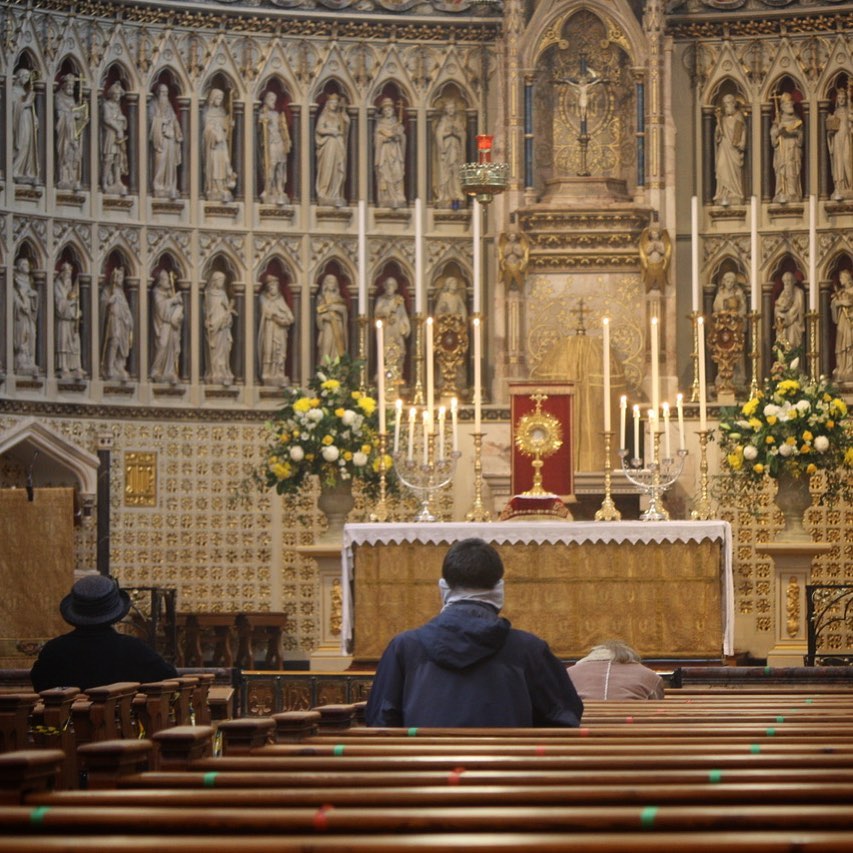
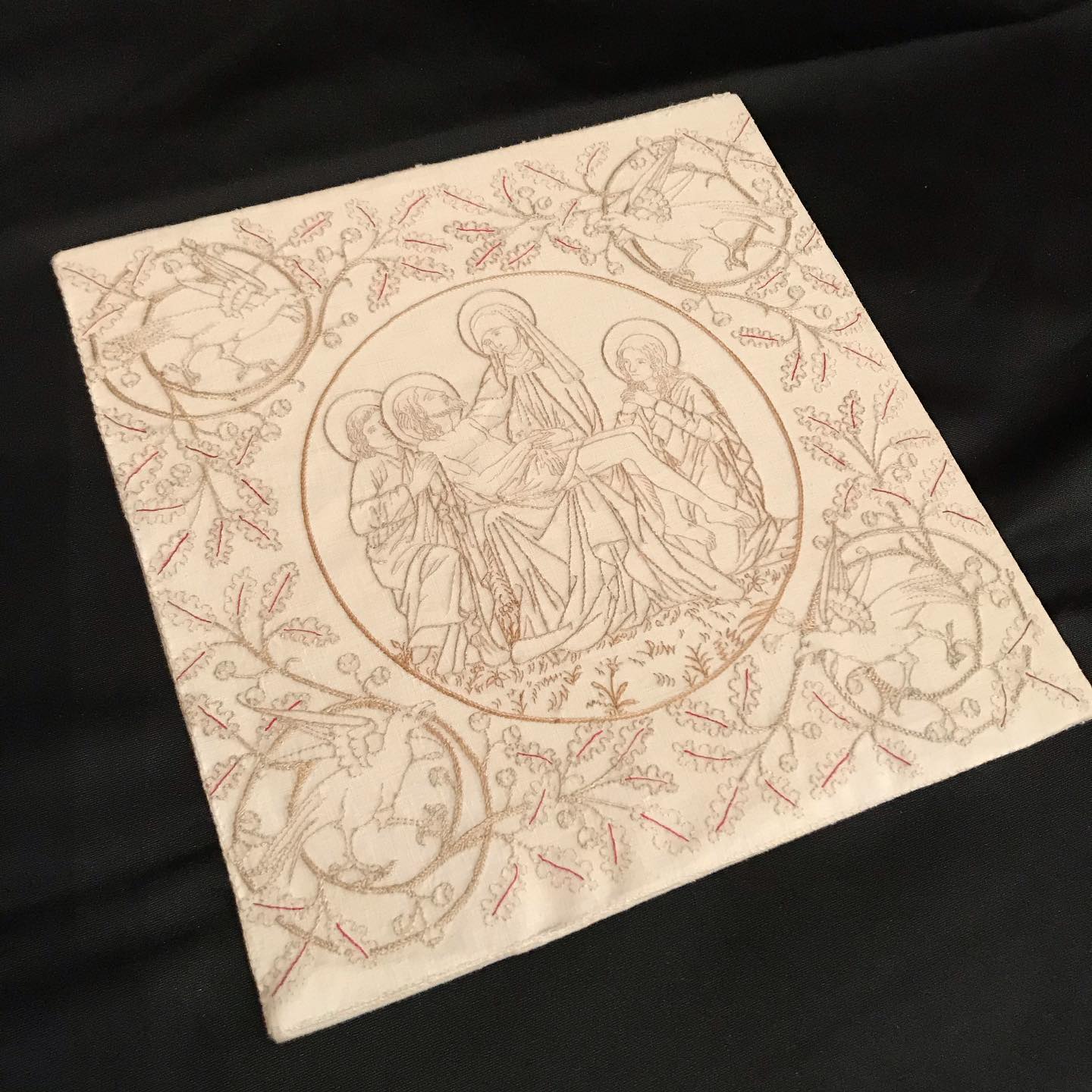
O God, to whom it ever belongs to show mercy and to spare: look favourably on the souls of your servants, and forgive all of their sins: that, with the chains of mortality having been broken, they may merit to pass on to life. #oxfordoratory

View on Instagram