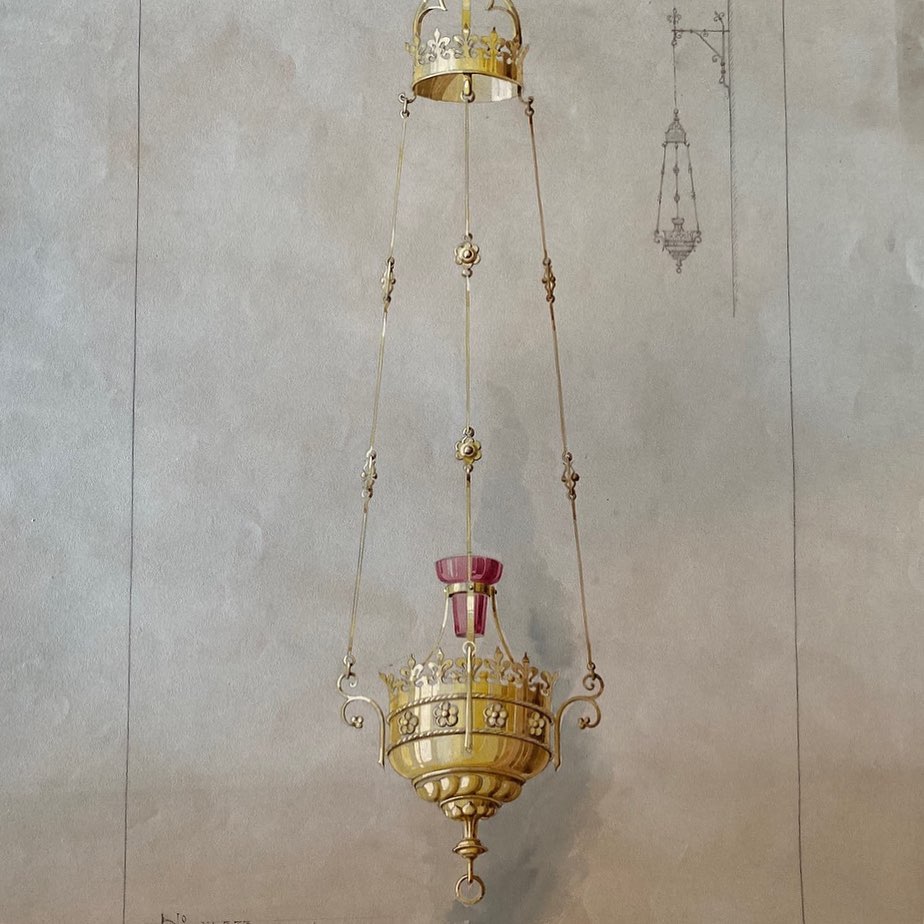
Original design for our sanctuary lamp from the archive. #oxfordoratory
When archaeologists uncover the remains of a building, they will often rely on peculiarities of its design to tell them who built it and what it was used for. Church buildings are no different. Even those of the same time and place can differ depending on which religious order or congregation built them. There are many Oratories dotted around Italy now, but there are even more buildings that once belonged to Oratorian communities that no longer exist. They can be recognised by the distinctive layout of their buildings. The typical Oratorian site has three elements: a church, a house and a little oratory.
Despite its name, the little oratory is the place where some of the most important work of the Oratory happens — that’s why it has a dedicated space. It is where, historically, the daily sermons were preached and the Fathers gathered in prayer with all those who wished to join them. It is named after that first place of prayer where St Philip taught his spiritual children how to pray.
The closest thing we have to a little oratory in Oxford is the Guild Room. It’s where the Fathers gather for prayer each evening, and where many of our groups spend a portion of their meetings praying together. But it was not always so.
The Guild Room started life as an extra classroom, built when what is now the parish centre was a school, before the parish school moved to new premises further along the Woodstock Road in the 1970s. When the school left, the room became the place where parish guilds met for their regular meetings, and the name stuck. Over time, the guilds got smaller, and more of the space was given over to storage. By the early 1990s, it was storing so many items that it couldn’t be used for anything else. The space was cleared out and transformed so that it could be used for meetings, talks and catechesis once again. But items in storage began to build up once more, and the room needed another good clear out a few years ago. It was also treated to a major redecoration, and an altar was constructed so that Mass could be said there. If you watched our livestream during the first lockdown, then you have seen Mass being said at this altar.
Now you may well be wondering why a detailed history of the Guild Room has replaced the weekly reflection. It hasn’t. The history of this room is a paradigm of the spiritual life:
“When the unclean spirit has gone out of a man, he passes through waterless places seeking rest, but he finds none. Then he says, ‘I will return to my house from which I came.’ And when he comes he finds it empty, swept, and put in order. Then he goes and brings with him seven other spirits more evil than himself, and they enter and dwell there; and the last state of that man becomes worse than the first.” (Matt. 12:43–45)
Rooms that aren’t kept clean and tidy accumulate junk. And if they are left empty — if they are not given a purpose — then the last state can easily become worse than the first.
In the Guild Room and in our lives, junk gets in the way of prayer. If we don’t keep on top of things, it’s possible for the junk to accumulate to such a degree that prayer becomes impossible. From time to time we might need to have a major clear out, but we can avoid that if we keep things clean and tidy before the junk gets a chance to build up. Most importantly, we can’t leave these spaces empty and purposeless. Putting an altar into the Guild Room has guaranteed its use as a place of prayer. Our Lord warns his listeners that it is not enough to have their demons cast out and their sins forgiven: they need to be filled with the Holy Spirit. Their souls need to become places of prayer.
Our Guild Room is closer to being a little oratory than it has been in the past. But it only takes a quick Google image search to show you that it’s not there yet. No matter. This too is like the spiritual life. This is what St Philip called the ‘human’ degree of spirituality — where we are doing that constant maintenance, fighting off sin by building up virtue, until we reach the kind of effortless sanctity we see in the lives of the saints. It’s certainly a step up from the animal life, where we are controlled by temptations and passions, but still one below the perfection of the angelic life. ‘Of these three degrees it is well to persevere in the second, because the Lord will grant the third in his own good time,’ St Philip said, ‘The Lord grants in a moment what we may have been unable to obtain in dozens of years.’
These reflections are sent out each Wednesday to all those on our mailing list. Enter your e-mail address below to receive our Sunday E-newsletter and these reflections straight to your inbox.
You can unsubscribe at any time by clicking the link at the bottom of one of the e-mails.
If you would like your child to receive their First Communion or Confirmation this year, please fill in this online form.
In-person classes are not possible at present and may not be for some time, so all classes will be online with occasional sessions via Zoom. Once you fill in the form, Fr Benedict will be in touch with more information.
We are also launching our new Family Catechism series. In this series of short videos we will explore the traditional Catechism so that whether you are a grown-up learning for yourself or a parent leading your family catechism, you can grow in knowledge and understanding of your Catholic faith. The series will launch on Monday and can be found on our YouTube channel.
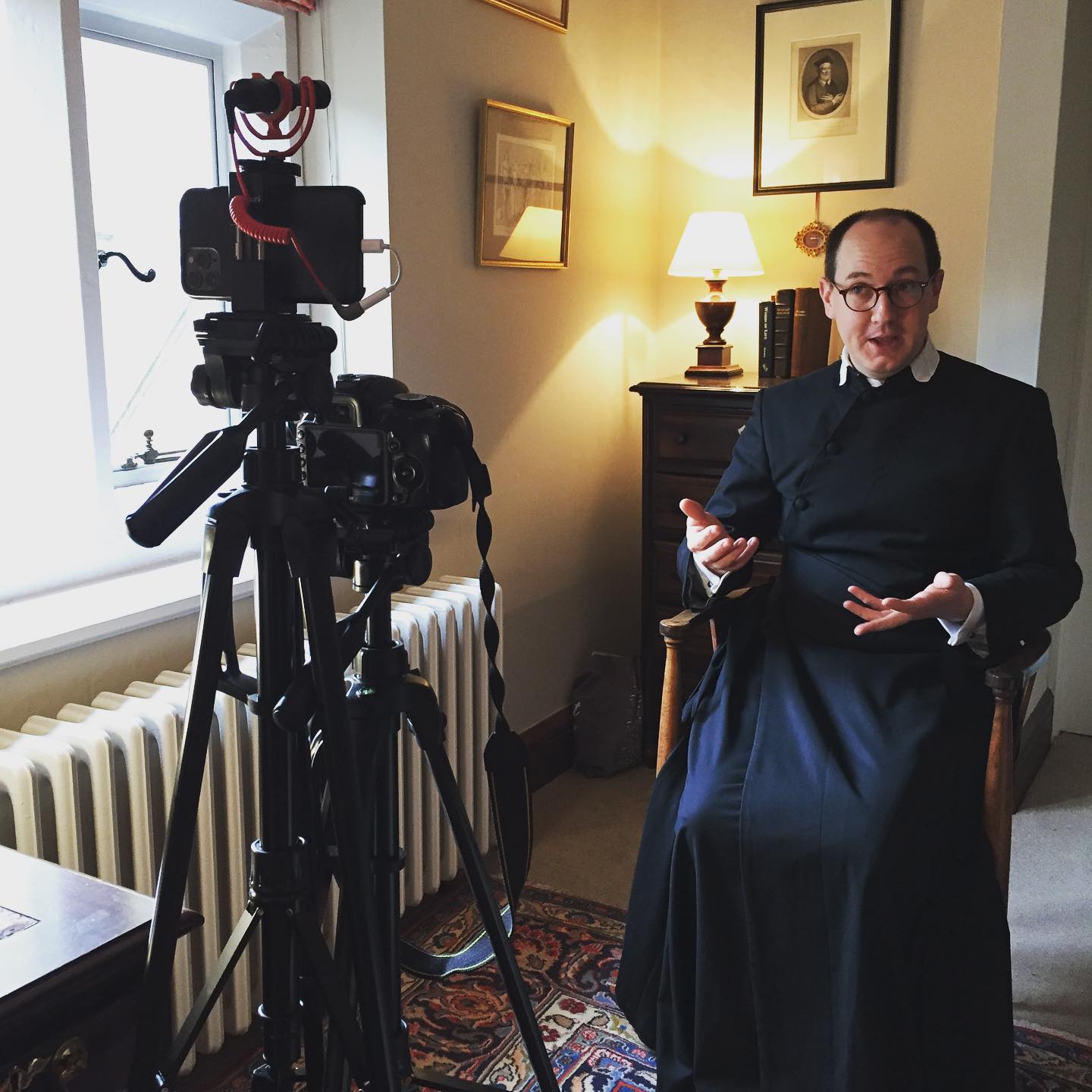
Filming our new Family Catechism series. We’re also starting to prepare children for First Communion and Confirmation soon. See our website to register your child. #oxfordoratory
Sunday 17 January Solemn Mass 11:00
2nd Sunday of the Year
Missa in G Casciolini
Ego flos campi Clemens non papa
Sunday 24 January Solemn Mass 11:00
3th Sunday of the Year
Mass XI (Orbis Factor) Plainsong
Tantum ergo Widor
Sunday 31 January Solemn Mass 11:00
4th Sunday of the Year
Missa in simplicitate Langlais
Verbum caro Hassler
Our church remains open and Masses, Vespers and confessions continue as normal. The church remains open between Masses for private prayer each day.
The new government guidance for places of worship was published this week. Most of the guidance remains the same, except for guidance about choirs, which are now limited to three singers. From this Sunday, there will be no music at the 9:30 Mass. A smaller choir will continue to sing at the 11:00 Mass.
When visiting the church, please continue to observe the following guidance:
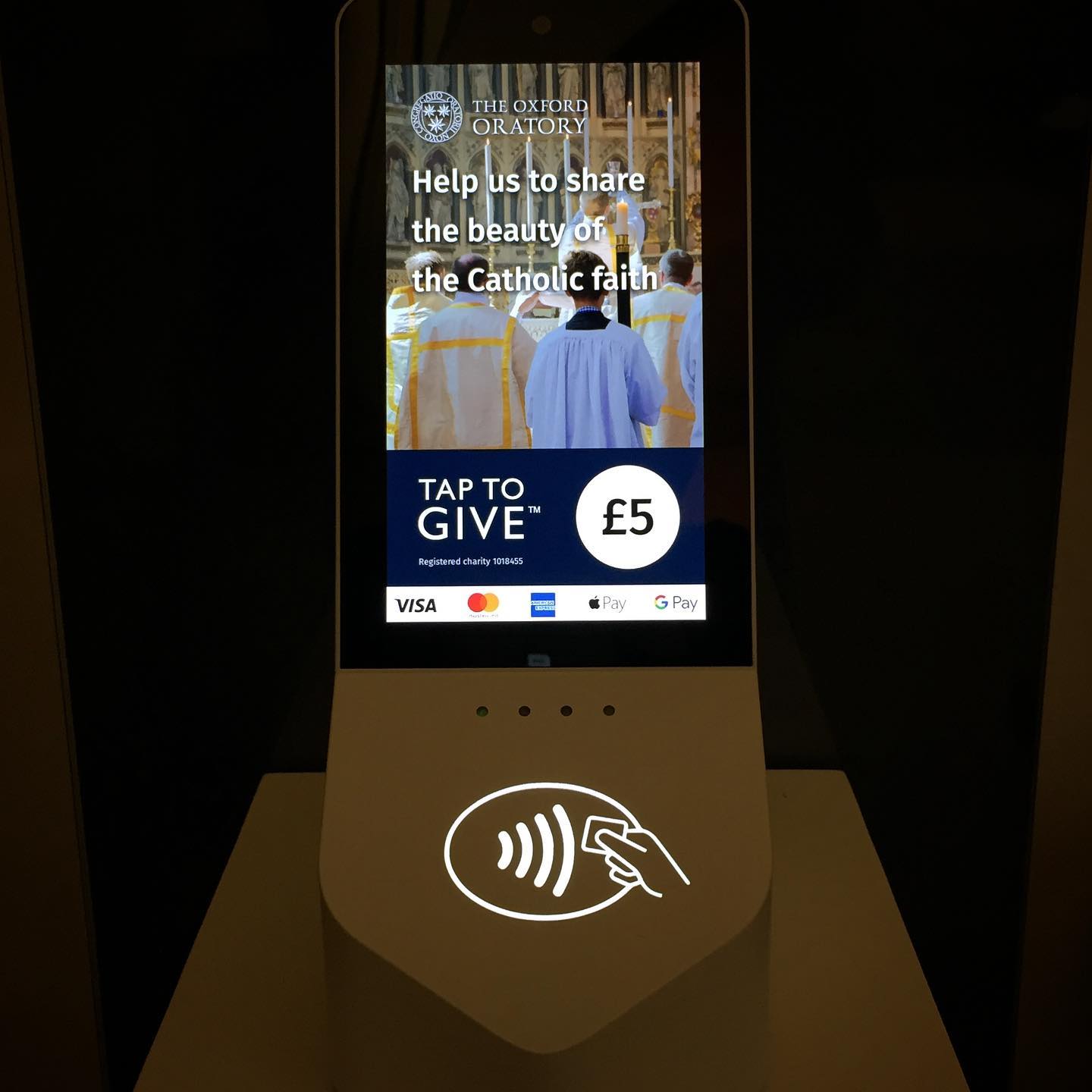
After a few glitches earlier this week, our contactless donation system is back up and running. Did you know you can gift aid contactless donations? See oxfordoratory.org.uk/giving to find out how. #oxfordoratory
Today is the Octave of the Epiphany. Though of course in the new Calendar, it is no longer observed as such. Which is rather a pity, since to do so would help us to keep in mind the significance of this wonderful feast of the manifestation of Christ to the world, a manifestation in which we are privileged to share, because we have been called to be the Light of the World in which we live.
Of course, we fall far short of being like the Epiphany star — emitting an uncertain light at times, or allowing that light to be obscured by the clouds of our moods or the fog of our vacillating faith, thrown off kilter by circumstance, the pressures of life and, yes, our sins. There are moments, long periods even, when we are not what we should be, and there are even times when we are not much bothered by this. We might freely admit that we are not always radiating the light of Christ, that we fail to heed Our Lord’s words: ‘Let your light so shine before men, that they may see your good works and glorify your Father in Heaven.’ (Matt. 5:16)
Each of us is different. One may be able to light a candle while another switches on a powerful floodlight, yet neither of these would make much impact in a sun-drenched landscape. That doesn’t really matter. We are all of us, despite our differing degrees of dimness and darkness, called to be light. Sometimes, when we fail to shine, or fail in any virtue of Christian living, we attempt to justify ourselves, saying, Well, I’m only human, which while it is true, seems an odd appeal to make. We are not angels, but men and women, called by grace to know, love and serve God.
From time to time we do fail to live up to our Christian calling, and our consciousness of this unpalatable truth about ourselves — that we are imperfect beings — can make us give up trying, because the effort required seems too great or because we imagine that we have been set up to fail. Or else, it can encourage us to try again and try harder, because to fail once does not make us a failure.
Many seem to see God as the eternal headmaster, or foreman, surveying the field of our endeavours from a lofty platform, cracking the whip, watching us flail around as we sink in failure, judging and condemning us. This way of thinking does the Lord a great disservice, because, on the contrary, He is there, working alongside us, energising us and acting with us. This makes me think of something Dame Julian of Norwich wrote: ‘When you shall meet your fair sweet Lord, you will laugh to see how you mistook Him.’
Our contribution, while it may seem quite puny to us (and our co-workers), is of infinite value to the Lord who has invited us and given a share in His great work.
The excuse I’m only human doesn’t really wash. It is precisely because we are human that we have been called by our Lord. And by his grace, we are enabled to become more fully human — the men and women we are meant to be. This requires total trust and the courage to press on and to trade with the talents God has given us and not to give in to fear and, paralysed, do nothing.
I’ve always had a fondness for the Arthur Hugh Clough’s poem, in which the poet exhorts his readers to soldier on, bearing in mind that our little human contribution may yet prove to be decisive and of tremendous significance.
Say not the struggle nought availeth,
The labour and the wounds are vain,
The enemy faints not, nor faileth,
And as things have been they remain.If hopes were dupes, fears may be liars;
It may be, in yon smoke concealed,
Your comrades chase e’en now the fliers,
And, but for you, possess the field.For while the tired waves, vainly breaking
Seem here no painful inch to gain,
Far back through creeks and inlets making,
Comes silent, flooding in, the main.And not by eastern windows only,
When daylight comes, comes in the light,
In front the sun climbs slow, how slowly,
But westward, look, the land is bright.
Sunday 3 January Solemn Mass 11:00
2nd Sunday after Christmas
Mass for Three voices Byrd
Benedic, anima mea Sermisy
Regem natum Handl
Wednesday 6 January Solemn Mass 18:00
The Epiphany of the Lord
Missa O Magnum mysterium Palestrina
Reges Tharsis Palestrina
Omnes de Saba Handl
Sunday 10 January Solemn Mass 11:00
The Baptism of the Lord
Missa Puer qui natus Guerrero
Tribus miraculis Palestrina
Sicut cervus Palestrina
Sunday 17 January Solemn Mass 11:00
2nd Sunday of the Year
Missa Brevis Palestrina
Jubilate deo Dering
O nomen Jesu Philips
Sunday 24 January Solemn Mass 11:00
3th Sunday of the Year
Missa Euge Bone Tye
Verbum caro Hassler
Sunday 31 January Solemn Mass 11:00
4th Sunday of the Year
Missa Simile est Regnum Victoria
Alma redemptoris Mater Guerrero
Beati mundo corde Byrd