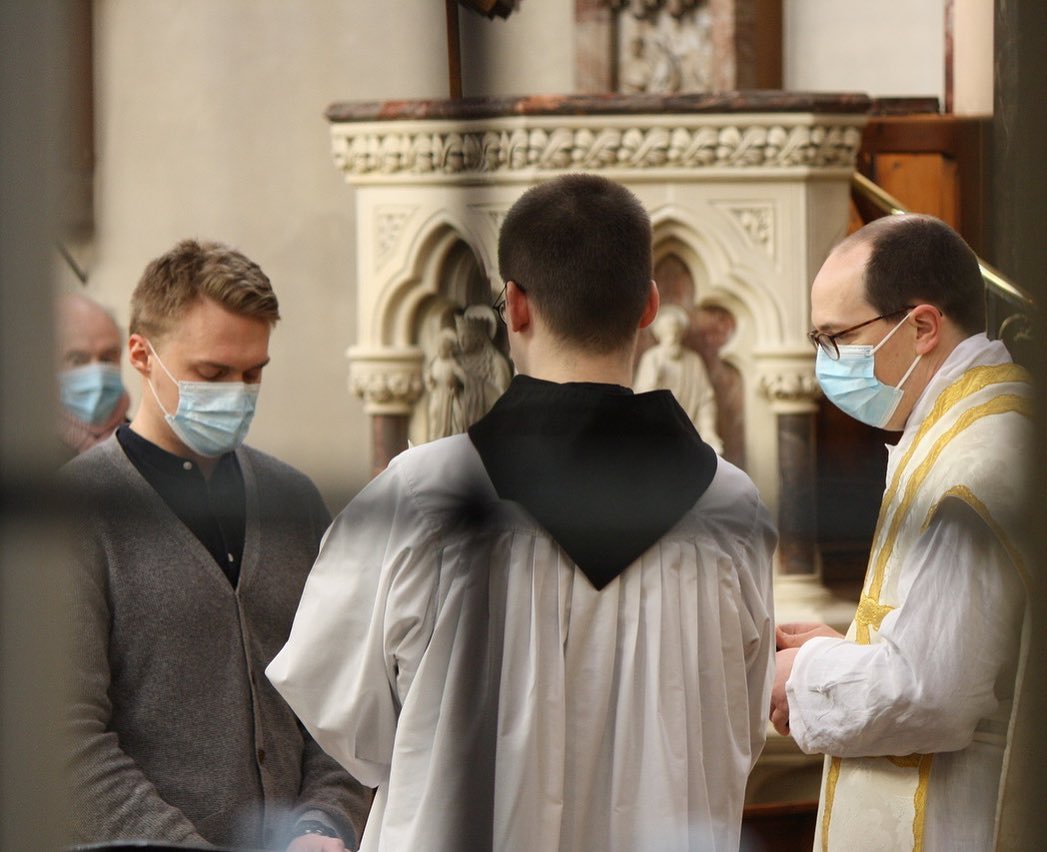
“I believe and profess all that the Holy Catholic Church believes, teaches, and proclaims to be revealed by God.”
Congratulations to Axel, who was received into full Communion with the Church this morning. #oxfordoratory
“I believe and profess all that the Holy Catholic Church believes, teaches, and proclaims to be revealed by God.”
Congratulations to Axel, who was received into full Communion with the Church this morning. #oxfordoratory
Please pray for the repose of the soul of Chris Crouch, who retired as head teacher of St Aloysius school after 21 years in 2009, and died on 10 February.
Eternal rest grant unto him, O Lord, and let perpetual light shine upon him.
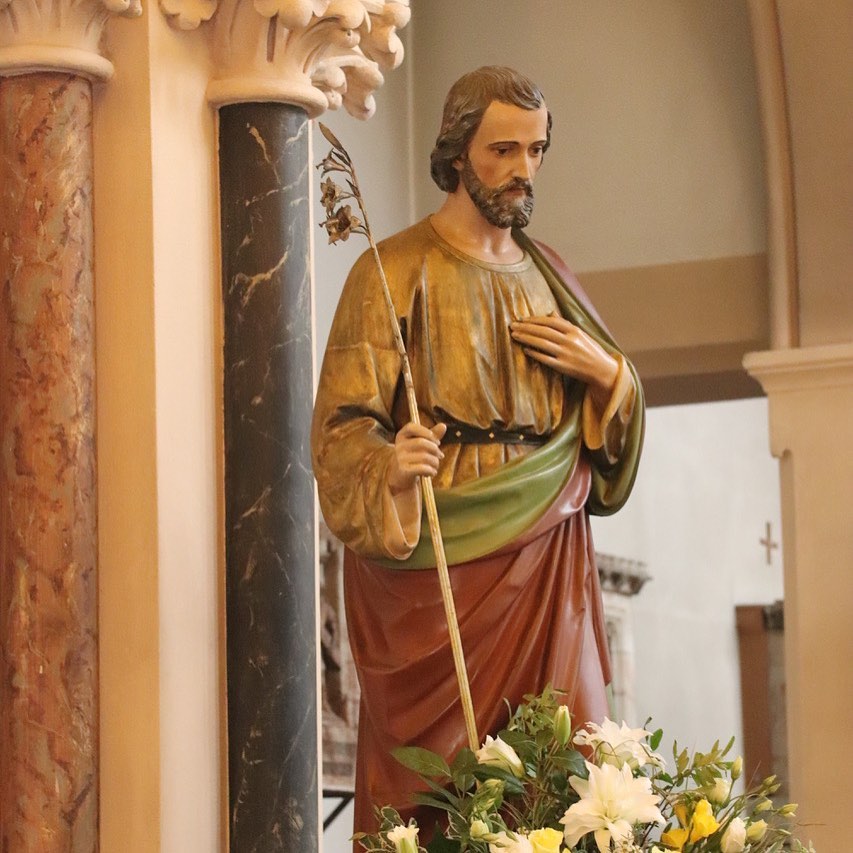
Prayer for the Year of St Joseph
Hail, Guardian of the Redeemer,
Spouse of the Blessed Virgin Mary.
To you God entrusted his only Son;
in you Mary placed her trust;
with you Christ became man.
Blessed Joseph, to us too,
show yourself a father
and guide us in the path of life.
Obtain for us grace, mercy, and courage,
and defend us from every evil. Amen.
#oxfordoratory
Distractions during prayer. We all have them. More often than not, having settled down to the business of praying (itself no easy matter), our minds suddenly become full of thoughts of other things, some of which may be valuable or good in themselves, but which are not God. They are distractions.
I find that much of my prayer time is taken up with these annoying thoughts, preoccupations, anxieties and such like; things I carry with me. But there are also other, external things which intrude themselves and interrupt the flow of our prayer. These are, for the most part, harmless: ‘Goodness, I really must dust this room!’, ‘I mustn’t forget the Wells-Nortons are coming for dinner tonight—she’s lactose intolerant and he’s a vegan.’ ‘What a dreadful hat she’s got on’ etc. You know the sort of thing.
Sometimes more serious thoughts will cloud the mind; our financial worries, concerns about our job or our lack of one, the people we love or hate. Bringing these things to God is surely good, even if they come to us in the form of a distraction. St. Thérèse wrote, ‘I have many distractions, but as soon as I become aware of them, I pray for those people the thought of whom is diverting my attention. In this way they reap the benefit of my distractions.’ Who else but the Little Flower could have thought of anything so beautifully simple? If we follow her in this way, we have the opportunity to hand over these people and situations to God, saying, ‘Lord, you take care of them.’ We are then free to continue our prayer, recognising the thoughts which distract us, but not allowing ourselves to become too involved in them.
Thérèse’s namesake and spiritual mother, Teresa of Avila advises those trying to pray: ‘Never address your words to God while you are thinking of something else.’ Of course, she is right; and we are probably aware of the many times we have done just that and allowed thoughts about people or things we like or find interesting or entertaining to grab our attention, and sometimes we have even sought them out. It’s no good pretending to pray when our minds are on other things and we make no attempt to turn them over to God. Have you ever been talking with someone in a crowded room and noticed that they are looking over your shoulder to see if there is anyone more interesting to talk to? Surely not! But have you ever done that yourself; come to prayer, not engaged nor paying attention to what God may have to say to us during the time we are supposed to have set aside for the work of Prayer.
There is a story told of St Bernard, who was once stopped by an importunate beggar who asked the saint for alms. Bernard told him that if he could say the Our Father without a distraction, he would give him his horse. Thinking this transaction a done deal, the man began his recitation: Our Father, who art in heaven, hallowed by thy name, thy kingdom,..and do I get the saddle as well?
Lent begins next week. Perhaps in these days we might consider we have had penance enough. Whether that is the case or not, the opportunity to deepen our love for the Lord is still one to be grasped with both hands. The fruit of that love, based as it is on faith, will be a richer life of prayer. Yes, there will be distractions, but we can learn to move on through them, leaving them behind, because we are wanting to be with God, who is so much more than all the distracting thoughts we could ever have.
Have a good Lent and keep on praying and never lose heart.
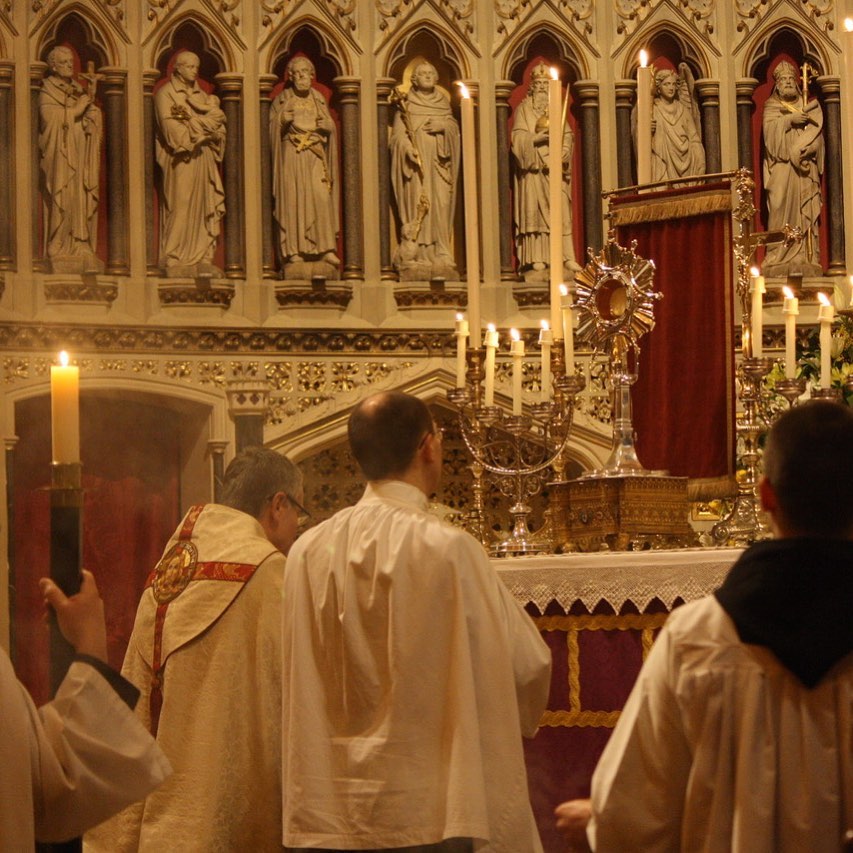
‘The most beautiful prayer we can make, is to say to God, “As Thou knowest and willest, O Lord, so do with me.”’ — St Philip #oxfordoratory
One of the most disconcerting things for a South African living in England is the fact that all the seasons here are upside down. Christmas is in mid-winter, and summer is in July! It’s very strange to have to dress warmly in January and open the church at 7am in the pitch-black darkness. February is probably the strangest of all the months: it suddenly starts to get lighter earlier; the days quite rapidly begin to lengthen. Soon getting up in the dark will be a distant, horrible memory.
February back home is a month of baking sunshine and clear skies, when the beginning of the new academic year has to fight (and often lose) against the temptation to “bunk off” and head to the beach. February in the Northern hemisphere, however, marks the end of the solar winter — those three months of the year with the least light. But the bittersweet paradox of February is that it is also usually the coldest month — and so there is the old farmer’s saying: “as the days grow longer, the cold grows stronger”. This phenomenon has to do with the temperature of the atmosphere and the oceans lagging behind the appearance of more sunshine: having depleted their heat-reserves over the winter, they need a chance to slowly warm up again.
It’s no coincidence that yesterday’s feast of Candlemas comes at the beginning of February. Candlemas, like February, welcomes the light. This light is the light that is spoken of in the great prologue of John’s gospel, that “shines in the darkness, and the darkness does not overcome it”. This is the light that Simeon speaks of as he takes the child Jesus into his arms: “the light to enlighten the nations”.
As the days grow longer, the cold grows stronger. The charm of Candlemas and the lovely scene of Mary, Joseph and Jesus in the temple form only part of the picture. For Candlemas, like the lengthening days of February, is bitter-sweet. Christmas is well and truly over, the crib is packed up for another year, and the last of the decorations have come down. We have already begun the season of Septuagesima in preparation for the penance of Lent, and soon the organ will fall silent, the flowers disappear from church, and our minds turn to the passion and death of the Lord.
Our Cardinal in his famous hymn describes this bitter-sweetness:
The angel-lights of Christmas morn,
Which shot across the sky,
Away they pass at Candlemas,
They sparkle and they die.Comfort of earth is brief at best,
Although it be divine;
Like funeral lights for Christmas gone,
Old Simeon’s tapers shine.
Yesterday’s feast is bitter-sweet because of the remarkable words Simeon utters to Our Lady: “this child…is destined for the fall and for the rising of many in Israel, destined to be a sign that is rejected — and a sword will pierce your own soul too — so that the secret thoughts of many may be laid bare”. His words are both mysterious and troubling. Mary and Joseph learn that this child will be a source of division. They learn that this child will be rejected. And Our Lady learns that she too will suffer; a sword will pierce her own soul, as she stands at the foot of the cross.
As the days grow longer, the cold grows stronger. So despite the great light that is brought into the temple, there is a great coldness that lies ahead of the child Simeon takes into his arms. At this time of year we stand between the incarnation and the crucifixion. We find ourselves with one eye cast back at Christmas and Epiphany, and the other looking forward to Lent, Holy Week and Easter. We realise that the Child in the Manger will be the Crucified of Calvary. We turn from the manger to the tomb.
Cardinal Newman’s hymn continues:
And then for eight long weeks and more,
We wait in twilight grey,
Till the tall candle sheds a beam
on Holy Saturday.We wait along the penance-tide
Of solemn fast and prayer;
While song is hushed and lights grow dim
In the sin-laden air.And while the sword in Mary’s soul
Is driven home, we hid
In our own hearts, and count the wounds
Of passion and of pride.
The bitter-sweetness of the month of February is the bitter-sweetness of the Christian life. To be a Christian is to be filled with light — the light of the world. But it is also to feel the coldness that is a constituent part of bearing that light. At baptism we are presented with a candle, symbolising the light of Christ. This comes with the vocation to shine as a light to the world. This vocation must be open to the possibility of coldness: the coldness of persecution, the coldness of rejection, the coldness of ignorance. In a progressively more secularised society Christians are increasingly confronted with these “coldnesses”. As we witness the watering down of our Christian heritage and the ignorance and hostility with which the church is viewed by many, we feel the bitter-sweetness of being a Christian in the twenty-first century.
However, this bitter-sweetness should not depress us. As the days grow longer, the cold grows stronger is certainly true of the month of February, but we know that come the spring the light will triumph over the coldness and the temperatures will rise. We know, also, that as we observe Lent, Holy Week and Easter, Jesus, the Light of the World, will triumph over the powers of darkness. We know that, despite a sword piercing her soul, the Queen of Heaven will rejoice in her Son’s resurrection.
So, if we believe in Christ’s power over darkness, there is hope for Christians in the twenty-first century. Despite the present darkness, the Light will triumph. But it won’t triumph unless we let it triumph. You and I are to shine ever more brightly as lights to the world, faithful to our calling as baptised members of Christ’s body. Only by our courage and boldness will we turn the tide of indifference and negativity towards the gospel. We, like Simeon, are to proclaim Christ as “a light to enlighten the nations”.
Stay with me, and then I shall begin to shine as Thou shinest: so to shine as to be a light to others. The light, O Jesus, will be all from Thee. None of it will be mine. No merit to me. It will be Thou who shinest through me upon others.
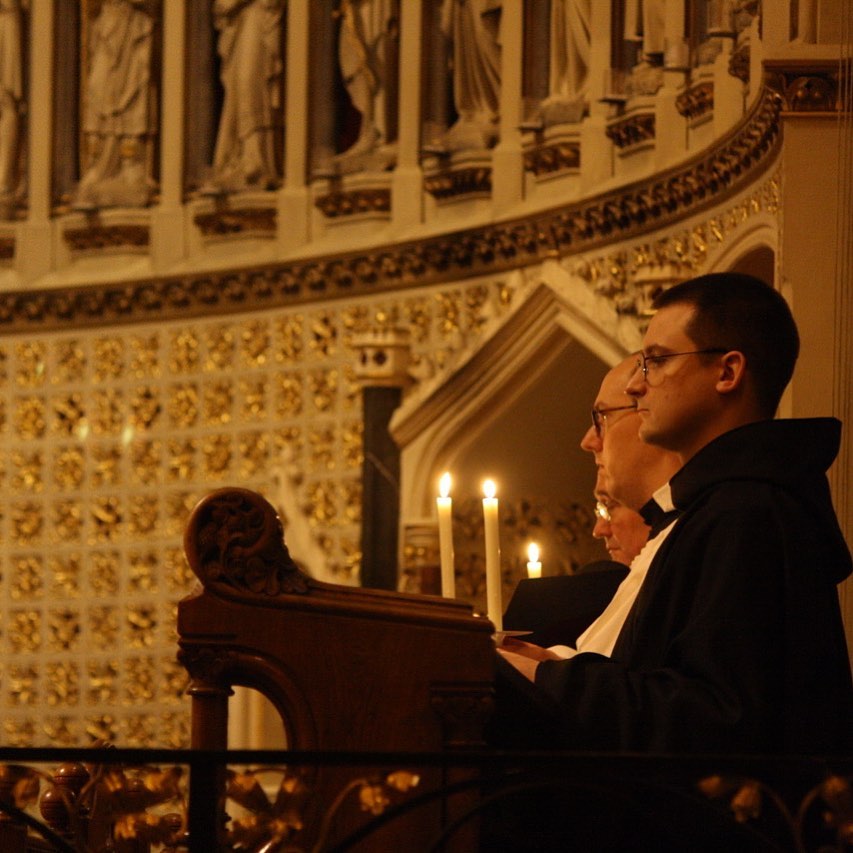
O God, source and origin of all light, who on this day showed to the just man Simeon the Light for revelation to the Gentiles, we humbly ask that, in answer to your people’s prayers, you may be pleased to sanctify with your blessing these candles, which we are eager to carry in praise of your name, so that, treading the path of virtue, we may reach that light which never fails.
#oxfordoratory
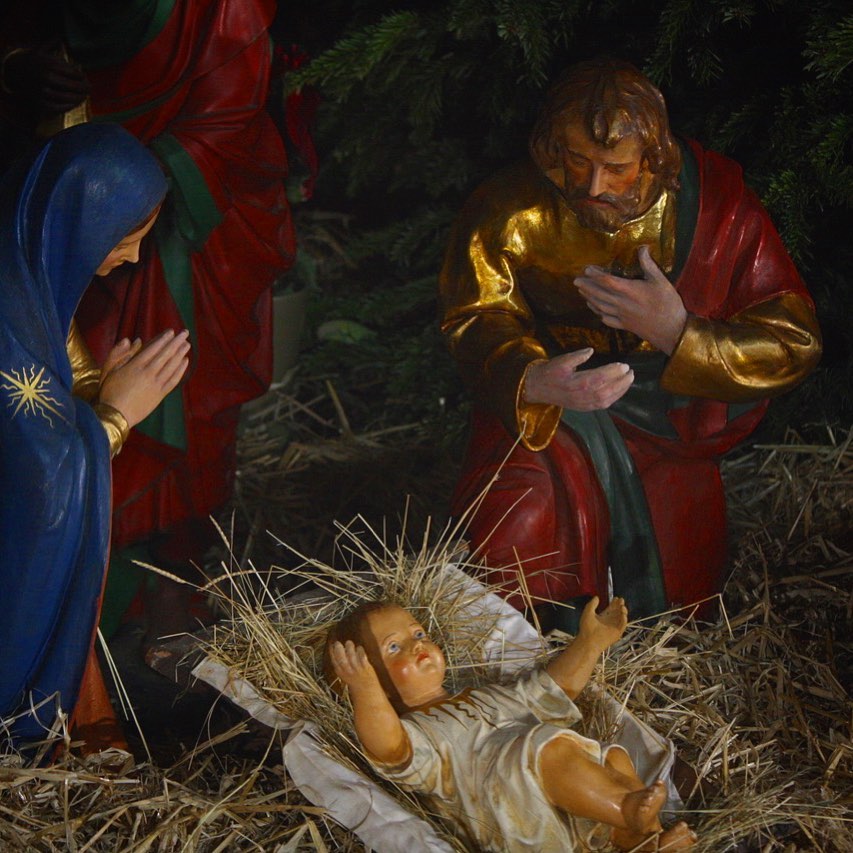
The Holy Father has declared a special year of St Joseph. We will be saying the special prayer to St Joseph after Masses on Wednesdays leading up to his feast on 19 March.
Hail, Guardian of the Redeemer,
Spouse of the Blessed Virgin Mary.
To you God entrusted his only Son;
in you Mary placed her trust;
with you Christ became man.
Blessed Joseph, to us too,
show yourself a father
and guide us in the path of life.
Obtain for us grace, mercy, and courage,
and defend us from every evil. Amen.
#oxfordoratory
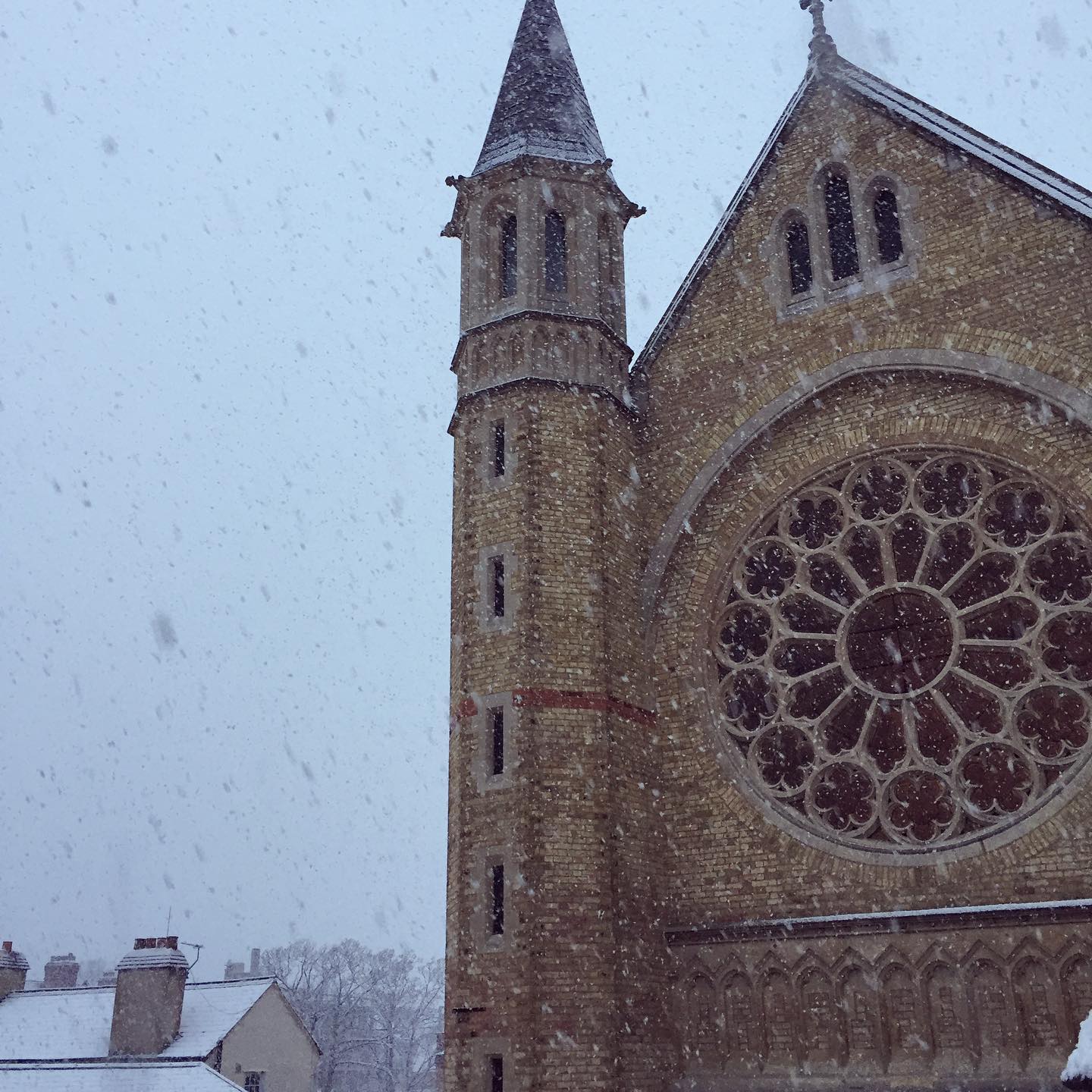
It caught us quite by surprise on Sunday, with two inches falling in an hour. Equally swift were the flurry (if you’ll forgive the expression) of images from all parts on social media. We had to be quick to capture the Narnia-like perfection before it was gone, and there is something in that haste. It amazed and cheered us.
One of the Fathers remarked as it fell, that the snow makes everything quiet, it softens the edges, everything stops and the light changes to a comforting, bright glow. The poem of the Belfast-born poet, Louis MacNiece also comes to mind. He remarks on the incongruity of ordinary things against the snow, transfigured in its light. That blanket of snow, which covers everything outside, just highlights the plurality of things within — he experiences for a moment “the drunkenness of things being various.” Perhaps MacNeice himself witnessed such sudden snow-falls from his window at Merton, though I am not so sure he would be one for Instagramming it.
There is something of a parable in all this snow, which speaks about God’s action in our life. The snow comes so silently and, despite the predictions of the Met Office, as a surprise. It brings joy, elicits a sense of wonder, and brings out the child in even the most grown-up of grown-ups. Its brightness and quietness seem to make everything new, clean and simple — almost miraculous. But the snow is passing. The clouds part, and the day moves on and by tea time it is melted, yet surely something of the memory, of the wonder remains.
Grace doesn’t just cover the ordinary and the corrupt in a blanket of snow, but rather, it works from the inside out. Sometimes in the spiritual life God allows us little moments like a snowfall. Perhaps the grace of a good confession, a sense of consolation or wonder at the reception of communion, or the joy and elation at the liturgy or a procession. Perhaps it is in the quiet moments of prayer when we feel his closeness and can open our heart to his. Whatever the moment, however fleeting, the wonder and the consolation are proof enough that God’s action is working a small miracle in us several times in every day. We just have to be alert to it.
Perhaps in these coming days as we welcome the time before Lent, we can try and be attentive to those many little miraculous moments God will give us if we allow allow him to, when we can welcome with surprise the fact that he is closer to us than we are to ourselves.
Snow
The room was suddenly rich and the great bay-window was
Spawning snow and pink roses against it
Soundlessly collateral and incompatible:
World is suddener than we fancy it.World is crazier and more of it than we think,
Incorrigibly plural. I peel and portion
A tangerine and spit the pips and feel
The drunkenness of things being various.And the fire flames with a bubbling sound for world
Is more spiteful and gay than one supposes—
On the tongue on the eyes on the ears in the palms of one’s hands—
There is more than glass between the snow and the huge roses.Louis MacNeice (1907-1963)