Forgiveness

At Mass the other day, we read the words with which Our Lord answered Peter’s question as to how many times he should extend forgiveness to his brother. As many as seven times? Matthew tells us that the Lord told him to keep going, up to as many as seventy-seven times. In other words, stop counting and just do it. One wonders what Peter’s relationship with his brother Andrew must have been like.

Forgiveness is both a difficult and a beautiful thing. We have all stood in need of it, perhaps many times, and been profoundly grateful when the one we have wronged in some way has offered it; and offered it not through gritted teeth and bad grace, but freely and generously. And the one who forgives should, in that moment, know the truth of some other words of Jesus, where he affirms that it is more blessed to give than to receive.

Of course, it always costs to pardon an injury. Some injuries are incredibly deep, the pain as raw as perhaps when the wound was inflicted. Some of us just cannot ‘move on’, despite the cajoling and encouragement of dear, kind, well-intentioned friends, who find it so difficult to see us suffering. When we are hurting or seething because of an injury, then even Jesus’ words challenge us. I remember the mother of one of the children killed by the Moors Murderers saying that since the day of her daughter’s death, she had been unable to pray the Lord’s Prayer. It was just too much to ask, since she could not bring herself to forgive the people who perpetrated the appalling torture and murder of her child. Something within us all is with that mother. Yet there is no avoiding the awkward fact that Our Lord, to whom we look for Life, speaks without compromise about forgiveness. That clause relating to forgiveness in the Our Father is the only one with a condition attached. Moreover, it is the only clause in the prayer on which he comments later: “For if you do not forgive others their sins, neither will your heavenly Father forgive you yours.” Elsewhere, Jesus tells us “Forgive and you shall be forgiven.” We have been promised that what we mete out we shall be given back. Another famous passage in Matthew’s Gospel says the same thing, but perhaps, a little more positively:

Be compassionate as your heavenly Father is compassionate. Do not judge and you will not be judged; do not condemn and you will not be condemned; forgive and you will be forgiven. Give, and there will be gifts for you: a full measure, pressed down, shaken together, and overflowing, will be poured into your lap; because the standard you use will be the standard used for you. (Luke 6:36ff).

In these words, Our Lord wants us to know and understand that God’s mercy is inexhaustible but that sometimes we can put up a barrier to receiving that mercy, and chief among the blocks with which we erect that great wall is a spirit of unforgivingness. God, who knows all hearts, can judge the secret emotions, can surely see when a soul in pain is unable at a particular moment to make that momentous act of forgiveness towards one who ‘has trespassed against’ them. But it may be, and often is the case, that they are just not yet ready to do so, not through ill will, but because the pain is just too great. Fundamentally, they would like to forgive, if they could. There can be no pretence here. We can only ever truly forgive when we do so from the heart and without reserve or conditions.

Only those who resolutely refuse to forgive, who block grace, find themselves unable to receive forgiveness for their own sins. The barriers they have erected prevent that forgiveness reaching them. It seems such a tragedy. Still, as St Padre Pio said, “Gods mercy is infinitely greater than our malice”. It is inexhaustible, and nowhere is this more beautifully illustrated by our Lord than in the parable which tells the story of the Lost or Prodigal Son, who, having squandered his father’s money, was welcomed home, embraced, clothed, restored and forgiven without a word of recrimination from his wronged father. Such mercy and forgiveness, Jesus assures us, is offered to each of us, the only condition (besides sincere penitence) being that we “forgive those who have trespassed against us.” This Lent, shall we ask for the grace to be able to do this.

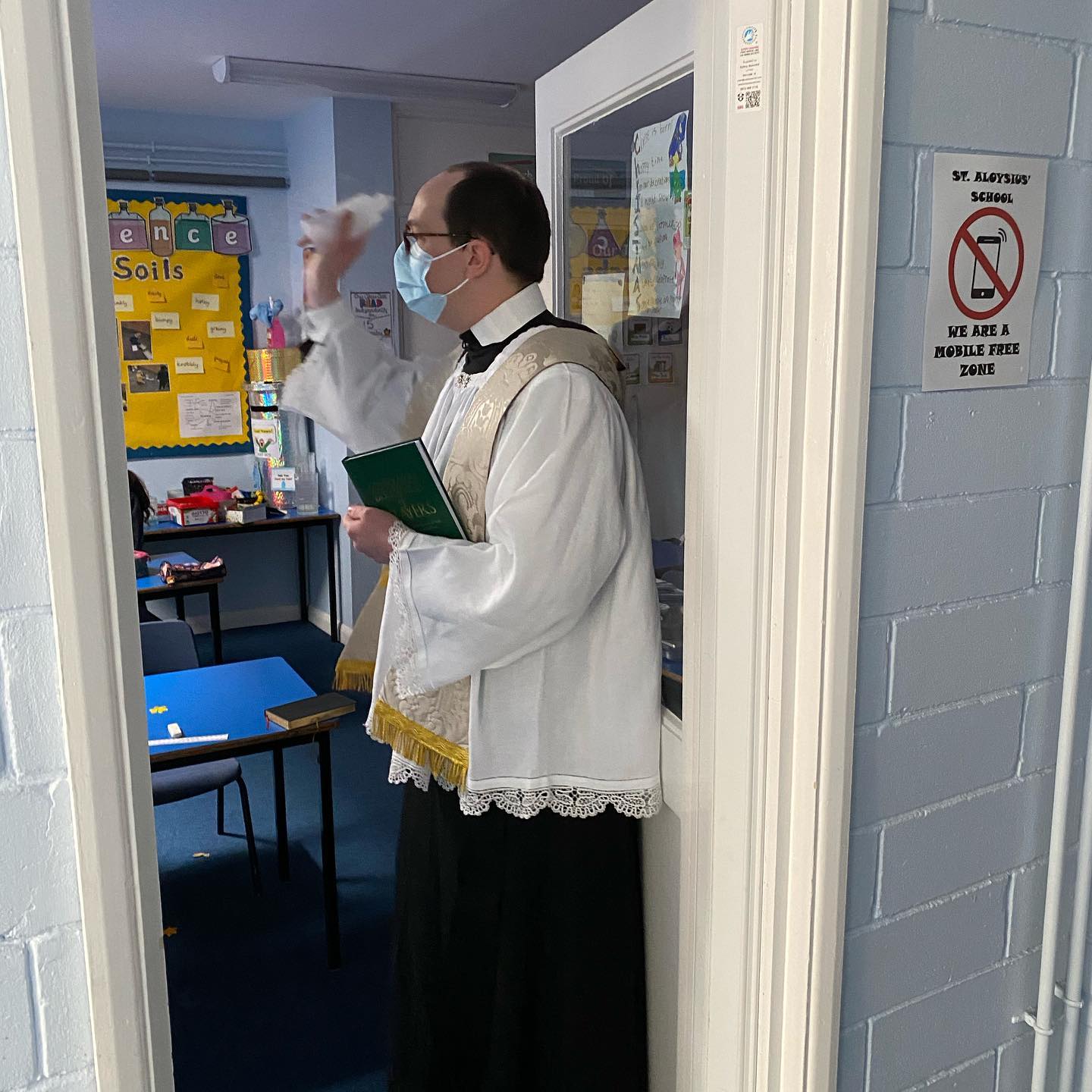
“Strengthen the students with heavenly grace, so that they may grasp with their minds, treasure in their hearts, and carry out in their deeds all the teachings that lead to salvation. And may all here please Thee by practising every virtue, so that they may one day be welcomed into Thy eternal home in heaven.” As pupils were welcomed back to St Aloysius’ School in person this morning, Fr Benedict was on hand to bless the school for the weeks ahead. #oxfordoratory

View on Instagram

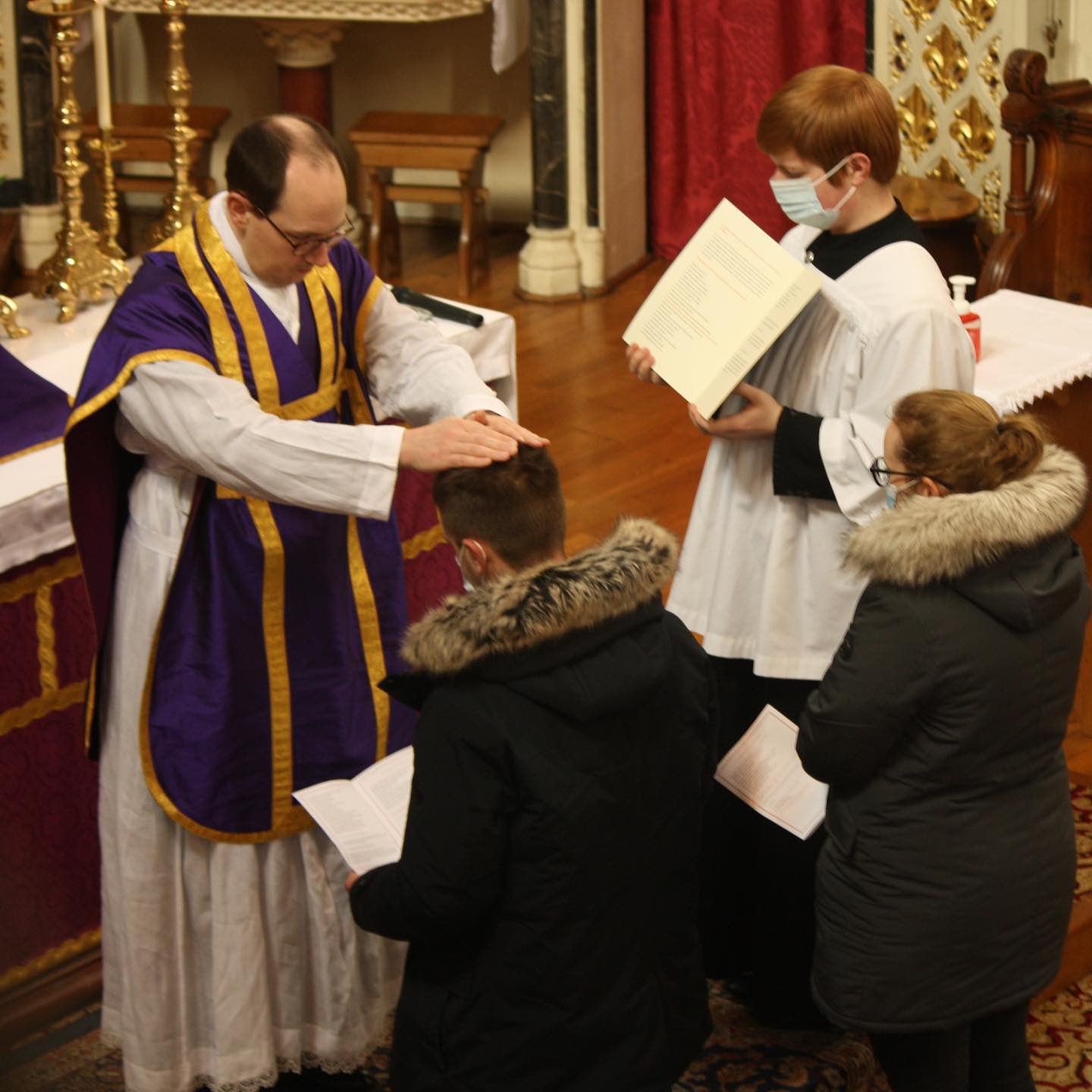
“Dominic, the Lord receives you into the Catholic Church. His loving kindness has led you here.” A warm welcome to Dominic, received into full Communion with the Church at Mass this morning. #oxfordoratory

View on Instagram

Lent Project: Crisis in Ethiopia

The people of Tigray are living in fear of imminent starvation. The brutal fighting, taking place away from the eyes of the world, has forced many to flee their homes. The city of Mekelle is being overwhelmed by displaced people arriving with nothing at all. Many of them are unaccompanied children who have lost their parents.

Probably amongst those children are some who used to eat Mary’s Meals at school, because before this conflict we were serving 24,230 children in the region each day.

—Magnus MacFarlane-Barrow, founder of Mary’s Meals

Support our Lent project this year, Mary’s Meals.

The best way to give is directly via the Mary’s Meals website, but you can also use the ‘Lent Project’ slot of the safe at the back of church to make cash donations.

Monuments

One of the traditional “Religious” customs that we still maintain in the Oratory is that of formal dinner, when we eat our evening meal together in silence while one of the Fathers serves and another reads to us — from Scripture, the Roman Martyrology for the following day, from the life of St Philip, and then from a chosen book. There are no rules about what kind of book this might be: we have had biographies (saintly and otherwise), books about history, spiritual books, travel books, even one entertaining story of citrus fruit. In this way our minds are fed while we feed our bodies, and we get a chance to read books that we might not otherwise have the time or inclination to read ourselves.

The Fathers have just finished a fascinating book about the artist and architect Bernini, whose creative genius and papal patronage in the 17th Century built much of the Rome that we know, love and admire today. One of the most interesting accounts in the book was how Bernini took the obelisks, those tall needle-shaped monuments brought from Egypt by conquering Roman Emperors, and “christened” them as Christian monuments, placing them in the squares in front of the major basilicas of the city as markers for pilgrims. Structures which once adorned the entrances of pagan temples were made to serve the same purpose for Christian churches, dedicated to Christ and topped with a cross.

The obelisk in St Peter’s Square probably witnessed the martyrdom of the Apostle himself. The obelisk from the Circus Maximus was moved to the Piazza del Popolo. The obelisk near the old papal palace of the Quirinale was brought to Rome by Diocletian, and used to stand in the Mausoleum of Augustus — its twin graces the piazza in front of St Mary Major. The largest obelisk in the world can be found by St John Lateran, the “mother and head of all the churches”, and came originally from the tomb of the Pharaoh Tuthmosis III. The Dominican church of the Minerva, known and loved by our own St Philip, has its own obelisk, originally carved in Egypt six hundreds years before Christ, and used by Domition for his Temple of the goddess Minerva. Bernini created a marble elephant on whose back this obelisk was placed, with its bottom facing the church (he did not like the Dominicans…).

This recycling of non-Christian monuments was nothing new in the history of the Church. Our great basilicas in Rome were modelled on ancient civic buildings, and in fact the Pantheon, dedicated to Our Lady and all the Martyrs, was once the Temple of All the Gods. The bronze doors of St John Lateran once hung in the Senate, and saw the assassination of Julius Caesar. Even our theologians took the wisdom of ancient thinkers and philosophers like Plato and Aristotle and used it to explain and understand Christian belief.

The Church has always taken what she finds to be good and beautiful and brought it into the service of Christ, whether in music, art, architecture or scholarship. While there is much in our tradition that has to do with renouncing “the world”, we also believe that “God so loved the world that he sent his only Son” (John 3:16). Jesus did not come to condemn the world, but so that through him the world might be saved. When Truth is united to the goodness and beauty we find in human society, and when human achievement and skill is directed towards God, there we can see Christ and the workings of his grace. That is how St John Henry, in the Idea of the University, described the spirit and mission of St Philip: “He preferred to yield to the stream, and direct the current, which he could not stop, of science, literature, art, and fashion, and to sweeten and to sanctify what God had made very good and man had spoilt.”

That is how grace works in us, what holiness really means. To become holy is not to become something altogether new and different. Baptism, and God’s redeeming mercy in the Sacrament of Penance, does not change our personalities, our gifts, and our circumstances, nor erase our histories. God’s grace, his friendship, perfects nature, it makes us more our true selves. Who we are is consecrated to him and used for his service, in wonderful and sometimes unexpected ways. That is not to say that God doesn’t sometimes have to move us from one place to another, or chip away that which is not good for us or which keeps us from him. Prayer, penance, fasting and almsgiving are some of the chisels and hammers that grace uses, and when we are united to Christ in faith, and crowned with his Cross, then we too can be monuments to God’s glory.