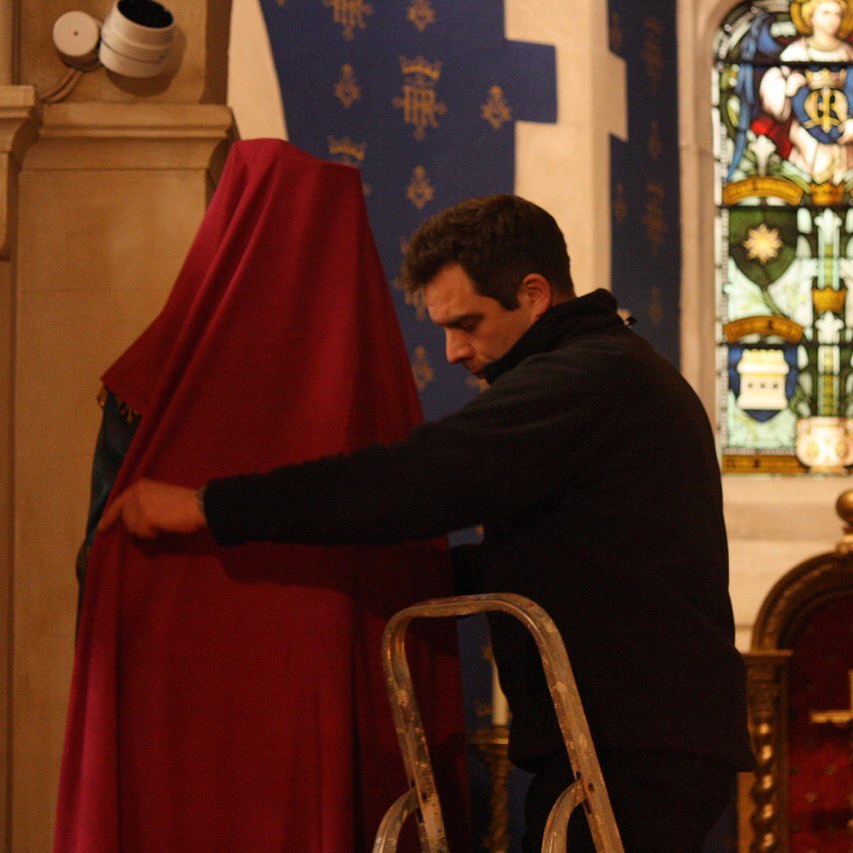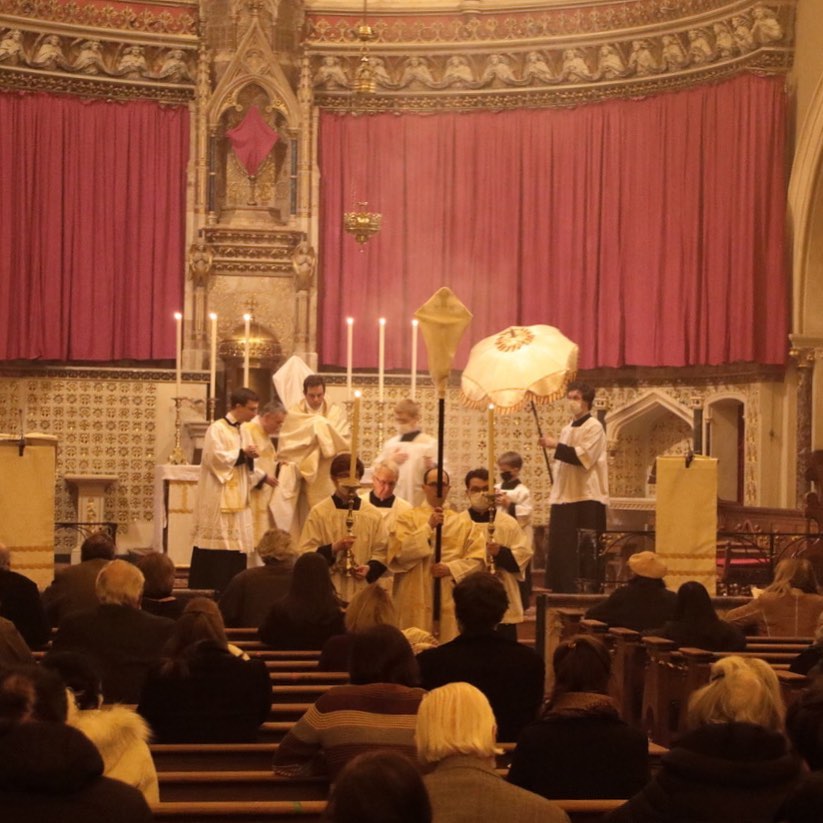
The procession to the altar of repose after the Mass of the Lord’s Supper. #oxfordoratory
The procession to the altar of repose after the Mass of the Lord’s Supper. #oxfordoratory
Maundy Thursday
Church open from 8am
Solemn Mass of the Lord’s Supper at 8pm*
watching at the Altar of Repose until 11pm
Good Friday
Church open from 8am
Tenebrae 9am
Confessions 10–11am
Children’s Stations of the Cross at 11am
Solemn Liturgy of the Passion at 3pm*
Confessions 6–7pm
Stations of the Cross at 7pm
Holy Saturday
Church open from 8am
Tenebrae 9am
Confessions 10am–1pm
Children’s Prayers at the Tomb at 12noon
Solemn Vigil of Easter at 9pm*
Easter Sunday
Masses at 8am* (EF), 9:30am* (Sung English), 11am* (Solemn Latin), 12:30pm, 6:30pm
Choral Vespers at 5pm
Easter Monday
Church open from 8am
Mass at 10am only, after which the church will be closed
Our normal schedule resumes from Easter Tuesday
Admission to services marked with * is by ticket only.
With the waving of palm branches, and the singing of “Hosanna” on Palm Sunday, we have entered into the holiest week of the Christian Year. Last year, in much of the world, the solemn commemoration of the Passion, Death and Resurrection of Our Lord was celebrated by the clergy alone, in empty churches — adding a poignancy which we hope never to experience again. This year, thanks be to God, we are able to gather once more with God’s People. Unfortunately the restrictions still in place mean that the capacity in our church is greatly reduced and we have had to ticket the main services of the Triduum. For those who are not able to attend in person, we will be live-streaming on our YouTube channel — please join us if you can!
Apart from the Mass itself, the ceremonies and symbols of the Triduum are some of the most moving and meaningful we possess, and are among the most ancient. About 1,630 years ago a woman from Spain (or possibly France) went on holiday to the Holy Land. She was a Christian, and she went to Jerusalem to witness the famous ceremonies of the week before Easter. Her diary, a sort of travelogue, is said to be the oldest significant written work by a woman we have. It is also the first account we have of the ceremonies of Holy Week.
Egeria describes the procession of palms on the Sunday before Easter, she writes about a Mass to celebrate the Last Supper on the Thursday and gives an account of a long service of readings and prayers, ending with the faithful venerating a large relic of the cross of our Lord with a kiss, on the Friday before Easter Day. She describes them with enthusiasm as great novelties, remarkable, unknown to her readers at home. She tells of elaborate and detailed ceremonies, the like of which those in Spain (or possible France) would not yet have seen. It is thought by historians of the Liturgy that her writing did much to spread and establish ceremonies which are now very familiar to us and which are the basis of holy week all over the world — ceremonies which we are about to celebrate ourselves in the coming days.
And then she comes to the Easter Vigil, the most colourful, the most dramatic, the most elaborate of all the ceremonies. Her description here is all the more remarkable — “and on Easter night,” she says, “they do exactly the same as us.” It is the barest description, with almost no detail. “They do exactly the same as us.”
For Egeria, the Holy Week ceremonies were worth writing home about. They were so different, so unusual, so dramatic. But Easter was the same everywhere.
Egeria’s diary tells us something we might have worked out for ourselves. The Vigil of Easter is so different. The other days, Palm Sunday, Maundy Thursday and Good Friday in a sense dramatise the story of the passion. They take us in the footsteps of Christ. They place us amongst the crowd. We voice the words and carry out the actions of those days. They are memorial and commemoration that allow us to participate in events of two thousand years ago. They are liturgy as solemn drama.
And this drama is necessary for us. We recall what God has done in the past, so that we can see how he continue to work today. We remember the events of Christ’s life — especially his Passion and Death — so that we can give glory to God for what he did then, so that we can see how those events effect us here and now, and so that we can prepare ourselves for how he will act in the future. We are called to reproduce Christ’s life in the day-to-day events of our own lives, through the power of his grace at work in us. This then-now-in future is present in all the Church’s liturgy and sacraments, but especially in the dramatic ceremonies of Holy Week.
Yet in the Easter Vigil, the high-point of the liturgical year, there is no drama, at least not in that sense. We do not gather round a tomb. We do not roll away a stone. We do not converse with angels, not even in a liturgical manner.
We gather in the dark. We bless a fire and sing God’s praises. We listen to Old Testament prophecies, about creation, about salvation through water of the Red Sea, about the water which will be poured over us and give us a new heart and a new spirit. We recall once again how God prepared his creation and his chosen people over thousands of years to receive his Son in the flesh, a Son — God himself — who becomes one of us so that he can save all of us. Our symbols are a candle and water, neither of which feature — at least not directly — in any story of the Resurrection.
In Easter night we do not recreate a story. We do of course commemorate an event, the actual real bodily resurrection in the flesh of our Lord Jesus Christ: but we celebrate salvation, and Baptism, which is our own dying and rising with Christ.
And in doing this we are doing something far more ancient than the retelling of the story, something more fundamental than reliving and representing history. We are not stepping back in time, but striding forward to eternity.
This is not drama, this is mystery. This is how we welcome new members into our family, into the Body of Christ, the Universal Church. “This is the night…” the Deacon will sing in the light of the Paschal Candle. “This is the night” when we celebrate that death is no more, that our life is the life of God himself, that darkness and sin and oppression and hell itself are not the final word on the human condition. “This is the night” in which we celebrate that our God loves us and gave himself up for us — and gives himself to us.
We have yet to begin the Triduum. We will gather with the Apostles for the Last Supper, and watch with the Lord who was handed over to be crucified. We will be confronted by the Son of God hanging on his cross, crying out “My people, what have I done to you? How have I offended you? Answer me!” But we will do all this in the knowledge that Christ is Risen.
Sunday 28 March Solemn Mass 11:00
Palm Sunday
Pueri hebraeorum Victoria
Ingrediente Domino Malcolm
Mass for four voices Byrd
Christus factus est Bruckner
Improperium expectavit cor meum Palestrina
O vos omnes Casals
Thursday 1 April Solemn Mass 20:00
Maundy Thursday
Missa Bell’ Amfitrit’ altera Lassus
Ubi caritas Duruflé
Dominus Jesus in qua nocte Palestrina
Pange lingua Victoria
Friday 2 April Liturgy of the Passion 15:00
Good Friday
Christus factus est Anerio
St John Passion Victoria
Popule meus Victoria
Crux fidelis King John IV of Portugal
Crucifixus Lotti
Versa est in luctum Lobo
Saturday 3 April Easter Vigil 21:00
Holy Saturday
Jubilate Deo Lassus
Messe à deux chœurs et deux orgues Widor
Christus resurgens ex mortuis Allegri
Dum transisset Sabbatum Taverner
Choral-Improvisation sur le ‘Victimae Paschali’ Tournemire
Sunday 4 April Solemn Mass 11:00
Easter Sunday
Coronation Mass Mozart
Ecce vicit Leo Philips
Haec dies Byrd
Hallelujah chorus Handel
Prelude and Fugue in B major Dupré
Solemn Vespers 17:00
Haec dies Sheppard
Magnificat tertii toni Victoria
O salutaris hostia Howells
Surrexit pastor bonus L’Héritier
Tantum ergo Duruflé
Alleluia Gabrieli
Regina caeli Howells
Final from Symphonie Romane Widor
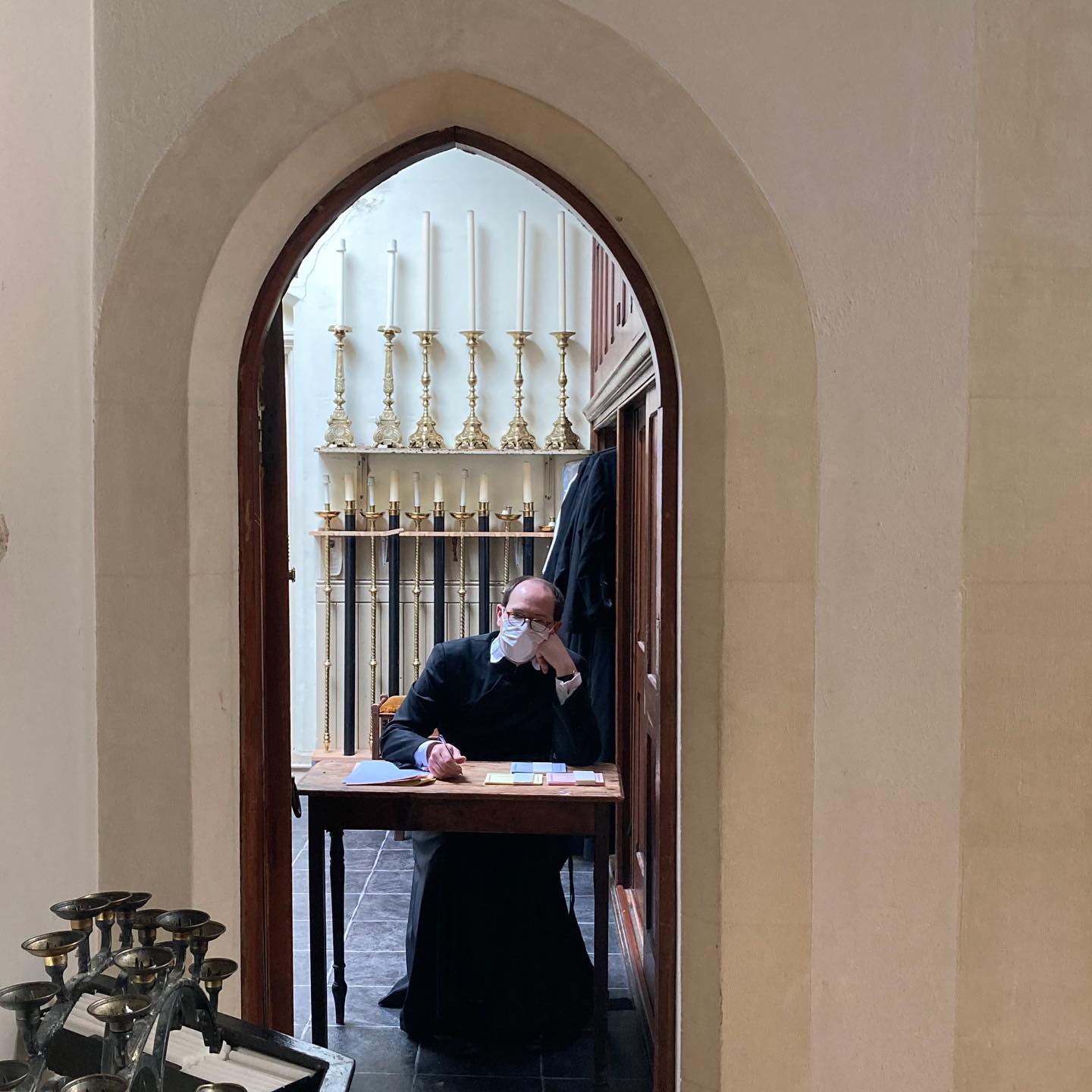
All tickets for the main liturgies of the Sacred Triduum are now gone. Tickets for Masses on Easter Sunday morning are still available from the sacristy after all Masses. #oxfordoratory
It always feels a bit odd to celebrate great feasts during Lent, and none more so than the feast of the Annunciation — celebrating the very beginning of Jesus’ life on earth — while veiled in the purple of Passiontide.
But this day has always looked forward to the Cross. The name Gabriel tells Mary to give the child means ’The Lord saves’, and we know that his mission to save his people will be completed on the Cross. St Ephraim taught that 25th March in the year of the Annunciation coincided with the 10th day of the month of Nisan in the Hebrew calendar. This was the day that each Israelite household selected the lamb to be sacrificed at the Passover: ‘Tell all the congregation of Israel that on the tenth day of this month they shall take every man a lamb according to their fathers’ houses, a lamb for a household.’ (Exodus 12:3). On this day when Christ became man, already he was marked out as the Lamb of God who takes away the sins of the world. St Ephraim writes:
Moses shut up a lamb in the month Nisan on the tenth day;
a type this of the Son that came into the womb
and shut himself up therein on the tenth day.
He came forth from the womb in this month
in which the sun gives longer light.
But that’s not the only link between this date and the Cross. In the Roman Martyrology (the book that lists all of the saints the Church remembers around the world for each day of the year) one entry for tomorrow reads:
The commemoration of the good thief, who on the cross confessed Christ, and thus deserved to hear him say, ‘This day you will be with me in paradise.’
It was commonly held in the ancient world that important people lived an exact number of years, and so it was thought by some that Christ died on the 25th March, an idea remembered now only because it is also the day on which the good thief died. Though it is unlikely that this was actually the case (3rd April is a better candidate for the first Good Friday), the two days remain linked nonetheless. When Good Friday falls on 25th March, we postpone our celebrations of the Annunciation until after Easter, but in the Eastern Churches, the two are combined into a single celebration with special solemnity. This happened in 2005 and 2016, but now won’t happen again in our lifetimes — the next occurrence will be in 2157.
The shadow of the Cross fell on Christ from the first moments of his conception. He was able to suffer death because he had first become man. He conquered death because, though true man, he was also truly God. The Annunciation celebrates this coming together of God and man, and, as we enter Holy Week, we are shown what that means for us. Christ invites us to let the shadow of the Cross fall on our own lives — so that we too can have our own share in the union of God and man.
We have supported Mary’s Meals before, in 2017. The founder of the charity, Magnus MacFarlane-Barrow, talked to us about the excellent work of the charity and shared the video Child 31 with us. You can watch the video on here:
The best way to give is directly via the Mary’s Meals website, but you can also use the ‘Lent Project’ slot of the safe at the back of church to make cash donations.
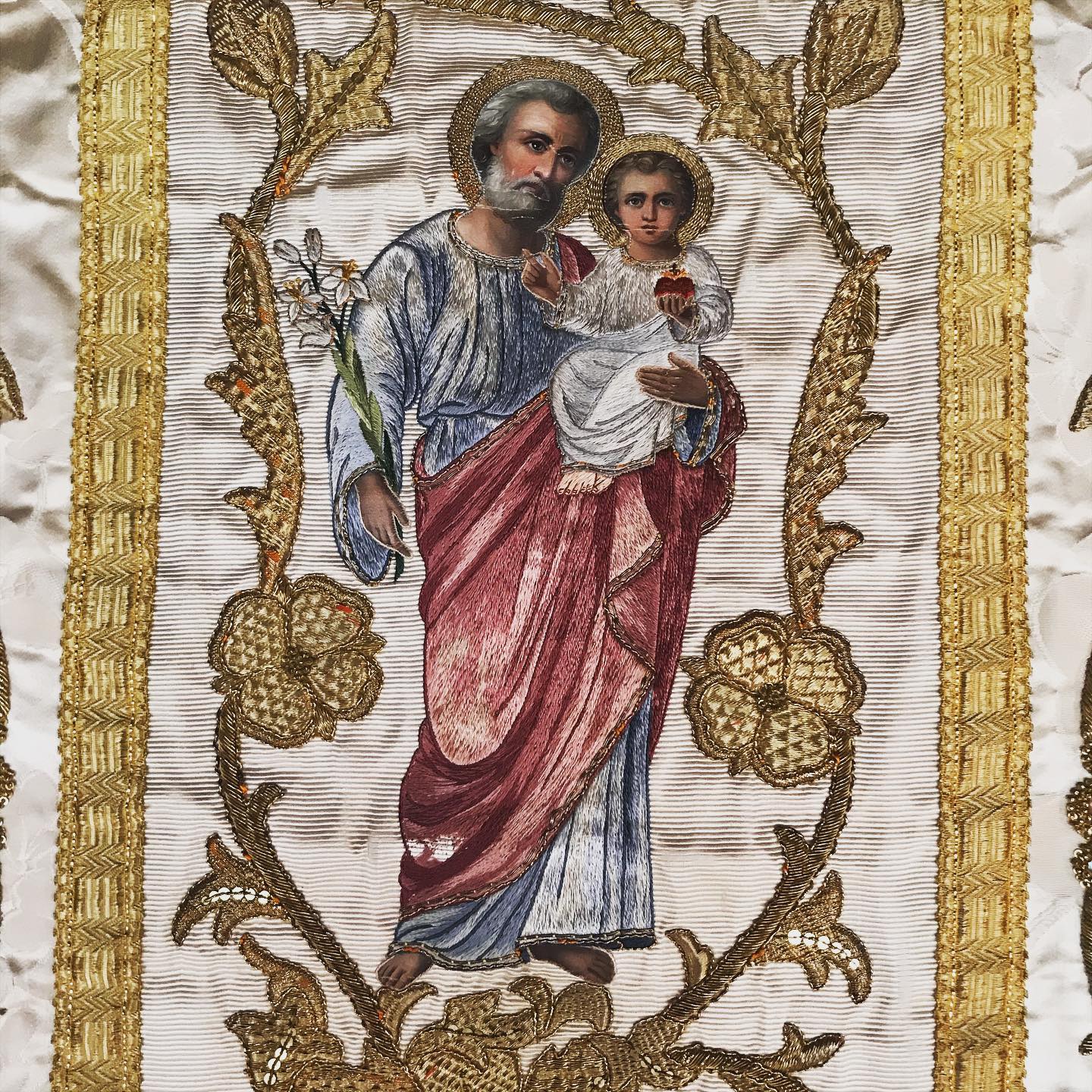
Grant, we pray, almighty God, that by Saint Joseph’s intercession your Church may constantly watch over
the unfolding of the mysteries of human salvation, whose beginnings you entrusted to his faithful care. Through our Lord Jesus Christ, your Son, who lives and reigns with you in the unity of the Holy Spirit, God, for ever and ever. Amen.
#oxfordoratory
We are now past the half-way point of Lent. In two weeks and a day, we will begin the Sacred Triduum. And in less than three weeks, it will all be over: Lent, Passiontide and Holy Week. Lent probably won’t be something we think about again for the rest of the year.
The thought of Lent approaching always seems like such a gloomy prospect in the days and weeks leading up to it, as we make a mental list of things we could give up, and end up ruling each one out as too essential to our happiness and ability to function as a normal human being. Ash Wednesday can feel like a tough 24 hours, much tougher than it actually is. (‘Last meat for 36 hours,’ Fr Jerome would always say on the evening of Shrove Tuesday.) But once we get going, not only is Lent not as bad as we expected, but it also goes surprisingly quickly. And that’s not even assuming that we’ve all kept our Lenten resolutions perfectly. Even if we have failed at times, the times we did successfully say ‘no’ to ourselves show us that penance is something we are all capable of, and that it isn’t so bad for us after all.
It must be a consequence of our fallen human nature that we all suffer from a certain inertia when it comes to doing what’s good for us. Even when it comes to doing those things that we want to do and enjoy doing, sometimes it takes an extraordinary mental effort to stop ourselves procrastinating and to get us going — what the spiritual writers sometimes call ‘doing violence’ to ourselves.
A year ago, a national lockdown was something that some expected, others wanted and many dreaded. The thought of giving up social contact for (what we expected to be) two or three weeks seemed unimaginable. If we can find any good in the past year, it has shown us that we are much more resilient than we thought, much as Lent does on a smaller scale. We haven’t always found adapting to the new conditions easy, and at times may have found ourselves put off prayer, our good habits and our good works. But the fact that we are still aiming for that perfection God calls us to, however far off it may seem, or however slowly we seem to be limping towards it, we are nonetheless heading in the right direction. There is no need to get dragged backwards by the times that we have failed. That we have succeeded at all in the past year is something to thank God for.
Lent will soon be over. So too, we pray, will the global pandemic and all the restrictions on our day to day lives that come with it. With the end of the race in sight, it becomes just that little bit easier to summon up the willpower to make that sprint to the finish line. So with Easter not far away — and life after lockdown too — ‘let us also lay aside every weight, and sin which clings so closely, and let us run with perseverance the race that is set before us.’ (Hebrews 12:1)
These reflections are sent out each Wednesday to all those on our mailing list. Click here to sign up to our mailing list, and receive our Sunday E-newsletter and these reflections straight to your inbox.