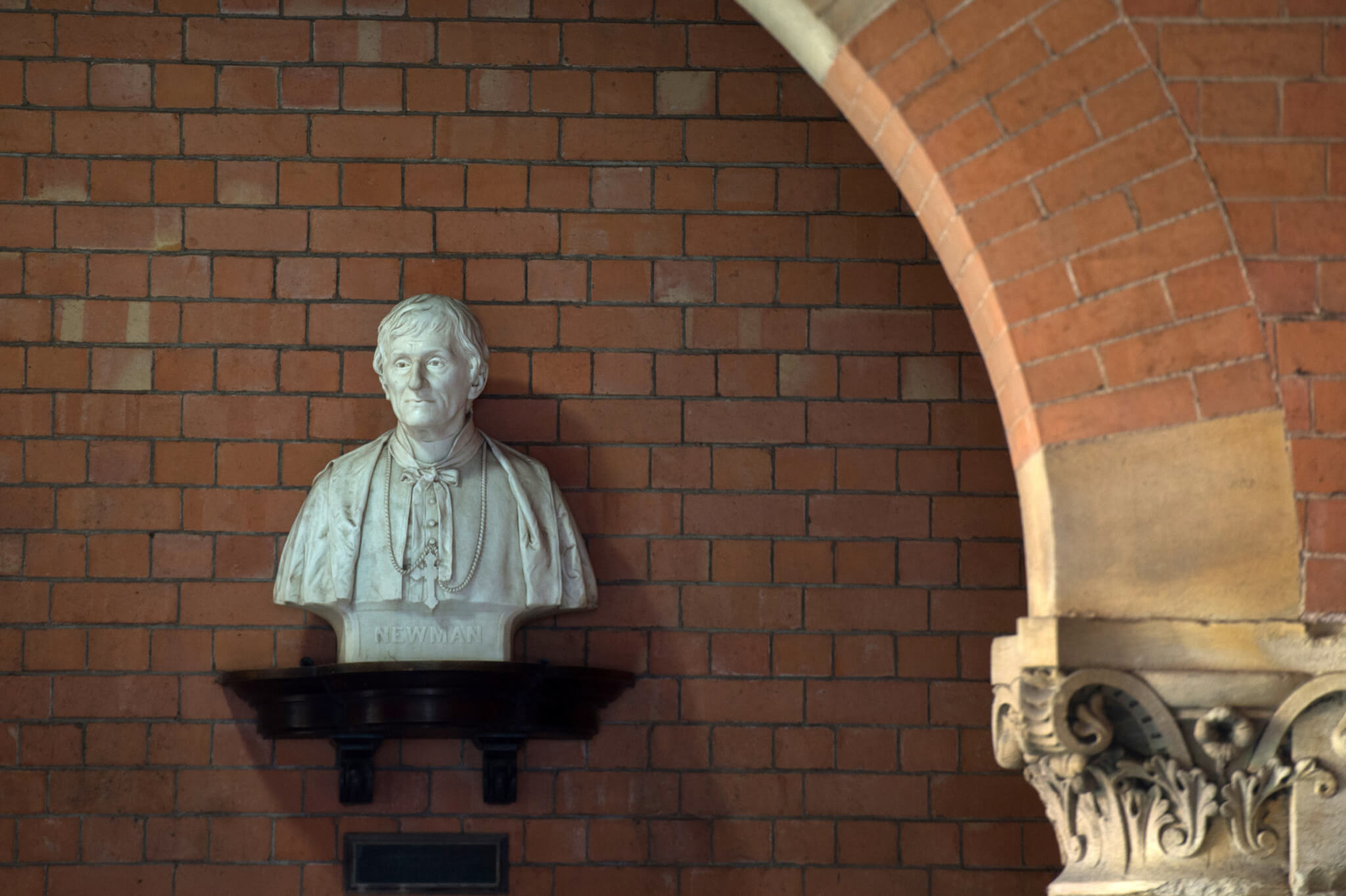
Bl. John Henry Newman to be Canonised on 13 October

bust-of-cardinal-newman-cloister-of-birmingham-oratory-church_48143485781_o

The Fathers of the Birmingham Oratory are delighted to announce that Pope Francis will canonise Blessed John Henry Newman in St Peter’s Square on Sunday 13 October 2019 alongside 4 others. This will make Cardinal Newman the first English person who has lived since the 17th century officially recognised as a saint by the Roman Catholic Church.

John Henry Newman (1801-1890) was ordained as a Church of England priest and soon became the leader of the Oxford Movement but converted to Catholicism in 1845. He founded the Oratory in England and was later made a cardinal. When he died at the age of 89, more than 15,000 people lined the streets of Birmingham for his funeral.

Cardinal Newman is widely considered to be one of the most significant figures of the 19th century.

The cause for his sainthood was opened in 1958 and he was declared Venerable by Pope Saint John Paul II in 1991 after his life of ‘heroic virtue’ was recognised. Pope Benedict XVI declared him Blessed in Cofton Park near Birmingham in September 2010, as part of his historic visit to Britain.

The canonisation was made possible by a second miracle attributed to the intercession of Blessed John Henry Newman, consisting in the medically inexplicable healing of a pregnant woman with life-threatening complications due to her pregnancy. The cure took place in Chicago, USA, in May 2013. After an initial investigation carried out by the archdiocese of Chicago, it was submitted to the Holy See in 2018, and approved by Pope Francis on 13 February 2019.

During the ceremony for his beatification in 2010, Pope Benedict said that Newman “tells us that our divine Master has assigned a specific task to each one of us, a ‘definite service’, committed uniquely to every single person.”

“The definite service to which Blessed John Henry was called,” continued the Pope, “involved applying his keen intellect and his prolific pen to many of the most pressing ‘subjects of the day’. His insights into the relationship between faith and reason, into the vital place of revealed religion in civilised society, and into the need for a broadly-based and wide-ranging approach to education were not only of profound importance for Victorian England, but continue today to inspire and enlighten many all over the world.”

Fr Ignatius Harrison, Provost of the Birmingham Oratory which was founded by Newman in 1849, said that “Newman’s lifelong success in bringing others to Christ shows us that the apostolate of Christian friendship achieves much more by attracting people to the Lord than by aggressive polemic. Newman’s long and incremental spiritual pilgrimage shows us that God leads us to Himself step by step, in ways that He customises to our individual needs, and in His own good time.”

Cardinal Vincent Nichols, Archbishop of Westminster, said “This is a moment of great pride. On Friday it was the feast of the Sacred Heart and we held a mass for the priests of England and Wales. Foremost in our minds was the declaration of a saint who was a priest here. John Henry Newman is known for many great qualities, but we remember him particularly for the kindness and compassion of his ministry to the people of Birmingham. At his death they turned out in their thousands to salute a much loved priest on his funeral procession through the streets of Birmingham.”

The other blesseds to be canonised alongside Newman are Giuseppina Vannini, Mariam Thresia Chiramel Mankidiyan, Irmã Dulce Pontes and Marguerite Bays.

Information about Cardinal Newman including details of his life, of the miracle and the process of canonisation, links to his writings as well as photos and videos available to media, can be found at www.newmancanonisation.com

NOBG_Full+Culor

Image © Mazur/catholicnews.org.uk
June Music

2 DOMINICA VII PASCHAE Solemn Mass 11:00

Mass X Plainsong
Perfice gressus meos Lassus
Tantum ergo Duruflé

9 DOMINICA PENTECOSTES Solemn Mass 11:00

Missa brevis in C (220) Mozart
Loquebantur variis linguis Palestrina
Factus est repente Festa

16 SANCTISSIMAE TRINITATIS Solemn Mass 11:00

Missa octavi toni Lassus
Benedicta sit sancta Trinitas Palestrina
Ego sum panis vivus Palestrina

20 CORPUS CHRISTI Solemn Mass 18:00

Missa in simplicitate Langlais
Dulcis Christe Grancini
Pange lingua Charpentier

21 S ALOISII GONZAGA Solemn Mass 18:00

Missa O quam gloriosum Victoria
O quam gloriosum Victoria
Ave verum Guilmant

23 CORPUS CHRISTI Solemn Mass 18:00

Messa da cappella a qua?ttro voci (1641) Monteverdi
In te speravi Domine Lassus
O sacrum convivium Croce

28 SS CORDIS IESU Solemn Mass 18:00

Missa brevis in F (192) Mozart
Improperium expectavit Lassus
Gustate et videte Isaac

29 SS PETRI & PAULI Solemn Mass 11:00

Missa brevis Palestrina
Quem dicunt homines? Marenzio
Doctor egregie Palestrina

30 SS PETRI & PAULI Solemn Mass 11:00

Missa “Puisque j’ay perdu” Lassus
Illumina oculos meos Lassus
Ave verum Mozart

Bishop Michael Campbell’s St Philip’s Day Sermon

The Martyrology entry for the feast of St. Philip Neri reads as follows:

The Memorial of St. Philip Neri, Priest: devoting his care to rescuing young men from evil, he founded the Oratory at Rome, where they might perform spiritual reading, music, and works of charity; he shone with love for his neighbour with Gospel simplicity and a joyful spirit, with the utmost zeal, and with the burning fervour of his service to God.

Not a bad summary of one’s life!

The thought of St. Philip Neri always cheers me up, and inevitably brings a smile to my face. I think the reason for this is the realisation that is how we ought to be, and perhaps often aren’t — joyful in the Lord, in the awareness that he is near, so there is no need to be unduly worried or preoccupied, despite what is happening in the world around us, or for that matter the Church.

The feast of St. Philip Neri underscores in a powerful way how almighty God can take a human being with all that person’s quirks and foibles, strengths and weaknesses and, as in St. Philip’s case, make him a real and lasting instrument of his grace. It also reassures us of God’s great love for us, notwithstanding our weaknesses and shortcomings. In the words of the Lord to Saint Paul: “my grace is sufficient for you, for my power is made perfect in weakness.” (2Cor 12:9) Echoing the first letter of Saint John, St. Augustine says that we can only love because we have been first loved. Our capacity to love God and others is a gift of God, an act of pure grace.

The familiar symbol of the vine and the branches, and the necessary fruitfulness which comes from unity with Christ, is the gospel chosen for today’s feast, with its clear application to the life and ministry of Philip Neri. Philip bore much fruit in his day with those he gathered around him, and through his inspiration the family of the Oratory which he founded continues to bear that fruit of which Christ speaks. Like every saint, Philip Neri was of his time and place, but with God’s grace he made the most of the opportunities which came his way.

Here lies a lesson for us who are the Church of today: let’s be joyful and accepting of the times, the moment of history, in which God has placed us. I am reminded of a sentence from St. Paul in this regard: “We destroy arguments and every lofty opinion raised against the knowledge of God, and take every thought captive to obey Christ” (2Cor. 10:5). The wonderful tradition of the Oratory, going back directly to St. Philip himself, of excellence in music and great reverence for the sacred liturgy, embodies that Spirit of wisdom prayed for in our first reading. We take what is finest and best in human culture and higher aspiration and offer them to God in Christ. What the philosophers named the transcendentals, “the good, the true and the beautiful” become part of our liturgical worship to the supreme, triune God.

Congratulations to the Oratorian family on their patronal feast. May the charism of St. Philip continue to flourish among them, especially in that simplicity of life, joyfulness of spirit, and love of God and neighbour, so precious to St. Philip Neri. Amen!

May Music

4 ANGLIAE MARTYRUM Solemn Mass 11:00

Mass in four parts Byrd
Sancte Deus Tallis
Bone Pastor Tallis

5 DOMINICA III PASCHAE Solemn Mass 11:00

Missa quarti toni Victoria
Regina coeli Palestrina
Ego sum resurrectio Hassler

12 DOMINICA IV PASCHAE Solemn Mass 11:00

Missa simile est regnum Victoria
Surgens Iesus Philips
Ad coenam agni Victoria

19 DOMINICA V PASCHAE Solemn Mass 11:00

Missa Tristasaz me matin Morales
Christus resurgens Richafort
Mortuus est enim Richafort

26 DOMINICA VI PASCHAE Solemn Mass 11:00

Missa Ave maris stella Palestrina
Surrexit pastor bonus Lassus
Ave verum Elgar

26 S.P.N. PHILIPPI NERII Vespers 17:00

Pangamus Nerio Sewell
O salutaris hostia Laloux
Tantum ergo de Sévérac
Respice de caelo Sewell

27 S.P.N. PHILIPPI NERII Solemn Mass 18:00

Missa O quam gloriosum Victoria
O quam gloriosum Victoria
O sacrum convivium Palestrina

30 IN ASCENSIONE DOMINI Solemn Mass 18:00

Missa O Rex gloriae Palestrina
O Rex gloriae Palestrina
Non vos relinquam Byrd

Holy Week and Easter 2019

Monday, Tuesday & Wednesday of Holy Week
Mass at 7:30am, 10am & 6pm
Confessions before every Mass Stations of the Cross at 10:30am

18 April — MAUNDY THURSDAY
Mass of the Lord’s Supper at 8pm
(This will be the only Mass in our church this day)
Watching at the Altar of Repose until midnight
Compline: 11.45pm
Confessions: 11am–12 noon and before Mass

19 April — GOOD FRIDAY
Tenebrae: 9am
Children’s Stations of the Cross: 11am
Solemn Liturgy of the Lord’s Passion at 3pm
Stations of the Cross: 7pm
Confessions: 10am–12 noon, 1:45–2:45pm and following the 3pm Liturgy

20 April — HOLY SATURDAY
Tenebrae: 9am
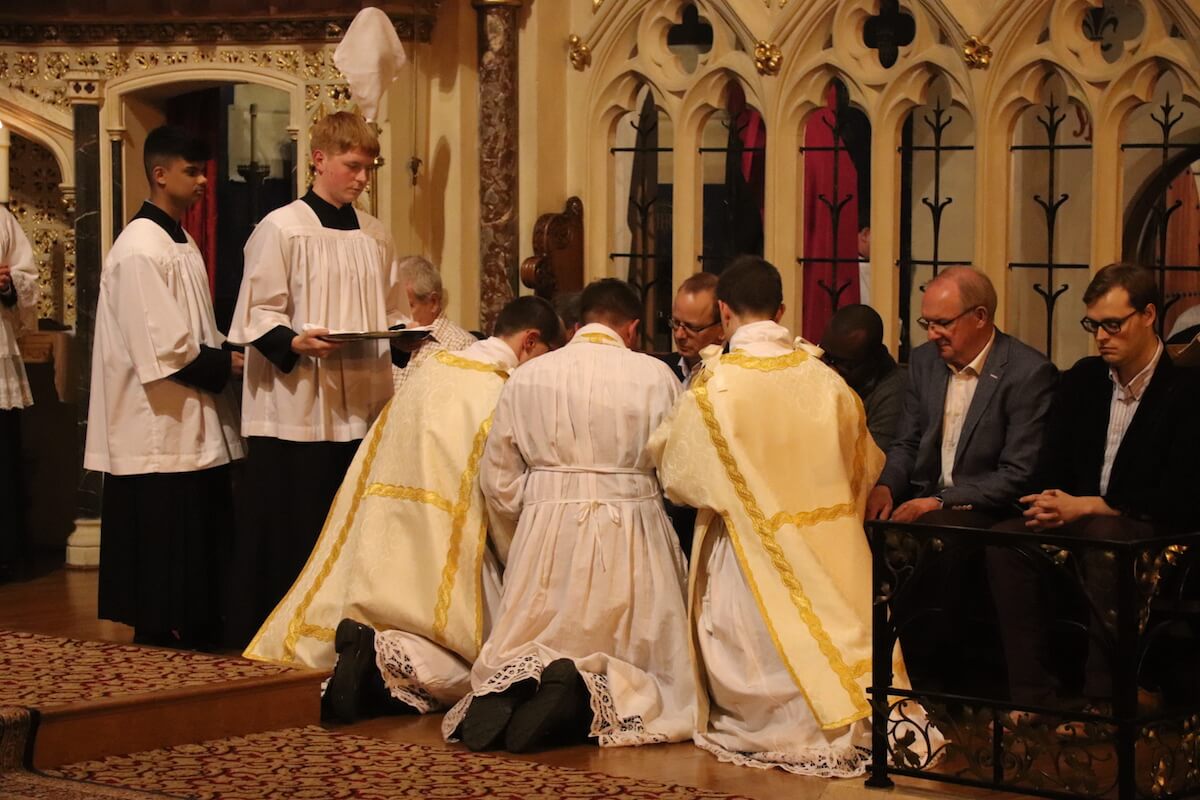
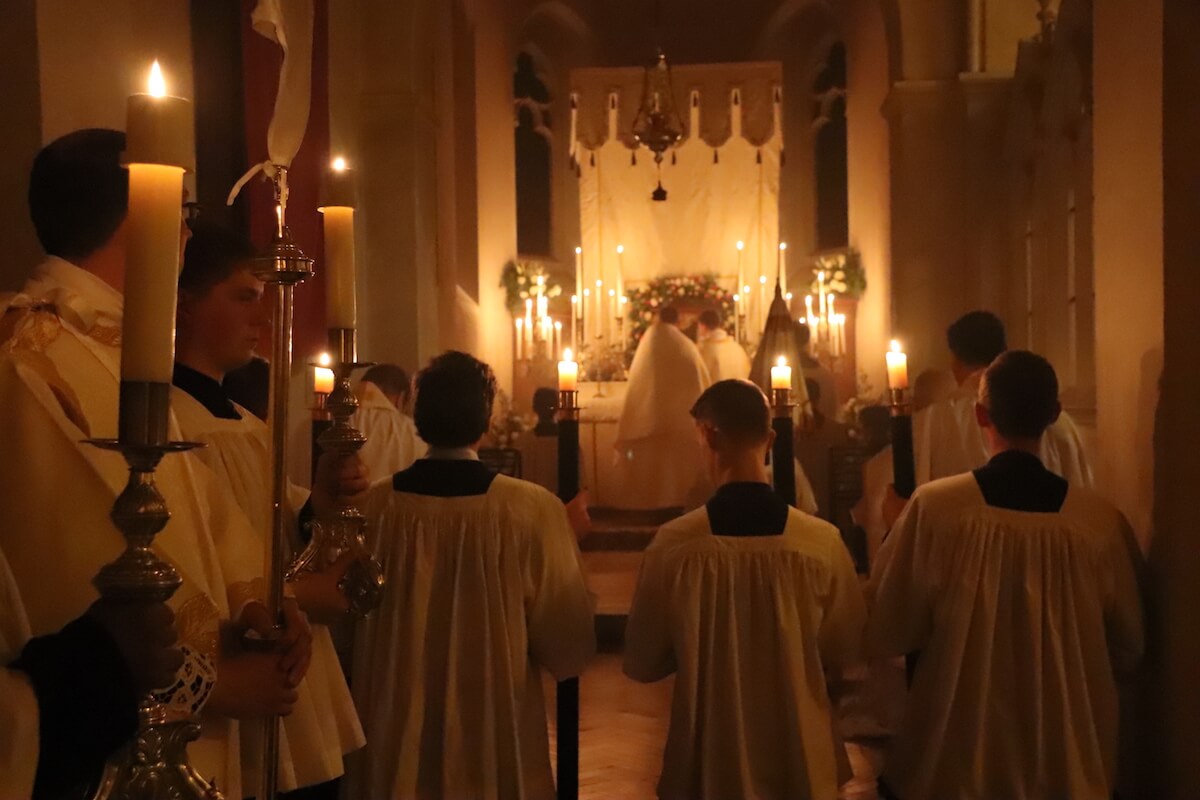
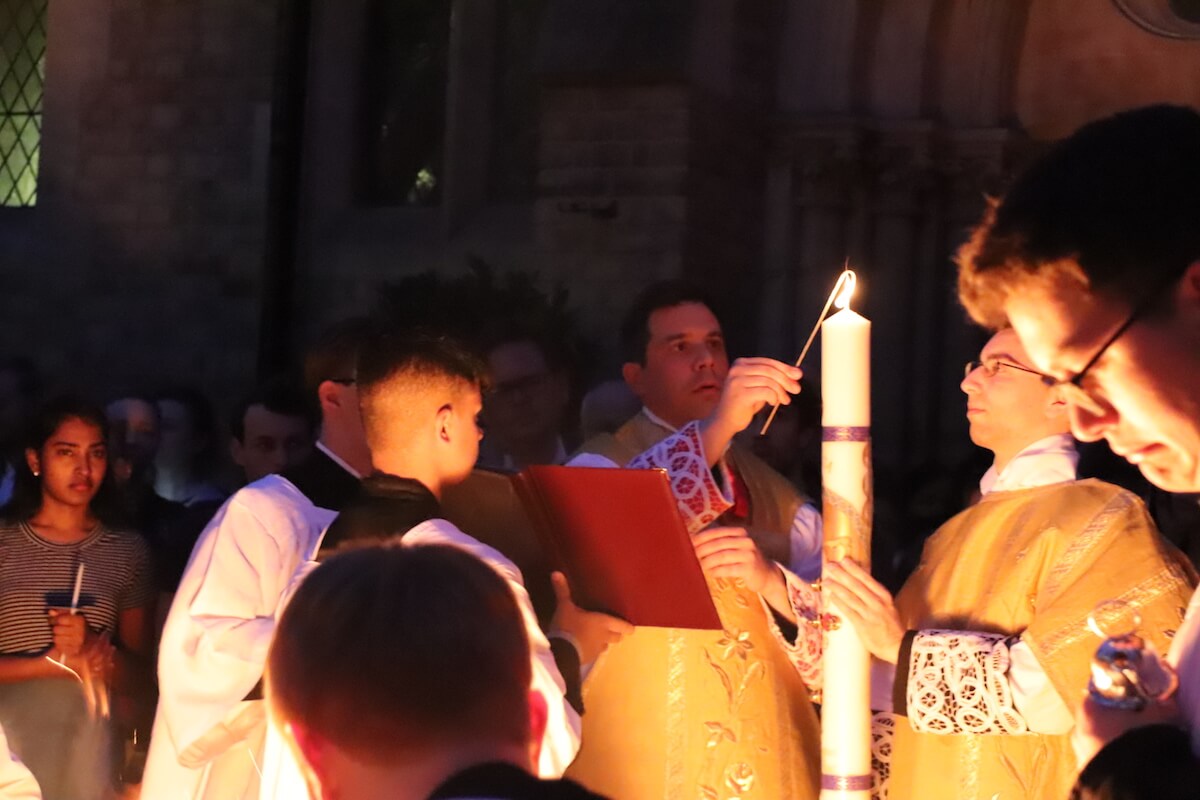
Easter Vigil at 8:30pm
Confessions: 10am–6pm

21 April — EASTER SUNDAY
EF Latin Mass: 8am
Sung English Mass: 9:30am
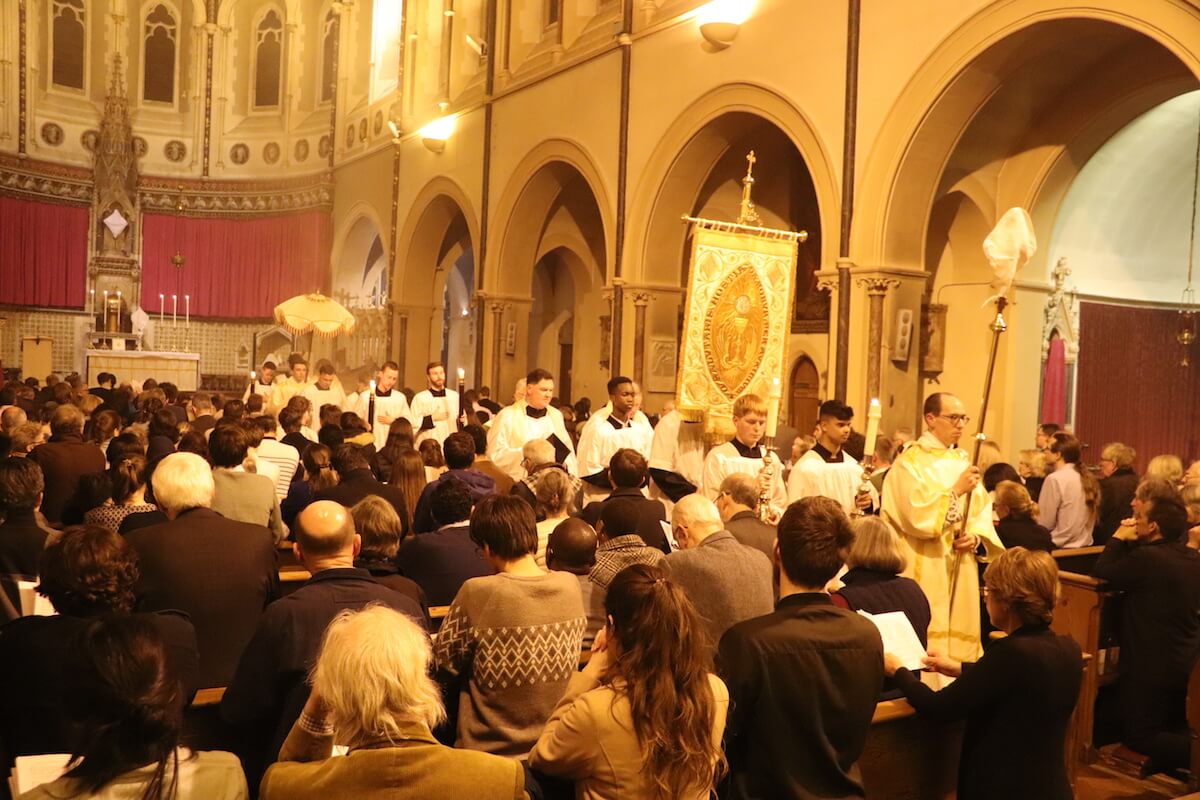
Solemn Mass: 11am
Choral Vespers & Benediction: 5:15pm
Mass: 6:30pm

22 April — Easter Monday
Mass at 10am only

April Music

7 DOMINICA PASSIONIS I Solemn Mass 11:00

Missa XVIII Plainsong
Ave Regina Caelorum Plainsong
Stabat Mater Giovani Sances

12 TENEBRAE FACTAE SUNT  Musical Oratory 20:00

Tenebrae Responsories Victoria

14 PASSIONIS II (IN PALMIS) Solemn Mass 11:00

Mass in four parts Byrd
Ingrediente Domino Malcolm
Christus factus est Anerio
Improperium exspectavit Lassus
O Domine Iesu Christe Guerrero

18 IN CENA DOMINI Solemn Mass 20:00

Missa Pange Lingua Josquin
Ubi caritas Duruflé
Dominus Iesus in qua nocte Palestrina
Pange lingua Palestrina

19 IN PASSIONE DOMINI Solemn Liturgy 15:00

Christus factus est Anerio
St John Passion Victoria
Reproaches Victoria
Adoramus te, Iesu Christe Handl
O vos omnes Victoria
Versa est in luctum Lobo
Ne irascaris/Civitas Byrd
Ecce quomodo Handl
Crux fidelis King John of Portugal
Crucifixus Lotti

20 IN VIGILIA PASCHALIS Solemn Mass 20:30

Iubilate Deo omnis terra Lassus
Cantemus Domino Hassler
Krönungsmesse Mozart
Dextera Domini Palestrina
Christus resurgens Philips

21 DOMINICA RESURRECTIONIS Solemn Mass 11:00

Missa Papae Marcelli Palestrina
Sicut cervus Palestrina
Dum transisset Taverner
Halleluiah Handel

21 DOMINICA RESURRECTIONIS VESPERS 17:00

Haec Dies Sheppard
Magnificat tertii toni Palestrina
O salutaris hostia Tallis
Surrexit pastor bonus Lhéritier
Tantum ergo Duruflé
Regina coeli Palestrina

28 DOMINICA IN ALBIS Solemn Mass 11:00

Missa ‘Amar donna’ Lassus
Victimae Paschali laudes Morales
Quia vidisti me Handl

Passiontide

On the fourteenth day of the month… will be the Passover of the Lord (Ex. 12:6)

IMG_6178

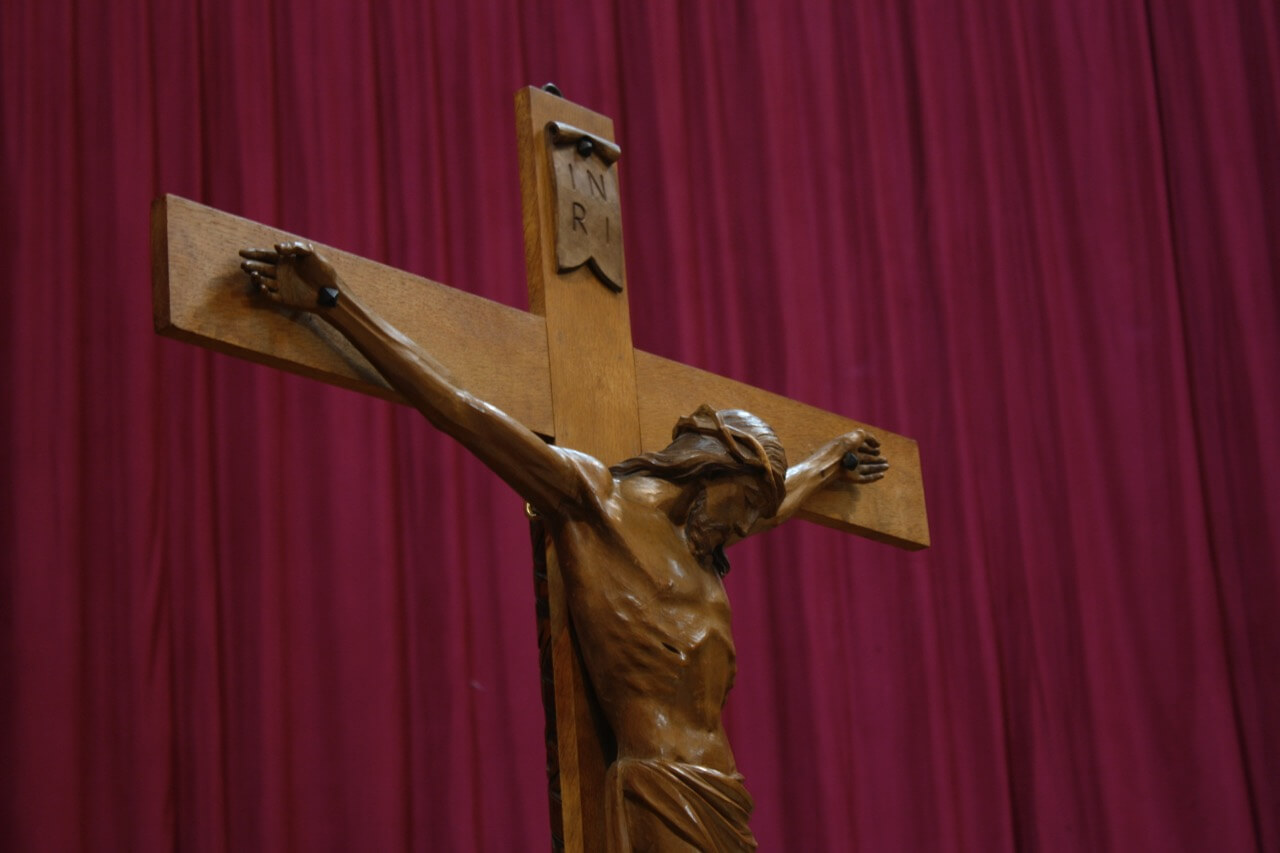
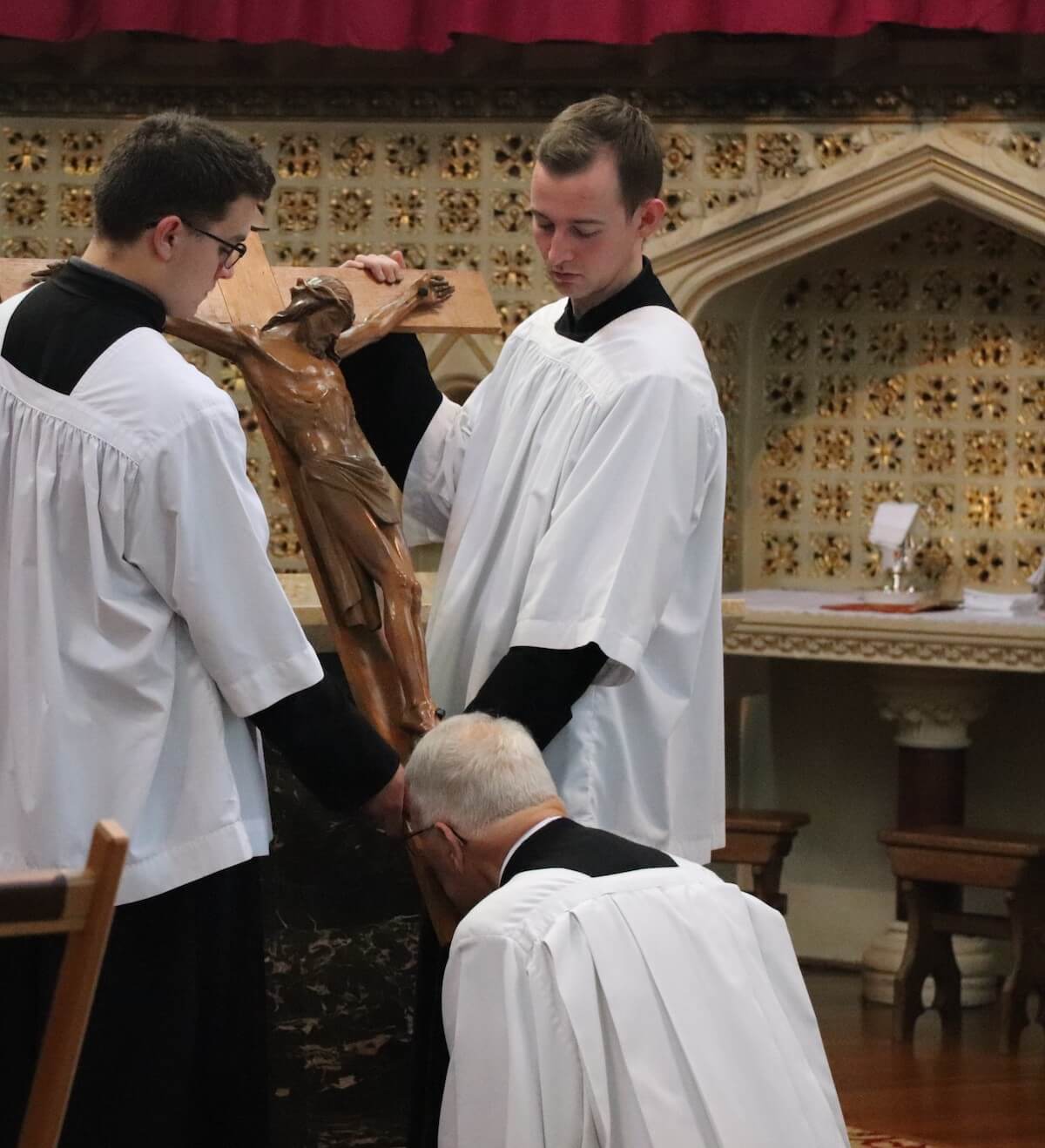
Passiontide — the last two weeks of Lent — is a Christian echo of the Jewish fourteen-day preparation for the Passover. Although short, it is a season in its own right, and older in its observance than Lent. We veil all the images to give the church a more sombre air, and because even the angels and saints hide their faces, as it were, from what is soon to take place. But we veil crucifixes also in reference to Our Lord’s response when the Pharisees’ tried to stone him: “And Jesus hid himself, and went out of the Temple,” (Jn 8:58). At the Incarnation, the Word of God veiled his Divinity; now, in his sufferings, he appears before us “marred… beyond human semblance,” (Is. 52:14). It is as if, in his Passion, he veils even his humanity. Moreover, just as on the Cross he “thirsts to be thirsted for,” sitit sitiri as St Gregory Nazianzen wrote, so we, too, begin to thirst for the sight of his holy countenance, being denied it for so long.

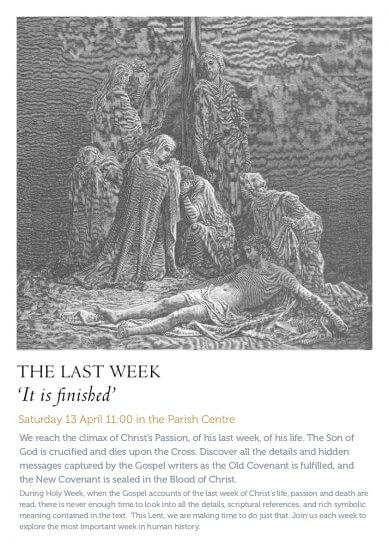
The Last Week: ‘It is finished’

We reach the climax of Christ’s Passion, of his last week, of his life. The Son of God is crucified and dies upon the Cross. Discover all the details and hidden messages captured by the Gospel writers as the Old Covenant is fulfilled, and the New Covenant is sealed in the Blood of Christ.

Talk 5-lr

During Holy Week, when the Gospel accounts of the last week of Christ’s life, passion and death are read, there is never enough time to look into all the details, scriptural references, and rich symbolic meaning contained in the text. This Lent, we are making time to do just that. Join us each week to explore the most important week in human history.

Talk takes place on Saturday 13 April in the Parish Centre. Cafe Neri open from 10:30.